

This event has concluded.

Here are the latest events.




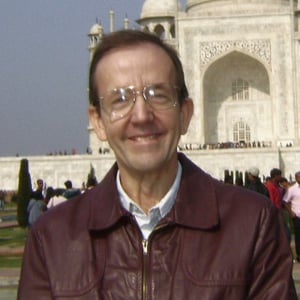
Adjunct Professor, Belmont Abbey College

Chief Judge, United States Court of Appeals, Eleventh Circuit
William H. Pryor Jr. serves as Chief Circuit Judge on the United States Court of Appeals for the Eleventh Circuit.
In 2013–18, he served on the United States Sentencing Commission and, in 2017–18, served as Acting Chair.
He has taught as a visiting professor at the University of Alabama School of Law and previously taught as an adjunct professor at the Cumberland School of Law of Samford University.
He served as the 45th Attorney General of Alabama from 1997 to 2004. When he took office, he was the youngest attorney general in the nation. In his reelection, he received the highest percentage of votes of any statewide candidate.
He graduated magna cum laude from Tulane Law School where he finished first in the common-law curriculum and was editor in chief of the Tulane Law Review. He then served as a law clerk for Judge John Minor Wisdom of the U.S. Court of Appeals for the Fifth Circuit.
He is a member of The American Law Institute and an Adviser for the RESTATEMENT OF THE LAW THIRD, CONFLICT OF LAWS. He is a coauthor with Bryan Garner, Justices Gorsuch and Kavanaugh, and several other judges of a treatise, THE LAW OF JUDICIAL PRECEDENT. He has published in the Yale Law Journal, Columbia Law Review, Virginia Law Review, Notre Dame Law Review, Harvard Journal of Law & Public Policy, Yale Law & Policy Review, George Mason Law Review, Florida Law Review, Alabama Law Review, Case Western Reserve Law Review, and Tulane Law Review. He has published op-eds in The Wall Street Journal, The New York Times, National Review, and USA Today. He has debated at National Lawyers’ Conventions of the Federalist Society (including on National Public Radio) and at the Oxford Union in the United Kingdom. And he is listed among several “widely admired judicial writers” in Bryan Garner’s The Redbook: A Manual on Legal Style.
He is a member of the Tulane Law School Hall of Fame and has received the Defender of the Constitution Award from the Heritage Foundation, the Jurist of the Year Award from the Texas Review of Law & Politics, and the St. Thomas More Award from the St. Thomas More Society of Atlanta. Judge Pryor is also a proud member of the National Society of the Sons of the American Revolution.
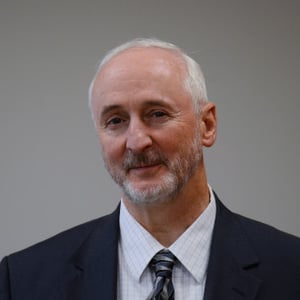
Professor of Politics, University of Dallas
Christopher Wolfe is a professor of politics at the University of Dallas and president of the American Public Philosophy Institute. He is also the former co-director of the Thomas International Center in Raleigh-Durham NC and emeritus professor of political science at Marquette University. His main area of research and teaching for two decades was Constitutional Law and American Political Thought, and he is the author of various books, the best known of which is The Rise of Modern Judicial Review, which the late Judge Robert Bork, in a 2006 Wall Street Journal contribution, listed as one of the five best books on the Constitution. Dr. Wolfe subsequently shifted his work back to political philosophy, and especially the area of natural law and liberal political theory. His book Natural Law Liberalism was published by Cambridge University Press in 2006.
Adjunct Professor, Belmont Abbey College
Senior Partner, Grefe & Sidney PLC
Guy R. Cook is a Des Moines, Iowa, native. He has been practicing law more than 25 years. He is a board certified trial lawyer by the National Board of Trial Advocacy. Guy has served as counsel in more than 1000 litigated matters and has tried more than 200 jury trials. He is one of only 20 Iowa attorneys to be inducted into the Million Dollar Advocates Forum for verdicts and settlements in excess of one million dollars. Guy is recognized in both The Best Lawyers in America publication and the list of Iowa Super Lawyers.
Guy has extensive and wide-ranging courtroom experience. He has successfully defended major business litigation, obtained million dollar jury verdicts, and successfully defended significant federal criminal cases. He has tried complex civil and criminal cases throughout the state of Iowa, including wrongful death, serious personal injury, products liability, securities fraud, medical malpractice, semi truck collisions, insurance fraud, sexual assault, false arrest and breach of contract claims.
Guy is a graduate of the University of Iowa and Drake University Law School. He worked his way through school as a union ironworker, campus security officer, and law library assistant. While in school Guy was vice president of the Liberal Arts Student Association, resident advisor for Acacia fraternity, and worked as a legislative intern in the Iowa General Assembly. During law school he was a staff writer and researcher for the Drake Law School Legal Research Service and a prosecutor intern in the Polk County Attorney's Office.
Upon graduation from Law School, Guy served as a judicial law clerk for Justice J.L. Larson of the Iowa Supreme Court, assisting Justice Larson in researching and drafting legal opinions of the Iowa Supreme Court.
In 1983, Guy was appointed Assistant United States Attorney for the Southern District of Iowa. As a federal prosecutor, Guy tried a wide range of criminal cases, including embezzlement, bank robbery, tax fraud, murder for hire, obstruction of justice, narcotic offenses, bank fraud, and kidnapping. Among the cases he prosecuted were the largest insurance fraud in Iowa history, the then largest drug case in Iowa history, and the largest tax evasion case in Iowa history. Guy received written commendations from FBI Directors William Webster and William Sessions. He has also received commendations for his trial work in major criminal cases by the District Director of the IRS and the Resident Agent of the U.S. Secret Service.
In 1987, Guy joined Grefe & Sidney, P.L.C. as a trial attorney. He is a senior partner practicing exclusively in the field of litigation. Guy's extensive courtroom work has taken him to courts across the state of Iowa. He has also appeared in federal courts in Iowa, Nebraska, Minnesota, Missouri and Illinois. He has been involved in nearly all types of litigation.
In addition to his work as a trial lawyer, Guy is past president of the Polk County Bar Association, the largest metropolitan bar in the state of Iowa representing more than one-fourth of all the lawyers in the state. Guy presently serves as a Board of Governor of the Iowa State Bar Association.
Guy was elected to serve as commissioner on the Iowa State Judicial Nominating Commission. He has also served as an appointed member of the Merit Selection Panel for selection of U.S. Magistrate Judges for the U.S. District Court for the Southern District of Iowa. Guy was appointed by the Chief Justice of the Iowa Supreme Court to serve as a member of the Iowa Supreme Court Grievance Commission.
Guy is a member of the American Board of Trial Advocates and has served as membership director for the Iowa chapter. Guy is also a fellow of the Iowa Academy of Trial Lawyers, an invitation only organization, limited to the top 250 trial attorneys in the State of Iowa. He has also been inducted into the Society of Outstanding Lawyers of America and is a certified member of the American College of Master Advocates and Barristers, an invitation only group requiring more than 75 jury trials. He has also been recognized repeatedly as a "leading individual" in litigation in Iowa by Chambers and Partners, a world wide legal publication. Guy has been a guest speaker and lecturer on a number of litigation topics throughout Iowa.
Lt. Governor, State of Iowa
Adam C. Gregg is an associate attorney with BrownWinick. Adam is engaged in the general practice of law, including but not limited to the areas of governmental relations, litigation,agricultural law, environmental law, administrative law andemployment law.
Adam brings extensive political experience to BrownWinick's lobbying practice group. He has been involved in a number of state and federal political campaigns, including work for the 2004 campaign of U.S. Senator John Thune and managing the Iowa Senate campaign of Senator Larry Noble. While studying abroad in London, Adam served as a legislative assistant and campaign staff to Cheryl Gillan, member of the United Kingdom Parliament. As a student, Adam also completed internships in Washington with the U.S. Department of Defense and U.S. Congressman Steve King. Adam has considerable experience in campaign finance and election law, having work experience with the Iowa Ethics and Campaign Disclosure Board and having served as a member of the Executive Committee of the Free Speech and Election Law Practice Group of the national Federalist Society. He has also conducted significant academic research in the area of election law.
Adam graduated, summa cum laude, from Central College in 2006, receiving his B.A. in Political Science and History. While at Central College, Adam was twice honored as the school's top political science student. Adam received his J.D. in 2009, with high honors, from Drake University. At Drake Law School, Adam was a recipient of the Dwight D. Opperman Scholarship. He was also chosen by the faculty to receive the William and Ellen Cooney Hoye Award, given annually to the graduating student who "demonstrates the greatest promise as an advocate, a public servant and practitioner," and who "has demonstrated not only academic promise, but also leadership ability, the speaking and writing skills of an effective advocate, and a commitment to public service and Drake Law School." Adam was chosen as an Iowa Supreme Court Scholar and in that capacity conducted legal research in the area of election law with Justice Mark S. Cady. Additionally, Adam clerked for U.S. Magistrate Judge Celeste F. Bremer through Drake's Honors Judicial Internship program.
Adam also devotes his time to community service and volunteer activities. In March 2008, he organized a group of law students to volunteer with the Pro Bono Project in New Orleans, where he worked primarily on legal issues faced by the homeless. Adam was a founding member and currently serves as Vice President of the Iowa Federalist Society. He also volunteers his time as a member of the Committee on Accountable Government of the Iowa Taxpayers Association.
Adam is a member of the Polk County and Iowa State Bar Associations, and he was admitted to the Iowa bar in 2009.
Iowa House of Representatives and Partner, Whitaker Hagenow GBMG
State Representative Chris Hagenow is a founding partner of Whitaker Hagenow GBMG, working in the areas of litigation, trusts and estates, corporations, nonprofit organizations and real estate. Chris is serving his second term in the Iowa Legislature, re-elected in November 2010. Chris represents the west suburbs of the greater Des Moines area, in particular the communities of West Des Moines, Clive and Windsor Heights.
Chris is a sixth-generation Iowan, raised in Cedar Falls. Chris graduated from Northern University High School and went on to receive his BA Magna Cum Laude from the University of Northern Iowa in 1994. He earned his JD from the University of Iowa College of Law in 1997 and is a member of the Iowa State Bar Association. Chris has practiced law in both Waterloo and Des Moines, with experience in criminal defense, real estate, trusts and estates and civil litigation.
In the Iowa House, Chris is the Chairman of the House Committee on Government Oversight. In addition to his role on Government Oversight, Chris also serves on the House committees for Appropriations, Judiciary and Public Safety. He is a member of the Iowa State Bar Association, the American Legislative Exchange Council (ALEC), and also serves on ALEC’s Telecommunications and Information Technology Task Force. Chris sits on the Steering Committee for the Iowa Federalist Society. He is also a member of the Windsor Heights Lions’ Club and the Iowa Prayer Breakfast Committee.
Chris lives in Windsor Heights with his wife Amanda and their sons Owen and Noah. The Hagenow family worships at Westkirk Presbyterian Church in Urbandale.
News Director, Radio Iowa
Covering politicians was apparently Kay’s destiny from day one. She was born on election day. Her parents were relieved their bundle of joy was “okay” considering the newborn’s mom was 45 years old, so they named her “O. Kay.” She grew up on the family farm near Lenox, Iowa, and paraded cattle in the show ring during her teenage years. (Kay still has the belt buckle and the 4-H badge to prove it.)
During her years at Iowa State University, Kay served as a statehouse correspondent for WOI-AM, the NPR affiliate in Ames. Between her freshman and sophomore years, she did a three-month, summertime “tour of duty” as the managing editor of the weekly newspaper in her hometown.
In 1987, Kay became one of the three founding members of the Radio Iowa network newsroom. In 1994, she became the network’s news director. You may recognize Kay’s mug from her Sunday television appearances. She’s a featured reporter and commentator on Iowa Public Television’s “Iowa Press.” Kay was the 2002 recipient of the Shelley Award.
Iowa House of Representatives and Partner, Swaim Law Firm
Kurt Swaim is serving his fourth term in the Iowa House. He is Chair of the Judiciary Committee and also serves on the Economic Growth, Government Oversight, and Appropriations Committees.
Kurt was born and raised in Davis County. He is the son of Basil and Betty Swaim. Basil was a rural mail carrier, and Betty worked as a teacher’s aide when not working in the home.
Kurt graduated from Davis County High School before attending Iowa Wesleyan. After graduating with a degree in economics and business administration, he went to the University of Iowa Law School. He was a member of its Order of the Coif. Kurt’s first job was as an associate attorney with Lundy, Butler, Wilson & Hall in Eldora from 1975-1978. He then served as the Senior Staff Attorney in the Northeast Regional Office of Legal Services Corporation of Iowa in Dubuque from 1978-1981.
Currently, Kurt is a partner in a three-person law firm in Bloomfield with his two sons, Justin and Joshua. In the past, Kurt served as the Davis County Attorney for thirteen years.
Kurt and his wife, Julie, have four children and five grandchildren. Julie works in the law office. Both are active members of the Bloomfield United Methodist Church. Kurt is a past chair of both the church’s administrative board and finance committee. He has also served as Lay Leader and is currently the Lay Representative to the Annual Conference. He has also been active in the Lions Club and the Masons in the past. He served as both president and treasurer of the Lions Club.
Kurt ran for the Statehouse because he believes that government should look beyond its next election cycle to develop long range solutions to the challenges facing the people of Iowa. He believes rural Iowa offers a great quality of life. He wants to work hard to see that rural Iowa is not left out as opportunities are expanded for all Iowans. This includes ensuring that local schools and county governments receive adequate authority from the state so they can be both economically efficient, and accessible to all citizens.
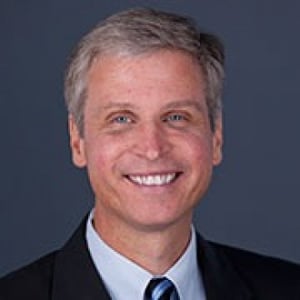
Frank Edwards Tyler Distinguished Professor of Law, University of Kansas School of Law
Stephen Ware is the author of five books, over 60 law review articles and many other publications. His writings have been cited by the Supreme Court of the United States and in at least 37 other cases. Ware teaches and writes on:
each with an international or comparative dimension. An experienced teacher of lawyering skills exercises in which student groups negotiate, mediate, and draft legal documents, Professor Ware takes this approach in his Transnational Dispute Resolution course, which he has customized for universities from Beijing to Istanbul to Kansas.
Ware has testified before both houses of the U.S. Congress, several state legislatures and, as an expert witness, in court. He is a frequent guest lecturer and speaker at academic and professional conferences—having given such presentations throughout the U.S. and in several other countries. He has appeared on numerous television and radio stations and been quoted in The New York Times, Wall Street Journal, USA Today, Financial Times, National Law Journal and many other news outlets. He is an elected member of the American Law Institute (ALI) and has served, at various times in his career, on the editorial board of the Journal of Legal Education and as an arbitrator for the American Arbitration Association.
Ware was named as the Frank Edwards Tyler Distinguished Professor of Law in 2019.
Roger Williams University School of Law
Professor, University of Illinois College of Law
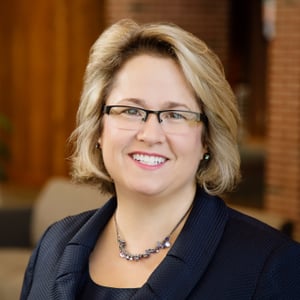
Robin Fretwell Wilson is the Mildred Van Voorhis Jones Chair in Law at the University of Illinois College of Law.
A scholar in family law, bioethics and law and religion, Professor Wilson has worked extensively on behalf of state and federal law reform efforts in each realm.
Across two decades, she has worked to secure laws protecting the autonomy of patients to decide when they will be used to teach intimate exams to medical students, laws now in place in 22 states—sixteen of which have been enacted since 2019.
Professor Wilson is known for bridging differences in the culture war. In 2015, she spent a month in residence with the Utah legislature, helping Utah state lawmakers to pass anti-discrimination legislation that balances religious liberty and LGBT rights. In 2019, Professor Wilson assisted the governor of Utah to craft regulations banning gay conversion therapy. In 2019, she also aided U.S. Representative Chris Stewart with portions of the “Fairness for All” he introduced in Congress. A member of the American Law Institute and a Fulbright Specialist, Professor Wilson has served as a consultant to the United Arab Emirates’ Judicial Department as they sought to create a parallel court system for the adjudication by expatriates of family law matters using the laws of their home country or of their faith traditions.
Professor Wilson is the author of 20 books, including her 2018 book, Religious Freedom, LGBT Rights, and the Prospects for Common Ground, with Yale University Professor William Eskridge, Jr., which is now in paperback at Cambridge University Press. Her other books include: The Contested Place of Religion in Family Law (Cambridge University Press, 2018, ed.), Reconceiving the Family: Critical Reflections on the American Law Institute’s Principles of the Law of Family Dissolution (Cambridge University Press, 2006, ed.); The Handbook of Children, Culture & Violence (Sage Publications, 2006, with Nancy Dowd and Dorothy Singer, eds.); Same-Sex Marriage and Religious Liberty: Emerging Conflicts (Rowman & Littlefield, 2008, with Douglas Laycock and Anthony Picarello, eds.); Health Law and Bioethics: Cases in Context (Aspen, 2008, with Joan Krause, Sandra Johnson, and Richard Saver, eds.); Domestic Relations: Cases and Materials, 8th edition (Foundation Press, 2017, with Walter Wadlington and Raymond C. O’Brien); and Understanding Family Law, 4th edition (LexisNexis, 2013, with John DeWitt Gregory and Peter N. Swisher). Her articles have appeared in the Boston College Law Review, Cornell Law Review, Emory Law Journal, Illinois Law Review, North Carolina Law Review, San Diego Law Review, U.C. Davis Law Review, and Washington and Lee Law Review, as well as in numerous peer-reviewed journals.
In 2010 and again in 2016, Professor Wilson was ranked among the Top Ten Family Law Scholars in the United States for scholarly impact. She ranks among the Top 10% of Authors in all time downloads on the Social Science Research Network. Professor Wilson’s scholarship has been cited by the Fifth, Seventh and Tenth Circuit Court of Appeals, the Minnesota Court of Appeals, lower federal courts, and the Supreme Courts of Delaware, Illinois, Iowa, and Washington.
Professor Wilson’s work has been featured in the New York Times, Wall Street Journal, National Public Radio’s All Things Considered, Washington Post, Los Angeles Times, The Atlantic Monthly, U.S. News and World Report, ABA Journal, Chronicle of Higher Education, Chicago Tribune, CNN Headline News, Good Morning America, ABC News, CBS News, Philadelphia Inquirer, Essence Magazine, The American Prospect, People Magazine, The American Conservative, The Australian, and Al Jazeera, among others. She has presented her research across the world, including the United Nations in Geneva, Switzerland, as well as in Argentina, Brazil, Peru, Chile, China, Israel, Qatar, the Netherlands, Italy, England, Wales, Poland, Spain, Serbia, Japan, Canada, Norway, Denmark, Australia, New Zealand, South Africa, Turkey, and France.
Professor Wilson has seven times been honored for her work on innovative laws that respect all persons. In 2007, she received the Citizen’s Legislative Award for her work on changing Virginia’s informed consent law. In 2018, Professor Wilson received the Thomas L. Kane Religious Freedom Award from the J. Reuben Clark Law Society, which is presented annually to an individual who exemplifies the spirit of religious liberty for all and who has contributed in significant ways to the defense of religious freedom in the public square.
In 2018, Professor Wilson was honored as one of the 150 for 150: Celebrating the Accomplishments of Women at the University of Illinois at Urbana-Champaign for its sesquicentennial celebration. In 2020, Professor Wilson received the 2020 Larine Y. Cowan Make a Difference Award for Advocacy for LGBTQ Affairs, a university-wide honor given by the Office of Diversity, Equity and Inclusion at the University of Illinois at Urbana-Champaign.
James Monroe Distinguished Professor of Law and Albert Clark Tate, Jr., Professor of Law, University of Virginia School of Law
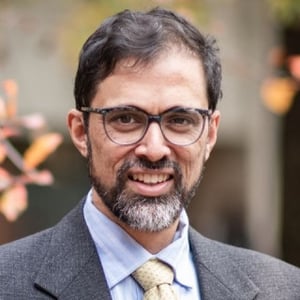
Professor Saikrishna Prakash’s scholarship focuses on separation of powers, particularly executive powers. He teaches Constitutional Law, Foreign Relations Law and Presidential Powers at the Law School.
Prakash’s most recent book, “The Living Presidency: An Originalist Argument Against Its Ever-Expanding Powers,” was published by Harvard Belknap Press in 2020. He also authored “Imperial from the Beginning: The Constitution of the Original Executive” (Yale University Press, 2015). The former book focuses on the modern presidency while the latter considers the presidency of the Founders.
Prakash has authored over 75 law review articles. Among them are “Of Synchronicity and Supreme Law” in the Harvard Law Review, “The Indefensible Duty to Defend” in the Columbia Law Review, and “50 States, 50 Attorneys General and 50 Approaches to the Duty to Defend” and “The Executive Power Over Foreign Affairs” in the Yale Law Journal.
Prakash has published op-eds in The New York Times, The Wall Street Journal and the Los Angeles Times. At the request of Democrats and Republicans, he has testified before Congress on matters of presidential removal, the Mueller Report and how Congress might better check the presidency. He is currently a Miller Center Senior Fellow. In 2015, he received the Roger Traynor award for faculty scholarship. In the same year, he received an honorable mention from the American Society of Legal Writers for his book “Imperial from the Beginning.” He has given named lectures at William & Mary Law School, Princeton University and Toledo Law School, and keynote addresses at several conferences.
Prakash majored in economics and political science at Stanford University. At Yale Law School, he served as senior editor of the Yale Law Journal and received the John M. Olin Fellowship in Law, Economics and Public Policy. He subsequently clerked for Judge Laurence H. Silberman of the U.S. Court of Appeals for the District of Columbia Circuit and for Justice Clarence Thomas of the U.S. Supreme Court. After practicing in New York for two years, he served as a visiting professor at the University of Illinois College of Law and as an associate professor at Boston University School of Law. He then spent several years at the University of San Diego School of Law as the Herzog Research Professor of Law. Prakash has been a visiting professor at Northwestern University and the University of Chicago. He also has served as a James Madison Fellow at Princeton University and Visiting Research Fellow at the Hoover Institution of War & Peace at Stanford University.
Emeritus Dean and Clifford Scott Green Chair in Law, Temple Law

Laurence A. Tisch Professor of Law and Director, Classical Liberal Institute, New York University School of Law; Director, Classical Liberal Institute, Civitas Institute University of Texas at Austin
Richard A. Epstein is the Laurence A. Tisch Professor of Law, at New York University, a senior research fellow at the Civitas Institute at the University of Texas Austin, and a senior Lecturer, the University of Chicago. He received an LL.D., h.c . from the University of Ghent, 2003 , and an LLD h.c . from the University of Siegen in 2018 and the Bradley Prize in 2011. He has been a member of the American Academy of Arts and Sciences since 1985. He has edited both the Journal of Legal Studies (1981-1991) and the Journal of Law and Economics (1991-2001). He is also a founder and director of the Classical Liberal Institute at NYU Law School. His most recent book is The Classical Liberal Constitution: The Uncertain Quest for Limited Government (2014). His other books include Takings: Private Property and the Power of Eminent Domain ( 1985); Bargaining with the State (1993); Simple Rules for a Complex World (1995); Principles for a Free Society: Reconciling Individual Liberty and the Common Good (1998); Skepticism and Freedom: A Modern Theory of Classical Liberalism (2003); Design for Liberty: Private Property, Public Administration and the Rule of Law (2011), and most recently, The Myth of Birthright citizenship—and Beyond (2026). He has taught courses in , administrative law, antitrust, constitutional, contracts, environmental law, land use planning; real property, torts and water law. He has written and spoken extensively on a wide range of topics, and is writes a regular column for Defining Ideas.
Professor of Law, Antonin Scalia Law School, George Mason University
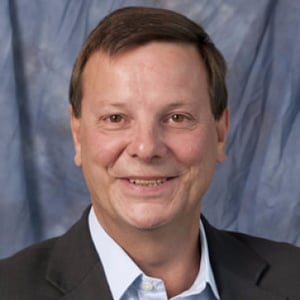
Professor of Law Michael S. Greve joined the faculty of the Antonin Scalia Law School, George Mason University in fall 2012 after having served as John G. Searle Scholar at the American Enterprise Institute (AEI), where he specialized in constitutional law, courts, and business regulation and served as chairman of the Competitive Enterprise Institute. Prior to joining AEI, Greve was founder and co-director of the Center for Individual Rights, a public interest law firm specializing in constitutional litigation.
Greve has served previously as an adjunct professor at a number of universities, including Cornell and Johns Hopkins Universities, and has been a visiting professor at Boston College since 2004. He was awarded a PhD and an MA in government by Cornell University. Greve also earned a Diploma from the University of Hamburg in Germany.
A prolific writer, Greve is the author of nine books and a multitude of articles appearing in scholarly publications, as well as numerous editorials, short articles, and book reviews. He is a frequent speaker for professional and scholarly organizations and has made many appearances on radio and television.
In addition Greve has provided congressional and state legislative testimony, has lobbied and consulted in federal agency proceedings, and has provided litigation services and management in over 30 cases, including matters before the U.S. Supreme Court.