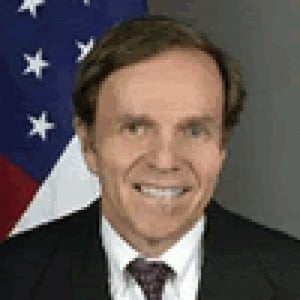
Assistant Secretary, Bureau of Democracy, Human Rights and Labor, U.S. Department of State
Biography
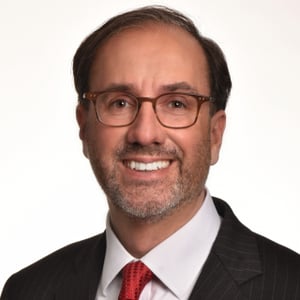
Michael H. Posner was sworn in as Assistant Secretary of State for the Bureau of Democracy, Human Rights and Labor on September 23, 2009.
Prior to joining State Department, Mr. Posner was the Executive Director and then President of Human Rights First. As its Executive Director he helped the organization earn a reputation for leadership in the areas of refugee protection, advancing a rights-based approach to national security, challenging crimes against humanity, and combating discrimination. He has been a frequent public commentator on these and other issues, and has testified dozens of times before the U.S. Congress. In January 2006, Mr. Posner stepped down as Executive Director to become the President of Human Rights First, a position he held until his appointment as Assistant Secretary.
Mr. Posner played a key role in proposing and campaigning for the first U.S. law providing for political asylum, which became part of the Refugee Act of 1980. In 1998, he led the Human Rights First delegation to the Rome conference at which the statute of the International Criminal Court (ICC) was adopted.
Mr. Posner also has been a prominent voice in support of fair, decent, and humane working conditions in factories throughout the global supply chain. As a member of the White House Apparel Industry Partnership Task Force, he helped found the Fair Labor Association (FLA), an organization that brings together corporations, local leaders, universities, and NGOs to promote corporate accountability for working conditions in the apparel industry. He also was involved in the development of the Global Network Initiative, a multi-stakeholder initiative aimed at promoting free expression and privacy rights on the internet.
Before joining Human Rights First, Mr. Posner was a lawyer with Sonnenschein, Nath & Rosenthal in Chicago. He lectured at Yale Law School from 1981 to 1984, and again in 2009. He was a visiting lecturer at Columbia University Law School since 1984. A member of the California Bar and the Illinois Bar, he received his J.D. from the University of California, Berkeley Law School (Boalt Hall) in 1975, and a B.A. with distinction and honors in History from the University of Michigan in 1972.
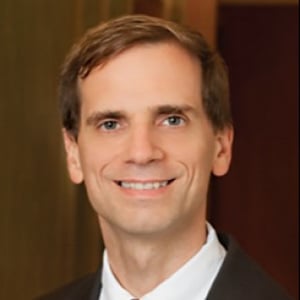
Judge, United States Court of Appeals, District of Columbia Circuit
Biography
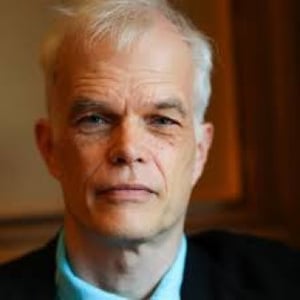
Judge Katsas was appointed to the D.C. Circuit in December 2017. He graduated from Princeton University and Harvard Law School, where he was an executive editor on the Harvard Law Review. Between 1989 and 1992, he served as a law clerk to Judge Edward Becker on the Third Circuit, to then-Judge Clarence Thomas on the D.C. Circuit, and to Justice Thomas on the Supreme Court. Between 1992 and 2001, he was an associate and then partner in the Washington office of Jones Day, where he specialized in appellate and complex civil litigation. Between 2001 and 2009, he served in many senior positions in the Department of Justice, including as Assistant Attorney General for the Civil Division and as Acting Associate Attorney General. In 2009, he returned to Jones Day. From January to December 2017, he served as Deputy Assistant to the President and Deputy Counsel to the President.
Before joining the bench, Judge Katsas argued more than 75 appeals, including three cases in the Supreme Court, 13 cases in the D.C. Circuit, and cases in every other federal court of appeals. By appointment of the Chief Justice, he served on the Advisory Committee on Appellate Rules from 2013 to 2017. In 2016, he was elected to membership in the American Academy of Appellate Lawyers.
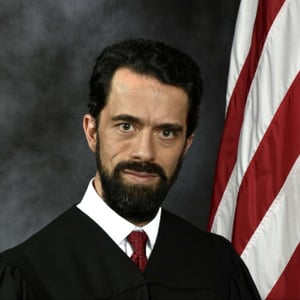
Judge, United States Court of Appeals, Third Circuit
Biography
Stephanos Bibas is a judge on the U.S. Court of Appeals for the Third Circuit. Judge Bibas was previously a professor of law and criminology at the University of Pennsylvania Law School. As director of the Penn Law Supreme Court Clinic, he argued six cases before the Supreme Court of the United States and filed briefs in dozens of others. He graduated summa cum laude and Phi Beta Kappa from Columbia University in 1989 with a B.A. in political theory and from Oxford University in 1991 with a B.A. in jurisprudence. He then earned his J.D. from Yale Law School in 1994.
After graduating from Yale Law, Judge Bibas clerked for Judge Patrick Higginbotham of the U.S. Court of Appeals for the Fifth Circuit and Justice Anthony Kennedy on the Supreme Court and was a litigation associate at Covington & Burling LLP in Washington, D.C. Thereafter, Judge Bibas served as an Assistant U.S. Attorney in the Southern District of New York, where he successfully prosecuted the world’s leading expert in Tiffany stained glass for hiring a grave robber to steal priceless Tiffany windows from cemeteries. Before his tenure at Penn Law, Judge Bibas taught at the University of Chicago Law School and the University of Iowa College of Law and was a research fellow at Yale Law School. He has published two books and seventy scholarly articles.
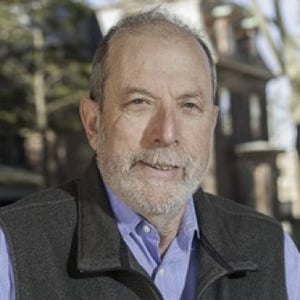
Distinguished Professor of Law, Rutgers Law School
Biography
Earl Maltz is a Distinguished Professor and the author of two books and more than 50 articles on constitutional law, statutory interpretation, the role of the courts and legal history. He teaches constitutional law, employment discrimination, conflicts of law and a seminar on the Supreme Court.
Professor Maltz is the author of Rethinking Constitutional Law: Originalism, Interventionism, and the Politics of Judicial Review (1994), Civil Rights, The Constitution and Congress, 1863-1865 (1990), and over 50 articles on constitutional law, statutory interpretation, the role of the courts and legal history. He received his B.A. from Northwestern University, where he was elected to Phi Beta Kappa, and his J.D. cum laude from Harvard. Professor Maltz teaches Constitutional Law, Employment Discrimination, Conflicts of Law, and a seminar on the Supreme Court.
Robert Alt is the President and Chief Executive Officer of The Buckeye Institute where he has catalyzed exponential growth since he took the organization’s helm in 2012. He has since founded Buckeye’s renowned Economic Research Center and established its impactful Legal Center.
Alt is a distinguished scholar and attorney with particular expertise in legal policy, criminal justice, national security, and constitutional law. He previously worked for former U.S. Attorney General Edwin Meese III, regularly provides commentary on television and radio programs, and his writings have appeared in countless outlets.
In 2004, Alt spent five months in Iraq as an embedded war correspondent.
Alt has testified before Congress multiple times—including at the confirmation hearings for U.S. Supreme Court Justice Elena Kagan—the Federal Election Commission regarding matters of constitutional and administrative law, and numerous state legislatures.
Alt serves as an officer on the boards of The Philadelphia Society and the Federalist Society’s Columbus Lawyers Chapter. He taught national security law, criminal law, and legislation at Case Western Reserve University School of Law, as well as constitutional law and political parties and interest groups at Ashland University.
Alt earned his Doctor of Law degree from The University of Chicago Law School, where he was Symposium Editor and the winner of the Mulroy Prize for Excellence in Appellate Advocacy as well as research assistant to Professor Richard Epstein. Following law school, he clerked for Judge Alice Batchelder on the U.S. Court of Appeals for the Sixth Circuit. Alt graduated with his Bachelor of Arts in philosophy and political science magna cum laude from Azusa Pacific University where he also won the Outstanding Senior Award in Political Science.
Alt is an accomplished high-altitude alpinist and endurance athlete who has successfully climbed 6.75 of the famed Seven Summits of the World including Mount Everest. He is the creator of PROFOUND CLIMBING™ and a frequent speaker across the country and around the world on legal and public policy topics as well as effective leadership, management, decision-making, and teamwork in contexts ranging from extraordinary life/death situations to ordinary professional/business settings.
Historian Richard Brookhiser is a senior editor of National Review, a senior fellow at the National Review Institute, and the author of several books, including Founders’ Son, Right Time, Right Place, George Washington on Leadership, What Would the Founders Do?, Gentleman Revolutionary, Rules of Civility, America’s First Dynasty, Alexander Hamilton, American, Founding Father: Rediscovering George Washington, Way of the WASP, and The Outside Story.
Doug Bandow is a senior fellow at the Cato Institute, specializing in foreign policy and civil liberties. He worked as special assistant to President Reagan and editor of the political magazine Inquiry. He writes regularly for leading publications such as Fortune magazine, National Interest, Wall Street Journal, and Washington Times. Bandow speaks frequently at academic conferences, on college campuses, and to business groups. Bandow has been a regular commentator on ABC, CBS, NBC, CNN, Fox News Channel, and MSNBC. He holds a J.D. from Stanford University.
Timothy P. Carney is a resident fellow at the American Enterprise Institute, where he works on economic competition, cronyism, civil society, localism, and religion in America. He is concurrently the commentary editor at the Washington Examiner.
In addition to his Washington Examiner columns, Mr. Carney’s work has been published in a variety of magazines, websites, and newspapers, including The Atlantic, New York Post, The New York Times, Reason Magazine, and The Wall Street Journal. His television appearances include CNBC, CNN, Fox News, MSNBC, and the “PBS NewsHour.”
Mr. Carney has a bachelor’s degree from St. John’s College in Annapolis.