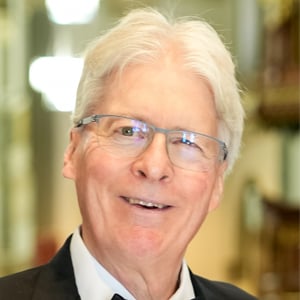
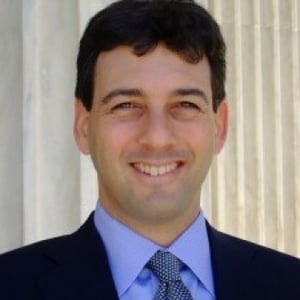
William Rand Kenan, Jr. Distinguished Professor of Law, University of North Carolina School of Law
Biography
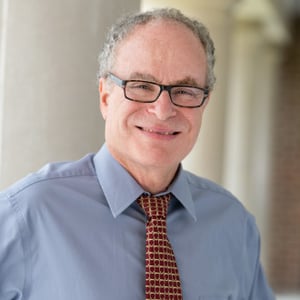
William (Bill) Marshall joined the Carolina Law faculty in 2001 and serves as the William R. Kenan Jr. Distinguished Professor of Law. His teaching and research interests include the first amendment, presidential power, election law, federal jurisdiction, federal judicial selection, civil procedure, and media law. Marshall is the author of numerous book chapters, articles, and essays on free speech, separation of powers, the Establishment Clause, and the Free Exercise Clause. His work has appeared in the Harvard Law Review, the Yale Law Journal, the Supreme Court Review, and the University of Chicago Law Review, among others.
Marshall received his law degree from the University of Chicago and his undergraduate degree from the University of Pennsylvania. Marshall was Deputy Counsel to the President and Deputy Assistant to the President during the Clinton Administration and also served as the Solicitor General for the State of Ohio. He has taught at the Northwestern, Boston University, Vanderbilt, Ohio State, DePaul, Case Western Reserve, William and Mary, and the University Connecticut law schools. Prior to beginning his teaching career, Marshall was a Special Assistant Attorney General for the State of Minnesota.
George C. Dix Professor in Constitutional Law, Northwestern University Pritzker School of Law
Biography
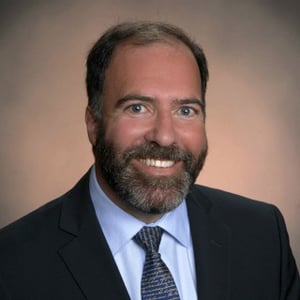
John O. McGinnis is a graduate of Harvard College and Harvard Law School where he was an editor of the Harvard Law Review. He also has an MA degree from Balliol College, Oxford, in philosophy and theology. Professor McGinnis clerked on the U.S. Court of Appeals for the District of Columbia. From 1987 to 1991, he was deputy assistant attorney general in the Office of Legal Counsel at the Department of Justice. He is the author of Accelerating Democracy: Transforming Government Through Technology (Princeton 2013) and Originalism and the Good Constitution (Harvard 2013) (with M. Rappaport). He is a past winner of the Paul Bator award given by the Federalist Society to an outstanding academic under 40. He has been listed by the United States on the roster of panelists who may be called upon to decide World Trade Organization Disputes.
Professor of Law, Widener University Commonwealth Law School
Biography
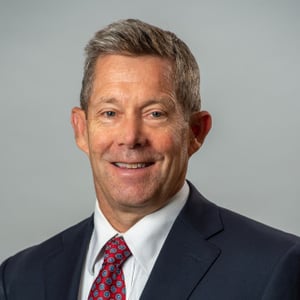
Michael R. Dimino is a Professor of Law at Widener University Commonwealth Law School, where he teaches and writes in a wide variety of subjects, including constitutional law and election law. Professor Dimino graduated from the State University of New York at Buffalo and Harvard Law School, and served as Articles Editor of the Harvard Journal of Law & Public Policy. Professor Dimino served as Chief Clerk to Associate Judge Albert Rosenblatt of the New York State Court of Appeals, and then clerked for Senior Circuit Judge Laurence Silberman of the United States Court of Appeals for the District of Columbia Circuit and Judge Paul Friedman of the United States District Court for the District of Columbia. Professor Dimino is a two-time recipient of Widener’s Faculty Scholarship Award, a three-time recipient of Widener’s Outstanding Professor Award, an elected member of the American Law Institute, and a Fulbright scholar. He has authored or co-authored several articles and six books, including Voting Rights and Election Law (4th ed. forthcoming); Understanding Election Law and Voting Rights (2d ed. 2026); and Congressional Investigations and Oversight (2d ed. 2023). In his spare time, Professor Dimino referees hockey.
Senior Fellow and Director of Constitutional Studies, Manhattan Institute
Biography
Ilya Shapiro is a senior fellow and director of constitutional studies at the Manhattan Institute and a contributing editor of City Journal. Previously he was executive director and senior lecturer at the Georgetown Center for the Constitution, and before that a vice president of the Cato Institute.
Shapiro has testified many times before Congress and state legislatures and has filed more than 500 amicus curiae “friend of the court” briefs in the Supreme Court. He lectures regularly on behalf of the Federalist Society, is a member of the board of fellows of the Jewish Policy Center, was an inaugural Washington Fellow at the National Review Institute, and has been an adjunct law professor at the George Washington University and University of Mississippi. He is also the chairman of the board of advisers of the Mississippi Justice Institute, a barrister in the Edward Coke Appellate Inn of Court, and a former member of the Virginia Advisory Committee to the U.S. Commission on Civil Rights.
Earlier in his career, Shapiro was a special assistant/adviser to the Multi-National Force in Iraq on rule-of-law issues and practiced at Patton Boggs and Cleary Gottlieb. Before entering private practice, he clerked for Judge E. Grady Jolly of the U.S. Court of Appeals for the Fifth Circuit. He holds an AB from Princeton University, an MSc from the London School of Economics, and a JD from the University of Chicago Law School.
Chief Judge, United States Court of Appeals, Sixth Circuit
Biography
JEFFREY S. SUTTON is the Chief Judge of the United States Court of Appeals for the Sixth Circuit. He has served as Chair of the Federal Judicial Conference Committee on Rules of Practice and Procedure, Chair of the Advisory Committee on Appellate Rules, and Chair of the Supreme Court Fellows Commission. He currently serves as Chair of the Executive Committee of the Judicial Conference of the United States. Since 1993, Chief Judge Sutton has been an adjunct professor at The Ohio State University College of Law, where he teaches seminars on State Constitutional Law, the United States Supreme Court, and Appellate Advocacy. He also teaches a class on State Constitutional Law at Harvard Law School. Among other publications, he is the author of Who Decides? States as Laboratories of Constitutional Experimentation and 51 Imperfect Solutions: States and the Making of American Constitutional Law. He is the co-author of a casebook, State Constitutional Law: The Modern Experience, as well as The Law of Judicial Precedent. He is also the co-editor of The Essential Scalia: On the Constitution, the Courts, and the Rule of Law. In 2006, Chief Judge Sutton was elected to the American Law Institute, and in 2017 he was elected to its Council.
General Counsel, James Madison Center for Free Speech
Biography
Jim has been practicing law for over 50 years, crisscrossing the country advancing the conservative cause, defending Republican principles, policies, and politics, and defending individual liberties by providing legal advise and litigation services for political campaigns, public policy initiatives and First Amendment rights. During his storied career, Jim has continually proven his prowess in the courtroom by representing clients with vigorous advocacy and expert guidance through a myriad of red-tape, excessive government regulations and politically motivated pressures. He is widely recognized as the architect of the legal strategies that led to the U.S. Supreme Court's overturning of Roe v. Wade and ruling in Citizens United v. Federal Election Commission that corporations and labor unions can independently endorse candidates.
Professor of Law, Widener University Commonwealth Law School
Biography
Michael R. Dimino is a Professor of Law at Widener University Commonwealth Law School, where he teaches and writes in a wide variety of subjects, including constitutional law and election law. Professor Dimino graduated from the State University of New York at Buffalo and Harvard Law School, and served as Articles Editor of the Harvard Journal of Law & Public Policy. Professor Dimino served as Chief Clerk to Associate Judge Albert Rosenblatt of the New York State Court of Appeals, and then clerked for Senior Circuit Judge Laurence Silberman of the United States Court of Appeals for the District of Columbia Circuit and Judge Paul Friedman of the United States District Court for the District of Columbia. Professor Dimino is a two-time recipient of Widener’s Faculty Scholarship Award, a three-time recipient of Widener’s Outstanding Professor Award, an elected member of the American Law Institute, and a Fulbright scholar. He has authored or co-authored several articles and six books, including Voting Rights and Election Law (4th ed. forthcoming); Understanding Election Law and Voting Rights (2d ed. 2026); and Congressional Investigations and Oversight (2d ed. 2023). In his spare time, Professor Dimino referees hockey.
Senior Fellow and Director of Constitutional Studies, Manhattan Institute
Biography
Ilya Shapiro is a senior fellow and director of constitutional studies at the Manhattan Institute and a contributing editor of City Journal. Previously he was executive director and senior lecturer at the Georgetown Center for the Constitution, and before that a vice president of the Cato Institute.
Shapiro has testified many times before Congress and state legislatures and has filed more than 500 amicus curiae “friend of the court” briefs in the Supreme Court. He lectures regularly on behalf of the Federalist Society, is a member of the board of fellows of the Jewish Policy Center, was an inaugural Washington Fellow at the National Review Institute, and has been an adjunct law professor at the George Washington University and University of Mississippi. He is also the chairman of the board of advisers of the Mississippi Justice Institute, a barrister in the Edward Coke Appellate Inn of Court, and a former member of the Virginia Advisory Committee to the U.S. Commission on Civil Rights.
Earlier in his career, Shapiro was a special assistant/adviser to the Multi-National Force in Iraq on rule-of-law issues and practiced at Patton Boggs and Cleary Gottlieb. Before entering private practice, he clerked for Judge E. Grady Jolly of the U.S. Court of Appeals for the Fifth Circuit. He holds an AB from Princeton University, an MSc from the London School of Economics, and a JD from the University of Chicago Law School.
Vice President for Litigation, Institute for Free Speech
Biography
Alan joined the Institute for Free Speech as Vice President for Litigation in February 2021. In this role, Alan directs the Institute’s litigation and legal advocacy, leads our in-house legal team, and manages and works to expand our network of volunteer attorneys.
Prior to joining the Institute, Alan litigated complex federal matters for twenty years, in his own practice and as a partner in various Washington-area firms. He argued and won landmark constitutional cases in the United States Supreme Court and has appeared before numerous appellate and district courts throughout the country. Alan often speaks at law schools and continuing legal education seminars. He also teaches strategic/public interest litigation as an adjunct professor at the Georgetown University Law Center.
Alan began his career clerking for the Hon. Terrence W. Boyle, United States District Judge for the Eastern District of North Carolina. He has also served as a Deputy Attorney General for the State of California, a litigation associate at the Washington office of Sidley Austin, and as counsel to the United States Senate Judiciary Committee.
Alan earned his J.D. at Georgetown (1995) and his B.A. at Cornell University (1992). He is an active member in good standing of the Virginia, District of Columbia, and California bars, the Bar of the United States Supreme Court, and various federal appellate and district court bars.