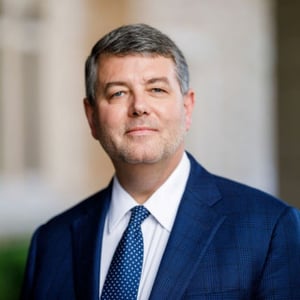
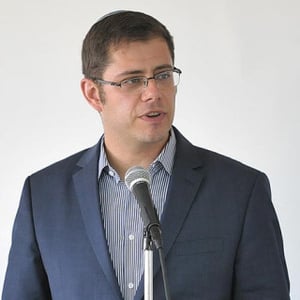
Patrick Hotung Professor of Constitutional Law, Georgetown University Law Center
Biography
Randy Barnett is the Patrick Hotung Professor of Constitutional Law at Georgetown University Law Center. He has argued before the United States Supreme Court, tried murder cases to juries as a prosecutor in Chicago, and appeared as a prosecutor in the feature film Inalienable. He is the author of numerous books, including Restoring the Lost Constitution, The Structure of Liberty, Our Republican Constitution, and The Original Meaning of the Fourteenth Amendment. He has published two memoirs, A Life for Liberty: The Making of an American Originalist, and Felony Review: Tales of True Crime and Corruption in Chicago. He is currently working on a new book, Freedom and Flourishing: Libertarianism for the Real World.
Professor of Law, Case Western Reserve University School of Law
Biography
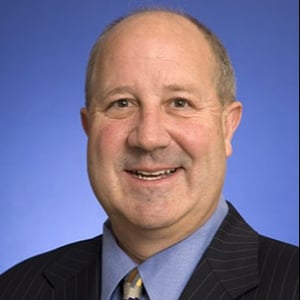
Professor Dent taught law at New York University, Cardozo, and the New York Law School before joining the faculty in 1990. Earlier he had clerked for Judge Paul R. Hays of the U.S. Court of Appeals, Second Circuit, and practiced corporate law in New York with Debevoise, Plimpton, Lyons & Gates. He teaches Business Associations, Mergers and Acquisitions, and Business Planning and is the faculty supervisor for the Business Organizations Concentration. He has published many articles on corporate and securities law, including “Academics in Wonderland: The Team Production and Director Primacy Models of Corporate Governance,” Houston Law Review (2008); “Corporate Governance: Still Broke, No Fix in Sight,” Journal of Corporation Law (2005); “Lawyers and Trust in Business Alliances,” Business Lawyer (2002); and “Gap Fillers and Fiduciary Duties in Strategic Alliances,” The Business Lawyer (2001). He also writes on law and religion, as in “Civil Rights for Whom: Gay Rights Versus Religious Freedom,” University of Kentucky Law Journal (2006-07); and “How Does Same-Sex Marriage Threaten You?,” Rutgers Law Review (2007). Mr. Dent serves as a director of the National Association of Scholars and as president of the Ohio Association of Scholars. He serves as an officer of Cleveland Chapter of the Federalist Society. He heads the Law Section of the Association for the Study of Free Institutions. He is chairman of the Ohio State Advisory Committee to the U.S. Commission on Civil Rights.
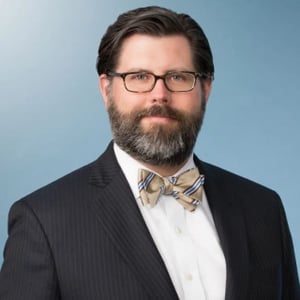
Brian J. Paul is an appellate lawyer and leads law teams in high-stakes commercial litigation. He has briefed and argued everything from weighty abstract constitutional issues to dollars-and-cents business issues and everything in-between, both on appeal and in trial courts around the country. A member of the American Law Institute, recent past-president of the Seventh Circuit Bar Association and top-tier ranked Chambers appellate lawyer, Brian had one client say about him: “Brian is one of the most respected and skilled appellate lawyers, not only in Indianapolis but across the country. He is trusted to deliver timely guidance on complex issues.” Another said: “He is excellent. I enjoyed working with him. He is able to put things into layman’s terms and explains things really well. His written and oral advocacy are short, crisp and to the point.”
Clients hire Brian to digest the complex, and make the complex simple and compelling for busy, generalist judges. In his writing, he strives to cut through jargon and legalese, and distill things down to what’s important. In his oral advocacy, by intense preparation, he strives to be the advocate whom judges trust for the right answers. In the dozens of cases he has argued, Brian has helped clients win on both sides of the “v.” His recent representations include:
AXIS Ins. Co. v. Am. Specialty Ins. & Risk Servs., No. 23-1698, 2024 WL 3665333, ___ F.4th ___ (7th Cir. Aug. 6, 2024). Representing AXIS Insurance Co., Brian obtained a reversal of an adverse summary judgment ruling in a case holding that the parties' indemnification contract neither expressly nor impliedly obligated the indemnitee to tender a defense to the indemnitor before settling claims against the indemnitee.
Circle City Broad. I, LLC v. AT&T Servs., Inc., 99 F.4th 378 (7th Cir. 2024). Representing AT&T Services, Inc., and DirectTV, LLC, Brian successfully defended a favorable summary judgment ruling in a case involving alleged discrimination in contracting under 42 U.S.C. § 1981 holding that the plaintiff failed to demonstrate that a jury could reasonably find that the defendants' decision not to pay broadcast retransmission fees for the rights to carry two Indianapolis-based television stations reflected anything other than lawful business choices responsive to dynamics of the television broadcast market.
Wells v. Freeman Co., 94 F.4th 608 (7th Cir. 2024). Representing The Freeman Company, Brian successfully defended a favorable summary judgment ruling in a Title VII case holding that the plaintiff could not sue for sexual harassment because she was not the company’s employee, but instead an independent contractor.
Mellowitz v. Ball State Univ., 221 N.E.3d 1214 (Ind. 2023). Representing Ball State University, Brian successfully defended the constitutionality of a state law that barred class actions seeking refunds of tuition and fees based on the university’s cancellation of in-person classes due to the COVID-19 pandemic.
Klaassen v. Trustees of Indiana Univ., 7 F.4th 592 (7th Cir. 2021) and Klaassen v. Trustees of Indiana Univ., 24 F.4th 638 (7th Cir. 2022). Representing Indiana University, Brian successfully defended the constitutionality of the school’s COVID vaccine mandate policy.
Nat’l Collegiate Athletic Ass’n v. Finnerty, 191 N.E.3d 211 (Ind. 2022). Representing the NCAA, Brian secured the reversal of a discovery ruling that would have allowed high-ranking executives to be deposed without any consideration of their unique role in the organization.
Westwood One Radio Networks, LLC v. Nat’l Collegiate Athletic Ass’n, 172 N.E.3d 294 (Ind. Ct. App. 2021). Representing the NCAA, Brian successfully beat back a request for an injunction preventing the Association from terminating an exclusive radio broadcast agreement.
Reid Hosp. & Health Care Servs., Inc. v. Conifer Revenue Cycle Sols., LLC, 8 F.4th 642 (7th Cir. 2021). Representing Reid Hospital & Health Care Services, Brian secured the reversal of a summary judgment ruling that denied the hospital the ability to seek tens of millions of dollars in compensation for breach of a revenue collection services contract.
Delgado v. U.S. Dep’t of Just., 979 F.3d 550 (7th Cir. 2020). Representing an agent of the Bureau of Alcohol, Tobacco, Firearms & Explosives, Brian obtained the reversal of an agency decision that declined to force an investigation into whether the agent had been retaliated against and denied promotions, in violation of the Whistleblower Protection Act, for reporting his suspicions that another agent had testified falsely during a federal criminal trial.
River Ridge Dev. Auth. v. Outfront Media, LLC, 146 N.E.3d 906 (Ind. 2020). Representing River Ridge Development Authority, Brian got a reversal of a six-figure attorney’s fees award.
Indiana Off. of Util. Consumer Couns. v. S. Indiana Gas & Elec. Co., 200 N.E.3d 915 (Ind. 2023). Representing the Indiana Energy Association as amicus curiae (friend of the court), Brian helped secure the reversal of a lower appellate court ruling that misinterpreted a statute governing customer credits for excess distributed generation of electricity.
Duke Energy Indiana, LLC v. City of Noblesville, 234 N.E.3d 173 (Ind. 2024). Representing the Indiana Energy Association as amicus curiae, Brian helped secure the reversal of a lower appellate court ruling in a case holding that only the Indiana Utility Regulatory Commission can decide whether a city ordinance implicating a public-utility function is unreasonable.
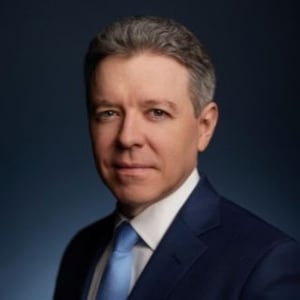
Jonathan F. Mitchell is Principal at Mitchell Law PLLC. He received his law degree with high honors from the University of Chicago Law School, where he was an articles editor of The University of Chicago Law Review and a member of the Order of the Coif.
After graduating from law school, Mr. Mitchell clerked for Judge J. Michael Luttig of the U.S. Court of Appeals for the Fourth Circuit and for Justice Antonin Scalia of the Supreme Court of the United States. He then served as an Attorney-Adviser in the Office of Legal Counsel of the United States Department of Justice from 2003 through 2006. After leaving the Department of Justice, Mr. Mitchell served as a Visiting Researcher at Georgetown University Law Center, a Visiting Assistant Professor at the University of Chicago Law School from 2006 through 2008, and an Assistant Professor of Law at George Mason University from 2008 through 2010.
In 2010, Mr. Mitchell was appointed Solicitor General of Texas, a position he held until January 2015. After leaving the Texas Solicitor General’s office, Mr. Mitchell served as the Searle Visiting Professor of Law at the University of Texas School of Law before joining the Hoover Institution as a Visiting Fellow from 2015 to 2016. Mr. Mitchell also served as a Visiting Professor of Law at Stanford Law School before opening his own law firm in 2018.
Mr. Mitchell has published numerous works of scholarship in top-10 law journals, and he has written articles on textualism, national-security law, criminal law and procedure, judicial review and judicial federalism, and the legality of stare decisis in constitutional adjudication.
Mr. Mitchell has argued eight times before the Supreme Court of the United States, and more than 20 times in the federal courts of appeals. He has also argued before Supreme Court of Texas and in numerous trial courts. Mr. Mitchell has authored the principal merits brief in 11 Supreme Court cases, and has written and submitted more than 20 amicus curiae briefs in the Supreme Court.
Mr. Mitchell devised the novel enforcement mechanism in the Texas Heartbeat Act, also known as Senate Bill 8, which avoids pre-enforcement judicial review by prohibiting government officials from enforcing the statute and empowering private citizens to bring lawsuits against those who violate it. This produced an end-run around Roe v. Wade and allowed Texas and other states to impose pre-viability abortion bans despite the continued existence of Roe.
Senior Resident Scholar, Institute of Government Studies, UC Berkeley
Biography
Steven Hayward is currently senior resident scholar at the Institute of Governmental Studies at UC Berkeley, and a visiting lecturer at Berkeley Law School. He was previously the Ronald Reagan Distinguished Visiting Professor at Pepperdine University’s Graduate School of Public Policy, and was the inaugural visiting scholar in conservative thought and policy at the University of Colorado at Boulder in 2013-14. From 2002 to 2012 he was the F.K Weyerhaeuser Fellow in Law and Economics at the American Enterprise Institute in Washington DC, and has been senior fellow at the Pacific Research Institute in San Francisco since 1991.
He writes frequently for the New York Times, Washington Post, Wall Street Journal, National Review, the Weekly Standard, the Claremont Review of Books, and other publications. The author of six books including a two-volume chronicle of Reagan and his times entitled The Age of Reagan: The Fall of the Old Liberal Order, 1964-1980, and The Age of Reagan: The Conservative Counter-Revolution, 1980-1989, and the Almanac of Environmental Trends. His most recent book is Patriotism is Not Enough: Harry Jaffa, Walter Berns, and the Arguments That Redefined American Conservatism.
John P. Murphy Foundation Professor of Law, Notre Dame Law School
Biography
Barry Cushman came to Notre Dame in 2012 following fifteen years on the faculty at the University of Virginia, where he was the James Monroe Distinguished Professor of Law and Professor of History. Cushman's scholarship examines the relations among constitutional law, political economy, and social reform movements in the late 19th and early 20th centuries. His book, Rethinking the New Deal Court: The Structure of a Constitutional Revolution (Oxford University Press), was awarded the American Historical Association's Littleton-Griswold Prize in American Law and Society. His article, “Court-Packing in Context,” was recognized with the Hughes-Gossett Award from the Supreme Court Historical Society. He has held research fellowships at New York University School of Law and in the Politics Department at Princeton University. In 2003, he was honored with the University of Virginia's All-University Teaching Award.
Before entering teaching, Cushman practiced as an estate planning and probate attorney with the Los Angeles firm of Riordan & McKinzie. He has served on the Board of Directors and the Executive Committee of the American Society for Legal History, on the Board of Directors of the University of Virginia Press, on the Scholar Advisory Board for the National Constitution Center, and on the Indiana State Probate Commission. He currently serves on the editorial board of the Journal of Supreme Court History, on the boards of the Albemarle County Rotary Club and the Albemarle County Rotary Club Foundation, and as Deputy Grand Knight of the Father Justin Cunningham Council of the Knights of Columbus.
Senior Vice President for Legal Studies, Cato Institute
Biography
Clark Neily is senior vice president for legal studies at the Cato Institute. His areas of interest include constitutional law, overcriminalization, civil forfeiture, police accountability, and gun rights. Neily is the author of Terms of Engagement: How Our Courts Should Enforce the Constitution’s Promise of Limited Government. His writing has appeared in the Wall Street Journal, Forbes, and National Review Online, as well as various law reviews, including the Harvard Journal of Law and Public Policy, George Mason Law Review, Georgetown Journal of Law and Public Policy, NYU Journal of Law and Liberty, and Texas Review of Law and Politics. Neily is a frequent guest speaker and lecturer for the Federalist Society, Institute for Humane Studies, and American Constitution Society.
Before joining Cato in 2017, Neily was a senior attorney and constitutional litigator at the Institute for Justice and director of the Institute’s Center for Judicial Engagement. He is also an adjunct professor at the University of Texas School of Law, where he teaches constitutional litigation and public-interest law.
Neily served as co-counsel in District of Columbia v. Heller, the historic case in which the Supreme Court held for the first time that the Second Amendment protects an individual right to own a gun for self-defense.
Neily began his legal career as a law clerk to Judge Royce Lamberth on the U.S. District Court for the District of Columbia. After that he spent four years in the trial department of the Dallas-based firm Thompson & Knight. Neily received his undergraduate and law degrees from the University of Texas, where he was Chief Articles Editor of the Texas Law Review.
Shareholder, Ogletree Deakins Nash Smoak & Stewart P.C.
Biography
Mr. Chapman serves on the Firm’s five-member Board of Directors. He is Board Certified in labor and employment law by the Texas Board of Legal Specialization and represents employers in all areas of labor and employment law, including discrimination, harassment, retaliation, wage and hour, non-competition and non-disclosure covenants, leaves of absence, employment agreements and policies, union campaigns, collective bargaining, unfair labor practices, and workplace safety.
Mr. Chapman has defended clients in over 25 states and the U.S. Virgin Islands, including class and collective actions, and regularly provides counseling to help clients navigate both legal and practical considerations. Representative clients include Dr. Pepper Snapple Group, FedEx Office, Fossil, GameStop, Hertz, Omni Hotels, Raytheon, Texas Instruments, and Valero.
J.D., cum laude, Southern Methodist University School of Law, 1995
B.A., cum laude, (Behavioral Sciences and Political Science) Rice University, 1992
Bill works with a broad range of clients, including trade associations, hospitals and other health care institutions, school districts, transportation and logistics companies and manufacturing companies.
He is a member of Littler Mendelson's Traditional Labor Practice Group and editor of the firm's traditional labor blog, Labor Relations Counsel. He also authored several amicus curiae briefs on behalf of trade associations in cases challenging state laws that allow labor unions to trespass on the private property of employers, including a landmark case now pending at the California Supreme Court.
Mr. Meisburg is a former National Labor Relations Board Member and General Counsel.
Prior to joining Hunton & Williams LLP, Ronald co-chaired the labor-management relations practice at an international law firm. Over the course of his 40-year career, which began with the Office of the Solicitor of the US Department of Labor, Mr. Meisburg has handled matters arising under federal labor and employment law in complex business transactions before federal agencies and courts.
Mr. Meisburg joined the NLRB in 2004, following a recess appointment by President George W. Bush. Two years later, President Bush appointed him to a four-year term as NLRB General Counsel, a position independent from the Board. Serving under the Bush and Obama Administrations as the chief prosecutor under the National Labor Relations Act and chief administrator of the agency’s 32 regional offices, he oversaw a $280 million budget and 1,200 staff.
Ronald has been quoted as a labor law authority by numerous national publications and news organizations, including The New York Times, The Wall Street Journal, The Washington Times, SHRM Online, Associated Press, Corporate Counsel Magazine, Bloomberg, Reuters, Employment Law 360 and BNA. He is a frequent speaker at national conferences sponsored by trade associations, professional groups and educational institutions, including the US Chamber of Commerce, numerous elite law schools and universities around the world, the Council on Labor Law Equality, Committee for a Democratic Workplace, Labor and Employment Research Association, Equal Employment Advisory Council, Human Resources Policy Association, Labor Relations Advisory Committee, National Retail Federation, Retail Leaders Industry Association, Energy and Mineral Law Foundation, American Arbitration Association and numerous bar associations. Mr. Meisburg has also been recognized by Legal500 USA.
Mr. Meisburg is admitted to practice in the United States Courts of Appeals for the Second, Third, Fourth, Fifth, Sixth, Seventh, Ninth and District of Columbia Circuits, and the Supreme Court of the United States.
Professor of Law and Director, Center for the Middle East and International Law, George Mason University Antonin Scalia Law School
Biography
Professor of Law Eugene Kontorovich is one of the world’s preeminent experts on universal jurisdiction and maritime piracy, as well as international law and the Israel-Arab conflict. He is also the Director of Scalia Law School's Center for the Middle East and International Law. Professor Kontorovich joined the Scalia Law School from Northwestern University Pritzker School of Law where he was a Professor of Law from 2011 to 2018 and an Associate Professor from 2007 to 2011. Previously, he was a Visiting Professor at the University of Chicago from 2005 to 2007 and an Assistant Professor at George Mason School of Law from 2003 to 2007.
Professor Kontorovich has published over thirty major scholarly articles and book chapters in leading law reviews and peer-reviewed journals in the United States and Europe, including the American Journal of International Law, International Review of Law & Economics, Stanford Law Review, California Law Review, University of Pennsylvania Law Review, and Virginia Law Review. His scholarship has been cited in leading foreign relations and international law
His expertise is often sought out and quoted by major news organizations such the New York Times, Wall Street Journal, NPR News, The New Yorker, Los Angeles Times, and numerous television and radio programs. Prof. Kontorovich’s popular writings have appeared in the New York Times, Wall Street Journal, Los Angeles Times, POLITICO, Commentary, Haaretz, and numerous other leading publications. He is also a regular contributor to the Washington Post’s Volokh Conspiracy legal blog.
He attended the University of Chicago for college and law school. After law school, he clerked for Judge Richard Posner on the United States Court of Appeals for the Seventh Circuit. He has been honored with a fellowship at the Institute for Advanced Study in Princeton, in 2011-12, and with the Federalist Society’s prestigious Bator Award, given annually to a young scholar (under 40), for outstanding scholarship and teaching.