Judge, United States Court of Appeals, Ninth Circuit
Biography
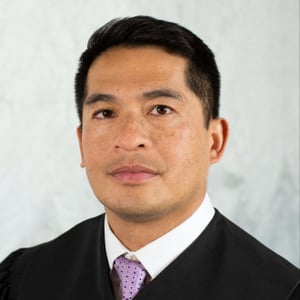
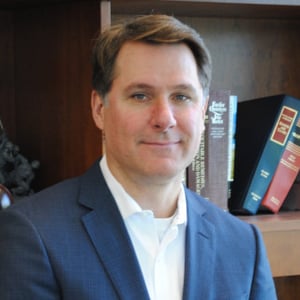
Patrick J. Bumatay was confirmed as a U.S. Circuit Judge for the U.S. Court of Appeals for the Ninth Circuit in December 2019. He is based in San Diego, California.
Prior to his appointment, Judge Bumatay served as an Assistant United States Attorney in the U.S. Attorney’s Office for the Southern District of California, where he was a member of the Appellate and Narcotics Sections. He also served as a Counselor to the Attorney General on criminal law issues, including on national opioid strategy and combating transnational organized crime.
Judge Bumatay has also worked in the Office of the Deputy Attorney General, the Office of the Associate Attorney General, and the Office of Legal Policy at the U.S. Department of Justice. Judge Bumatay has twice received the Attorney General’s Distinguished Service Award.
Judge Bumatay previously worked as an associate at Morvillo, Abramowitz, Grand, Iason, and Bohrer in New York, New York. Judge Bumatay clerked for the Honorable Timothy M. Tymkovich of the U.S. Court of Appeals for the Tenth Circuit and the Honorable Sandra L. Townes of the U.S. District Court for the Eastern District of New York. Judge Bumatay earned his B.A., cum laude, from Yale University and his J.D. from Harvard Law School.
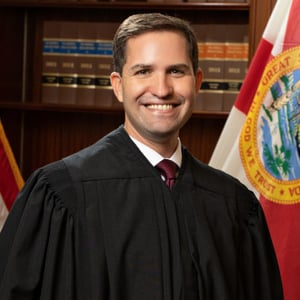
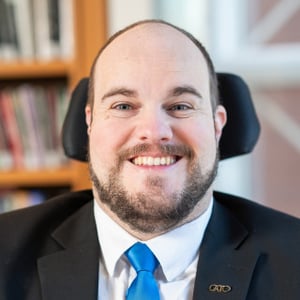
John D. Couriel is the 58th Chief Justice of the State of Florida and the 90th Justice of the Florida Supreme Court. Justice Couriel was born in Miami, Florida in 1978. He is married to Rebecca L. Toonkel, M.D. They have two children.
Justice Couriel received his A.B. magna cum laude from Harvard College in 2000 and his J.D. from Harvard Law School in 2003. He clerked for the Honorable John D. Bates of the United States District Court for the District of Columbia before joining Davis Polk & Wardwell in New York. His practice there included securities offerings, mergers and acquisitions, bankruptcy matters, and investigations. In 2009, he became an Assistant United States Attorney for the Southern District of Florida. He prosecuted hundreds of federal offenses, including international money laundering, public integrity, healthcare fraud, and human trafficking crimes. In 2013, he joined Kobre & Kim LLP, where he specialized in cross-border disputes and investigations relating to financial products and services, asset recovery, and government enforcement defense, with an emphasis on clients in Latin America.
Justice Couriel is a native speaker of Spanish. His parents emigrated from Cuba in the 1960s, his father as one of approximately 14,000 unaccompanied minors welcomed to the United States as part of Operation Pedro Pan.
He was appointed to the Florida Supreme Court by Governor Ron DeSantis on June 1, 2020.
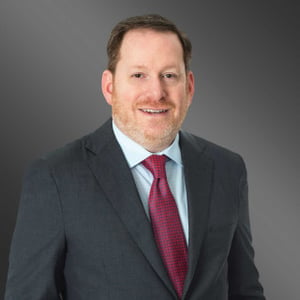
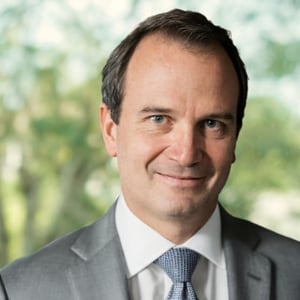
Fred E. Karlinsky is a Shareholder and Chair of Greenberg Traurig’s Global Insurance Regulatory and Transactions Practice Group. He also serves on Greenberg Traurig’s Executive Committee. With more than 30 years of experience, Fred represents the interests of insurers, reinsurers and a broad range of insurance-related entities on complex regulatory and transactional matters. A nationally recognized authority on insurance regulation and compliance, Fred has held leadership positions in numerous industry trade organizations and frequently advises on emerging trends shaping the insurance sector. Under Fred’s leadership, Greenberg Traurig’s Insurance Regulatory and Transactions Practice was named “Legal Services Provider of the Year” by Insurance Insider at the 2024 U.S. Honors Awards and was a finalist for “Legal Team of the Year” at Business Insurance’s 2025 U.S. Insurance Awards.
Fred is consistently recognized as a foremost insurance regulatory attorney. He is the only Band 1 Florida insurance lawyer by Chambers & Partners, earning that distinction for 15 years. His honors include listings in The Best Lawyers in America, Super Lawyers, Florida Trend’s Florida 500, Insurance Business America’s “Hot 100,” Daily Business Review’s “Distinguished Leaders” and Influence Magazine’s “Insurance Lobbyist of the Year.” He has also been named an Insurance Law Trailblazer by The National Law Journal and listed as one of Florida’s 100 Most Influential People in State Politics in multiple consecutive editions of Influence Magazine
In addition to his role with Greenberg Traurig, Fred has been an Adjunct Professor of Law at Florida State University College of Law since 2008 and currently chairs the College of Law’s Board of Visitors. Since 2014 Fred has served on the Florida Supreme Court Judicial Nominating Commission (JNC), where six of the seven sitting Justices of the Florida Supreme Court have been appointed during Fred’s tenure on the JNC. Fred previously chaired the Florida Supreme Court Judicial Nominating Commission from 2022-2025. Fred proudly holds key leadership roles in numerous civic and professional organizations, including the Florida Supreme Court Historical Society, Board of Directors of the World Trade Center Miami, Leadership Florida’s Board of Directors, Board of Directors of the Holocaust Documentation and Education Center, is an active member of the Orange Bowl Committee and was a Board Member of the 2026 College Football Playoff National Championship Host Committee.
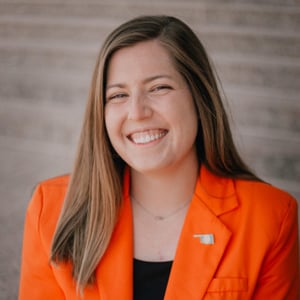
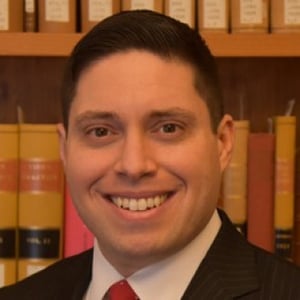
Erin Smith serves as Associate Counsel at First Liberty Institute. Before joining First Liberty, Erin served as Assistant General Counsel for the Oklahoma State Department of Education. She also served as Assistant Attorney General for the Office of the Oklahoma Attorney General in the Criminal Appeals Unit.
Erin graduated summa cum laude from the Oklahoma City University School of Law. During law school, she served as Editor-in-Chief of the Oklahoma City University Law Review, president of the OKC Student Lawyers Chapter of the Federalist Society and vice president of the OCU Christian Legal Society. She externed for the Solicitor General of Oklahoma, and published her note, Almost Only Counts in Horseshoes, Hand Grenades … and Hardison? The 45-year Reign Continues, in the Oklahoma City University Law Review. Erin spent her summers interning at First Liberty Institute and the Office of the Oklahoma Attorney General.
Erin received her bachelor’s degree in Political Science from Oklahoma State University in 2019, graduating summa cum laude.
Vice President of Legal Affairs, Landmark Legal Foundation
Biography
Michael J. O’Neill serves as Vice President for Legal Affairs for Landmark Legal Foundation. He is a graduate of Villanova University and the Catholic University’s Columbus School of Law. He specializes in constitutional and regulatory legal matters and has exposed tax abuse and improper political spending by non-profit groups. He has authored numerous amicus briefs with the U.S. Supreme Court. Mike is licensed to practice law in Virginia and the District of Columbia.
Director, Project on Criminal Justice, Cato Institute
Biography
Matthew Cavedon is the Director of the Cato Institute’s Project on Criminal Justice. He focuses on reforming plea-driven mass adjudication, ensuring police accountability, and defending constitutional criminal originalism. Cavedon’s scholarship has been published (or is forthcoming in) publications including the Arizona State Law Journal, Cato Supreme Court Review, Seattle University Law Review, and Georgetown Journal of Law and Public Policy. Formerly a Georgia public defender and fellow at the Institute for Justice, Cavedon has taught law school courses on criminal law and procedure, as well as the First Amendment. Cavedon clerked for a U.S. district court and the Supreme Court of Georgia. He came to Cato following a fellowship at the Emory University Center for the Study of Law and Religion.
Judge, United States Court of Appeals, Sixth Circuit
Biography
Judge Readler earned his undergraduate and law degrees from the University of Michigan. After graduating, he served as a law clerk to Judge Alan Norris of the United States Court of Appeals for the Sixth Circuit. Judge Readler then began practicing law in the Columbus office of the international law firm Jones Day, eventually spending ten years as a partner in the firm’s Issues and Appeals Practice Group. While at Jones Day, Judge Readler appeared in state and federal trial and appellate courts around the country, most frequently the Supreme Court of Ohio and the Sixth Circuit. Judge Readler also successfully argued before the United States Supreme Court in McQuiggin v. Perkins on behalf of an inmate claiming actual innocence. His other pro bono representations include representing capital defendants before the Tenth Circuit and the Supreme Court of Ohio, as well as representing defendants sentenced to life in prison before the Sixth Circuit. While at Jones Day, Judge Readler traveled to Nairobi with Lawyers Without Borders to train Kenyan lawyers in prosecuting domestic violence cases, and he was also a recipient of the American Marshall Memorial Fellowship awarded by the German Marshall Fund of the United States. Following his career in private practice, Judge Readler served as Acting Assistant Attorney General for the Civil Division of the United States Department of Justice from 2017 to 2019. In that role, Judge Readler led and supervised over 1,000 lawyers in the Department’s largest litigating division, briefing and arguing several cases on behalf of the United States in federal courts across the country, including high-profile cases significant to the Administration and the Department. In March 2019, Judge Readler was confirmed to serve as a Circuit Judge on the Sixth Circuit. He resides in Columbus.
Judge, United States Court of Appeals, Fourth Circuit
Biography
Judge Julius “Jay” Richardson serves on the United States Court of Appeals for the Fourth Circuit. Jay grew up in Barnwell, South Carolina. After graduating from Vanderbilt University, Jay moved to Hawaii and worked at a pool-side bar-and-grill. Jay later earned his law degree from the University of Chicago Law School, where he served as Articles Editor for the Law Review and right fielder for the law school’s championship softball team. Following law school, Jay clerked for Judge Richard A. Posner and for Chief Justice William H. Rehnquist. He then practiced with Kellogg Hansen in Washington, DC before returning to South Carolina as an Assistant United States Attorney. Along with prosecuting violent crime, gangs, terrorism, public corruption, civil rights, and narcotics trafficking, he led the prosecution of Dylann Roof, who was convicted and sentenced to death for his racist massacre of nine Black worshippers during a Bible study at Mother Emanuel AME Church in Charleston. He and his wife Macon are blessed with four daughters.
Professor, Associate Dean for Faculty Research, Catholic University of America, Columbus School of Law
Biography
José Joel Alicea is the inaugural St. Robert Bellarmine Professor of Law, Associate Dean for Faculty Research, and Director of the Law School’s Center for the Constitution and the Catholic Intellectual Tradition. He has also served as a Visiting Professor at Duke Law School and Notre Dame Law School. Prior to joining the Catholic Law faculty, Professor Alicea practiced law for several years at the law firm of Cooper & Kirk, PLLC, where he specialized in constitutional litigation. He previously served as a law clerk for Justice Samuel A. Alito Jr., on the United States Supreme Court and for Judge Diarmuid F. O'Scannlain on the United States Court of Appeals for the Ninth Circuit.
Professor Alicea’s scholarship has focused on constitutional theory. His scholarship has appeared, or is forthcoming, in the Yale Law Journal, the University of Pennsylvania Law Review, the Virginia Law Review, and the Notre Dame Law Review, among other publications. He has also been active in public debates about constitutional law, testifying before Congress and publishing essays in places like The New York Times, City Journal, and National Affairs.
Professor Alicea is a Fellow at the Columbus School of Law's Center for Religious Liberty and a Nonresident Fellow at The American Enterprise Institute. He is the recipient of several research and teaching awards, including the student-selected Professor of the Year teaching award.
Professor, Cleveland State University College of Law
Biography
Professor Christa Laser comes to Cleveland Marshall after nearly a decade of practice experience as an intellectual property litigator at the law firms WilmerHale and Kirkland & Ellis LLP. She has deep expertise in patents, trademarks, copyrights, false advertising, pharmaceutical litigation and regulation, and technology law. She has represented leading life sciences and technology companies in all stages of trial and appellate matters and consulted on legislative changes to intellectual property laws.
Professor Laser's research focuses on intellectual property and innovation. Her patent law scholarship has been cited by numerous scholars, by judges of the U.S. Court of Appeals for the Federal Circuit, and in briefs to the U.S. Supreme Court. Her research envisions an intellectual property system that supports innovation, investment, and competition across all technology areas.
Professor Laser was the World Champion of the Lachs Space Law Moot Court Competition. Prior to law school, she worked as a scientific researcher, where her work studying protein dynamics of photosynthesis using genetically modified bacteria and laser spectroscopy was published in the prestigious journal Science.
PROFESSIONAL EXPERIENCE AND EDUCATION:
Senior Associate, Intellectual Property Litigation, WilmerHale; Associate, Kirkland & Ellis LLP; judicial intern for Chief Judge Randall R. Rader, U.S. Court of Appeals for the Federal Circuit, and Judge Roger W. Titus, U.S. District Court for the District of Maryland; Scientific Researcher, The BioDesign Institute at Arizona State University, Department of BioOptical Nanotechnology.
J.D., The George Washington University Law School (World Champion, International & North American Lachs Space Law Moot Court Competition; Research Assistant, Professor Lawrence Cunningham; Notes Editor, American Intellectual Property Law Association Quarterly Journal); B.S., Arizona State University, Barrett Honors College (Beckman Scholar; Biochemistry Award).
Senior Fellow and Director of Constitutional Studies, Manhattan Institute
Biography
Ilya Shapiro is a senior fellow and director of constitutional studies at the Manhattan Institute and a contributing editor of City Journal. Previously he was executive director and senior lecturer at the Georgetown Center for the Constitution, and before that a vice president of the Cato Institute.
Shapiro has testified many times before Congress and state legislatures and has filed more than 500 amicus curiae “friend of the court” briefs in the Supreme Court. He lectures regularly on behalf of the Federalist Society, is a member of the board of fellows of the Jewish Policy Center, was an inaugural Washington Fellow at the National Review Institute, and has been an adjunct law professor at the George Washington University and University of Mississippi. He is also the chairman of the board of advisers of the Mississippi Justice Institute, a barrister in the Edward Coke Appellate Inn of Court, and a former member of the Virginia Advisory Committee to the U.S. Commission on Civil Rights.
Earlier in his career, Shapiro was a special assistant/adviser to the Multi-National Force in Iraq on rule-of-law issues and practiced at Patton Boggs and Cleary Gottlieb. Before entering private practice, he clerked for Judge E. Grady Jolly of the U.S. Court of Appeals for the Fifth Circuit. He holds an AB from Princeton University, an MSc from the London School of Economics, and a JD from the University of Chicago Law School.