Associate Dean for Academic Advancement and Director, Center for, Seton Hall University School of Law
Biography
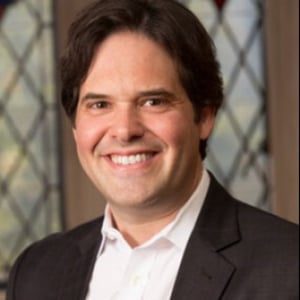
Professor Kathleen Boozang went to Seton Hall in 1990 as the founder of the Law School’s now top-ranked health law program. Professor Boozang teaches a variety of health law courses in person and on-line including the survey health law course, a course on health care fraud in the life sciences industry, and death and dying. In her scholarship, Professor Boozang has dedicated much of her career to nonprofit governance issues with a special focus on religiously sponsored hospitals. In the last several years, however, she has expanded her research and teaching to explore the legal and policy issues related to the global pharmaceutical and medtech industries, many of which make New Jersey their headquarters.
Professor Boozang is a Fellow of The Hastings Center, an independent nonprofit bioethics research institute, as well as a Fellow of the American Bar Foundation, an honorary organization of legal practitioners. She is also a member of the American Law Institute and participates on the consultant group for the Principles of Nonprofit Law. She serves on the Editorial Board of the Journal of Health and Life Sciences Law and is a past editor-in-chief of the Journal of Law, Medicine & Ethics. She is past president of the American Society of Law, Medicine & Ethics and also previously sat on the Advisory Board of the Journal of Health Law. Professor Boozang served for many years on the serves on the Board of Directors of the American Health Lawyers Association, and remains involved in many AHLA projects.
Throughout her legal career, Professor Boozang has been active in public service. She has served on numerous advisory boards and committees for healthcare providers and for the states of New Jersey and New York, including serving as an advisor to the New Jersey Attorney General Task Force on Physician Compensation by Pharmaceutical Companies, which resulted in the promulgation of proposed regulation. She is a former member of the New York State Task Force on Life and the Law, an interdisciplinary commission with a mandate to develop public policy on bioethical issues.
Professor Boozang currently serves on the Board of Trustees of the St. Joseph Healthcare System in New Jersey and the Crisis Standards Committee of the New Jersey Department of Health. Professor Boozang currently serves as the Law School’s Associate Dean for Academic Advancement with responsibility for the Division of Corporate and Foundations, the Center for Health & Pharmaceutical Law & Policy, and the Division of Online Learning. Professor Boozang served as the Vice Provost of Seton Hall University in South Orange, New Jersey in 2010 and 2011. Prior to moving to the university’s main campus, Professor Boozang served for eight years as the Law School’s Associate Dean, and then for two years as the Associate Dean for Academic Advancement, with oversight of two of the Law School’s Centers of Excellence: the Gibbons Institute of Law Science and Technology, and the Center for Health & Pharmaceutical Law & Policy.
In 2013, ASLME conferred upon Professor Boozang the Jay Healy Health Law Teacher Award. Professor Boozang was named the Seton Hall University Woman of the Year in 2006 and the Washington University Law School’s Young Alum of the Year in 2004. She graduated from Washington University School of Law in St. Louis, Missouri, where she was inducted into the Order of the Coif and served as the managing editor of LAW QUARTERLY. She received her LL.M. from Yale Law School in 1990.
Sheila Millar joined Keller and Heckman in 1980. Ms. Millar counsels corporate and association clients on advertising, privacy, product safety, and other public policy and regulatory compliance issues.
Ms. Millar counsels clients on advertising issues, working on policy questions, as well as claims and advertising challenges. She helps clients develop privacy policies, data security and access procedures, manage trans-border data flows and create training programs. She also works with clients to navigate the array of federal and state requirements related to contests and sweepstakes. Ms. Millar has special expertise in all issues related to the sale, advertising and marketing of children's products, and has appeared at Federal Trade Commission (FTC) workshops on advertising literacy and children's privacy.
Ms. Millar counsels clients on risk management and product safety strategies, as well as on compliance with Consumer Product Safety Commission (CPSC) requirements, including new requirements under the Consumer Product Safety Improvements Act (CPSIA), green chemistry and other product safety laws. Ms. Millar's environmental regulatory expertise includes ozone depletion, global warming, clean air matters, energy use and green claims.
Ms. Millar chairs the International Chamber of Commerce (ICC) Marketing and Advertising Commission Working Group on Sustainability and has represented the ICC at international intergovernmental meetings on environmental marketing. She is a frequent speaker at conferences on product safety, advertising law and environmental regulation, and has authored many articles. Ms. Millar is AV® PreeminentTM Rated by Martindale-Hubbell.
George C. Dix Professor in Constitutional Law, Northwestern University Pritzker School of Law
Biography
John O. McGinnis is a graduate of Harvard College and Harvard Law School where he was an editor of the Harvard Law Review. He also has an MA degree from Balliol College, Oxford, in philosophy and theology. Professor McGinnis clerked on the U.S. Court of Appeals for the District of Columbia. From 1987 to 1991, he was deputy assistant attorney general in the Office of Legal Counsel at the Department of Justice. He is the author of Accelerating Democracy: Transforming Government Through Technology (Princeton 2013) and Originalism and the Good Constitution (Harvard 2013) (with M. Rappaport). He is a past winner of the Paul Bator award given by the Federalist Society to an outstanding academic under 40. He has been listed by the United States on the roster of panelists who may be called upon to decide World Trade Organization Disputes.
U.S. Court of Appeals, District of Columbia Circuit (1983-1989); U.S. Solicitor General (1989-1993)
Biography
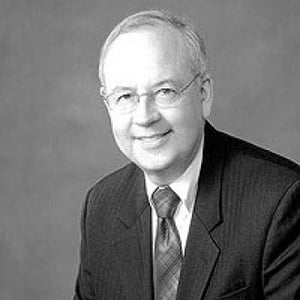
Kenneth Starr is a former United States Federal Court of Appeals Judge, U.S. Solicitor General, and Independent Counsel. He is the former President and Chancellor of Baylor University where he held the Louise L. Morrison Chair of Constitutional Law at Baylor University Law School.
Speaker Information
Mario Loyola
Senior Fellow for Law, Economics, and Technology, The Heritage Foundation; Professor, Florida International University
Biography
Mario Loyola is a Senior Fellow for Law, Economics, and Technology at The Heritage Foundation.
Loyola served in the Trump Administration as Associate Director for Regulatory Reform at the White House Council on Environmental Quality. In that role, he was one of the principal drafters of the One Federal Decision policy, which helped to streamline the permitting and environmental review of large infrastructure projects. While at CEQ, he was a member of the U.S. delegation to the USMCA free trade negotiations with Mexico and Canada, as well as the United Nations conference on biodiversity on the high seas. Loyola initially joined the White House in February 2017 as a Presidential Speechwriter, employing his expertise in many areas of foreign and domestic policy.
After beginning his career in M&A and corporate finance law, Loyola served in the Bush 43 Administration as a special assistant to the Undersecretary of Defense for Policy. He left that position to start writing on national defense issues in magazines such as National Review and The Weekly Standard, reporting from the front lines of the war on terrorism in Lebanon, Israel, and Iraq. He finished the Bush Administration as Foreign and Defense Counsel to the U.S. Senate Republican Policy Committee, then under the chairmanship of Senator Kay Bailey Hutchison of Texas. He subsequently moved to Texas and joined the Texas Public Policy Foundation, where he specialized in energy, environment, and federalism.
Loyola is a frequent contributor to The Wall Street Journal, National Review, and The Atlantic, among others. He teaches environmental and administrative law at Florida International University, where he is Founding Director of the Environmental Finance and Risk Management program in FIU’s prestigious Institute of Environment. He received a bachelor’s degree in European history from the University of Wisconsin–Madison and a J.D. from Washington University School of Law.
Walter E. Meyer Professor of Property and Urban Law, Yale Law School
Biography
David Schleicher is the Walter E. Meyer Professor of Property and Urban Law at Yale Law School and is an expert in local government law, land use, federalism, state and local finance, and urban development. His work has been published widely in academic journals and popular outlets. He recently released a new book, "In a Bad State: Responding to State and Local Fiscal Crises," and has co-authored leading casebooks about local government and property law. Professor Schleicher is also the co-host of the hit podcast, “Digging a Hole: The Legal Theory Podcast.”
Schleicher was previously an Associate Professor of Law at George Mason University School of Law, where he won the university’s Teaching Excellence Award. He has also taught at Georgetown, Harvard, and New York University. He is a 2004 graduate of Harvard Law School. He also holds an MSc in Economics from the London School of Economics and an AB in Economics and Government from Dartmouth College.
Professor of Law, South Texas College of Law Houston
Biography
Josh Blackman is a national thought leader on constitutional law and the United States Supreme Court. Josh’s work was quoted during two presidential impeachment trials. He has testified before Congress and advises federal and state lawmakers. Josh regularly appears on TV, including NBC, CBS, ABC, Fox, and the BBC. Josh is also a frequent guest on NPR and other syndicated radio programs. He has published commentaries in the New York Times, Wall Street Journal, Washington Post, and leading national publications.
Since 2012, Josh has served as a professor at the South Texas College of Law Houston. He holds the Centennial Chair of Constitutional Law. Josh is an Adjunct Fellow at the Manhattan Institute. Josh has written more than seven dozen law review articles that have been cited more than a thousand times. Josh was selected as the Jurist of the Year by the Texas Journal of Law & Public Policy, received the inaugural Meese III Originalism Award, and was awarded the Inaugural Joseph Story Award. Josh was selected by Forbes Magazine for the “30 Under 30” in Law and Policy. Josh is the President of the Harlan Institute, and founded FantasySCOTUS, the Internet’s Premier Supreme Court Fantasy League. He blogs at the Volokh Conspiracyand posts@JoshMBlackman.
Professor of Law, South Texas College of Law Houston
Biography
Josh Blackman is a national thought leader on constitutional law and the United States Supreme Court. Josh’s work was quoted during two presidential impeachment trials. He has testified before Congress and advises federal and state lawmakers. Josh regularly appears on TV, including NBC, CBS, ABC, Fox, and the BBC. Josh is also a frequent guest on NPR and other syndicated radio programs. He has published commentaries in the New York Times, Wall Street Journal, Washington Post, and leading national publications.
Since 2012, Josh has served as a professor at the South Texas College of Law Houston. He holds the Centennial Chair of Constitutional Law. Josh is an Adjunct Fellow at the Manhattan Institute. Josh has written more than seven dozen law review articles that have been cited more than a thousand times. Josh was selected as the Jurist of the Year by the Texas Journal of Law & Public Policy, received the inaugural Meese III Originalism Award, and was awarded the Inaugural Joseph Story Award. Josh was selected by Forbes Magazine for the “30 Under 30” in Law and Policy. Josh is the President of the Harlan Institute, and founded FantasySCOTUS, the Internet’s Premier Supreme Court Fantasy League. He blogs at the Volokh Conspiracyand posts@JoshMBlackman.
Vice President & Senior Counsel, American Bankers Association
Biography
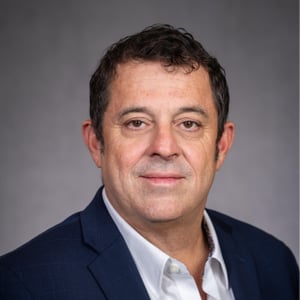
Timothy E. Keehan is Vice President and Senior Counsel at the Center for Securities, Trust and Investments at the American Bankers Association. The Center resides in the ABA’s Financial Institutions Policy and Regulatory Affairs group and is dedicated to assisting member banks with legislation, regulations, and other issues involving securities, trust, and investment activities. Mr. Keehan's areas of focus include trust and asset management, ERISA, and fiduciary and advisory products and services.
Before joining the ABA in January 2011, Mr. Keehan had been a partner in the Financial Regulatory Practice of Latham & Watkins and a partner in the Financial Services Regulatory Practice of Mayer Brown.
Mr. Keehan received his B.A. in Government & Foreign Affairs from the University of Virginia, his M.A. from Reformed Theological Seminary, and his J.D. from the University of Virginia School of Law. He is a member of the District of Columbia bar.
Marcus Stanley is the Policy Director of Americans for Financial Reform. Americans for Financial Reform is the major public interest coalition supporting stronger financial reform. Dr. Stanley has a Ph.D. in public policy from Harvard University, and previously worked as an economic and policy advisor to Senator Barbara Boxer, as a Senior Economist at the U.S. Joint Economic Committee, and as an Assistant Professor of Economics at Case Western Reserve University