Professor of Law, Antonin Scalia Law School, George Mason University
Biography
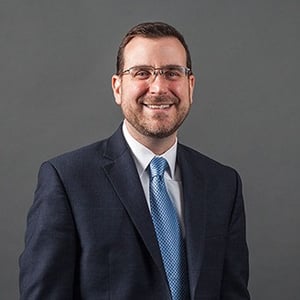
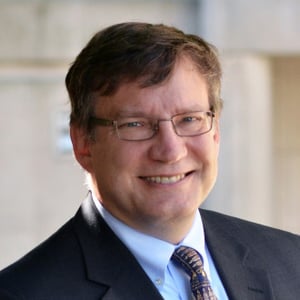
Adam Mossoff is Professor of Law at Antonin Scalia Law School, George Mason University. He has published extensively on why patents, copyrights, and other intellectual property rights have been—and should be—legally secured to innovators and creators as property rights. His scholarship has been relied on by the United States Supreme Court, by lower federal courts, and by U.S. federal agencies. He has been invited to testify numerous times before the U.S. Senate and the House of Representatives on intellectual property legislation. His writings on intellectual property policy have also appeared in the Wall Street Journal, New York Times, Forbes, Investors Business Daily, and in other media outlets. His journal articles can be downloaded here.
Professor Mossoff is a longstanding member of the Executive Committee of the Intellectual Property Practice Group of the Federalist Society, on which he served as Chairperson from 2016-2018, and he is Chair of the Intellectual Property Working Group of the Regulatory Transparency Project of the Federalist Society. He is a Senior Fellow and Chair of the Forum for Intellectual Property at the Hudson Institute, a Visiting Intellectual Property Fellow at the Heritage Foundation, and a member of the Board of Directors of the Center for Intellectual Property Understanding. He is a member of the Intellectual Property Rights Policy Committee of ANSI and he has served as Chair and Vice-Chair of the Intellectual Property Committee of the IEEE-USA, on which he remains a member in good standing.
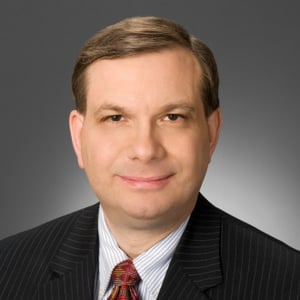
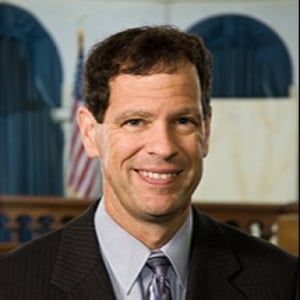
John Fund is National Affairs Columnist for National Review magazine and a on-air analyst on the Fox News Channel. He is considered a notable expert on American politics and the nexus between politics and economics.
He previously served as a columnist and editorial board member for The Wall Street Journal. He is the author of several books, including Who's Counting: Bow Fraudsters and Bureaucrats Put Your Vote At Risk (Encounter Books, 2012); Stealing Elections: How Voter Fraud Threatens Our Democracy (Encounter Books, 2008) and The Dangers of Regulation Through Litigation (ATRA Press, 2008). He worked as a research analyst for the California Legislature in Sacramento before beginning his journalism career as a reporter for the syndicated columnists Rowland Evans and Robert Novak.
Roll Call, the newspaper of Capitol Hill, called him "the Tom Paine of the modern Congressional reform movement." He has won awards from the Institute for Justice, The School Choice Aliance and the Warren Brooks award for journalistic excellence from the American Legislative Exchange Council.
Senior Legal Fellow, Edwin Meese III Institute for the Rule of Law, Advancing American Freedom
Biography
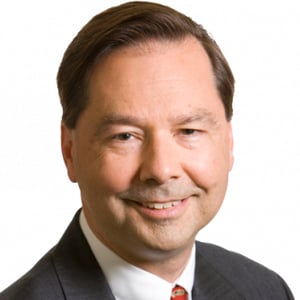
Hans A. von Spakovsky is a leading national expert on a wide range of legal and constitutional issues, including civil rights, elections, the First Amendment, immigration, executive authority, the rule of law, and government reform.
He is the former Senior Legal Fellow and Manager of the Election Law Reform Initiative in the Edwin Meese III Center for Legal & Judicial Studies at The Heritage Foundation.
He is a former member of President Donald Trump’s Advisory Commission on Election Integrity. From 2006 to 2007, von Spakovsky was a member of the Federal Election Commission. He served as Counsel to the Assistant Attorney General for Civil Rights at the U.S. Department of Justice from 2002 to 2005. Prior to entering public service, Hans von Spakovsky worked for 17 years as a government affairs consultant, in a corporate legal department, and in private practice.
He is a 1984 graduate of the Vanderbilt University School of Law and received a B.S. from the Massachusetts Institute of Technology in 1981, which he attended on a National Merit Scholarship. He is Chairman of the Board of Trustees of the Public Interest Legal Foundation.
He is the 2016 winner of the Drs. W. Glenn and Rita Ricardo Campbell Award from the Heritage Foundation and received Meritorious Service Awards from the U.S. Department of Justice in 2003, 2004, and 2005.
von Spakovsky is the coauthor of “Who’s Counting? How Fraudsters and Bureaucrats Put Your Vote at Risk” (Encounter 2012) and “Obama’s Enforcer: Eric Holder’s Justice Department” (HarperCollins/Broadside 2014). His 2011 series “Every Single One” at PJ Media was nominated for a Pulitzer Prize and his articles have appeared in Fox News, National Review Online, and the Wall Street Journal.
Founder and Director, James Wilson Institute on Natural Rights & the American Founding
Biography
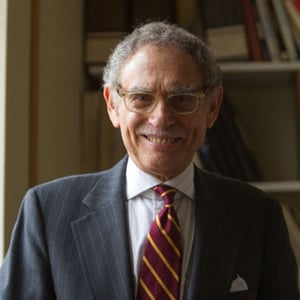
Hadley Arkes joined the faculty of Amherst College in 1966. He became the Edward Ney Professor of Jurisprudence in 1987, and held that chair until he retired officially in July 2015. But he has not retired from writing and speaking. He has carried that teaching into a new phase; he has become the Founder and Director of the James Wilson Institute on Natural Rights and the American Founding in Washington, D.C. He has written eight books, mostly with Princeton and Cambridge University Presss. Among the books at Princeton have been: The Philosopher in the City (1981), First Things (1986), Beyond the Constitution (1990), and The Return of George Sutherland (1994). With Cambridge Press he has done Natural Rights and the Right to Choose (2002), and Constitutional Illusions & Anchoring Truths: The Touchstone of the Natural Law (2010). His most recent book, with Regnery Press is Mere Natural Law (2023) His articles have appeared in professional journals, but apart from his writing in more scholarly formats, he has become known to a wider audience through his writings in the Wall Street Journal, National Review, Civitas and First Things, a journal that took its name from his book of that title.
He was the main advocate, and architect, of the bill that became known as the Born-Alive Infants’ Protection Act. The account of his experience, in moving the bill through Congress, is contained as an epilogue or memoir in his book, Natural Rights & the Right to Choose. Arkes first prepared his proposal as part of the debating kit assembled for the first George Bush in 1988. The purpose of that proposal was to offer the “most modest first step” of all in legislating on abortion, and opening a conversation even with people who called themselves “pro-choice.” Professor Arkes proposed to begin simply by preserving the life of a child who survived an abortion–contrary to the holding of one federal judge, that such a child was not protected by the laws. Professor Arkes led the testimony on the bill before the Judiciary Committee of the U.S. House in July 2000, then again in July 2001. The legislative calendar was upended in the aftermath of September 11th, but in March 2002, the bill was brought to the floor of the House, where it passed unanimously. To the surprise of Professor Arkes, the bill was brought to the floor of the Senate on July 18 by the Deputy Majority Leader, Harry Reid, and passed in the same way. On August 5, President Bush signed the bill into law with Professor Arkes in attendance.
Professor Arkes was the founder, at Amherst, of the Committee for the American Founding, a group of alumni and students seeking to preserve, at Amherst, the doctrines of “natural rights” taught by the American Founders and Lincoln. That interest has been carried over now to the founding of a new center for the jurisprudence of natural law, in Washington, D.C.: the James Wilson Institute on Natural Rights and the American Founding, named for one of the premier minds among the American Founders. Professor Arkes has drawn to this project a cluster of accomplished federal judges who have wanted to get a firmer hold on the natural law, and brought them together with some gifted teachers of philosophy and law. The new institute will be sponsoring lectures and seminars in Washington and other parts of the country. The purpose of this new James Wilson Institute is to teach anew, to lawyers, judges, and students those principles of law that furnished the guide to the American Founders as they set about framing a Constitution. And the hope is to restore, to a new generation, the furnishings of mind of the men who formed this regime.
Leitner Family Professor of International Law and Co-Founder & Co-Director of the Center on Asian Americans & the Law, Fordham University School of Law
Biography
Thomas H. Lee is the Leitner Family Professor of International Law at Fordham, where he teaches civil procedure, constitutional law, federal courts, international law, and the U.S. law of civil-military relations. His meticulously researched and historically-grounded scholarship has argued that the Eleventh Amendment reflected the classical international law principle that only a sovereign state—not its citizens or subjects— has rights against other sovereign states; that the Alien Tort Statute was a national-security peacekeeping statute, not an international human-rights statute, enacted in 1789 when the United States was a militarily weak state; and that the Natural Born Citizen Clause regarding presidential eligibility reflected natural-law principles of membership by descent as well as domestic birthplace. His current research examines the nature of Article III judicial power and the role of the federal courts in American society.
He is Co-Director of the Center on Asian Americans and the Law, Special Counsel at Hughes Hubbard & Reed, and a Member of the American Law Institute. He was Special Counsel to the General Counsel of the U.S. Department of Defense, a Member of the ICSID Panel of Conciliators, Adviser to the Constitutional Court of Korea, and Visiting Professor at Columbia, Harvard, and the University of Virginia law schools, as well as Faculty Director of International and Graduate Studies at Fordham from 2006 to 2019. Before his academic career, Lee clerked for Judge Michael Boudin of the First Circuit and Justice David Souter of the Supreme Court and served as an active-duty U.S. naval cryptology officer, afloat on submarines and surface combatants and ashore in Korea, Japan, and with the National Security Agency. He holds A.B. (summa cum laude), A.M. (Regional Studies—East Asia), and J.D. degrees from Harvard, where he was Articles Chair of the Harvard Law Review and a Ph.D. candidate (ABD) in Government.
Warren Distinguished Professor of Law, University of San Diego School of Law
Biography
Michael D. Ramsey is Warren Distinguished Professor of Law at the University of San Diego School of Law, where he teaches and writes in the areas of Constitutional Law, Foreign Relations Law and International Law. He is the author of The Constitution’s Text in Foreign Affairs (Harvard University Press), co-editor of International Law in the U.S. Supreme Court: Continuity and Change (Cambridge University Press), and co-author of two casebooks, Transnational Law and Practice (2d ed., Aspen) and International Business Transactions: A Problem-Oriented Coursebook (14th ed., West). His scholarly articles have appeared in publications such as the Yale Law Journal, the University of Chicago Law Review, the Georgetown Law Journal and the American Journal of International Law. He received his B.A. magna cum laude from Dartmouth College and his J.D. summa cum laude from Stanford Law School. Prior to teaching, he served as a judicial clerk for Judge J. Clifford Wallace of the United States Court of Appeals for the Ninth Circuit and for Justice Antonin Scalia of the United States Supreme Court, and practiced law with the law firm of Latham & Watkins, where he specialized in international finance and investment. He has taught as a visiting professor at the University of California, San Diego, in the Department of Political Science and at the University of Paris – Sorbonne, in the Department of Comparative Law.
Chairman and Founder, Institute for Free Speech; Josiah H. Blackmore II/Shirley M. Nault Designated Professor of Law, Capital University Law School
Biography
Bradley Smith is one of the nation’s foremost experts on campaign finance and election law, having served as a Commissioner on the Federal Election Commission from 2000 to 2005, including as Vice Chairman of the Commission in 2003 and Chairman in 2004. While serving as FEC Commissioner, the Wall Street Journal dubbed him, “the only honorable man in this bordello.”
His articles on election law have appeared in the Yale Law Journal, the Georgetown Law Journal, the University of Pennsylvania Law Review, and other top journals, and he contributes regularly to popular publications such as The Wall Street Journal and National Review.
In her book on the history of campaign finance reform, "Big Money Unleashed" (Univ. Of Chicago Press 2024), legal historian Ann Southworth writes, "Smith has done more than any other scholar since the 1970s to advance the legal theories that ultimately prevailed in the Roberts Court."
Smith has been the Josiah H. Blackmore II/Shirley M. Nault Professor of Law at Capital University Law School, and has also held appointments at West Virginia University and Princeton University. He is a cum laude graduate of Harvard Law School and Kalamazoo College.
Thomas M. Siebel Senior Fellow, The Hoover Institution, Stanford University; Gary T. Schwartz Distinguished Professor of Law Emeritus, UCLA School of Law
Biography
Eugene Volokh is the Thomas M. Siebel Senior Fellow at the Hoover Institution (Stanford), as well as the Gary T. Schwartz Distinguished Professor of Law Emeritus and Distinguished Research Professor at UCLA School of Law. He recently retired from teaching at UCLA, after 30 years there, and is now focusing on research.
Volokh is the author of the textbooks The First Amendment and Related Statutes (8th ed. 2023), and Academic Legal Writing (5th ed. 2016), as well as over 100 academic law journal articles, mostly on First Amendment law. He is a member of The American Law Institute; the editor-in-chief of the Journal of Free Speech Law; and the creator and coauthor of The Volokh Conspiracy, a leading legal blog founded in 2002 (hosted at the Washington Post from 2014 to 2017 and now at Reason Magazine).