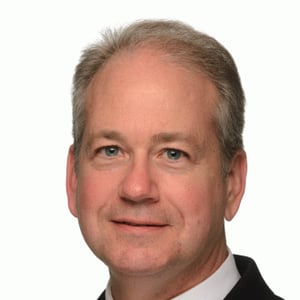
Clarke has a law degree from Valparaiso University School of Law and a B.A. in Political Science from Allegheny College.
Clarke Forsythe is currently Senior Counsel for AUL and author of Abuse of Discretion: The Inside Story of Roe v. Wade. His twenty-seven years of service to AUL includes founding and directing the AUL Project in Law & Bioethics, serving for six years as Vice President and General Counsel, overseeing our nationwide litigation and legislation strategy, and serving as President for ten years.
Mr. Forsythe has argued cases before federal and state courts and has testified before Congress and state legislatures. He is also a prolific writer on pro-life law issues, having published more than 15 law review articles and book chapters, as well as articles in First Things, the Wall Street Journal, and National Review Online. Other leading newspapers that have published his articles or quoted him include The New York Times, USA Today, the Washington Times, the Washington Post, Chicago Tribune, and the Wall Street Journal. Clarke blogs frequently on “The Road to Roe."
In 2006, Mr. Forsythe received an M.A. in Bioethics from Trinity International University. His recent articles include “A Lack of Prudence,” published in Human Life Review; “Protecting Unconscious, Medically-Dependent Persons after Wendland & Schiavo,” published in Constitutional Commentary; “The Tragic Failure of Roe v. Wade: Why Abortion Should be Returned to the States” published in Texas Review of Law and Politics; and most recently, “A Road Map Through the Supreme Court’s Back Alley” published in Villanova Law Review.
His first book, Politics for the Greatest Good: The Case for Prudence in the Public Square, was published by InterVarsity Press in 2009. First Things called it “an essential book for lawmakers and all participants in the ongoing culture wars.”
Professor of Law, Antonin Scalia Law School, George Mason University
Biography
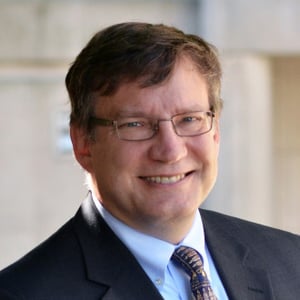
Eric R. Claeys is Professor of Law at the Antonin Scalia Law School, George Mason University. He has written widely in the fields of property, private law, and constitutional law. Professor Claeys’s current research interests focus on flourishing- and labor-based natural rights justifications for property—in American property theory, in intellectual property, and in contemporary regulation of shale gas exploration and hydraulic fracturing. He is a member of the American Law Institute, he serves on the ALI’s Members’ Consultative Group for the first Restatement of Copyright, and he also serves as an adviser to the Restatement (Fourth) of the Law of Property.
Professor Claeys received his JD from the University of Southern California Gould School of Law. He received his AB from Princeton University, and he is a former visiting fellow and current member of Princeton’s Politics Department’s James Madison Program in American Ideals and Institutions. After law school, Professor Claeys clerked for the Hon. Melvin Brunetti, U.S. Court of Appeals for the Ninth Circuit, and the Hon. William H. Rehnquist, Chief Justice of the United States.
Professor Claeys’s main teaching interests include Property, Torts, Jurisprudence, and Intellectual Property. In recent years, he has also taught Water Law, Remedies, Estates and Trusts, Trade Secrecy, Constitutional Law, Torts, and Oil and Gas law. Spring 2018, he is teaching Torts and Jurisprudence as a Visiting Professor at Harvard Law School.
Donald J. Devine (born 1937) is an American political scientist and former government official, who has popularized fusionism as taught by Frank Meyer. He is associated to The Fund for American Studies and The Heritage Foundation. He is also a trustee of the Philadelphia Society.
Devine served as the Office of Personnel Management director of Ronald Reagan's first administration. During his tenure, he helped cut 100,000 federal jobs, and over $6 billion in benefits. He was labeled by The Washington Post as a "terrible swift sword of the civil service", by The New York Times as "the Grinch", and by Federal Times as the "Rasputin of the reduction in force".
Devine taught government and politics at the University of Maryland, and Western civilization at Bellevue University. He has written more than ten libertarian conservative books, and was a contributor to Project 2025.
Partner and Co-Chair, Constitutional and Appellate Law Practice Group, Gibson, Dunn & Crutcher LLP
Biography
Allyson N. Ho is a partner in the Dallas office of Gibson, Dunn & Crutcher LLP and co‐chair of the Firm’s nationwide Appellate and Constitutional Law practice group.
Mrs. Ho is “undoubtedly one of the premier appellate lawyers in the United States” (Chambers). She has presented over 100 oral arguments in federal and state courts nationwide, including multiple high‐stakes cases on behalf of business before the U.S. Supreme Court.
Her most significant winning arguments include a U.S. Supreme Court reversal worth billions of dollars for unionized employers in the Sixth Circuit; a U.S. Supreme Court reversal limiting the power of federal regulators; a multi‐billion dollar environmental win in the Fifth Circuit; a multi‐billion dollar commercial victory for the founder of a technology company in the Appellate Division of the New York Supreme Court; a billion dollar environmental win in the Houston Court of Appeals; a nine‐figure commercial victory in the Corpus Christi Court of Appeals; and a nine‐figure arbitration win in the Fifth Circuit.
Among her numerous accolades, Mrs. Ho is one of only a small group of appellate lawyers nationwide, and the only one in Texas, to be nationally ranked by Chambers every year for the past ten years (2012‐21). She is also one of the few appellate lawyers nationwide to be named to the BTI Client Service All‐Stars List, an honor bestowed by the corporate counsel community for lawyers “who stand above all the others in delivering the absolute best in client service.” She is also routinely named as a leading appellate lawyer by Benchmark, The Best Lawyers in America®, The Legal 500, Texas Super Lawyers, and D Magazine.
Mrs. Ho has received the Gregory S. Coleman Outstanding Appellate Lawyer Award (Texas Bar Foundation, June 22, 2018), been named a “Distinguished Leader” (Texas Lawyer, Sep. 1, 2017) and “Appellate MVP” (Law360, Nov. 23, 2015), and been recognized on the “Appellate Hot List” (National Law Journal, Nov. 16, 2015). In addition, she has been profiled in “Texas Powerhouse” (Law360, Aug. 2, 2021), “Texas Appellate Power Couple” (Texas Lawbook, January 7, 2021), “Litigators of the Week” (The American Lawyer, May 8, 2020), “Litigation Powerhouse” (Law360, Aug. 10, 2016), “Supreme Court Insider” (National Law Journal, July 21, 2016), “Supreme Court Specialists, Mostly Male, Dominated Arguments This Term” (National Law Journal, May 11, 2016), “Attorney of the Year Finalist” (Texas Lawyer, Nov. 2, 2015), “Litigation Department of the Year” (Texas Lawyer, June 1, 2015), “Employment Group of the Year” (Law360, Jan. 13, 2015), “A Supreme Month: Lawyer Credits Preparedness in Ability to Argue Two U.S. High Court Cases in Three Weeks” (Texas Lawyer, Dec. 8, 2014), “High Court Debuts for Two Lawyers” (National Law Journal, Nov. 3, 2014), “Women in Business Awards” (Dallas Business Journal, Aug 29, 2014), “Litigation Departments of the Year” (Texas Lawyer, June 2, 2014), “Winning Women” (Texas Lawyer, Aug. 22, 2011), and “High court practitioners: increasingly diverse” (National Law Journal, June 6, 2011).
Federal and State Appellate Practice
Mrs. Ho has argued a series of high stakes, landmark cases on behalf of the business community before the U.S. Supreme Court. National Law Journal called her a “Veteran SCOTUS Advocate” in the “upper echelons of Supreme Court practice.” Law360 named her a “Supreme Court Star” and “one of the nation’s preeminent appellate lawyers.” And EmpiricalSCOTUS.com ranked her among “the most successful attorneys that currently practice before the Court.” Mrs. Ho once argued two significant business cases before the Court within the span of 21 days—including a “significant ruling for employers” that “paved a new path for companies paying millions of dollars in retiree health care benefits” (Law360), as well as a landmark administrative law dispute in which “several justices agreed with Ho’s contention that SCOTUS should revisit and overrule its own precedent” (Law360). She also prevailed against the EEOC in a case that the employment defense bar called “good news for employers across the country.” And in “the most important patent case in modern history” according to patent law experts, her argument before the Court was credited for “pick[ing] up two votes that pundits thought unreachable.”
She has appeared before every federal court of appeals in the country, including en banc arguments before the Fourth and Sixth Circuits. She has successfully represented business clients in every circuit, including the First (Pruco Life Insurance Company), Second (Swiss Federation; Rite Aid), Third (Johnson & Johnson), Fourth (Genex Services), Fifth (United Space Alliance LLC; Elliott Co.; MERSCORP; 24 Hour Fitness USA, Inc.; Stream Energy; Health Management Systems), Sixth (Deutsche Bank; American Airlines; M&G Polymers), Seventh (Expedia), Eighth (Cotter), Ninth (Boeing; JP Morgan Chase Bank), Tenth (Mitchell International), Eleventh (AstraZeneca), D.C. (FedEx), and Federal (Repros Therapeutics) Circuits.
In addition, Mrs. Ho regularly appears in state appellate courts across the country. She has argued numerous cases in the Texas Supreme Court, Texas appellate courts in Dallas, Houston, San Antonio, Corpus Christi, and Eastland, and state appellate courts in Arizona, Michigan, New York, Ohio, Oklahoma, and West Virginia, prevailing on behalf of Ford Motor Company, PepsiCo, International Paper, Tenet, GameStop, Deutsche Bank, and Unit.
Government and Public Service Experience
Mrs. Ho has a distinguished record of experience at the highest levels of the federal government. She served as Special Assistant to President George W. Bush, Counselor to Attorney General John Ashcroft, and law clerk to Justice Sandra Day O’Connor of the U.S. Supreme Court and Judge Jacques L. Wiener Jr. of the U.S. Court of Appeals for the Fifth Circuit.
Her record of public service also includes appointments to various boards and commissions. Among the most notable are her election as a member of the Administrative Conference of the United States, a trustee of the United States Supreme Court Historical Society, and a trustee of the Texas Supreme Court Historical Society. She is also vice chair of the Federal Judicial Evaluation Committee, appointed by U.S. Senators John Cornyn and Ted Cruz to evaluate potential appointments of all federal judges and U.S. Attorneys in Texas, and has previously served on the U.S. Magistrate Judge Merit Selection Panel for the Northern District of Texas.
Other Background Information
An active pro bono litigator, Mrs. Ho works most frequently with the First Liberty Institute and as amicus counsel for the State and Local Legal Center, the National Organization for Victim Assistance, and the National Crime Victim Law Institute. She is a frequent public speaker and active member of the Federalist Society, the American Law Institute, and the Washington Legal Foundation’s Legal Policy Advisory Board.
Mrs. Ho graduated from Duke University magna cum laude with a B.A. in English, Rice University with an M.A. and Ph.D. in English Literature, and the University of Chicago Law School with high honors. She was a member of the Law Review and Order of the Coif. She and her husband Jim, a federal judge, have a twin daughter and son.
Chairman and Founder, Institute for Free Speech; Josiah H. Blackmore II/Shirley M. Nault Designated Professor of Law, Capital University Law School
Biography
Bradley Smith is one of the nation’s foremost experts on campaign finance and election law, having served as a Commissioner on the Federal Election Commission from 2000 to 2005, including as Vice Chairman of the Commission in 2003 and Chairman in 2004. While serving as FEC Commissioner, the Wall Street Journal dubbed him, “the only honorable man in this bordello.”
His articles on election law have appeared in the Yale Law Journal, the Georgetown Law Journal, the University of Pennsylvania Law Review, and other top journals, and he contributes regularly to popular publications such as The Wall Street Journal and National Review.
In her book on the history of campaign finance reform, "Big Money Unleashed" (Univ. Of Chicago Press 2024), legal historian Ann Southworth writes, "Smith has done more than any other scholar since the 1970s to advance the legal theories that ultimately prevailed in the Roberts Court."
Smith has been the Josiah H. Blackmore II/Shirley M. Nault Professor of Law at Capital University Law School, and has also held appointments at West Virginia University and Princeton University. He is a cum laude graduate of Harvard Law School and Kalamazoo College.
Curtis Dubay is the Chief Economist at the U.S. Chamber of Commerce. He tracks the condition of the economy, analyzes the impact of public policy on economic growth, and runs the Chamber’s Chief Economists Committee. Previously, he was senior economist at the American Bankers Association and a research fellow in tax and economic policy at The Heritage Foundation. He also worked at the accounting firm PricewaterhouseCoopers (PwC) and at the Tax Foundation.
Dubay has researched and published frequently on a wide range of tax and economic issues. He isregularly quoted by the press and has appeared often in the media, including on CNBC, Fox Business, Fox News, and C-SPAN. He has testified before Congress several times and been cited in newspapers such as The Wall Street Journal, The New York Times, The Washington Post, USA Today, and Politico.
Dubay received his master’s degree in economics from the University of Connecticut and his bachelor’s degree in economics and leadership studies from the University of Richmond. He resides in Washington, D.C., with his wife and three sons.
Professor of Law, Georgetown University Law Center
Biography
Nicholas Quinn Rosenkranz teaches constitutional law and federal jurisdiction, and he writes articles for the Harvard Law Review and the Stanford Law Review.
He is currently developing a new theory of constitutional interpretation and judicial review. The first installment, entitledThe Subjects of the Constitution, was published in the Stanford Law Review in May of 2010, and it is among the most downloaded articles about constitutional interpretation, judicial review, and/or federal courts in the history of SSRN. The second installment, The Objects of the Constitution, was published in May of 2011, also in the Stanford Law Review. And the comprehensive version is forthcoming as a book by Oxford University Press.