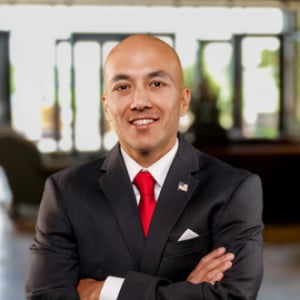
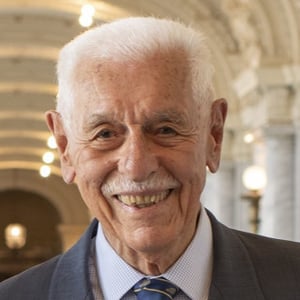
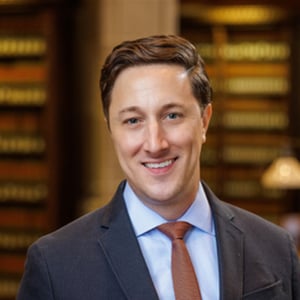
Lecturer in Law, Michigan State University College of Law
Biography
Professor Pucillo comes to Michigan State University College of Law from the University of North Carolina School of Law, where he taught Civil Procedure and Constitutional Law as a visiting professor during the 2009-10 academic year. He spent the previous academic year teaching Administrative Law, Constitutional Law, Constitutional Litigation, and Federal Courts at Tulane University Law School. Prior to those appointments, he served on the faculty of Ave Maria School of Law in Ann Arbor, Michigan, where he was awarded tenure.
Before he began teaching law, Professor Pucillo practiced as a litigation associate in the Washington, D.C., office of Skadden, Arps, Slate, Meagher & Flom. He also completed several judicial clerkships, including one with Judge Ronald Lee Gilman of the U.S. Court of Appeals for the Sixth Circuit.
Professor Pucillo's primary area of scholarly interest is federal jurisdiction and procedure, especially in the appellate realm. His most recent publications have appeared in the Tulane Law Review, the Rutgers Law Review, and the Oklahoma Law Review.
Senior Fellow, Arthur F. Burns Fellow in Financial Policy Studies, American Enterprise Institute
Biography
Peter J. Wallison holds the Arthur F. Burns Chair in Financial Policy Studies and is co-director of AEI’s program on Financial Policy Studies. Prior to joining AEI, he practiced banking, corporate and financial law at Gibson, Dunn & Crutcher in Washington, D.C., and New York. Mr. Wallison has held a number of government positions. From June 1981 to January 1985, he was General Counsel of the United States Treasury Department, where he had a significant role in the development of the Reagan Administration's proposals for deregulation in the financial services industry. During 1986 and 1987, Mr. Wallison was White House counsel to President Ronald Reagan, and between 1972 and 1976, he served first as Special Assistant to New York's Gov. Nelson A. Rockefeller and, subsequently, as counsel to Mr. Rockefeller as vice president of the United States.
Mr. Wallison was admitted to practice before the courts of New York and the District of Columbia, and is retired from practice in New York. He continues to be a member of the District of Columbia Bar Association. He received his undergraduate degree from Harvard College in 1963 and law degree from Harvard Law School in 1966.
Mr. Wallison is the author of Ronald Reagan: The Power of Conviction and the Success of His Presidency, published in December 2002 by Westview Press. On campaign finance, he is the author (with Joel Gora) of Better Parties, Better Government, (AEI Press 2009). On financial or regulatory matters, he is the author of Back From the Brink, a proposal for a private deposit insurance system, and co-author of Nationalizing Mortgage Risk: The Growth of Fannie Mae and Freddie Mac; The GAAP Gap: Corporate Disclosure in the Internet Age; Competitive Equity: A Better Way to Organize Mutual Funds;Bad History, Worse Policy: How a False Narrative about the Financial Crisis Led to the Dodd-Frank Act (AEI Press 2013); and Hidden In Plain Sight: What Caused the World’s Worst Financial Crisis and Why it Could Happen Again (Encounter Books 2015). His most recent book is Judicial Fortitude: The Last Chance to Rein in the Administrative State, published by Encounter Books in October 2018.
He testifies frequently before committees of Congress, and is a frequent contributor to the op-ed pages of the Wall Street Journal and other print and online journals. He has also been a speaker at many conferences on financial services, housing, the causes of the financial crisis, the Dodd-Frank Act, accounting, and corporate governance, and was a member of the Shadow Financial Regulatory Committee between 1995 and 2015. He was a member of the SEC Advisory Committee on Improvements to Financial Reporting (2008), co-Chair of the Pew Financial Reform Task Force (2009), and a member of the congressionally- appointed Financial Crisis Inquiry Commission (2009-2011). In May 2011, for his work in financial policy, Mr. Wallison received an honorary doctorate in Humane Letters from the University of Colorado.
Newton D. Baker/Baker and Hostetler Chair of Law, Capital University Law School
Biography
Mark R. Brown was born in Louisville, Kentucky and graduated from the University of Louisville School of Law (1984). He has a B.S. from the University of Dayton (1981). Following graduation from the University of Louisville, Professor Brown earned his LL.M. at the University of Illinois (1988). He clerked for the Honorable Harry W. Wellford, Judge of the United States Court of Appeals for the Sixth Circuit (1984-1985). Also, he served as a Judicial Fellow at the Supreme Court of the United States (October Term 1993) under the Chief Justice of the United States. Professor Brown currently holds the Newton D. Baker/Baker & Hostetler Chair at Capital University. He has also taught at Stetson University, the University of Illinois, the Ohio State University, and Florida State University.
Senior Legal Fellow, Edwin Meese III Institute for the Rule of Law, Advancing American Freedom
Biography
Hans A. von Spakovsky is a leading national expert on a wide range of legal and constitutional issues, including civil rights, elections, the First Amendment, immigration, executive authority, the rule of law, and government reform.
He is the former Senior Legal Fellow and Manager of the Election Law Reform Initiative in the Edwin Meese III Center for Legal & Judicial Studies at The Heritage Foundation.
He is a former member of President Donald Trump’s Advisory Commission on Election Integrity. From 2006 to 2007, von Spakovsky was a member of the Federal Election Commission. He served as Counsel to the Assistant Attorney General for Civil Rights at the U.S. Department of Justice from 2002 to 2005. Prior to entering public service, Hans von Spakovsky worked for 17 years as a government affairs consultant, in a corporate legal department, and in private practice.
He is a 1984 graduate of the Vanderbilt University School of Law and received a B.S. from the Massachusetts Institute of Technology in 1981, which he attended on a National Merit Scholarship. He is Chairman of the Board of Trustees of the Public Interest Legal Foundation.
He is the 2016 winner of the Drs. W. Glenn and Rita Ricardo Campbell Award from the Heritage Foundation and received Meritorious Service Awards from the U.S. Department of Justice in 2003, 2004, and 2005.
von Spakovsky is the coauthor of “Who’s Counting? How Fraudsters and Bureaucrats Put Your Vote at Risk” (Encounter 2012) and “Obama’s Enforcer: Eric Holder’s Justice Department” (HarperCollins/Broadside 2014). His 2011 series “Every Single One” at PJ Media was nominated for a Pulitzer Prize and his articles have appeared in Fox News, National Review Online, and the Wall Street Journal.
Mike Berry serves as Chief Counsel for United States Senator Ted Cruz. As Chief Counsel for Senator Cruz, Mike provides advice and counsel to the Senator with special emphasis on the Senate’s advice and consent role pertaining to judicial nominations.
Prior to working on the Hill, Mike spent many years in public interest litigation with various non-profits. Mike served for seven years as an attorney with the U.S. Marine Corps, leaving active duty in 2013. Among his numerous positions within the Marine Corps, Mike deployed to Afghanistan in 2008 and he served as an Adjunct Professor of Law at the United States Naval Academy. Mr. Berry continues to proudly serve our nation as a member of the Marine Corps Reserve.
Mr. Berry earned his bachelor’s degree from Texas A&M University, and he earned his law degree from The Ohio State University.
Judge, United States Court of Appeals, Ninth Circuit
Biography
Judge Carlos Bea serves as a judge on the United States Court of Appeals for the Ninth Circuit. He received his Bachelor's Degree from Stanford University in 1956 and his J.D. from Stanford Law School in 1958. Judge Bea was born in San Sebastian, Spain, and immigrated with his family to Cuba in 1939. In 1952, he represented Cuba on the Cuban National basketball team in the Helsinki Olympics. Judge Bea became a naturalized citizen of the United States in 1958. He engaged in private practice in San Francisco, principally in the area of civil trials (jury and non-jury), from 1959-75 at Dunne, Phelps & Mills and from 1975-90 at Carlos Bea, A Law Corporation. He taught courses in civil litigation advocacy at Hastings College of Law and Stanford Law School. From 1990 to 2003, Judge Bea served as a judge of the San Francisco Superior Court. He was nominated by President George W. Bush to the United States Court of Appeals for the Ninth Circuit and was confirmed in 2003.
Judge Bea and his wife Louise reside in San Francisco, where they raised their four sons, Sebastian, Alexander, Nicholas, and Dominic.
Professor of Law, South Texas College of Law Houston
Biography
Josh Blackman is a national thought leader on constitutional law and the United States Supreme Court. Josh’s work was quoted during two presidential impeachment trials. He has testified before Congress and advises federal and state lawmakers. Josh regularly appears on TV, including NBC, CBS, ABC, Fox, and the BBC. Josh is also a frequent guest on NPR and other syndicated radio programs. He has published commentaries in the New York Times, Wall Street Journal, Washington Post, and leading national publications.
Since 2012, Josh has served as a professor at the South Texas College of Law Houston. He holds the Centennial Chair of Constitutional Law. Josh is an Adjunct Fellow at the Manhattan Institute. Josh has written more than seven dozen law review articles that have been cited more than a thousand times. Josh was selected as the Jurist of the Year by the Texas Journal of Law & Public Policy, received the inaugural Meese III Originalism Award, and was awarded the Inaugural Joseph Story Award. Josh was selected by Forbes Magazine for the “30 Under 30” in Law and Policy. Josh is the President of the Harlan Institute, and founded FantasySCOTUS, the Internet’s Premier Supreme Court Fantasy League. He blogs at the Volokh Conspiracyand posts@JoshMBlackman.
Senior Fellow and Director of Constitutional Studies, Manhattan Institute
Biography
Ilya Shapiro is a senior fellow and director of constitutional studies at the Manhattan Institute and a contributing editor of City Journal. Previously he was executive director and senior lecturer at the Georgetown Center for the Constitution, and before that a vice president of the Cato Institute.
Shapiro has testified many times before Congress and state legislatures and has filed more than 500 amicus curiae “friend of the court” briefs in the Supreme Court. He lectures regularly on behalf of the Federalist Society, is a member of the board of fellows of the Jewish Policy Center, was an inaugural Washington Fellow at the National Review Institute, and has been an adjunct law professor at the George Washington University and University of Mississippi. He is also the chairman of the board of advisers of the Mississippi Justice Institute, a barrister in the Edward Coke Appellate Inn of Court, and a former member of the Virginia Advisory Committee to the U.S. Commission on Civil Rights.
Earlier in his career, Shapiro was a special assistant/adviser to the Multi-National Force in Iraq on rule-of-law issues and practiced at Patton Boggs and Cleary Gottlieb. Before entering private practice, he clerked for Judge E. Grady Jolly of the U.S. Court of Appeals for the Fifth Circuit. He holds an AB from Princeton University, an MSc from the London School of Economics, and a JD from the University of Chicago Law School.
Professor Derek Muller is a nationally-recognized scholar in the field of election law. His research focuses on the role of states in the administration of federal elections, the constitutional contours of voting rights and election administration, the limits of judicial power in the domain of elections, and the Electoral College.
He has published more than two dozen academic works, and his op-eds have appeared in the New York Times, the Los Angeles Times, and the Wall Street Journal. He has testified before Congress, and he is a contributor at the Election Law Blog. He is a co-author on a Federal Courts casebook published by Carolina Academic Press. He is also the co-reporter on a new Restatement of the Law, Election Litigation, an effort led by the American Law Institute.
Professor Muller teaches Election Law, Civil Procedure, and Evidence.