Associate Professor of Law, University of Florida Levin College of Law
Biography
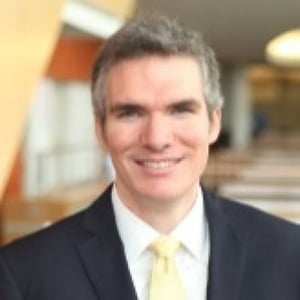
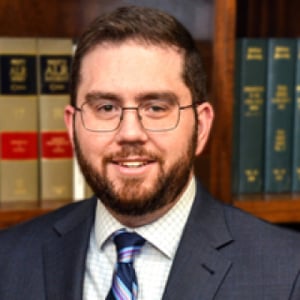
Professor Ben Johnson is an Associate Professor of Law at the University of Florida Levin College of Law. He researches and writes on governance by committees. Sometimes, the governing committee is a board of directors. Other times, it is a committee of justices at the Supreme Court. His research has won awards from national organizations in law (AALS) and political science (APSA) and can be found in law reviews and peer reviewed outlets. His recent work on the Supreme Court has been published in the Columbia Law Review and Alabama Law Review. Earlier work on district judges with financial conflicts (published in the North Carolina Law Review) led to a large exposé in the Wall Street Journal. His game theoretic model of corporate fiduciary duties is forthcoming at the BYU Law Review. He has ongoing projects on the Supreme Court’s Shadow Docket, corporate fiduciary duties, shareholder voting, and machine learning.
Professor Johnson teaches Corporations (the only course in the curriculum where students learn to build and maintain institutions that can make the world a better place long after they are gone), Empirical Methods for Lawyers, and topics on the federal judiciary.
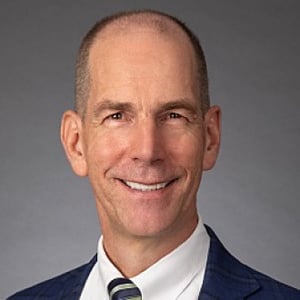
As an associate director at the President’s Council on Environmental Quality (CEQ), Edward (Ted) Boling served as the country’s top National Environmental Policy Act (NEPA) attorney. He currently advises clients on the development of renewable energy, resource development, transportation, and infrastructure, drawing on over 30 years of high-level public service.
Ted served in the U.S. Department of the Interior (DOI), CEQ, and the U.S. Department of Justice (DOJ) in both Democratic and Republican administrations. His experience includes deep involvement in federal infrastructure issues, as well as leadership of the first comprehensive revision of CEQ’s NEPA regulations in 40 years.
Ted’s work at CEQ also included the National Ocean Policy, CEQ’s climate change guidance, and the regulatory response to the Deepwater Horizon disaster. He drafted NEPA guidance on mitigation and monitoring, cumulative impacts analysis, and the development categorical exclusions from detailed NEPA documentation. Ted advised on the establishment of numerous national monuments, including the first marine national monuments in the United States and the largest marine protected areas in the world. He also assisted in briefing three U.S. Supreme Court cases.
At DOI, Ted handled matters involving energy development on the outer continental shelf, including offshore wind power development, and the fast track for solar and wind energy projects on public lands. He has provided legal and policy advice on environmental issues concerning the Federal Columbia River Power System and the California Central Valley Project.
At DOJ, in the first 10 years of his career, Ted litigated significant cases involving NEPA, endangered species, marine mammals, wetland protections, and public lands. He was involved in litigation concerning the Northwest Forest Plan, National Forest management decisions, and Federal Transit Administration decisions in New England.
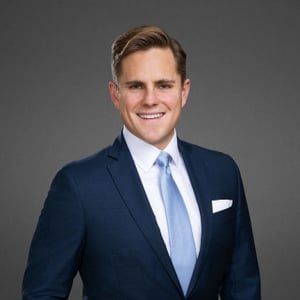
Garrett Kral serves as Deputy General Counsel at U.S. EPA. Prior to that, Garrett practiced environmental law at DLA Piper and clerked on the U.S. District Court for the Middle District of Florida.
Speaker Information
Mario Loyola
Senior Fellow for Law, Economics, and Technology, The Heritage Foundation; Professor, Florida International University
Biography
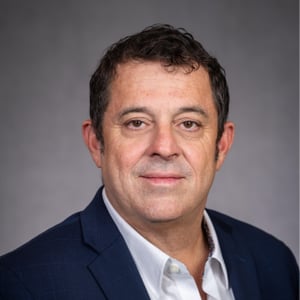
Mario Loyola is a Senior Fellow for Law, Economics, and Technology at The Heritage Foundation.
Loyola served in the Trump Administration as Associate Director for Regulatory Reform at the White House Council on Environmental Quality. In that role, he was one of the principal drafters of the One Federal Decision policy, which helped to streamline the permitting and environmental review of large infrastructure projects. While at CEQ, he was a member of the U.S. delegation to the USMCA free trade negotiations with Mexico and Canada, as well as the United Nations conference on biodiversity on the high seas. Loyola initially joined the White House in February 2017 as a Presidential Speechwriter, employing his expertise in many areas of foreign and domestic policy.
After beginning his career in M&A and corporate finance law, Loyola served in the Bush 43 Administration as a special assistant to the Undersecretary of Defense for Policy. He left that position to start writing on national defense issues in magazines such as National Review and The Weekly Standard, reporting from the front lines of the war on terrorism in Lebanon, Israel, and Iraq. He finished the Bush Administration as Foreign and Defense Counsel to the U.S. Senate Republican Policy Committee, then under the chairmanship of Senator Kay Bailey Hutchison of Texas. He subsequently moved to Texas and joined the Texas Public Policy Foundation, where he specialized in energy, environment, and federalism.
Loyola is a frequent contributor to The Wall Street Journal, National Review, and The Atlantic, among others. He teaches environmental and administrative law at Florida International University, where he is Founding Director of the Environmental Finance and Risk Management program in FIU’s prestigious Institute of Environment. He received a bachelor’s degree in European history from the University of Wisconsin–Madison and a J.D. from Washington University School of Law.
Director of the Legal Writing Center, Liberty University
Biography
Andrew P. Connors serves as the Director of the Legal Writing Center and Director of the Intellectual Property Clinic at Liberty University School of Law, where he teaches classes including trademarks, intellectual property, and mediation. He is a Virginia attorney and a former partner at Connors & Brenke. He still represents clients through his firm, Darkhorse Law, where he focuses principally on disputes involving intellectual property, technology law, and business contracts.
As a litigator, he has represented clients in all state trial courts in Virginia, the U.S. District Court for the Western District of Virginia, the Court of Appeals of Virginia, including the full Court of Appeals sitting en banc, and the Supreme Court of Virginia. He has handled cases involving all kinds of intellectual property matters, including trademark, trade secret, patent, and copyright suits or potential suits. His business counseling practice focuses on business formation, intellectual property protection, intellectual property licensing, and contract drafting, including technology-related contract and licensing agreements.
He speaks regularly to various groups about intellectual property law, contract law, and business litigation issues. Before entering private practice, Mr. Connors served as a law clerk for two years to the Honorable William G. Petty at the Court of Appeals of Virginia. In law school, he was a Managing Editor of the Liberty University Law Review and won several moot court awards.
Super Lawyers magazine has named Mr. Connors a “Rising Star” in Virginia from 2013–2020 for Intellectual Property, Appeals, and Business Litigation. Virginia Business magazine named Mr. Connors as part of its “Legal Elite” for Intellectual Property for 2017 and 2019. He is a member of the Board of Governors of the Virginia State Bar Litigation Section and a Barrister with the Ted Dalton Inns of Court in Roanoke.
Robert G. Storey Distinguished Faculty Fellow; Associate Professor of Law Co-Director, Tsai Center for Law, Science and Innovation, SMU Dedman School of Law
Biography
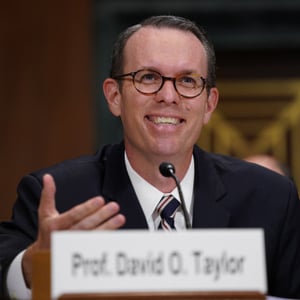
David O. Taylor is an Associate Professor at the SMU Dedman School of Law in Dallas, Texas. He also founded and currently serves as a Co-Director of the school’s Tsai Center for Law, Science and Innovation.
Professor Taylor earned his bachelor of science, magna cum laude, in mechanical engineering from Texas A&M University and his juris doctor, cum laude, from Harvard Law School. Prior to law school, Professor Taylor worked as an applications engineer at National Instruments Corporation in Austin, Texas. While in law school, he served as an extern for the U.S. Attorney’s Office in Boston, as a member of both the Harvard Journal of Law & Technology and the Harvard Journal of Law & Public Policy, and as President of the law school's Texas Club.
After graduating from law school, Professor Taylor clerked for the current Chief Judge of the U.S. Court of Appeals for the Federal Circuit, the Honorable Sharon Prost. Professor Taylor also worked for seven years at the law firm of Baker Botts LLP in its Dallas office. While at Baker Botts, Professor Taylor engaged in patent litigation in various district courts and at the U.S. Court of Appeals for the Federal Circuit. His litigation experience includes both bench and jury trials. A registered patent attorney, he also gained significant experience in the fields of intellectual property licensing and patent prosecution. During his time in practice he assisted with several advanced patent law courses at SMU Dedman School of Law, including Patent Litigation, Intellectual Property Licensing, and Patent Prosecution, and successfully represented clients in pro bono matters, including before the U.S. Court of Veterans Appeals.
At SMU, Professor Taylor teaches in the areas of contracts and patent law. His scholarship focuses on patent law, patent policy, patent litigation, and civil procedure. Professor Taylor has published articles in various journals, including the Connecticut Law Review, Georgia Law Review, New York University Law Review, and in an assortment of intellectual property specialty journals. His publications have been cited by the U.S. Court of Appeals for the Federal Circuit and various district courts.
A frequent speaker, he has made academic presentations at law schools across the United States, including Boston College, California Berkeley, Cardozo, Chicago-Kent, DePaul, Houston, Kansas, San Diego, Stanford, and Texas, and internationally in Chongqing, China; Ho Chi Minh City, Vietnam; and Taipei, Taiwan. He also is a regular speaker at various continuing legal education (CLE) events, including events sponsored by the Dallas Bar Association, the Eastern District of Texas Bar Association, the Center for American and International Law, and the Federalist Society for Law and Public Policy Studies.
In addition to these activities, Professor Taylor has organized numerous symposia and conferences, helped launch SMU’s Patent and Trademark Clinics, and helped draft the proposal to secure the funding to launch the Tsai Center for Law, Science and Innovation. He serves on several law school committees and is an advisor to both the SMU Science and Technology Law Review and The International Lawyer. Professor Taylor also serves as an advisor to the law school's chapter of the Federalist Society, which regularly hosts speakers addressing hot topics in the field of constitutional law. SMU granted Professor Taylor tenure in 2016.
Professor Taylor serves in various leadership positions. He is a member of the Advisory Council for the U.S. Court of Appeals for the Federal Circuit. He serves on the Executive Board of the Institute for Law and Technology at the Center for American and International Law. He also is currently the Reporter for the Patentable Subject Matter Task Force of the American Intellectual Property Law Association (AIPLA), and he serves as a member of the AIPLA's Amicus Committee. He is a Director of the Intellectual Property Law Section of the Dallas Bar Association (DBA), and he previously served as the Chair of the Computer Law Section of the DBA. In addition to these leadership activities, Professor Taylor has served as an expert and consultant in various intellectual property disputes.
He has received several accolades. Professor Taylor is the recipient of a Thomas Edison Innovation Fellowship from the Center for the Protection of Intellectual Property at the George Mason University Antonin Scalia Law School. He has also been named a founding Barrister of the Honorable Barbara M.G. Lynn American Inn of Court, an Honorary Barrister of the SMU Dedman School of Law Board of Advocates, and an Outstanding Graduate of the Irving Independent School District. In addition to these awards, he has received numerous research and course development grants.
Outside of his work at the law school and the field of intellectual property law, Professor Taylor has engaged in public service with diverse groups including Advocates for Community Transformation, Texas Scottish Rite Hospital for Children, and the Veterans Consortium Pro Bono Program.
Professor Taylor is married. Together with his wife Rachel, he enjoys spending time with his three children: Caroline, Emily, and Joshua.
Associate Dean for Faculty and Intellectual Life, Ohio State University Moritz College of Law
Biography
Ric Simmons is the Associate Dean for Faculty and Intellectual Life and the Jacob E. Davis and Jacob E. Davis II Chair in Law at Moritz. He teaches Evidence, Criminal Law, Criminal Procedure, and Computer Crime and Surveillance.
An accomplished legal scholar, Professor Simmons’ research focuses on the intersection of the Fourth Amendment and new technology. He has written about the use of big data in the criminal justice system, searches of cell phones and other electronic devices, and hyper-intrusive surveillance devices. He has also written about the privatization of the criminal justice system and the role of the prosecutor. Professor Simmons is the author of Smart Surveillance: How to Interpret the Fourth Amendment in the Twenty-First Century (Cambridge Press 2019), and Private Criminal Justice: How Private Parties are Enforcing Criminal Law and Transforming Our Justice System (2023), and he has co-authored four casebooks and two hornbooks. His scholarship has also appeared in leading legal journals, including the Duke Law Journal, the Boston University Law Review, and the George Washington Law Review.
Before coming to Moritz, Simmons was an acting assistant professor at New York University School of Law. Before that, he clerked for the Honorable Laughlin E. Waters of the Central District of California and then served for four years as an assistant district attorney for New York County.
Professor Simmons is a national expert on the grand jury and served on the Ohio Supreme Court’s Grand Jury Task Force. He has also been a recipient of the Ohio State University Alumni Award for Distinguished Teaching and has won the Morgan E. Shipman Outstanding Professor Award six times.
Allison Daniel is an attorney at Pacific Legal Foundation, focusing on cases in which she can help restore the separation of powers between the branches of government and prevent federal agencies from creating laws through regulatory action. Her commitment to liberty began with an interest in politics and philosophy in high school and college. She was particularly inspired by Ron Paul and the works of Friedrich Hayek, Murray Rothbard, and Ayn Rand.
She received her law degree from the Florida State University College of Law, where she served as president of the Federalist Society chapter. She worked as a law clerk for Pacific Legal Foundation in the Sacramento office during her 1L summer. After law school, she joined the Institute for Justice as a staff attorney in the Florida office, where she defended the economic liberty and property rights of clients. Family commitments then led her to Ohio, where she clerked at the Ohio Court of Appeals and served as legal counsel to all statewide elected officeholders at the Ohio Attorney General’s Office.
She resides in Southwest Ohio with her husband and their four young children.
Vice President and Deputy Chief Counsel, U.S. Chamber Litigation Center, U.S. Chamber of Commerce
Biography
Jennifer B. Dickey is vice president and deputy chief counsel at the U.S. Chamber Litigation Center, the litigation arm of the U.S. Chamber of Commerce. Dickey handles a variety of litigation matters for the Chamber.
Dickey joined the Chamber following her service as Acting Assistant Attorney General and Principal Deputy Assistant Attorney General in the Civil Division at the U.S. Department of Justice. She also previously served as Deputy Associate Attorney General, providing strategic oversight of the Civil Division, Civil Rights Division, and Foreign Claims Settlement Commission, as well as Special Assistant to the President and Associate Counsel to the President. In the latter capacity, she provided legal advice on a wide array of executive actions and rulemakings, civil litigation, and judicial nominations.
Dickey also practiced law at Kirkland & Ellis LLP before her government service. She was a commercial and appellate litigator, representing businesses in federal and state courts.
Earlier in her career, Dickey served as a law clerk for the Honorable Clarence Thomas of the Supreme Court of the United States and the Honorable William H. Pryor Jr. of the United States Court of Appeals for the Eleventh Circuit.
Dickey earned her law degree magna cum laude from Duke University School of Law, where she was an Executive Editor of the Duke Law Journal, and her undergraduate degree magna cum laude from Dartmouth College.
Elizabeth A. Kiernan is a senior associate in the Appellate and Constitutional Law Practice Group at Gibson, Dunn & Crutcher, representing clients in their most consequential, high-stakes, and time-sensitive matters. Elizabeth specializes in appellate advocacy and sophisticated briefing. She has successfully argued before the Fifth Circuit and Texas Supreme Court and has supported arguments in various courts, including the U.S. Supreme Court and courts across the country.
Elizabeth’s most significant victories include obtaining and preserving at the Texas Supreme Court writs of mandamus directing dismissal of billions of dollars in personal injury and property damage claims across a 200-case, 20,000-plaintiff MDL; securing a landmark U.S. Supreme Court victory allowing an insurer responsible for millions of dollars in bankruptcy claims to be heard on objections to its insureds’ plan of reorganization; and persuading a unanimous Fifth Circuit panel to uphold dismissal of over $12 million in contractual and tort claims.
Chambers and Partners recently named Elizabeth an “Associate to Watch” for Litigation: Appellate (Texas), and she has been recognized as an Appellate “Rising Star” by Thomson Reuters’s Texas Super Lawyers magazine.
Prior to joining Gibson Dunn, Elizabeth earned her B.A. summa cum laude from the University of Alabama and her J.D. with Honors from the University of Chicago Law School. She served as a law clerk to the Honorable Jerry E. Smith of the U.S. Court of Appeals for the Fifth Circuit and the Honorable William H. Pryor Jr. of the U.S. Court of Appeals for the Eleventh Circuit. She also served as Special Counsel to U.S. Senator Josh Hawley for the confirmation of Justice Amy Coney Barrett.
Morgan Ratner is an experienced appellate advocate and legal-issues specialist who handles the most important cases around the country. She has argued ten cases before the U.S. Supreme Court, where she has had remarkable success at both the certiorari and merits stages.
Morgan regularly briefs and argues appeals and dispositive motions; provides strategic guidance for trial and administrative proceedings; and counsels clients confronting high-stakes legal issues. She has had particular success helping clients navigate—and, when appropriate, challenge—federal regulations. In the last 18 months, she has twice been named The American Lawyer’s “Litigator of the Week” (and her matters have been named three times more), including for prevailing in a landmark Delaware corporate-governance dispute and striking down the FCC’s net-neutrality rules. The American Lawyer named her the 2024 “Young Lawyer of the Year — Litigation”, and Law360 recently profiled her as one of “12 Lawyers Who Are The Future Of The Supreme Court Bar.”
Morgan served for more than four years in the Office of the Solicitor General at the U.S. Department of Justice, where she argued securities regulation, bankruptcy, employment, and intellectual property cases before the U.S. Supreme Court. During her tenure, she also filed more than 150 Supreme Court briefs at the merits and certiorari stages and received a John Marshall Award, DOJ’s highest award offered to lawyers for exceptional service to the Office of the Solicitor General and DOJ.
After graduating Harvard Law School—where she was awarded the Fay Diploma as the top student in her class—Morgan clerked for Chief Justice John G. Roberts, Jr. of the U.S. Supreme Court and then-Judge Brett M. Kavanaugh of the U.S. Court of Appeals for the D.C. Circuit. She is a member of the Edward Coke Appellate Inn of Court, a volunteer with Street Law, Inc., and a trustee of the Supreme Court Historical Society.
Counsel to the Assistant Attorney General, Civil Division, U.S. Department of Justice
Biography
Sarah Welch is an associate in the Firm's Issues & Appeals Practice based in the Cleveland Office of Jones Day.
Ms. Welch's practice focuses on appellate advocacy and significant motions. Before joining Jones Day, she served as a law clerk to the Associate Justice Brett M. Kavanaugh of the Supreme Court of the United States, the Honorable William H. Pryor Jr. of the U.S. Court of Appeals for the Eleventh Circuit, and the Honorable Jeffrey S. Sutton of the U.S. Court of Appeals for the Sixth Circuit.
During law school, Ms. Welch participated in briefing cases before the Supreme Court and federal courts of appeals through The University of Chicago Law School's Supreme Court and appellate clinic, as well as through internships with the Ohio and United States solicitors general. She volunteers on the case committee for Ohio's high school mock trial competition.
Lou Capozzi is the Solicitor General of Missouri. In that role, he oversees all appeals for the State of Missouri. He is also the Director of Special Litigation and litigates high-stakes cases at trial.
Lou previously worked at Jones Day, where he specialized in administrative and election law. At Jones Day, he helped lead a six-week bench trial in federal court, during which he cross-examined important expert and fact witnesses, delivered closing argument, asserted evidentiary objections, and argued several motions, including a motion for a directed verdict. He has also authored briefs at all phases of litigation--from evidentiary motions to dispositive motions and appeals.
Lou is also Lecturer in Law at the University of Pennsylvania Carey Law School and a Public Member of the Administrative Conference of the United States. He has published several academic articles focusing on administrative law.
Lou clerked for Justice Neil Gorsuch at the United States Supreme Court in the 2021 Term, as well as for Judges J. Harvie Wilkinson III of the United States Court of Appeals for the Fourth Circuit and Anthony Scirica of the United States Court of Appeals for the Third Circuit. He gradated as the valedictorian from the University of Pennsylvania Law School in 2019.
Associate Professor of Law, J. Reuben Clark Law School at Brigham Young University
Biography
Tyler Lindley joined BYU Law School in 2024 as an Associate Professor of Law. His research centers on the judicial role and the historical evolution of the judiciary in America. He has extensively examined and published on judicial remedies, federal courts, constitutional law, and administrative law. His scholarly contributions have been or will be featured in the Alabama Law Review,BYU Law Review, Georgia Law Review, Virginia Law Review, and Wake Forest Law Review.
Professor Lindley holds a bachelor's degree in economics from Brigham Young University (2018) and a Juris Doctor from The University of Chicago Law School (2021). During his legal studies, he served as a judicial extern for Judge Ryan Nelson on the US Court of Appeals for the Ninth Circuit. Prior to joining the faculty at BYU Law, he clerked for Chief Judge William Pryor on the US Court of Appeals for the Eleventh Circuit and Judge Gregory Katsas on the US Court of Appeals for the D.C. Circuit. He also served as a Research Fellow at BYU Law between his clerkships.
Executive Vice President and Senior Counselor to the President, The Federalist Society for Law and Public Policy Studies
Biography
B.A., Yale; J.D., University of Chicago. Lee Liberman Otis is the Executive Vice President and Senior Counselor to the President at the Federalist Society. She also serves as a member of the American Law Institute (ALI), a senior fellow of the Administrative Conference (ACUS), and as the co-chair of the National Constitution Center's Coalition of Freedom Advisory Board. She previously was a special assistant and an Associate Deputy Attorney General at the U.S. Department of Justice, General Counsel of the Department of Energy, an associate in the appellate section of Jones, Day, Reavis & Pogue, an associate counsel to President George H.W. Bush, and a law clerk to Associate Justice Antonin Scalia. She also served as an assistant professor of law at George Mason, where she taught legislation, federal jurisdiction, constitutional law, civil procedure, and appellate advocacy. Ms. Otis has been an important member of the Federalist Society team since the organization’s beginnings. Together with David McIntosh, she led the effort to start what became the Chicago chapter of the Society. She also helped organize the Society’s first conference at Yale, its second conference at Chicago, and its first Lawyers Division chapter in Washington DC, as well as the effort to incorporate the Society, recruit its permanent staff, and obtain its early funding. She was a Founding Director of the Federalist Society.
Robin Fretwell Wilson is the Mildred Van Voorhis Jones Chair in Law at the University of Illinois College of Law.
A scholar in family law, bioethics and law and religion, Professor Wilson has worked extensively on behalf of state and federal law reform efforts in each realm.
Across two decades, she has worked to secure laws protecting the autonomy of patients to decide when they will be used to teach intimate exams to medical students, laws now in place in 22 states—sixteen of which have been enacted since 2019.
Professor Wilson is known for bridging differences in the culture war. In 2015, she spent a month in residence with the Utah legislature, helping Utah state lawmakers to pass anti-discrimination legislation that balances religious liberty and LGBT rights. In 2019, Professor Wilson assisted the governor of Utah to craft regulations banning gay conversion therapy. In 2019, she also aided U.S. Representative Chris Stewart with portions of the “Fairness for All” he introduced in Congress. A member of the American Law Institute and a Fulbright Specialist, Professor Wilson has served as a consultant to the United Arab Emirates’ Judicial Department as they sought to create a parallel court system for the adjudication by expatriates of family law matters using the laws of their home country or of their faith traditions.
Professor Wilson is the author of 20 books, including her 2018 book, Religious Freedom, LGBT Rights, and the Prospects for Common Ground, with Yale University Professor William Eskridge, Jr., which is now in paperback at Cambridge University Press. Her other books include: The Contested Place of Religion in Family Law (Cambridge University Press, 2018, ed.), Reconceiving the Family: Critical Reflections on the American Law Institute’s Principles of the Law of Family Dissolution (Cambridge University Press, 2006, ed.); The Handbook of Children, Culture & Violence (Sage Publications, 2006, with Nancy Dowd and Dorothy Singer, eds.); Same-Sex Marriage and Religious Liberty: Emerging Conflicts (Rowman & Littlefield, 2008, with Douglas Laycock and Anthony Picarello, eds.); Health Law and Bioethics: Cases in Context (Aspen, 2008, with Joan Krause, Sandra Johnson, and Richard Saver, eds.); Domestic Relations: Cases and Materials, 8th edition (Foundation Press, 2017, with Walter Wadlington and Raymond C. O’Brien); and Understanding Family Law, 4th edition (LexisNexis, 2013, with John DeWitt Gregory and Peter N. Swisher). Her articles have appeared in the Boston College Law Review, Cornell Law Review, Emory Law Journal, Illinois Law Review, North Carolina Law Review, San Diego Law Review, U.C. Davis Law Review, and Washington and Lee Law Review, as well as in numerous peer-reviewed journals.
In 2010 and again in 2016, Professor Wilson was ranked among the Top Ten Family Law Scholars in the United States for scholarly impact. She ranks among the Top 10% of Authors in all time downloads on the Social Science Research Network. Professor Wilson’s scholarship has been cited by the Fifth, Seventh and Tenth Circuit Court of Appeals, the Minnesota Court of Appeals, lower federal courts, and the Supreme Courts of Delaware, Illinois, Iowa, and Washington.
Professor Wilson’s work has been featured in the New York Times, Wall Street Journal, National Public Radio’s All Things Considered, Washington Post, Los Angeles Times, The Atlantic Monthly, U.S. News and World Report, ABA Journal, Chronicle of Higher Education, Chicago Tribune, CNN Headline News, Good Morning America, ABC News, CBS News, Philadelphia Inquirer, Essence Magazine, The American Prospect, People Magazine, The American Conservative, The Australian, and Al Jazeera, among others. She has presented her research across the world, including the United Nations in Geneva, Switzerland, as well as in Argentina, Brazil, Peru, Chile, China, Israel, Qatar, the Netherlands, Italy, England, Wales, Poland, Spain, Serbia, Japan, Canada, Norway, Denmark, Australia, New Zealand, South Africa, Turkey, and France.
Professor Wilson has seven times been honored for her work on innovative laws that respect all persons. In 2007, she received the Citizen’s Legislative Award for her work on changing Virginia’s informed consent law. In 2018, Professor Wilson received the Thomas L. Kane Religious Freedom Award from the J. Reuben Clark Law Society, which is presented annually to an individual who exemplifies the spirit of religious liberty for all and who has contributed in significant ways to the defense of religious freedom in the public square.
In 2018, Professor Wilson was honored as one of the 150 for 150: Celebrating the Accomplishments of Women at the University of Illinois at Urbana-Champaign for its sesquicentennial celebration. In 2020, Professor Wilson received the 2020 Larine Y. Cowan Make a Difference Award for Advocacy for LGBTQ Affairs, a university-wide honor given by the Office of Diversity, Equity and Inclusion at the University of Illinois at Urbana-Champaign.