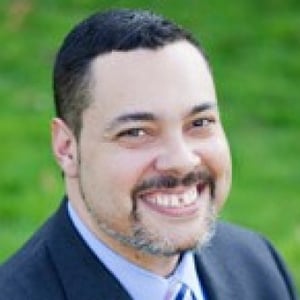
Laurence H. Silberman Chair in Constitutional Governance, American Enterprise Institute; Executive Director, Antonin Scalia Law School’s C. Boyden Gray Center for the Study of the Administrative State
Biography
Adam J. White is the Laurence H. Silberman Chair in Constitutional Governance and senior fellow at the American Enterprise Institute, where he focuses on the Supreme Court and the administrative state. He also directs the Antonin Scalia Law School’s C. Boyden Gray Center for the Study of the Administrative State.
He writes on regulation and constitutional government for a variety of publications. He practiced law in Washington, D.C., after clerking for the D.C. Circuit's Judge David Sentelle. He also has been chairman of the ABA's Administrative Law Section.
In 2021, he served on the Presidential Commission on the Supreme Court of the United States, where he criticized “Court packing” and other efforts to restructure the Supreme Court.
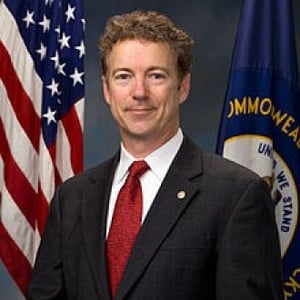
U.S. Senator Rand Paul, M.D. was elected to represent Kentucky in the United States Senate in 2010. He serves on the Senate Foreign Relations Committee, the Health, Education, Labor and Pensions Committee, the Homeland Security and Government Affairs Committee, and the Small Business and Entrepreneurship Committee.
Dr. Paul is the third of five children born to Carol and Ron Paul. He grew up in Lake Jackson, Tex., and attended Baylor University. He graduated from Duke Medical School in 1988. Dr. Paul completed a general surgery internship at Georgia Baptist Medical Center in Atlanta, Ga., and completed his residency in ophthalmology at Duke University Medical Center. Upon completion of his training in 1993, Dr. Paul and Kelley moved to Bowling Green to start their family and begin his ophthalmology practice. Dr. Paul has been married for 25 years to Kelley Ashby Paul of Russellville, Ky., and they have three sons together: William, 22; Duncan, 19; and Robert, 16.
Trial Attorney, Department of Justice - Criminal Division
Speaker Information
Josh Blackman
Professor of Law, South Texas College of Law Houston
Biography
Josh Blackman is a national thought leader on constitutional law and the United States Supreme Court. Josh’s work was quoted during two presidential impeachment trials. He has testified before Congress and advises federal and state lawmakers. Josh regularly appears on TV, including NBC, CBS, ABC, Fox, and the BBC. Josh is also a frequent guest on NPR and other syndicated radio programs. He has published commentaries in the New York Times, Wall Street Journal, Washington Post, and leading national publications.
Since 2012, Josh has served as a professor at the South Texas College of Law Houston. He holds the Centennial Chair of Constitutional Law. Josh is an Adjunct Fellow at the Manhattan Institute. Josh has written more than seven dozen law review articles that have been cited more than a thousand times. Josh was selected as the Jurist of the Year by the Texas Journal of Law & Public Policy, received the inaugural Meese III Originalism Award, and was awarded the Inaugural Joseph Story Award. Josh was selected by Forbes Magazine for the “30 Under 30” in Law and Policy. Josh is the President of the Harlan Institute, and founded FantasySCOTUS, the Internet’s Premier Supreme Court Fantasy League. He blogs at the Volokh Conspiracyand posts@JoshMBlackman.
Somin’s work has appeared in numerous scholarly journals, including the Yale Law Journal, Stanford Law Review, Northwestern University Law Review, Georgetown Law Journal, Critical Review, and others. Somin has also published articles in a variety of popular press outlets, including the New York Times, Washington Post, Wall Street Journal, Los Angeles Times, CNN, NBC, The Atlantic, USA Today, Boston Globe, US News and World Report, South China Morning Post, National Law Journal and Reason. He has been quoted or interviewed by the New York Times, Washington Post, Wall Street Journal, Time, Newsweek, The Economist, the Christian Science Monitor, the Financial Times, The Guardian, the Associated Press, CBS, MSNBC, NPR, BBC, Reuters, the Canadian Broadcasting Corporation, the Australian Broadcasting Corporation, Radio Free Europe/Radio Liberty, Al Jazeera, and the Voice of America, among other media.
Somin’s writings have been cited in decisions by the United States Supreme Court, multiple state supreme courts and lower federal courts, and the Supreme Court of Israel. He is co-counsel for the plaintiffs in VOS Selections, Inc. v. Trump, a case challenging the constitutionality of President Trump’s “Liberation Day” tariffs. Somin has testified on the use of drones for targeted killing in the War on Terror before the US Senate Judiciary Subcommittee on the Constitution, Civil Rights, and Human Rights. In 2009, he testified on property rights issues at the United States Senate Judiciary Committee confirmation hearings for Supreme Court Justice Sonia Sotomayor. Somin writes regularly for the popularVolokh Conspiracylaw and politics blog, now affiliated with Reason magazine (previously affiliated with the Washington Post from 2014 to 2017). From 2006 to 2013, he served as Co-Editor of the Supreme Court Economic Review, one of the country’s top-rated law and economics journals.
Somin has served as a visiting professor at the University of Pennsylvania Law School. He has also been a visiting professor or scholar at the Georgetown University Law Center, the University of Hamburg, Germany, the University of Torcuato Di Tella in Buenos Aires, Argentina, Uriel Reichman University in Israel, and Zhengzhou University in China. He is a University Affiliate of the Schar School of Policy and Government at George Mason University, and an affiliated faculty member of the George Mason University Institute for Immigration Research. Before joining the faculty at George Mason, Somin was the John M. Olin Fellow in Law at Northwestern University Law School in 2002-2003. In 2001-2002, he clerked for the Hon. Judge Jerry E. Smith of the U.S. Court of Appeals for the Fifth Circuit. Professor Somin earned his B.A., Summa Cum Laude, at Amherst College, M.A. in Political Science from Harvard University, and J.D. from Yale Law School.
Welpton & Wise Professor of Law, University of Nebraska College of Law
Biography
Professor Rick Duncan is the Welpton & Wise Professor of Law at the University Of Nebraska College Of Law. He is a graduate of the Cornell Law School and served as an editor of the Cornell Law Review. He teaches Constitutional Law with a special emphasis on the law of religious freedom, free speech, and federalism. Duncan has written numerous books, articles, and commentaries on a wide variety of legal topics. His recent publications include an article on Justice Scalia’s legacy, another on Kermit Gosnell and Roe v. Wade, a piece on the Electoral College and Federalism, a 2019 piece on Masterpiece Cakeshop and the First Amendment, and three recent articles on the “no compelled speech” doctrine as a First Amendment defense against authoritarianism and tyranny. His most recent article, on School Choice and the First Amendment, will be published in 2023 in Case Western Law Review. He is also the co-author of a book on Secured Transactions under Article 9 of the UCC. He served as Chairman of the Nebraska Advisory Committee to the U.S. Commission on Civil Rights during the Reagan Administration. He also loves to speak at Federalist Society meetings around the country on life, liberty, and the pursuit of federalism.
Duncan has five children, five grandchildren, and a wonderful wife who help him pursue happiness. He loves lifting weights (particularly going heavy on the incline bench press), attending Broadway musicals and plays, including Hamilton: An American Musical which he has seen 12 times (possibly a Nebraska record). He regularly reads both the Bible and the New York Times because it is important to keep up with what both sides have to say. He loves following major league baseball, especially the San Diego Padres. And his favorite legal aphorism is “first come rights then comes government to secure those rights.”
Stevenson Bernard Professor, George Washington University Law School
Biography
The Honorable F. Scott Kieff is the Stevenson Bernard Professor at George Washington University Law School and a Visiting Fellow at Stanford University’s Hoover Institution.
He served as Commissioner of the U.S. International Trade Commission from 2013-2017. He also served during the Bush, Obama, and Trump Administrations in the part-time leadership of the national security defense-intelligence community.
He was previously a professor of law and medicine at Washington University in Saint Louis and a Senior Fellow at Hoover. A former law clerk to U.S. Circuit Judge Giles S. Rich, he is a graduate of Penn Law School and MIT, where he studied molecular biology and microeconomics. He was elected to the European Academy of Sciences and Arts in 2012 and the Academia Europaea in 2024.
His private sector work through Kieff Strategies LLC (www.kieffstrategies.com) provides neutral services including mediation and compliance, and expert services including crisis management, advising, and testimony.
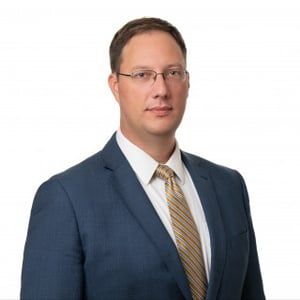
Gregg is an attorney, public policy professional, and veteran of the conservative legal movement. He served as Chief Nominations Counsel to the Senate Judiciary Committee, playing a key strategic role in the confirmation proceedings for scores of federal judges and executive branch appointees. He also served as policy counsel to the Senate Republican Policy Committee, and later as general counsel and domestic policy adviser to Sen. Marco Rubio. Earlier in his career, Gregg served in the U.S. Department of Justice’s Civil Rights Division and worked as a litigator in an international law firm.
Assistant Professor of Law, George Mason University, Antonin Scalia Law School
Biography
Robert Leider is an Assistant Professor of Law at Antonin Scalia Law School, George Mason University. His scholarly interests are in criminal law, criminal procedure, and constitutional law, especially concerning questions about the use of force and the rule of law. He has written on the law of self-defense, the constitutional allocation of military power, and gun control. Among other places, he has published in the Florida Law Review (forthcoming), the Indiana Law Journal, and the Wall Street Journal.
Before joining Antonin Scalia Law School, Professor Leider was at Arnold & Porter in Washington, DC. He was previously with Mayer Brown LLP and was an Olin-Searle-Smith Fellow at the University of Pennsylvania Law School. He has clerked for Judge Diane S. Sykes, of the U.S. Court of Appeals for the Seventh Circuit, and Justice Clarence Thomas. Professor Leider earned a BA, summa cum laude, from The George Washington University, a JD from Yale Law School, and a PhD in Philosophy (dissertation defended with distinction) from Georgetown University. While at Yale, he served as an articles editor for the Yale Law Journal.
Distinguished University Professor, Antonin Scalia Law School, George Mason University
Biography
University Professor Nelson Lund is the author of Rousseau’s Rejuvenation of Political Philosophy: A New Introduction. He has also written widely in the field of constitutional law, including articles on constitutional interpretation, federalism, separation of powers, the Second Amendment, the Commerce Clause, the Speech or Debate Clause, the Equal Protection Clause, and the Uniformity Clause. In addition, he has published articles in the fields of employment discrimination and civil rights, the legal regulation of medical ethics, and the application of economic analysis to legal institutions and legal ethics.
Professor Lund graduated from St. John's College in Annapolis, Maryland, after which he received an MA in philosophy from the Catholic University of America and a PhD in political science from Harvard University. He left the faculty of the University of Chicago to attend its law school, where he served as executive editor of the University of Chicago Law Review and chapter chairman of the Federalist Society for Law and Public Policy Studies. After law school, he held positions at the United States Department of Justice in the Office of the Solicitor General and the Office of Legal Counsel. He also served as a law clerk to the Honorable Patrick E. Higginbotham of the United States Court of Appeals for the Fifth Circuit and to the Honorable Sandra Day O'Connor of the United States Supreme Court. Following his clerkship with Justice O'Connor, Professor Lund served in the White House as associate counsel to the president from 1989 to 1992.
Since joining the faculty at George Mason University's Antonin Scalia Law School, Professor Lund has taught Constitutional Law, Legislation, Federal Election Law, Employment Discrimination, State and Local Government, and seminars on the Second Amendment and on a variety of topics in Jurisprudence.
Darrell Miller writes and teaches in the areas of civil rights, constitutional law, civil procedure, state and local government law, and legal history. His scholarship on the Second and Thirteenth Amendments has been published in leading law reviews such as the Yale Law Journal, the University of Chicago Law Review, and the Columbia Law Review, and has been cited by the Supreme Court of the United States, the United States Courts of Appeals, the United States District Courts, and in congressional testimony and legal briefs.
Before coming to Duke, Miller taught at the University of Cincinnati College of Law where he twice received the Goldman Award for Excellence in Teaching. Prior to joining the academy, Miller practiced complex and appellate litigation in Columbus, Ohio. He is a former clerk to Chief Judge R. Guy Cole, Jr. of the United States Court of Appeals for the Sixth Circuit.
Miller graduated cum laude from Harvard Law School and served as an editor of the Harvard Law Review. In addition to his law degree, Miller holds degrees from Oxford University, where he studied as a Marshall Scholar, and from Anderson University.
Distinguished Senior Fellow and Antonin Scalia Chair in Constitutional Studies, Ethics and Public Policy Center
Biography
Edward Whelan is a Distinguished Senior Fellow of the Ethics and Public Policy Center and holds EPPC’s Antonin Scalia Chair in Constitutional Studies. He is the longest-serving President in EPPC’s history, having held that position from March 2004 through January 2021.
Mr. Whelan directs EPPC’s program on The Constitution, the Courts, and the Culture. His areas of expertise include constitutional law and the judicial confirmation process. As a contributor to National Review Online’s Bench Memos blog, he has been a leading commentator on nominations to the Supreme Court and the lower courts and on issues of constitutional law. He has written essays and op-eds for leading newspapers—including the Wall Street Journal, the New York Times, and the Washington Post—opinion journals, and academic symposia and law reviews. The National Law Journal has named Mr. Whelan among its “Champions and Visionaries” in the practice of law in D.C.
Mr. Whelan is co-editor of three volumes of Supreme Court Justice Antonin Scalia’s work: Scalia Speaks: Reflections on Law, Faith, and Life Well Lived (Crown Forum, 2017), a New York Times bestselling collection of speeches by Justice Scalia; On Faith: Lessons from an American Believer (Crown Forum, 2019), a collection of Justice Scalia’s writings on faith and religion; and The Essential Scalia: On the Constitution, the Courts, and the Rule of Law (Crown Forum, 2020), a collection of Justice Scalia’s views on legal issues.
Mr. Whelan, a lawyer and a former law clerk to Justice Scalia, has served in positions of responsibility in all three branches of the federal government. From just before the terrorist attacks of September 11, 2001, until joining EPPC in 2004, Mr. Whelan was the Principal Deputy Assistant Attorney General for the Office of Legal Counsel in the U.S. Department of Justice. In that capacity, he advised the White House Counsel’s Office, the Attorney General and other senior DOJ officials, and departments and agencies throughout the executive branch on difficult and sensitive legal questions. Mr. Whelan previously served on Capitol Hill as General Counsel to the U.S. Senate Committee on the Judiciary. In addition to clerking for Justice Scalia, he was a law clerk to Judge J. Clifford Wallace of the U.S. Court of Appeals for the Ninth Circuit.
In 1981 Mr. Whelan graduated with honors from Harvard College and was inducted into Phi Beta Kappa. He received his J.D. magna cum laude in 1985 from Harvard Law School, where he was a member of the Board of Editors of the Harvard Law Review.
For more on Mr. Whelan’s background, see this interview.