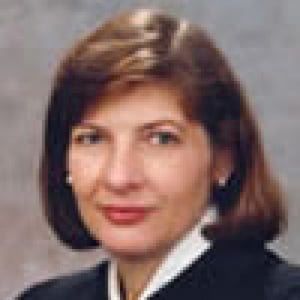
Priscilla Richman Owen is a federal judge on the United States Court of Appeals for the Fifth Circuit. She was previously a Justice on the Texas Supreme Court.
Speaker Information
Laura I. Appleman
Speaker Information
Lyrissa Lidsky
Raymond & Miriam Ehrlich Chair in US Constitutional Law, University of Florida Levin College of Law
Biography
Lyrissa Lidsky is the Raymond & Miriam Ehrlich Chair in U.S. Constitutional Law at Florida Law. She previously served as Dean of the University of Missouri School of Law from 2017-2022. The focus of her research and teaching is the intersection of Tort Law and the First Amendment, with an emphasis on defamation and free speech issues in social media. Missouri Lawyers Media named Lidsky its 2020 Woman of the Year based on her scholarship, passion for law, mentorship of students, and engagement of constituencies supporting the school of law.
Before becoming dean at Missouri, Lidsky served in a variety of leadership roles at UF Law, including as associate dean for graduate and international programs and associate dean for faculty development. She also held the Stephen C. O’Connell Chair in Law and received a number of teaching awards during her 23-year tenure at UF, including student-selected awards such as Teacher of the Year (twice) and Faculty Graduation Speaker (three times), as well as Teacher of the Year, which was selected by a faculty committee.
Lidsky is co-reporter on the Restatement of Defamation and Privacy, which is now in progress. She is co-author of a leading Media Law casebook, a First Amendment casebook, and a reference book on press freedom and has published dozens of articles, culminating in a forthcoming article in the Virginia Law Review, co-authored with Professor Christina Koningisor, called First Amendment Disequilibrium. Her work on anonymous speech has been cited by a number of state supreme courts and the highest courts of Canada and Hong Kong.
Before becoming a law professor, Lidsky served as a clerk for the Honorable Joseph T. Sneed of the United States Court of Appeals for the Ninth Circuit in San Francisco, Calif. Lidsky received her law degree from the University of Texas School of Law with high honors. She was initiated into Order of the Coif in recognition of her scholastic achievement and served as articles editor of the Texas Law Review. Before law school, she was a Fulbright Scholar at Cambridge University in England, studying medieval legal history and early development of the Common Law. She received her bachelor’s degree, summa cum laude, in English and political science from Texas A&M University.
John Marshall Harlan II Professor of Law Emerita, New York Law School; Former President, American Civil Liberties Union
Biography
Nadine Strossen, New York Law School Professor Emerita and Senior Fellow at FIRE (the Foundation for Individual Rights and Expression), was national President of the American Civil Liberties Union from 1991 to 2008. An internationally acclaimed free speech scholar and advocate, who regularly addresses diverse audiences and provides media commentary around the world, Strossen is also the Host and Project Consultant for Free To Speak, a 3-hour documentary film series distributed on public television in 2023. Her books about free speech include: Free Speech: What Everyone Needs to Know® (Oxford University Press 2023); HATE: Why We Should Resist It with Free Speech, Not Censorship (Oxford University Press 2018); and Defending Pornography: Free Speech, Sex, and the Fight for Women’s Rights (Scribner 1995), which was republished with a new Preface in 2024 as part of the NYU Classics Series. Her many honors and awards include the National Coalition Against Censorship’s Judy Blume Lifetime Achievement Award for Free Speech. She serves on the Advisory Boards of several organizations that do free speech work, including: ACLU, Academic Freedom Alliance, Foundation Against Intolerance and Racism (FAIR), Heterodox Academy, National Coalition Against Censorship, and the University of Austin.
Ilan Wurman is the Julius E. Davis Professor of Law at the University of Minnesota, where he teaches administrative law and constitutional law. He previously taught at Arizona State University. He writes primarily on the Fourteenth Amendment, administrative law, separation of powers, and constitutionalism. His academic writing has appeared in the Yale Law Journal, the Stanford Law Review, the University of Chicago Law Review, the University of Pennsylvania Law Review, the Virginia Law Review, the Duke Law Journal, the Minnesota Law Review, the Notre Dame Law Review, and the Texas Law Review among other journals.
Professor Wurman is the author of a casebook, Administrative Law Theory and Fundamentals: An Integrated Approach (Foundation Press 2d ed. 2024). He is also the author of A Debt Against the Living: An Introduction to Originalism (Cambridge 2017), and The Second Founding: An Introduction to the Fourteenth Amendment (Cambridge 2020). His next book, The Constitution of 1789: A New Introduction, is also forthcoming with Cambridge University Press.
Professor Wurman practices law with the firm Tully Bailey. He has litigated a variety of administrative law and constitutional law cases, including cases involving COVID-19 restrictions, transmission lines, and Appointments Clause challenges. He also devised winning public nuisance theories to force city governments to address the increasingly challenging public camping crises throughout the country.
Associate Professor & Director, Constitutional Government Initiative, Wheatley Institute, Brigham Young University
Biography
James C. Phillips is the Constitutional Government Initiative Director and an associate professor at BYU’s Wheatley Institute. He is also a fellow with the UC-Berkeley School of Law’s Public Law and Policy Program and an academic affiliate with the D.C.-based law firm Schaerr|Jaffe. His scholarship has been cited by judges around the country, including at the U.S. Supreme Court, and has been covered in various media outlets, including the New York Times Magazine, USA Today, Reuters, CNN, and Fox News. He is a member of the Executive Committee of the Federalist Society's Religious Liberty Practice Group and the J. Reuben Clark Law Society Religious Liberty Committee.
Prior to joining Wheatley, Phillips was associate professor of law at Chapman University’s Fowler School of Law, where he taught Constitutional Law, Religion and the Constitution, Civil Procedure, Family Law, and Professional Responsibility and was named 1L Professor of the Year. Dr. Phillips has taught Administrative Law at BYU’s J. Reuben Clark Law School, where he also helped conceive and design the Corpus of Founding-Era American English. He was also a Non-resident Fellow with Stanford Law School’s Constitutional Law Center.
Dr. Phillips has published dozens of academic articles, primarily in law journals, but also communications, business, and history journals. His longer pieces have been published in, for example, the University of Pennsylvania Law Review, the Southern California Law Review, and the Harvard Journal of Law and Public Policy, and his shorter articles have been published in journals such as the Yale Law Journal Forum and the Duke Law Journal Online. Dr. Phillips has also written op-eds on constitutional issues for Newsweek, The Atlantic, the Los Angeles Times, the Orange County Register, Deseret News, and National Review.
Prior to his university posts, Dr. Phillips practiced law as a Constitutional Law Fellow for the Becket Fund for Religious Liberty and an associate for Kirton | McConkie. He has worked on dozens of cases at the U.S. Supreme Court, as well as cases in federal and state courts throughout the country. He is a member of the bar in Utah and D.C. He clerked for Judge Thomas B. Griffith on the U.S. Court of Appeal for the D.C. Circuit and for Justice Thomas R. Lee on the Utah Supreme Court. Dr. Phillips earned his JD, Order of the Coif, from UC-Berkeley’s School of Law, where he was a member of the California Law Review. He also has a PhD in Jurisprudence & Social Policy from UC-Berkeley, an M.A. in Mass Communication from BYU, and a B.A. in History from Arizona State University.
Director, Center to Protect Free Speech, American Legislative Exchange Council
Biography
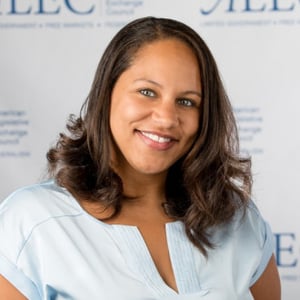
Shelby Emmett graduated from James Madison College at Michigan State University (GO GREEN!!) in 2006 with a dual-major in Political Theory & Constitutional Democracy and Social Relations & Policy. Shelby attended the David A. Clarke School of Law in Washington, D.C., where she participated in the school’s Legislative Clinic.
After law school, Shelby served as the Policy Coordinator for a national non-profit in Baltimore. In 2012, Shelby was the Legislative Fellow with the Republican Study Committee, the largest caucus in the House of Representatives. During the 113th session of Congress, Shelby served as Legislative Counsel for Michigan’s 11th district, responsible for a broad legislative portfolio including education and civil rights. Most recently, Shelby was the Legal & Legislative Policy Advocate and Strategic Outreach Officer at the Foundation for Individual Rights in Education (FIRE), a nonprofit organization devoted to protecting free speech rights on college campuses.
Shelby, a native of Detroit, Michigan is an attorney licensed in the state of Maryland and lives in Washington, D.C. In her down time, Shelby enjoys traveling and kickboxing–and is looking forward to competing in her first competition in 2017.
Senior Counsel, National Council for Incarcerated and Formerly Incarcerated Women and Girls
Speaker Information
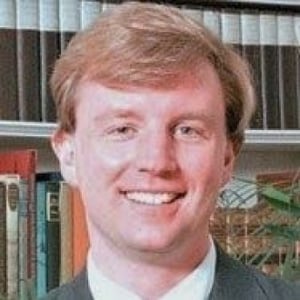
Randy Elf
Constitutional, Appellate, and Political Speech Lawyer
Biography
Randy Elf, a Jamestown, New York, native, attended Jamestown Public Schools and Southwestern Central School.
After graduating as valedictorian from Southwestern, he graduated with honors from Duke University and was Duke’s first guest teacher at Landheim Schondorf, a German-language boarding school in Schondorf am Ammersee, Germany.
Thereafter, he held a one-year position as a German teacher at Southwestern, was an assistant to authors and lecturers Drs. Russell Kirk and Annette Kirk, and covered education and federal and state affairs for The Post-Journal in Jamestown, where his reporting was instrumental in completing Interstate 86 in Chautauqua County.
He graduated as president of his law-school class at Syracuse University—where he co-founded a chapter of the Federalist Society—and clerked for two federal judges: Brevard Hand of the U.S. District Court for the Southern District of Alabama in Mobile, and Alice Batchelder of the U.S. Court of Appeals for the Sixth Circuit in Medina, Ohio.
He twice ran for the New York state Assembly against a long-term incumbent in Chautauqua County.
Dr. Elf has practiced law, both at the Federal Election Commission and privately. Since 2010, no one in the country has had more experience briefing and conducting hearings on the constitutionality of political-speech law. Much of his experience is reflected in his 2016 Regent University Law Review article, at https://ssrn.com/abstract=5283417, and his 2020 Advocates for Balance at Chautauqua presentation, at https://www.youtube.com/watch?v=h3ebymA7xOo .
He explored seeking the Republican and Conservative parties’ nominations for New York attorney general in 2018, has written a regular newspaper column since 2020, and was his Mom’s caregiver for eight years.
He has been active in several organizations and enjoys swimming, snowmobiling, traveling, golf, tennis, and rooting for the Buffalo Bills and Sabres.
A 13th great-grandson of King Gustav Eriksson Vasa of Sweden, he and the former Hilary Anne Kurtz, who he later learned is his ninth cousin twice removed, were married (#KurtzElfWedding) on December 28, 2019. Mrs. Elf and their two children, Ryan and Margaret, are in Heaven.
Senior Fellow and Director of Constitutional Studies, Manhattan Institute
Biography
Ilya Shapiro is a senior fellow and director of constitutional studies at the Manhattan Institute and a contributing editor of City Journal. Previously he was executive director and senior lecturer at the Georgetown Center for the Constitution, and before that a vice president of the Cato Institute.
Shapiro has testified many times before Congress and state legislatures and has filed more than 500 amicus curiae “friend of the court” briefs in the Supreme Court. He lectures regularly on behalf of the Federalist Society, is a member of the board of fellows of the Jewish Policy Center, was an inaugural Washington Fellow at the National Review Institute, and has been an adjunct law professor at the George Washington University and University of Mississippi. He is also the chairman of the board of advisers of the Mississippi Justice Institute, a barrister in the Edward Coke Appellate Inn of Court, and a former member of the Virginia Advisory Committee to the U.S. Commission on Civil Rights.
Earlier in his career, Shapiro was a special assistant/adviser to the Multi-National Force in Iraq on rule-of-law issues and practiced at Patton Boggs and Cleary Gottlieb. Before entering private practice, he clerked for Judge E. Grady Jolly of the U.S. Court of Appeals for the Fifth Circuit. He holds an AB from Princeton University, an MSc from the London School of Economics, and a JD from the University of Chicago Law School.