John Marshall Harlan II Professor of Law Emerita, New York Law School; Former President, American Civil Liberties Union
Biography
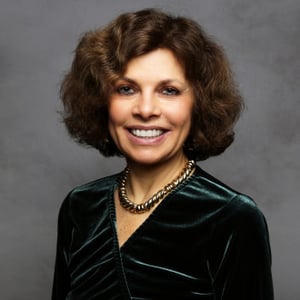
Nadine Strossen, New York Law School Professor Emerita and Senior Fellow at FIRE (the Foundation for Individual Rights and Expression), was national President of the American Civil Liberties Union from 1991 to 2008. An internationally acclaimed free speech scholar and advocate, who regularly addresses diverse audiences and provides media commentary around the world, Strossen is also the Host and Project Consultant for Free To Speak, a 3-hour documentary film series distributed on public television in 2023. Her books about free speech include: Free Speech: What Everyone Needs to Know® (Oxford University Press 2023); HATE: Why We Should Resist It with Free Speech, Not Censorship (Oxford University Press 2018); and Defending Pornography: Free Speech, Sex, and the Fight for Women’s Rights (Scribner 1995), which was republished with a new Preface in 2024 as part of the NYU Classics Series. Her many honors and awards include the National Coalition Against Censorship’s Judy Blume Lifetime Achievement Award for Free Speech. She serves on the Advisory Boards of several organizations that do free speech work, including: ACLU, Academic Freedom Alliance, Foundation Against Intolerance and Racism (FAIR), Heterodox Academy, National Coalition Against Censorship, and the University of Austin.
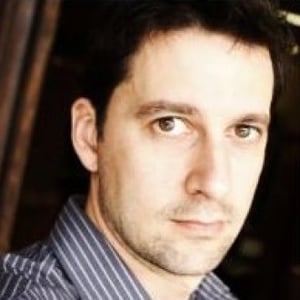
Olivier Blanchard has extensive experience managing product innovation, technology adoption, digital integration, and change management for industry leaders in the B2B, B2C, B2G sectors, and the IT channel. His passion is helping decision-makers and their organizations understand the many risks and opportunities of technology-driven disruption, and leverage innovation to build stronger, better, more competitive companies. A trusted source of analysis and insights on digital business and digital innovation, Olivier also travels the globe speaking about business technology, Disruption as a Model (DaaM), and the impact of innovation on markets and culture. He is also the best-selling author of Social Media RIO: Managing and Measuring Social Media Efforts in Your Organization, and co-author of Building Dragons: Digital Transformation in the Experience Economy. Blanchard is based in Greenville, South Carolina.
President and Founder, International Center for Law & Economics
Biography
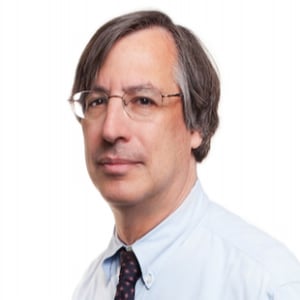
Geoffrey A. Manne is the president and founder of the International Center for Law and Economics (ICLE), a nonprofit, nonpartisan research center based in Portland, Oregon. He is also a distinguished fellow at Northwestern Law School’s Searle Center on Law, Regulation, & Economic Growth. In April 2017 he was appointed by FCC Chairman Ajit Pai to the FCC’s Broadband Deployment Advisory Committee, and he recently served for two years on the FCC’s Consumer Advisory Committee.
Mr. Manne earned his JD and AB degrees from the University of Chicago and is an expert in the economic analysis of law, specializing in competition, telecommunications, consumer protection, intellectual property, and technology policy.
Prior to founding ICLE, Manne was a law professor at Lewis & Clark Law School. From 2006-2009, he took a leave from teaching to develop Microsoft’s law and economics academic outreach program. Manne has also served as a lecturer in law at the University of Chicago Law School and the University of Virginia School of Law. He practiced antitrust law and appellate litigation at Latham & Watkins, clerked for Hon. Morris S. Arnold on the 8th Circuit Court of Appeals, and worked as a research assistant for Judge Richard Posner. He was also once (very briefly) employed by the FTC.
Mr. Manne’s publications have appeared in numerous journals including the Journal of Competition Law and Economics, the Harvard Journal of Law and Technology, the Supreme Court Economic Review, and the Arizona Law Review, among others. With former FTC Commissioner, Joshua Wright, Manne is the editor of a volume from Cambridge University Press entitled, Competition Policy and Intellectual Property Law Under Uncertainty: Regulating Innovation. Manne has also testified on several occasions before Congress and at the FCC and FTC, and he regularly files written comments and amicus briefs on key antitrust, IP, and telecommunications issues. His analysis is frequently published in popular print and broadcasting outlets such as the Wall Street Journal, Wired, Foreign Affairs, NPR, and Bloomberg, among others.
Manne is a member of the American Law and Economics Association, the Canadian Law and Economics Association, and the Society for Institutional & Organizational Economics. He blogs at Truth on the Market (www.truthonthemarket.com) (of which he is also the co-founder), is a contributor at WIRED, and tweets at @geoffmanne. His scholarly publications are available at http://ssrn.com/author=175541.
Levin, Mabie & Levin Professor of Law, University of Florida Levin College of Law
Biography
Professor Gary Lawson joined the University of Florida Levin College of Law faculty on July 1, 2024, after twenty-four years at Boston University School of Law and eleven years at Northwestern University School of Law. While at Boston University, he was named a William Fairfield Warren Distinguished Professor in 2022 – the highest faculty honor within the university. He has authored or co-authored nine editions of a textbook on administrative law, a textbook on constitutional law, five university press books, one popular press book, and more than one hundred scholarly articles on topics ranging from aspects of constitutional theory and history to the proof of legal propositions. His works have been cited in more than twenty opinions of United States Supreme Court justices. He is a founding member, and serves on the Board of Directors, of the Federalist Society for Law and Public Policy Studies and is on the Editorial Advisory Board of the Heritage Guide to the Constitution.
United States Circuit Judge, United States Circuit Court, Third Circuit
Biography
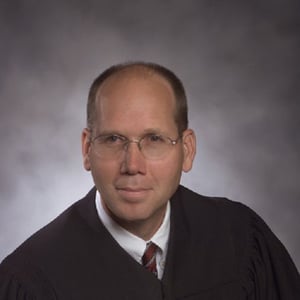
Kent A. Jordan was appointed in 2006 to serve as a United States Circuit Judge for the Third Circuit. Before that, Judge Jordan was a United States District Judge for the District of Delaware from 2002 to 2006. He received a B.A. in Economics in 1981 from Brigham Young University and a J.D. in 1984 from Georgetown University. He was an Assistant United States Attorney and head of the Civil Division in the U.S. Attorney’s Office for the District of Delaware. Later, he served as an officer and as a member of the boards of directors of privately held businesses and was a partner in a Wilmington, Delaware law firm. He is an Adjunct Professor of Law at the University of Pennsylvania and Vanderbilt University and currently serves as President of the Board of Trustees of the American Inns of Court Foundation, as well as on the boards of other non-profit organizations.
John Marshall Harlan II Professor of Law Emerita, New York Law School; Former President, American Civil Liberties Union
Biography
Nadine Strossen, New York Law School Professor Emerita and Senior Fellow at FIRE (the Foundation for Individual Rights and Expression), was national President of the American Civil Liberties Union from 1991 to 2008. An internationally acclaimed free speech scholar and advocate, who regularly addresses diverse audiences and provides media commentary around the world, Strossen is also the Host and Project Consultant for Free To Speak, a 3-hour documentary film series distributed on public television in 2023. Her books about free speech include: Free Speech: What Everyone Needs to Know® (Oxford University Press 2023); HATE: Why We Should Resist It with Free Speech, Not Censorship (Oxford University Press 2018); and Defending Pornography: Free Speech, Sex, and the Fight for Women’s Rights (Scribner 1995), which was republished with a new Preface in 2024 as part of the NYU Classics Series. Her many honors and awards include the National Coalition Against Censorship’s Judy Blume Lifetime Achievement Award for Free Speech. She serves on the Advisory Boards of several organizations that do free speech work, including: ACLU, Academic Freedom Alliance, Foundation Against Intolerance and Racism (FAIR), Heterodox Academy, National Coalition Against Censorship, and the University of Austin.
Senior Fellow and Director of Constitutional Studies, Manhattan Institute
Biography
Ilya Shapiro is a senior fellow and director of constitutional studies at the Manhattan Institute and a contributing editor of City Journal. Previously he was executive director and senior lecturer at the Georgetown Center for the Constitution, and before that a vice president of the Cato Institute.
Shapiro has testified many times before Congress and state legislatures and has filed more than 500 amicus curiae “friend of the court” briefs in the Supreme Court. He lectures regularly on behalf of the Federalist Society, is a member of the board of fellows of the Jewish Policy Center, was an inaugural Washington Fellow at the National Review Institute, and has been an adjunct law professor at the George Washington University and University of Mississippi. He is also the chairman of the board of advisers of the Mississippi Justice Institute, a barrister in the Edward Coke Appellate Inn of Court, and a former member of the Virginia Advisory Committee to the U.S. Commission on Civil Rights.
Earlier in his career, Shapiro was a special assistant/adviser to the Multi-National Force in Iraq on rule-of-law issues and practiced at Patton Boggs and Cleary Gottlieb. Before entering private practice, he clerked for Judge E. Grady Jolly of the U.S. Court of Appeals for the Fifth Circuit. He holds an AB from Princeton University, an MSc from the London School of Economics, and a JD from the University of Chicago Law School.
Constitutional, Appellate, and Political Speech Lawyer
Biography
Randy Elf, a Jamestown, New York, native, attended Jamestown Public Schools and Southwestern Central School.
After graduating as valedictorian from Southwestern, he graduated with honors from Duke University and was Duke’s first guest teacher at Landheim Schondorf, a German-language boarding school in Schondorf am Ammersee, Germany.
Thereafter, he held a one-year position as a German teacher at Southwestern, was an assistant to authors and lecturers Drs. Russell Kirk and Annette Kirk, and covered education and federal and state affairs for The Post-Journal in Jamestown, where his reporting was instrumental in completing Interstate 86 in Chautauqua County.
He graduated as president of his law-school class at Syracuse University—where he co-founded a chapter of the Federalist Society—and clerked for two federal judges: Brevard Hand of the U.S. District Court for the Southern District of Alabama in Mobile, and Alice Batchelder of the U.S. Court of Appeals for the Sixth Circuit in Medina, Ohio.
He twice ran for the New York state Assembly against a long-term incumbent in Chautauqua County.
Dr. Elf has practiced law, both at the Federal Election Commission and privately. Since 2010, no one in the country has had more experience briefing and conducting hearings on the constitutionality of political-speech law. Much of his experience is reflected in his 2016 Regent University Law Review article, at https://ssrn.com/abstract=5283417, and his 2020 Advocates for Balance at Chautauqua presentation, at https://www.youtube.com/watch?v=h3ebymA7xOo .
He explored seeking the Republican and Conservative parties’ nominations for New York attorney general in 2018, has written a regular newspaper column since 2020, and was his Mom’s caregiver for eight years.
He has been active in several organizations and enjoys swimming, snowmobiling, traveling, golf, tennis, and rooting for the Buffalo Bills and Sabres.
A 13th great-grandson of King Gustav Eriksson Vasa of Sweden, he and the former Hilary Anne Kurtz, who he later learned is his ninth cousin twice removed, were married (#KurtzElfWedding) on December 28, 2019. Mrs. Elf and their two children, Ryan and Margaret, are in Heaven.