Senior Vice President for Legal Studies, Cato Institute
Biography
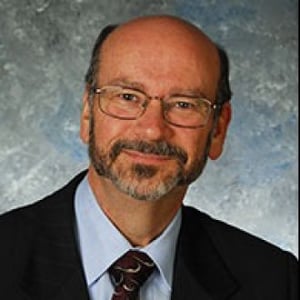
Clark Neily is senior vice president for legal studies at the Cato Institute. His areas of interest include constitutional law, overcriminalization, civil forfeiture, police accountability, and gun rights. Neily is the author of Terms of Engagement: How Our Courts Should Enforce the Constitution’s Promise of Limited Government. His writing has appeared in the Wall Street Journal, Forbes, and National Review Online, as well as various law reviews, including the Harvard Journal of Law and Public Policy, George Mason Law Review, Georgetown Journal of Law and Public Policy, NYU Journal of Law and Liberty, and Texas Review of Law and Politics. Neily is a frequent guest speaker and lecturer for the Federalist Society, Institute for Humane Studies, and American Constitution Society.
Before joining Cato in 2017, Neily was a senior attorney and constitutional litigator at the Institute for Justice and director of the Institute’s Center for Judicial Engagement. He is also an adjunct professor at the University of Texas School of Law, where he teaches constitutional litigation and public-interest law.
Neily served as co-counsel in District of Columbia v. Heller, the historic case in which the Supreme Court held for the first time that the Second Amendment protects an individual right to own a gun for self-defense.
Neily began his legal career as a law clerk to Judge Royce Lamberth on the U.S. District Court for the District of Columbia. After that he spent four years in the trial department of the Dallas-based firm Thompson & Knight. Neily received his undergraduate and law degrees from the University of Texas, where he was Chief Articles Editor of the Texas Law Review.
Professor of Law, South Texas College of Law Houston
Biography
Josh Blackman is a national thought leader on constitutional law and the United States Supreme Court. Josh’s work was quoted during two presidential impeachment trials. He has testified before Congress and advises federal and state lawmakers. Josh regularly appears on TV, including NBC, CBS, ABC, Fox, and the BBC. Josh is also a frequent guest on NPR and other syndicated radio programs. He has published commentaries in the New York Times, Wall Street Journal, Washington Post, and leading national publications.
Since 2012, Josh has served as a professor at the South Texas College of Law Houston. He holds the Centennial Chair of Constitutional Law. Josh is an Adjunct Fellow at the Manhattan Institute. Josh has written more than seven dozen law review articles that have been cited more than a thousand times. Josh was selected as the Jurist of the Year by the Texas Journal of Law & Public Policy, received the inaugural Meese III Originalism Award, and was awarded the Inaugural Joseph Story Award. Josh was selected by Forbes Magazine for the “30 Under 30” in Law and Policy. Josh is the President of the Harlan Institute, and founded FantasySCOTUS, the Internet’s Premier Supreme Court Fantasy League. He blogs at the Volokh Conspiracyand posts@JoshMBlackman.
Clinical Professor of Law, Dale E. Fowler School of Law, Chapman University
Biography
Anthony T. Caso earned his J.D. from University of the Pacific, McGeorge School of Law and M.B.A. from Golden Gate University. Professor Caso joined the Chapman faculty in 2008 as a Visiting Associate Clinical Professor and Director of the Constitutional Jurisprudence Clinic. Prior to joining the faculty Professor Caso held a variety of positions at Pacific Legal Foundation, including service as its Senior Vice President and Chief Counsel. Professor Caso's litigation experience includes successful cases at every level of the state and federal court system, including the California Supreme Court and the United States Supreme Court. Professor Caso has taught as an Adjunct Professor of State Constitutional Law at McGeorge School of Law and an adjunct professor at the University of San Francisco, College of Professional Studies. In addition to directing the Constitutional Jurisprudence Clinic, Professor Caso teaches Administrative Law.
Dr. Michael P. Farris is a litigator, educator, public advocate, and communicator, and is widely recognized for his successful work on both the national and international stage.
He is the founding president of both the Home School Legal Defense Association (1983) and Patrick Henry College (2000) and continues to serve as Chairman of the Board of HSLDA and Chancellor Emeritus of PHC. Dr. Farris served as the President and CEO of Alliance Defending Freedom and continues to serve in a part-time capacity as Counselor to the President. He currently serves as General Counsel for National Religious Broadcasters.
Senior Fellow and Director of Constitutional Studies, Manhattan Institute
Biography
Ilya Shapiro is a senior fellow and director of constitutional studies at the Manhattan Institute and a contributing editor of City Journal. Previously he was executive director and senior lecturer at the Georgetown Center for the Constitution, and before that a vice president of the Cato Institute.
Shapiro has testified many times before Congress and state legislatures and has filed more than 500 amicus curiae “friend of the court” briefs in the Supreme Court. He lectures regularly on behalf of the Federalist Society, is a member of the board of fellows of the Jewish Policy Center, was an inaugural Washington Fellow at the National Review Institute, and has been an adjunct law professor at the George Washington University and University of Mississippi. He is also the chairman of the board of advisers of the Mississippi Justice Institute, a barrister in the Edward Coke Appellate Inn of Court, and a former member of the Virginia Advisory Committee to the U.S. Commission on Civil Rights.
Earlier in his career, Shapiro was a special assistant/adviser to the Multi-National Force in Iraq on rule-of-law issues and practiced at Patton Boggs and Cleary Gottlieb. Before entering private practice, he clerked for Judge E. Grady Jolly of the U.S. Court of Appeals for the Fifth Circuit. He holds an AB from Princeton University, an MSc from the London School of Economics, and a JD from the University of Chicago Law School.
Senior Vice President for Legal Studies, Cato Institute
Biography
Clark Neily is senior vice president for legal studies at the Cato Institute. His areas of interest include constitutional law, overcriminalization, civil forfeiture, police accountability, and gun rights. Neily is the author of Terms of Engagement: How Our Courts Should Enforce the Constitution’s Promise of Limited Government. His writing has appeared in the Wall Street Journal, Forbes, and National Review Online, as well as various law reviews, including the Harvard Journal of Law and Public Policy, George Mason Law Review, Georgetown Journal of Law and Public Policy, NYU Journal of Law and Liberty, and Texas Review of Law and Politics. Neily is a frequent guest speaker and lecturer for the Federalist Society, Institute for Humane Studies, and American Constitution Society.
Before joining Cato in 2017, Neily was a senior attorney and constitutional litigator at the Institute for Justice and director of the Institute’s Center for Judicial Engagement. He is also an adjunct professor at the University of Texas School of Law, where he teaches constitutional litigation and public-interest law.
Neily served as co-counsel in District of Columbia v. Heller, the historic case in which the Supreme Court held for the first time that the Second Amendment protects an individual right to own a gun for self-defense.
Neily began his legal career as a law clerk to Judge Royce Lamberth on the U.S. District Court for the District of Columbia. After that he spent four years in the trial department of the Dallas-based firm Thompson & Knight. Neily received his undergraduate and law degrees from the University of Texas, where he was Chief Articles Editor of the Texas Law Review.
Associate Professor of Political Science, Johns Hopkins University
Biography
Steven Teles is associate professor of political science at Johns Hopkins University and fellow at the New America Foundation.
He is the author, most recently, of the Rise of the Conservative Legal Movement: The Battle for Control of the Law (Princeton University Press, 2008), and before that Whose Welfare: AFDC and Elite Politics (University Press of Kansas, 1996). He is the co-editor of two books: Conservatism and American Political Development (Oxford University Press, 2009, with Brian Glenn) and Ethnicity, Social Mobility and Public Policy: Comparing the US and UK (Cambridge University Press, 2005, with Glenn Loury and Tariq Modood). Professor Teles is also the editor of Oxford University Press' book series on Contemporary American Political Development. He is currently working on two co-authored books. The first, with Mark Kleiman of UCLA, tentatively calledThe Statesman's Discipline: The Art of Asking the Right Questions. His second project, with Peter Frumkin, is a developmental study of foundations over the past half-century.
Professor Teles has also published articles in the New Statesman, American Prospect, Public Interest, National Affairs, The American Interest, Prospect (UK) and Boston Reviews, appeared on bloggingheads.tv and blogs occasionally at samefacts.com.
He received his PhD in government and foreign affairs from the University of Virginia in 1995, and his BA in political science from George Washington University in 1989.
United States Attorney for the District of Maryland, U.S. Department of Justice
Biography
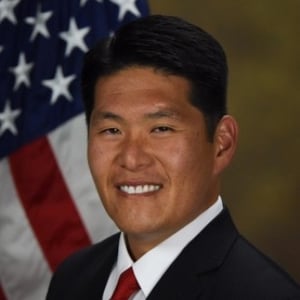
Robert K. Hur is the 48th United States Attorney for the District of Maryland. As U.S. Attorney, he is the chief federal law enforcement officer in the District of Maryland. Mr. Hur oversees the investigation and litigation of all criminal and civil cases brought on behalf of the United States in the District of Maryland. He supervises an office of approximately 88 Assistant U.S. Attorneys and 72 support personnel, who handle a high volume of matters including domestic and international terrorism, narcotics trafficking, organized crime, gang violence, public corruption, cybercrime, financial and healthcare fraud, and civil rights violations. He also serves as a member of the Attorney General’s Advisory Committee of United States Attorneys (“AGAC”), which provides advice and counsel to the Attorney General on matters of policy, procedure, and management impacting the Offices of the United States Attorneys.
Before taking office as U.S. Attorney on April 9, 2018, Mr. Hur served as Principal Associate Deputy Attorney General with the Department of Justice in Washington, DC. In that position, Mr. Hur was a member of the Department’s senior leadership team and the top aide to Deputy Attorney General Rod J. Rosenstein, assisting him with oversight of all components of the Department.
Mr. Hur served as an Assistant U.S. Attorney in the District of Maryland from 2007 to 2014, where he prosecuted gang violence, firearms offenses, and narcotics trafficking, as well as white-collar offenses including financial institutions fraud, public corruption, mortgage fraud, tax offenses, computer network intrusions, and intellectual property theft. He received the Attorney General’s Distinguished Service Award for superior performance and excellence as a lawyer.
Before joining the U.S. Attorney’s Office, Mr. Hur served as Special Assistant and later Counsel to the Assistant Attorney General in charge of the Criminal Division, where he handled counterterrorism, corporate fraud, and appellate matters.
In addition to his service with the Department of Justice, Mr. Hur was a litigation partner with a major law firm in Washington, D.C., where he represented companies and individuals facing criminal and regulatory enforcement actions before the Department of Justice, the Securities and Exchange Commission, and other federal agencies, as well as related civil litigation.
Mr. Hur began his legal career as a law clerk for the late William H. Rehnquist, Chief Justice of the United States, and Judge Alex Kozinski of the U.S. Court of Appeals for the Ninth Circuit.
Mr. Hur received his A.B. degree, magna cum laude with highest honors, from Harvard College. He received his J.D. from Stanford Law School, where he served as Executive Editor of the Stanford Law Review.
U.S. Attorney for the District of Columbia, U.S. Department of Justice
Biography
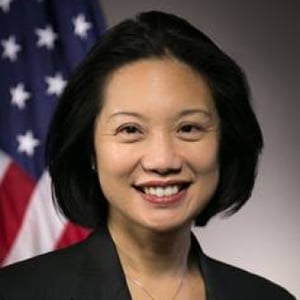
Jessie K. Liu was confirmed by the U.S. Senate on September 14, 2017, as the United States Attorney for the District of Columbia, and took office on September 24, 2017.
Ms. Liu was an Assistant United States Attorney in the District of Columbia from 2002 to 2006, prosecuting violent crime, drug trafficking, firearms, and fraud offenses in both the Superior Court and Criminal Divisions, and briefing and arguing appeals in the D.C. Court of Appeals and the U.S. District Court for the D.C. Circuit. She subsequently served in several senior positions in the U.S. Department of Justice, including as Deputy Assistant Attorney General in the Civil Rights Division, Counsel to the Deputy Attorney General for national security matters, and Deputy Chief of Staff for the National Security Division. Most recently, she was Deputy General Counsel at the U.S. Department of the Treasury, advising the Secretary of the Treasury and other senior Treasury officials on national security, law enforcement, and intelligence issues.
In addition, Ms. Liu has been a partner at the law firms of Morrison & Foerster LLP and Jenner & Block LLP, where her practice focused on litigation, investigations, and compliance.
Ms. Liu clerked for then-Chief Judge Carolyn Dineen King of the U.S. Court of Appeals for the Fifth Circuit in Houston, Texas. She received her A.B., summa cum laude, from Harvard University in 1995 and her J.D. from Yale Law School in 1998.
Dean Reuter is Executive Vice President at the Federalist Society for Law and Public Policy Studies. He has served in two federal government agency Offices of the Inspector General, as Counsel to the Inspector General and Deputy Inspector General, responsible for policing the use of federal funds granted and contracted through those agencies. As such, he helped conduct and oversee criminal investigations across the country. He is the principal author of the non-fiction book, The Hidden Nazi: The Untold Story of America's Deal with the Devil, and editor of Liberty’s Nemesis: The Unchecked Expansion of the State and Confronting Terror: 9/11 and the Future of American National Security. He was appointed by the President and served as Vice-Chairman of the Board of Directors of the Corporation for National and Community Service, and recently served as an appointee on the U.S. Commission on Presidential Scholars. He is a graduate of Hood College (BA with Honors) and the University of Maryland School of Law.
Partner, Vinson & Elkins, and former U.S. Attorney for the Eastern District of Virginia
Biography
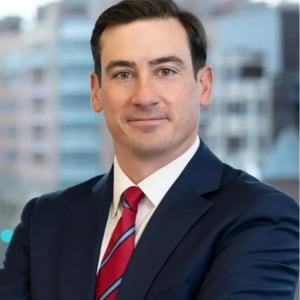
Zachary (“Zach”) Terwilliger, the former Senate confirmed United States Attorney for the Eastern District of Virginia, has extensive experience in all manner of federal investigations and trials. Those frontline skills combine with his mastery of involved management roles overseeing operational programs, setting policy parameters, and managing teams to accomplish strategic objectives. He gained this experience over a decades-long career in public service where he advanced from an office intern to serve as the presidentially appointed and Senate confirmed United States Attorney. He rounds out his Washington experience by having served as Associate Deputy Attorney General and Chief of staff to the Deputy Attorney General, whose office manages the entire Department of Justice and its various agencies, and as counsel to the Chair of the Senate Judiciary Committee.
In a testament to his professionalism, he was the sole and unanimous recommendation of Virginia’s two Democratic Senators to serve as U.S. Attorney. Following this recommendation, the President’s nomination, and confirmation by the entire U.S. Senate, Zach was sworn in as the then youngest U.S. Attorney in the country.
Zach’s knowledge of how the Justice Department and federal enforcement agencies function in both civil and criminal matters, particularly in regards to discretionary decision making, provides him with unique insights necessary to effectively assist companies and individuals facing federal enforcement matters, including allegations of domestic and international criminal and civil violations. Zach is skilled in navigating internal and government investigations, allegations of bribery under the Foreign Corrupt Practices Act, complex criminal grand jury investigations, criminal antitrust matters, and Congressional inquiries and select committee investigations, among other complex white collar issues.
As U.S. Attorney for the Eastern District of Virginia, Zach supervised a team of over 300 lawyers and support staff. He also managed multiple key corporate resolutions, and significantly enhanced the District’s white-collar footprint through collaboration with DOJ’s Fraud Section, as well as with other enforcement entities like the newly created Special Inspector General for Pandemic Recovery and the Procurement Collusion Strike Force. He is also a veteran litigator with years of investigative and in-court experience in trials, pre-trial proceedings, and appeals.
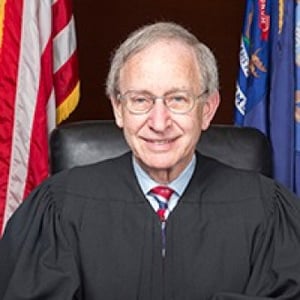
Stephen Markman was appointed Justice of the Michigan Supreme Court on October 1, 1999. He served as the Chief Justice from 2017-2019. Before his appointment, he served as Judge on the Michigan Court of Appeals from 1995-1999. Prior to this, he practiced law with the firm of Miller, Canfield, Paddock & Stone in Detroit.
From 1989-1993, Justice Markman served as United States Attorney, or federal prosecutor, in Michigan, after having been nominated by President George H. W. Bush and confirmed by the United States Senate. From 1985-1989, he served as Assistant Attorney General of the United States, after having been nominated by President Ronald Reagan and confirmed by the United States Senate. In that position, he headed the Department of Justice’s Office of Legal Policy, which served as the principal policy development office within the Department, and which coordinated the federal judicial selection process. Prior to this, he served for seven years as Chief Counsel of the United States Senate Subcommittee on the Constitution, and as Deputy Chief Counsel of the United States Senate Judiciary Committee.
Justice Markman has authored articles for such publications as the University of Michigan Journal of Law Reform, the Detroit College of Law Review, the Stanford Law Review, the University of Chicago Law Review, the American Criminal Justice Law Review, the Barrister’s Law Journal, the Harvard Journal of Law & Public Policy, and the American University Law Review. He has also served as a contributing editor of National Review magazine, and has authored chapters in such books as “In the Name of Justice: The Aims of the Criminal Law,” “Still the Law of the Land,” and “Originalism: A Quarter Century of Debate.”
Justice Markman has taught constitutional law at Hillsdale College since 1993. He has served on the Board of Directors of the Western Michigan University Thomas M. Cooley Law School. He traveled to Ukraine on two occasions on behalf of the State Department, to provide assistance in the development of that nation’s post-Soviet constitution. He is a Fellow of the Michigan Bar Foundation, a Master of the Bench of the Inns of Court, and a member of the One Hundred Club. He has spoken before hundreds of youth, civic, charitable, and legal groups throughout Michigan and nationally, and has coached Little League baseball and basketball. He lives with his wife Mary Kathleen in Mason, and has two sons, James and Charles.
Justice Markman was re-elected to the Supreme Court in 2000, 2004, and 2012. His present term expires January 1, 2021.
Professor of Law, University of Michigan Law School
Biography
Prof. Richard Primus teaches the law, theory, and history of the U.S. Constitution. In 2008, he won the first-ever Guggenheim Fellowship in Constitutional Studies for his work on the relationship between history and constitutional interpretation. His scholarship has been cited in opinions of the Justices of the Supreme Court of the United States.
Prof. Primus works with constitutional law on the state level as well as the federal. He has helped state governmental agencies, nonprofit organizations, and private businesses solve practical problems involving state-level constitutional law, both in Michigan and in other states.
The students of Michigan Law School have given Prof. Primus the L. Hart Wright Award for Excellence in Teaching on four separate occasions: in 2004, 2007, 2010, and 2011.
Prof. Primus graduated from Harvard College in 1992 with an AB, summa cum laude, in social studies. He then earned a DPhil in politics at Oxford, where he was a Rhodes Scholar and the Jowett Senior Scholar at Balliol College. After studying law at Yale, Prof. Primus clerked for Judge Guido Calabresi on the Second Circuit and for U.S. Supreme Court Justice Ruth Bader Ginsburg. He then practiced law at the Washington, D.C., office of Jenner & Block before joining the Michigan faculty in 2001.