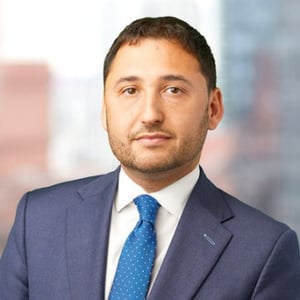
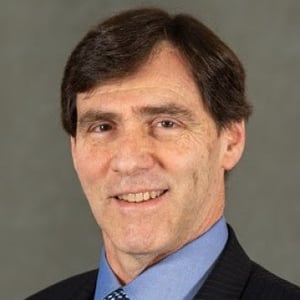
Misha leads Troutman Peppers' national appellate and Supreme Court practice. Most recently, he successfully obtained orders from the Supreme Court blocking an unconstitutional restriction on places of worship, as well as overturning a lower court order that had blocked several state election laws. He has also argued and prevailed before the Supreme Court in Gill v. Whitford, one of the most significant redistricting cases in decades, as well as Murr v. Wisconsin, a high-stakes regulatory taking case.
Before joining Troutman, Misha served as Solicitor General of the State of Wisconsin. Misha previously served as a law clerk for the Honorable Anthony M. Kennedy of the Supreme Court, Janice Rogers Brown of the D.C. Circuit, and Alex Kozinski of the 9th Circuit. He graduated from Georgetown University Law Center, where he was President of the Federalist Society Chapter.
Senior Fellow and Director of Constitutional Studies, Manhattan Institute
Biography
Ilya Shapiro is a senior fellow and director of constitutional studies at the Manhattan Institute and a contributing editor of City Journal. Previously he was executive director and senior lecturer at the Georgetown Center for the Constitution, and before that a vice president of the Cato Institute.
Shapiro has testified many times before Congress and state legislatures and has filed more than 500 amicus curiae “friend of the court” briefs in the Supreme Court. He lectures regularly on behalf of the Federalist Society, is a member of the board of fellows of the Jewish Policy Center, was an inaugural Washington Fellow at the National Review Institute, and has been an adjunct law professor at the George Washington University and University of Mississippi. He is also the chairman of the board of advisers of the Mississippi Justice Institute, a barrister in the Edward Coke Appellate Inn of Court, and a former member of the Virginia Advisory Committee to the U.S. Commission on Civil Rights.
Earlier in his career, Shapiro was a special assistant/adviser to the Multi-National Force in Iraq on rule-of-law issues and practiced at Patton Boggs and Cleary Gottlieb. Before entering private practice, he clerked for Judge E. Grady Jolly of the U.S. Court of Appeals for the Fifth Circuit. He holds an AB from Princeton University, an MSc from the London School of Economics, and a JD from the University of Chicago Law School.
Curtis Dubay is the Chief Economist at the U.S. Chamber of Commerce. He tracks the condition of the economy, analyzes the impact of public policy on economic growth, and runs the Chamber’s Chief Economists Committee. Previously, he was senior economist at the American Bankers Association and a research fellow in tax and economic policy at The Heritage Foundation. He also worked at the accounting firm PricewaterhouseCoopers (PwC) and at the Tax Foundation.
Dubay has researched and published frequently on a wide range of tax and economic issues. He isregularly quoted by the press and has appeared often in the media, including on CNBC, Fox Business, Fox News, and C-SPAN. He has testified before Congress several times and been cited in newspapers such as The Wall Street Journal, The New York Times, The Washington Post, USA Today, and Politico.
Dubay received his master’s degree in economics from the University of Connecticut and his bachelor’s degree in economics and leadership studies from the University of Richmond. He resides in Washington, D.C., with his wife and three sons.
Mr. Consovoy assists clients on a broad range of litigation and appellate issues primarily before the Supreme Court of the United States and federal appellate and district courts, as well as before federal agencies. Mr. Consovoy represents clients in cases involving constitutional issues, interpretation and enforcement of federal statutes, administrative law, civil rights disputes, and a variety of other civil litigation issues. Mr. Consovoy recently argued two cases—Spokeo v. Robbins and Evenwel v. Abbott—before the Supreme Court of the United States.
Mr. Consovoy is a former law clerk to Supreme Court Justice Clarence Thomas, Judge Edith H. Jones of the United States Court of Appeals for the Fifth Circuit, and the 17th Judicial Circuit of Virginia. Mr. Consovoy is a member of the Edward Coke Appellate Inn of Court and was named by Law360 as a “rising star” in appellate law for 2013. Since 2011, Mr. Consovoy has been the co-director of the Supreme Court Clinic at the Antonin Scalia Law School at George Mason University, where he also is the co-director of the Administrative Law Clinic.
Mr. Consovoy earned his B.A. from Monmouth University, and his J.D. magna cum laude from George Mason University School of Law. Mr. Consovoy is a member of the Virginia and District of Columbia bars.
Fellow, Catholic Studies Program at Ethics and Public Policy Center
Biography
Mary Rice Hasson, J.D., is the Kate O’Beirne Senior Fellow at the Ethics and Public Policy Center in Washington, D.C. She directs the Catholic Women’s Forum, a network of Catholic professional women and scholars, and co-founded the Person and Identity Project, a new initiative that equips parents and faith-based institutions to counter gender ideology and promote the truth of the human person. An attorney and policy expert, Mary served as keynote speaker for the Holy See during the United Nations Commission on the Status of Women, addressing education (2018), women and work (2017), caregiving (2019), and gender ideology (2019). She currently serves as a consultant to the U.S. Conference of Catholic Bishops’ Committee on Laity, Marriage, Family, Life and Youth.
Mary speaks frequently in national and international venues on topics related to gender ideology, parental rights, religious liberty, and culture. She is frequently called upon to provide expert counsel on federal and state legislation and, in 2021, testified before the U.S. Senate Judiciary Committee against the Equality Act and before the Australian Parliament, New South Wales, in support of parental rights legislation.
She has co-authored several books on education, including Get Out Now: Why You Should Pull Your Child From Public School Before It’s Too Late (Regnery 2018), and her writing has appeared in a variety of policy journals, scholarly publications, and traditional media includings The Wall Street Journal, Newsweek, First Thing, National Review Online, and the National Catholic Register, among others. She is a frequent media commentator in both religious and secular media.
A graduate of the University of Notre Dame and Notre Dame Law School, Mary and her husband Seamus Hasson have seven grown children and two grandchildren.
Professor of Business and Professor of Law (by courtesy) | Executive Director, Georgetown Institute for the Study of Markets and Ethics McDonough School of Business, Georgetown University
Professor Hasnas is also the executive director of the Georgetown Institute for the Study of Markets and Ethics, whose tripartite mission is to produce high-quality research on matters related to the ethics of market activity, improve ethics pedagogy, and educate the broader, non-academic community about ethical issues related to the functioning of markets.
Professor Hasnas has held previous appointments as associate professor of law at George Mason University School of Law, visiting associate professor of law at Duke University School of Law and the Washington College of Law at American University, and Law and Humanities Fellow at Temple University School of Law. Professor Hasnas has also been a visiting scholar at the Kennedy Institute of Ethics in Washington, DC and the Social Philosophy and Policy Center in Bowling Green, Ohio.
He received his B.A. in Philosophy from Lafayette College, his J.D. and Ph.D. in Legal Philosophy from Duke University, and his LL.M. in Legal Education from Temple Law School. His scholarship concerns ethics and white collar crime, jurisprudence, and legal history.
Karen Harned is President at Harned Strategies LLC. Previously, she served as Executive Director of the National Federation of Independent Business Small Business Legal Center, a post she held from 2002-2022. Prior to joining the Legal Center, Ms. Harned was an attorney at a Washington, D.C. law firm specializing in food and drug law, where she represented several small and large businesses and their respective trade associations before Congress and federal agencies. She also served as Assistant Press Secretary to U.S. Senator Don Nickles of Oklahoma from August of 1989 to March of 1993. Ms. Harned received her B.A. from the University of Oklahoma in 1989 and her J.D. from The George Washington University National Law Center in 1995. She is admitted to practice in the District of Columbia.
As Executive Director of the NFIB Small Business Legal Center, Ms. Harned commented regularly on small business cases before federal and state courts, as well as the U.S. Supreme Court. She has appeared on Fox News, Fox Business, NBC Nightly News, CNN, CNBC and MSNBC, as well as National Public Radio, CBS Radio, and radio outlets across the country. Her opinion editorials and articles regarding healthcare, lawsuit abuse, regulation, and other issues important to small business have been published in newspapers and other publications nationwide.
Ms. Harned has testified before Congress on the small business impact of regulation and the civil justice system. Additionally, she has conducted numerous webinars and legal compliance seminars for small business owners across the country on issues relating to employment law, including unionization and immigration.
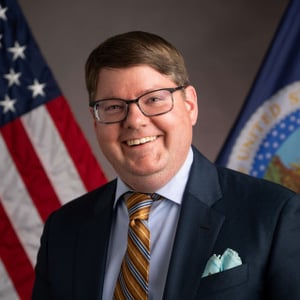
Deputy Secretary of Agriculture, U.S. Department of Agriculture
Biography
Judge Stephen Alexander Vaden was appointed as the Deputy Secretary of the U.S. Department of Agriculture on July 7, 2025. Alongside Secretary Brooke L. Rollins, Deputy Secretary Vaden leads the Department’s operations and implements policies that support America’s food and farm systems. A native of Union City, Tennessee, Deputy Secretary Vaden brings expertise in agricultural policy, law, and rural development. Previously, he served as a judge on the U.S. Court of International Trade and as General Counsel of USDA. Throughout Deputy Secretary Vaden’s time as General Counsel, he led successful Supreme Court litigation, advanced regulatory reform, and supported the implementation of the 2018 Farm Bill. He is a graduate of Yale Law School and Vanderbilt University. A public servant with strong agricultural roots, Deputy Secretary Vaden is committed to revitalizing rural America and ensuring an abundant, affordable, and safe U.S. food supply.
Andrew Varcoe was formerly a partner at Boyden Gray & Associates in Washington, D.C. From 2014 to 2017, Mr. Varcoe was Deputy General Counsel at the Biotechnology Innovation Organization (BIO), the trade association for the biotechnology industry. He previously served as an attorney in the Office of the General Counsel of the U.S. Department of Agriculture (USDA) in Washington, D.C., and Harrisburg, Pennsylvania. While at USDA, he briefed, argued, and mediated cases in the federal courts of appeals and helped manage USDA’s and its agencies’ nationwide appellate litigation docket, working closely with trial and appellate lawyers at the U.S. Department of Justice. Before joining USDA, Mr. Varcoe was an associate and then counsel at Wilmer Cutler Pickering Hale and Dorr LLP (previously Wilmer, Cutler & Pickering). Mr. Varcoe served as a law clerk to Justice Francis X. Spina of the Massachusetts Supreme Judicial Court (from 1999 to 2000), and to Judge Edith H. Jones of the U.S. Court of Appeals for the Fifth Circuit (from 2001 to 2002).
Mr. Varcoe received his J.D. cum laude in 1999 from Harvard Law School, where he was a research assistant to Professor Martha Minow and an editor of the Harvard Journal of Law & Public Policy. Mr. Varcoe graduated with honors in 1995 from the University of Chicago, where he was Student Ombudsperson (a mediator, reporting to the President of the University, who investigated and resolved student grievances) and a member of Phi Beta Kappa.
In 2018 and 2019, Mr. Varcoe served as Chairman of the Executive Committee of the Federalist Society’s Environmental Law and Property Rights Practice Group.
Professor of Law, South Texas College of Law Houston
Biography
Josh Blackman is a national thought leader on constitutional law and the United States Supreme Court. Josh’s work was quoted during two presidential impeachment trials. He has testified before Congress and advises federal and state lawmakers. Josh regularly appears on TV, including NBC, CBS, ABC, Fox, and the BBC. Josh is also a frequent guest on NPR and other syndicated radio programs. He has published commentaries in the New York Times, Wall Street Journal, Washington Post, and leading national publications.
Since 2012, Josh has served as a professor at the South Texas College of Law Houston. He holds the Centennial Chair of Constitutional Law. Josh is an Adjunct Fellow at the Manhattan Institute. Josh has written more than seven dozen law review articles that have been cited more than a thousand times. Josh was selected as the Jurist of the Year by the Texas Journal of Law & Public Policy, received the inaugural Meese III Originalism Award, and was awarded the Inaugural Joseph Story Award. Josh was selected by Forbes Magazine for the “30 Under 30” in Law and Policy. Josh is the President of the Harlan Institute, and founded FantasySCOTUS, the Internet’s Premier Supreme Court Fantasy League. He blogs at the Volokh Conspiracyand posts@JoshMBlackman.
Legal Fellow, Center for Constitutional Studies, Cato Institute
Biography
Brent Skorup is a legal fellow in the Cato Institute’s Robert A. Levy Center for Constitutional Studies.
Before joining Cato, he was a senior research fellow at the Mercatus Center at the George Mason University. His research areas include free speech, technology law, Fourth Amendment protections, regulation, and property law. Skorup has published pieces in economics and law journals and in popular media, including The Wall Street Journal, The New York Times, Bloomberg Law, Reuters, and Wired. He’s appeared as a TV and radio interview guest for news outlets like C‑SPAN, NPR, CBS News, ABC News, and CNBC Asia.
The Pennsylvania Supreme Court, a dissenting opinion at the Illinois Supreme Court, and the ALI's Restatement of the Law of Property have cited his legal research and he has testified as a technology and legal expert in legislative hearings in several states. Skorup has been appointed to several federal and state advisory bodies and he is currently a member of the Texas Advanced Air Mobility Advisory Committee.
Skorup has a BA in economics from Wheaton College and a law degree from the George Mason University School of Law, where he was articles editor for the Civil Rights Law Journal. He was a legal clerk at the FCC’s wireless bureau and Office of General Counsel and at the Energy and Commerce Committee in the U.S. House of Representatives.