The Rise of Populism In American Politics
Baltimore Student Chapter
Speakers:
- Ilya Shapiro, Cato Institute
- Professor Garrett Epps, Baltimore Law
Speakers:
- Ilya Shapiro, Cato Institute
- Professor Garrett Epps, Baltimore Law

Baltimore Student Chapter
Speakers:
Speakers:
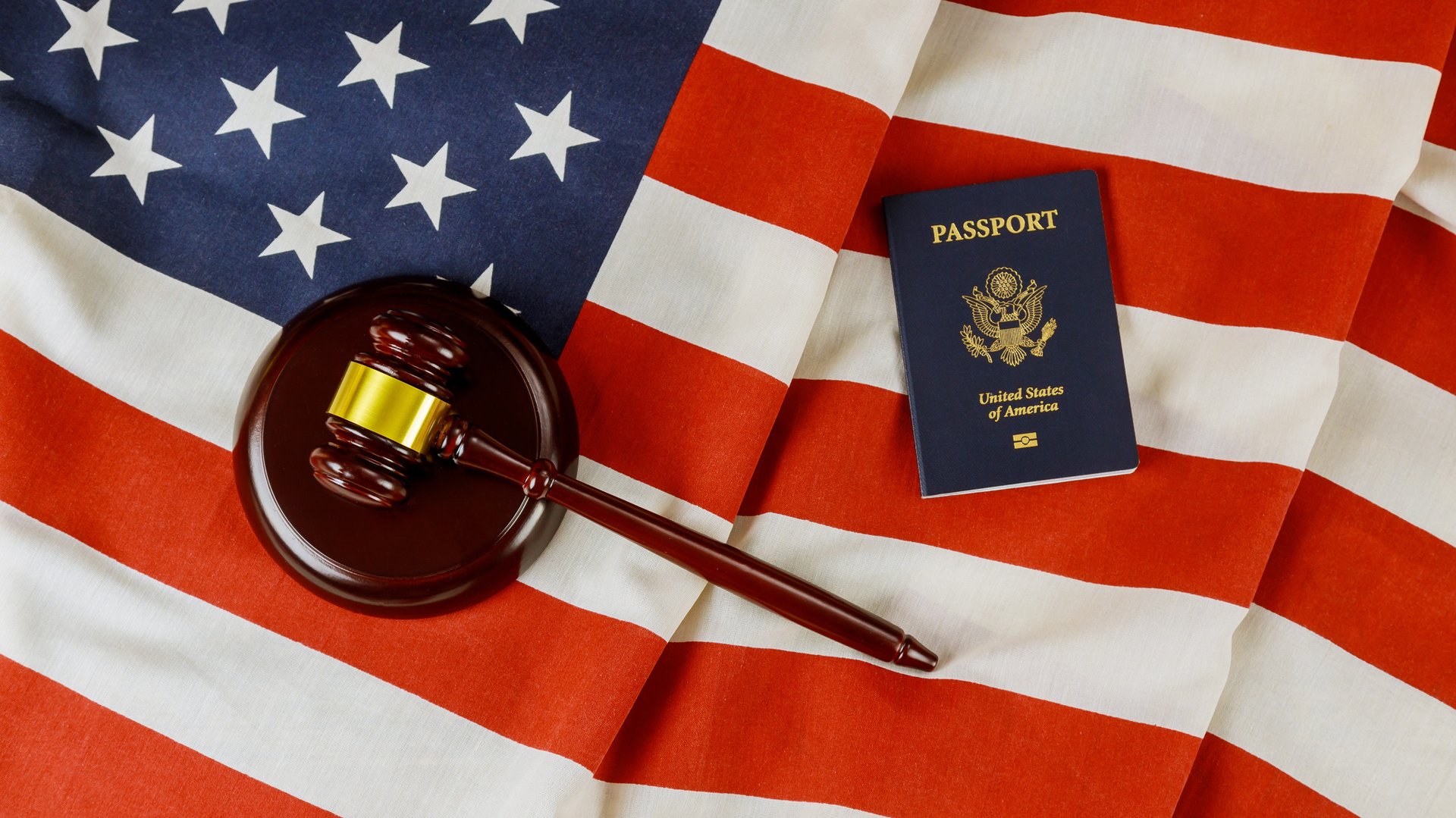
Professor of Law, University of Baltimore School of Law
Professor Garrett Epps joined the University of Baltimore School of Law in 2008. He teaches courses in Constitutional Law, First Amendment, and Fiction and Non-Fiction Writing for Law Students. He is a contributing writer to The Atlantic Online and serves as the magazine's Supreme Court correspondent. He is also a contributing editor of The American Prospect. Epps' most recent book, American Justice 2014: Nine Clashing Visions on the Supreme Court, was published by the University of Pennsylvania Press.
Professor Epps' previous book, American Epic: Reading the U.S. Constitution, was published in 2013 by Oxford University Press. In March 2014, American Epic was named a finalist for the American Bar Association’s Silver Gavel Book award. Two of his previous books, Democracy Reborn: The Fourteenth Amendment and the Fight for Equal Rights in Post-Civil War America (2006) and To an Unknown God: Religious Freedom on Trial (2001), were both also Silver Gavel finalists. A former staff writer for The Washington Post, Epps has written for The New York Times, The New York Review of Books, The Nation, The New Republic and The American Prospect.
He received his LL.M. in Comparative and International Law and his J.D. from Duke University, where he served as articles editor of Law and Contemporary Problems and graduated with the Willis Smith Award for the highest three-year academic average. Before attending law school, Epps earned his M.A. in English Writing in 1975 from Hollins College and his B.A. in 1972 from Harvard College, where he was editor of The Harvard Crimson.
Senior Fellow and Director of Constitutional Studies, Manhattan Institute
Ilya Shapiro is a senior fellow and director of constitutional studies at the Manhattan Institute and a contributing editor of City Journal. Previously he was executive director and senior lecturer at the Georgetown Center for the Constitution, and before that a vice president of the Cato Institute.
Shapiro is the author of Lawless: The Miseducation of America’s Elites (2025) and Supreme Disorder: Judicial Nominations and the Politics of America’s Highest Court (2020), coauthor of Religious Liberties for Corporations? (2014), and editor of 11 volumes of the Cato Supreme Court Review (2008-18). He has contributed to a variety of academic, popular, and professional publications, including the Wall Street Journal, Harvard Journal of Law & Public Policy, Washington Post, Los Angeles Times, USA Today, National Review, and Newsweek. He also regularly provides commentary for various media outlets, writes the Shapiro’s Gavel newsletter on Substack, and once appeared on the Colbert Report.
Shapiro has testified many times before Congress and state legislatures and has filed more than 500 amicus curiae “friend of the court” briefs in the Supreme Court. He lectures regularly on behalf of the Federalist Society, is a member of the board of fellows of the Jewish Policy Center, was an inaugural Washington Fellow at the National Review Institute, and has been an adjunct law professor at the George Washington University and University of Mississippi. He is also the chairman of the board of advisers of the Mississippi Justice Institute, a barrister in the Edward Coke Appellate Inn of Court, and a former member of the Virginia Advisory Committee to the U.S. Commission on Civil Rights.
Earlier in his career, Shapiro was a special assistant/adviser to the Multi-National Force in Iraq on rule-of-law issues and practiced at Patton Boggs and Cleary Gottlieb. Before entering private practice, he clerked for Judge E. Grady Jolly of the U.S. Court of Appeals for the Fifth Circuit. He holds an AB from Princeton University, an MSc from the London School of Economics, and a JD from the University of Chicago Law School.