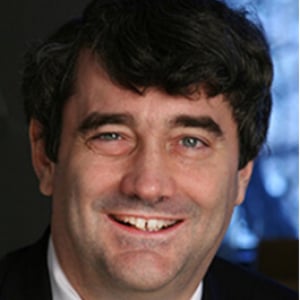
Clayton J. and Henry R. Barber Professor of Law, Northwestern University Pritzker School of Law and Co-Chairman, Board of Directors, The Federalist Society
Biography
STEVEN GOW CALABRESI is the Clayton J. & Henry R. Barber Professor at Northwestern Pritzker School of Law. He has also co-taught in the Fall semester at Yale Law School from 2013 to the present. Calabresi clerked for Justice Antonin Scalia and Judges Robert H. Bork and Ralph K. Winter. He was a Special Assistant to Attorney General Meese from 1985 to 1987 and worked with Ken Cribb as his deputy in 1987 on the second floor of the West Wing of the Reagan White House. Calabresi has written books on presidential power and comparative constitutional law and the origins of judicial review. He and Gary Lawson are the co-editors of a casebook on U.S. Constitutional Law, and Calabresi is also the co-editor of a casebook on comparative constitutional law. He has written over seventy law review articles since 1990.
Associate Professor of Political Science, Brown University
Biography
John Tomasi is Associate Professor of Political Science at Brown University and Director of the Political Theory Project at Brown University. He is author of Liberalism Beyond Justice: Citizens Society and the Boundaries of Political Theory (Princeton University Press, 2001), and numerous articles.
He received his B.A. from Colby College, his M.A. from the University of Arizona (1990), and his B. Phil., D. Phil. from Oxford University (1993). He has had previous appointments at Princeton University and Stanford University. His specializations are political theory and ethics and public policy.
Liberal regimes shape the ethical outlook of their citizens, relentlessly influencing their most personal commitments over time. This fact raises pressing questions: If liberals cannot prevent the spillover of public values into nonpublic domains, how accommodating of diversity can a liberal regime actually be? To what degree can a liberal society be a home even to the people whose viewpoints it was formally designed to include?