
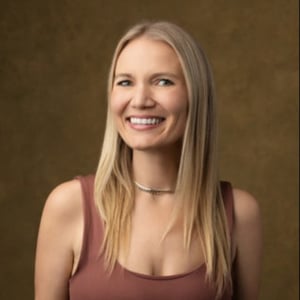
Constitutional Scholarship Director and Senior Legal Analyst, Pacific Legal Foundation
Anastasia Boden is Director of Constitutional Scholarship at Pacific Legal Foundation, where she leads the organization’s Supreme Court commentary and directs scholarly analysis in support of the firm’s litigation. She has represented entrepreneurs and small businesses nationwide in challenges to onerous licensing regimes, anti-competitive titling restrictions, Certificate of Need (“competitor’s veto”) laws, and other forms of unnecessary red tape that block economic opportunity.
Prior to this role, Anastasia developed nearly a dozen constitutional challenges to Certificate of Need laws across the country, helping spur legislative reform in Montana, Pennsylvania, and West Virginia. Her victories include a ruling invalidating Houston’s busking restrictions, multiple appellate decisions expanding access to the courts for civil rights plaintiffs, and the legislative repeal of Virginia’s happy-hour advertising ban.
Her writings on law and liberty have been featured in USA Today, The Washington Post, The Wall Street Journal, the Los Angeles Times, the Chicago Tribune, Forbes, and more, and she has appeared on Headline News, CBS News, Fox News, ReasonTV, Newsmax, and John Stossel. In 2020, she was featured on Libertarian Party presidential candidate Jo Jorgensen’s Supreme Court shortlist.
Anastasia earned her BA with dean’s honors from the University of California, Santa Barbara, and her JD from Georgetown University Law Center, where she was research assistant to Professor Randy E. Barnett—the “intellectual godfather” of the constitutional challenge to Obamacare. She is the co-creator of the podcast Dissed, about infamous Supreme Court dissents. She authors the biweekly newsletter SCOTUS Scoop and the column, “In Dissent” for SCOTUSblog.

Professor of Law, University of Minnesota Law School
Professor James W. Coleman is a scholar of energy law. He specializes in North American energy infrastructure, transport, and trade. He is also a nonresident senior fellow at the American Enterprise Institute focused on energy policy.
Professor Coleman has testified before Congress on steps to speed up energy infrastructure permits. He also worked with a team of experts as part of Alberta's Royalty Review to revise the Canadian province's management of its vast oil and gas resources.
Before joining Minnesota, Professor Coleman taught at Southern Methodist University's Dedman School of Law, the University of Calgary’s law and business schools, and Harvard Law School. Earlier, he practiced environmental and appellate law at Sidley Austin in Washington, D.C., and clerked for the Honorable Steven M. Colloton of the U.S. Court of Appeals for the Eighth Circuit.
Professor Coleman received two degrees from Harvard University—a J.D. (cum laude) and B.A. in biology (magna cum laude with highest honors in the field). As a result of his undergraduate thesis on butterfly genetics, which required fieldwork in Central Asia, a species of lycaenid butterfly was named after him—Agrodiaetus ripartii colemani.
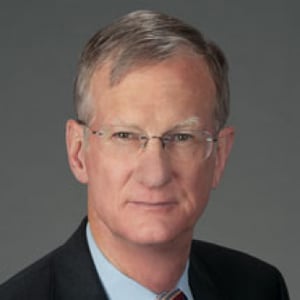
Legal Scholar and Solo Practitioner
Jack received his B.A. in History from the University of Virginia in 1977, graduating with Highest Distinction. After graduating Yale Law School in 1980, he served active duty in the U.S. Army's JAG Corps, rising to the rank of Major, where he represented the United States in more than 250 cases.
He practiced for a decade as an Associate for Bradley Arant in Birmingham, Alabama. He proudly served the State of Alabama in the Office of the Attorney General, both as Deputy and Assistant Attorney General, handling complex civil and criminal litigation cases for the people of Alabama. In 2000, he won the "Best Brief Award" from the National Association of Attorneys General for his brief in a case decided by the U.S. Supreme Court, James Alexander v. Martha Sandoval – a case he won. He was Special Assistant to the Inspector General for the Corporation for National and Community Service, Visiting Legal Fellow for the Center for Judicial and Legal Studies for the Heritage Foundation, Of Counsel at Strickland Brockington Lewis, a solo practitioner, and General Counsel for Indigo Energy.
Most recently, he "re-upped" for military service, volunteering his legal services to the Georgia State Defense Force where twice each month he provided legal services for National Guardsmen who were being deployed. He wore his military uniform for the last time in October 2024.
Jack Park passed away on March 16, 2026.
Member, Miller & Chevalier Chartered
Timothy P. O'Toole defends individuals and companies in white collar criminal prosecutions, conducts internal corporate investigations, and represents potential witnesses and targets in government investigations. His white collar criminal defense practice includes matters involving the Foreign Corrupt Practices Act, criminal tax, conspiracy, false representations to government agencies, bribery, illegal gratuities, obstruction of justice, and fraud.
Mr. O’Toole also handles complex litigation arising under the Employee Retirement Income Security Act (ERISA). His ERISA practice spans a broad spectrum, including fiduciary litigation, pre-emption matters, and cases arising under Title IV. He has represented plan sponsors in benefits litigation and has particular experience in defending breach of fiduciary duty claims. Mr. O’Toole also currently represents a number of retiree organizations in challenges to the manner in which the Pension Benefit Guaranty Corporation (PBGC) has handled the termination of their pension plans and administered their pension benefits.
Mr. O'Toole is experienced in handling criminal and civil appeals, having presented more than 25 appellate arguments in the state and federal courts, and represented parties and amici curiae before the United States Supreme Court in a Fourth Amendment case (Hudson v. Michigan), cases involving the Sixth Amendment right to confront witnesses (Briscoe v. Virginia; Melendez-Diaz v. Massachusetts; Davis v. Washington; and Hammon v. Indiana), and cases involving federal court jurisdiction (Slack v. McDaniel; Whorton v. Bockting; Muhammad v. Close; and Rumsfeld v. Padilla).
Prior to joining Miller & Chevalier, Mr. O’Toole served as the Chief of the Special Litigation Division of the Public Defender Service for the District of Columbia, where he supervised and handled complex cases in the local and federal courts. He is a former Assistant Federal Public Defender in Las Vegas, Nevada, where he represented people under sentence of death in federal proceedings.
General Counsel and Vice-President of Litigation, Washington Legal Foundation
Cory Andrews is General Counsel and Vice-President of Litigation for the Washington Legal Foundation (WLF). As counsel of record for WLF and other clients, he has authored more than 100 briefs, at petition and merits stages, in the U.S. Supreme Court. He also frequently litigates in state and federal appellate courts. Before joining WLF, Cory practiced trial and appellate law for White & Case LLP, where he litigated in state and federal courts on behalf of clients in the telecommunications, hospitality, and banking industries. He received his J.D. magna cum laude from the University of Florida, where he was Editor-in-Chief of the Florida Law Review and elected to the Order of the Coif. Upon graduation, Cory served as a law clerk to the Honorable Steven D. Merryday of the U.S. District Court for the Middle District of Florida.

Teleforum Preview: Obama's Foreign Policy
Join the Federalist Society's International and National Security Law Practice Group for a Teleforum conference call with...
Trial by Formula & Class Action Lawsuits
Anastasia P. Boden
Short video featuring Anastasia Boden discussing Tyson Foods, Inc. v. Bouaphakeo
Attorney Anastasia Boden of the Pacific Legal Foundation previews the upcoming Supreme Court case Tyson...
Countdown to the National Lawyers Convention: Free Speech, Anti-Corruption, and the Criminalization of Government Affairs
Looking forward to the convention; I always enjoy seeing old friends and being challenged to think...
Federal Energy Regulatory Commission v. Electric Power Supply Association and EnerNOC v. Electric Power Supply Association - Post-Argument SCOTUScast
James W. Coleman
SCOTUScast 11-7-15 featuring James Coleman
On October 14, 2015, the Supreme Court heard oral argument in Federal Energy Regulatory Commission v....
Hurst v. Florida - Post-Argument SCOTUScast
John J. Park
SCOTUScast 11-7-15 featuring Jack Park
On October 13, 2015, the Supreme Court heard oral argument in Hurst v. Florida. Timothy...
Ocasio v. U.S. - Post-Argument SCOTUScast
Timothy P. O'Toole
SCOTUScast 11-7-15 featuring Timothy O'Toole
On October 6, 2015, the Supreme Court heard oral argument in Ocasio v. U.S. Ocasio challenges his...
DIRECTV v. Imburgia - Post-Argument SCOTUScast
Cory L. Andrews
SCOTUScast 11-6-15 featuring Cory Andrews
On October 6, 2015, the Supreme Court heard oral argument in DIRECTV v. Imburgia. This...
Topics
SCOTUS Orders: 11/6/2015
This afternoon the Supreme Court granted cert in seven challenges to the Affordable Care Act...
Topics
Countdown to the National Lawyers Convention: What's "Conservative" about the "Roberts" Court?
Next week, I will participate in the Federalist Society’s National Lawyers Convention, in Washington, D.C.,...
Topics
Supreme Court Preview: Tyson Foods v. Bouaphakeo
On November 10, the Supreme Court will hear oral arguments in the case of Tyson v....