

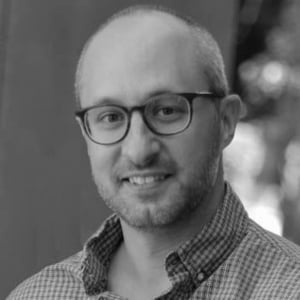
Professor of Law, Michigan State University (currently serving as FCC General Counsel)
Professor Candeub joined the MSU Law faculty in fall 2004. He is also a Fellow with MSU's Institute of Public Utilities. Prior to joining MSU, he served as an advisor at the Federal Communications Commission (FCC). From 1998 to 2000, Professor Candeub was a litigation associate for the Washington D.C. firm of Jones, Day, Reavis & Pogue and also has served as a corporate associate with Cleary, Gottlieb, Steen & Hamilton, also in Washington, D.C. Immediately following law school, he clerked for Chief Judge J. Clifford Wallace, U.S. Court of Appeals for the Ninth Circuit. While in law school, Professor Candeub was an articles editor for the University of Pennsylvania Law Review.
Professor Candeub's scholarly interests focus on the law and regulation of communications, internet, technology. His numerous law review articles and scholarly papers have placed him at the center of legal and policy controversies, and he often writes for popular outlets such as the Wall Street Journal and US News. Federal courts, including the U.S. Supreme Court, have cited and relied upon his work.
He joined the Trump administration in 2019 as Deputy Assistant Secretary of Commerce for Telecommunications and Information and assumed the role of Acting Assistant Secretary. He later joined the Department of Justice as Deputy Associate Attorney General.
Professor Candeub is a senior fellow at the D.C.-based Center of Renewing America.
Assistant Professor of Law and, by courtesy, Computer Science, University of Nebraska College of Law; Nonresident Fellow, Stanford Law School Program in Law, Science & Technology
Professor Dickinson is an Assistant Professor of Law University of Nebraska College of Law, where he teaches Contracts, Business Torts and Unfair Competition, The Common Law, and Remedies. He is also a nonresident fellow with the Stanford Law School Program in Law, Science and Technology and holds a JD from Harvard Law School. Before teaching, Professor Dickinson practiced at Ropes & Gray LLP in Boston and at law firms in Rochester, New York, with a year in between as a law clerk for Judge Richard C. Wesley of the U.S. Court of Appeals for the Second Circuit.
Professor Dickinson's research focuses on the interaction between private law and technology. One major area of interest is how the common law responds to technological innovation and can be harnessed to complement the more particular statutory and regulatory schemes layered atop it. A second branch of his work explores how the tools of machine learning and artificial intelligence can be brought to bear on traditional legal questions. Through computational analysis of large bodies of case law his research seeks to provide a more systematic view of our legal system and doctrines and to guide legal reforms and policy decisions. His work appears in leading journals including the Boston College Law Review, the Stanford Technology Law Review, the Harvard Journal on Legislation, and the Administrative Law Review.
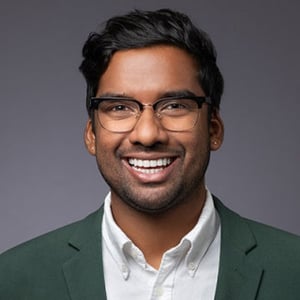
Associate Attorney - Investment Funds, Kirkland & Ellis LLP
Dhruva Krishna is an investment funds associate in the Los Angeles office of Kirkland & Ellis LLP. Dhruva's practice largely focuses on the formation, structuring, marketing, management and regulatory compliance of investment funds, including operational, legal and regulatory issues, with various sponsors ranging up to $15 billion. He also assists with related fund documentation and processes, including transfers, secondaries, co-investments and more. As an avid musician and writer, Dhruva is especially interested in the intersection of technology, regulation and innovation.
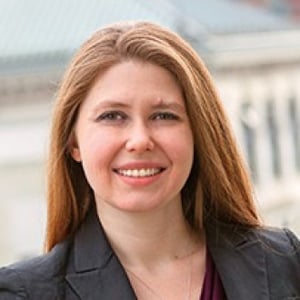
Professor of Law, Brooklyn Law School
Professor Mulligan teaches Internet law, intellectual property law, and trusts & estates. Her research addresses efforts to adapt intellectual property law for the digital age, the relationship between law and technology, and theories of constitutional interpretation. Recently, she has written about the Internet of Things, robot punishment, and early translations of the Constitution.
While at Brooklyn, Professor Mulligan researched as a visiting scholar at the Georgetown Center for the Constitution and taught as a visiting associate professor at Yale Law School. Previously, she taught at the University of Georgia and was a postdoctoral associate and lecturer in law at the Information Society Project at Yale Law School. Her scholarship has been published in a variety of journals and law reviews, including Georgia Law Review, SMU Law Review, and Constitutional Commentary.
Professor Mulligan earned her bachelor’s degree cum laude and her law degree cum laude from Harvard University, where she worked as a production and article editor for the Harvard Journal of Law & Technology. Before entering academia, she served as a law clerk for Judge Charles F. Lettow of the U.S. Court of Federal Claims.
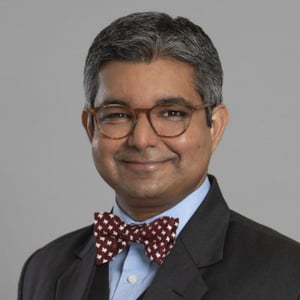
Professor of Law and Director, Intellectual Property and Information Law Program, Benjamin N. Cardozo School of Law, Yeshiva University
Saurabh Vishnubhakat is a Professor of Law and Director of the Intellectual Property and Information Law Program at Cardozo Law. He is also a Research Fellow at the Duke Law Center for Innovation Policy and a Senior Scholar at the George Mason University Center for IP and Innovation Policy. Previously, he held joint appointments as a Professor of Law and Professor of Engineering at Texas A&M University.
Professor Vishnubhakat’s expertise is in intellectual property, administrative law and federal litigation, especially from an empirical perspective. His legal writings have been cited in federal judicial opinions, agency regulations and over two dozen Supreme Court briefs. His latest work is published or forthcoming in the Indiana Law Journal, the Washington and Lee Law Review and the Iowa Law Review as well as the peer-reviewed Journal of the Copyright Society of the USA and the Journal of Economic Perspectives.
His research explores the interaction of the U.S. intellectual property system with federal courts and agencies, among other topics. With a background in the natural sciences, Professor Vishnubhakat brings a scientific mindset to legal thinking and is dedicated to teaching students how to build arguments with analytical rigor.
Prior to his appointment at Texas A&M, Professor Vishnubhakat served in the United States Patent and Trademark Office as principal legal advisor to that agency’s first two chief economists. He was also a faculty fellow at Duke Law School, where he co-taught patent law and was a postdoctoral associate at the Duke Center for Public Genomics, where he researched law and policy issues surrounding innovation in genetics and biomedicine.
Professor Vishnubhakat holds both a J.D. and LL.M. in intellectual property from the University of New Hampshire Franklin Pierce School of Law, where he was an editor of the Law Review. He also holds a B.S. in chemistry from the Georgia Institute of Technology. He is admitted to the bars of Texas, Illinois, the U.S. Court of Appeals for the Federal Circuit and the Supreme Court of the United States.

Thomas M. Siebel Senior Fellow, The Hoover Institution, Stanford University; Gary T. Schwartz Distinguished Professor of Law Emeritus, UCLA School of Law
Eugene Volokh is the Thomas M. Siebel Senior Fellow at the Hoover Institution (Stanford), as well as the Gary T. Schwartz Distinguished Professor of Law Emeritus and Distinguished Research Professor at UCLA School of Law. He recently retired from teaching at UCLA, after 30 years there, and is now focusing on research.
Volokh is the author of the textbooks The First Amendment and Related Statutes (8th ed. 2023), and Academic Legal Writing (5th ed. 2016), as well as over 100 academic law journal articles, mostly on First Amendment law. He is a member of The American Law Institute; the editor-in-chief of the Journal of Free Speech Law; and the creator and coauthor of The Volokh Conspiracy, a leading legal blog founded in 2002 (hosted at the Washington Post from 2014 to 2017 and now at Reason Magazine).
Professor of Law, Michigan State University (currently serving as FCC General Counsel)
Professor Candeub joined the MSU Law faculty in fall 2004. He is also a Fellow with MSU's Institute of Public Utilities. Prior to joining MSU, he served as an advisor at the Federal Communications Commission (FCC). From 1998 to 2000, Professor Candeub was a litigation associate for the Washington D.C. firm of Jones, Day, Reavis & Pogue and also has served as a corporate associate with Cleary, Gottlieb, Steen & Hamilton, also in Washington, D.C. Immediately following law school, he clerked for Chief Judge J. Clifford Wallace, U.S. Court of Appeals for the Ninth Circuit. While in law school, Professor Candeub was an articles editor for the University of Pennsylvania Law Review.
Professor Candeub's scholarly interests focus on the law and regulation of communications, internet, technology. His numerous law review articles and scholarly papers have placed him at the center of legal and policy controversies, and he often writes for popular outlets such as the Wall Street Journal and US News. Federal courts, including the U.S. Supreme Court, have cited and relied upon his work.
He joined the Trump administration in 2019 as Deputy Assistant Secretary of Commerce for Telecommunications and Information and assumed the role of Acting Assistant Secretary. He later joined the Department of Justice as Deputy Associate Attorney General.
Professor Candeub is a senior fellow at the D.C.-based Center of Renewing America.
Assistant Professor of Law and, by courtesy, Computer Science, University of Nebraska College of Law; Nonresident Fellow, Stanford Law School Program in Law, Science & Technology
Professor Dickinson is an Assistant Professor of Law University of Nebraska College of Law, where he teaches Contracts, Business Torts and Unfair Competition, The Common Law, and Remedies. He is also a nonresident fellow with the Stanford Law School Program in Law, Science and Technology and holds a JD from Harvard Law School. Before teaching, Professor Dickinson practiced at Ropes & Gray LLP in Boston and at law firms in Rochester, New York, with a year in between as a law clerk for Judge Richard C. Wesley of the U.S. Court of Appeals for the Second Circuit.
Professor Dickinson's research focuses on the interaction between private law and technology. One major area of interest is how the common law responds to technological innovation and can be harnessed to complement the more particular statutory and regulatory schemes layered atop it. A second branch of his work explores how the tools of machine learning and artificial intelligence can be brought to bear on traditional legal questions. Through computational analysis of large bodies of case law his research seeks to provide a more systematic view of our legal system and doctrines and to guide legal reforms and policy decisions. His work appears in leading journals including the Boston College Law Review, the Stanford Technology Law Review, the Harvard Journal on Legislation, and the Administrative Law Review.
Associate Attorney - Investment Funds, Kirkland & Ellis LLP
Dhruva Krishna is an investment funds associate in the Los Angeles office of Kirkland & Ellis LLP. Dhruva's practice largely focuses on the formation, structuring, marketing, management and regulatory compliance of investment funds, including operational, legal and regulatory issues, with various sponsors ranging up to $15 billion. He also assists with related fund documentation and processes, including transfers, secondaries, co-investments and more. As an avid musician and writer, Dhruva is especially interested in the intersection of technology, regulation and innovation.
Professor of Law, Brooklyn Law School
Professor Mulligan teaches Internet law, intellectual property law, and trusts & estates. Her research addresses efforts to adapt intellectual property law for the digital age, the relationship between law and technology, and theories of constitutional interpretation. Recently, she has written about the Internet of Things, robot punishment, and early translations of the Constitution.
While at Brooklyn, Professor Mulligan researched as a visiting scholar at the Georgetown Center for the Constitution and taught as a visiting associate professor at Yale Law School. Previously, she taught at the University of Georgia and was a postdoctoral associate and lecturer in law at the Information Society Project at Yale Law School. Her scholarship has been published in a variety of journals and law reviews, including Georgia Law Review, SMU Law Review, and Constitutional Commentary.
Professor Mulligan earned her bachelor’s degree cum laude and her law degree cum laude from Harvard University, where she worked as a production and article editor for the Harvard Journal of Law & Technology. Before entering academia, she served as a law clerk for Judge Charles F. Lettow of the U.S. Court of Federal Claims.
Professor of Law and Director, Intellectual Property and Information Law Program, Benjamin N. Cardozo School of Law, Yeshiva University
Saurabh Vishnubhakat is a Professor of Law and Director of the Intellectual Property and Information Law Program at Cardozo Law. He is also a Research Fellow at the Duke Law Center for Innovation Policy and a Senior Scholar at the George Mason University Center for IP and Innovation Policy. Previously, he held joint appointments as a Professor of Law and Professor of Engineering at Texas A&M University.
Professor Vishnubhakat’s expertise is in intellectual property, administrative law and federal litigation, especially from an empirical perspective. His legal writings have been cited in federal judicial opinions, agency regulations and over two dozen Supreme Court briefs. His latest work is published or forthcoming in the Indiana Law Journal, the Washington and Lee Law Review and the Iowa Law Review as well as the peer-reviewed Journal of the Copyright Society of the USA and the Journal of Economic Perspectives.
His research explores the interaction of the U.S. intellectual property system with federal courts and agencies, among other topics. With a background in the natural sciences, Professor Vishnubhakat brings a scientific mindset to legal thinking and is dedicated to teaching students how to build arguments with analytical rigor.
Prior to his appointment at Texas A&M, Professor Vishnubhakat served in the United States Patent and Trademark Office as principal legal advisor to that agency’s first two chief economists. He was also a faculty fellow at Duke Law School, where he co-taught patent law and was a postdoctoral associate at the Duke Center for Public Genomics, where he researched law and policy issues surrounding innovation in genetics and biomedicine.
Professor Vishnubhakat holds both a J.D. and LL.M. in intellectual property from the University of New Hampshire Franklin Pierce School of Law, where he was an editor of the Law Review. He also holds a B.S. in chemistry from the Georgia Institute of Technology. He is admitted to the bars of Texas, Illinois, the U.S. Court of Appeals for the Federal Circuit and the Supreme Court of the United States.
Thomas M. Siebel Senior Fellow, The Hoover Institution, Stanford University; Gary T. Schwartz Distinguished Professor of Law Emeritus, UCLA School of Law
Eugene Volokh is the Thomas M. Siebel Senior Fellow at the Hoover Institution (Stanford), as well as the Gary T. Schwartz Distinguished Professor of Law Emeritus and Distinguished Research Professor at UCLA School of Law. He recently retired from teaching at UCLA, after 30 years there, and is now focusing on research.
Volokh is the author of the textbooks The First Amendment and Related Statutes (8th ed. 2023), and Academic Legal Writing (5th ed. 2016), as well as over 100 academic law journal articles, mostly on First Amendment law. He is a member of The American Law Institute; the editor-in-chief of the Journal of Free Speech Law; and the creator and coauthor of The Volokh Conspiracy, a leading legal blog founded in 2002 (hosted at the Washington Post from 2014 to 2017 and now at Reason Magazine).
Dwight D. Opperman Professor of Law; Director, Center for Labor, New York University School of Law
Samuel Estreicher is a nationally preeminent scholar in US and international-comparative labor and employment law and arbitration law. He has authored more than a dozen books, including Beyond Elite Law: Access to Civil Justice in America (with Joy Radice, Cambridge Univ. 2016); leading casebooks on legislation and regulatory state, labor law and employment discrimination and employment law; and published more than 200 articles in professional and academic journals. He served as Chief Reporter for the American Law Institute’s Restatement of Employment Law (2015). After clerking for Judge Harold Leventhal of the US Court of Appeals for the DC Circuit, practicing in a labor law firm, and clerking for Justice Lewis F. Powell Jr. of the US Supreme Court, Prof. Estreicher joined the NYU School of Law faculty in 1978. In addition to serving as counsel to major law firms, he is the former secretary of the Labor and Employment Law Section of the American Bar Association, a former chair of the Committee on Labor and Employment Law of the Association of the Bar of the City of New York.15). He maintains an active appellate and ADR practice. The Labor and Employment Research Association awarded him its 2010 Susan C. Eaton Award for Outstanding Scholar-Practitioner. In recent years, Estreicher also has published work in public international law and authored several briefs in the Supreme Court and US courts of appeals on employment and US foreign relations law issues. Prof. Estreicher received his BA from Columbia College, his MS in industrial relations from Cornell University, and his JD from Columbia Law School, where he was editor-in-chief of the Columbia Law Review. He is a member of the College of Labor and Employment Lawyers and was appointed in 2016 by the UN Secretary General as a member of the UN’s Internal Justice Commission.
Martin Luther King Jr. Professor of Law, University of California, Davis School of the Law
Professor Chimène Keitner is a leading authority on international law and civil litigation, and served as the 27th Counselor on International Law in the U.S. Department of State. She has authored two books and dozens of articles, essays, and book chapters on questions surrounding the relationship among law, communities, and borders, including issues of jurisdiction, extraterritoriality, foreign sovereign and foreign official immunity, and the historical understandings underpinning current practice in these areas.
Professor Keitner holds a bachelor’s degree in history and literature with high honors from Harvard, a JD from Yale, where she was a Paul & Daisy Soros Fellow, and a doctorate in international relations from Oxford, where she was a Rhodes Scholar.
Among other professional service, Professor Keitner has served on the Executive Council of the American Society of International Law and as Co-Chair of the ASIL International Law in Domestic Courts Interest Group. She is a member of the American Law Institute and an Adviser on the ALI’s Fourth Restatement of the Foreign Relations Law of the United States. She is also a founding co-chair of the International Law Association’s Study Group on Individual Responsibility in International Law.

Judge, United States Court of Appeals, Eighth Circuit
David Stras became a judge on the United States Court of Appeals for the Eighth Circuit on January 31, 2018. Before serving on the Eighth Circuit, Judge Stras was an Associate Justice of the Minnesota Supreme Court, a position he occupied from July 1, 2010 until his appointment to the Eighth Circuit.
Prior to becoming a judge, Stras was a member of the faculty of the University of Minnesota Law School from 2004 through 2010. He taught and wrote in the areas of federal courts and jurisdiction, constitutional law, criminal law, and law and politics.
Judge Stras received his Bachelor of Arts degree, with highest distinction, in 1995 and his Master of Business Administration in 1999, both from the University of Kansas. He also received his law degree from the University of Kansas School of Law in 1999, where he served as Editor-in-Chief of the Criminal Procedure Edition of the Kansas Law Review.
Following law school, Stras clerked for The Honorable Melvin Brunetti of the United States Court of Appeals for the Ninth Circuit and then for The Honorable J. Michael Luttig of the United States Court of Appeals for the Fourth Circuit.
From 2001 to 2002, he practiced white-collar criminal and appellate litigation with the Washington, D.C., office of Sidley Austin Brown & Wood. Following his year in practice, he clerked for The Honorable Clarence Thomas of the Supreme Court of the United States.
Dwight D. Opperman Professor of Law; Director, Center for Labor, New York University School of Law
Samuel Estreicher is a nationally preeminent scholar in US and international-comparative labor and employment law and arbitration law. He has authored more than a dozen books, including Beyond Elite Law: Access to Civil Justice in America (with Joy Radice, Cambridge Univ. 2016); leading casebooks on legislation and regulatory state, labor law and employment discrimination and employment law; and published more than 200 articles in professional and academic journals. He served as Chief Reporter for the American Law Institute’s Restatement of Employment Law (2015). After clerking for Judge Harold Leventhal of the US Court of Appeals for the DC Circuit, practicing in a labor law firm, and clerking for Justice Lewis F. Powell Jr. of the US Supreme Court, Prof. Estreicher joined the NYU School of Law faculty in 1978. In addition to serving as counsel to major law firms, he is the former secretary of the Labor and Employment Law Section of the American Bar Association, a former chair of the Committee on Labor and Employment Law of the Association of the Bar of the City of New York.15). He maintains an active appellate and ADR practice. The Labor and Employment Research Association awarded him its 2010 Susan C. Eaton Award for Outstanding Scholar-Practitioner. In recent years, Estreicher also has published work in public international law and authored several briefs in the Supreme Court and US courts of appeals on employment and US foreign relations law issues. Prof. Estreicher received his BA from Columbia College, his MS in industrial relations from Cornell University, and his JD from Columbia Law School, where he was editor-in-chief of the Columbia Law Review. He is a member of the College of Labor and Employment Lawyers and was appointed in 2016 by the UN Secretary General as a member of the UN’s Internal Justice Commission.
Martin Luther King Jr. Professor of Law, University of California, Davis School of the Law
Professor Chimène Keitner is a leading authority on international law and civil litigation, and served as the 27th Counselor on International Law in the U.S. Department of State. She has authored two books and dozens of articles, essays, and book chapters on questions surrounding the relationship among law, communities, and borders, including issues of jurisdiction, extraterritoriality, foreign sovereign and foreign official immunity, and the historical understandings underpinning current practice in these areas.
Professor Keitner holds a bachelor’s degree in history and literature with high honors from Harvard, a JD from Yale, where she was a Paul & Daisy Soros Fellow, and a doctorate in international relations from Oxford, where she was a Rhodes Scholar.
Among other professional service, Professor Keitner has served on the Executive Council of the American Society of International Law and as Co-Chair of the ASIL International Law in Domestic Courts Interest Group. She is a member of the American Law Institute and an Adviser on the ALI’s Fourth Restatement of the Foreign Relations Law of the United States. She is also a founding co-chair of the International Law Association’s Study Group on Individual Responsibility in International Law.
Judge, United States Court of Appeals, Eighth Circuit
David Stras became a judge on the United States Court of Appeals for the Eighth Circuit on January 31, 2018. Before serving on the Eighth Circuit, Judge Stras was an Associate Justice of the Minnesota Supreme Court, a position he occupied from July 1, 2010 until his appointment to the Eighth Circuit.
Prior to becoming a judge, Stras was a member of the faculty of the University of Minnesota Law School from 2004 through 2010. He taught and wrote in the areas of federal courts and jurisdiction, constitutional law, criminal law, and law and politics.
Judge Stras received his Bachelor of Arts degree, with highest distinction, in 1995 and his Master of Business Administration in 1999, both from the University of Kansas. He also received his law degree from the University of Kansas School of Law in 1999, where he served as Editor-in-Chief of the Criminal Procedure Edition of the Kansas Law Review.
Following law school, Stras clerked for The Honorable Melvin Brunetti of the United States Court of Appeals for the Ninth Circuit and then for The Honorable J. Michael Luttig of the United States Court of Appeals for the Fourth Circuit.
From 2001 to 2002, he practiced white-collar criminal and appellate litigation with the Washington, D.C., office of Sidley Austin Brown & Wood. Following his year in practice, he clerked for The Honorable Clarence Thomas of the Supreme Court of the United States.
Chief Counsel, FIRE
Robert Corn-Revere joined FIRE from the law firm of Davis Wright Tremaine where he was a partner for 20 years specializing in freedom of expression and communications law. Before his time at DWT, he was a partner at Hogan & Hartson and served as legal advisor and later chief counsel to Federal Communications Commission Chairman James H. Quello.
Corn-Revere is a prominent writer, thinker, and advocate on free expression issues. In 2021, Cambridge University Press published his book, “The Mind of the Censor and the Eye of the Beholder: The First Amendment and the Censor’s Dilemma,” which explores how free expression became a part of America’s identity. He also co-authored the three-volume treatise, “Modern Communication Law,” published by West Group. In 2003, he successfully petitioned Governor George E. Pataki to grant the first posthumous pardon in New York history to the late comedian Lenny Bruce, who was convicted for “obscene” comedy routines.
Before joining FIRE full-time, Corn-Revere was a volunteer on FIRE’s Advisory Council. He also served as outside counsel for FIRE’s Stand Up For Speech Litigation Project, successfully litigating on behalf of college students and faculty whose First Amendment rights were violated.
He is regularly listed as a leading First Amendment and media law practitioner by The Best Lawyers in America, SuperLawyers Washington, D.C., and by Chambers USA. Best Lawyers in America named him as Washington, D.C.’s 2017 “Lawyer of the Year” in the areas of First Amendment Law and Litigation – First Amendment. He was again named as Best Lawyers’ “Lawyer of the Year” for First Amendment Law for 2019 and 2021, and in Media Law for 2022.

Executive Vice President/Chief Legal Officer, Sinclair Broadcast Group
David Gibber has served as Executive Vice President/Chief Legal Officer since March 2024. Prior to that, since joining Sinclair in 2011, he has served as Vice President/Deputy General Counsel, Deputy General Counsel/Director of Legal Services and Legal Counsel. Prior to joining Sinclair, he was an associate at Gordon Feinblatt, LLC in Baltimore, Maryland. Mr. Gibber received his J.D. degree from the University of Maryland School of Law, where he graduated magna cum laude, Order of the Coif. Mr. Gibber also sits on the board of directors of various charitable and community organizations.

Partner, HWG LLP
Patricia Paoletta is a partner with the law firm of HWG LLP, where she specializes in telecommunications, trade and technology policy. Ms. Paoletta provides advice on regulatory, trade and legislative policy to clients before the FCC, Congress and the Administration. Her clients include providers of content, cloud, mobile broadband, VoIP, international telecommunications, small cells, cognitive radio, public safety and homeland security solutions. She serves on Advisory Boards for several entities engaged in information services, communications and technology.
Ms. Paoletta has accrued considerable experience with telecommunications trade and policy in the public sector. From 1990 to 1995, she was senior advisor to the International Bureau Chief and Office Director at the Federal Communications Commission. In the mid 1990s, Ms. Paoletta served as Director of Telecommunications Trade Policy in the Office of the U.S. Trade Representative, Executive Office of the President, where she worked on the WTO Information Technology Agreement (ITA) and the Basic Telecommunications Agreement. After USTR, Ms. Paoletta served as Majority Counsel to the House Energy and Commerce Committee. She then moved to Level 3 Communications, as Vice President, Government Relations.
Ms. Paoletta is on the Steering Committee of the Transatlantic Roundtable on Telecommunications and Information Technology of the European Institute. She is a member of the USTR Alumni Association, Washington International Trade Association, the Federal Communications Bar Association (FCBA), and Women in Technology. Ms. Paoletta has served on the Board of Advisors for the Inter-American Dialogue's Latin America Telecom Advisor, Co-Chairman of the American Bar Association International Communications Committee, and as a member of the U.S. Chamber of Commerce's Technology Policy Committee.
Ms. Paoletta served as a delegate in 2012 to the ITU-R's Study Group 6 Working Party 6A Meeting and in 2009 and 2010 to the ITU-R's Study Group I Working Party IB Meetings; the 2009 meetings of CITEL (the Committee on International Telecommunications at the Organization of American States) PCC-II; the International Telecommunication Union (ITU) World Telecommunications Standards Assembly (2000); the ITU Internet Protocol Telephony Experts Group and the ITU World Telecommunications Policy Forum in 2001; as Chairman of the National Reliability and Interoperability Council (NRIC) Steering Committee (2000-2001); as Board Member for the Voice on the Net Coalition (2001); as Co-Chairman of the FCBA's Annual Seminar Committee (2009-2011); as a member of the FCBA's Ad Hoc Speakers Committee (2006-2007); as Co-Chairman for the FCBA International Practice Committee (2001-2002 and 2005-2006); and as a Co-Chairman of the FCBA Legislative Practice Committee (1999-2000).
President, Center for American Rights
Daniel Suhr serves as president of the Center for American Rights, where he spends every day on the front lines of the fight to preserve our rights and liberties. The Center's mission is to advance free speech, free enterprise, and parental freedom in education through strategic, precedent-setting litigation.
Daniel formerly worked as policy director for Wisconsin Governor Scott Walker, as chief of staff for Wisconsin Lieutenant Governor Rebecca Kleefisch, and as a law clerk for Judge Diane Sykes of the U.S. Court of Appeals for the Seventh Circuit. He holds a B.A. and J.D. from Marquette University, and master’s degrees from Georgetown and the University of Missouri.
Chief Counsel, FIRE
Robert Corn-Revere joined FIRE from the law firm of Davis Wright Tremaine where he was a partner for 20 years specializing in freedom of expression and communications law. Before his time at DWT, he was a partner at Hogan & Hartson and served as legal advisor and later chief counsel to Federal Communications Commission Chairman James H. Quello.
Corn-Revere is a prominent writer, thinker, and advocate on free expression issues. In 2021, Cambridge University Press published his book, “The Mind of the Censor and the Eye of the Beholder: The First Amendment and the Censor’s Dilemma,” which explores how free expression became a part of America’s identity. He also co-authored the three-volume treatise, “Modern Communication Law,” published by West Group. In 2003, he successfully petitioned Governor George E. Pataki to grant the first posthumous pardon in New York history to the late comedian Lenny Bruce, who was convicted for “obscene” comedy routines.
Before joining FIRE full-time, Corn-Revere was a volunteer on FIRE’s Advisory Council. He also served as outside counsel for FIRE’s Stand Up For Speech Litigation Project, successfully litigating on behalf of college students and faculty whose First Amendment rights were violated.
He is regularly listed as a leading First Amendment and media law practitioner by The Best Lawyers in America, SuperLawyers Washington, D.C., and by Chambers USA. Best Lawyers in America named him as Washington, D.C.’s 2017 “Lawyer of the Year” in the areas of First Amendment Law and Litigation – First Amendment. He was again named as Best Lawyers’ “Lawyer of the Year” for First Amendment Law for 2019 and 2021, and in Media Law for 2022.
Executive Vice President/Chief Legal Officer, Sinclair Broadcast Group
David Gibber has served as Executive Vice President/Chief Legal Officer since March 2024. Prior to that, since joining Sinclair in 2011, he has served as Vice President/Deputy General Counsel, Deputy General Counsel/Director of Legal Services and Legal Counsel. Prior to joining Sinclair, he was an associate at Gordon Feinblatt, LLC in Baltimore, Maryland. Mr. Gibber received his J.D. degree from the University of Maryland School of Law, where he graduated magna cum laude, Order of the Coif. Mr. Gibber also sits on the board of directors of various charitable and community organizations.
Partner, HWG LLP
Patricia Paoletta is a partner with the law firm of HWG LLP, where she specializes in telecommunications, trade and technology policy. Ms. Paoletta provides advice on regulatory, trade and legislative policy to clients before the FCC, Congress and the Administration. Her clients include providers of content, cloud, mobile broadband, VoIP, international telecommunications, small cells, cognitive radio, public safety and homeland security solutions. She serves on Advisory Boards for several entities engaged in information services, communications and technology.
Ms. Paoletta has accrued considerable experience with telecommunications trade and policy in the public sector. From 1990 to 1995, she was senior advisor to the International Bureau Chief and Office Director at the Federal Communications Commission. In the mid 1990s, Ms. Paoletta served as Director of Telecommunications Trade Policy in the Office of the U.S. Trade Representative, Executive Office of the President, where she worked on the WTO Information Technology Agreement (ITA) and the Basic Telecommunications Agreement. After USTR, Ms. Paoletta served as Majority Counsel to the House Energy and Commerce Committee. She then moved to Level 3 Communications, as Vice President, Government Relations.
Ms. Paoletta is on the Steering Committee of the Transatlantic Roundtable on Telecommunications and Information Technology of the European Institute. She is a member of the USTR Alumni Association, Washington International Trade Association, the Federal Communications Bar Association (FCBA), and Women in Technology. Ms. Paoletta has served on the Board of Advisors for the Inter-American Dialogue's Latin America Telecom Advisor, Co-Chairman of the American Bar Association International Communications Committee, and as a member of the U.S. Chamber of Commerce's Technology Policy Committee.
Ms. Paoletta served as a delegate in 2012 to the ITU-R's Study Group 6 Working Party 6A Meeting and in 2009 and 2010 to the ITU-R's Study Group I Working Party IB Meetings; the 2009 meetings of CITEL (the Committee on International Telecommunications at the Organization of American States) PCC-II; the International Telecommunication Union (ITU) World Telecommunications Standards Assembly (2000); the ITU Internet Protocol Telephony Experts Group and the ITU World Telecommunications Policy Forum in 2001; as Chairman of the National Reliability and Interoperability Council (NRIC) Steering Committee (2000-2001); as Board Member for the Voice on the Net Coalition (2001); as Co-Chairman of the FCBA's Annual Seminar Committee (2009-2011); as a member of the FCBA's Ad Hoc Speakers Committee (2006-2007); as Co-Chairman for the FCBA International Practice Committee (2001-2002 and 2005-2006); and as a Co-Chairman of the FCBA Legislative Practice Committee (1999-2000).
President, Center for American Rights
Daniel Suhr serves as president of the Center for American Rights, where he spends every day on the front lines of the fight to preserve our rights and liberties. The Center's mission is to advance free speech, free enterprise, and parental freedom in education through strategic, precedent-setting litigation.
Daniel formerly worked as policy director for Wisconsin Governor Scott Walker, as chief of staff for Wisconsin Lieutenant Governor Rebecca Kleefisch, and as a law clerk for Judge Diane Sykes of the U.S. Court of Appeals for the Seventh Circuit. He holds a B.A. and J.D. from Marquette University, and master’s degrees from Georgetown and the University of Missouri.

Panel: Regulation of Algorithms
Adam Candeub, Gregory Dickinson, Dhruva Krishna, Christina M. Mulligan, Saurabh Vishnubhakat, Eugene Volokh
Opaque algorithms shape what news stories you see on social media, dictate how artificial intelligence...
Panel: Regulation of Algorithms
Adam Candeub, Gregory Dickinson, Dhruva Krishna, Christina M. Mulligan, Saurabh Vishnubhakat, Eugene Volokh
Opaque algorithms shape what news stories you see on social media, dictate how artificial intelligence...
Remarks by AALS President-Elect Austen Parrish
Event Audio: Remarks by AALS President-Elect Austen Parrish
Remarks by AALS President-Elect Austen Parrish
Event Video: Remarks by AALS President-Elect Austen Parrish
Luncheon Discussion: South Africa v. Israel Case: Allegations of Israeli Genocide in Gaza
Samuel Estreicher, Chimène Keitner, David R. Stras
Featuring: Prof. Sam Estreicher, Dwight D. Opperman Professor of Public Law, New York University...
Luncheon Discussion: South Africa v. Israel Case: Allegations of Israeli Genocide in Gaza
Samuel Estreicher, Chimène Keitner, David R. Stras
Featuring: Prof. Sam Estreicher, Dwight D. Opperman Professor of Public Law, New York University...
Disinformation in Broadcasting and the Public Interest Standard
Robert Corn-Revere, David Gibber, Patricia J. Paoletta, Daniel Suhr
The Communications Act of 1934 requires that licensees operate consistent with the “public interest convenience...
Disinformation in Broadcasting and the Public Interest Standard
Robert Corn-Revere, David Gibber, Patricia J. Paoletta, Daniel Suhr
The Communications Act of 1934 requires that licensees operate consistent with the “public interest convenience...
Topics
The Protective Tariff: Defending American Economic and National Security
Tariffs have been critical to protecting both the republic at the time of the founding...
Topics
The Poison Pill in the Peanut Butter: A Culture-War Lawsuit Quietly Threatens Disability Rights
When a dog doesn’t want to take a pill, you coat it in peanut butter....