
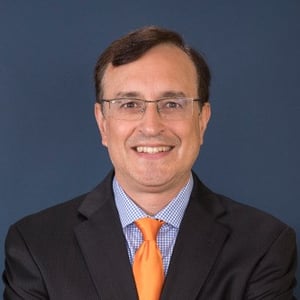
President, Center for Individual Rights
Todd Gaziano is the President of the Center for Individual Rights. Mr. Gaziano received his J.D. in 1988 from the University of Chicago Law School, where he was a John M. Olin Fellow in Law and Economics. He received his B.A. from West Virginia University, summa cum laude in 1985. He was selected as a Truman Scholar from West Virginia while an undergraduate.
Mr. Gaziano’s previous legal work includes service as a law clerk for U.S. Court of Appeals for the Fifth Circuit Judge Edith Jones, as an attorney in the U.S. Department of Justice Office of Legal Counsel, as a chief subcommittee counsel in the U.S. House of Representatives, as a Houston trial attorney, and as a chief corporate legal officer. He also served a six-year term as commissioner on the U.S. Commission on Civil Rights (2008-2013), where he helped conduct oversight and investigations of civil rights agencies.
For most of the last 25 years, Mr. Gaziano was a legal scholar and public interest law leader, promoting individual liberty in the Supreme Court and Congress. From 1997 to 2013, he was the founding director of the Edwin Meese Center for Legal and Judicial Studies at The Heritage Foundation. From 2014 until he joined CIR, he was the Chief of Legal Policy and Strategic Research, and Director of the Center for the Separation of Powers, at Pacific Legal Foundation.
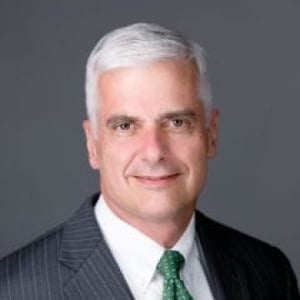
David McIntosh is a leader for the principles of limited constitutional government and individual freedom. He is president of the Club for Growth, the leading advocate for economic liberty.
Former Congressman David McIntosh represented Indiana's 2nd Congressional District in the United States Congress from 1995-2001. As a Freshman, David chaired the Subcommittee on Regulatory Relief. He passed the Congressional Review Act and held extensive oversight and field hearings to build a record of public support for regulatory relief initiatives in energy, biotechnology, pharmaceutical, healthcare, transportation and technology sectors. Another issue that he championed was the elimination of the marriage penalty in the Federal Tax Code.
David served during the Reagan administration as special assistant to Attorney General Edwin Meese III, and as special assistant to President Reagan for Domestic Affairs. During the first Bush administration, he served as executive director of the President's Council on Competitiveness and assistant to the Vice President. The Competitiveness Council coordinated the cost/benefit review of major regulations and promoted legal reform measures.
David is a co-founder of the Federalist Society for Law and Public Policy and serves on the Board of Directors. He remains active with several free market and conservative think tanks and grassroots organizations. David has also had stints at the Hudson Institute and as a Professor of Economics at Ball State School of Business.
Prior to the Club for Growth, David was a partner at Mayer Brown, LLP in Washington, DC.
David graduated from the University of Chicago Law School in 1983, and Yale University, BA, cum laude, in 1980. He and his wife, Ruthie, are the proud parents of Ellie age 17 and Davey age 13.
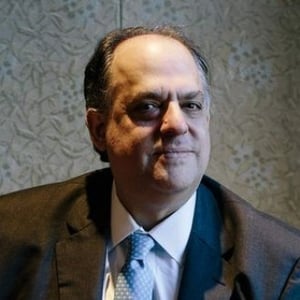
Director of Litigation and Senior Attorney, Hamilton Lincoln Law Institute
Theodore H. Frank is director at the Hamilton Lincoln Law Institute and the Center for Class Action Fairness. Frank founded and ran CCAF as a non-profit, public interest law firm in 2009.
Frank has won several landmark appeals and tens of millions of dollars for consumers and other plaintiffs through his class action work. Adam Liptak of The New York Times calls Frank “the leading critic of abusive class action settlements” and the American Lawyer Litigation Daily referred to him as “the indefatigable scourge of underwhelming class action settlements.”
Previously, Frank clerked for the Honorable Frank H. Easterbrook on the Seventh Circuit Court of Appeals, and was a litigator at firms in Washington and Los Angeles and a resident fellow at the American Enterprise Institute. Frank is a frequent public speaker and has testified before Congress multiple times on legal issues. He has been profiled by The Wall Street Journal, Forbes, GQ, and the ABA Journal, among other publications.
In 2008, Frank was elected to membership in the American Law Institute. He also serves on the Executive Committee of the Federalist Society Litigation Practice Group. Frank graduated from The University of Chicago Law School in 1994 with high honors and as a member of the Order of the Coif and the Law Review. He is a member of the District of Columbia Bar and the state bars of California and Illinois.
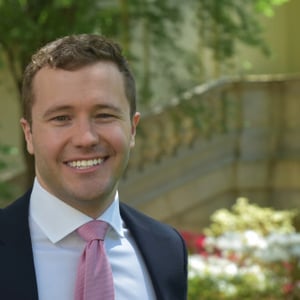
Adjunct Professor, New York University School of Law
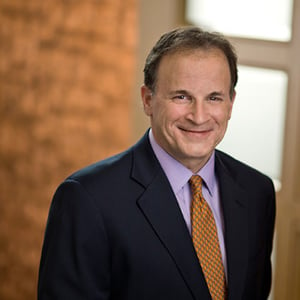
Partner, Boies Schiller Flexner
Jonathan Sherman is a general commercial litigator who combines 25 years of business litigation and First Amendment expertise to specialize in the strategic use of reputation, a unique approach to resolving information age and knowledge economy disputes.
Named since 2012 to its annual list of American’s “500 Leading Lawyers”, Lawdragon calls Jonathan a “nimble advocate with a sharp legal mind” who “can handle any task” and whose “passion for the law bubbles forth with astonishing ferocity.” A recent profile called him “Floyd Abrams meets David Boies with a side order of Hunter S. Thompson.”
Jonathan has tried cases, argued appeals, and resolved multi-party disputes in securities, financial institution, business defamation, intellectual property, unfair competition, antitrust and free speech matters. He has represented an eclectic mix of clients: from mining to media, finance to fashion, reinsurance to online gaming, political figures and cultural critics, among others. He is both a plaintiff’s lawyer and a traditional defense counsel.
At ease under heavy scrutiny since his earliest years of practice representing Court TV in the OJ Simpson criminal proceedings, Jonathan is now among the world’s leading advocates for public access to courts. The New York Times has twice published his op-ed pieces. A former member of the New York State Bar Association’s Media Law Committee, he has taught at Yale, Stanford and Fordham, and lectured in London, Brussels, Budapest and elsewhere.
Jonathan is a Trustee of DC’s acclaimed Shakespeare Theatre Company in Washington, DC, and has been listed in Who’s Who in America since 2000.

President, Harned Strategies LLC
Karen Harned is President at Harned Strategies LLC. Previously, she served as Executive Director of the National Federation of Independent Business Small Business Legal Center, a post she held from 2002-2022. Prior to joining the Legal Center, Ms. Harned was an attorney at a Washington, D.C. law firm specializing in food and drug law, where she represented several small and large businesses and their respective trade associations before Congress and federal agencies. She also served as Assistant Press Secretary to U.S. Senator Don Nickles of Oklahoma from August of 1989 to March of 1993. Ms. Harned received her B.A. from the University of Oklahoma in 1989 and her J.D. from The George Washington University National Law Center in 1995. She is admitted to practice in the District of Columbia.
As Executive Director of the NFIB Small Business Legal Center, Ms. Harned commented regularly on small business cases before federal and state courts, as well as the U.S. Supreme Court. She has appeared on Fox News, Fox Business, NBC Nightly News, CNN, CNBC and MSNBC, as well as National Public Radio, CBS Radio, and radio outlets across the country. Her opinion editorials and articles regarding healthcare, lawsuit abuse, regulation, and other issues important to small business have been published in newspapers and other publications nationwide.
Ms. Harned has testified before Congress on the small business impact of regulation and the civil justice system. Additionally, she has conducted numerous webinars and legal compliance seminars for small business owners across the country on issues relating to employment law, including unionization and immigration.

Partner, Wiley Rein LLP
Stephen J. Obermeier has a wide range of experience litigating complex disputes before federal and state courts and administrative agencies and in arbitration. He has represented clients in both individual and class action cases involving commercial and government contract disputes, the False Claims Act (FCA), procurement fraud, consumer fraud, business torts, and the Administrative Procedure Act (APA). Mr. Obermeier has authored dozens of appellate and dispositive motions briefs in courts across the country and has successfully argued multiple motions to dismiss, summary judgment motions, and appeals in federal and state court. He also has experience conducting internal investigations for corporate clients in response to government allegations of misconduct. Mr. Obermeier previously served as an Assistant U.S. Attorney in the civil section in the Eastern District of Virginia.
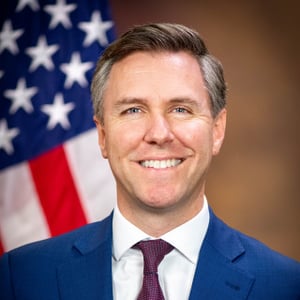
Assistant Attorney General, Civil Division, United States Department of Justice
Brett A. Shumate was sworn in as the Civil Division’s 36th Assistant Attorney General on June 11, 2025. He previously served in the Civil Division from 2017 to 2019 as the Deputy Assistant Attorney General for the Federal Programs Branch. Prior to rejoining the Department, Mr. Shumate was a partner at Jones Day in Washington, D.C.
Mr. Shumate clerked for Judge Edith H. Jones on the United States Court of Appeals for the Fifth Circuit. He graduated from Wake Forest University School of Law and Furman University.
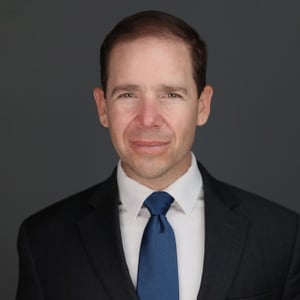
Founder and CEO, Lexpat Global Services
Adam Pearlman is the Founder and Chief Executive Officer of Lexpat Global Services. He is a National Security Law expert and a proven senior leader with experience across the U.S. Departments of Justice, Defense, and State, in the White House, and with the U.S. Federal Judiciary.
Before founding Lexpat, Mr. Pearlman served as the Senior Advisor for Legal Policy in the State Department’s Bureau of Counterterrorism. There, he counseled senior officials on matters covering the entire spectrum of programs and operations to counter terrorism and violent extremism. While participating in sensitive diplomatic engagements and helping to coordinate military operations, he also advised in the development of sanctions policy and initiatives to build legal and operational capacity in partner nations. Mr. Pearlman also managed the Bureau’s participation in federal litigation and led U.S. delegations in multilateral forums concerning criminal justice and rule of law. Separately, Mr. Pearlman supported the State Department’s Bureau of International Narcotics and Law Enforcement Affairs (INL) as the contracted Senior Justice and Rule of Law Advisor in Cabo Verde, Africa. There he was the chief implementer of a Foreign Assistance program that grew eight-fold during his tenure, building host nation capacity across the law enforcement, justice sector, rule of law, anti-money laundering, and corrections disciplines.
A former Associate Deputy General Counsel of the Department of Defense, Mr. Pearlman was agency counsel for complex civil and criminal national security matters in federal and military courts. He also led the Supreme Court and appellate unit of the team dedicated to litigating classified counterterrorism cases. His earlier service in the Department of Justice spanned four litigating divisions and the Office of the Deputy Attorney General. His diverse experience included reviewing complex international transactions and mergers, and advising on immigration removal proceedings, human rights abuses, and terrorist financing investigations. Mr. Pearlman also served with distinction in Iraq as an early advisor to the Iraqi High Tribunal’s prosecution of Saddam Hussein. He was a law clerk for The Honorable Royce C. Lamberth of the U.S. District Court for the District of Columbia, and during law school interned in the White House Counsel’s Office.
Mr. Pearlman is a Senior Fellow at the National Security Institute at George Mason University’s Antonin Scalia Law School, a member of the American Bar Association’s Advisory Committee on Law and National Security, and the Editor-in-Chief of the U.S. Intelligence Community Law Sourcebook. Previously, he has been a Term Member of the Council on Foreign Relations, National Security Fellow at the Foundation for Defense of Democracies, member of the ABA’s Africa Law Initiative Council and of the Center for Strategic & International Studies’ (CSIS) Project on Nuclear Issues, vice chairman of the ABA Section of International Law’s committees on national security, and aerospace and defense, and a liaison to the Board of Directors of the ABA’s Rule of Law Initiative. He has published articles in the Harvard National Security Journal, Stanford Law & Policy Review, Intelligence & National Security, The Foreign Service Journal, Lawfare, and many other outlets.
Mr. Pearlman earned his B.A., with honors, from UCLA, and his J.D., with honors, from The George Washington University Law School, where he was a member of the International Law Review. He also earned a Master of Science of Strategic Intelligence degree from the National Intelligence University, where he was the inaugural recipient of the Kornblum Award for national security law and ethics. Mr. Pearlman is a Certified Financial Crime Specialist and holds certificates in international human rights law from the University of Oxford and in anti-corruption law from American University’s Washington College of Law. He is admitted to the State Bars of California and Virginia, as well as to the Bar of the United States Supreme Court. He speaks and reads Portuguese at the intermediate level.
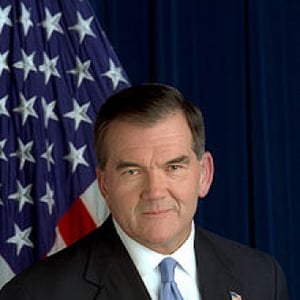
Chairman, Ridge Global, Former First Secretary, U.S. Department, Former Governor of Pennsylvania
Gov. Tom Ridge is Chairman of Ridge Global. He provides clients with solutions to cyber security, international security and risk management issues. Following the tragic events of September 11th, 2001, Gov. Tom Ridge became the first Assistant to the President for Homeland Security and, on January 24, 2003, became the first Secretary of the U.S. Department of Homeland Security. The creation of the country's 15th Cabinet Department marked the largest reorganization of government since the Truman administration and another call to service for the former soldier, congressman and governor of Pennsylvania. During his DHS tenure, Secretary Ridge worked with more than 180,000 employees from a combined 22 agencies to create an agency that facilitated the flow of people and goods, instituted layered security at air, land and seaports, developed a unified national response and recovery plan, protected critical infrastructure, integrated new technology and improved information sharing worldwide. Gov. Tom Ridge served as Secretary of this historic and critical endeavor until February 1, 2005. Before the events of September 11th, Gov. Tom Ridge was twice elected Governor of Pennsylvania. He served as the state's 43rd governor from 1995 to 2001. Gov. Ridge's aggressive technology strategy helped fuel the state's advances in economic development, education, health care and the environment. He serves on the boards of the Institute for Defense Analyses, the Center for the Study of the Presidency and Congress and other private and public entities. He is currently chairman of the U.S. Chamber of Commerce's National Security Task Force. He graduated from Harvard with honors. After his first year at Penn State University's Dickinson School of Law, he was drafted into the U.S. Army, where he served as an infantry staff sergeant in Vietnam, earning the Bronze Star for Valor, the Combat Infantry Badge and the Vietnamese Cross of Gallantry. After returning to Pennsylvania and to Dickinson, he earned his law degree and, later, became one of the first Vietnam combat veterans elected to the U.S. House of Representatives, where he served six terms.

The Congressional Review Act’s “Rediscovery” and Hidden Uses - Podcast
Todd F. Gaziano, David M. McIntosh
Administrative Law & Regulation Practice Group Podcast
In 1996, Congress passed the Congressional Review Act (CRA). Before an executive agency rule—broadly defined...
JUST ANNOUNCED: March 2017 DC Luncheon with Donald McGahn
Join us Thursday, March 2, for this month's DC lawyers' chapter luncheon at Tony Cheng's...
Topics
Fourth Circuit misinterprets Supreme Court 2nd Amendment precedent
In Kolbe v. Hogan, the Fourth Circuit, sitting en banc, became the first Federal Circuit...
In Re: Walgreen Co. Stockholder Litigation Update - Podcast
Theodore "Ted" Frank
Litigation Practice Group Podcast
According to the Competitive Enterprise Institute, over 97% of mergers and acquisitions result in "strike...
Bitcoin: How Should Judges Deal with New Currency?
Max Raskin
Short video featuring Max Raskin
Is Bitcoin property or currency in a court of law? Max Raskin, Research Fellow at...
Supreme Court Preview: Packingham v. North Carolina - Podcast
Jonathan Sherman, Melissa Sherry
Criminal Law & Procedure Practice Group Podcast
On February 27, the Supreme Court will hear oral argument in Packingham v. North Carolina....
Courthouse Steps: McLane v. EEOC - Podcast
Karen Harned
Labor & Employment Law Practice Group Podcast
In McLane v. EEOC the Supreme Court is being asked to resolve a circuit split...
Topics
Right to Work laws at the polls and in the courts - an update
Since my last blog on this subject, dated November 28, 2016, two more states have...
Litigation Update: American Bankers Association and Washington Federal v. U.S. - Podcast
Stephen J. Obermeier, Brett Shumate
Litigation Practice Group Podcast
The American Bankers Association and Washington Federal, a bank holding company, have filed a suit...
Federal, State, Local, and Tribal Partnerships Feat. Governor Tom Ridge - Podcast
Adam R. Pearlman, Tom Ridge
International & National Security Law Practice Group Podcast
Over the last fifteen years, homeland security has become a field unto itself. The United...