
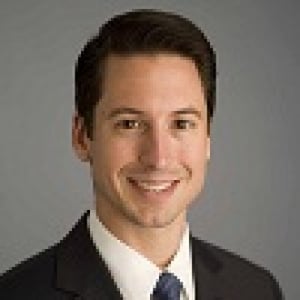
Partner, Gibson, Dunn & Crutcher
Jason J. Mendro is a partner in the Washington, D.C. office of Gibson, Dunn & Crutcher LLP, where he practices in the firm's Litigation Department. Mr. Mendro has extensive experience defending class and derivative action lawsuits at the trial and appellate level, in both federal and state courts. He is a member of the Steering Committee of the Firm's Securities Litigation Practice Group. Law360 recently recognized Mr. Mendro as a "Rising Star" in the category of securities law.
Mr. Mendro has defended numerous securities class actions and shareholder derivative actions, representing directors and executives against a host of challenges to their decisions, oversight, and compensation.
Mr. Mendro has also defended complex litigation involving a broad spectrum of other disputes, including claims under ERISA, the Fair Labor Standards Act, and the Sarbanes-Oxley whistleblower protection laws. He has conducted internal investigations, represented special litigation committees, and defended companies in investigations and actions by the Consumer Financial Protection Bureau, the Securities and Exchange Commission, and self-regulatory organizations.
Mr. Mendro also has significant experience in appellate litigation and in rulemaking challenges. Among other recent matters, Mr. Mendro was a key contributor to successful challenges to numerous, controversial regulations with broad implications for the global swaps market, as well as a precedent-setting appellate victory that reversed a multi-million-dollar jury verdict under the False Claims Act.
Mr. Mendro graduated cum laude from Harvard Law School. He earned a bachelor's degree from the University of Florida, where he graduated first in his class. Mr. Mendro also served as a law clerk to the Honorable Gerald B. Tjoflat of the United States Court of Appeals for the Eleventh Circuit.
Mr. Mendro is admitted to practice law in Washington, D.C., California, and numerous federal courts, including the Supreme Court of the United States and the United States Courts of Appeals for the First, Second, Third, Fourth, Seventh, Ninth, Eleventh, and D.C. Circuits.
John F. Scarpa Chair in Catholic Legal Studies, Villanova University School of Law
Patrick McKinley Brennan joined the Villanova faculty in 2004 as the inaugural holder of the John F. Scarpa Chair in Catholic Legal Studies and now also serves as the Associate Dean for Academic Affairs. Professor Brennan works in the tradition of reflection on natural law and natural rights to examine a wide range of questions in jurisprudence and public law, including sovereignty, equality authority, the rule of law, constitutionalism, the family, and punishment and forgiveness, as well as topics in administrative law, constitutional law, federal jurisdiction, religious liberty and the liberty of the church, and criminal law. He regularly teaches constitutional law, administrative law, federal courts, criminal law, and a range of courses in jurisprudence.
Professor Brennan has published some fifty articles and book chapters. His most recent book, The Sovereignty of the Good: An Essay on Law, Authority, and the Church, will be published by Oxford University Press. He has also published By Nature Equal: The Anatomy of a Western Insight (Princeton University Press 1999) (with John Coons), Civilizing Authority: Society, State, and Church (Lexington 2007), and the Vocation of the Child (W.B. Eeerdmans 2008). He currently co-authoring Christian Perspectives on Law: Cases and Materials (with William Brewbaker III).
Before coming to Villanova, Professor Brennan was for eight years a faculty member in the Sandra Day O'Connor College of Law at Arizona State University, where for several years he served as Associate Dean for Faculty Affairs and Research and later as Vice Dean. Previously, Brennan was associated with major law firms in Washington, D.C., and San Francisco. Brennan clerked for Hon. John T. Noonan, Jr., on the U.S. Court of Appeals for the Ninth Circuit, in San Francisco.
A native of California, Brennan earned his J.D. from Berkeley Law (Boalt Hall), U.C. Berkeley, where he won many awards and was elected to the Order of the Coif. Prior to law school, Brennan earned an M.A. and pursued doctoral course work in philosophy at the University of Toronto, taking many of his courses there in the Pontifical Institute of Mediaeval Studies. He was graduated from Yale College with a B.A. in philosophy with honors and distinction in the major. At Yale, Brennan also studied Greek and Latin and won the Jacob Cooper Prize for the best essay on ancient Greek philosophy.
Professor Brennan has been a visiting professor in the Boston College Law School and a senior research fellow at the Robbins Collection of Canon and Civil Law at U.C. Berkeley. Brennan has also been a scholar in residence at the Columbus School of Law, The Catholic University of America, where he delivered the Brendan F. Brown Lecture in 2006. Brennan has delivered the Yves Simon Lecture at the University of Chicago and the Donald M. Giannella Lecture at Villanova University.
At Villanova, Brennan organizes the annual John F. Scarpa Conference on Law, Politics, and Culture. Keynote speakers have included the late Avery Cardinal Dulles, S.J., Justice Antonin Scalia, Martha Nussbaum, Joseph Vining, John Ferejohn, and William Eskridge. Other speakers have included Jeremy Waldron, Geoff Stone, Jesse Choper, Lee Bollinger, Roderick Hills, Jane Schacter, Kristin Hickman, Jefferson Powell, Amy Uelmen, Richard Garnett, Kent Greenawalt, and many others.
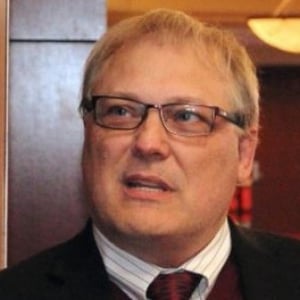
Senior Education Policy Fellow, Kansas Policy Institute
David Dorsey is a Senior Education Policy Fellow with Kansas Policy Institute. His primary emphasis in this role is combining his time spent as a public school teacher with policy research on issues related to K-12 finance, student achievement, and education reform. Prior to joining KPI, David spent 20 years as a public school elementary teacher, seventeen in Kansas. He was both a classroom and specialty teacher and served in various leadership capacities in those schools. David finished his teaching career with eight years as a mathematics interventionist at Lowman Hill Elementary School in Topeka USD 501 working with at-risk students. Prior to teaching he spent 15 years working in state and local government in Arizona as a city administrator, research analyst for the Phoenix Police Department, and a program evaluator for the largest state agency in Arizona. He earned a Master of Arts in Political Science from Arizona State University with an emphasis on research and statistical analysis in 1980. David was born and raised in South Dakota and received a BS degree from the University of South Dakota in 1977 with a major in Political Science and a minor in Economics.
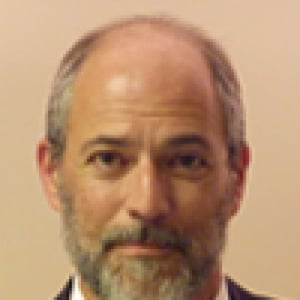
Deputy District Attorney, Philadelphia District Attorney's Office
Ronald Eisenberg heads the Law Division of the Philadelphia District Attorney's Office. The 60 lawyers in the division handle appeals, habeas corpus and civil litigation, and legislative matters. Mr. Eisenberg has appeared at all levels of the state and federal court system, and has argued several cases in the United States Supreme Court.
Mr. Eisenberg is a member of the Pennsylvania Supreme Court Investigating Grand Jury Task Force and the Advisory Committee for the Pennsylvania Suggested Standard Criminal Jury Instructions. He has represented his office on the Pennsylvania Advisory Committee on Wrongful Convictions, was an adjunct professor at Temple University School of Law, teaching legal writing and research, and has served on the Pennsylvania Criminal Rules and Appellate Rules Committees. He is a past president and current board member of the Association of Government Attorneys in Capital Litigation, a national organization of capital prosecutors.
Mr. Eisenberg received his bachelor's degree from Haverford College in 1978 and his law degree from the University of Pennsylvania Law School in 1981.
J.D., University of Pennsylvania
B.A., Haverford College

Professor Emeritus, Paul M. Hebert Law Center, Louisiana State University
In memoriam
Dr. John Baker is Professor Emeritus of Law, and previously the Dale E. Bennett Professor of Law, at Louisiana State University Law School. He is currently Visiting Professor at Peking University School of Transnational Law (via Zoom) and has been Visiting Professor at The Center for the Constitution, Georgetown Law School (2013-2020). He has also been a Visiting Fellow at Oriel College, the University of Oxford (2012-2014) and taught at Blackfriars Hall, Oxford in 2014. Dr. Baker has also been an adjunct Fellow at the Heritage Foundation (Spring, 2008) and a Distinguished Scholar at the Catholic University of America Law School (2011-12). He has taught at Tulane Law School, George Mason Law School, Pepperdine Law School, New York Law School, Hong Kong University, and the University of Dallas, School of Management and also taught and/or lectured in 17 foreign countries. Notable among his foreign visits are the
following: Visiting Professor at the University of Lyon III (France) (1999-2011); Visiting Professor at the Universidad de los Andes, Chile (2012), as a Fulbright Specialist (2006); and a Fulbright Scholar at various universities in the Philippines. Dr. Baker received his J.D., with honors, from the University of Michigan Law School and his B.A., magna cum laude, from the University of Dallas. He also earned a Ph.D. in Political Thought from the University of London. Baker has taught over a dozen different subjects, mostly courses in public law. His main areas of interest are Constitutional Law (particularly federalism and separation of powers), Criminal Law, Anti-Terrorism Law, International Law, Health Care Law, Mediation, and Comparative Law.
In addition to law review articles and book chapters, Dr. Baker’s academic publications include Hall's Criminal Law: Cases and Materials (with Benson, Force and George; 5th ed. Michie, 1993); An Introduction to the Law of the United States (ed. with Levasseur; University Press of America, 1992). He has also published on Forbes.com, FoxNews.com, in The Washington Times, and a number of times in The Wall Street Journal. He argues in federal court, including two oral arguments in the U.S. Supreme Court. For many years, he co-taught courses for the Federalist Society on separation of powers with the late Supreme Court Justice Antonin Scalia. In September 2016, he co-taught a Supreme Court seminar in China with Justice Samuel Alito. Following law school, he served as a law clerk in federal district court and as an assistant district attorney in New Orleans before joining LSU in 1975. While a professor, he has been as a consultant to USAID, USIA (since rolled into the State Department), the Justice Department, the U.S. Senate Judiciary Subcommittee on Separation of Powers, and the Office of Planning in the White House. He served on an ABA Task Force which issued the report, The Federalization of Crime (1998) and later as a consultant to the “Bi-Partisan Task Force on the Over- federalization of Crime” (2012-2014) created by the U.S. House Judiciary Subcommittee on Crime. Dr. Baker was a co-founder of the first iteration (1995) of Stratfor Inc., a global intelligence agency. He co-authored its first book: The Intelligence Edge (with Friedman, Friedman and Chapman; Crown Books/Random House 1997). In 2022, he began a short, weekly video podcast available on YouTube and Rumble, The Baker Brief.

Associate, Baker Botts, LLP
Ellen Springer is an Associate at Baker Botts, LLP in Austin, TX. Before joining Baker Botts, she clerked for Chief Justice Nathan Hecht of the Texas Supreme Court. Ms. Springer received her B.A. from Georgetown and her J.D. from The University of Texas Law School.
Kathleen Q. Abernathy recently returned to Wilkinson Barker Knauer LLP as special counsel. She was previously elected to the Board of Directors of Frontier Communications as an independent director in 2006 following her term as a Commissioner at the Federal Communications Commission from 2001 to 2005. In 2010 she joined the company as Chief Legal Officer and Executive Vice President, Regulatory and Governmental Affairs. Prior to her term as an FCC Commissioner, Ms. Abernathy worked for a number of different telecommunications companies and law firms. She has received numerous awards in recognition of her professional accomplishments and has taught as an adjunct professor at Georgetown University Law Center and Catholic University’s Columbus School of Law. She received her B.S. from Marquette University and her J.D. from Catholic University’s Columbus School of Law.

Senior Attorney, Pacific Legal Foundation
Christina Martin is a Senior Attorney at Pacific Legal Foundation where she leads its initiative to end home equity theft—predatory tax-foreclosure laws that allow the government to take valuable homes and all equity in those homes as payment for debts as small as $8.
Christina's victories as lead counsel include Tyler v. Hennepin County in the U.S. Supreme Court, Hall v. Meisner in the Sixth Circuit, Rafaeli, LLC v. Oakland County in the Michigan Supreme Court, and New Mexico Farm & Livestock Bureau v. U.S. Department of the Interior in the Tenth Circuit. She also served as second chair in Knick v. Township of Scott, a landmark Supreme Court case that opened up the federal courthouse doors to takings plaintiffs.
Christina is admitted to the state bars of Washington, Oregon, and Florida, as well as a number of federal courts, including the Supreme Court of the United States. She earned a Bachelor of Science in Physics and a Bachelor of Arts in Communication from the University of Washington. She earned her J.D. from Ave Maria School of Law, where she was an editor of the Ave Maria Law Review.
Partner, Cooper & Kirk, PLLC
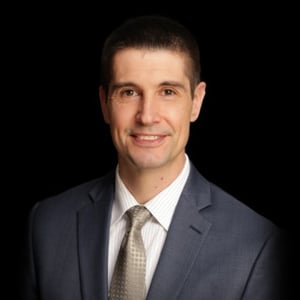
Pete Patterson is a partner at Cooper & Kirk. His practice includes appellate litigation, constitutional litigation, commercial litigation, and administrative law. In addition, Mr. Patterson for a number of years taught an appellate litigation clinic at the University of Cincinnati College of Law. Mr. Patterson has argued in the U.S. Supreme Court and in nearly every regional federal circuit court of appeals.
Mr. Patterson has extensive experience in complex matters involving important questions of constitutional, statutory, and administrative law. He frequently has represented plaintiffs in cases alleging constitutional or statutory violations by federal, state, and local government officials. He also has represented plaintiffs in class action litigation against corporations and the federal government.
Mr. Patterson joined the firm in 2009. Prior to arriving at Cooper & Kirk, he served as a law clerk to Judge Jeffrey S. Sutton of the United States Court of Appeals for the Sixth Circuit. Mr. Patterson typically works from Cincinnati, Ohio.
Mr. Patterson received his J.D. from Stanford Law School in 2006, earning Order of the Coif honors for finishing in the top 10% of his class. There, he was a member of the Stanford Law Review, serving as an Articles Editor. He also participated in litigation before the United States Supreme Court through the Stanford Supreme Court Litigation Clinic.
Mr. Patterson graduated with University Honors from Carnegie Mellon University in 2000 with a B.S. in Information and Decision Systems. While at Carnegie Mellon, he wrote a regular column for the student newspaper and was a member of the football team.

Fiduciary Rule Update - Podcast
Jason Mendro
Labor & Employment Law Practice Group Podcast
On April 8, 2016, the Department of Labor (DOL) published the Fiduciary Rule, which greatly...
Carousel of Kansas Education Finance Lawsuits Continues in the Gannon Case
Patrick McKinley Brennan, David Dorsey
The citizens of the Sunflower State are holding their collective breaths, waiting for the Kansas...
Jenkins v. Hutton & Virginia v. LeBlanc - Post-Decision SCOTUScast
Ronald Eisenberg
SCOTUScast 9-1-17 featuring Ron Eisenberg
In June, the Supreme Court issued per curiam opinions in two habeas cases: Jenkins v....
Docket Watch: Carousel of Kansas Education Finance Lawsuits Continues in the Gannon Case
The citizens of the Sunflower State are holding their collective breaths, waiting for the Kansas...
Warning to Corporate Counsel: If State AGs Can Do This to ExxonMobil, How Safe Is Your Company? - Podcast
John S. Baker
Corporations, Securities, & Antitrust Practice Group Podcast
Nation-states have long fought wars for control of oil. In a novel development, American states...
McLane Co. v. EEOC - Post-Decision SCOTUScast
Ellen Springer
mclane-co-v-eeoc-post-decision-scotuscast
On April 3, 2017, the Supreme Court decided McLane Co., Inc. v. Equal Employment Opportunity...
How to Regulate the Internet
Kathleen Q. Abernathy
Federalist Society Review, Volume 18
Note from the Editor: This article traces the history of the FCC’s approach to regulating...
Bogorff v. Scott
Christina Martin
In Bogorff v. Scott, the Florida Supreme Court revealed the difficulty many property owners face when...
Docket Watch: Bogorff v. Scott
In Bogorff v. Scott, the Florida Supreme Court revealed the difficulty many property owners face...
Heimlich Maneuver on Operation Choke Point?
Peter A. Patterson
Regulatory Transparency Project Teleforum
On August 16, the Department of Justice issued a letter repudiating the Department’s participation in...