
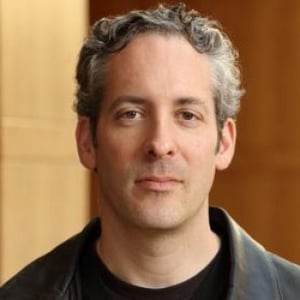
Justice Thurgood Marshall Distinguished Professor of Law, University of Virginia School of Law
Brandon L. Garrett joined the law faculty in 2005. His research and teaching interests include criminal procedure, wrongful convictions, habeas corpus, corporate crime, scientific evidence, civil rights, civil procedure and constitutional law. Garrett’s recent research includes studies of DNA exonerations and organizational prosecutions. The research web pages below provide data related to those studies.
Garrett’s recent book examining corporate prosecutions, titled “Too Big to Jail: How Prosecutors Compromise with Corporations,” was published by Harvard University Press in Fall 2014. Translations are forthcoming in Spain and Taiwan. A new book titled “End of its Rope: How Killing the Death Penalty Can Revive Criminal Justice,” examining the implications of the decline of the death penalty, is forthcoming in Fall 2017 from Harvard University Press. In 2011, Harvard University Press published Garrett’s book, "Convicting the Innocent: Where Criminal Prosecutions Go Wrong," examining the cases of the first 250 people to be exonerated by DNA testing. That book was the subject of a symposium issue in New England Law Review, and received an A.B.A. Silver Gavel Award, Honorable Mention, and a Constitutional Commentary Award. It was translated for editions in China, Japan and Taiwan. In 2013, Foundation Press published Garrett’s casebook, “Federal Habeas Corpus: Executive Detention and Post-Conviction Litigation,” co-authored with Lee Kovarsky. Garrett’s work has been widely cited by courts, including the U.S. Supreme Court, lower federal courts, state supreme courts, and courts in other countries, such as the Supreme Courts of Canada and Israel. Garrett also frequently speaks about criminal justice matters before legislative and policymaking bodies, groups of practicing lawyers, law enforcement, and to local and national media.
Garrett attended Columbia Law School, where he was an articles editor of the Columbia Law Review and a Kent Scholar. After graduating, he clerked for the Hon. Pierre N. Leval of the U.S. Court of Appeals for the Second Circuit. He then worked as an associate at Neufeld, Scheck & Brustin LLP in New York City.
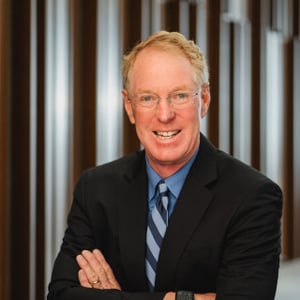
Ronald N. Boyce Presidential Professor of Criminal Law and University Distinguished Professor of Law, The University of Utah College of Law
Paul G. Cassell is an internationally recognized legal scholar on criminal and civil justice, crime victims' rights, constitutional law, evidence, judicial process, and other legal issues. Cassell received a B.A. (1981) and a J.D. (1984) from Stanford University, where he graduated Order of the Coif and was President of the Stanford Law Review. He clerked for then-Judge Antonin Scalia when Scalia was on the U.S. Court of Appeals for the D.C. Circuit (1984-85) and for Chief Justice Warren Burger of the United States Supreme Court (1985-86). Cassell then served as an Associate Deputy Attorney General with the U.S. Justice Department (1986-88) and as an Assistant U.S. Attorney for the Eastern District of Virginia (1988 to 1991). Cassell joined the faculty at the College of Law in 1992, where he taught full-time until he was sworn in as a U.S. District Court Judge for the District of Utah in July 2002. In November 2007, he resigned his judgeship to return full-time to the College of Law to teach, write, and litigate concerning issues relating to crime victims' rights and criminal and civil justice reform. Professor Cassell has also published numerous law review articles in journals such as the Stanford Law Review, the Michigan Law Review, the Harvard Journal of Law and Public Policy, and the Journal of Criminal Law and Criminology. He is a co-author of the nation's only law school textbook on crime victims' rights, Victims in Criminal Procedure (various editions, most recently in its fifth edition published in 2025). Professor Cassell has argued pro bono cases relating to criminal procedure and crime victims' rights before the United States Supreme Court, the 2nd, 4th, 5th, 6th, 7th, 8th, 9th, 10th, 11th, and D.C. Circuits (including the 5th and 11th Circuits en banc), several U.S. District Courts, the Utah Supreme Court, and the Arizona Supreme Court. In 2020, Cassell received the Ronald Wilson Reagan Public Policy Award - National Crime Victims' Service Award from the U.S. Department of Justice. Cassell is a member of the American Law Institute, a fellow of the American Bar Foundation, and an inaugural member of the Council on Criminal Justice. He is also an occasional blogger at The Volokh Conspiracy.

Amelia D. Lewis Professor of Constitutional and Criminal Law, Sandra Day O'Connor College of Law at Arizona State University
Erik Luna is the Amelia D. Lewis Professor of Constitutional and Criminal Law in the Sandra Day O'Connor College of Law at Arizona State University.
Professor Luna teaches and writes primarily in the areas of criminal law and criminal procedure. Luna has received two Fulbright awards. In 2000, he served as the senior Fulbright Scholar to New Zealand at Victoria University Law School (Wellington, NZ). In 2016-17, he was the Fulbright Distinguished Chair at the University of Birmingham (Birmingham, UK). Luna has also been a visiting scholar with the Max Planck Institute for Foreign and International Criminal Law (Freiburg, DE), a visiting professor with the Cuban Society of Penal Sciences (Havana, CU), a visiting professional in the Office of the Prosecutor of the International Criminal Court (The Hague, NL), and a research fellow with the Alexander von Humboldt Foundation (Bonn, DE). Prior to coming to ASU, Luna was the Sydney & Frances Lewis Professor of Law at Washington and Lee University, and before that, he was the Hugh B. Brown Chair in Law at the University of Utah. Luna is a member of the American Law Institute and an adjunct scholar with the Cato Institute. He graduated summa cum laude from the University of Southern California and received his J.D. with honors from Stanford Law School. Upon graduation, Luna was a prosecutor in the San Diego District Attorney’s Office and a fellow and lecturer at the University of Chicago Law School.
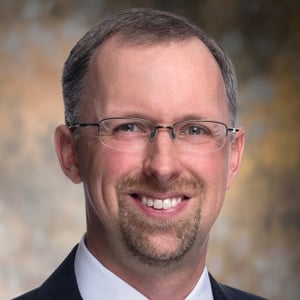
Joshua Dunlap, a member of Pierce Atwood’s Litigation Group and Appellate & Amici team, focuses his practice on civil litigation at both the trial and appellate levels. He appears in federal as well as state court, representing clients in various commercial litigation matters.
Joshua regularly defends clients in complex litigation, including class actions and multidistrict litigation. Much of his practice has involved representing financial institutions, manufacturers, retailers, and other institutional clients in state and national consumer class actions involving various issues, including bank overdrafts, products liability, and electronic data breaches.
Joshua also represents clients before federal and state appeals courts, and has argued and won before the Maine Supreme Judicial Court. Joshua is a former federal court of appeals law clerk, having clerked for the Hon. Paul J. Kelly Jr. on the U.S. Court of Appeals for the Tenth Circuit. He has also acted as law clerk for two Special Masters appointed by the U.S. Supreme Court in original jurisdiction proceedings.
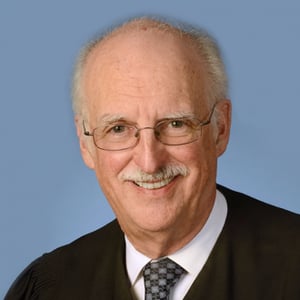
Senior Judge, United States Court of Appeals, District of Columbia Circuit
Circuit Judge Douglas H. Ginsburg was appointed to the United States Court of Appeals for the District of Columbia in 1986. After receiving his B.S. from Cornell University in 1970, and his J.D. from the University of Chicago Law School in 1973, he clerked on the D.C. Circuit and for Justice Thurgood Marshall on the United States Supreme Court. Thereafter, Judge Ginsburg was a professor at the Harvard Law School, the Deputy Assistant and then Assistant Attorney General for the Antitrust Division of the Department of Justice, as well as the Administrator of the Office of Information and Regulatory Affairs in the Office of Management and Budget. Concurrent with his service as a federal judge, Judge Ginsburg has taught at the University of Chicago Law School and the New York University School of Law. Judge Ginsburg is currently a Professor of Law at the George Mason University and a visiting professor at University College London, Faculty of Laws.
Judge Ginsburg is the Chairman of the International Advisory Board of the Global Antitrust Institute at the Law and Economics Center of the George Mason University School of Law. He also serves on the Advisory Boards of: Competition Policy International; the Harvard Journal of Law and Public Policy; the Journal of Competition Law and Economics; the Journal of Law, Economics & Policy; the Supreme Court Economic Review; the University of Chicago Law Review; the New York University Journal of Law and Liberty; and, at University College London, both the Centre for Law, Economics and Society and the Jevons Institute for Competition Law and Economics.
In 2020, Judge Ginsburg was the 11th recipient of the John Sherman Award, presented by the Antitrust Division of the Department of Justice in recognition of the awardee’s Lifetime Contributions to Antitrust Law and Policy.
In 2014, Judge Ginsburg received the Lifetime Achievement Award given annually by the Global Competition Review.
He is the author or co-author of several books and more than 100 articles on competition and regulation, including, most recently, Growing Convergence: The Limited Role of Antitrust in Standard Essential Patent Disputes, in CPI Antitrust Chronicle, Summer 2021, Vol. 1, No. 2.
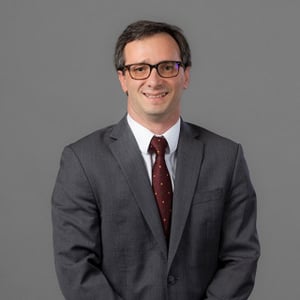
Assistant Professor of Law, George Mason University, Antonin Scalia Law School
Robert Leider is an Assistant Professor of Law at Antonin Scalia Law School, George Mason University. His scholarly interests are in criminal law, criminal procedure, and constitutional law, especially concerning questions about the use of force and the rule of law. He has written on the law of self-defense, the constitutional allocation of military power, and gun control. Among other places, he has published in the Florida Law Review (forthcoming), the Indiana Law Journal, and the Wall Street Journal.
Before joining Antonin Scalia Law School, Professor Leider was at Arnold & Porter in Washington, DC. He was previously with Mayer Brown LLP and was an Olin-Searle-Smith Fellow at the University of Pennsylvania Law School. He has clerked for Judge Diane S. Sykes, of the U.S. Court of Appeals for the Seventh Circuit, and Justice Clarence Thomas. Professor Leider earned a BA, summa cum laude, from The George Washington University, a JD from Yale Law School, and a PhD in Philosophy (dissertation defended with distinction) from Georgetown University. While at Yale, he served as an articles editor for the Yale Law Journal.
Professor Leider teaches criminal law and torts.
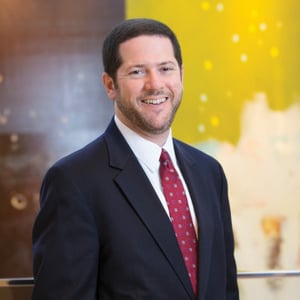
Partner, Co-chair of the Litigation & Trial Practice Group, Alston & Bird LLP
Adam Biegel is co-chair of Alston & Bird’s Litigation & Trial Practice Group and former co-chair of its Antitrust Team. He has substantial experience representing clients on antitrust counseling and litigation matters, including those involving government and internal investigations, mergers and joint ventures, pricing and distribution, compliance counseling and training, pre-merger reviews under the Hart-Scott-Rodino (HSR) Act, and multidistrict litigation. He regularly represents clients before the U.S. Department of Justice (DOJ) Antitrust Division, Federal Trade Commission (FTC) and state attorneys general, and in federal courts.
Adam is recognized for his antitrust experience by Chambers USA and selected to The Best Lawyers in America®, including his recognition as “Lawyer of the Year” for Antitrust Litigation in Washington, D.C., in 2022. He is a longtime member of the American Bar Association Antitrust Law Section’s leadership, currently serving as co-chair of its In-House Counsel Task Force and previously having served on its board, and chaired its Corporate Counseling Committee, Long Range Planning Committee, and Spring Meeting conference. He also serves on the board of the Federalist Society’s antitrust practice group.
Adam served as a law clerk to the Hon. Frank M. Hull, U.S. Court of Appeals for the Eleventh Circuit. Before attending law school, he worked as a newspaper reporter in Arkansas and on the legislative staff of U.S. Senator Orrin Hatch.
Deputy Director of the Bureau of Competition, Federal Trade Commission
Ian Conner serves as the Deputy Director of the Bureau of Competition at the Federal Trade Commission. He previously was a partner in the Antitrust & Competition practice at Kirkland & Ellis LLP in Washington, DC. Prior to entering private practice, Mr. Conner was a Trial Attorney in the Transportation, Energy and Agriculture Section of the Antitrust Division of the U.S. Department of Justice.
Senior Antitrust Counsel,, Tennessee Attorney General’s Office
Vic is Senior Antitrust Counsel in the Tennessee Attorney General’s Office and serves as Tennessee’s chief counsel for all state and multistate antitrust investigations and litigation. He also enforces Tennessee’s Nonprofit Act with a special focus on hospital transactions and conducts investigations on behalf of the Tennessee Ethics Commission. He is admitted to practice before all state courts in Tennessee, the U. S. Supreme Court, the United States Court of Appeals for the Sixth Circuit and United States District Courts for the Eastern, Middle and Western Districts of Tennessee. Vic was named Chair of the NAAG Antitrust Task Force in 2015 and has served as a member of the Long Range Planning Committee of the Antitrust Law Section of the American Bar Association and as a Co-Chair of the State Enforcement Committee. He has written and spoken on numerous antitrust and nonprofit matters and is currently on the Editorial Board of the ABA publication Antitrust Law Developments Updates. He has also planned or participated as a panelist on several ABA teleconferences programs and Spring Meeting sessions. Vic received his J.D. from Rutgers University School of Law and has a B.A. in Economics from Vanderbilt University
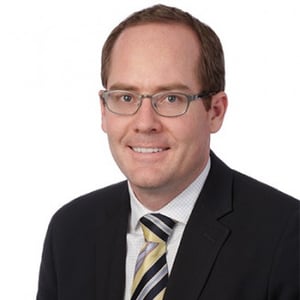
Senior Associate, Baker Botts L.L.P., Washington, DC
Jeffrey Oliver is an Associate in the firm’s Antitrust and Competition Practice. Mr. Oliver advises clients on all aspects of antitrust law, with an emphasis on U.S. and international merger reviews. Mr. Oliver has obtained antitrust clearance for transactions in a wide variety of industries, with significant experience in oil and gas, pharmaceuticals, chemicals and trade associations.
Prior to joining Baker Botts, Mr. Oliver was a Staff Attorney at the Federal Trade Commission, Bureau of Competition. There, Mr. Oliver’s practice focused on merger and conduct investigations in the oil and gas industry. Mr. Oliver has experience in all phases of the FTC’s investigation process, from reviewing HSR filings to challenging mergers in litigation.
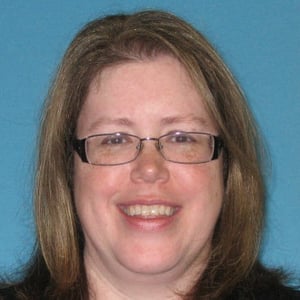
Senior Deputy Attorney General, Antitrust Section, Pennsylvania Attorney General’s Office
Jennifer A. Thomson serves as a Senior Deputy Attorney General in the Antitrust Section of the Pennsylvania Office of Attorney General, which she joined in March of 2003. She practices Antitrust Law, specializing in Intellectual Property, Healthcare and Airline matters, along with a wide array of other industries. Ms. Thomson has given presentations with the American Bar Association, the National Association of Attorneys General, the United States Department of Justice, the American Antitrust Institute and the United States Patent and Trademark Office. She authored several papers on topics such as the proposed merger of Highmark and Independence Blue Cross, State Action of the states' objection to the Google Book Search Settlement.
Ms. Thomson earned her J.D. in 2002 from the University of Pittsburgh School of Law, where she was an inaugural Fellow for the Samuelson/Glusko Fellowship in IP/Technology Law. As part of this fellowship, she prepared a paper on antitrust in the motion picture industry, which received from the University of Pittsburgh faculty the Thomas M. Cooley, II Legal Writing Award for Most Distinguished Paper. She is admitted to the bars of the Commonwealth of Pennsylvania, the United States District Courts for the Western, Middle and Eastern Districts of Pennsylvania, the Untied States District Court for the District of Columbia and the United States Court of Appeals for the Third Circuit. She is a member of the American Bar Association Antitrust Section and the State Enforcement Committee. She has been designated by the Chief Attorney General to sit on their behalf on the State Board of Cosmetology from 2003-2017, the Real Estate Commission Since Fall, 2017, and was recently appointed to serve as part of the Advisory Committee of the Review of the State Professional and Occupational Licensure Board Requirements and Processes pursuant to Pennsylvania Governor Tom Wolf's Executive Order 2017-03.
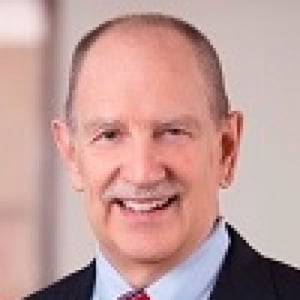
Retired
Tom Gede retired in 2023 as a principal in Morgan Lewis Consulting LLC and of counsel to the firm. He currently consults on a variety of legal and policy matters for both public and private clients. Tom has a national reputation and distinguished background in federal Indian law. Prior to retirement, he represented clients in complex governmental matters in litigation, administrative and regulatory proceedings, including high-profile matters involving state governments. A former senior deputy in the California Attorney General’s office, Tom was amicus coordinator and Supreme Court counsel, and argued cases in the US Supreme Court, the California Supreme Court, and numerous state and federal appellate courts.
Tom also served as executive director of the Conference of Western Attorneys General (CWAG), coordinating activities on key legal and policy issues, such as federal Indian law, energy, environmental, public lands, financial services, and telecommunications, for the attorneys general of 18 western states and territories. In 2016, Tom was elected as a Member of the American Law Institute (ALI), and served as an Adviser on the Restatement of the Law Third - The Law of American Indians. Tom also taught federal Indian law as an adjunct law professor at the University of the Pacific - McGeorge School of Law. He served as an assistant editor for and the author of the Indian gaming chapter in CWAG’s American Indian Law Deskbook (2d & 3d eds.). He has been engaged in Indian gaming and Indian law matters for more than three decades, having focused on the gaming compacts with Indian tribes, as well as complex civil and criminal jurisdiction, land, natural resources, water and law enforcement issues in Indian country. He has testified before Congress on American Indian and Native Alaskan issues. In 2012 he was appointed by Speaker John Boehner to serve on the United States Indian Law and Order Commission, where he examined criminal justice issues in Indian country and Alaska, resulting in the issuance of an important report to the President and Congress.
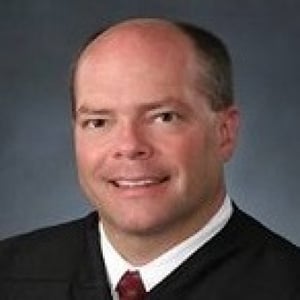
Ohio Fifth District Court of Appeals
Judge Craig Baldwin was appointed to the Fifth District Court of Appeals in 2013. He was elected to the position in 2014 and again in 2016. Prior to his time on the appellate court, Judge Baldwin served eight years as a judge in the Licking County Court of Common Pleas, Domestic Relations Division. An attorney since 1992, Judge Baldwin was a partner with the law firm of Jones, Norpell, List, Miller and Howarth. In 2001 he was appointed by the Licking County Commissioners as director of the Licking County Child Support Enforcement Agency until his election as judge in 2004. He was re-elected as judge in 2010.
Judge Baldwin obtained his Juris Doctor from Capital University, Bachelor of Arts degree from Ohio University and pursued graduate degree work in public administration at Ohio University.
Judge Baldwin has served by assignment on the Ohio Supreme Court. Judge Baldwin is a former chair of the Ohio Supreme Court’s Commission on the Rules of Superintendence, a member of the Licking County Bar, Stark County Bar and Ohio State Bar Associations. In 2012 he was appointed to the Ohio Supreme Court’s Task Force on the Funding of Ohio Courts. Judge Baldwin is also a frequent instructor at the Ohio Judicial College.
Judge Baldwin is a member of the Newark-Heath Rotary and a board member of the Licking Memorial Hospital. He is married and has two children.
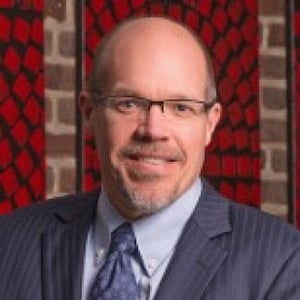
United States District Judge, Southern District of Ohio
Douglas R. Cole was nominated for the position in May 2019 by President Donald J. Trump and confirmed by the Senate in December 2019. Immediately before joining the bench, Judge Cole was a founding partner at Organ Cole, a litigation boutique in Columbus, Ohio.
Judge Cole received his J.D. from the University of Chicago Law School, where he graduated with High Honors and Order of the Coif, was an Olin Fellow in Law & Economics, and was a member of the editorial board of the University of Chicago Law Review. He clerked for Judge Frank H. Easterbrook on the United States Court of Appeals for the Seventh Circuit before joining Kirkland & Ellis in its Chicago office. He has served as a professor at the University of Oklahoma College of Law and at the Michael E. Moritz College of Law at The Ohio State University, where he taught in the fields of business law, law & economics, and intellectual property. From 2003-2006, he was the State Solicitor for the State of Ohio. In that capacity, he argued five cases at the United States Supreme Court, and multiple cases in the United States Court of Appeals for the Sixth Circuit and the Ohio Supreme Court. Before joining Organ Cole, Judge Cole was a litigation partner at the Columbus office of Jones Day, where he practiced in the Issues & Appeals group and the Intellectual Property group.
Judge Cole has undergraduate degrees in electrical engineering, mathematics, and physics, and worked as an electrical engineer before attending law school.
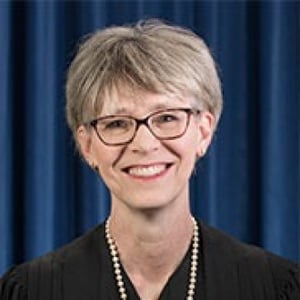
Associate Justice, Ohio Supreme Court
Mary DeGenaro became the 159th justice of the Ohio Supreme Court by gubernatorial appointment, effective Jan. 28, 2018.
Justice DeGenaro served nearly 17 years as a judge on the Seventh District Court of Appeals in Youngstown prior to her Supreme Court appointment. The appointed term ends Jan. 1, 2019 for a seat up for election in November 2018.
During her tenure on the Seventh District Court of Appeals, which began Feb. 9, 2001, she sat by assignment with the Ohio Supreme Court and other appellate districts.
Justice DeGenaro has served in many roles outside the courtroom. She was an adjunct faculty member for the political science department at Youngstown State University, where she earned her Bachelor of Arts degree. She received her law degree from the Cleveland-Marshall College of Law, where she interned with U.S. District Judge George White.
She also was vice president of the Ohio Women’s Bar Association at the time of her Supreme Court appointment.
Admitted to the Ohio bar in 1986, she also was admitted to practice in the federal courts, including the U.S. Supreme Court and the Sixth Circuit, U.S. Court of Appeals.
Prior to her judgeship, she served on the Poland Village Council.
Justice DeGenaro was appointed by the late Chief Justice Thomas J. Moyer to serve during 2002 and 2003 as a member of the Voter Education & Public Funding Working Group to further Judicial Impartiality: The Next Step Forum. This court-policy initiative addressed issues involving judicial races and preserving the integrity of Ohio’s judiciary.
In 2005, she began serving as a founding member of the Ohio State Bar Association’s Appellate Practice Specialty Certification Board, which administers the specialty bar examination and certification.
Involved in a variety of community organizations, Justice DeGenaro's service includes the board of trustees of the Public Library of Youngstown and Mahoning County and the Mahoning Valley Historical Society. Past service includes the external advisory committees for the Ohio Center for the Advancement of Women in Public Service at Cleveland State University, and Youngstown State University’s College of Liberal Arts and Social Sciences.
Outside of her judicial duties, Justice DeGenaro enjoys reading and beekeeping. She and her husband, Steve, reside in Poland, Ohio. They have two adult sons.
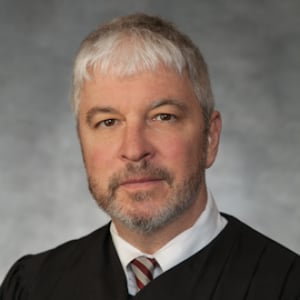
Cuyahoga County Common Pleas Court
Michael P. Donnelly is a judge on the Cuyahoga County Court of Common Pleas General Division in Cleveland, Ohio. He first joined the court on January 3, 2005. Donnelly won re-election to a third consecutive term in the general election on November 8, 2016. His current term expires January 2, 2023.
Donnelly received his undergraduate degree from John Carroll University and his J.D. from the Cleveland-Marshall College of Law. He was admitted to the Ohio Bar in 1992 and began working as an assistant prosecutor for Cuyahoga County. In 1997, he left that role to become an attorney at the firm of Davis & Young, where he worked until 1999. He then joined the firm of Climaco, Lefkowitz, Peca, Wilcox & Garofoli, working as a private practice attorney until his election to the common pleas bench in 2004.
In 2011, Donnelly participated in a program with the National Judicial College called "Innovative Leadership/Management Skills for Future Court Leaders". In 2012, Donnelly served as the Chair of Commission on Professionalism.
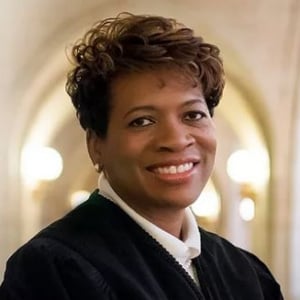
Ohio Eighth District Court of Appeals
Elected to the Ohio Court of Appeals – Eighth Appellate District in 2006 and twice reelected, Judge Melody Stewart has over 30 years of combined administrative, legal, and academic experience in a number of private and public settings. She has been an administrator for a healthcare management company, a music teacher, a civil defense litigator, and a law school administrator and professor. She served as the Administrative Judge for the Court of Appeals in 2013.
Judge Stewart earned a Bachelor of Music degree from the College-Conservatory of Music at the University of Cincinnati; her law degree as a Patricia Roberts Harris Fellow from the Cleveland-Marshall College of Law, Cleveland State University; and her Ph.D. as a Mandel Leadership Fellow at Case Western Reserve University’s Mandel School of Applied Social Sciences.
After practicing law as an assistant law director for the cities of Cleveland and East Cleveland, Judge Stewart worked as a lecturer, an adjunct instructor, and an assistant dean at Cleveland-Marshall College of Law before joining the faculty. Her primary teaching areas were ethics and professional responsibility, criminal law, criminal procedure, and legal research, writing, and advocacy. Additionally, she taught at the University of Toledo College of Law, at Ursuline College, and was Director of Student Services at Case Western Reserve University’s School of Law.
Judge Stewart has served on many boards of trustees and been a member of various professional, educational, civic, and community organizations. She also served as a commissioner and chair of the Board of Planning and Zoning for the city of Euclid. Recently Judge Stewart served as a member of the Ohio Criminal Justice Recodification Committee. She is currently a member of the board of the Ohio Supreme Court’s Judicial College and is chair of the Ohio Capital Case Attorney Fee Council. Judge Stewart is admitted to practice in the state and federal courts in Ohio, the District of Columbia, and the United States Supreme Court.
Ohio Fifth District Court of Appeals
Judge Craig Baldwin was appointed to the Fifth District Court of Appeals in 2013. He was elected to the position in 2014 and again in 2016. Prior to his time on the appellate court, Judge Baldwin served eight years as a judge in the Licking County Court of Common Pleas, Domestic Relations Division. An attorney since 1992, Judge Baldwin was a partner with the law firm of Jones, Norpell, List, Miller and Howarth. In 2001 he was appointed by the Licking County Commissioners as director of the Licking County Child Support Enforcement Agency until his election as judge in 2004. He was re-elected as judge in 2010.
Judge Baldwin obtained his Juris Doctor from Capital University, Bachelor of Arts degree from Ohio University and pursued graduate degree work in public administration at Ohio University.
Judge Baldwin has served by assignment on the Ohio Supreme Court. Judge Baldwin is a former chair of the Ohio Supreme Court’s Commission on the Rules of Superintendence, a member of the Licking County Bar, Stark County Bar and Ohio State Bar Associations. In 2012 he was appointed to the Ohio Supreme Court’s Task Force on the Funding of Ohio Courts. Judge Baldwin is also a frequent instructor at the Ohio Judicial College.
Judge Baldwin is a member of the Newark-Heath Rotary and a board member of the Licking Memorial Hospital. He is married and has two children.
United States District Judge, Southern District of Ohio
Douglas R. Cole was nominated for the position in May 2019 by President Donald J. Trump and confirmed by the Senate in December 2019. Immediately before joining the bench, Judge Cole was a founding partner at Organ Cole, a litigation boutique in Columbus, Ohio.
Judge Cole received his J.D. from the University of Chicago Law School, where he graduated with High Honors and Order of the Coif, was an Olin Fellow in Law & Economics, and was a member of the editorial board of the University of Chicago Law Review. He clerked for Judge Frank H. Easterbrook on the United States Court of Appeals for the Seventh Circuit before joining Kirkland & Ellis in its Chicago office. He has served as a professor at the University of Oklahoma College of Law and at the Michael E. Moritz College of Law at The Ohio State University, where he taught in the fields of business law, law & economics, and intellectual property. From 2003-2006, he was the State Solicitor for the State of Ohio. In that capacity, he argued five cases at the United States Supreme Court, and multiple cases in the United States Court of Appeals for the Sixth Circuit and the Ohio Supreme Court. Before joining Organ Cole, Judge Cole was a litigation partner at the Columbus office of Jones Day, where he practiced in the Issues & Appeals group and the Intellectual Property group.
Judge Cole has undergraduate degrees in electrical engineering, mathematics, and physics, and worked as an electrical engineer before attending law school.
Associate Justice, Ohio Supreme Court
Mary DeGenaro became the 159th justice of the Ohio Supreme Court by gubernatorial appointment, effective Jan. 28, 2018.
Justice DeGenaro served nearly 17 years as a judge on the Seventh District Court of Appeals in Youngstown prior to her Supreme Court appointment. The appointed term ends Jan. 1, 2019 for a seat up for election in November 2018.
During her tenure on the Seventh District Court of Appeals, which began Feb. 9, 2001, she sat by assignment with the Ohio Supreme Court and other appellate districts.
Justice DeGenaro has served in many roles outside the courtroom. She was an adjunct faculty member for the political science department at Youngstown State University, where she earned her Bachelor of Arts degree. She received her law degree from the Cleveland-Marshall College of Law, where she interned with U.S. District Judge George White.
She also was vice president of the Ohio Women’s Bar Association at the time of her Supreme Court appointment.
Admitted to the Ohio bar in 1986, she also was admitted to practice in the federal courts, including the U.S. Supreme Court and the Sixth Circuit, U.S. Court of Appeals.
Prior to her judgeship, she served on the Poland Village Council.
Justice DeGenaro was appointed by the late Chief Justice Thomas J. Moyer to serve during 2002 and 2003 as a member of the Voter Education & Public Funding Working Group to further Judicial Impartiality: The Next Step Forum. This court-policy initiative addressed issues involving judicial races and preserving the integrity of Ohio’s judiciary.
In 2005, she began serving as a founding member of the Ohio State Bar Association’s Appellate Practice Specialty Certification Board, which administers the specialty bar examination and certification.
Involved in a variety of community organizations, Justice DeGenaro's service includes the board of trustees of the Public Library of Youngstown and Mahoning County and the Mahoning Valley Historical Society. Past service includes the external advisory committees for the Ohio Center for the Advancement of Women in Public Service at Cleveland State University, and Youngstown State University’s College of Liberal Arts and Social Sciences.
Outside of her judicial duties, Justice DeGenaro enjoys reading and beekeeping. She and her husband, Steve, reside in Poland, Ohio. They have two adult sons.
Cuyahoga County Common Pleas Court
Michael P. Donnelly is a judge on the Cuyahoga County Court of Common Pleas General Division in Cleveland, Ohio. He first joined the court on January 3, 2005. Donnelly won re-election to a third consecutive term in the general election on November 8, 2016. His current term expires January 2, 2023.
Donnelly received his undergraduate degree from John Carroll University and his J.D. from the Cleveland-Marshall College of Law. He was admitted to the Ohio Bar in 1992 and began working as an assistant prosecutor for Cuyahoga County. In 1997, he left that role to become an attorney at the firm of Davis & Young, where he worked until 1999. He then joined the firm of Climaco, Lefkowitz, Peca, Wilcox & Garofoli, working as a private practice attorney until his election to the common pleas bench in 2004.
In 2011, Donnelly participated in a program with the National Judicial College called "Innovative Leadership/Management Skills for Future Court Leaders". In 2012, Donnelly served as the Chair of Commission on Professionalism.
Ohio Eighth District Court of Appeals
Elected to the Ohio Court of Appeals – Eighth Appellate District in 2006 and twice reelected, Judge Melody Stewart has over 30 years of combined administrative, legal, and academic experience in a number of private and public settings. She has been an administrator for a healthcare management company, a music teacher, a civil defense litigator, and a law school administrator and professor. She served as the Administrative Judge for the Court of Appeals in 2013.
Judge Stewart earned a Bachelor of Music degree from the College-Conservatory of Music at the University of Cincinnati; her law degree as a Patricia Roberts Harris Fellow from the Cleveland-Marshall College of Law, Cleveland State University; and her Ph.D. as a Mandel Leadership Fellow at Case Western Reserve University’s Mandel School of Applied Social Sciences.
After practicing law as an assistant law director for the cities of Cleveland and East Cleveland, Judge Stewart worked as a lecturer, an adjunct instructor, and an assistant dean at Cleveland-Marshall College of Law before joining the faculty. Her primary teaching areas were ethics and professional responsibility, criminal law, criminal procedure, and legal research, writing, and advocacy. Additionally, she taught at the University of Toledo College of Law, at Ursuline College, and was Director of Student Services at Case Western Reserve University’s School of Law.
Judge Stewart has served on many boards of trustees and been a member of various professional, educational, civic, and community organizations. She also served as a commissioner and chair of the Board of Planning and Zoning for the city of Euclid. Recently Judge Stewart served as a member of the Ohio Criminal Justice Recodification Committee. She is currently a member of the board of the Ohio Supreme Court’s Judicial College and is chair of the Ohio Capital Case Attorney Fee Council. Judge Stewart is admitted to practice in the state and federal courts in Ohio, the District of Columbia, and the United States Supreme Court.
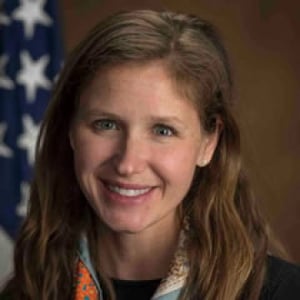
Vice President & Compliance Counsel, Capital One
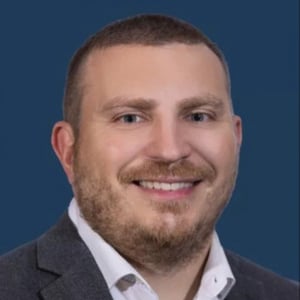
Legal Policy Director, Pacific Legal Foundation
Daniel Dew directs Pacific Legal Foundation’s legal policy efforts. The legal policy team fights for individual liberty in the other two branches of government by finding principled solutions to complex problems.
Daniel has led numerous successful public policy campaigns, including home equity theft reform, judicial bias reform, emergency powers reform, and prior to his time at PLF, civil asset forfeiture reform, sentencing reform, and removing government-imposed barriers to employment.
Before joining PLF, Daniel was a legal fellow at The Buckeye Institute in Columbus, Ohio, and a visiting legal fellow at The Heritage Foundation’s Meese Center for Legal and Judicial Studies.
Daniel served on the Ohio Supreme Court’s Task Force to Examine Ohio’s Bail System, and Ohio’s Justice Reinvestment 2.0 Ad Hoc Committee. He has also served as president of the Columbus, Ohio lawyers chapter of the Federalist Society, and chaired the Ohio State Bar Association’s Criminal Justice Committee.
He earned his law degree from Cleveland Marshall College of Law and his undergraduate degree from Utah State University.
When he’s not battling bureaucrats, Daniel coaches baseball, trains for marathons (very slowly), is constantly disappointed by Cleveland sports teams, and keeps busy with his wife, Amanda, and their four children.
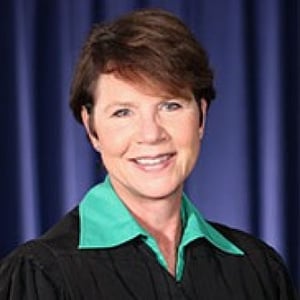
Justice, Ohio Supreme Court
On November 4, 2014, Justice Sharon L. Kennedy was re-elected to a full term on the Supreme Court of Ohio in a decisive victory winning all 88 counties and garnering 73 percent of the vote. Justice Kennedy first joined the court in 2012, having been elected to fill an unexpired term.
Prior to her term on the Ohio Supreme Court, Justice Kennedy served at the Butler County Court of Common Pleas, Domestic Relations Division beginning in 1999. From 2005 until December of 2012, Justice Kennedy served as the administrative judge of that division. During her time as administrative judge, she improved the case management system to ensure the timely resolution of cases for families and children. Working with state legislators she championed a "common sense" family law initiative to reduce multiple-forum litigation for Butler County families.
When Butler County faced tough economic times, Justice Kennedy organized concerned elected officials in a county-wide Budget Work Group. Seeing the need to bring private sector financial know-how to the government, she worked to create the Advisory Committee to the Budget Work Group. Justice Kennedy served as the facilitator and led discussions between county officials and private sector leaders to analyze county finances, study and implement cost saving measures, and present business driven fiscal policy to the county commissioners.
In 1991, after obtaining her law degree from the University of Cincinnati College of Law, Justice Kennedy ran a small business of her own as a solo practitioner. While in private practice she served the legal needs of families, juveniles, and the less fortunate. As special counsel for Attorney General Betty D. Montgomery, Justice Kennedy fought on behalf of Ohio’s taxpayers to collect monies due the State of Ohio. As a part-time magistrate in the Butler County Area Courts, Justice Kennedy presided over a wide array of civil litigation and assisted law enforcement officers and private citizens seeking the issuance of criminal warrants for arrest.
Justice Kennedy began her career in the justice system as a police officer at the Hamilton Police Department. She was assigned to a rotating shift, single-officer road patrol unit working to protect and serve the citizens of the City of Hamilton. From the routine, to the heart-pounding, to the heart-breaking, she has seen it all. During her time as an officer, Justice Kennedy also worked undercover operations, implemented crime prevention programs, and later, as a civil assistant, assisted in drafting police policy and procedure for the Accreditation Program.
Throughout her career Justice Kennedy has served on numerous boards, developed and facilitated programs to address the needs of young people, and worked with judges across the state. As a dedicated jurist she has received multiple awards of recognition including: Leadership Ohio Community Leadership Award, 2016; The University of Cincinnati College of Law Nicholas Longworth, III Alumni Achievement Award, May 17, 2014; Northwest High School Distinguished Alumnus Award, April 25, 2014; named one of 13 professional women to watch by The Cincinnati Enquirer, March 17, 2013; Excellence in Public Service, June 2009; Judge of the Year, 2006; Above the Fold Award, 2002; and the Furtherance of Justice Award, 2001. Justice Kennedy was also featured in Trends in the Judiciary: Interviews with Judges Across the Globe, Volume II, published by CRC Press in February 2015.

Attorney General, State of Ohio
Dave Yost was re-elected as Ohio’s 51st attorney general on Nov. 8, 2022, receiving more votes than any other attorney general in the state’s history.
During his first term as the state’s chief legal officer, he quickly gained a national reputation as a fearless advocate for the rule of law — or, as he puts it, “the same rules for everybody.”
Yost’s goal is to “do big good” for the people of Ohio by protecting consumers, rooting out corruption, defending the environment, ensuring an open and competitive marketplace, and fulfilling the many other duties of the Ohio Attorney General’s Office.
Yost began his public-service career as Delaware County auditor, later winning election as that county’s prosecutor. From 2011 through 2018, he served as Ohio’s auditor of state and, in January 2019, began his first term as attorney general.
Yost earned his bachelor’s degree from The Ohio State University and law degree from Capital University. He and his wife, Darlene, live in Franklin County; they have three grown children and five grandchildren.
Vice President & Compliance Counsel, Capital One
Legal Policy Director, Pacific Legal Foundation
Daniel Dew directs Pacific Legal Foundation’s legal policy efforts. The legal policy team fights for individual liberty in the other two branches of government by finding principled solutions to complex problems.
Daniel has led numerous successful public policy campaigns, including home equity theft reform, judicial bias reform, emergency powers reform, and prior to his time at PLF, civil asset forfeiture reform, sentencing reform, and removing government-imposed barriers to employment.
Before joining PLF, Daniel was a legal fellow at The Buckeye Institute in Columbus, Ohio, and a visiting legal fellow at The Heritage Foundation’s Meese Center for Legal and Judicial Studies.
Daniel served on the Ohio Supreme Court’s Task Force to Examine Ohio’s Bail System, and Ohio’s Justice Reinvestment 2.0 Ad Hoc Committee. He has also served as president of the Columbus, Ohio lawyers chapter of the Federalist Society, and chaired the Ohio State Bar Association’s Criminal Justice Committee.
He earned his law degree from Cleveland Marshall College of Law and his undergraduate degree from Utah State University.
When he’s not battling bureaucrats, Daniel coaches baseball, trains for marathons (very slowly), is constantly disappointed by Cleveland sports teams, and keeps busy with his wife, Amanda, and their four children.
Justice, Ohio Supreme Court
On November 4, 2014, Justice Sharon L. Kennedy was re-elected to a full term on the Supreme Court of Ohio in a decisive victory winning all 88 counties and garnering 73 percent of the vote. Justice Kennedy first joined the court in 2012, having been elected to fill an unexpired term.
Prior to her term on the Ohio Supreme Court, Justice Kennedy served at the Butler County Court of Common Pleas, Domestic Relations Division beginning in 1999. From 2005 until December of 2012, Justice Kennedy served as the administrative judge of that division. During her time as administrative judge, she improved the case management system to ensure the timely resolution of cases for families and children. Working with state legislators she championed a "common sense" family law initiative to reduce multiple-forum litigation for Butler County families.
When Butler County faced tough economic times, Justice Kennedy organized concerned elected officials in a county-wide Budget Work Group. Seeing the need to bring private sector financial know-how to the government, she worked to create the Advisory Committee to the Budget Work Group. Justice Kennedy served as the facilitator and led discussions between county officials and private sector leaders to analyze county finances, study and implement cost saving measures, and present business driven fiscal policy to the county commissioners.
In 1991, after obtaining her law degree from the University of Cincinnati College of Law, Justice Kennedy ran a small business of her own as a solo practitioner. While in private practice she served the legal needs of families, juveniles, and the less fortunate. As special counsel for Attorney General Betty D. Montgomery, Justice Kennedy fought on behalf of Ohio’s taxpayers to collect monies due the State of Ohio. As a part-time magistrate in the Butler County Area Courts, Justice Kennedy presided over a wide array of civil litigation and assisted law enforcement officers and private citizens seeking the issuance of criminal warrants for arrest.
Justice Kennedy began her career in the justice system as a police officer at the Hamilton Police Department. She was assigned to a rotating shift, single-officer road patrol unit working to protect and serve the citizens of the City of Hamilton. From the routine, to the heart-pounding, to the heart-breaking, she has seen it all. During her time as an officer, Justice Kennedy also worked undercover operations, implemented crime prevention programs, and later, as a civil assistant, assisted in drafting police policy and procedure for the Accreditation Program.
Throughout her career Justice Kennedy has served on numerous boards, developed and facilitated programs to address the needs of young people, and worked with judges across the state. As a dedicated jurist she has received multiple awards of recognition including: Leadership Ohio Community Leadership Award, 2016; The University of Cincinnati College of Law Nicholas Longworth, III Alumni Achievement Award, May 17, 2014; Northwest High School Distinguished Alumnus Award, April 25, 2014; named one of 13 professional women to watch by The Cincinnati Enquirer, March 17, 2013; Excellence in Public Service, June 2009; Judge of the Year, 2006; Above the Fold Award, 2002; and the Furtherance of Justice Award, 2001. Justice Kennedy was also featured in Trends in the Judiciary: Interviews with Judges Across the Globe, Volume II, published by CRC Press in February 2015.
Attorney General, State of Ohio
Dave Yost was re-elected as Ohio’s 51st attorney general on Nov. 8, 2022, receiving more votes than any other attorney general in the state’s history.
During his first term as the state’s chief legal officer, he quickly gained a national reputation as a fearless advocate for the rule of law — or, as he puts it, “the same rules for everybody.”
Yost’s goal is to “do big good” for the people of Ohio by protecting consumers, rooting out corruption, defending the environment, ensuring an open and competitive marketplace, and fulfilling the many other duties of the Ohio Attorney General’s Office.
Yost began his public-service career as Delaware County auditor, later winning election as that county’s prosecutor. From 2011 through 2018, he served as Ohio’s auditor of state and, in January 2019, began his first term as attorney general.
Yost earned his bachelor’s degree from The Ohio State University and law degree from Capital University. He and his wife, Darlene, live in Franklin County; they have three grown children and five grandchildren.

Criminal Justice Reform Discussion
Brandon Garrett, Paul G. Cassell, Erik Luna
Criminal justice reform has been a hot political topic for several years now, bringing together...
Maine Senate v. Secretary of State
Joshua D. Dunlap
In Maine Senate v. Secretary of State, the Maine Supreme Judicial Court (referred to as the...
The Journey of a SCOTUS Case: Briefs, Arguments, and Decisions [No. 86]
Douglas H. Ginsburg
Short video featuring Douglas Ginsburg
Today, the Supreme Court is taking longer to reach fewer decisions than ever before. Why...
Kisela v. Hughes - Post-Decision SCOTUScast
Robert Leider
SCOTUScast featuring Robert Leider
On April 2, 2018, the Supreme Court decided Kisela v. Hughes. In 2010, Andrew Kisela,...
Antitrust Enforcement by State Attorney Generals
Adam Biegel, Ian Conner, Victor Domen, Jeffrey S. Oliver, Jennifer A. Thomson
State Attorneys General often investigate antitrust violations – ranging from price fixing to anticompetitive mergers...
Upper Skagit Indian Tribe v. Lundgren
Thomas F. Gede
SCOTUScast featuring Tom Gede
On March 21, 2018, the Supreme Court heard argument in Upper Skagit Indian Tribe v....
Analyzing Ohio's Judicial System and the Ohio Supreme Court
Craig R. Baldwin, Douglas R. Cole, Mary DeGenaro, Michael P. Donnelly, Melody Stewart
2018 Ohio Lawyers Chapters Conference
What methods of interpretation should Ohio courts use in constitutional matters and in cases involving...
Analyzing Ohio's Judicial System and the Ohio Supreme Court
Craig R. Baldwin, Douglas R. Cole, Mary DeGenaro, Michael P. Donnelly, Melody Stewart
2018 Ohio Lawyers Chapters Conference
What methods of interpretation should Ohio courts use in constitutional matters and in cases involving...
Criminal Justice Reform: A Necessary Correction or a Dangerous Experiment?
Heather Childs, Daniel J. Dew, Sharon L. Kennedy, Dave Yost
2018 Ohio Lawyers Chapters Conference
Demand for criminal justice reform appears to be growing across the political spectrum. Bipartisan coalitions...
Criminal Justice Reform: A Necessary Correction or a Dangerous Experiment?
Heather Childs, Daniel J. Dew, Sharon L. Kennedy, Dave Yost
2018 Ohio Lawyers Chapters Conference
Demand for criminal justice reform appears to be growing across the political spectrum. Bipartisan coalitions...