

Partner, Lehotsky Keller LLP
The New York Times recognized Scott A. Keller as a “legal heavyweight,” who “is praised by opponents as a formidable advocate.”
Mr. Keller has argued 12 cases before the U.S. Supreme Court and 12 cases before the Texas Supreme Court. He is the only practicing lawyer to have argued at least 10 cases in both courts. Mr. Keller frequently represents parties in high stakes appeals, and he has argued many cases in federal courts of appeals throughout the nation. He has earned individual accolades from Lawdragon 500 Leading Litigators in America, Chambers, Legal 500, The American Lawyer, The National Law Journal, Law360, Super Lawyers, The Best Lawyers in America, and other publications.
Before founding Lehotsky Keller Cohn LLP, Mr. Keller headed Baker Botts LLP’s Supreme Court Practice. He also has significant experience at the highest levels in all three branches of government. Mr. Keller served as the Solicitor General of Texas, the State’s chief appellate litigator. He was U.S. Senator Ted Cruz’s chief counsel on the Senate Judiciary Committee. Mr. Keller was a law clerk for Justice Anthony Kennedy of the Supreme Court of the United States and Chief Judge Alex Kozinski of the U.S. Court of Appeals for the Ninth Circuit. He was also a Bristow Fellow in the U.S. Department of Justice’s Office of the Solicitor General.
Mr. Keller represents clients in cases where public communications strategy is crucial, and he has made numerous media appearances in major outlets such as The New York Times, The Wall Street Journal, BBC, Fox News, NPR, and Politico. As a sought after speaker and writer, Mr. Keller’s articles have appeared in the Stanford Law Review, Virginia Law Review, and Texas Law Review. He has also served as an adjunct professor of constitutional litigation, Supreme Court practice, and federal courts at the University of Texas School of Law.
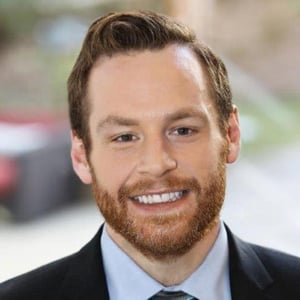
Deputy Director - Center for Effective Public Management; Senior Fellow - Governance Studies, The Brookings Institution
John Hudak is deputy director of the Center for Effective Public Management and a senior fellow in Governance Studies. His research examines questions of presidential power in the contexts of administration, personnel, and public policy. Additionally, he focuses on campaigns and elections, legislative-executive interaction, and state and federal marijuana policy.
John’s 2016 book, Marijuana: A Short History, offers a unique, up-to-date profile of how cannabis emerged from the shadows of counterculture and illegality to become a serious, even mainstream, public policy issue and source of legal revenue for both businesses and governments. In it, he describes why attitudes and policy have changed, and what those changes mean for marijuana's future place in society.
His 2014 Presidential Pork: White House Influence over the Distribution of Federal Grants demonstrates that pork-barrel politics occurs beyond the halls of Congress. Presidents capitalize on their discretionary funding authority to target federal dollars to swing states in advance of presidential elections. His other work explores how agency staffing, expertise, and institutional structure facilitate or hinder presidential power and influence. This research explores the balance between political control and bureaucratic expertise in the delivery of public policy.
John’s work has been recognized for its quality and contribution by the Midwest Political Science Association and the American Political Science Association’s Presidency Research Group. His work has been supported by institutions including the National Science Foundation.
Prior to joining Brookings, John served as the program director and as a graduate fellow at the Center for the Study of Democratic Institutions. He holds a B.A. in political science and economics from the University of Connecticut and an M.A. and Ph.D. in political science from Vanderbilt University.
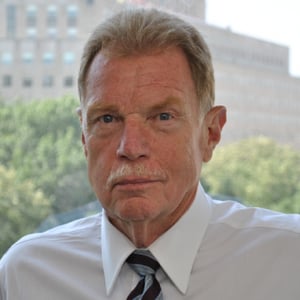
Senior Fellow, Hudson Institute
David W. Murray is a Senior Fellow at Hudson Institute where he co-directs the Center for Substance Abuse Policy Research. While serving previous posts as Chief Scientist and Associate Deputy Director (Supply Reduction) in the federal government’s Office of National Drug Control Policy, Murray directed extensive scientific research on all aspects of the drug problem and helped coordinate high-level inter-agency efforts to limit the production of illicit drugs and counter the transnational criminal organizations that control their global shipment and marketing.
Before entering government, Murray was executive director of the Statistical Assessment Service and held academic appointments at Connecticut College and Brown, Brandeis, and Georgetown Universities. He is the author of numerous scholarly papers, essays, and commentaries; co-author (with Joel Schwartz and S. Robert Lichter) of the widely-noted book It Ain’t Necessarily So: How Media Make and Unmake the Scientific Picture of Reality; and a frequent guest on major network television and radio programs.
Murray holds an M.A. and Ph.D. in social anthropology from the University of Chicago.
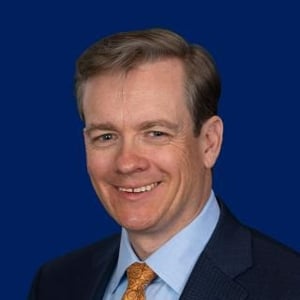
Daryl Joseffer is executive vice president and chief counsel at the U.S. Chamber Litigation Center, the litigation arm of the U.S. Chamber of Commerce. A former principal deputy solicitor general, Joseffer has argued 12 cases in the U.S. Supreme Court and dozens of other appeals across the country.
Before joining the Chamber, Joseffer practiced law with King & Spalding LLP, where he was a partner and head of the firm’s appellate group. Previously, he served in the Solicitor General’s Office and as a deputy general counsel in the White House Office of Management and Budget, a partner at Kirkland & Ellis, and a law clerk to the Honorable Jerry E. Smith, Circuit Judge of the U.S. Court of Appeals for the Fifth Circuit.
Joseffer graduated magna cum laude from Harvard Law School and received a B.A. in economics from Stanford University.
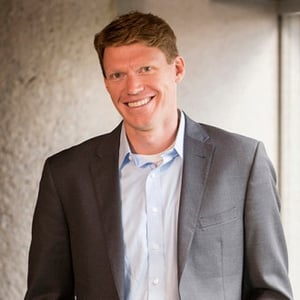
Professor of Law, Vanderbilt Law School
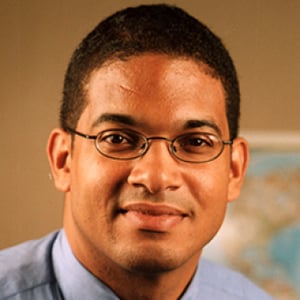
Benjamin Mazur Summer Research Professor of Law Affiliated Faculty, Ford Motor Company Center for Global Citizenship, Northwestern University School of Law
Jide Nzelibe joined Northwestern's faculty as an assistant professor in 2004 became a full Professor in 2008. He served as the Bigelow Teaching Fellow and Lecturer in Law at the University of Chicago before joining Northwestern Law. In addition to his JD from Yale Law School, he also holds an MPA in international relations from Princeton University, where he was awarded a fellowship from the Woodrow Wilson Foundation and a pre-doctoral fellowship from the Ford Foundation. His research and teaching interests include international trade, foreign relations law, public and private international law and contracts.

Professor Emeritus of Law, Antonin Scalia Law School, George Mason University
Jeremy A. Rabkin is a Professor Emeritus of Law at the Antonin Scalia Law School, George Mason University. Before joining the faculty in June 2007, he was for over two decades a professor in the Department of Government at Cornell University. Professor Rabkin serves on the board of directors of the Center for Individual Rights, a public interest law firm based in Washington, D.C. Previously he was a board member of the U.S. Institute of Peace and the board of academic advisors of the American Enterprise Institute.
Professor Rabkin’s books include Law Without Nations? (Princeton University Press, 2005). He authored “If You Need a Friend, Don’t Call a Cosmopolitan,” a chapter in Varieties of Sovereignty and Citizenship (Sigal R. Ben-Porath & Rogers M. Smith eds., University of Pennsylvania Press, 2012). His articles have appeared in major law reviews and political science journals and his journalistic contributions in a range of magazines and newspapers, including the Washington Post and the Wall Street Journal.
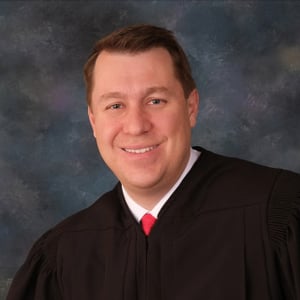
Judge, Ohio Twelfth District Court of Appeals
Judge Matthew R. Byrne was elected to the Ohio Court of Appeals for the Twelfth District in 2020, and his first term began on January 1, 2021. He is currently serving as the court's elected Administrative Judge. The Twelfth District Court of Appeals hears civil and criminal appeals from the trial courts in eight counties in southwest Ohio. Judge Byrne is active in the Ohio Judicial Conference and the Ohio Court of Appeals Judges Association. He also currently serves as a member and vice chair of the Ohio Supreme Court's Commission on the Rules of Practice and Procedure (where he previously chaired the Appellate Rules Committee). He previously served as a member of the Ohio Supreme Court's Commission on Character and Fitness.
From January 2010 to December 2020, Judge Byrne practiced law at the national law firm of Jackson Lewis P.C. He was a member of the firm's General Employment Litigation Practice Group and the Wage and Hour Practice Group. From 2007 to 2010 he practiced at Taft Stettinius & Hollister LLP. At both firms, Judge Byrne represented clients ranging from small businesses to international corporations in state and federal trial and appellate litigation, including multiple class and collective actions. He also represented clients in arbitration and before numerous administrative agencies, including the Equal Employment Opportunity Commission, the National Labor Relations Board, and the Ohio Civil Rights Commission.
Judge Byrne earned his law degree, cum laude, from The Ohio State University Moritz College of Law. During law school he was symposium editor of the Ohio State Law Journal and the winner of the Donald S. Teller Memorial Award for student writing contributing most significantly to the Ohio State Law Journal. During law school he clerked for the Acting General Counsel of the United States Department of the Treasury. Judge Byrne earned his bachelor's degree, magna cum laude, from Xavier University, where he majored in International Affairs (Business) and Political Science.
Prior to entering law school Judge Byrne served in President George W. Bush's Administration as a member of the White House staff in the Office of Presidential Personnel, the office responsible for selecting candidates to recommend to the President for appointment or nomination to high-level government positions, and for coordinating with the Offices of White House Counsel, Press Secretary, and Executive Clerk regarding candidate background clearances, press announcements, and the status of appointments/nominations.
Judge Byrne has been a member of the Federalist Society since law school and he served for five years as president of the Federalist Society's Cincinnati Lawyers Chapter. He is a member of a number of other community and civic organizations, including the Ohio State Bar Association and the bar associations of Butler, Clermont, and Warren Counties. Judge Byrne previously was a member of the Advisory Board of Pregnancy Center East and a board member and president of the St. Thomas More Lawyers Guild of Greater Cincinnati.
Judge Byrne is an active parishioner at his church, where he is a lector, a former member and president of the Education Commission, and a former member of the Finance and Administration Commission.
Judge Byrne resides in Deerfield Township, Warren County, Ohio with his wife Julie and their three children.
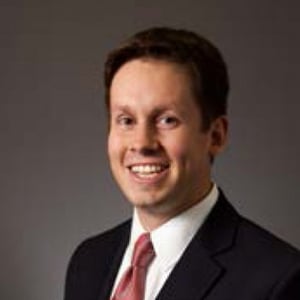
Senior Counsel, Alliance Defending Freedom
Jeremiah Galus serves as senior counsel for Alliance Defending Freedom, where he is a key member of the Center for Christian Ministries.
Since joining ADF in 2015, Galus has represented a wide array of religious ministries, schools, and churches, litigating cases at all levels of state and federal court. Galus has successfully briefed and argued appeals before both state appellate courts and the U.S. Court of Appeals. He was a key member of ADF’s litigation team in Uzuegbunam v. Preszewski, leading to a U.S. Supreme Court victory ensuring government officials are held accountable for violating constitutionally protected freedoms.
Prior to joining ADF, Galus worked as an attorney with a large law firm in Washington, D.C., where he focused on complex civil litigation. Galus also served as a prosecutor before joining ADF. Galus received his J.D., cum laude, in 2009 from the University of Pittsburgh School of Law, where he served as senior research editor of the University of Pittsburgh Law Review. He earned a B.A. in government and political affairs from Millersville University in 2006. Galus also is a 2007 Blackstone Fellow.
Galus is admitted to the state bars of Arizona, Pennsylvania, and the District of Columbia, the U.S. Supreme Court, and various lower federal courts.

Vice President of Government Relations, Columbus Chamber of Commerce
As Vice President of Government Relations, Holly Gross helps our members navigate the ever-changing opportunities and challenges businesses face when it comes to local, state and federal policy decisions. Not only can she advocate for your business, but she also helps to unify the voices of our greater Columbus business community. Holly, an attorney, finds creative ways to help businesses better understand critical policy issues, foster relationships with your elected officials and provide your business with the resources it needs to be successful.
A graduate of The Ohio State University and Capital University Law School, Holly represented the State’s retail industry before the Ohio General Assembly as Legislative Counsel for the Ohio Council of Retail Merchants, where she focused on legislative issues pertaining to labor and employment, alcohol and gambling, economic and workforce development and the automotive industry. Her previous experiences also include Executive Director for the Ohio Association of Convenience Stores and the Ohio Tire and Automotive Association, as well as a Legislative Aide for the Ohio House of Representatives.
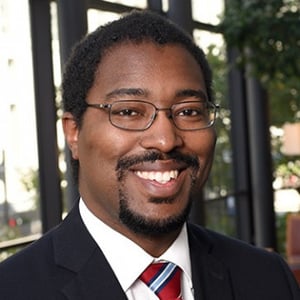
Partner, Taft Stettinius & Hollister LLP
Philip litigates complex matters in state and federal courts. He has briefed appeals in multiple U.S. Courts of Appeals, including the Sixth, Seventh, and Ninth Circuits, as well as state appellate courts in Ohio, Kentucky, and Georgia. Philip has also represented amici at both the cert petition and merits stages in the U.S. Supreme Court.
Prior to joining Taft, Philip served as a law clerk for Judge Raymond M. Kethledge of the U.S. Court of Appeals for the Sixth Circuit, Judge Amul R. Thapar of the U.S. District Court for the Eastern District of Kentucky, and Judge Lavenski R. Smith of the U.S. Court of Appeals for the Eighth Circuit.
Philip serves on the board of directors for the Cincinnati and Northern Kentucky lawyers chapters of the Federalist Society. He was a 2018 James Wilson Fellow with the James Wilson Institute, a 2013 John Marshall Fellow with the Claremont Institute Center for Constitutional Jurisprudence, and a 2011 Blackstone Fellow with the Alliance Defending Freedom.
Philip received his undergraduate degree, with Highest Honors, from Ouachita Baptist University. He received his J.D. from the University of Virginia School of Law, where he served as the submissions review editor for the Journal of Law and Politics.
Judge, Ohio Twelfth District Court of Appeals
Judge Matthew R. Byrne was elected to the Ohio Court of Appeals for the Twelfth District in 2020, and his first term began on January 1, 2021. He is currently serving as the court's elected Administrative Judge. The Twelfth District Court of Appeals hears civil and criminal appeals from the trial courts in eight counties in southwest Ohio. Judge Byrne is active in the Ohio Judicial Conference and the Ohio Court of Appeals Judges Association. He also currently serves as a member and vice chair of the Ohio Supreme Court's Commission on the Rules of Practice and Procedure (where he previously chaired the Appellate Rules Committee). He previously served as a member of the Ohio Supreme Court's Commission on Character and Fitness.
From January 2010 to December 2020, Judge Byrne practiced law at the national law firm of Jackson Lewis P.C. He was a member of the firm's General Employment Litigation Practice Group and the Wage and Hour Practice Group. From 2007 to 2010 he practiced at Taft Stettinius & Hollister LLP. At both firms, Judge Byrne represented clients ranging from small businesses to international corporations in state and federal trial and appellate litigation, including multiple class and collective actions. He also represented clients in arbitration and before numerous administrative agencies, including the Equal Employment Opportunity Commission, the National Labor Relations Board, and the Ohio Civil Rights Commission.
Judge Byrne earned his law degree, cum laude, from The Ohio State University Moritz College of Law. During law school he was symposium editor of the Ohio State Law Journal and the winner of the Donald S. Teller Memorial Award for student writing contributing most significantly to the Ohio State Law Journal. During law school he clerked for the Acting General Counsel of the United States Department of the Treasury. Judge Byrne earned his bachelor's degree, magna cum laude, from Xavier University, where he majored in International Affairs (Business) and Political Science.
Prior to entering law school Judge Byrne served in President George W. Bush's Administration as a member of the White House staff in the Office of Presidential Personnel, the office responsible for selecting candidates to recommend to the President for appointment or nomination to high-level government positions, and for coordinating with the Offices of White House Counsel, Press Secretary, and Executive Clerk regarding candidate background clearances, press announcements, and the status of appointments/nominations.
Judge Byrne has been a member of the Federalist Society since law school and he served for five years as president of the Federalist Society's Cincinnati Lawyers Chapter. He is a member of a number of other community and civic organizations, including the Ohio State Bar Association and the bar associations of Butler, Clermont, and Warren Counties. Judge Byrne previously was a member of the Advisory Board of Pregnancy Center East and a board member and president of the St. Thomas More Lawyers Guild of Greater Cincinnati.
Judge Byrne is an active parishioner at his church, where he is a lector, a former member and president of the Education Commission, and a former member of the Finance and Administration Commission.
Judge Byrne resides in Deerfield Township, Warren County, Ohio with his wife Julie and their three children.
Senior Counsel, Alliance Defending Freedom
Jeremiah Galus serves as senior counsel for Alliance Defending Freedom, where he is a key member of the Center for Christian Ministries.
Since joining ADF in 2015, Galus has represented a wide array of religious ministries, schools, and churches, litigating cases at all levels of state and federal court. Galus has successfully briefed and argued appeals before both state appellate courts and the U.S. Court of Appeals. He was a key member of ADF’s litigation team in Uzuegbunam v. Preszewski, leading to a U.S. Supreme Court victory ensuring government officials are held accountable for violating constitutionally protected freedoms.
Prior to joining ADF, Galus worked as an attorney with a large law firm in Washington, D.C., where he focused on complex civil litigation. Galus also served as a prosecutor before joining ADF. Galus received his J.D., cum laude, in 2009 from the University of Pittsburgh School of Law, where he served as senior research editor of the University of Pittsburgh Law Review. He earned a B.A. in government and political affairs from Millersville University in 2006. Galus also is a 2007 Blackstone Fellow.
Galus is admitted to the state bars of Arizona, Pennsylvania, and the District of Columbia, the U.S. Supreme Court, and various lower federal courts.
Vice President of Government Relations, Columbus Chamber of Commerce
As Vice President of Government Relations, Holly Gross helps our members navigate the ever-changing opportunities and challenges businesses face when it comes to local, state and federal policy decisions. Not only can she advocate for your business, but she also helps to unify the voices of our greater Columbus business community. Holly, an attorney, finds creative ways to help businesses better understand critical policy issues, foster relationships with your elected officials and provide your business with the resources it needs to be successful.
A graduate of The Ohio State University and Capital University Law School, Holly represented the State’s retail industry before the Ohio General Assembly as Legislative Counsel for the Ohio Council of Retail Merchants, where she focused on legislative issues pertaining to labor and employment, alcohol and gambling, economic and workforce development and the automotive industry. Her previous experiences also include Executive Director for the Ohio Association of Convenience Stores and the Ohio Tire and Automotive Association, as well as a Legislative Aide for the Ohio House of Representatives.
Partner, Taft Stettinius & Hollister LLP
Philip litigates complex matters in state and federal courts. He has briefed appeals in multiple U.S. Courts of Appeals, including the Sixth, Seventh, and Ninth Circuits, as well as state appellate courts in Ohio, Kentucky, and Georgia. Philip has also represented amici at both the cert petition and merits stages in the U.S. Supreme Court.
Prior to joining Taft, Philip served as a law clerk for Judge Raymond M. Kethledge of the U.S. Court of Appeals for the Sixth Circuit, Judge Amul R. Thapar of the U.S. District Court for the Eastern District of Kentucky, and Judge Lavenski R. Smith of the U.S. Court of Appeals for the Eighth Circuit.
Philip serves on the board of directors for the Cincinnati and Northern Kentucky lawyers chapters of the Federalist Society. He was a 2018 James Wilson Fellow with the James Wilson Institute, a 2013 John Marshall Fellow with the Claremont Institute Center for Constitutional Jurisprudence, and a 2011 Blackstone Fellow with the Alliance Defending Freedom.
Philip received his undergraduate degree, with Highest Honors, from Ouachita Baptist University. He received his J.D. from the University of Virginia School of Law, where he served as the submissions review editor for the Journal of Law and Politics.

Topics
A Needed USF Budgetary Cap
While net neutrality and the classification of broadband internet access services tend to be the...
Virginia House of Delegates v. Bethune-Hill - Post-Argument SCOTUScast
Scott Allen Keller
SCOTUScast featuring Scott Keller
On March 18, 2019, the Supreme Court heard argument in Virginia House of Delegates v....
Should DEA Remove Cannabis from Schedule I? [POLICYbrief]
John Hudak, David W. Murray
Short video featuring John Hudak and David Murray
The Drug Enforcement Agency lists cannabis as a Schedule I substance, meaning it has no...
The Dutra Group v. Batterton - Post-Argument SCOTUScast
Daryl Joseffer
SCOTUScast featuring Daryl Joseffer
On March 25, 2019, the Supreme Court heard argument in The Dutra Group v. Batterton,...
How Should the IRS Handle Cryptocurrencies?
Cryptocurrencies have been around for 10 years, but there remains significant ambiguity in the tax...
Trump's Emergency Tariffs: Court Says Legal, But Are They Constitutional?
Timothy Meyer, Jide Okechuku Nzelibe, Jeremy A. Rabkin
In late March, the Court of International Trade (a U.S. Article III court) upheld the...
Topics
Executive Branch Review Preview: the Trump Administration’s Proposed Redefinition of “Navigable Waters” under the Clean Water Act
The theme of this year’s Executive Branch Review conference is: Regulatory Reform “Report Card.” One of the...
Topics
Over-regulation is Killing Medical Innovation – But it’s Not the Agency You Think
Usually when we think about regulation of the medical industry – and specifically pharmaceuticals –...
Panel 3: Emerging Religious Liberty Issues in Ohio
Matthew R. Byrne, Jeremiah Galus, Holly Gross, Philip D. Williamson
2019 Ohio Lawyers Chapters Conference
On April 5, 2019, the Federalist Society's Ohio lawyers chapters hosted the 2019 Ohio Chapters...
Panel 3: Emerging Religious Liberty Issues in Ohio
Matthew R. Byrne, Jeremiah Galus, Holly Gross, Philip D. Williamson
2019 Ohio Lawyers Chapters Conference
On April 5, 2019, the Federalist Society's Ohio lawyers chapters hosted the 2019 Ohio Chapters...