Note from the Editor: The Federalist Society takes no positions on particular legal and public policy matters. Any expressions of opinion are those of the author. We welcome responses to the views presented here. To join the debate, please email us at info@fedsoc.org.
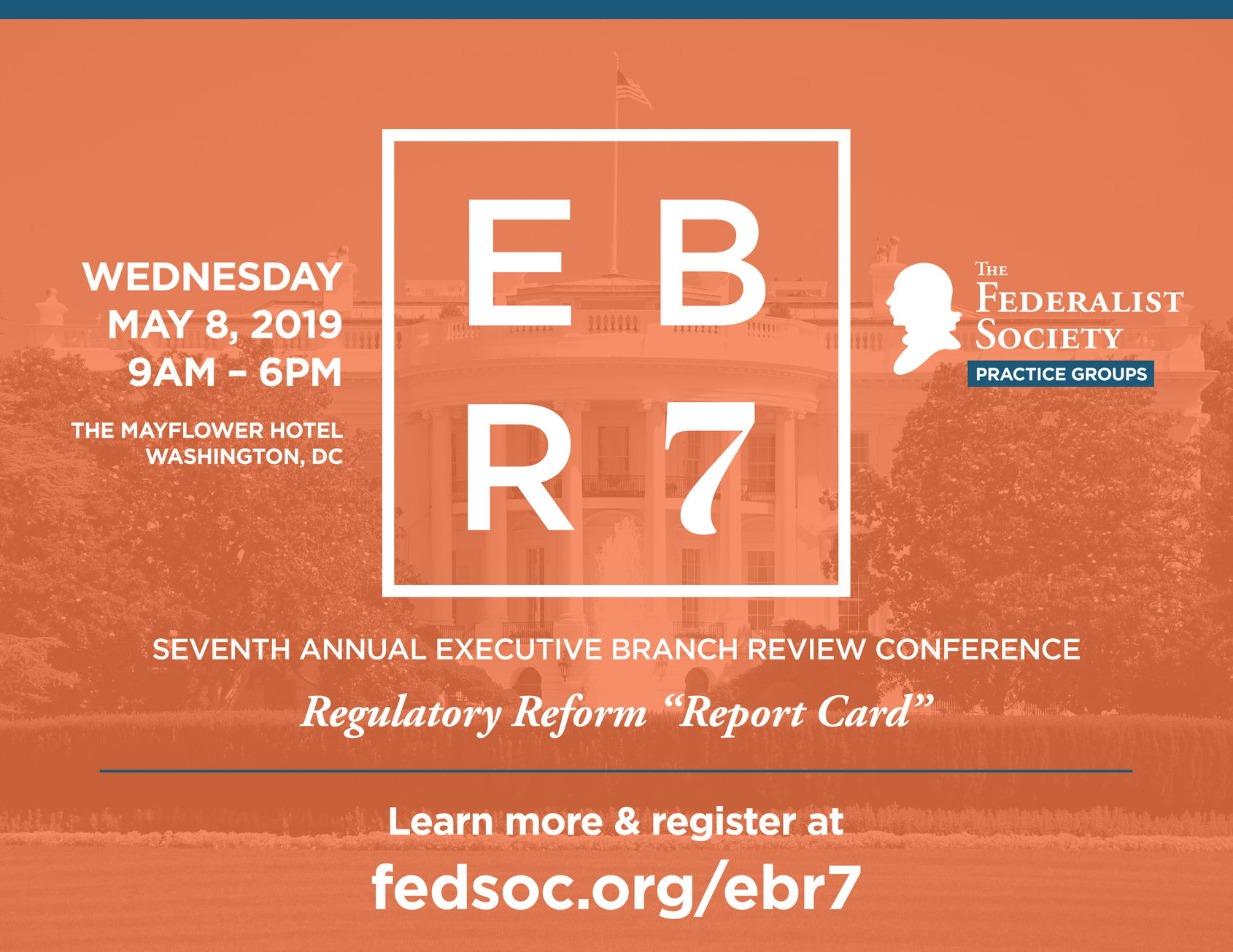
The theme of this year’s Executive Branch Review conference is: Regulatory Reform “Report Card.” One of the afternoon breakout panels will examine the Administration’s efforts to redefine “navigable waters” under the Clean Water Act. Clean Water Act reform has been one of the President’s high profile initiatives, starting with an ambitious executive order shortly after taking office. It has also been a high priority for the Environmental Protection Agency and the Army Corps of Engineers. After nearly two years of consultation and drafting, the agencies formally published their proposal in February of this year. Some have applauded it, others derided it, and still others have called it a mixed bag.
The Environmental Law & Property Rights Practice Group is presenting a balanced panel at this year’s Executive Branch Review, which will examine the proposed redefinition from all sides, moderated by Professor Jonathan Adler. We are honored that the panel will include the Assistant Attorney General for the Justice Department’s Environment and Natural Resources Division, the Hon. Jeffrey Clark. Also speaking on the panel will be the Natural Resources Defense Council’s Director for Federal Water Policy, Jon Devine, and Pacific Legal Foundation Senior Attorney Tony Francois.
I think that we can rely on Asst. Attorney General Clark to present the Administration’s view of the proposed regulation. For their part, the Natural Resources Defense Council says that the proposal would “radically roll back the safeguards of the Clean Water Act for critical streams and for wetlands that filter pollution, prevent flooding, and are nurseries for lots of wildlife.” NRDC’s full comment letter can be seen here. On the other hand, Pacific Legal Foundation says that the agencies “have made a decent start, but their current proposal still covers far too much land that is not navigable at all and is rarely wet.” PLF’s full comment letter is here. The discussion promises to be lively, and Clean Water Act issues are rife with active controversies involving the Administrative State, from application of the non-delegation and void-for-vagueness doctrines, to Due Process concerns in agency adjudications, to Chevron and Auer deference in the federal courts.
Please join us on May 8, 2019, at the Mayflower Hotel in Washington, D.C., for the entire Conference, and at 2:15 p.m. that afternoon for the “Navigable Waters” breakout panel.