

Laurence A. Tisch Professor of Law and Director, Classical Liberal Institute, New York University School of Law; Director, Classical Liberal Institute, Civitas Institute University of Texas at Austin
Richard A. Epstein is the Laurence A. Tisch Professor of Law, at New York University, a senior research fellow at the Civitas Institute at the University of Texas Austin, and a senior Lecturer, the University of Chicago. He received an LL.D., h.c . from the University of Ghent, 2003 , and an LLD h.c . from the University of Siegen in 2018 and the Bradley Prize in 2011. He has been a member of the American Academy of Arts and Sciences since 1985. He has edited both the Journal of Legal Studies (1981-1991) and the Journal of Law and Economics (1991-2001). He is also a founder and director of the Classical Liberal Institute at NYU Law School. His most recent book is The Classical Liberal Constitution: The Uncertain Quest for Limited Government (2014). His other books include Takings: Private Property and the Power of Eminent Domain ( 1985); Bargaining with the State (1993); Simple Rules for a Complex World (1995); Principles for a Free Society: Reconciling Individual Liberty and the Common Good (1998); Skepticism and Freedom: A Modern Theory of Classical Liberalism (2003); Design for Liberty: Private Property, Public Administration and the Rule of Law (2011), and most recently, The Myth of Birthright citizenship—and Beyond (2026). He has taught courses in , administrative law, antitrust, constitutional, contracts, environmental law, land use planning; real property, torts and water law. He has written and spoken extensively on a wide range of topics, and is writes a regular column for Defining Ideas.
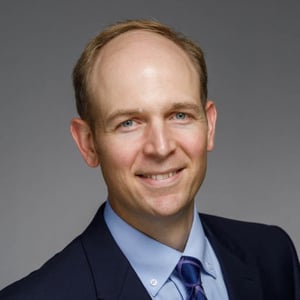
Professor of Law, Notre Dame Law School
Professor Samuel L. Bray joined the Notre Dame Law School faculty in 2018. Before coming to Notre Dame, he was an assistant professor of law at UCLA from 2011 to 2016, and a professor of law from 2016 to 2018. In addition, he was a Harrington Faculty Fellow at the University of Texas-Austin for the 2016-2017 academic year.
Bray is a graduate of the University of Chicago Law School, and he clerked for then-Judge Michael W. McConnell on the U.S. Court of Appeals for the Tenth Circuit. After clerking, he practiced law at Mayer Brown LLP, was an associate-in-law at Columbia Law School, and was executive director of the Constitutional Law Center at Stanford Law School.
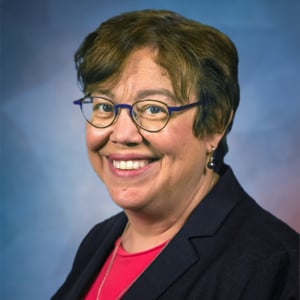
Executive Vice President and Senior Counselor to the President, The Federalist Society for Law and Public Policy Studies
B.A., Yale; J.D., University of Chicago. Lee Liberman Otis is the Executive Vice President and Senior Counselor to the President at the Federalist Society. She also serves as a member of the American Law Institute (ALI), a senior fellow of the Administrative Conference (ACUS), and as the co-chair of the National Constitution Center's Coalition of Freedom Advisory Board. She previously was a special assistant and an Associate Deputy Attorney General at the U.S. Department of Justice, General Counsel of the Department of Energy, an associate in the appellate section of Jones, Day, Reavis & Pogue, an associate counsel to President George H.W. Bush, and a law clerk to Associate Justice Antonin Scalia. She also served as an assistant professor of law at George Mason, where she taught legislation, federal jurisdiction, constitutional law, civil procedure, and appellate advocacy. Ms. Otis has been an important member of the Federalist Society team since the organization’s beginnings. Together with David McIntosh, she led the effort to start what became the Chicago chapter of the Society. She also helped organize the Society’s first conference at Yale, its second conference at Chicago, and its first Lawyers Division chapter in Washington DC, as well as the effort to incorporate the Society, recruit its permanent staff, and obtain its early funding. She was a Founding Director of the Federalist Society.
Vice President and Chair of the Joseph Story Award, University of Chicago Law School Federalist Society
Wally Pelton is Vice President and Chair of the Joseph Story Award. Wally is from Bloomfield Hills, Michigan. He went to undergrad at Michigan State University.
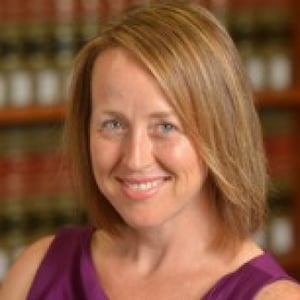
Assistant Professor of Law, UCLA Law
Beth Colgan is Assistant Professor of Law at UCLA School of Law. Her primary research and teaching interests are in criminal law and procedure and juvenile justice. Prior to joining the Law School, she was a Thomas C. Grey Fellow and Lecturer in Law at Stanford Law School.
Professor Colgan earned her B.A. from Stanford University and her J.D. from Northwestern University School of Law, where she was Note and Comment Editor of the Northwestern Law Review, a member of the National Moot Court Team, and the recipient of the Wigmore Key award. After law school, she worked as an associate for Perkins Coie LLP (2000-05), where she litigated a variety of matters in federal and state court and engaged in extensive pro bono work focusing primarily on access to competent indigent defense counsel in rural Washington and post-conviction representation of juveniles tried in adult criminal courts. From 2006-11, Professor Colgan worked as the Managing Attorney of the Institutions Project at Columbia Legal Services, representing juveniles and adults confined in prisons, jails, mental health facilities, and immigration detention in civil rights litigation, collateral appeals, and legislative advocacy. Professor Colgan has been recognized for her work on criminal and juvenile justice reform, including the Washington State Bar Association Thomas Neville Pro Bono Award, the Northwestern University Children & Family Justice Center Alumni Award, and the Stanford Law School Pro Bono Distinction Award. She continues to serve the criminal justice community as a consultant on issues related to punishment, access to counsel, and juvenile justice.
Professor Colgan’s scholarship centers on the relationship between constitutional interpretation and the practical effects of the law. She is particularly interested in the intersection between criminal law and poverty, the treatment of juveniles in juvenile and adult criminal contexts, and the systemic consequences of constitutional interpretation (e.g., underfunding of indigent defense systems). Her recent scholarship has appeared in the California Law Review, Iowa Law Review, Stanford Journal of Civil Rights & Civil Liberties, UCLA Law Review, and William and Mary Law Review.
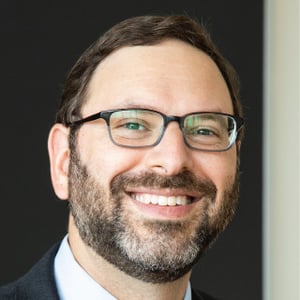
Antonin Scalia Professor of Law, Harvard Law School
Stephen E. Sachs is the Antonin Scalia Professor of Law at Harvard Law School, where he teaches civil procedure, conflict of laws, and seminars on constitutional law. His research focuses on the law and theory of constitutional interpretation, the jurisdiction of state and federal courts, the history of procedure and private law, and the role of the general common law in the U.S. legal system.
Sachs has authored numerous articles, essays, and book chapters. He is an elected member of the American Law Institute, an adviser to the ALI’s project on the Restatement of the Law (Third), Conflict of Laws, a former member of the Judicial Conference’s Advisory Committee on Appellate Rules, and a founding member of the Academic Freedom Alliance.
In 2020, Sachs received the Federalist Society’s Joseph Story Award, which recognizes a young academic who has demonstrated excellence in legal scholarship, a commitment to teaching, a concern for students, and who has made a significant public impact in a manner that advances the rule of law in a free society.
Sachs previously taught at Duke University School of Law and as a visiting professor at the University of Chicago Law School. Before entering academia, he practiced in the Washington, D.C., litigation group of Mayer Brown LLP, and he clerked for Chief Justice John G. Roberts Jr. as well as for Judge Stephen F. Williams of the U.S. Court of Appeals for the D.C. Circuit.
Sachs received his J.D. from Yale Law School, where he was executive editor of the Yale Law Journal and served both as executive editor and articles editor of the Yale Law & Policy Review. A Rhodes Scholar, he graduated from Oxford University with a first-class BA (Hons) degree in philosophy, politics, and economics. He received his A.B. degree summa cum laude in history from Harvard University, earning the Sophia Freund Prize.
Sachs is a licensed attorney in Massachusetts and the District of Columbia, and he is authorized to practice before the D.C. Circuit, the Second Circuit, the Seventh Circuit, and the Supreme Court of the United States.
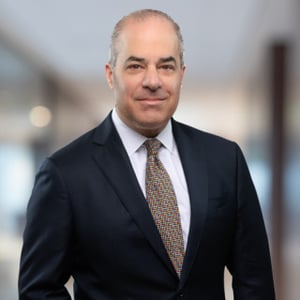
Partner, Foley & Lardner LLP
A trial and courtroom lawyer for over 30 years, Jason A. Levine is an antitrust and commercial litigation partner in the Washington, D.C. office of Foley & Lardner LLP.
Mr. Levine has served as lead counsel for clients in high-stakes and often multi-faceted business disputes. His diverse practice focuses on antitrust, complex contractual, and business tort suits. Mr. Levine tried 14 cases to judges and juries across the country, briefed and argued dozens of dispositive motions and several precedent-setting appeals, and has had an active amicus practice before the U.S. Supreme Court for nationwide trade associations. He was also lead counsel to defendants in several of the nation’s largest antitrust class actions and MDLs. Mr. Levine has perennially been recognized as a prominent litigator by Best Lawyers, SuperLawyers, Benchmark Litigation, and Global Competition Review. He also spent nearly four years as an Investment Manager at Omni Bridgeway, a global commercial litigation finance company, where he launched and led the Washington, D.C. office and led the U.S. antitrust strategy.
Mr. Levine received his B.A. summa cum laude (Phi Beta Kappa) from Brandeis University in 1991 and his J.D. cum laude from Harvard Law School in 1994, where he was Editor-in-Chief of the Harvard Journal of Law & Public Policy. Before entering private practice, Mr. Levine was a law clerk for Judge Randall Rader on the U.S. Court of Appeals for the Federal Circuit, where he focused on the court’s Takings and administrative cases.

Topics
Good Intentions Gone Awry: Racial Quotas in Connecticut Schools
Hartford, Connecticut is a modern day tale of two cities. The city has world-class magnet...
Topics
The DOJ and Other Federal Agencies Oppose the FTC in FTC v. Qualcomm
On May 21, 2019, the U.S. District Court for the Northern District of California issued...
2019 Joseph Story Award Winner: Prof. Samuel L. Bray
Richard A. Epstein, Samuel L. Bray, Lee Liberman Otis, Walter G. Pelton, Beth Colgan
2019 National Student Symposium
On March 16, 2019, the Federalist Society presented the Joseph Story Award to Prof. Samuel...
Topics
Licensing Speech & Regulating the Internet: Tennessee’s Auctioneer Licensing Scheme
This spring the Tennessee legislature substantially broadened the sweep of its auctioneering license, with an...
Topics
Proposed Reforms to FCC’s Lifeline Program Require A Bit More Thought
In an effort to expand the use of telecommunications services by low-income Americans, the Federal...
Topics
Corporate Finance for Law—Essential and Ethical
Legal finance as it has evolved in the U.S. over the last decade reflects a...
Topics
Trump National Labor Relations Board Protects Employee Freedom of Choice
On July 3, 2019, the National Labor Relations Board issued an important decision in Johnson...
Franchise Tax Board of California v. Hyatt - Post-Decision SCOTUScast
Stephen E. Sachs
SCOTUScast featuring Stephen Sachs
On May 13, 2019, the Supreme Court decided Franchise Tax Board of California v. Hyatt,...
The “Risk Corridors” Litigation: How Risky Should it Be To Do Business With the U.S. Government?
Jason Alan Levine
Three consolidated cases now pending before the U.S. Supreme Court have the potential to re-set...
Topics
Man Bites Dog – Idaho Repeals its Regulatory Code
Idaho has long been widely known for the natural wonders that grace its landscape: the...