
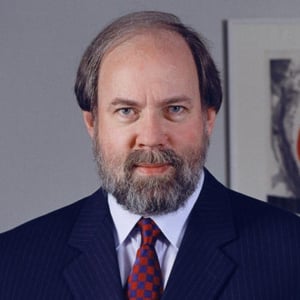
U.S. Court of Appeals, Seventh Circuit
Frank H. Easterbrook is a judge of the United States Court of Appeals for the Seventh Circuit and a Senior Lecturer at the Law School of the University of Chicago. He was Chief Judge from 2006–2013. Before joining the court in 1985, he was the Lee andBrena Freeman Professor of Law at the University of Chicago, where he taught and wrote in antitrust, securities, corporate law, jurisprudence, and criminal procedure. He has published The Economic Structure of Corporate Law (with Daniel R. Fischel) and about 100 scholarly articles. He served as Co-Editor of the Journal of Law and Economics from 1982 to 1991 and as a member of the Judicial Conference’s Standing Committee on Rules of Practice and Procedure from 1991 to 1997. Before joining the faculty of the Law School in 1979, Judge Easterbrook was Deputy Solicitor General of the United States. He holds degrees from Swarthmore College (B.A. with high honors, 1970) and the University of Chicago (J.D. cum laude, 1973), and is a member of the American Academy of Arts and Sciences, the American Law Institute, the Mont Pelerin Society, Phi Beta Kappa, and the Order of the Coif.
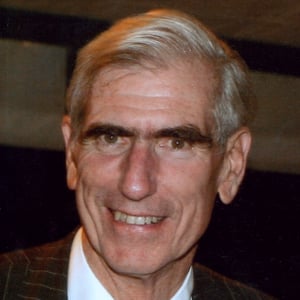
Founding Partner, Boyden Gray & Associates
Ambassador C. Boyden Gray is the founding partner of Boyden Gray & Associates, a law and strategy firm in Washington, D.C., focused on constitutional and regulatory issues.
Mr. Gray worked in the White House for twelve years, first as counsel to the Vice President during the Reagan administration and then as White House Counsel to President George H.W. Bush. In the Reagan administration, he was Counsel to the Presidential Task Force on Regulatory Relief, for which he wrote the original Executive Order 12291 requiring cost-benefit analysis and White House review of regulations (later renumbered as current EO 12866). In the George H.W. Bush Administration, Mr. Gray was in charge of judicial selection and was also instrumental in the enactment of the Clean Air Act Amendments of 1990, the Energy Policy Act of 1992, and a cap-and-trade system for acid rain emissions. In 1993, he received the Presidential Citizens Medal. Under President George W. Bush, Mr. Gray was U.S. Ambassador to the European Union and U.S. Special Envoy to Europe for Eurasian Energy.
Mr. Gray practiced law for 25 years at the law firm of Wilmer, Cutler & Pickering and was chairman of the Administrative Law and Regulatory Practice Section of the American Bar Association from 2000 to 2002. Early in his career, Mr. Gray helped to develop the Business Roundtable and served as its first counsel. He is an adjunct professor at Antonin Scalia Law School and a former adjunct professor at NYU Law School (teaching energy and environmental law). Mr. Gray is on the Board of Directors of the Atlantic Council, the Federalist Society, Reason Foundation, and the Trust for the National Mall.
Mr. Gray earned his A.B. magna cum laude from Harvard, where he was an editor of the Crimson, and his J.D. with high honors from the University of North Carolina at Chapel Hill, where he was editor-in-chief of the Law Review. Mr. Gray served in the United States Marine Corps, and after law school, he clerked for Earl Warren, Chief Justice of the United States Supreme Court.

Judge, United States Court of Appeals, Fifth Circuit
Edith Jones graduated from Alamo Heights High School, where she was a National Merit Scholar. In 1971, she received her B.A. in Economics from Cornell University, graduating with honors. In 1974, she was awarded her J.D. at the University of Texas Law School, where she was a law review editor and received the Order of the Coif.
Judge Jones was the first female partner at Andrews, Kurth, Campbell & Jones (now Hunton Andrews Kurth) where she practiced various types of litigation and bankruptcy cases. Judge Jones went on the federal bench on June 1, 1985.
Judge Jones served as a former member of the National Bankruptcy Review Commission, and as a member of the Judicial Conference Commission on Bankruptcy Rules. Judge Jones served on the White House Fellows Commission. Judge Jones served on the board of the Sam Houston Area Council of the Boy Scouts of America. She has been a member of the Garland Walker Inn of Court in Houston for more than 20 years and its President for at least ten years. Judge Jones is also on the Board of the Calvin Coolidge Presidential Foundation.
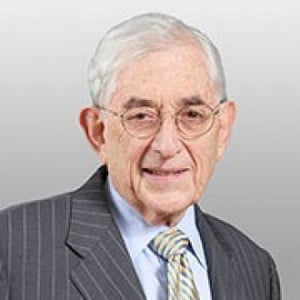
Retired Partner, Covington & Burling LLP
With the exception of two periods of United States Government service, Harris Weinstein practiced law with Covington's Washington office as an associate, partner, and senior counsel between 1962 and his retirement from practice in 2009. He was with the Department of Justice during the period 1967-1969 as an Assistant to the Solicitor General of the United States and with the Department of the Treasury during 1990-1992 as Chief Counsel of the then Office of Thrift Supervision. Before joining Covington, Mr. Weinstein was law clerk to Judge William H. Hastie of the United States Court of Appeals for the Third Circuit.
His private practice focused on civil litigation, including disputes under antitrust, securities, tax and banking laws, and patent and related trade issues. He has appeared in federal trial and appellate courts throughout the United States and, as a government attorney, argued nine cases in the United States Supreme Court.
From January 2007 through December 2016, Mr. Weinstein served as a Distinguished Lecturer on the faculty of the Columbus School of Law of The Catholic University of America, teaching International Commercial Arbitration as well as other subjects. He also coached the law school’s team in the Willem C. Vis International Commercial Arbitration Moot. He has taught the arbitration course at the University of California, Davis and lectured on the subject at Penn State Law School and the University of Lisbon, Portugal.
Mr. Weinstein’s teaching activity has included lectures on banking law or corporate fiduciary issues at American University, George Washington University, and the Universities of Illinois, Michigan and Virginia. He has also taught one-week courses on Banking and International Arbitration under United States Law as part of Catholic University’s American Law program at the Jagiellonian University in Krakow, Poland.
In his pro bono work, Mr. Weinstein was a member of the Administrative Conference of the United States and chaired the Conference’s Committee on Government Processes. He also has been a member of the Corporation of the Massachusetts Institute of Technology, President of its alumni/ae association, and Chair of its Alumni/ae Fund; Counsel to the Contests and Credentials Committees of the Republican National Conventions of 1984 and 1988; and a member of the initial advisory committee of the Commonwealth Institute (Richmond, VA).
His law degree is from Columbia University, where he was editor-in-chief of the Columbia Law Review. He received S.B. and S.M. degrees in mathematics from M.I.T. and was elected an associate member of the Sigma Xi science honorary society.
U.S. Court of Appeals, Seventh Circuit
Frank H. Easterbrook is a judge of the United States Court of Appeals for the Seventh Circuit and a Senior Lecturer at the Law School of the University of Chicago. He was Chief Judge from 2006–2013. Before joining the court in 1985, he was the Lee andBrena Freeman Professor of Law at the University of Chicago, where he taught and wrote in antitrust, securities, corporate law, jurisprudence, and criminal procedure. He has published The Economic Structure of Corporate Law (with Daniel R. Fischel) and about 100 scholarly articles. He served as Co-Editor of the Journal of Law and Economics from 1982 to 1991 and as a member of the Judicial Conference’s Standing Committee on Rules of Practice and Procedure from 1991 to 1997. Before joining the faculty of the Law School in 1979, Judge Easterbrook was Deputy Solicitor General of the United States. He holds degrees from Swarthmore College (B.A. with high honors, 1970) and the University of Chicago (J.D. cum laude, 1973), and is a member of the American Academy of Arts and Sciences, the American Law Institute, the Mont Pelerin Society, Phi Beta Kappa, and the Order of the Coif.
Founding Partner, Boyden Gray & Associates
Ambassador C. Boyden Gray is the founding partner of Boyden Gray & Associates, a law and strategy firm in Washington, D.C., focused on constitutional and regulatory issues.
Mr. Gray worked in the White House for twelve years, first as counsel to the Vice President during the Reagan administration and then as White House Counsel to President George H.W. Bush. In the Reagan administration, he was Counsel to the Presidential Task Force on Regulatory Relief, for which he wrote the original Executive Order 12291 requiring cost-benefit analysis and White House review of regulations (later renumbered as current EO 12866). In the George H.W. Bush Administration, Mr. Gray was in charge of judicial selection and was also instrumental in the enactment of the Clean Air Act Amendments of 1990, the Energy Policy Act of 1992, and a cap-and-trade system for acid rain emissions. In 1993, he received the Presidential Citizens Medal. Under President George W. Bush, Mr. Gray was U.S. Ambassador to the European Union and U.S. Special Envoy to Europe for Eurasian Energy.
Mr. Gray practiced law for 25 years at the law firm of Wilmer, Cutler & Pickering and was chairman of the Administrative Law and Regulatory Practice Section of the American Bar Association from 2000 to 2002. Early in his career, Mr. Gray helped to develop the Business Roundtable and served as its first counsel. He is an adjunct professor at Antonin Scalia Law School and a former adjunct professor at NYU Law School (teaching energy and environmental law). Mr. Gray is on the Board of Directors of the Atlantic Council, the Federalist Society, Reason Foundation, and the Trust for the National Mall.
Mr. Gray earned his A.B. magna cum laude from Harvard, where he was an editor of the Crimson, and his J.D. with high honors from the University of North Carolina at Chapel Hill, where he was editor-in-chief of the Law Review. Mr. Gray served in the United States Marine Corps, and after law school, he clerked for Earl Warren, Chief Justice of the United States Supreme Court.
Judge, United States Court of Appeals, Fifth Circuit
Edith Jones graduated from Alamo Heights High School, where she was a National Merit Scholar. In 1971, she received her B.A. in Economics from Cornell University, graduating with honors. In 1974, she was awarded her J.D. at the University of Texas Law School, where she was a law review editor and received the Order of the Coif.
Judge Jones was the first female partner at Andrews, Kurth, Campbell & Jones (now Hunton Andrews Kurth) where she practiced various types of litigation and bankruptcy cases. Judge Jones went on the federal bench on June 1, 1985.
Judge Jones served as a former member of the National Bankruptcy Review Commission, and as a member of the Judicial Conference Commission on Bankruptcy Rules. Judge Jones served on the White House Fellows Commission. Judge Jones served on the board of the Sam Houston Area Council of the Boy Scouts of America. She has been a member of the Garland Walker Inn of Court in Houston for more than 20 years and its President for at least ten years. Judge Jones is also on the Board of the Calvin Coolidge Presidential Foundation.
Retired Partner, Covington & Burling LLP
With the exception of two periods of United States Government service, Harris Weinstein practiced law with Covington's Washington office as an associate, partner, and senior counsel between 1962 and his retirement from practice in 2009. He was with the Department of Justice during the period 1967-1969 as an Assistant to the Solicitor General of the United States and with the Department of the Treasury during 1990-1992 as Chief Counsel of the then Office of Thrift Supervision. Before joining Covington, Mr. Weinstein was law clerk to Judge William H. Hastie of the United States Court of Appeals for the Third Circuit.
His private practice focused on civil litigation, including disputes under antitrust, securities, tax and banking laws, and patent and related trade issues. He has appeared in federal trial and appellate courts throughout the United States and, as a government attorney, argued nine cases in the United States Supreme Court.
From January 2007 through December 2016, Mr. Weinstein served as a Distinguished Lecturer on the faculty of the Columbus School of Law of The Catholic University of America, teaching International Commercial Arbitration as well as other subjects. He also coached the law school’s team in the Willem C. Vis International Commercial Arbitration Moot. He has taught the arbitration course at the University of California, Davis and lectured on the subject at Penn State Law School and the University of Lisbon, Portugal.
Mr. Weinstein’s teaching activity has included lectures on banking law or corporate fiduciary issues at American University, George Washington University, and the Universities of Illinois, Michigan and Virginia. He has also taught one-week courses on Banking and International Arbitration under United States Law as part of Catholic University’s American Law program at the Jagiellonian University in Krakow, Poland.
In his pro bono work, Mr. Weinstein was a member of the Administrative Conference of the United States and chaired the Conference’s Committee on Government Processes. He also has been a member of the Corporation of the Massachusetts Institute of Technology, President of its alumni/ae association, and Chair of its Alumni/ae Fund; Counsel to the Contests and Credentials Committees of the Republican National Conventions of 1984 and 1988; and a member of the initial advisory committee of the Commonwealth Institute (Richmond, VA).
His law degree is from Columbia University, where he was editor-in-chief of the Columbia Law Review. He received S.B. and S.M. degrees in mathematics from M.I.T. and was elected an associate member of the Sigma Xi science honorary society.
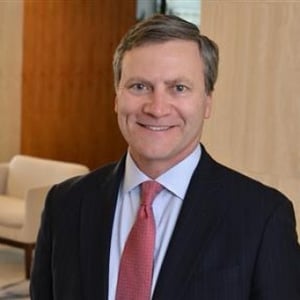
Shareholder, Brownstein, Hyatt, Farber, Shreck
With more than 20 years of experience both as a first-chair litigator and in public service, Greg Brower’s practice focuses on civil and criminal litigation, as well as regulatory and enforcement actions, corporate investigations, cybersecurity matters and federal and state government relations.
Most recently, Greg served as the assistant director for the Office of Congressional Affairs at the Federal Bureau of Investigation (FBI), serving as the FBI’s chief liaison to Congress on a wide range of critical oversight and investigative matters. He previously served as the FBI’s Deputy General Counsel, managing a diverse portfolio of legal matters, including litigation, privacy, procurement, compliance and ethics. During his time as a senior FBI executive, spanning two administrations, he worked closely with high-ranking officials in the U.S. Department of Justice (DOJ), the U.S. intelligence community and with key leaders on Capitol Hill. Greg is a regular commentator and contributor on national security, legal and cybersecurity issues, regularly appearing on CNN and MSNBC, and he is the featured contributor on white collar crime and corporate compliance for the Washington Legal Foundation’s Legal Pulse blog.
Greg has a long history of public service. At the federal level, he previously served as the U.S. Attorney for the District of Nevada, and as both General Counsel and Inspector General at the U.S. Government Publishing Office. Greg also served at DOJ as Legislative Counsel in the Executive Office for U.S. Attorneys. At the state level, he has served in a variety of public policy roles, including five terms in the Nevada Legislature, where he was chairman of the Senate Judiciary Committee. He has also served on the Nevada Gaming Policy Committee, the Nevada Advisory Commission on the Administration of Justice, the Nevada Sentencing Commission and the Nevada Juvenile Justice Commission.
Throughout his career, Greg has served the Nevada legal community as an adjunct professor of law at the William S. Boyd School of Law at the University of Nevada, Las Vegas, where he has taught courses in national security law and trial advocacy. Before attending law school, Greg served in the U.S. Navy as a Surface Warfare Officer.
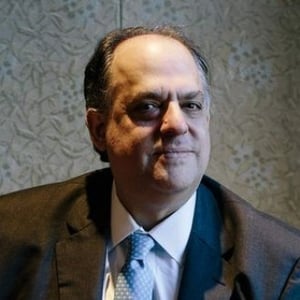
Director of Litigation and Senior Attorney, Hamilton Lincoln Law Institute
Theodore H. Frank is director at the Hamilton Lincoln Law Institute and the Center for Class Action Fairness. Frank founded and ran CCAF as a non-profit, public interest law firm in 2009.
Frank has won several landmark appeals and tens of millions of dollars for consumers and other plaintiffs through his class action work. Adam Liptak of The New York Times calls Frank “the leading critic of abusive class action settlements” and the American Lawyer Litigation Daily referred to him as “the indefatigable scourge of underwhelming class action settlements.”
Previously, Frank clerked for the Honorable Frank H. Easterbrook on the Seventh Circuit Court of Appeals, and was a litigator at firms in Washington and Los Angeles and a resident fellow at the American Enterprise Institute. Frank is a frequent public speaker and has testified before Congress multiple times on legal issues. He has been profiled by The Wall Street Journal, Forbes, GQ, and the ABA Journal, among other publications.
In 2008, Frank was elected to membership in the American Law Institute. He also serves on the Executive Committee of the Federalist Society Litigation Practice Group. Frank graduated from The University of Chicago Law School in 1994 with high honors and as a member of the Order of the Coif and the Law Review. He is a member of the District of Columbia Bar and the state bars of California and Illinois.
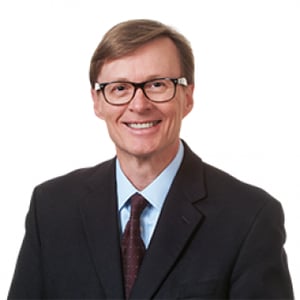
Shareholder, Littler Mendelson P.C.
Bruce J. Sarchet has focused his entire legal career on the representation of management in labor and employment law matters and has particular expertise in issues involving:
He regularly appears in state and federal courts and before the National Labor Relations Board (NLRB) on matters involving:
With energy, enthusiasm, and intense focus, Bruce provides clients with superior quality work and exceptional client service and has earned a reputation as a hands-on problem solver. He provides consultation and representation to large, medium and small businesses across California in a variety of industries, including food and beverage, healthcare, transportation, technology, and construction. He also represents public sector employers. He crafts practical, real world solutions to workplace problems such as dealing with difficult employees and recognizing and balancing business realities and necessities with the need to minimize exposure to litigation.
For unionized employers, Bruce frequently serves as chief spokesperson in collective bargaining negotiations and provides representation in grievances and arbitration hearings. He also represents employers during union organizing drives and unfair labor practice charges under the National Labor Relations Act.
An animated, effective and entertaining public speaker, Bruce regularly makes presentations to local professional organizations on labor and employment law topics and has also presented numerous in-house training sessions and workshops to management teams at private and public employers. Bruce has published numerous articles for local business journals, providing practical, hands-on labor and employment law advice to small business owners.
From 2005 to 2013, Bruce served on the firm's five-attorney Management Committee, which handles the firm's operations. In this capacity, he oversaw thirteen Littler offices in seven states. Prior to his selection to the Management Committee, he served as the office-managing shareholder for the firm's Sacramento office and served several terms as a member of the firm's Board of Directors.

Socialization of Risk: Bankruptcy Law & Financial Institutions [Archive Collection]
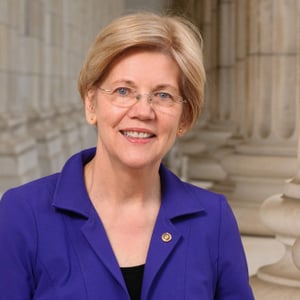
Frank H. Easterbrook, C. Boyden Gray, Edith H. Jones, Elizabeth Warren, Harris Weinstein
1991 Annual Lawyers Convention
On September 13-14, 1991, the Federalist Society held its Fifth Annual National Lawyers Convention on...
Socialization of Risk: Bankruptcy Law & Financial Institutions [Archive Collection]
Frank H. Easterbrook, C. Boyden Gray, Edith H. Jones, Elizabeth Warren, Harris Weinstein
1991 Annual Lawyers Convention
On September 13-14, 1991, the Federalist Society held its Fifth Annual National Lawyers Convention on...
Nielsen v. Preap - Post Decision SCOTUScast
Greg Brower
featuring Greg Brower
On March 19, 2019, the Supreme Court decided Nielsen v. Preap (and its companion case Wilcox...
Topics
Speech Police at the DMV: Regulation and Arbitrary Rule
Vague laws invite arbitrary power. Laws that require regulators to censor speech they find offensive,...
Topics
The FDIC Refinery
It was a busy day at the Federal Deposit Insurance Corporation (FDIC). The agency took...
Frank v. Gaos - Post-Decision Podcast
Theodore "Ted" Frank
SCOTUScast featuring Theodore Frank
On March 20, 2019, the Supreme Court decided Frank v. Gaos, a case raising the...
Topics
Exploring American Legion: What Shelving Lemon Could Mean for Monuments Litigation
In 2015, the Arkansas legislature authorized placement of a privately-donated Ten Commandments monument on the...
Topics
How Economics Can Help Guide Our Thinking About the C-Band
Satisfying the rapid demand growth for additional commercial spectrum presents challenges the Federal Communications Commission. ...
Topics
Chamberlain v. Montoya: The First Legal Challenge That Applies the American Legion to a New Display
Based in New Hampshire, the Northeast POW/MIA Network is an organization whose mission is to...
Independent Contractor Or Employee: Sometimes, Things Are Not As Easy As A-B-C
Bruce J. Sarchet
The status of independent contractors in California has been hotly debated over the past year,...