

Kaplan Johnson Abate & Bird
Cassie Chambers Armstrong focuses her practice on litigation. She has significant courtroom experience; prior to joining the firm, she was the lead attorney on multiple trials. She has worked on class actions, appeals, and other complex litigation.
Previously, she was a Skadden Fellow at a Kentucky nonprofit, where she formulated and implemented impact litigation strategies.
Her graduate degrees in Public Health and Public Management give her a unique perspective on the intersection between health care, government, and law.
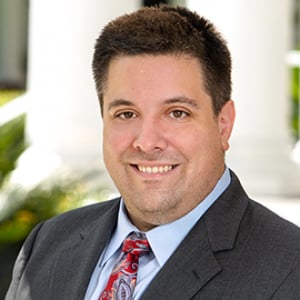
Sheila M. McDevitt Professor of Law and Faculty Director of the Election Law Center, Florida State University College of Law
Professor Morley joined FSU Law in 2018, and teaches and writes in the areas of election law, constitutional law, remedies, and the federal courts. He is best known for his work on election emergencies and post-election litigation, nationwide and other defendant-oriented injunctions, the jurisdiction of the federal courts and their equitable powers more generally. He has testified before congressional committees, made presentations to election officials for the U.S. Election Assistance Commission and participated in bipartisan blue-ribbon groups to develop election reforms. The governor of Florida also appointed Professor Morley to the Criminal Punishment Code Task Force, to propose potential revisions to the legislature.
The U.S. Supreme Court has cited several of his articles, and he was counsel of record for the successful Petitioner in a landmark campaign finance case. Professor Morley has appeared on C-SPAN, Court TV, Fox News and numerous local news programs, and has been quoted in the Washington Post, Los Angeles Times, Roll Call, Politico, U.S. News and World Report, and a wide range of other national publications. His work has been published in many of the nation’s top law reviews, including the Georgetown Law Journal, Northwestern University Law Review, Boston University Law Review and Emory Law Journal.
Before joining FSU Law, Professor Morley was a Climenko Fellow and Lecturer in Law at Harvard Law School. Prior to his experience in academia, he served in government as special assistant to the General Counsel of the Army at the Pentagon, as well as a law clerk for Judge Gerald B. Tjoflat of the U.S. Court of Appeals for the Eleventh Circuit. During his tenure with the Army General Counsel’s office, he was awarded the Meritorious Civilian Service Award and the Army Staff Lapel Pin. He also worked as an associate at Williams & Connolly LLP and the Supreme Court & Appellate group of Winston & Strawn, LLP, both in Washington, D.C.
Professor Morley earned his J.D. from Yale Law School in 2003, where he was a senior editor on the Yale Law Journal; served on the moot court board; and received the Thurman Arnold Prize for Best Oralist in the Morris Tyler Moot Court of Appeals.

Member, Stoll Keenon Ogden PLLC
John is a Member in Stoll Keenon Ogden’s Louisville office and has been with the firm since 2007. He has a track record of success in Labor and Employment Law spanning 35 years, and is honored to serve as Chair of the Kentucky State Labor Relations Board, which resolves disputes between public employers and their labor organizations.
He is responsible for creating binding legal precedent entitling employers to secure indemnity from other parties in harassment or retaliation cases. He has also established legal precedent holding that the claim for intentional infliction of emotional distress is preempted by statute. In a class discrimination case, he prevailed in challenging a claim brought by the federal government that women were categorically excluded from coal mining jobs.
For his many accomplishments, John has been distinguished with multiple local, state and national recognitions, including more than eight consecutive years of being listed in the Best Lawyers in America® peer-review publication.
Labor, Employment & Employee Benefits: John’s extensive experience encompasses the full breadth of employment law, including traditional labor law, claims of harassment and retaliation, breach of contract disputes and enforcement of trade secrets.
Appellate: Once a trial court decision has been made, John is fully prepared to take cases to court at the state or federal level as necessary to obtain a satisfactory resolution. He has obtained favorable verdicts for both appellants and appellees.
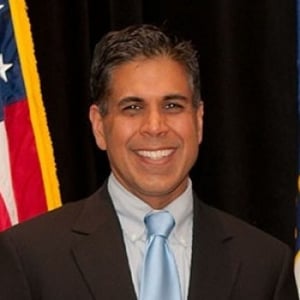
Judge, United States Court of Appeals, Sixth Circuit
Amul R. Thapar serves as a judge on the United States Court of Appeals for the Sixth Circuit. His judicial career began in 2007 when President George W. Bush nominated him to serve on the Eastern District of Kentucky, making him the first South Asian Article III judge in American history. In 2017, he became President Donald J. Trump’s first appellate court nominee.
Before joining the bench, Judge Thapar served as the United States Attorney for the Eastern District of Kentucky. While United States Attorney, Judge Thapar worked on the Attorney General’s Advisory Committee (“AGAC”) and chaired the AGAC’s Controlled Substances and Asset Forfeiture subcommittee. He also served on the Terrorism and National Security subcommittee, the Violent Crime subcommittee, and the Child Exploitation working group.
Judge Thapar has worked in private practice, at Williams & Connolly in Washington, D.C., and Squire, Sanders & Dempsey in Cincinnati, Ohio. He also served as an Assistant United States Attorney in both the Southern District of Ohio and the District of Columbia.
Judge Thapar received his undergraduate degree from Boston College and his law degree from the University of California, Berkeley. After graduating, Judge Thapar worked as a law clerk to the Honorable S. Arthur Spiegel of the United States District Court for the Southern District of Ohio, and the Honorable Nathaniel R. Jones of the United States Court of Appeals for the Sixth Circuit.
Judge Thapar has also published in the Yale Law Journal, Michigan Law Review, and Catholic University Law Review. He teaches courses on originalism, the Federalists and Anti-Federalists, and legal writing at Notre Dame Law School, the University of Virginia School of Law, and Vanderbilt Law School.
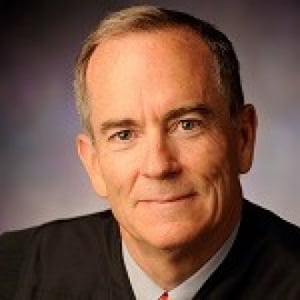
Justice, Supreme Court of Kentucky
Laurance B. VanMeter was elected to the Kentucky Supreme Court in November 2016 from the 5th Appellate District, comprising Anderson, Bourbon, Boyle, Clark, Fayette, Franklin, Jessamine, Madison, Mercer, Scott, and Woodford Counties. Upon taking office on January 2, 2017, he became just the third Justice to have served at all four levels of Kentucky unified court system. Prior to being elected to the Supreme Court, Justice VanMeter served thirteen years as a Judge of the Kentucky Court of Appeals, having been elected in November 2003, and being re-elected unopposed in 2006 and 2014.
Justice VanMeter currently serves as the chairman of the Board of Trustees of the Kentucky Judicial Form Retirement Systems, having previously served as chairman of that Board for two terms (2012-16), with an intervening term as chairman of the Judicial Retirement Fund Investment Committee (2016-18). Justice VanMeter is the Supreme Court’s liaison to the Kentucky Bar Association’s Continuing Legal Education Commission. He served the Court of Appeals as acting Chief Judge during 2010 and as Chief Judge Pro Tempore from 2007 to 2010, and served as the Court of Appeals’ representative on the Ethics Committee of the Kentucky Judiciary from 2004 to 2012 and as its alternate member on the Kentucky Judicial Conduct Commission from 2012 to 2016. In addition, Justice VanMeter has served on the Probate and Trust Legislative Committee of the Kentucky Bar Association, the Family Court Rules and the Civil Rules Committees of the Kentucky Supreme Court, the Chief Justice’s Fayette County Family Court Task Force, and is a frequent speaker for continuing legal education.
Justice VanMeter was born in 1958 in Lexington, and was raised in Winchester. He received his undergraduate degree with a major in history in 1980 from Vanderbilt University, and his law degree in 1983 from the University of Kentucky College of Law, where he was a member of the Order of the Coif and the Kentucky Law Journal.
Justice VanMeter practiced law with the Lexington firm of Stoll, Keenon & Park from 1983 to 1994, where his practice areas included equine law, business planning and organizations, real estate, taxation, estate planning, trusts and probate. He has been admitted to the bar of the Supreme Court of the United States, and is a member of the Kentucky and Fayette County Bar Associations. From 1994 to 1999, he served as a judge of the Fayette District Court, 22nd District, Division 1. Justice VanMeter was appointed and then elected to the Fayette Circuit Court bench in 1999 on which he served until his election to the Court of Appeals.
Justice VanMeter has been actively involved in a number of community organizations, including Little League Baseball, Lexington Youth Soccer, Boys' and Girls' Clubs of America, Parents’ Place, the University of Kentucky Libraries National Advisory Board, and has served on the vestry of Christ Church Cathedral, on the Vanderbilt University Alumni Board of Directors, and on the Sayre School Board of Trustees. He is a Fellow of the University of Kentucky, a Life Fellow of the Kentucky Bar Foundation, and a Founding Fellow of the Fayette County Bar Foundation. He is a member of Christ Church Cathedral. Justice VanMeter and his late wife, Lucy, are the parents of four children.
Kaplan Johnson Abate & Bird
Cassie Chambers Armstrong focuses her practice on litigation. She has significant courtroom experience; prior to joining the firm, she was the lead attorney on multiple trials. She has worked on class actions, appeals, and other complex litigation.
Previously, she was a Skadden Fellow at a Kentucky nonprofit, where she formulated and implemented impact litigation strategies.
Her graduate degrees in Public Health and Public Management give her a unique perspective on the intersection between health care, government, and law.
Sheila M. McDevitt Professor of Law and Faculty Director of the Election Law Center, Florida State University College of Law
Professor Morley joined FSU Law in 2018, and teaches and writes in the areas of election law, constitutional law, remedies, and the federal courts. He is best known for his work on election emergencies and post-election litigation, nationwide and other defendant-oriented injunctions, the jurisdiction of the federal courts and their equitable powers more generally. He has testified before congressional committees, made presentations to election officials for the U.S. Election Assistance Commission and participated in bipartisan blue-ribbon groups to develop election reforms. The governor of Florida also appointed Professor Morley to the Criminal Punishment Code Task Force, to propose potential revisions to the legislature.
The U.S. Supreme Court has cited several of his articles, and he was counsel of record for the successful Petitioner in a landmark campaign finance case. Professor Morley has appeared on C-SPAN, Court TV, Fox News and numerous local news programs, and has been quoted in the Washington Post, Los Angeles Times, Roll Call, Politico, U.S. News and World Report, and a wide range of other national publications. His work has been published in many of the nation’s top law reviews, including the Georgetown Law Journal, Northwestern University Law Review, Boston University Law Review and Emory Law Journal.
Before joining FSU Law, Professor Morley was a Climenko Fellow and Lecturer in Law at Harvard Law School. Prior to his experience in academia, he served in government as special assistant to the General Counsel of the Army at the Pentagon, as well as a law clerk for Judge Gerald B. Tjoflat of the U.S. Court of Appeals for the Eleventh Circuit. During his tenure with the Army General Counsel’s office, he was awarded the Meritorious Civilian Service Award and the Army Staff Lapel Pin. He also worked as an associate at Williams & Connolly LLP and the Supreme Court & Appellate group of Winston & Strawn, LLP, both in Washington, D.C.
Professor Morley earned his J.D. from Yale Law School in 2003, where he was a senior editor on the Yale Law Journal; served on the moot court board; and received the Thurman Arnold Prize for Best Oralist in the Morris Tyler Moot Court of Appeals.
Member, Stoll Keenon Ogden PLLC
John is a Member in Stoll Keenon Ogden’s Louisville office and has been with the firm since 2007. He has a track record of success in Labor and Employment Law spanning 35 years, and is honored to serve as Chair of the Kentucky State Labor Relations Board, which resolves disputes between public employers and their labor organizations.
He is responsible for creating binding legal precedent entitling employers to secure indemnity from other parties in harassment or retaliation cases. He has also established legal precedent holding that the claim for intentional infliction of emotional distress is preempted by statute. In a class discrimination case, he prevailed in challenging a claim brought by the federal government that women were categorically excluded from coal mining jobs.
For his many accomplishments, John has been distinguished with multiple local, state and national recognitions, including more than eight consecutive years of being listed in the Best Lawyers in America® peer-review publication.
Labor, Employment & Employee Benefits: John’s extensive experience encompasses the full breadth of employment law, including traditional labor law, claims of harassment and retaliation, breach of contract disputes and enforcement of trade secrets.
Appellate: Once a trial court decision has been made, John is fully prepared to take cases to court at the state or federal level as necessary to obtain a satisfactory resolution. He has obtained favorable verdicts for both appellants and appellees.
Judge, United States Court of Appeals, Sixth Circuit
Amul R. Thapar serves as a judge on the United States Court of Appeals for the Sixth Circuit. His judicial career began in 2007 when President George W. Bush nominated him to serve on the Eastern District of Kentucky, making him the first South Asian Article III judge in American history. In 2017, he became President Donald J. Trump’s first appellate court nominee.
Before joining the bench, Judge Thapar served as the United States Attorney for the Eastern District of Kentucky. While United States Attorney, Judge Thapar worked on the Attorney General’s Advisory Committee (“AGAC”) and chaired the AGAC’s Controlled Substances and Asset Forfeiture subcommittee. He also served on the Terrorism and National Security subcommittee, the Violent Crime subcommittee, and the Child Exploitation working group.
Judge Thapar has worked in private practice, at Williams & Connolly in Washington, D.C., and Squire, Sanders & Dempsey in Cincinnati, Ohio. He also served as an Assistant United States Attorney in both the Southern District of Ohio and the District of Columbia.
Judge Thapar received his undergraduate degree from Boston College and his law degree from the University of California, Berkeley. After graduating, Judge Thapar worked as a law clerk to the Honorable S. Arthur Spiegel of the United States District Court for the Southern District of Ohio, and the Honorable Nathaniel R. Jones of the United States Court of Appeals for the Sixth Circuit.
Judge Thapar has also published in the Yale Law Journal, Michigan Law Review, and Catholic University Law Review. He teaches courses on originalism, the Federalists and Anti-Federalists, and legal writing at Notre Dame Law School, the University of Virginia School of Law, and Vanderbilt Law School.
Justice, Supreme Court of Kentucky
Laurance B. VanMeter was elected to the Kentucky Supreme Court in November 2016 from the 5th Appellate District, comprising Anderson, Bourbon, Boyle, Clark, Fayette, Franklin, Jessamine, Madison, Mercer, Scott, and Woodford Counties. Upon taking office on January 2, 2017, he became just the third Justice to have served at all four levels of Kentucky unified court system. Prior to being elected to the Supreme Court, Justice VanMeter served thirteen years as a Judge of the Kentucky Court of Appeals, having been elected in November 2003, and being re-elected unopposed in 2006 and 2014.
Justice VanMeter currently serves as the chairman of the Board of Trustees of the Kentucky Judicial Form Retirement Systems, having previously served as chairman of that Board for two terms (2012-16), with an intervening term as chairman of the Judicial Retirement Fund Investment Committee (2016-18). Justice VanMeter is the Supreme Court’s liaison to the Kentucky Bar Association’s Continuing Legal Education Commission. He served the Court of Appeals as acting Chief Judge during 2010 and as Chief Judge Pro Tempore from 2007 to 2010, and served as the Court of Appeals’ representative on the Ethics Committee of the Kentucky Judiciary from 2004 to 2012 and as its alternate member on the Kentucky Judicial Conduct Commission from 2012 to 2016. In addition, Justice VanMeter has served on the Probate and Trust Legislative Committee of the Kentucky Bar Association, the Family Court Rules and the Civil Rules Committees of the Kentucky Supreme Court, the Chief Justice’s Fayette County Family Court Task Force, and is a frequent speaker for continuing legal education.
Justice VanMeter was born in 1958 in Lexington, and was raised in Winchester. He received his undergraduate degree with a major in history in 1980 from Vanderbilt University, and his law degree in 1983 from the University of Kentucky College of Law, where he was a member of the Order of the Coif and the Kentucky Law Journal.
Justice VanMeter practiced law with the Lexington firm of Stoll, Keenon & Park from 1983 to 1994, where his practice areas included equine law, business planning and organizations, real estate, taxation, estate planning, trusts and probate. He has been admitted to the bar of the Supreme Court of the United States, and is a member of the Kentucky and Fayette County Bar Associations. From 1994 to 1999, he served as a judge of the Fayette District Court, 22nd District, Division 1. Justice VanMeter was appointed and then elected to the Fayette Circuit Court bench in 1999 on which he served until his election to the Court of Appeals.
Justice VanMeter has been actively involved in a number of community organizations, including Little League Baseball, Lexington Youth Soccer, Boys' and Girls' Clubs of America, Parents’ Place, the University of Kentucky Libraries National Advisory Board, and has served on the vestry of Christ Church Cathedral, on the Vanderbilt University Alumni Board of Directors, and on the Sayre School Board of Trustees. He is a Fellow of the University of Kentucky, a Life Fellow of the Kentucky Bar Foundation, and a Founding Fellow of the Fayette County Bar Foundation. He is a member of Christ Church Cathedral. Justice VanMeter and his late wife, Lucy, are the parents of four children.
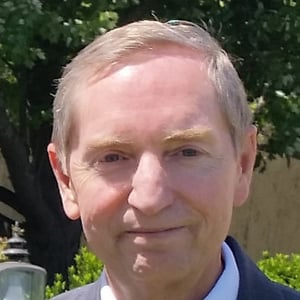
Legal Director & General Counsel, Criminal Justice Legal Foundation
Kent S. Scheidegger has been the Legal Director of the Criminal Justice Legal Foundation since December 1986. He also served as Chairman of the Criminal Law Practice Group of the Federalist Society 2003 to 2005. His articles on criminal and constitutional law have been published in law reviews, national legal publications, and congressional reports. Legal arguments authored by Mr. Scheidegger have been cited and incorporated in several precedent-setting United States Supreme Court decisions.
After receiving a degree in physics with honors from New Mexico State University in 1976, Mr. Scheidegger served for six years in the United States Air Force as a Nuclear Research Officer. He took his law degree with distinction from the University of the Pacific, McGeorge School of Law in 1982 and practiced civil law in Northern California. He was general counsel of California Cooler, Inc. from 1984 until 1986, when he joined the Foundation.
Principal, Legis Matters
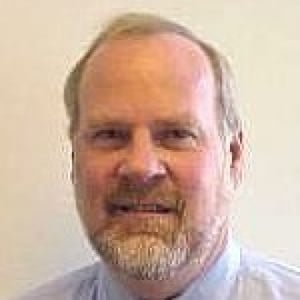
Karl T. Kurtz is principal of Legis Matters, a consulting firm that focuses on strengthening democratic institutions, especially legislatures, at home and abroad. He previously worked for the National Conference of State Legislatures (NCSL) from its founding in 1975 until his retirement in 2014.
Karl has written, consulted and lectured widely on American state legislatures, elections and public opinion. He is coauthor of Republic on Trial: The Case for Representative Democracy and coeditor of Institutional Change in American Politics: The Case of Term Limits. He has provided advice and assistance in the development of democratic institutions to legislators and legislative staff throughout the world. As a consultant to NCSL, Karl is currently leading a national study of how legislatures can overcome problems of political polarization and effectively reach settlements and negotiate differences on critical issues.
Before joining NCSL, Karl taught political science at the University of Georgia. He worked on the staff of the United States Congress as a Congressional Fellow of the American Political Science Association. He holds an AB degree from Oberlin College and a Ph.D. from Washington University (St. Louis).
Former Congressman, VP and Dir., Center for Law and Government, Liberty University
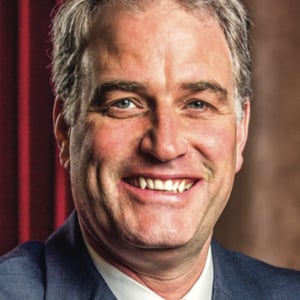
Former Congressman Hurt is the Vice President and Director of the Center for Law and Government at Liberty University. From 2011 to 2017 he represented Virginia’s 5th Congressional District in the U.S. House of Representatives and served on the House Financial Services Committee.
Congressman Hurt began his time in public service in 2001 as a member of the Chatham Town Council. From 2002 to 2007, Hurt served in the Virginia House of Delegates, and from 2008 to 2010, he represented the 19th District in the Senate of Virginia for two years.
Congressman Hurt lives in Chatham, Virginia with his wife, Kathy, and their three sons, Charles, Clement and John.
Principal, Legis Matters
Karl T. Kurtz is principal of Legis Matters, a consulting firm that focuses on strengthening democratic institutions, especially legislatures, at home and abroad. He previously worked for the National Conference of State Legislatures (NCSL) from its founding in 1975 until his retirement in 2014.
Karl has written, consulted and lectured widely on American state legislatures, elections and public opinion. He is coauthor of Republic on Trial: The Case for Representative Democracy and coeditor of Institutional Change in American Politics: The Case of Term Limits. He has provided advice and assistance in the development of democratic institutions to legislators and legislative staff throughout the world. As a consultant to NCSL, Karl is currently leading a national study of how legislatures can overcome problems of political polarization and effectively reach settlements and negotiate differences on critical issues.
Before joining NCSL, Karl taught political science at the University of Georgia. He worked on the staff of the United States Congress as a Congressional Fellow of the American Political Science Association. He holds an AB degree from Oberlin College and a Ph.D. from Washington University (St. Louis).
Former Congressman, VP and Dir., Center for Law and Government, Liberty University
Former Congressman Hurt is the Vice President and Director of the Center for Law and Government at Liberty University. From 2011 to 2017 he represented Virginia’s 5th Congressional District in the U.S. House of Representatives and served on the House Financial Services Committee.
Congressman Hurt began his time in public service in 2001 as a member of the Chatham Town Council. From 2002 to 2007, Hurt served in the Virginia House of Delegates, and from 2008 to 2010, he represented the 19th District in the Senate of Virginia for two years.
Congressman Hurt lives in Chatham, Virginia with his wife, Kathy, and their three sons, Charles, Clement and John.

Stare Decisis Panel
Cassie Chambers Armstrong, Michael T. Morley, John O. Sheller, Amul R. Thapar, Laurance B. VanMeter
2019 Kentucky Chapters Conference
On October 7, 2019, The Federalist Society held a panel on Stare Decisis at its...
Stare Decisis Panel
Cassie Chambers Armstrong, Michael T. Morley, John O. Sheller, Amul R. Thapar, Laurance B. VanMeter
2019 Kentucky Chapters Conference
On October 7, 2019, The Federalist Society held a panel on Stare Decisis at its...
Mathena v. Malvo - Post-Argument SCOTUScast
Kent Scheidegger
featuring Kent Scheidegger
On October 16, 2019, the Supreme Court heard oral argument in Mathena v. Malvo, a...
Topics
Hernandez v. Mesa
On November 12, 2019, the Supreme Court will once again take up Hernandez v. Mesa on...
Topics
Nondelegation After Gundy
While the Supreme Court repeatedly has proclaimed that Congress cannot delegate its law-making power, in...
Topics
The Recurring Money Question
As Wayne says, the question of money is always a hot topic. How money fits...
Topics
Questions about Money
A retired university professor, a veteran central bank watcher, the former head of a Federal...
Topics
51 Imperfect Solutions for the Ethical Practice of Law
Each of the States and the District of Columbia regulates the practice of law. In...
Necessary & Proper Episode 50: Laboratories of Democracy, Part 2: Can Congress learn from State Legislatures?
Karl Kurtz, Robert Hurt
The concept of states serving as important test cases for national governance dates to the...
Necessary & Proper Episode 50: Laboratories of Democracy, Part 2: Can Congress learn from State Legislatures?
Karl Kurtz, Robert Hurt
The concept of states serving as important test cases for national governance dates to the...