
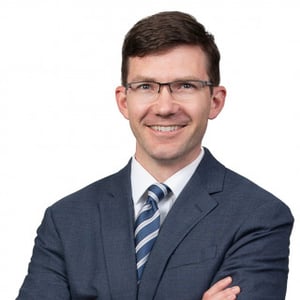
Partner, Nelson Mullins Riley & Scarborough LLP
Miles practices in the areas of appeals, business litigation, and First Amendment law. In addition to representing clients in complex civil and criminal litigation and appeals, Miles advises and represents public and private universities and serves as outside general counsel to several business and educational clients. He also represents and counsels private entities and government agencies and officials, including multiple current and former governors of South Carolina and members of Congress, on issues relating to the constitutional and statutory freedoms of speech, religion, and association. His First Amendment work has been cited by the United States Supreme Court.
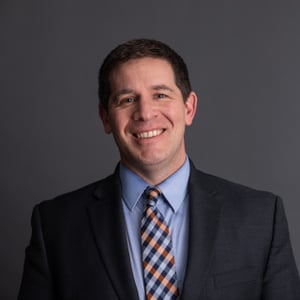
Vice President for Legal Strategy, Stand Together
Casey Mattox is Vice President for Legal Strategy at Stand Together and Senior Advisor at
Americans for Prosperity. In these roles he advocates for and creates strategies and
partnerships to ensure a constitutionally limited government that protects the civil liberties of all
Americans. Prior to joining Stand Together and AFP Casey’s legal career focused on defending
the First Amendment rights of students, faculty, healthcare workers and religious organizations.
Casey has a J.D. from Boston College School of Law and an undergraduate degree from the
University of Virginia. You can find him on Twitter at @CaseyMattox_ and on LinkedIn at
@Casey-Mattox-ST.

Thomas M. Siebel Senior Fellow, The Hoover Institution, Stanford University; Gary T. Schwartz Distinguished Professor of Law Emeritus, UCLA School of Law
Eugene Volokh is the Thomas M. Siebel Senior Fellow at the Hoover Institution (Stanford), as well as the Gary T. Schwartz Distinguished Professor of Law Emeritus and Distinguished Research Professor at UCLA School of Law. He recently retired from teaching at UCLA, after 30 years there, and is now focusing on research.
Volokh is the author of the textbooks The First Amendment and Related Statutes (8th ed. 2023), and Academic Legal Writing (5th ed. 2016), as well as over 100 academic law journal articles, mostly on First Amendment law. He is a member of The American Law Institute; the editor-in-chief of the Journal of Free Speech Law; and the creator and coauthor of The Volokh Conspiracy, a leading legal blog founded in 2002 (hosted at the Washington Post from 2014 to 2017 and now at Reason Magazine).
Professor of Political Science, Northeastern University
Professor of Law Emeritus, Brooklyn Law
Henry Mark Holzer received his B.A. degree from New York University where he studied Russian and political science. After graduation in 1954 he served in South Korea with United States Army intelligence, holding top secret clearance as chief order of battle analyst (Chinese Communist Forces) at Eighth Army Headquarters in Seoul. Following Professor Holzer’s military service he earned his Juris Doctor degree at New York University School of Law. After his admission to the New York bar in December 1959 he practiced constitutional and appellate law.
From 1972 to 1993 he taught full time at Brooklyn Law School, and for two years was an associate dean. His courses included Constitutional Law, Administrative Law, Civil Liberties, First Amendment and Appellate Advocacy. In the fall of 1993, he taught as a visiting professor at the University of New Mexico School of Law in Albuquerque.
He is author of approximately 300 articles, essays, and reviews. He has published legal and political commentary on current issues in print and electronic media, and has often been interviewed on radio and television.
Several of his out-of-print books are The Gold Clause: Government’s Money Monopoly; Sweet Land of Liberty? The Supreme Court and Individual Rights; Speaking Freely: The Case Against Speech Codes; Why Not Call it Treason? Korea, Vietnam, Afghanistan and Today. With his wife, Erika Holzer, he is co-author of “Aid and Comfort”: Jane Fonda in North Vietnam; and Fake Warriors: Identifying, Exposing, and Punishing Those Who Falsify Their Military Service.
His book The Supreme Court Opinions of Clarence Thomas, 1919-2006, was published in 2007. The second edition, covering the years 1991-2011 was published in 2012. Also published in 2012, in a print edition and eBook, was Professor Holzer’s book The American Constitution and Ayn Rand’s “Inner Contradiction.”

Richard and Frances Mallery Professor of Law and Faculty Director, Constitutional Law Center, Stanford Law School
Michael W. McConnell is the Richard and Frances Mallery Professor and Faculty Director of the Constitutional Law Center at Stanford Law School, and a Senior Fellow at the Hoover Institution. From 2002 to 2009, he served as a Circuit Judge on the United States Court of Appeals for the Tenth Circuit. He was nominated by President George W. Bush, a Republican, and confirmed by a Democratic Senate by unanimous consent. McConnell has previously held chaired professorships at the University of Chicago and the University of Utah, and visiting professorships at Harvard and NYU. He teaches courses on constitutional law, constitutional history, First Amendment, and interpretive theory. He has published widely in the fields of constitutional law and theory, especially church and state, equal protection, and separation of powers. His book, “The President Who Would Not Be King: Executive Power Under the Constitution,” was published by Princeton University Press in 2020, based on the Tanner Lectures in Human Values, which he delivered at Princeton in 2019. His latest book, co-authored with Nathan Chapman, “Agreeing to Disagree: How the Establishment Clause Protects Religious Diversity and Freedom of Conscience,” was published by Oxford University Press in mid-2023. McConnell has argued sixteen cases in the United States Supreme Court, most recently Carney v. Adams (2020). defending a provision of the Delaware Constitution requiring political balance on that state’s courts. More recently, he was co-counsel in Gonzalez v. Google. He earned his B.A. from Michigan State University and his J.D. from the University of Chicago, and has received honorary degrees from Notre Dame University and Michigan State. He served as law clerk to Supreme Court Justice William J. Brennan, Jr. and D.C. Circuit Chief Judge J. Skelly Wright. He has been Assistant General Counsel of the Office of Management & Budget, Assistant to the Solicitor General of the Department of Justice, and a member of the President’s Intelligence Oversight Board. He is Senior of Counsel to the law firm Wilson, Sonsini, Goodrich & Rosati, and is co-chair of Meta’s Oversight Review Board.
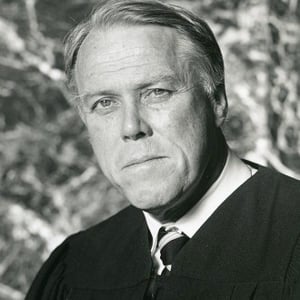
Senior Judge, United States Court of Appeals, Ninth Circuit
John T. Noonan, Jr. was a federal judge on senior status with the United States Court of Appeals for the 9th Circuit. He joined the court in 1985 after being nominated by President Ronald Reagan. He assumed senior status on December 27, 1996, and served as a senior judge until his death on April 17, 2017.
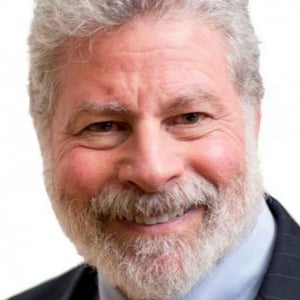
Senior Counsel, American Civil Liberties Union
Arthur B. Spitzer was the Legal Director of the ACLU of the District of Columbia from April Fool’s Day, 1980 until April 2020, when he became Senior Counsel. His work has spanned the range of ACLU issues, including freedom of speech and religion, police misconduct, national security, due process, privacy, prisoners’ rights, the rights of government employees, freedom of information, discrimination based on race, sex, religion, sexual orientation and gender preference, and more.
He has represented such varied clients as Mohamedou Ould Slahi (a Guantánamo detainee held without charge for 14 years), Louis Farrakhan (when he was barred from attending then-D.C. Mayor Marion Barry’s criminal trial), the Ku Klux Klan (when it was denied a permit to march in D.C.), the National Black Police Association (challenging ultra-low D.C. election campaign contribution limits), the White House Vigil for the Equal Rights Amendment (challenging restrictive regulations for demonstrating near the White House), People for the Ethical Treatment of Animals (when its design for an abused circus elephant was rejected from a public art display), Milo Yiannopoulos (whose advertisement for his new book was denied advertising by the D.C. transit authority), and both John and Jane Doe.
In Abbate v. Ramsey, Art represented some of the nearly 400 protestors arrested at an anti-World Bank demonstration in Pershing Park in 2002, challenging their illegal arrest and inhumane detention, and resulting in a settlement that included major changes in D.C. police practices in demonstration situations. He also had a major hand in crafting the legislation that created the D.C. police civilian review board (now known as the Office of Police Complaints) and the First Amendment Rights and Police Practices Act, a model statute governing D.C. police conduct during the peaceful exercise of free speech rights.
Other cases include Harmon v. Thornburgh (challenging random drug testing of Justice Department employees), Walsh v. Montrose Christian School (representing longtime school secretaries and a cafeteria worker at a Christian School who were fired because they were not members of the church), Schroer v. Billington (representing a trans woman who was fired by the Library of Congress when she disclosed her status), Center for National Security Studies v. U.S. Department of Justice (challenging the secret detention of immigrants after 9/11), Wimberly v. D.C. Board of Elections and Ethics (blocking a proposed ballot initiative to permit organized group prayer in D.C. public schools), and LaShawn A. v. Bowser (a still-ongoing class action filed in 1989 to reform D.C.’s dysfunctional foster care system).
In the Supreme Court, Art successfully argued Ake v. Oklahoma, which ruled that poor criminal defendants are entitled to free expert witnesses when needed for their defense, just as they’re entitled to free lawyers.
Art was born in Brooklyn (yay!), raised in Queens, and educated at Cornell University and Yale Law School. Before ascending to the ACLU, he practiced for several years at the law firm now known as WilmerHale. He has taught a course in “Demonstration Law” at the University of the District of Columbia School of Law.
His dog is Taxi; his cats are Tigris and Euphrates. He is not and has never been related to former New York governor Elliot Spitzer.
Professor of Political Science, Northeastern University
Professor of Law Emeritus, Brooklyn Law
Henry Mark Holzer received his B.A. degree from New York University where he studied Russian and political science. After graduation in 1954 he served in South Korea with United States Army intelligence, holding top secret clearance as chief order of battle analyst (Chinese Communist Forces) at Eighth Army Headquarters in Seoul. Following Professor Holzer’s military service he earned his Juris Doctor degree at New York University School of Law. After his admission to the New York bar in December 1959 he practiced constitutional and appellate law.
From 1972 to 1993 he taught full time at Brooklyn Law School, and for two years was an associate dean. His courses included Constitutional Law, Administrative Law, Civil Liberties, First Amendment and Appellate Advocacy. In the fall of 1993, he taught as a visiting professor at the University of New Mexico School of Law in Albuquerque.
He is author of approximately 300 articles, essays, and reviews. He has published legal and political commentary on current issues in print and electronic media, and has often been interviewed on radio and television.
Several of his out-of-print books are The Gold Clause: Government’s Money Monopoly; Sweet Land of Liberty? The Supreme Court and Individual Rights; Speaking Freely: The Case Against Speech Codes; Why Not Call it Treason? Korea, Vietnam, Afghanistan and Today. With his wife, Erika Holzer, he is co-author of “Aid and Comfort”: Jane Fonda in North Vietnam; and Fake Warriors: Identifying, Exposing, and Punishing Those Who Falsify Their Military Service.
His book The Supreme Court Opinions of Clarence Thomas, 1919-2006, was published in 2007. The second edition, covering the years 1991-2011 was published in 2012. Also published in 2012, in a print edition and eBook, was Professor Holzer’s book The American Constitution and Ayn Rand’s “Inner Contradiction.”
Richard and Frances Mallery Professor of Law and Faculty Director, Constitutional Law Center, Stanford Law School
Michael W. McConnell is the Richard and Frances Mallery Professor and Faculty Director of the Constitutional Law Center at Stanford Law School, and a Senior Fellow at the Hoover Institution. From 2002 to 2009, he served as a Circuit Judge on the United States Court of Appeals for the Tenth Circuit. He was nominated by President George W. Bush, a Republican, and confirmed by a Democratic Senate by unanimous consent. McConnell has previously held chaired professorships at the University of Chicago and the University of Utah, and visiting professorships at Harvard and NYU. He teaches courses on constitutional law, constitutional history, First Amendment, and interpretive theory. He has published widely in the fields of constitutional law and theory, especially church and state, equal protection, and separation of powers. His book, “The President Who Would Not Be King: Executive Power Under the Constitution,” was published by Princeton University Press in 2020, based on the Tanner Lectures in Human Values, which he delivered at Princeton in 2019. His latest book, co-authored with Nathan Chapman, “Agreeing to Disagree: How the Establishment Clause Protects Religious Diversity and Freedom of Conscience,” was published by Oxford University Press in mid-2023. McConnell has argued sixteen cases in the United States Supreme Court, most recently Carney v. Adams (2020). defending a provision of the Delaware Constitution requiring political balance on that state’s courts. More recently, he was co-counsel in Gonzalez v. Google. He earned his B.A. from Michigan State University and his J.D. from the University of Chicago, and has received honorary degrees from Notre Dame University and Michigan State. He served as law clerk to Supreme Court Justice William J. Brennan, Jr. and D.C. Circuit Chief Judge J. Skelly Wright. He has been Assistant General Counsel of the Office of Management & Budget, Assistant to the Solicitor General of the Department of Justice, and a member of the President’s Intelligence Oversight Board. He is Senior of Counsel to the law firm Wilson, Sonsini, Goodrich & Rosati, and is co-chair of Meta’s Oversight Review Board.
Senior Judge, United States Court of Appeals, Ninth Circuit
John T. Noonan, Jr. was a federal judge on senior status with the United States Court of Appeals for the 9th Circuit. He joined the court in 1985 after being nominated by President Ronald Reagan. He assumed senior status on December 27, 1996, and served as a senior judge until his death on April 17, 2017.
Senior Counsel, American Civil Liberties Union
Arthur B. Spitzer was the Legal Director of the ACLU of the District of Columbia from April Fool’s Day, 1980 until April 2020, when he became Senior Counsel. His work has spanned the range of ACLU issues, including freedom of speech and religion, police misconduct, national security, due process, privacy, prisoners’ rights, the rights of government employees, freedom of information, discrimination based on race, sex, religion, sexual orientation and gender preference, and more.
He has represented such varied clients as Mohamedou Ould Slahi (a Guantánamo detainee held without charge for 14 years), Louis Farrakhan (when he was barred from attending then-D.C. Mayor Marion Barry’s criminal trial), the Ku Klux Klan (when it was denied a permit to march in D.C.), the National Black Police Association (challenging ultra-low D.C. election campaign contribution limits), the White House Vigil for the Equal Rights Amendment (challenging restrictive regulations for demonstrating near the White House), People for the Ethical Treatment of Animals (when its design for an abused circus elephant was rejected from a public art display), Milo Yiannopoulos (whose advertisement for his new book was denied advertising by the D.C. transit authority), and both John and Jane Doe.
In Abbate v. Ramsey, Art represented some of the nearly 400 protestors arrested at an anti-World Bank demonstration in Pershing Park in 2002, challenging their illegal arrest and inhumane detention, and resulting in a settlement that included major changes in D.C. police practices in demonstration situations. He also had a major hand in crafting the legislation that created the D.C. police civilian review board (now known as the Office of Police Complaints) and the First Amendment Rights and Police Practices Act, a model statute governing D.C. police conduct during the peaceful exercise of free speech rights.
Other cases include Harmon v. Thornburgh (challenging random drug testing of Justice Department employees), Walsh v. Montrose Christian School (representing longtime school secretaries and a cafeteria worker at a Christian School who were fired because they were not members of the church), Schroer v. Billington (representing a trans woman who was fired by the Library of Congress when she disclosed her status), Center for National Security Studies v. U.S. Department of Justice (challenging the secret detention of immigrants after 9/11), Wimberly v. D.C. Board of Elections and Ethics (blocking a proposed ballot initiative to permit organized group prayer in D.C. public schools), and LaShawn A. v. Bowser (a still-ongoing class action filed in 1989 to reform D.C.’s dysfunctional foster care system).
In the Supreme Court, Art successfully argued Ake v. Oklahoma, which ruled that poor criminal defendants are entitled to free expert witnesses when needed for their defense, just as they’re entitled to free lawyers.
Art was born in Brooklyn (yay!), raised in Queens, and educated at Cornell University and Yale Law School. Before ascending to the ACLU, he practiced for several years at the law firm now known as WilmerHale. He has taught a course in “Demonstration Law” at the University of the District of Columbia School of Law.
His dog is Taxi; his cats are Tigris and Euphrates. He is not and has never been related to former New York governor Elliot Spitzer.
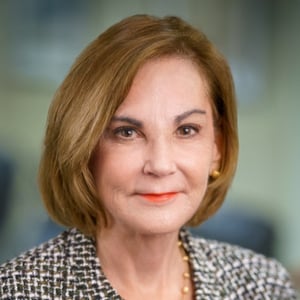
Partner, Marzulla Law
Ms. Marzulla served as an Attorney-Advisor and as a trial lawyer prosecuting employment violations in the Civil Rights Division at the U.S. Department of Justice. Later, Nancie joined the law firm of Verner, Liipfert (now DLA Piper), where she litigated complex airline and other civil matters. In 1991, She founded Defenders of Property Rights, where she was involved in high profile takings cases in the Supreme Court, federal courts of appeal, and trial courts. Ms. Marzulla also worked at the International Labor Organization in Geneva, Switzerland doing comparative legal research.
Nancie G. Marzulla is a founding partner of Marzulla Law, ranked as one of the nation’s “Best Law Firms,” and a “Tier One” environmental litigation firm by the U.S. News and World Report. Nancie’s litigation practice concentrates on water rights, takings, and contract claims in the U.S. Court of Federal Claims. She also has extensive experience in handling matters involving property, water, environmental law, Indian tribal claims, development, and natural resources in trial courts, courts of appeal, the Supreme Court, and in international tribunals. Nancie also represents corporate clients in enforcement or permitting disputes with federal regulatory agencies.
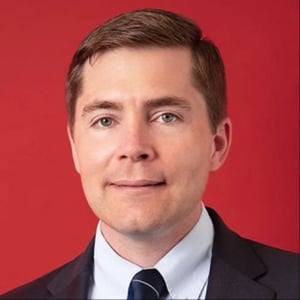
Senior Attorney, Pacific Legal Foundation
Damien Schiff is a senior attorney at Pacific Legal Foundation. He leads its environmental practice group, a unique initiative that draws broadly from PLF’s expertise and success in property rights and separation of powers litigation. Over the years, Damien has represented hundreds of landowners and property rights advocates to defend their liberties against heavy-handed and unwarranted environmental and land-use regulation. His litigation experience includes Sackett v. U.S. Environmental Protection Agency, a groundbreaking decision in which the U.S. Supreme Court upheld the right of landowners to challenge Clean Water Act compliance orders issued by EPA, and Contoski v. Norton, PLF’s successful effort to force the federal government to make good on its promise to delist the bald eagle from the Endangered Species Act.
Besides litigation, Damien has written academic articles on a variety of subjects, including the Endangered Species Act, the Clean Water Act, greenhouse gas torts, the duty to rescue, and international water law. He has appeared on a variety of television and radio programs and has been quoted in The New York Times, The Wall Street Journal, Harper’s Magazine, and The Economist, among other publications.
He obtained his law degree magna cum laude from the University of San Diego School of Law, and his undergraduate degree magna cum laude from Georgetown University. While at USD, he was a research assistant for Professor Bernard Siegan, a leading constitutional theorist and advocate for property rights and economic liberty. Immediately prior to joining PLF, Damien clerked for Judge (and former PLF attorney) Victor Wolski of the United States Court of Federal Claims. Damien credits the mentoring and examples of Professor Siegan and Judge Wolski for his decision to pursue a career in liberty-based public interest litigation.
Damien lives in Sacramento with his wife, two young sons, four chickens, and a cat named Princess. In his off hours he enjoys stamp collecting, Gregorian chant, and martinis—preferably at the same time.
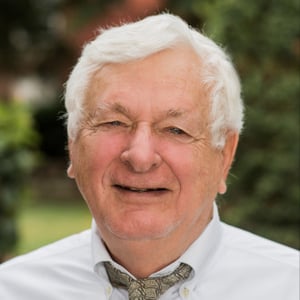
Lyle T. Alverson Professor of Law, George Washington University Law School
Professor Pierce is author of over twenty books and 130 articles on administrative law, government regulation, and the effects of various forms of government intervention on the performance of markets. His books and articles have been cited in hundreds of judicial opinions, including over a dozen opinions of the U.S. Supreme Court.
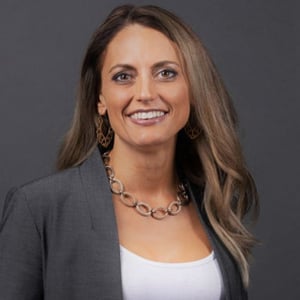
Judge, U.S. Court of Appeals for the Third Circuit
Hon. Jennifer Mascott served as Associate Professor of Law and Director of the Separation of Powers Institute at The Catholic University of America’s Columbus School of Law before her appointment to the federal bench. On July 16, 2025, President Donald J. Trump nominated her to the U.S. Court of Appeals for the Third Circuit (Delaware), and she was confirmed on October 9, 2025.
Prior to her confirmation, Judge Mascott wrote extensively in administrative and constitutional law, statutory interpretation, and the separation of powers. Her scholarship—published in leading journals including the Stanford Law Review, Notre Dame Law Review, and Supreme Court Review—was cited by the U.S. Supreme Court and multiple federal courts. She also contributed Supreme Court commentary for NBC Universal.
Before joining Catholic Law, she was an Assistant Professor and Co-Director of The C. Boyden Gray Center at George Mason University’s Antonin Scalia Law School. In 2022 she became co-author of Beermann, Cass & Diver’s Administrative Law: Cases and Materials (9th ed.). In 2023 she received the Justice Joseph Story Award for excellence in scholarship, teaching, and advancing the rule of law.
Judge Mascott also served as a Council Member of the ABA’s Administrative Law Section and as a Public Member of the Administrative Conference of the United States. She frequently testified before Congress on executive power, regulatory reform, and judicial jurisdiction, and participated in multiple Supreme Court confirmation hearings.
From 2019 to 2021, she took leave from academia to serve as Deputy Assistant Attorney General in the Department of Justice’s Office of Legal Counsel and later as Associate Deputy Attorney General, where she argued federal cases and assisted with Justice Amy Coney Barrett’s confirmation. Earlier in her career, she clerked for Justice Clarence Thomas and for then-Judge Brett M. Kavanaugh on the D.C. Circuit.
Judge Mascott earned her J.D. summa cum laude from the George Washington University Law School and her B.A. from the same institution.
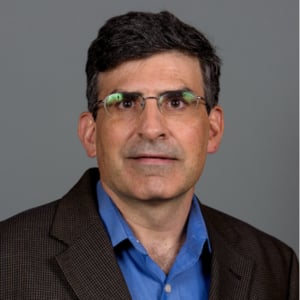
Director and Professor, School of Civic and Economic Thought and Leadership, Arizona State University
Paul Carrese is the founding director of the School of Civic and Economic Thought and Leadership at Arizona State University. For nearly two decades he was a professor of political science at the U.S. Air Force Academy, and co-founded a new honors program blending liberal arts education and leadership education. He is author of The Cloaking of Power: Montesquieu, Blackstone, and the Rise of Judicial Activism, and co-editor of three other books – on George Washington, constitutionalism, and American grand strategy. His most recent book is Democracy in Moderation: Montesquieu, Tocqueville, and Sustainable Liberalism. He has held fellowships at Oxford University as a Rhodes Scholar; Harvard University; the University of Delhi (as a Fulbright fellow); and the James Madison Program, Politics Department, Princeton University. He served on the founding advisory board of the Program on Public Discourse at University of North Carolina Chapel Hill, and currently is co-leading a national study funded by the NEH and US Department of Education on improving American history and civics education in K-12 schools with partners from Harvard and Tufts Universities and iCivics.
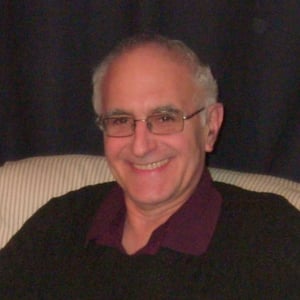
Nancy Reeves Dreux Professor of Political Science, The University of Notre Dame
Michael Zuckert (B.A., Cornell University; PhD, University of Chicago, 1974) is Nancy Reeves Dreux Professor, and Department Chair of Political Science at University of Notre Dame. Professor Zuckert teaches graduate and undergraduate courses in Political Philosophy and Theory, American Political Thought, American Constitutional Law, American Constitutional History, Constitutional Theory, and Philosophy of Law. His advising specialties are graduate programs in political science.
Professor Zuckert has published extensively on a variety of topics, including George Orwell, Plato, Shakespeare, and contemporary liberal theory. He is currently finishing a book called Completing the Constitution: The Post-Civil War Amendments and is co-authoring another book on Machiavelli and Shakespeare. He has been commissioned to write the volume on John Rawls for a series on Twentieth Century Political Philosophy. He co-authored and co-produced public radio series Mr. Adams and Mr. Jefferson: A Nine Part Drama for the Radio. He also was senior scholar for Liberty! (1997), a six hour public television series on the American Revolution, and served as senior advisor on the PBS series on Benjamin Franklin (2002) and Alexander Hamilton (2007). He is currently head of the new Tocqueville Center for the Study of Religion in American Public Life.
Zuckert has received grants from NEH, the Woodrow Wilson Center, Earhart Foundation and NSF, and has taught at Carleton College, Cornell University, Claremont Men’s College, Fordham University, the University of Minnesota, the University of Michigan at Ann Arbor, and the University of Chicago.
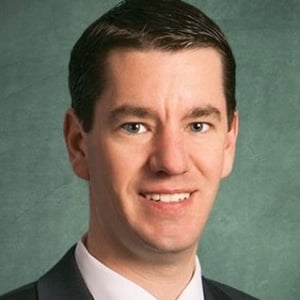
Litigation and Alternative Dispute Resolution Practice Group Member, Bodman PLC
Mr. Rheaume is a member of Bodman's Litigation and Alternative Dispute Resolution Practice Group. He represents clients involved in complex commercial litigation matters and serves as local counsel for national and international law firms.
Mr. Rheaume has been selected to the Michigan Super Lawyers® Rising Stars list since 2013 for business litigation. Prior to joining Bodman, he served as a law clerk to Justice Stephen J. Markman of the Michigan Supreme Court. Based on this experience, Mr. Rheaume is an integral team member of the firm's Appellate Law Practice Group. He has written appellate and amicus briefs in state and federal appellate courts, including the United States Supreme Court.
Mr. Rheaume is President of The Federalist Society-Michigan Chapter. He serves on the alumni board of the Sigma Chi Fraternity of Michigan State University. He is also a board member of the Detroit Economic Club's Young Leader Program.
Mr. Rheaume graduated from Michigan State University College of Law ranked first in his class. While there, he served as an associate editor on The Michigan State Law Review and received Jurisprudence Awards for outstanding achievement in Secured Transactions, Professional Responsibility, Insurance Law, Construction Law, Decedents Estates & Trusts, Bankruptcy, Negotiations, and Income Taxation.
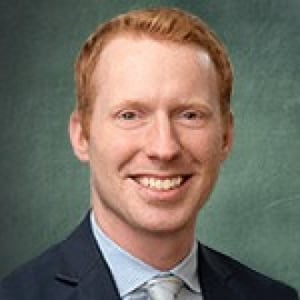
Litigation and Alternative Dispute Resolution Practice Group Member, Bodman PLC
Mr. Kangas is a member of Bodman PLC’s Litigation and ADR Group. He represents diverse clients in complex commercial disputes in both state and federal courts.
Prior to joining Bodman, Mr. Kangas clerked for Hon. Ralph B. Guy, Jr. of the U.S. Court of Appeals for the Sixth Circuit and Hon. Stephen J. Murphy, III of the U.S. District Court for the Eastern District of Michigan. As a law student, he interned with Chief Justice Robert P. Young of the Michigan Supreme Court and Hon. Robert H. Cleland of the U.S. District Court for the Eastern District of Michigan.
While in law school, Mr. Kangas served as Editor of the Michigan Journal of Gender and Law, as President of the Catholic Law Students Association, and as Publicity Chair of the Federalist Society. He also served as a volunteer Student Attorney with the University of Michigan Law School’s Unemployment Insurance Project. Following law school, Mr. Kangas was accepted into the Georgetown Center for the Constitution's Originalism seminar.
Prior to practicing law, Mr. Kangas founded a presentation consulting firm, advising professionals and organizations on persuasive and impactful presentation skills.

Professor Emeritus, Paul M. Hebert Law Center, Louisiana State University
In memoriam
Dr. John Baker is Professor Emeritus of Law, and previously the Dale E. Bennett Professor of Law, at Louisiana State University Law School. He is currently Visiting Professor at Peking University School of Transnational Law (via Zoom) and has been Visiting Professor at The Center for the Constitution, Georgetown Law School (2013-2020). He has also been a Visiting Fellow at Oriel College, the University of Oxford (2012-2014) and taught at Blackfriars Hall, Oxford in 2014. Dr. Baker has also been an adjunct Fellow at the Heritage Foundation (Spring, 2008) and a Distinguished Scholar at the Catholic University of America Law School (2011-12). He has taught at Tulane Law School, George Mason Law School, Pepperdine Law School, New York Law School, Hong Kong University, and the University of Dallas, School of Management and also taught and/or lectured in 17 foreign countries. Notable among his foreign visits are the
following: Visiting Professor at the University of Lyon III (France) (1999-2011); Visiting Professor at the Universidad de los Andes, Chile (2012), as a Fulbright Specialist (2006); and a Fulbright Scholar at various universities in the Philippines. Dr. Baker received his J.D., with honors, from the University of Michigan Law School and his B.A., magna cum laude, from the University of Dallas. He also earned a Ph.D. in Political Thought from the University of London. Baker has taught over a dozen different subjects, mostly courses in public law. His main areas of interest are Constitutional Law (particularly federalism and separation of powers), Criminal Law, Anti-Terrorism Law, International Law, Health Care Law, Mediation, and Comparative Law.
In addition to law review articles and book chapters, Dr. Baker’s academic publications include Hall's Criminal Law: Cases and Materials (with Benson, Force and George; 5th ed. Michie, 1993); An Introduction to the Law of the United States (ed. with Levasseur; University Press of America, 1992). He has also published on Forbes.com, FoxNews.com, in The Washington Times, and a number of times in The Wall Street Journal. He argues in federal court, including two oral arguments in the U.S. Supreme Court. For many years, he co-taught courses for the Federalist Society on separation of powers with the late Supreme Court Justice Antonin Scalia. In September 2016, he co-taught a Supreme Court seminar in China with Justice Samuel Alito. Following law school, he served as a law clerk in federal district court and as an assistant district attorney in New Orleans before joining LSU in 1975. While a professor, he has been as a consultant to USAID, USIA (since rolled into the State Department), the Justice Department, the U.S. Senate Judiciary Subcommittee on Separation of Powers, and the Office of Planning in the White House. He served on an ABA Task Force which issued the report, The Federalization of Crime (1998) and later as a consultant to the “Bi-Partisan Task Force on the Over- federalization of Crime” (2012-2014) created by the U.S. House Judiciary Subcommittee on Crime. Dr. Baker was a co-founder of the first iteration (1995) of Stratfor Inc., a global intelligence agency. He co-authored its first book: The Intelligence Edge (with Friedman, Friedman and Chapman; Crown Books/Random House 1997). In 2022, he began a short, weekly video podcast available on YouTube and Rumble, The Baker Brief.
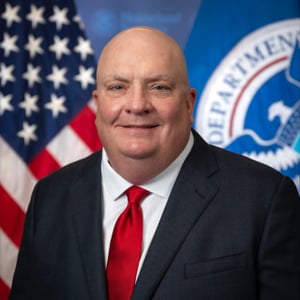
Acting Assistant Commissioner of Customs and Border Protection, Office of Professional Responsibility, U.S. Department of Homeland Security
Brian M. Fish is currently the Senior Advisor to the General Counsel at the Department of Homeland Security where he works on immigration and law enforcement issues. Previously, he was a trial attorney with the United States Immigration and Customs Enforcement, where he represented the Department of Homeland Security in removal hearings before the U.S. Immigration Court. Additionally, he was a Special Assistant United States Attorney and a Baltimore City homicide prosecutor. He is a member of the Federalist Society's Criminal Law & Procedure Practice Group Executive Committee and the President of its Baltimore Lawyers Chapter. He earned his B.A. from LaSalle University in 1992 and his J.D. from Loyola University New Orleans School of Law in 1998.

Past is Prologue: A Discussion of the First Amendment and a Revised Proposal for Rule 8.4
Miles Coleman, Casey Mattox, Eugene Volokh
Charleston and Columbia Lawyers Chapter - Online Event
On February 19, 2021, the Charleston, Greenville, and Columbia Lawyers Chapters hosted Eugene Volokh and...
Panel II: The Freedom of Religion [Archive Collection]
Robert L. Cord, Mitchell L. Edwards, Henry Mark Holzer, Michael W. McConnell, John T. Noonan, Arthur B. Spitzer
1986 National Student Symposium
On March 7-8, 1986, The Federalist Society hosted its annual National Student Symposium at Stanford...
Panel II: The Freedom of Religion [Archive Collection]
Robert L. Cord, Mitchell L. Edwards, Henry Mark Holzer, Michael W. McConnell, John T. Noonan, Arthur B. Spitzer
1986 National Student Symposium
On March 7-8, 1986, The Federalist Society hosted its annual National Student Symposium at Stanford...
Topics
Sunshine Week Event With Judge Royce Lamberth
Each year, the National Archives and its Office of Government Information Services holds a series...
Courthouse Steps Decision Teleforum: U.S. Fish and Wildlife Service v. Sierra Club
Nancie G. Marzulla, Damien Michael Schiff
In this case, Sierra Club, Inc. submitted a FOIA request to the U.S. Fish and...
Carr v. Saul - Post-Argument SCOTUScast
Richard J. Pierce, Jenn L. Mascott
featuring Richard Pierce and Jennifer Mascott
On March 3, 2021, the Supreme Court will hear oral arguments in Carr v. Saul. The...
The Laws, the Leviathan, & the Prince | The Philosophers Behind the Founders
Paul Carrese, Michael P. Zuckert
The FedSoc Films Podcast
Who are some of the other philosophers behind the founders that didn’t make it into...
State Court Docket Watch: Council of Organizations and Others for Education About Parochiaid v. State of Michigan
Thomas J. Rheaume, Gordon J. Kangas
Michigan’s Supreme Court confirmed that the state’s constitution permits reimbursement to religious schools for costs...
Federalist Papers Book Club: The Federalist [Session 7]
John S. Baker
Federalist ##52, 55, 56, and 57 (The House of Representatives)
Federalist Papers Book Club will run weekly on Tuesday evenings for 10 one-hour sessions, beginning...
Courthouse Steps Decision Teleforum: Pereida v. Wilkinson
Brian M. Fish
In Pereida v. Wilkinson, the Supreme Court held 5-3 that an individual seeking relief from a...