
United States District Court, Western District of North Carolina
United States District Court, Western District of North Carolina
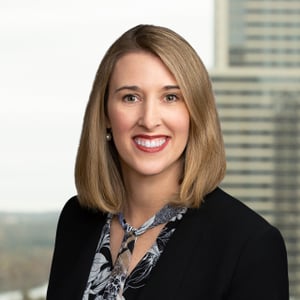
Partner, Jackson Walker
A former federal prosecutor, Jennifer Freel advises businesses and individuals under investigation by the government and conducts internal investigations for companies. Drawing on her extensive courtroom experience, Jennifer also represents clients in civil disputes at the pre-trial, trial, and appellate levels in state and federal court.
In her previous role as an Assistant U.S. Attorney in the Western District of Texas, Jennifer prosecuted cases involving child exploitation, narcotics conspiracies, gun smuggling, and white collar crimes. Her practice focused on appellate matters, defending convictions from across the district. She has argued more than 20 times before the Fifth Circuit Court of Appeals.
Before becoming a prosecutor, Jennifer clerked for Judge Fortunato Benavides, who served on the Fifth Circuit. She has been appointed to the Western District of Texas Attorney Discipline Committee and the Criminal Justice Act appellate panel for the Austin Division of the Western District of Texas. Jennifer is an elected Fellow of the Texas Bar Foundation, the Mentorship Chair of the Robert W. Calvert American Inn of Court, a past chair of the Criminal Law Section of the Federal Bar Association, and a past president of the Austin Chapter of the Federal Bar Association.
Prior to attending law school, Jennifer worked as a broadcast news reporter at the NBC affiliate in Columbia, Missouri and the ABC affiliate in Baton Rouge, Louisiana.

Executive Director, Georgetown Center for the Constitution
Alexa Gervasi is Executive Director at the Georgetown Center for the Constitution. Alexa is a graduate of Texas A&M University and Georgetown University Law Center. She completed law school through Georgetown Law’s evening program, spending her days working as the Program Manager for the Georgetown Center for the Constitution, directed by Professor Randy E. Barnett. After law school, Alexa spent some time in private practice before jumping ship to clerk for the Honorable D. Michael Fisher of the United States Court of Appeals for the Third Circuit. She then had the distinct privilege of clerking on the Fifth Circuit Court of Appeals for the liberty-loving Honorable Don R. Willett before joining the Institute for Justice.
Alexa is licensed to practice law in New York and the District of Columbia. She is also admitted to practice before the Third Circuit.
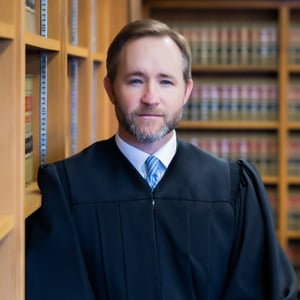
Judge, United States District Court for the Northern District of Texas
Wes Hendrix is a judge on the United States District Court for the Northern District of Texas. He was nominated by President Donald Trump in January 2019 and confirmed by the U.S. Senate in July 2019. He presides over federal civil and criminal cases in the Northern District’s Lubbock, Abilene, and San Angelo Divisions. He is a member of the Fifth Circuit’s Criminal Pattern Jury Instructions Committee and the Northern District of Texas’s Local Rules Committee. He is an adjunct professor at Texas Tech University School of Law.
Prior to his confirmation, Judge Hendrix served as the Appellate Chief for the Northern District of Texas’s United States Attorney’s Office. He served as Chair of the Department of Justice’s Appellate Chiefs Working Group and as an ex officio member of the Attorney General’s Advisory Committee. He regularly coordinated with the Department of Justice’s Criminal Division Appellate Section and the Office of the Solicitor General regarding cases appealed to and argued before the U.S. Supreme Court.
As an Assistant U.S. Attorney, he represented the United States at trial and on appeal. He helped prosecute Hosam Smadi, who was convicted of attempting to use a weapon of mass destruction in a downtown Dallas skyscraper. He also argued over 25 appeals at the Fifth and Seventh Circuits—including two en banc arguments—and served as sole counsel in over 350 appeals. He regularly taught courses at the Department of Justice’s National Advocacy Center.
Prior to his work as a prosecutor, Judge Hendrix was an associate at the Dallas office of Baker Botts L.L.P., where he focused on complex commercial, oil-and-gas, and intellectual-property litigation. He began his legal career as a law clerk to Judge Patrick Higginbotham of the United States Court of Appeals for the Fifth Circuit.
Judge Hendrix received his law degree from the University of Texas, where he served on the Texas Law Review and graduated with high honors and as a Chancellor-at-Large. He received his undergraduate degree with honors from the University of Chicago.
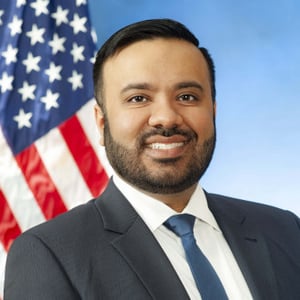
Of Counsel, Gibson, Dunn & Crutcher LLP
Prerak Shah is Of Counsel at Gibson, Dunn & Crutcher LLP. He was most recently the Acting United States Attorney for the Northern District of Texas, leading a team of approximately 120 Assistant U.S. Attorneys handling a wide range of cases, including securities fraud, health care fraud, the False Claims Act, computer crime, national security, tax fraud, money laundering, public corruption, and terrorism. Mr. Shah previously held several leadership positions at the Department of Justice, including Deputy Associate Attorney General in the office overseeing the work of the Antitrust, Civil, Civil Rights, Environment & Natural Resources, and Tax Divisions. Before joining the Justice Department, Mr. Shah served as Chief of Staff to Senator Ted Cruz and as a Chief Counsel on the Senate Judiciary Committee. He graduated from the University of Chicago Law School and clerked for the Honorable Jerry E. Smith of the U.S. Court of Appeals for the Fifth Circuit.
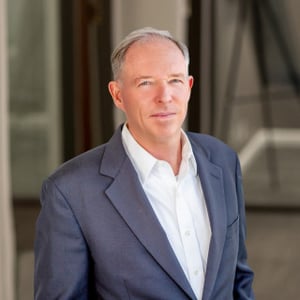
Partner, Ashcroft Law Firm
With more than 20 years government experience, Johnny Sutton has acquired expertise as a front-line trial prosecutor and a top policy advisor to a Governor and a President. Mr. Sutton runs the Austin office of the Ashcroft Law Firm which specializes in internal investigations, white-collar criminal defense and helping companies comply with federal law.
From November 2001 to April 2009, Sutton led one of the largest and busiest United States Attorney’s Offices in the nation. The Western District of Texas covers 93,000 square miles, 68 counties and 660 miles of U.S.-Mexico border. As U.S. Attorney, Mr. Sutton managed more than 300 employees, a $28 million annual budget and directed 43,000 federal prosecutions and thousands of civil cases. Under Mr. Sutton’s leadership, the office led the nation in drug convictions, was second in illegal alien prosecutions, won more than 105 public corruption convictions and sent nearly 400 violent criminal gang members to prison.
In 2003, then-United States Attorney General John Ashcroft appointed Mr. Sutton to the Attorney General’s Advisory Committee—a panel of 17 U.S. Attorneys that advise the General and help carry out the President’s national goals. Sutton served from 2003 until 2009 and was chairman for nearly two years.
After leading the Bush-Cheney Department of Justice Transition Team in 2000, Mr. Sutton was named Associate Deputy Attorney General. He held the position until becoming U.S. Attorney.
From 1995 to 2000, Mr. Sutton served as the Criminal Justice Policy Director for then-Governor George W. Bush. Mr. Sutton was the chief policy advisor to the Governor on all criminal justice issues.
From 1988 to 1995, Mr. Sutton was a prosecutor in the Harris County District Attorney’s Office (Houston, TX) where he tried more than 60 first chair felony jury trials and had only three acquittals. He also successfully tried 17 murder jury trials, including seven for capital murder.
Mr. Sutton attended the University of Texas at Austin on a baseball scholarship where he was a two year lettermen and the starting left fielder for the 1983 University of Texas National Championship baseball team. Mr. Sutton was voted the Most Valuable Player of the NCAA Central Regional Baseball Tournament in 1983. Mr. Sutton is fluent in Spanish and conversant in Portuguese.
Mr. Sutton has dedicated his career to defending the innocent and standing up for the rule of law.
Partner, Jackson Walker
A former federal prosecutor, Jennifer Freel advises businesses and individuals under investigation by the government and conducts internal investigations for companies. Drawing on her extensive courtroom experience, Jennifer also represents clients in civil disputes at the pre-trial, trial, and appellate levels in state and federal court.
In her previous role as an Assistant U.S. Attorney in the Western District of Texas, Jennifer prosecuted cases involving child exploitation, narcotics conspiracies, gun smuggling, and white collar crimes. Her practice focused on appellate matters, defending convictions from across the district. She has argued more than 20 times before the Fifth Circuit Court of Appeals.
Before becoming a prosecutor, Jennifer clerked for Judge Fortunato Benavides, who served on the Fifth Circuit. She has been appointed to the Western District of Texas Attorney Discipline Committee and the Criminal Justice Act appellate panel for the Austin Division of the Western District of Texas. Jennifer is an elected Fellow of the Texas Bar Foundation, the Mentorship Chair of the Robert W. Calvert American Inn of Court, a past chair of the Criminal Law Section of the Federal Bar Association, and a past president of the Austin Chapter of the Federal Bar Association.
Prior to attending law school, Jennifer worked as a broadcast news reporter at the NBC affiliate in Columbia, Missouri and the ABC affiliate in Baton Rouge, Louisiana.
Executive Director, Georgetown Center for the Constitution
Alexa Gervasi is Executive Director at the Georgetown Center for the Constitution. Alexa is a graduate of Texas A&M University and Georgetown University Law Center. She completed law school through Georgetown Law’s evening program, spending her days working as the Program Manager for the Georgetown Center for the Constitution, directed by Professor Randy E. Barnett. After law school, Alexa spent some time in private practice before jumping ship to clerk for the Honorable D. Michael Fisher of the United States Court of Appeals for the Third Circuit. She then had the distinct privilege of clerking on the Fifth Circuit Court of Appeals for the liberty-loving Honorable Don R. Willett before joining the Institute for Justice.
Alexa is licensed to practice law in New York and the District of Columbia. She is also admitted to practice before the Third Circuit.
Judge, United States District Court for the Northern District of Texas
Wes Hendrix is a judge on the United States District Court for the Northern District of Texas. He was nominated by President Donald Trump in January 2019 and confirmed by the U.S. Senate in July 2019. He presides over federal civil and criminal cases in the Northern District’s Lubbock, Abilene, and San Angelo Divisions. He is a member of the Fifth Circuit’s Criminal Pattern Jury Instructions Committee and the Northern District of Texas’s Local Rules Committee. He is an adjunct professor at Texas Tech University School of Law.
Prior to his confirmation, Judge Hendrix served as the Appellate Chief for the Northern District of Texas’s United States Attorney’s Office. He served as Chair of the Department of Justice’s Appellate Chiefs Working Group and as an ex officio member of the Attorney General’s Advisory Committee. He regularly coordinated with the Department of Justice’s Criminal Division Appellate Section and the Office of the Solicitor General regarding cases appealed to and argued before the U.S. Supreme Court.
As an Assistant U.S. Attorney, he represented the United States at trial and on appeal. He helped prosecute Hosam Smadi, who was convicted of attempting to use a weapon of mass destruction in a downtown Dallas skyscraper. He also argued over 25 appeals at the Fifth and Seventh Circuits—including two en banc arguments—and served as sole counsel in over 350 appeals. He regularly taught courses at the Department of Justice’s National Advocacy Center.
Prior to his work as a prosecutor, Judge Hendrix was an associate at the Dallas office of Baker Botts L.L.P., where he focused on complex commercial, oil-and-gas, and intellectual-property litigation. He began his legal career as a law clerk to Judge Patrick Higginbotham of the United States Court of Appeals for the Fifth Circuit.
Judge Hendrix received his law degree from the University of Texas, where he served on the Texas Law Review and graduated with high honors and as a Chancellor-at-Large. He received his undergraduate degree with honors from the University of Chicago.
Of Counsel, Gibson, Dunn & Crutcher LLP
Prerak Shah is Of Counsel at Gibson, Dunn & Crutcher LLP. He was most recently the Acting United States Attorney for the Northern District of Texas, leading a team of approximately 120 Assistant U.S. Attorneys handling a wide range of cases, including securities fraud, health care fraud, the False Claims Act, computer crime, national security, tax fraud, money laundering, public corruption, and terrorism. Mr. Shah previously held several leadership positions at the Department of Justice, including Deputy Associate Attorney General in the office overseeing the work of the Antitrust, Civil, Civil Rights, Environment & Natural Resources, and Tax Divisions. Before joining the Justice Department, Mr. Shah served as Chief of Staff to Senator Ted Cruz and as a Chief Counsel on the Senate Judiciary Committee. He graduated from the University of Chicago Law School and clerked for the Honorable Jerry E. Smith of the U.S. Court of Appeals for the Fifth Circuit.
Partner, Ashcroft Law Firm
With more than 20 years government experience, Johnny Sutton has acquired expertise as a front-line trial prosecutor and a top policy advisor to a Governor and a President. Mr. Sutton runs the Austin office of the Ashcroft Law Firm which specializes in internal investigations, white-collar criminal defense and helping companies comply with federal law.
From November 2001 to April 2009, Sutton led one of the largest and busiest United States Attorney’s Offices in the nation. The Western District of Texas covers 93,000 square miles, 68 counties and 660 miles of U.S.-Mexico border. As U.S. Attorney, Mr. Sutton managed more than 300 employees, a $28 million annual budget and directed 43,000 federal prosecutions and thousands of civil cases. Under Mr. Sutton’s leadership, the office led the nation in drug convictions, was second in illegal alien prosecutions, won more than 105 public corruption convictions and sent nearly 400 violent criminal gang members to prison.
In 2003, then-United States Attorney General John Ashcroft appointed Mr. Sutton to the Attorney General’s Advisory Committee—a panel of 17 U.S. Attorneys that advise the General and help carry out the President’s national goals. Sutton served from 2003 until 2009 and was chairman for nearly two years.
After leading the Bush-Cheney Department of Justice Transition Team in 2000, Mr. Sutton was named Associate Deputy Attorney General. He held the position until becoming U.S. Attorney.
From 1995 to 2000, Mr. Sutton served as the Criminal Justice Policy Director for then-Governor George W. Bush. Mr. Sutton was the chief policy advisor to the Governor on all criminal justice issues.
From 1988 to 1995, Mr. Sutton was a prosecutor in the Harris County District Attorney’s Office (Houston, TX) where he tried more than 60 first chair felony jury trials and had only three acquittals. He also successfully tried 17 murder jury trials, including seven for capital murder.
Mr. Sutton attended the University of Texas at Austin on a baseball scholarship where he was a two year lettermen and the starting left fielder for the 1983 University of Texas National Championship baseball team. Mr. Sutton was voted the Most Valuable Player of the NCAA Central Regional Baseball Tournament in 1983. Mr. Sutton is fluent in Spanish and conversant in Portuguese.
Mr. Sutton has dedicated his career to defending the innocent and standing up for the rule of law.
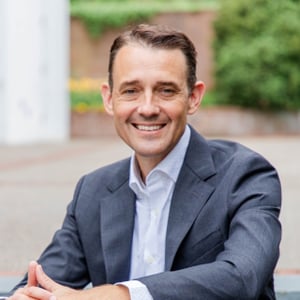
Senior Vice President, Strategic Initiatives & Special Counsel to the President, Alliance Defending Freedom
Ryan Bangert serves as senior vice president for strategic initiatives and special counsel to the president at Alliance Defending Freedom. He oversees ADF’s regulatory practice, government relations, and corporate engagement teams. He also advises executive leadership with strategic initiatives and appears as counsel for ADF clients.
Before joining ADF, Bangert served as deputy first assistant attorney general and deputy for legal counsel in the office of the Texas attorney general. In those roles, he oversaw the state’s Special Litigation Unit, which handled critical litigation against the federal government, and oversaw multiple divisions within the office. Prior to that, he served as deputy for civil litigation for Missouri Attorney General Josh Hawley, overseeing the state’s civil litigation divisions, including the consumer protection and antitrust divisions, with over 200 attorneys and staff. During his time in government service, Bangert handled a diverse array of matters involving Big Tech, election law, civil rights, multistate antitrust and consumer protection investigations, and many other issues.
Prior to his government service, Bangert was a litigation partner at Baker Botts L.L.P., where he was a member of the firm’s commercial litigation and appellate practice sections. A seasoned trial attorney, The Texas Lawyer ranked the verdict Bangert achieved in the Janvey v. Maldonado case as the #1 verdict in the securities category for 2015-2019, and The National Law Journal ranked it in its “Top 100 Verdicts of 2015.” He was named a “Texas Rising Star” for multiple years by Texas Lawyer and Law and Politics magazines. While at Baker Botts, he was a volunteer attorney for ADF and served as amicus counsel in numerous cases, including Trinity Lutheran v. Comer and Salazar v. Buono, receiving the firm’s Opus Justitae Award in recognition of his outstanding commitment to pro bono service.
Bangert earned his J.D. from Southern Methodist University, where he was a Hatton Sumner’s scholar and graduated first in his class. He also participated in ADF’s Blackstone program and is a Blackstone Fellow. Following law school, he clerked for the Honorable Patrick E. Higginbotham on the Fifth Circuit Court of Appeals.
Bangert is a member of the Philadelphia Society and Federalist Society. He is admitted to practice law in Texas, California (inactive), Missouri (inactive), the U.S. Supreme Court and numerous federal district and appellate courts. A frequent op-ed contributor, his work has appeared in National Review, Daily Wire, The Hill, Washington Examiner, The Federalist, Fox News, and RealClear Religion. He speaks nationally on constitutional, cultural, and religious liberty issues.
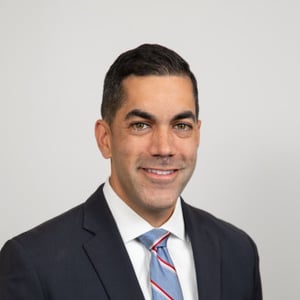
Managing Attorney, Institute for Justice
Arif Panju serves as a managing attorney with the Institute for Justice. He leads IJ’s Texas office and litigates cases involving free speech, property rights, economic liberty, and educational choice.
Arif is co-counsel in the case of Carson v. Makin in the U.S. Supreme Court. Carson is a challenge to Maine’s exclusion of religious educational options from the state’s school choice program.
Arif’s work has resulted in court victories in both federal and state court. He vindicated the free speech rights of tour guides in Billups v. City of Charleston. He secured a victory for economic liberty in Brantley v. Kuntz, freeing hairbraiding schools in Texas from onerous restrictions and paving the way for the abolishment of the state’s braiding license at the Texas Legislature. In Patel v. Texas Department of Licensing and Regulation, Arif helped secure a landmark victory in the Texas Supreme Court, establishing a new test for reviewing the constitutionality of economic regulations.
Arif’s work at IJ has been featured by outlets including The Wall Street Journal, New York Times, Washington Post, The Atlantic, Texas Tribune, and dozens more nationwide. His opinions and views on legal issues have been published in several outlets, including the Dallas Morning News, Austin American-Statesman, and USA Today. Arif sits on the board for the Freedom of Information Foundation of Texas.
Arif graduated law school with honors from Southern Methodist University. During law school he clerked on the United States Senate Committee on the Judiciary. Arif lives in Austin, Texas.
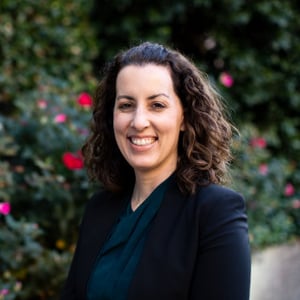
Counsel, Becket Law
Rebekah Ricketts joined Becket as counsel in 2022. Her practice focuses on First Amendment and appellate litigation.
Before joining Becket, Becky served as an Assistant U.S. Attorney for the Northern District of Texas, where she prosecuted a wide range of violent crimes and cyber offenses, including sex trafficking, cyberstalking, carjacking, kidnapping, firearms offenses, and drug trafficking. As Human Trafficking Coordinator, she led the District’s efforts to reconstitute the North Texas Trafficking Task Force, a cross-agency task force led by Homeland Security Investigations. She also obtained the first criminal indictment and guilty plea under the Fight Online Sex Trafficking Act (FOSTA), in a case against the owner of a commercial sex website.
Before that, Becky was an associate at Gibson, Dunn & Crutcher LLP in Dallas, where she practiced appellate and constitutional law, complex commercial litigation, and administrative law. While at the firm, Becky argued cases in federal and state court and worked on numerous high-profile appeals, including a landmark Fifth Circuit reversal of a $663 million False Claims Act judgment. She also maintained an active pro bono docket of religious liberty cases.
Becky served as a law clerk to Justice Clarence Thomas of the Supreme Court of the United States, Judge José A. Cabranes of the United States Court of Appeals for the Second Circuit, and Judge Richard J. Sullivan, then of the United States District Court for the Southern District of New York. She earned her J.D. from Yale Law School, where she was a Book Reviews & Features Editor of the Yale Law Journal, and her B.A. from the University of Texas at Austin, where she graduated with High Honors and was awarded the Harry S. Truman Scholarship.
Becky lives in the great state of Texas with her husband and two young daughters.

Counsel, First Liberty
Keisha Russell is Counsel with First Liberty Institute, concentrating on religious liberty matters and First Amendment rights.
Keisha attended Emory University School of Law, where she was heavily involved in Emory’s prestigious Center for the Study of Law and Religion. She served on the Emory Journal of Law & Religion and two moot court teams. She was a law clerk for the Center’s Restoring Religious Freedom Project where she worked on religious liberty litigation. In her final year of law school, Keisha worked as a law clerk for the American Center for Law and Justice (ACLJ) on national and international matters affecting Israel. Keisha was a 2017 Emory University Graduating Woman of Excellence.
Prior to joining First Liberty, Keisha was a 2011 Teach For America corps member in Atlanta Public Schools. As an elementary special education teacher, she taught students with ADD, emotional behavioral disorders, and learning disabilities. Keisha is most passionate about protecting religious freedom for children in America’s schools.
Keisha’s religious liberty commentary has been published in FoxNews.com, Washington Examiner, The Daily Signal, Real Clear Religion, The Richmond Times-Dispatch, Houston Chronicle, and others. She’s been a guest on FOX & Friends, CBN, and other local stations.
Keisha earned a Bachelor’s in Communications from University of Central Florida and a Master’s in Teaching from the University of Southern California.
Keisha is licensed to practice law in New York, Texas, and Florida.
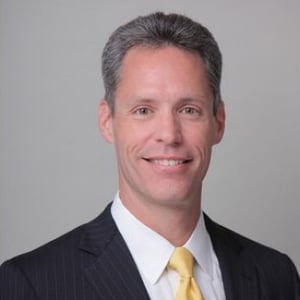
Judge, United States District Court for the Southern District of Texas
Prior to joining the bench, Drew Tipton was a partner at Baker Hostetler, LLP in Houston, Texas, where his practice focused on complex labor and employment and trade secret litigation. Before joining Baker Hostetler in 1999, Judge Tipton was in private practice with Marek, Griffin, & Knaupp, LLP and Littler Mendelson, PC. Judge Tipton also served 5 years in the United States Marine Corps Reserve. Upon graduation from law school, Judge Tipton served as a law clerk to Judge John D. Rainey of the United States District Court for the Southern District of Texas. Judge Tipton earned his B.A. from Texas A&M University and his J.D. from South Texas College of Law Houston.
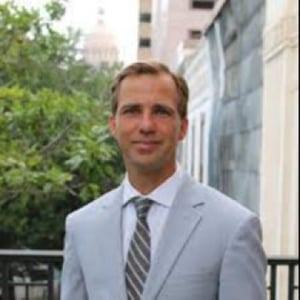
Director of Litigation, Texas Public Policy Foundation
Chance Weldon is a Senior Attorney and the Director of Litigation for the Center for the American Future at the Texas Public Policy Foundation.
Chance was one of the first attorneys hired by former litigation director Rob Henneke in 2015. Since joining the Foundation, Chance has worked on some of its most important cases. From protecting the rights of property owners along the Red River in North Texas (Aderholt v. BLM) to striking down the City of Austin’s onerous short-term rental regulations in Zaatari v. City of Austin, to defending peoples’ ability to maintain their property without suffering ruinous penalties in F.P. Development, LLC v. Canton, to reinvigorating the Commerce Clause in TPPF’s litigation against the Federal Government’s Eviction Moratorium and Vaccine Mandate, Chance has been at the forefront of protecting constitutional rights in Texas and across the country.
Before joining the Foundation, Chance served as a fellow at the Pacific Legal Foundation in Sacramento, California and the Institute for Justice in Austin, Texas. As a fellow, he worked on wide breadth of litigation involving economic liberty, free speech, school choice, and private property rights.
A Houston native, Chance earned his J.D. from the University of Houston, where he was awarded the Dean’s Merit Scholarship for all three years. Prior to law school, he received a B.A. in Philosophy and Political Science from the University of Houston. He is licensed to practice law in Texas, California (inactive status), the United States Supreme Court, and the United States Courts of Appeals for the Fifth, Sixth, and Seventh Circuits.
Senior Vice President, Strategic Initiatives & Special Counsel to the President, Alliance Defending Freedom
Ryan Bangert serves as senior vice president for strategic initiatives and special counsel to the president at Alliance Defending Freedom. He oversees ADF’s regulatory practice, government relations, and corporate engagement teams. He also advises executive leadership with strategic initiatives and appears as counsel for ADF clients.
Before joining ADF, Bangert served as deputy first assistant attorney general and deputy for legal counsel in the office of the Texas attorney general. In those roles, he oversaw the state’s Special Litigation Unit, which handled critical litigation against the federal government, and oversaw multiple divisions within the office. Prior to that, he served as deputy for civil litigation for Missouri Attorney General Josh Hawley, overseeing the state’s civil litigation divisions, including the consumer protection and antitrust divisions, with over 200 attorneys and staff. During his time in government service, Bangert handled a diverse array of matters involving Big Tech, election law, civil rights, multistate antitrust and consumer protection investigations, and many other issues.
Prior to his government service, Bangert was a litigation partner at Baker Botts L.L.P., where he was a member of the firm’s commercial litigation and appellate practice sections. A seasoned trial attorney, The Texas Lawyer ranked the verdict Bangert achieved in the Janvey v. Maldonado case as the #1 verdict in the securities category for 2015-2019, and The National Law Journal ranked it in its “Top 100 Verdicts of 2015.” He was named a “Texas Rising Star” for multiple years by Texas Lawyer and Law and Politics magazines. While at Baker Botts, he was a volunteer attorney for ADF and served as amicus counsel in numerous cases, including Trinity Lutheran v. Comer and Salazar v. Buono, receiving the firm’s Opus Justitae Award in recognition of his outstanding commitment to pro bono service.
Bangert earned his J.D. from Southern Methodist University, where he was a Hatton Sumner’s scholar and graduated first in his class. He also participated in ADF’s Blackstone program and is a Blackstone Fellow. Following law school, he clerked for the Honorable Patrick E. Higginbotham on the Fifth Circuit Court of Appeals.
Bangert is a member of the Philadelphia Society and Federalist Society. He is admitted to practice law in Texas, California (inactive), Missouri (inactive), the U.S. Supreme Court and numerous federal district and appellate courts. A frequent op-ed contributor, his work has appeared in National Review, Daily Wire, The Hill, Washington Examiner, The Federalist, Fox News, and RealClear Religion. He speaks nationally on constitutional, cultural, and religious liberty issues.
Managing Attorney, Institute for Justice
Arif Panju serves as a managing attorney with the Institute for Justice. He leads IJ’s Texas office and litigates cases involving free speech, property rights, economic liberty, and educational choice.
Arif is co-counsel in the case of Carson v. Makin in the U.S. Supreme Court. Carson is a challenge to Maine’s exclusion of religious educational options from the state’s school choice program.
Arif’s work has resulted in court victories in both federal and state court. He vindicated the free speech rights of tour guides in Billups v. City of Charleston. He secured a victory for economic liberty in Brantley v. Kuntz, freeing hairbraiding schools in Texas from onerous restrictions and paving the way for the abolishment of the state’s braiding license at the Texas Legislature. In Patel v. Texas Department of Licensing and Regulation, Arif helped secure a landmark victory in the Texas Supreme Court, establishing a new test for reviewing the constitutionality of economic regulations.
Arif’s work at IJ has been featured by outlets including The Wall Street Journal, New York Times, Washington Post, The Atlantic, Texas Tribune, and dozens more nationwide. His opinions and views on legal issues have been published in several outlets, including the Dallas Morning News, Austin American-Statesman, and USA Today. Arif sits on the board for the Freedom of Information Foundation of Texas.
Arif graduated law school with honors from Southern Methodist University. During law school he clerked on the United States Senate Committee on the Judiciary. Arif lives in Austin, Texas.
Counsel, Becket Law
Rebekah Ricketts joined Becket as counsel in 2022. Her practice focuses on First Amendment and appellate litigation.
Before joining Becket, Becky served as an Assistant U.S. Attorney for the Northern District of Texas, where she prosecuted a wide range of violent crimes and cyber offenses, including sex trafficking, cyberstalking, carjacking, kidnapping, firearms offenses, and drug trafficking. As Human Trafficking Coordinator, she led the District’s efforts to reconstitute the North Texas Trafficking Task Force, a cross-agency task force led by Homeland Security Investigations. She also obtained the first criminal indictment and guilty plea under the Fight Online Sex Trafficking Act (FOSTA), in a case against the owner of a commercial sex website.
Before that, Becky was an associate at Gibson, Dunn & Crutcher LLP in Dallas, where she practiced appellate and constitutional law, complex commercial litigation, and administrative law. While at the firm, Becky argued cases in federal and state court and worked on numerous high-profile appeals, including a landmark Fifth Circuit reversal of a $663 million False Claims Act judgment. She also maintained an active pro bono docket of religious liberty cases.
Becky served as a law clerk to Justice Clarence Thomas of the Supreme Court of the United States, Judge José A. Cabranes of the United States Court of Appeals for the Second Circuit, and Judge Richard J. Sullivan, then of the United States District Court for the Southern District of New York. She earned her J.D. from Yale Law School, where she was a Book Reviews & Features Editor of the Yale Law Journal, and her B.A. from the University of Texas at Austin, where she graduated with High Honors and was awarded the Harry S. Truman Scholarship.
Becky lives in the great state of Texas with her husband and two young daughters.
Counsel, First Liberty
Keisha Russell is Counsel with First Liberty Institute, concentrating on religious liberty matters and First Amendment rights.
Keisha attended Emory University School of Law, where she was heavily involved in Emory’s prestigious Center for the Study of Law and Religion. She served on the Emory Journal of Law & Religion and two moot court teams. She was a law clerk for the Center’s Restoring Religious Freedom Project where she worked on religious liberty litigation. In her final year of law school, Keisha worked as a law clerk for the American Center for Law and Justice (ACLJ) on national and international matters affecting Israel. Keisha was a 2017 Emory University Graduating Woman of Excellence.
Prior to joining First Liberty, Keisha was a 2011 Teach For America corps member in Atlanta Public Schools. As an elementary special education teacher, she taught students with ADD, emotional behavioral disorders, and learning disabilities. Keisha is most passionate about protecting religious freedom for children in America’s schools.
Keisha’s religious liberty commentary has been published in FoxNews.com, Washington Examiner, The Daily Signal, Real Clear Religion, The Richmond Times-Dispatch, Houston Chronicle, and others. She’s been a guest on FOX & Friends, CBN, and other local stations.
Keisha earned a Bachelor’s in Communications from University of Central Florida and a Master’s in Teaching from the University of Southern California.
Keisha is licensed to practice law in New York, Texas, and Florida.
Judge, United States District Court for the Southern District of Texas
Prior to joining the bench, Drew Tipton was a partner at Baker Hostetler, LLP in Houston, Texas, where his practice focused on complex labor and employment and trade secret litigation. Before joining Baker Hostetler in 1999, Judge Tipton was in private practice with Marek, Griffin, & Knaupp, LLP and Littler Mendelson, PC. Judge Tipton also served 5 years in the United States Marine Corps Reserve. Upon graduation from law school, Judge Tipton served as a law clerk to Judge John D. Rainey of the United States District Court for the Southern District of Texas. Judge Tipton earned his B.A. from Texas A&M University and his J.D. from South Texas College of Law Houston.
Director of Litigation, Texas Public Policy Foundation
Chance Weldon is a Senior Attorney and the Director of Litigation for the Center for the American Future at the Texas Public Policy Foundation.
Chance was one of the first attorneys hired by former litigation director Rob Henneke in 2015. Since joining the Foundation, Chance has worked on some of its most important cases. From protecting the rights of property owners along the Red River in North Texas (Aderholt v. BLM) to striking down the City of Austin’s onerous short-term rental regulations in Zaatari v. City of Austin, to defending peoples’ ability to maintain their property without suffering ruinous penalties in F.P. Development, LLC v. Canton, to reinvigorating the Commerce Clause in TPPF’s litigation against the Federal Government’s Eviction Moratorium and Vaccine Mandate, Chance has been at the forefront of protecting constitutional rights in Texas and across the country.
Before joining the Foundation, Chance served as a fellow at the Pacific Legal Foundation in Sacramento, California and the Institute for Justice in Austin, Texas. As a fellow, he worked on wide breadth of litigation involving economic liberty, free speech, school choice, and private property rights.
A Houston native, Chance earned his J.D. from the University of Houston, where he was awarded the Dean’s Merit Scholarship for all three years. Prior to law school, he received a B.A. in Philosophy and Political Science from the University of Houston. He is licensed to practice law in Texas, California (inactive status), the United States Supreme Court, and the United States Courts of Appeals for the Fifth, Sixth, and Seventh Circuits.
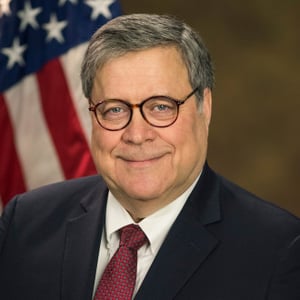
Former United States Attorney General
William P. Barr was born on May 23, 1950 in New York City. Mr. Barr received his A.B. in government from Columbia University in 1971 and his M.A. in government and Chinese studies in 1973. From 1973 to 1977, he served in the Central Intelligence Agency before receiving his J.D. with highest honors from George Washington University Law School in 1977.
In 1978, Mr. Barr served as a law clerk under Judge Malcolm Wilkey of the U.S. Court of Appeals for the District of Columbia Circuit. Following his clerkship, Mr. Barr joined the Washington, D.C. office of the law firm of Shaw, Pittman, Potts & Trowbridge as an associate. He left the firm to work in the White House under President Ronald Reagan from 1982 to 1983 on the domestic policy staff, then returned to the law firm and became a partner in 1985.
Under President George H.W. Bush, Mr. Barr served as the Deputy Attorney General from 1990 to 1991; the Assistant Attorney General of the Office of Legal Counsel from 1989 to 1990; and the 77th Attorney General of the United States from 1991 to 1993. While serving at the Department, Mr. Barr helped create programs and strategies to reduce violent crime and was responsible for establishing new enforcement policies in a number of areas including financial institutions, civil rights, and antitrust merger guidelines. Mr. Barr also led the Department’s response to the Savings & Loan crisis; oversaw the investigation of the Pan Am 103 bombing; directed the successful response to the Talladega prison uprising and hostage taking; and coordinated counter-terrorism activities during the First Gulf War.
From 1994 to 2000, Mr. Barr served as Executive Vice President and General Counsel for GTE Corporation. Mr. Barr then served as Executive Vice President and General Counsel of Verizon from 2000 to 2008. At both GTE and Verizon, Mr. Barr led the legal, regulatory, and government affairs activities of the companies.
After retiring from Verizon in 2008, Mr. Barr advised major corporations on government enforcement matters, as well as regulatory litigation. Mr. Barr served as Of Counsel at Kirkland & Ellis LLP in 2009 and rejoined the firm in 2017.
President Donald Trump announced his intention to nominate Mr. Barr on December 7, 2018, and he was confirmed as the 85th Attorney General of the United States by the U.S. Senate on February 14, 2019. U.S. Supreme Court Chief Justice John Roberts administered the oath of office. Mr. Barr joins John Crittenden (1841 and 1850-1853) as one of only two people in U.S. history to serve twice as Attorney General.
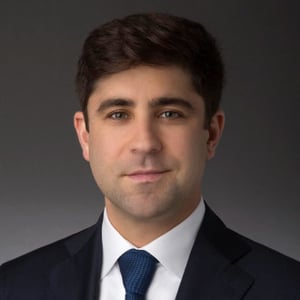
Partner, Sidley Austin LLP
Will Levi is a partner at Sidley Austin. He draws on his experience serving in senior roles at the U.S. Department of Justice and U.S. Senate to represent clients in high-stakes government enforcement actions, congressional investigations, litigation, and crisis situations. He focuses his practice on commercial disputes and government-facing litigation, including in matters defending against government enforcement actions and challenging federal regulatory action, and he represents clients before federal administrative agencies as well as in federal and state courts.
Prior to joining Sidley, Will served in senior roles at the U.S. Department of Justice, including as Chief of Staff of the Department of Justice and Senior Counselor to the Attorney General. In those roles, Will had broad responsibilities, including supervision of a wide range of high-profile civil litigation, criminal investigations and prosecutions, and national security matters. In recognition of outstanding service to the Department of Justice, Will was awarded the Department’s highest honor, the Edmund J. Randolph Award.
He also served as Chief Counsel to U.S. Senator Mike Lee and Staff Director of the U.S. Senate Judiciary Committee’s Subcommittee on Antitrust, Competition Policy, and Consumer Rights, which oversees the federal antitrust enforcement agencies and reviews major proposed mergers affecting the national economy.
Will regularly advises leading company executives and boards of directors on strategic legal issues arising from high-stakes litigation, congressional investigations and hearings, and government investigations and regulation. In recognition of his success, Will has been named a “Future Star” in the District of Columbia by Benchmark Litigation (2025), and he was ranked among an elite group of lawyers as a 2023 “D.C. Rising Star” by The National Law Journal.
Will clerked for U.S. Supreme Court Justice Samuel A. Alito, Jr. and U.S. Court of Appeals for the Third Circuit Judge Anthony J. Scirica. By appointment of the U.S. Court of Appeals for the D.C. Circuit, Will serves as a member of the Court’s Advisory Committee on Procedures. He is also an elected member of the American Law Institute and a member of the nominating committee for the William H. Webster Profiles in Leadership Award for Prosecution.
Former United States Attorney General
William P. Barr was born on May 23, 1950 in New York City. Mr. Barr received his A.B. in government from Columbia University in 1971 and his M.A. in government and Chinese studies in 1973. From 1973 to 1977, he served in the Central Intelligence Agency before receiving his J.D. with highest honors from George Washington University Law School in 1977.
In 1978, Mr. Barr served as a law clerk under Judge Malcolm Wilkey of the U.S. Court of Appeals for the District of Columbia Circuit. Following his clerkship, Mr. Barr joined the Washington, D.C. office of the law firm of Shaw, Pittman, Potts & Trowbridge as an associate. He left the firm to work in the White House under President Ronald Reagan from 1982 to 1983 on the domestic policy staff, then returned to the law firm and became a partner in 1985.
Under President George H.W. Bush, Mr. Barr served as the Deputy Attorney General from 1990 to 1991; the Assistant Attorney General of the Office of Legal Counsel from 1989 to 1990; and the 77th Attorney General of the United States from 1991 to 1993. While serving at the Department, Mr. Barr helped create programs and strategies to reduce violent crime and was responsible for establishing new enforcement policies in a number of areas including financial institutions, civil rights, and antitrust merger guidelines. Mr. Barr also led the Department’s response to the Savings & Loan crisis; oversaw the investigation of the Pan Am 103 bombing; directed the successful response to the Talladega prison uprising and hostage taking; and coordinated counter-terrorism activities during the First Gulf War.
From 1994 to 2000, Mr. Barr served as Executive Vice President and General Counsel for GTE Corporation. Mr. Barr then served as Executive Vice President and General Counsel of Verizon from 2000 to 2008. At both GTE and Verizon, Mr. Barr led the legal, regulatory, and government affairs activities of the companies.
After retiring from Verizon in 2008, Mr. Barr advised major corporations on government enforcement matters, as well as regulatory litigation. Mr. Barr served as Of Counsel at Kirkland & Ellis LLP in 2009 and rejoined the firm in 2017.
President Donald Trump announced his intention to nominate Mr. Barr on December 7, 2018, and he was confirmed as the 85th Attorney General of the United States by the U.S. Senate on February 14, 2019. U.S. Supreme Court Chief Justice John Roberts administered the oath of office. Mr. Barr joins John Crittenden (1841 and 1850-1853) as one of only two people in U.S. history to serve twice as Attorney General.
Partner, Sidley Austin LLP
Will Levi is a partner at Sidley Austin. He draws on his experience serving in senior roles at the U.S. Department of Justice and U.S. Senate to represent clients in high-stakes government enforcement actions, congressional investigations, litigation, and crisis situations. He focuses his practice on commercial disputes and government-facing litigation, including in matters defending against government enforcement actions and challenging federal regulatory action, and he represents clients before federal administrative agencies as well as in federal and state courts.
Prior to joining Sidley, Will served in senior roles at the U.S. Department of Justice, including as Chief of Staff of the Department of Justice and Senior Counselor to the Attorney General. In those roles, Will had broad responsibilities, including supervision of a wide range of high-profile civil litigation, criminal investigations and prosecutions, and national security matters. In recognition of outstanding service to the Department of Justice, Will was awarded the Department’s highest honor, the Edmund J. Randolph Award.
He also served as Chief Counsel to U.S. Senator Mike Lee and Staff Director of the U.S. Senate Judiciary Committee’s Subcommittee on Antitrust, Competition Policy, and Consumer Rights, which oversees the federal antitrust enforcement agencies and reviews major proposed mergers affecting the national economy.
Will regularly advises leading company executives and boards of directors on strategic legal issues arising from high-stakes litigation, congressional investigations and hearings, and government investigations and regulation. In recognition of his success, Will has been named a “Future Star” in the District of Columbia by Benchmark Litigation (2025), and he was ranked among an elite group of lawyers as a 2023 “D.C. Rising Star” by The National Law Journal.
Will clerked for U.S. Supreme Court Justice Samuel A. Alito, Jr. and U.S. Court of Appeals for the Third Circuit Judge Anthony J. Scirica. By appointment of the U.S. Court of Appeals for the D.C. Circuit, Will serves as a member of the Court’s Advisory Committee on Procedures. He is also an elected member of the American Law Institute and a member of the nominating committee for the William H. Webster Profiles in Leadership Award for Prosecution.

Head of U.S. Policy and Strategic Advocacy, Electric Coin Company
Paul Brigner is the Head of U.S. Policy and Strategic Advocacy at the Electric Coin Company. He has served in senior level technology policy and government relations roles for the last eighteen years with another ten years of hands-on technical experience at the beginning his career after serving in the United States Army.
He holds an MBA from the McDonough School of Business at Georgetown University and a JD from the Georgetown University Law Center. He received a Bachelors degree from Stephen F. Austin State University where he was named the Outstanding Computer Science Graduate.

General Counsel, Espresso Systems
Michael Mosier is General Counsel at Espresso Systems, which is developing configurable privacy for digital assets with decentralized private computation. He served as Acting Director, Deputy Director, and the first Digital Innovation Officer of the U.S. Treasury’s Financial Crimes Enforcement Network (FinCEN). He also was Counselor (for Cybersecurity & Emerging Technology) to the Deputy Secretary of the Treasury.
Previously, Michael was Chief Technical Counsel at Chainalysis; an Associate Director of Treasury’s Office of Foreign Assets Control; a Deputy Chief at the Department of Justice’s Money Laundering Section; and White House National Security Council Director for Transnational Organized Crime. He began his public service with the Manhattan District Attorney’s Office and has been an adjunct professor at Georgetown University Law Center.
Professor of Legal Studies and Business Ethics at the Wharton School, University of Pennsylvania
Kevin Werbach is a professor of Legal Studies and Business Ethics at the Wharton School, University of Pennsylvania, and formerly Counsel for New Technology Policy at the U.S. Federal Communications Commission, Werbach has spent the past two decades exploring major trends at the intersection of the Internet, digital media, and communications. He served on the Obama Administration's Presidential Transition Team and founded the Supernova Group, a technology consulting firm, which organized the CEO-level Supernova technology conference. He also created one of the most successful massive open online courses, with nearly half a million enrollments. He was named Wharton's first-ever Iron Prof in 2010.
Werbach has published four books, including The Blockchain and the New Architecture of Trust, For the Win: The Power of Gamification and Game Thinking in Business, Education, Government, and Social Impact, and After the Digital Tornado: Networks, Algorithms, Humanity.
Earlier in his career, he edited the influential technology newsletter Release 1.0, and helped develop the U.S. Government's Internet and e-commerce policies in the Clinton Administration
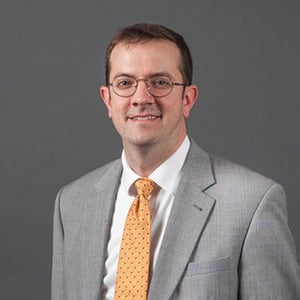
Associate Professor of Law, Antonin Scalia Law School, George Mason University
Associate Professor of Law J.W. Verret joined the Antonin Scalia Law School, George Mason University faculty in 2008. In 2013, he took leave for two years to serve as the Chief Economist and Senior Counsel for the U.S. House Committee on Financial Services. He received his JD and MA in Public Policy from Harvard Law School and the Harvard Kennedy School of Government, respectively, in 2006. While in law school, Professor Verret served an Olin Fellowship in Law and Economics at the Harvard Program on Corporate Governance under the guidance of Prof. Lucian Bebchuk.
Professor Verret then served as a law clerk for Vice-Chancellor John W. Noble of the Delaware Court of Chancery. Prior to joining the faculty at Scalia Law, Professor Verret was an associate in the SEC Enforcement Defense Practice Group at Skadden, Arps in Washington, D.C. He has written extensively on corporate law topics, including Delaware's Guidance, co-written with Chief Justice Myron T. Steele of the Delaware Supreme Court. His academic work has been featured in the Yale Journal on Regulation, The Business Lawyer, the Delaware Journal of Corporate Law, the Stanford Law Review, the University of Pennsylvania Journal of Business Law, and the Virginia Law and Business Review. Professor Verret was selected by the Northwestern Law School Searle Center on Law, Regulation, and Economic Growth for a 2009-2010 Searle-Kaufmann Research Fellowship.
Professor Verret is also a Senior Scholar at the Mercatus Center Working Group on Financial Markets, where he regularly briefs Congressional staff, members of Congress, SEC Commissioners and other financial regulatory agencies on financial regulation topics. He also directs the Corporate Federalism Initiative, where he obtains research grants for a network of students and faculty scholars who study the division between states and the federal government as sources of corporate law. Professor Verret has been invited to testify before various House and Senate Committees four times during the financial crisis of 2009 regarding all of the central provisions of the Obama Administration's 2009 financial regulatory reform proposals. For a full list of Professor Verret's C-Span appearances, including testimony before the U.S. House of Representatives and the U.S. Senate, see http://www.c-spanvideo.org/jwverret.
Professor Verret has been an invited panelist for various television appearances, including an interview on The NewsHour with Jim Lehrer. Professor Verret has been quoted in various media on financial regulation and corporate law topics, including the New York Times, CNN Money, the CNN Political Ticker, CNBC, ABC News, Investor's Business Daily, ESPN.com, The American Banker, The American Lawyer, The Huffington Post, CBS.com, and AP News. Professor Verret's op-eds have been featured in Forbes, The Chicago Tribune, The Orange County Register, and The Wall Street Journal. Professor Verret is also a regular guest contributor to three of the most noted corporate law and financial regulation law blogs: the Harvard Law School Corporate Governance and Financial Regulation Forum, Deallawyers.com, and The Conglomerate.
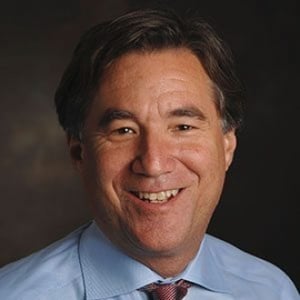
Ashe Family Chair Professor of Law, Georgia State University College of Law
Eric J. Segall graduated from Emory University, Phi Beta Kappa and summa cum laude, and from Vanderbilt Law School, where he was the research editor for the Law Review and member of Order of the Coif. He clerked for the Chief Judge Charles Moye Jr. for the Northern District of Georgia, and Albert J. Henderson of the 11th Circuit Court of Appeals. After his clerkships, Segall worked for Gibson, Dunn & Crutcher and the U.S. Department of Justice, before joining the Georgia State faculty in 1991.
Segall teaches federal courts and constitutional law I and II. He is the author of the books Originalism as Faith and Supreme Myths: Why the Supreme Court is not a Court and its Justices are not Judges. His articles on constitutional law have appeared in, among others, the Harvard Law Review Forum, the Stanford Law Review On Line, the UCLA Law Review, the George Washington Law Review, the Washington University Law Review, the University of Pennsylvania Journal of Constitutional Law, the Northwestern University Law Review Colloquy, and Constitutional Commentary among many others.
Segall’s op-eds and essays have appeared in the New York Times, the LA Times, The Atlantic, SLATE, Vox, Salon, and the Daily Beast, among others. He has appeared on CNN, Fox News, MSNBC, and France 24 and all four of Atlanta’s local television stations. He has also appeared on numerous local and national radio shows.

Professor, University of Minnesota Law School
Ilan Wurman is the Julius E. Davis Professor of Law at the University of Minnesota, where he teaches administrative law and constitutional law. He previously taught at Arizona State University. He writes primarily on the Fourteenth Amendment, administrative law, separation of powers, and constitutionalism. His academic writing has appeared in the Yale Law Journal, the Stanford Law Review, the University of Chicago Law Review, the University of Pennsylvania Law Review, the Virginia Law Review, the Duke Law Journal, the Minnesota Law Review, the Notre Dame Law Review, and the Texas Law Review among other journals.
Professor Wurman is the author of a casebook, Administrative Law Theory and Fundamentals: An Integrated Approach (Foundation Press 2d ed. 2024). He is also the author of A Debt Against the Living: An Introduction to Originalism (Cambridge 2017), and The Second Founding: An Introduction to the Fourteenth Amendment (Cambridge 2020). His next book, The Constitution of 1789: A New Introduction, is also forthcoming with Cambridge University Press.
Professor Wurman practices law with the firm Tully Bailey. He has litigated a variety of administrative law and constitutional law cases, including cases involving COVID-19 restrictions, transmission lines, and Appointments Clause challenges. He also devised winning public nuisance theories to force city governments to address the increasingly challenging public camping crises throughout the country.

Lunch & Introductory Remarks
Frank D. Whitney
Inaugural North Carolina Chapters Conference
Featuring: Hon. Frank D. Whitney, United States District Court, Western District of North Carolina
Lunch & Introductory Remarks
Frank D. Whitney
Inaugural North Carolina Chapters Conference
Featuring: Hon. Frank D. Whitney, United States District Court, Western District of North Carolina
Panel 1: Rising Crime Rates and Criminal Justice Reform
Jennifer Sheffield Freel, Alexa L. Gervasi, James Wesley Hendrix, Prerak Shah, Johnny Sutton
Eighth Annual Texas Chapters Conference
Alexa Gervasi, Executive Director, Georgetown Center for the Constitution Jennifer Freel, Partner, Jackson Walker Prerak Shah,...
Panel 1: Rising Crime Rates and Criminal Justice Reform
Jennifer Sheffield Freel, Alexa L. Gervasi, James Wesley Hendrix, Prerak Shah, Johnny Sutton
Eighth Annual Texas Chapters Conference
Alexa Gervasi, Executive Director, Georgetown Center for the Constitution Jennifer Freel, Partner, Jackson Walker Prerak Shah,...
Young Lawyers Panel – Career Opportunities in Constitutional Litigation
Ryan L. Bangert, Arif Panju, Rebekah Perry Ricketts, Keisha Toni Russell, Drew B. Tipton, Chance Dean Weldon
Eighth Annual Texas Chapters Conference
Ryan Bangert, Senior Counsel and Vice President for Legal Strategy, Alliance Defending Freedom Arif Panju,...
Young Lawyers Panel – Career Opportunities in Constitutional Litigation
Ryan L. Bangert, Arif Panju, Rebekah Perry Ricketts, Keisha Toni Russell, Drew B. Tipton, Chance Dean Weldon
Eighth Annual Texas Chapters Conference
Ryan Bangert, Senior Counsel and Vice President for Legal Strategy, Alliance Defending Freedom Arif Panju,...
Gregory S. Coleman Memorial Lecture & Luncheon
William P. Barr, Will Ranney Levi
Eighth Annual Texas Chapters Conference
Hon. William Barr, Former United States Attorney General and Author, One Damn Thing After Another:...
Gregory S. Coleman Memorial Lecture & Luncheon
William P. Barr, Will Ranney Levi
Eighth Annual Texas Chapters Conference
Hon. William Barr, Former United States Attorney General and Author, One Damn Thing After Another:...
Is the Office of Foreign Assets Control's Sanctioning of Tornado Cash a Threat to the Future of Financial Privacy?
Paul Brigner, Michael Mosier, Kevin Werbach, J.W. Verret
Tornado Cash is an open source, decentralized cryptocurrency tumbler that was introduced in 2019. The...
Feddie Night Frights: Return of the Living Constitution?
Eric J. Segall, Ilan Wurman
It's on!
The Federalist Society’s Student Division &Boston University School of Law Chapter present Feddie Night Frights:Return...