

Thomas M. Siebel Senior Fellow, The Hoover Institution, Stanford University; Gary T. Schwartz Distinguished Professor of Law Emeritus, UCLA School of Law
Eugene Volokh is the Thomas M. Siebel Senior Fellow at the Hoover Institution (Stanford), as well as the Gary T. Schwartz Distinguished Professor of Law Emeritus and Distinguished Research Professor at UCLA School of Law. He recently retired from teaching at UCLA, after 30 years there, and is now focusing on research.
Volokh is the author of the textbooks The First Amendment and Related Statutes (8th ed. 2023), and Academic Legal Writing (5th ed. 2016), as well as over 100 academic law journal articles, mostly on First Amendment law. He is a member of The American Law Institute; the editor-in-chief of the Journal of Free Speech Law; and the creator and coauthor of The Volokh Conspiracy, a leading legal blog founded in 2002 (hosted at the Washington Post from 2014 to 2017 and now at Reason Magazine).
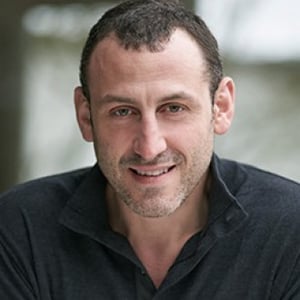
Professor of Law, Northwestern University Pritzker School of Law
Joshua Kleinfeld teaches and writes about political, legal, and moral philosophy, criminal law, and criminal procedure. He also practices law in Northwestern's Juvenile Criminal Defense Clinic. He is a full professor with tenure at the Northwestern Pritzker School of the Law and (by courtesy) in Northwestern’s philosophy department. In 2017-18, he was a visiting professor at Harvard and Stanford Law Schools. He is the recipient of the Bator Award, given annually to one American law professor under the age of 40 who has demonstrated "excellence in legal scholarship, a commitment to teaching, a concern for students, and who has made a significant public impact."
In philosophy, Kleinfeld's research focuses on the idea of "embodied ethical life," as developed in the socio-theoretic tradition of Hegel, Weber, and Durkheim. This tradition aims to understand and critique social life by bringing to light the normative ideas implicit in social practices and institutions. In law, this means that the most interesting philosophical concepts are often those reflected or actualized in legal practice – in the law as judges and lawyers think of it and wield it.
In criminal law and procedure, Kleinfeld has developed a theory known as "reconstructivism," which holds that the chief office of criminal law is not to dole out retributive justice, nor to optimize crime and cost control, but to reconstruct a violated normative order in the wake of a crime. This work, which draws on the thought of Hegel, Durkheim, Jean Hampton, and Antony Duff, develops an alternative to retributive and utilitarian theories of criminal law by focusing on the distinctive social function and sense of justice at work in the criminal system.
Kleinfeld is also involved in practical criminal justice reform. In this vein, he defends children accused of homicide in the Northwestern Juvenile Criminal Defense clinic and assists in litigation efforts meant to reform American criminal law through the courts. He has also developed a view of criminal justice reform known as "democratization," which holds that the root of the American criminal justice crisis is a set of bureaucratic attitudes, structures, and incentives divorced from the American public’s concerns and sense of justice, and that the primary solution is to make criminal justice more community-focused and responsive to lay influences. Working with others, he has developed a number of policy proposals meant to reform American criminal justice in a democratic direction.
Kleinfeld holds a JD from Yale Law School, a PhD in philosophy from the Goethe University of Frankfurt (supervised by Axel Honneth, Klaus Günther, and Rainer Forst), and a BA in philosophy from Yale College. He clerked for Judge J. Harvie Wilkinson on the United States Court of Appeals for the Fourth Circuit; Judge Janice Rogers Brown on the United States Court of Appeals for the D.C. Circuit; and President (chief justice) Aharon Barak of the Supreme Court of Israel. He worked as an Associate at Debevoise & Plimpton LLP in Frankfurt, Germany, in the area of corporate criminal law. Before law school, he worked as a Senior Research Analyst at the White House’s Council on Bioethics.
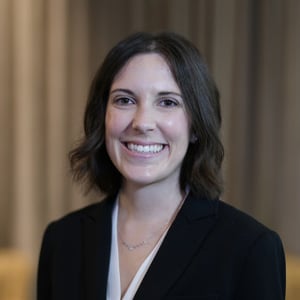
Director, Faculty Relations, The Federalist Society
Katie McClendon is the Director of Faculty Relations at the Federalist Society, where she has worked since 2015.
Katie holds a J.D. from the University of Pennsylvania Law School and a B.A. in Political Science from Biola University, where she was a member of the Torrey Honors Institute. She is a fellow of the John Jay Institute and the Blackstone Legal Fellowship. Katie is originally from Los Angeles, and she now lives with her husband and four children in Atlanta.
Thomas M. Siebel Senior Fellow, The Hoover Institution, Stanford University; Gary T. Schwartz Distinguished Professor of Law Emeritus, UCLA School of Law
Eugene Volokh is the Thomas M. Siebel Senior Fellow at the Hoover Institution (Stanford), as well as the Gary T. Schwartz Distinguished Professor of Law Emeritus and Distinguished Research Professor at UCLA School of Law. He recently retired from teaching at UCLA, after 30 years there, and is now focusing on research.
Volokh is the author of the textbooks The First Amendment and Related Statutes (8th ed. 2023), and Academic Legal Writing (5th ed. 2016), as well as over 100 academic law journal articles, mostly on First Amendment law. He is a member of The American Law Institute; the editor-in-chief of the Journal of Free Speech Law; and the creator and coauthor of The Volokh Conspiracy, a leading legal blog founded in 2002 (hosted at the Washington Post from 2014 to 2017 and now at Reason Magazine).
Professor of Law, Northwestern University Pritzker School of Law
Joshua Kleinfeld teaches and writes about political, legal, and moral philosophy, criminal law, and criminal procedure. He also practices law in Northwestern's Juvenile Criminal Defense Clinic. He is a full professor with tenure at the Northwestern Pritzker School of the Law and (by courtesy) in Northwestern’s philosophy department. In 2017-18, he was a visiting professor at Harvard and Stanford Law Schools. He is the recipient of the Bator Award, given annually to one American law professor under the age of 40 who has demonstrated "excellence in legal scholarship, a commitment to teaching, a concern for students, and who has made a significant public impact."
In philosophy, Kleinfeld's research focuses on the idea of "embodied ethical life," as developed in the socio-theoretic tradition of Hegel, Weber, and Durkheim. This tradition aims to understand and critique social life by bringing to light the normative ideas implicit in social practices and institutions. In law, this means that the most interesting philosophical concepts are often those reflected or actualized in legal practice – in the law as judges and lawyers think of it and wield it.
In criminal law and procedure, Kleinfeld has developed a theory known as "reconstructivism," which holds that the chief office of criminal law is not to dole out retributive justice, nor to optimize crime and cost control, but to reconstruct a violated normative order in the wake of a crime. This work, which draws on the thought of Hegel, Durkheim, Jean Hampton, and Antony Duff, develops an alternative to retributive and utilitarian theories of criminal law by focusing on the distinctive social function and sense of justice at work in the criminal system.
Kleinfeld is also involved in practical criminal justice reform. In this vein, he defends children accused of homicide in the Northwestern Juvenile Criminal Defense clinic and assists in litigation efforts meant to reform American criminal law through the courts. He has also developed a view of criminal justice reform known as "democratization," which holds that the root of the American criminal justice crisis is a set of bureaucratic attitudes, structures, and incentives divorced from the American public’s concerns and sense of justice, and that the primary solution is to make criminal justice more community-focused and responsive to lay influences. Working with others, he has developed a number of policy proposals meant to reform American criminal justice in a democratic direction.
Kleinfeld holds a JD from Yale Law School, a PhD in philosophy from the Goethe University of Frankfurt (supervised by Axel Honneth, Klaus Günther, and Rainer Forst), and a BA in philosophy from Yale College. He clerked for Judge J. Harvie Wilkinson on the United States Court of Appeals for the Fourth Circuit; Judge Janice Rogers Brown on the United States Court of Appeals for the D.C. Circuit; and President (chief justice) Aharon Barak of the Supreme Court of Israel. He worked as an Associate at Debevoise & Plimpton LLP in Frankfurt, Germany, in the area of corporate criminal law. Before law school, he worked as a Senior Research Analyst at the White House’s Council on Bioethics.

Partner, Briscoe Prows Kao Ivester & Bazel LLP
Tony Francois is experienced in Water and Real Property Law, Land Use and Zoning, Environmental Regulation, Natural Resources Development, Agricultural Law, and Constitutional Law. He has represented homeowners, builders, farmers and ranchers, trade associations, and water districts in administrative, civil, and criminal proceedings before state and federal administrative agencies and state and federal trial and appellate courts. He is a member of the California State Bar and the Northern, Eastern, and Central Districts of California and the Districts of New Mexico and North Dakota, and has litigated cases in federal courts in California, Oregon, Washington, Idaho, Montana, Nevada, Arizona, New Mexico, Colorado, North and South Dakota, Minnesota, Massachusetts, Maryland, South Carolina, and the District of Columbia, as well as the Sixth, Eighth, Ninth, and Tenth Circuit Courts of Appeals. He has appeared before the Supreme Courts of California, Idaho, Nevada, and the United States.
Prior to attending law school, he served as an infantry officer in the United States Army, and was stationed in the former West Germany during the fall of the Berlin Wall.
Tony was an Attorney at Pacific Legal Foundation from 2012 to 2021. He was a lobbyist for 10 years, first with California Farm Bureau Federation from 2003 to 2007, and then with KP Public Affairs from 2007 to 2012. He was an attorney at McQuaid, Bedford & Van Zandt in San Francisco from 1999 – 2003.
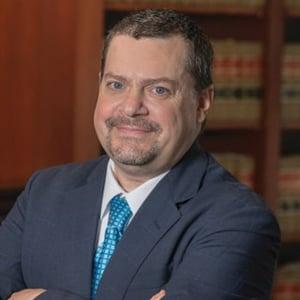
Partner, Alston & Bird
Kevin Minoli leads Alston & Bird’s Environment, Land Use & Natural Resources Washington, D.C. practice, and is a member of the firm’s ESG, Cryptocurrency, and COVID-19 Response & Relief teams. Before Alston & Bird, Kevin spent 18 years with the Environmental Protection Agency (EPA), ultimately holding the highest-ranking career attorney position at the agency and serving as the EPA’s acting general counsel. Kevin served as legal counsel on the EPA’s programs nationwide, working extensively with the EPA’s regional offices. During his time at EPA, Kevin gained substantial experience with environmental laws and the regulations that implement them, and had extensive involvement with litigation at all levels of the court system, including several matters before the Supreme Court. Kevin spent several years as the EPA lead on congressional oversight matters, including preparing senior agency officials for hearings and other engagements with congressional committees, and frequently worked with a number of other agencies, including the White House, the Department of Justice, Department of the Interior, Army Corps of Engineers, and Department of Agriculture. Through knowledge, relationships, and experience he gained during his tenure at the EPA, Kevin effectively advocates on behalf of clients before the EPA and across the federal government and state government agencies.
Partner, Briscoe Prows Kao Ivester & Bazel LLP
Tony Francois is experienced in Water and Real Property Law, Land Use and Zoning, Environmental Regulation, Natural Resources Development, Agricultural Law, and Constitutional Law. He has represented homeowners, builders, farmers and ranchers, trade associations, and water districts in administrative, civil, and criminal proceedings before state and federal administrative agencies and state and federal trial and appellate courts. He is a member of the California State Bar and the Northern, Eastern, and Central Districts of California and the Districts of New Mexico and North Dakota, and has litigated cases in federal courts in California, Oregon, Washington, Idaho, Montana, Nevada, Arizona, New Mexico, Colorado, North and South Dakota, Minnesota, Massachusetts, Maryland, South Carolina, and the District of Columbia, as well as the Sixth, Eighth, Ninth, and Tenth Circuit Courts of Appeals. He has appeared before the Supreme Courts of California, Idaho, Nevada, and the United States.
Prior to attending law school, he served as an infantry officer in the United States Army, and was stationed in the former West Germany during the fall of the Berlin Wall.
Tony was an Attorney at Pacific Legal Foundation from 2012 to 2021. He was a lobbyist for 10 years, first with California Farm Bureau Federation from 2003 to 2007, and then with KP Public Affairs from 2007 to 2012. He was an attorney at McQuaid, Bedford & Van Zandt in San Francisco from 1999 – 2003.
Partner, Alston & Bird
Kevin Minoli leads Alston & Bird’s Environment, Land Use & Natural Resources Washington, D.C. practice, and is a member of the firm’s ESG, Cryptocurrency, and COVID-19 Response & Relief teams. Before Alston & Bird, Kevin spent 18 years with the Environmental Protection Agency (EPA), ultimately holding the highest-ranking career attorney position at the agency and serving as the EPA’s acting general counsel. Kevin served as legal counsel on the EPA’s programs nationwide, working extensively with the EPA’s regional offices. During his time at EPA, Kevin gained substantial experience with environmental laws and the regulations that implement them, and had extensive involvement with litigation at all levels of the court system, including several matters before the Supreme Court. Kevin spent several years as the EPA lead on congressional oversight matters, including preparing senior agency officials for hearings and other engagements with congressional committees, and frequently worked with a number of other agencies, including the White House, the Department of Justice, Department of the Interior, Army Corps of Engineers, and Department of Agriculture. Through knowledge, relationships, and experience he gained during his tenure at the EPA, Kevin effectively advocates on behalf of clients before the EPA and across the federal government and state government agencies.
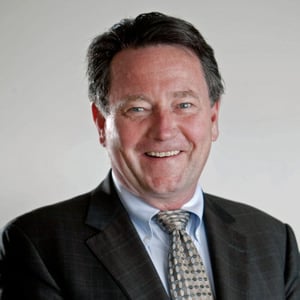
Senior Fellow, American Enterprise Institute
Mark J. Perry is concurrently a senior fellow at AEI and a professor emeritus of economics at the University of Michigan. He is best known as the creator and editor of the popular economics blog Carpe Diem. At AEI, Perry writes about economic and financial issues for American.com and the AEIdeas blog.

Global Technology Counsel, Sony Corporation of America
Christopher Ekren is Global Technology Counsel for Sony. Based out of Silicon Valley, he is currently the lead US in house counsel for key Sony advanced technology initiatives in the areas of Artificial Intelligence (Sony AI, Inc.) , Gene Therapy (Sony Biotechnology Inc.), Satellite Communications (Sony Space Communications Inc.), Semiconductor and Component Technologies (Sony Semiconductor Solutions of America), Sony’s Research Labs US operations, as well as engineering and product development activities part of Sony’s North American core electronics business. He has concurrent global roles supporting Sony’s technology standards, open source software and special technology projects.
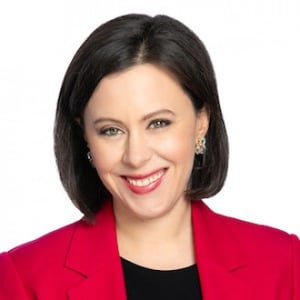
Executive Vice President and Senior Policy Advisor, Stephens, Inc.
Mary Kissel is Executive Vice President and Senior Policy Advisor at Stephens Inc., where she provides advice on geopolitical risk and macroeconomic trends to Stephens clients and the Stephens management team. Previously, she served as Senior Advisor to Secretary of State Michael R. Pompeo from October 2018 to January 2021. Prior to joining the State Department, she had a long and distinguished career on The Wall Street Journal editorial board, including stints as chief foreign policy commentator in New York City and Asia-Pacific editorial page editor, based in Hong Kong. Ms. Kissel hosts the Nixon Seminar on Conservative Realism and National Security, is a member of the Council on Foreign Relations, and serves on the boards of the American Australian Council, The Marathon Initiative, and RXO, Inc. She is a graduate of Harvard University and the Johns Hopkins School of Advanced International Studies.
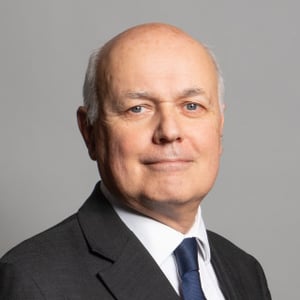
Member of Parliament for Chingford & Woodford Green, House of Commons
The Rt Hon Sir Iain Duncan Smith is the Conservative MP for Chingford and Woodford Green, and has been an MP continuously since 1992.
Between 1997 and 2001, he was Shadow Secretary of State for Social Security and then Shadow Secretary of State for Defence. From 2001 to 2003, he was leader of the Conservative Party.
He took a lead role in the Vote Leave campaign ahead of the EU referendum on 23 June 2016, appearing many times in the media and public debates, and is now working alongside colleagues to ensure the Government achieves a smooth and rapid exit from the EU and forms a new relationship based on trade, continuing friendship and cooperation.
Before entering politics, he served in the Scots Guards from 1975 to 1982. During this time, he saw service in Northern Ireland and Rhodesia/ Zimbabwe. After leaving the army, he worked in industry, first with the GUC, then as a Director of a property company and subsequently as a Director at the publishing company Jane’s Information Group.

Topics
Closing the Digital Divide
How do we close the digital divide? And what are the challenges in achieving internet...
Open Minds with Prof. Eugene Volokh & Prof. Joshua Kleinfeld, Part III
Eugene Volokh, Joshua Kleinfeld
Finally, we turn to the present moment and consider the current challenges to American free...
Federalist Society Review, Volume 23
Katie McClendon
The Federalist Society Review is the legal journal of the Federalist Society. The Review is...
Topics
Ensuring the Perpetuation of Our Political Institutions
In the late 1830s, increasingly bitter disputes over slavery were turning violent and sometimes deadly....
Open Minds with Prof. Eugene Volokh & Prof. Joshua Kleinfeld, Part II
Eugene Volokh, Joshua Kleinfeld
What are the fundamentals of how free speech law works and what are the outer...
Topics
Slavery Reparations in California
Following the death of George Floyd in 2020, Governor Gavin Newsom of California signed a...
Clean Water Act – Forward to the Past?
Tony Francois, Kevin Minoli
The federal Clean Water Act regulates discharges to “navigable waters,” which the Act defines as...
Clean Water Act – Forward to the Past?
Tony Francois, Kevin Minoli
The federal Clean Water Act regulates discharges to “navigable waters,” which the Act defines as...
Explainer Episode 47 - The Procedure of Title VI & IX Complaints
Mark J. Perry
Regulatory Transparency Project's Fourth Branch Podcast
Title VI and IX apply to all colleges and universities that accept federal funds, which,...
Western Business in China: Can We Sell Without Selling Out?
Christopher Ekren, Mary Kissel, Sir Iain Duncan Smith
China offers a paramount opportunity for corporate investment, due to its market size, supply chain...