
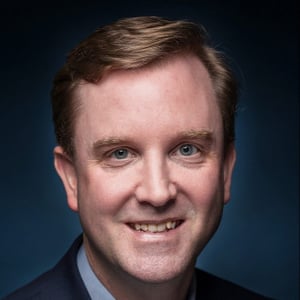
Vice President and Deputy Counsel, Wisconsin Institute for Law and Liberty
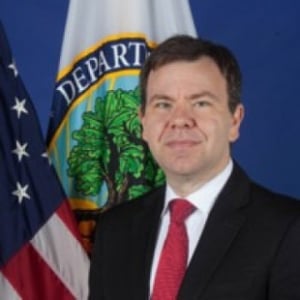
General Counsel, Mountain States Legal Foundation
William E. Trachman is General Counsel for Mountain States Legal Foundation, where he protects the rights of individuals to live freely and securely under the U.S. Constitution. Previously, he was appointed to serve in the Department of Education as Deputy Assistant Secretary in the Office for Civil Rights. Prior to his appointment, he served as General Counsel to the Douglas County School District, where he helped litigate the fight for school choice in the school district. Presently, Mr. Trachman serves as Chair of the Colorado Federalist Society and the Vice Chair of the U.S. Commission on Civil Rights’ Colorado Advisory Board. He previously taught as an Adjunct Professor at the University of Denver, Sturm College of Law. He attended U.C. Berkeley for both undergraduate and law school, and then clerked for the Honorable Harris Hartz on the 10th Circuit Court of Appeals. Mr. Trachman is licensed in Colorado, California, and Washington, D.C.
Vice President and Deputy Counsel, Wisconsin Institute for Law and Liberty
General Counsel, Mountain States Legal Foundation
William E. Trachman is General Counsel for Mountain States Legal Foundation, where he protects the rights of individuals to live freely and securely under the U.S. Constitution. Previously, he was appointed to serve in the Department of Education as Deputy Assistant Secretary in the Office for Civil Rights. Prior to his appointment, he served as General Counsel to the Douglas County School District, where he helped litigate the fight for school choice in the school district. Presently, Mr. Trachman serves as Chair of the Colorado Federalist Society and the Vice Chair of the U.S. Commission on Civil Rights’ Colorado Advisory Board. He previously taught as an Adjunct Professor at the University of Denver, Sturm College of Law. He attended U.C. Berkeley for both undergraduate and law school, and then clerked for the Honorable Harris Hartz on the 10th Circuit Court of Appeals. Mr. Trachman is licensed in Colorado, California, and Washington, D.C.
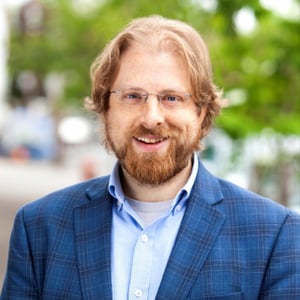
Senior Fellow and Academic Director, Penn Carey Law School
Gus Hurwitz is a Senior Fellow and the Academic Director of the Center for Technology, Innovation & Competition and the University of Pennsylvania Carey Law School where he is working to develop academic and scholarly programs at the intersecution of law, technology, and policy.
He is also Director of Law & Economics Programs at the International Center for Law & Economics (ICLE), a think tank based in Portland, Oregon, where he directs its law and economics-focused research program and helps to translate academic research into applied policy issues.
Hurwitz's research focuses on the regulation of technology, including administrative and regulatory law, antitrust law, torts and products liability, and media law - alongside cognate fields. Inrecent years he has worked on an AI standardization initiative with Seoul National University, a UNICEF-organized study of broadband deployment to public schools in Rwanda, and a book on conglomerate and ecosystems theories of antitrust.
He has published over 30 articles and book chapters, two books (one on cybersecurity law & policy, one on media regulation in the digital era) and have two more in process, over 100 shorter writings (op-eds, shorter analyses, blog posts, &c), hosted over 100 podcast episodes, and regularly appear or am quoted in popular media (including the NY Times, Wall Street Journal, Washington Post, and Associated Press). His work has been cited by legislators, federal courts of appeals, and federal regulatory agencies.
He was previously a full professor and founding director of the Governance & Technology Center at the University of Nebraska, prior to which he was the inaugural research fellow at the Center for Technology, Innovation & Competition (CTIC). From 2007 to 2010, he was a trial attorney with the U.S. Department of Justice Antitrust Division in the Telecommunications and Media Enforcement Section.
He also is, or has been, affiliated with the Classical Liberal Institute at New York University School of Law, the National Security Institute at George Mason University, and the American Enterprise Institute (AEI).
Before attending law school, Hurwitz worked at Los Alamos National Lab and interned at the Naval Research Lab. During this time his work was recognized by the Federal Laboratory Consortium, Los Alamos National Lab, IEEE & ACM, Corporation for Education Network Initiatives in California, R&D Magazine, and even the Guinness Book of World Records.
A current list of Hurwitz’s publications is available on his website: GusHurwitz.net.
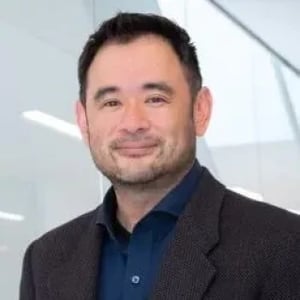
John Homer Kapp Professor of Law, Case Western Reserve University School of Law
Raymond Ku is the John Homer Kapp Professor of Law at Case Western Reserve University School of Law. He has also served as Associate Dean for Academic Affairs and Co-Director of Case’s Center for Law, Technology and the Art. He received his J.D., cum laude, from New York University School of Law where he was a Leonard Boudin First Amendment Fellow in the Arthur Garfield Hays Civil Liberties Program, and his A.B. with Honors from Brown University where he was the recipient of the Philo Sherman Bennet Prize for the best political science thesis discussing the principles of free government. Professor Ku clerked for the Honorable Timothy K. Lewis, United States Court of Appeals for the Third Circuit. He then practiced constitutional, intellectual property, and antitrust law with Gibson, Dunn & Crutcher, LLP, and First Amendment/media and intellectual property law with Levine Pierson Sullivan & Koch, L.L.P., both in Washington, D.C. He has taught at Cornell Law School, Seton Hall University School of Law, Thomas Jefferson School of Law, and St. Thomas University School of Law.
An internationally recognized scholar, Professor Ku writes on legal issues impacting individual liberty, creativity, and technology. His areas of expertise include Constitutional Law, Cyberlaw, Privacy and Copyright. His articles appear in the law reviews and journals of Berkeley, Chicago, Georgetown, Minnesota, Vanderbilt, and Wisconsin among others, and he is the lead author of the first casebook devoted exclusively to the study of cyberspace law. Professor Ku was the 2009 recipient of the Case Western Reserve University Law Alumni Association’s Distinguished Teacher Award, and voted Professor of the Year by the graduating class of 2009.
Senior Fellow and Academic Director, Penn Carey Law School
Gus Hurwitz is a Senior Fellow and the Academic Director of the Center for Technology, Innovation & Competition and the University of Pennsylvania Carey Law School where he is working to develop academic and scholarly programs at the intersecution of law, technology, and policy.
He is also Director of Law & Economics Programs at the International Center for Law & Economics (ICLE), a think tank based in Portland, Oregon, where he directs its law and economics-focused research program and helps to translate academic research into applied policy issues.
Hurwitz's research focuses on the regulation of technology, including administrative and regulatory law, antitrust law, torts and products liability, and media law - alongside cognate fields. Inrecent years he has worked on an AI standardization initiative with Seoul National University, a UNICEF-organized study of broadband deployment to public schools in Rwanda, and a book on conglomerate and ecosystems theories of antitrust.
He has published over 30 articles and book chapters, two books (one on cybersecurity law & policy, one on media regulation in the digital era) and have two more in process, over 100 shorter writings (op-eds, shorter analyses, blog posts, &c), hosted over 100 podcast episodes, and regularly appear or am quoted in popular media (including the NY Times, Wall Street Journal, Washington Post, and Associated Press). His work has been cited by legislators, federal courts of appeals, and federal regulatory agencies.
He was previously a full professor and founding director of the Governance & Technology Center at the University of Nebraska, prior to which he was the inaugural research fellow at the Center for Technology, Innovation & Competition (CTIC). From 2007 to 2010, he was a trial attorney with the U.S. Department of Justice Antitrust Division in the Telecommunications and Media Enforcement Section.
He also is, or has been, affiliated with the Classical Liberal Institute at New York University School of Law, the National Security Institute at George Mason University, and the American Enterprise Institute (AEI).
Before attending law school, Hurwitz worked at Los Alamos National Lab and interned at the Naval Research Lab. During this time his work was recognized by the Federal Laboratory Consortium, Los Alamos National Lab, IEEE & ACM, Corporation for Education Network Initiatives in California, R&D Magazine, and even the Guinness Book of World Records.
A current list of Hurwitz’s publications is available on his website: GusHurwitz.net.
John Homer Kapp Professor of Law, Case Western Reserve University School of Law
Raymond Ku is the John Homer Kapp Professor of Law at Case Western Reserve University School of Law. He has also served as Associate Dean for Academic Affairs and Co-Director of Case’s Center for Law, Technology and the Art. He received his J.D., cum laude, from New York University School of Law where he was a Leonard Boudin First Amendment Fellow in the Arthur Garfield Hays Civil Liberties Program, and his A.B. with Honors from Brown University where he was the recipient of the Philo Sherman Bennet Prize for the best political science thesis discussing the principles of free government. Professor Ku clerked for the Honorable Timothy K. Lewis, United States Court of Appeals for the Third Circuit. He then practiced constitutional, intellectual property, and antitrust law with Gibson, Dunn & Crutcher, LLP, and First Amendment/media and intellectual property law with Levine Pierson Sullivan & Koch, L.L.P., both in Washington, D.C. He has taught at Cornell Law School, Seton Hall University School of Law, Thomas Jefferson School of Law, and St. Thomas University School of Law.
An internationally recognized scholar, Professor Ku writes on legal issues impacting individual liberty, creativity, and technology. His areas of expertise include Constitutional Law, Cyberlaw, Privacy and Copyright. His articles appear in the law reviews and journals of Berkeley, Chicago, Georgetown, Minnesota, Vanderbilt, and Wisconsin among others, and he is the lead author of the first casebook devoted exclusively to the study of cyberspace law. Professor Ku was the 2009 recipient of the Case Western Reserve University Law Alumni Association’s Distinguished Teacher Award, and voted Professor of the Year by the graduating class of 2009.
Milton R. Underwood Chair in Free Enterprise, Vanderbilt University Law School
Brian Fitzpatrick is the Milton R. Underwood Chair in Free Enterprise and Professor of Law at Vanderbilt Law School, where his research focuses on class action litigation, federal courts, judicial selection, and constitutional law. He is best known for his empirical studies of class action settlements as well as his book The Conservative Case for Class Actions (University of Chicago Press, 2019). Professor Fitzpatrick joined Vanderbilt's law faculty in 2007 after serving as the John M. Olin Fellow at New York University School of Law. He graduated first in his class from Harvard Law School and went on to clerk for Judge Diarmuid O'Scannlain on the U.S. Court of Appeals for the Ninth Circuit and Justice Antonin Scalia on the U.S. Supreme Court. After his clerkships, Professor Fitzpatrick practiced commercial and appellate litigation for several years at Sidley Austin in Washington, D.C., and served as Special Counsel for Supreme Court Nominations to U.S. Senator John Cornyn. Before earning his law degree, Fitzpatrick graduated summa cum laude with a bachelor's of science in chemical engineering from the University of Notre Dame. He has received the Hall-Hartman Outstanding Professor Award, which recognizes excellence in classroom teaching, for his Civil Procedure and Federal Courts courses.
Director of Housing Policy and the American Identity Project, Progressive Policy Institute
Richard D. Kahlenberg is the Director of Housing Policy at the Progressive Policy Institute, and the Director of the American Identity Project, where he is working on to strengthen American identity through public education. The author or editor of seventeen books, he has expertise in education, civil rights, and equal opportunity. Kahlenberg has been called “the intellectual father of the economic integration movement” in K–12 schooling and “arguably the nation’s chief proponent of class-based affirmative action in higher education admissions.” He is also an authority on teachers’ unions, charter schools, community colleges, housing segregation, and labor organizing.
Kahlenberg’s articles have been published in the New York Times, the Washington Post, the Wall Street Journal, The New Republic, and elsewhere. He has appeared on ABC, CBS, CNN, FOX, C-SPAN, MSNBC, and NPR.
Previously, Kahlenberg was a senior fellow at The Century Foundation. a fellow at the Center for National Policy, a visiting associate professor of constitutional law at George Washington University, and a legislative assistant to Senator Charles S. Robb (D-VA). He also serves on the advisory board of the Pell Institute, and the Albert Shanker Institute, and as a professorial lecturer at George Washington University’s Trachtenberg School of Public Policy and Public Administration. In addition, he is the winner of the William A. Kaplin Award for Excellence in Higher Education Law and Policy Scholarship. Reflecting on Kahlenberg’s work on higher education, William G. Bowen and Michael S. McPherson wrote that he “deserves more credit than anyone else for arguing vigorously and relentlessly for stronger efforts to address disparities by socioeconomic status.” He graduated from Harvard College and Harvard Law School and was a rotary scholar at the University of Nairobi School of Journalism.
Executive Director & Secretary, American Civil Rights Project
Dan Morenoff is the executive director at the American Civil Rights Project and an adjunct fellow at the Manhattan Institute.
His work focuses on protecting and, where necessary, restoring the primacy of all Americans' shared civil rights against the identitarian alternative.
Before practicing law, Morenoff served on the legislative staff of Sen. Phil Gramm (R-TX). Morenoff holds a B.A. from Columbia College of Columbia University in the City of New York and a J.D. from the University of Chicago Law School. He has also served as an officer or director of several community organizations in Dallas, Texas.
Julius Kreeger Professor of Law & Criminology, University of Chicago Law School
Sonja Starr joined the University of Chicago law faculty after eleven years teaching at the University of Michigan, where she was the Henry M. Butzel Professor of Law. She previously taught at the University of Maryland and Harvard Law School after graduating from Yale Law. She also clerked for Judges Merrick Garland of the DC Circuit and Mohamed Shahabuddeen of the International Criminal Tribunals for Rwanda and the Former Yugoslavia.
Professor Starr's research focuses on the criminal justice system and on discrimination and disparity (in the criminal process and in other contexts, including employment, education, and health care). Her research blends quantitative empirical work with more traditional legal scholarship. Topics include the use of predictive algorithms in sentencing and bail, legal and empirical analyses of statistical discrimination, racialized medical algorithms, educational diversity and race-conscious policymaking, racial and other disparities in prosecution and sentencing, policies designed to expand employment opportunities for people with criminal records, and how neighborhoods affect employment discrimination patterns. Professor Starr’s work has appeared in, for example, the Quarterly Journal of Economics, the Journal of Political Economy, the Yale Law Journal, and the Stanford and Harvard Law Reviews. She has been the Law and Economics Section Chair of the American Association of Law Schools, a past co-president of the Society for Empirical Legal Studies, and a board member of the American Law and Economics Association. She teaches Criminal Law, the Constitutional Law Workshop, Race and Criminal Justice Policy, and Collateral Consequences of Criminal Convictions.
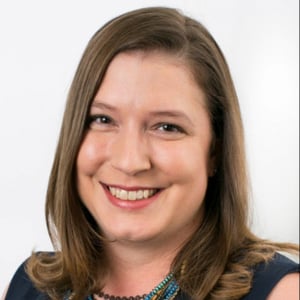
Attorney, Pacific Legal Foundation
Erin Wilcox joined PLF in 2018 and works primarily from Austin, Texas. She litigates cases around the country to secure the inalienable rights of all Americans to live responsibly and productively in their pursuit of happiness.
After graduating from law school, Erin defended the individual rights of employees as a litigator for the National Right to Work Legal Defense Foundation, was an attorney-advisor for the D.C. Public Employee Relations Board, and most recently fought for liberty in the Lone Star State as an attorney with the Texas Public Policy Foundation. During law school, Erin clerked at the Institute for Justice and was a Charles Koch Summer Fellow.
A native Texan, Erin ventured east after high school to earn a B.A. in history and political science from Wake Forest University and a J.D. from the Wake Forest University School of Law. In addition to liberty, Erin’s loves include college football, Texas barbecue, and a well-made Old Fashioned.
Milton R. Underwood Chair in Free Enterprise, Vanderbilt University Law School
Brian Fitzpatrick is the Milton R. Underwood Chair in Free Enterprise and Professor of Law at Vanderbilt Law School, where his research focuses on class action litigation, federal courts, judicial selection, and constitutional law. He is best known for his empirical studies of class action settlements as well as his book The Conservative Case for Class Actions (University of Chicago Press, 2019). Professor Fitzpatrick joined Vanderbilt's law faculty in 2007 after serving as the John M. Olin Fellow at New York University School of Law. He graduated first in his class from Harvard Law School and went on to clerk for Judge Diarmuid O'Scannlain on the U.S. Court of Appeals for the Ninth Circuit and Justice Antonin Scalia on the U.S. Supreme Court. After his clerkships, Professor Fitzpatrick practiced commercial and appellate litigation for several years at Sidley Austin in Washington, D.C., and served as Special Counsel for Supreme Court Nominations to U.S. Senator John Cornyn. Before earning his law degree, Fitzpatrick graduated summa cum laude with a bachelor's of science in chemical engineering from the University of Notre Dame. He has received the Hall-Hartman Outstanding Professor Award, which recognizes excellence in classroom teaching, for his Civil Procedure and Federal Courts courses.
Director of Housing Policy and the American Identity Project, Progressive Policy Institute
Richard D. Kahlenberg is the Director of Housing Policy at the Progressive Policy Institute, and the Director of the American Identity Project, where he is working on to strengthen American identity through public education. The author or editor of seventeen books, he has expertise in education, civil rights, and equal opportunity. Kahlenberg has been called “the intellectual father of the economic integration movement” in K–12 schooling and “arguably the nation’s chief proponent of class-based affirmative action in higher education admissions.” He is also an authority on teachers’ unions, charter schools, community colleges, housing segregation, and labor organizing.
Kahlenberg’s articles have been published in the New York Times, the Washington Post, the Wall Street Journal, The New Republic, and elsewhere. He has appeared on ABC, CBS, CNN, FOX, C-SPAN, MSNBC, and NPR.
Previously, Kahlenberg was a senior fellow at The Century Foundation. a fellow at the Center for National Policy, a visiting associate professor of constitutional law at George Washington University, and a legislative assistant to Senator Charles S. Robb (D-VA). He also serves on the advisory board of the Pell Institute, and the Albert Shanker Institute, and as a professorial lecturer at George Washington University’s Trachtenberg School of Public Policy and Public Administration. In addition, he is the winner of the William A. Kaplin Award for Excellence in Higher Education Law and Policy Scholarship. Reflecting on Kahlenberg’s work on higher education, William G. Bowen and Michael S. McPherson wrote that he “deserves more credit than anyone else for arguing vigorously and relentlessly for stronger efforts to address disparities by socioeconomic status.” He graduated from Harvard College and Harvard Law School and was a rotary scholar at the University of Nairobi School of Journalism.
Executive Director & Secretary, American Civil Rights Project
Dan Morenoff is the executive director at the American Civil Rights Project and an adjunct fellow at the Manhattan Institute.
His work focuses on protecting and, where necessary, restoring the primacy of all Americans' shared civil rights against the identitarian alternative.
Before practicing law, Morenoff served on the legislative staff of Sen. Phil Gramm (R-TX). Morenoff holds a B.A. from Columbia College of Columbia University in the City of New York and a J.D. from the University of Chicago Law School. He has also served as an officer or director of several community organizations in Dallas, Texas.
Julius Kreeger Professor of Law & Criminology, University of Chicago Law School
Sonja Starr joined the University of Chicago law faculty after eleven years teaching at the University of Michigan, where she was the Henry M. Butzel Professor of Law. She previously taught at the University of Maryland and Harvard Law School after graduating from Yale Law. She also clerked for Judges Merrick Garland of the DC Circuit and Mohamed Shahabuddeen of the International Criminal Tribunals for Rwanda and the Former Yugoslavia.
Professor Starr's research focuses on the criminal justice system and on discrimination and disparity (in the criminal process and in other contexts, including employment, education, and health care). Her research blends quantitative empirical work with more traditional legal scholarship. Topics include the use of predictive algorithms in sentencing and bail, legal and empirical analyses of statistical discrimination, racialized medical algorithms, educational diversity and race-conscious policymaking, racial and other disparities in prosecution and sentencing, policies designed to expand employment opportunities for people with criminal records, and how neighborhoods affect employment discrimination patterns. Professor Starr’s work has appeared in, for example, the Quarterly Journal of Economics, the Journal of Political Economy, the Yale Law Journal, and the Stanford and Harvard Law Reviews. She has been the Law and Economics Section Chair of the American Association of Law Schools, a past co-president of the Society for Empirical Legal Studies, and a board member of the American Law and Economics Association. She teaches Criminal Law, the Constitutional Law Workshop, Race and Criminal Justice Policy, and Collateral Consequences of Criminal Convictions.
Attorney, Pacific Legal Foundation
Erin Wilcox joined PLF in 2018 and works primarily from Austin, Texas. She litigates cases around the country to secure the inalienable rights of all Americans to live responsibly and productively in their pursuit of happiness.
After graduating from law school, Erin defended the individual rights of employees as a litigator for the National Right to Work Legal Defense Foundation, was an attorney-advisor for the D.C. Public Employee Relations Board, and most recently fought for liberty in the Lone Star State as an attorney with the Texas Public Policy Foundation. During law school, Erin clerked at the Institute for Justice and was a Charles Koch Summer Fellow.
A native Texan, Erin ventured east after high school to earn a B.A. in history and political science from Wake Forest University and a J.D. from the Wake Forest University School of Law. In addition to liberty, Erin’s loves include college football, Texas barbecue, and a well-made Old Fashioned.

Frances and George Skestos Professor of Law, University of Michigan Law School
Adam C. Pritchard, the Frances and George Skestos Professor of Law, teaches corporate and securities law. He is the author, with Stephen J. Choi, of Securities Regulation: Cases and Analysis, currently in its fifth edition. His research focuses on securities class actions, Securities and Exchange Commission (SEC) enforcement, and the history of securities law in the U.S. Supreme Court. His articles have appeared in the Journal of Law and Economics, American Law and Economics Review, the Journal of Empirical Legal Studies, the Journal of Finance, the Journal of Law, Economics, and Organizations, and various law reviews. Professor Pritchard holds BA and JD degrees from the University of Virginia, as well as an MPP from the Harris School of Public Policy at the University of Chicago. While at Virginia, he was an Olin Fellow in Law and Economics and served as articles development editor of the Virginia Law Review. After graduation, he clerked for the Hon. J. Harvie Wilkinson III of the U.S. Court of Appeals for the Fourth Circuit and served as a Bristow Fellow in the Office of the Solicitor General at the U.S. Department of Justice. After working in private practice, Professor Pritchard served as senior counsel in the Office of the General Counsel of the SEC, where he wrote appellate briefs and studied the effect of recent reforms in the areas of securities fraud litigation. He received the SEC's Law and Policy Award for his work in United States v. O'Hagan, in which the U.S. Supreme Court upheld the misappropriation theory of insider trading. Professor Pritchard has been a visiting professor at the Northwestern University School of Law, the Georgetown University Law Center, and the University of Iowa School of Law. He also has been a visiting scholar at the SEC and a visiting fellow in capital market studies at the Cato Institute. He was previously a member of the FINRA National Adjudicatory Council and the Nasdaq Listing Qualifications Panel.
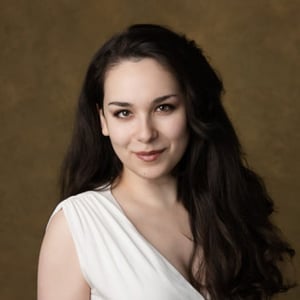
Legal Fellow, Pacific Legal Foundation
Sydney Madigan joined Pacific Legal Foundation in August 2024. Before coming to PLF, she clerked for the Hon. Joseph L. Falvey, Jr., of the United States Court of Appeals for Veterans Claims. Sydney is a graduate of George Mason University Antonin Scalia Law School, where she served as the Federalist Society Chapter president. In addition to her law degree, she holds a degree in mathematics from Christendom College, where she researched the philosophical controversy surrounding computer-assisted proofs.
Sydney and her husband live in Virginia with their children.
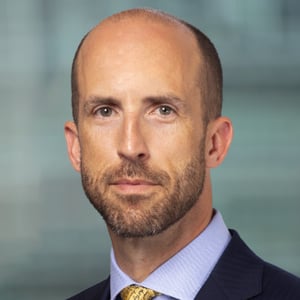
Director of Health Policy Studies, Cato Institute
Michael F. Cannon is the Cato Institute’s director of health policy studies. His scholarship spans public health; regulation of clinicians, medical facilities, pharmaceuticals, and medical devices; employer‐sponsored and other private health insurance; Medicare; Medicaid; CHIP; the Veterans Health Administration; medical malpractice litigation; administrative law; international health systems; political philosophy; and more. Cannon is “an influential health‐care wonk” (Washington Post) and “the most famous libertarian health care scholar” (Washington Examiner). Washingtonian magazine named Cannon one of Washington, DC’s “Most Influential People” in 2021, 2022, and 2023.
Cannon has appeared on ABC, Al Jazeera, BBC, CBS, CNN, CNBC, C‑SPAN, Fox News Channel, NPR, and other broadcast media. His articles have appeared in the Wall Street Journal; the New York Times; USA Today; the Washington Post; the Los Angeles Times; SCOTUSBlog; Forum for Health Economics and Policy; JAMA Internal Medicine; Health Matrix: Journal of Law‐Medicine; Harvard Health Policy Review; the Yale Journal of Health Policy, Law, and Ethics; the Journal of Health Politics, Policy and Law; and Quinnipiac Health Law Journal. His latest book is Recovery: A Guide to Reforming the U.S. Health Sector.
Cannon was previously a domestic policy analyst for the U.S. Senate Republican Policy Committee, where he advised the Senate leadership on health, education, labor, welfare, and the Second Amendment. He is a member of the Board of Advisers of Harvard Health Policy Review and the Federalist Society Regulatory Transparency Project’s FDA & Health Working Group.
Cannon holds an MA in economics and a JM in law and economics from George Mason University and a BA in American government from the University of Virginia.

Executive Vice President, Goldwater Institute
Christina Sandefur is the Executive Vice President at the Goldwater Institute. She develops policies and litigates cases advancing healthcare freedom, free enterprise, private property rights, free speech, and taxpayer rights.
Christina is a co-drafter of the Right to Try initiative, now federal law, which protects terminally ill patients' right to try safe investigational treatments that have been prescribed by their physician but are not yet FDA-approved. She has won important victories for property rights in Arizona and works nationally to promote the Institute's Private Property Rights Protection Act, a state-level reform that requires government to pay owners when regulations destroy property rights and reduce property values.
Christina is the co-author of the book Cornerstone of Liberty: Private Property Rights in 21st Century America (2016). She is a frequent guest on national television and radio programs, has provided expert legal testimony to various legislative committees, and is a frequent speaker at conferences. She is the recipient of the 2018 Buckley Award in recognition of her leadership in the freedom movement, and she is an Advisory Board Member of the Network of enlightened Women. Christina serves on the board of the Phoenix Lawyers Chapter of the Federalist Society and is a member of the executive committee for the Federalist Society's Regulatory Transparency Project: FDA & Health.
Christina is a graduate of Michigan State University College of Law and Hillsdale College.
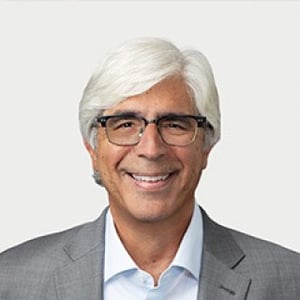
Partner, Gibson Dunn & Crutcher LLP
Theodore J. Boutrous, Jr. is a partner in the Los Angeles office of Gibson Dunn and one of the nation’s leading litigators. He is a member of the American Law Institute and a Fellow of the American Academy of Appellate Lawyers.
As The New York Times has noted, Mr. Boutrous has “a long history of pushing the courts and the public to see the bigger picture on heated issues.” The American Lawyer named Mr. Boutrous the 2019 “Litigator of the Year, Grand Prize Winner” and the Los Angeles and San Francisco Daily Journals in 2021 named him a “Top Lawyer of the Decade.” According to The National Law Journal, which in 2013 named him one of the “100 Most Influential Lawyers in America,” he “is known for his wise, strategic advice to clients in crisis and is a media law star.”
Mr. Boutrous has represented clients in federal and state appellate courts throughout the nation in a wide spectrum of cases, and he is currently serving as Co-Chair of the firm's First Amendment and Free Expression Practice Group. He has argued hundreds of appeals, including before the Supreme Court of the United States, 12 different federal circuit courts of appeals, and 12 different state supreme courts (including 14 arguments in the California Supreme Court), and he has led a multitude of other complex civil, constitutional and criminal matters. Mr. Boutrous has successfully persuaded courts to overturn some of the largest jury verdicts and class actions in history, and prevailed in many cutting-edge cases. In 2011, he successfully represented Walmart before the Supreme Court of the United States in the Dukes case, which unanimously reversed what had been the largest employment class action in history and established important standards governing class actions (Wal-Mart Stores, Inc. v. Dukes). In 2013, he successfully represented the prevailing party in obtaining a unanimous Supreme Court decision enforcing the Class Action Fairness Act (Standard Fire Insurance Co. v. Knowles). Also in 2013, Mr. Boutrous successfully represented plaintiffs in the Supreme Court in a case invalidating California’s prohibition on same-sex marriage, Proposition 8 (Hollingsworth v. Perry), in which he also served as one of the lead trial lawyers and architects of the legal strategy that led to this landmark victory. In 2018, Mr. Boutrous successfully represented CNN and its reporter Jim Acosta in bringing First Amendment and due process claims against then-President Donald Trump and other White House officials, forcing the White House to restore Mr. Acosta’s press credentials. “Litigators of the Week: Gibson Dunn’s Two Teds Score for the Free Press,” The AmLaw Litigation Daily (November 30, 2018). And in 2021, he secured a major victory for Hewlett-Packard Company when the California Court of Appeal affirmed a more than $3 billion verdict in HP’s long-running contract dispute with Oracle Corporation. “Litigators of the Week: Gibson Dunn Protects Its $3B Trial Win for HP Against Oracle on Appeal,” The AmLaw Litigation Daily (June 18, 2021).
As both a crisis management strategist and a seasoned appellate and media lawyer, Mr. Boutrous has extensive experience handling high-profile litigation, media relations and media legal issues. He routinely advises clients in planning how to respond, and in responding, to crises and other especially significant legal problems that attract the media spotlight.
Mr. Boutrous has also received the 2021 Freedom of the Press Award from the Reporters Committee for Freedom of the Press and the Distinguished Leadership Award from PEN America in 2019 for his leadership in advancing First Amendment rights and protecting freedom of expression. As The Hollywood Reporter noted in naming him to its 2022 “Power Lawyers” list, “When issues of free speech are in play, Boutrous is the attorney on speed dial.” Hollywood’s Top 100 Attorneys (March 2022). Mr. Boutrous was also named a “First Amendment Rights Trailblazer” by The National Law Journal in 2020.
Numerous profiles of Mr. Boutrous and his practice have appeared in the media. Prominent mentions include: “Mr. Boutrous, You Have 4 Minutes’: On Rebuttal With Ted Boutrous of Gibson Dunn,” The AmLaw Litigation Daily (August 25, 2022); “Litigator of the Week: How Gibson Dunn Helped Hit Print on Mary Trump’s Best-Seller,” The AmLaw Litigation Daily (July 17, 2020); “Litigation Department of the Year,” The American Lawyer (January 2020); “Litigator of the Week: Gibson Dunn’s Theodore Boutrous Jr. Scores Another Win for the Fourth Estate,”The AmLaw Litigation Daily (September 6, 2019); “Lawyer of the week: Theodore Boutrous Jr, attorney in White House press pass victory,” The Times of London (November 29, 2018); Ted Boutrous, CNN’s Champion, Is Fired Up,” Law.com (November 30, 2018); “Litigator of the Week: From Zero to Hero in Seven Days” The AmLaw Litigation Daily (April 27, 2017); “Litigator of the Week” The AmLaw Litigation Daily (September 8, 2016); “Practice Group Performs In Spotlight and Under Pressure,” Los Angeles and San Francisco Daily Journal (March 14, 2012); “Litigator of the Week,” The AmLaw Litigation Daily (June 23, 2011); “Lawyer of the Week,” The Times of London (June 30, 2011); “Appellate Lawyer of the Week,” National Law Journal (March 23, 2011); “Litigation Department of the Year,” The American Lawyer (January 2016); “Litigation Department of the Year,” The American Lawyer (January 2012); “Litigation Department of the Year,” The American Lawyer (January 2010); and “He’s a Hired Gun of the Highest Caliber,” The Los Angeles Times (June 24, 2007).
In 2025, The Daily Journal recognized Mr. Boutrous with its inaugural Distinguished Counsel award, which honors lawyers “whose consistent excellence and enduring influence in California’s legal community have earned them a place among the Top 100 lawyers for 15 years or more,” and has repeatedly named him to its list of “Top 100 Lawyers” and “Leading Commercial Litigators” in California for over two decades. The Hollywood Reporter, featuring him in Power Lawyers 2021: Hollywood’s Top 100 Attorneys, declared that “Boutrous is there when an industry’s future rides on a big argument.” He has been named a California “Litigation Star” in Benchmark Litigation, as well as a “National Practice Area Star.” Chambers USA ranks him as a leading lawyer in five different categories, describing him as “an absolute star,” with clients praising his skills as “an amazing orator” and his “incredible knack of picking the winning argument and his oral advocacy skills are peerless. He picks the right point in response to every question without even blinking.” The Legal 500 named Mr. Boutrous a “Leading Lawyer” for Supreme Court and Appellate litigation, calling him a “renowned advocate” and “the preeminent authority on punitive damages defenses in the U.S.” Lawdragon recognizes Mr. Boutrous as one of its distinguished "Lawdragon Legends," an honor reserved for those who have appeared in Lawdragon's guide at least ten times since its inception in 2005. Over the years, he has been named to the following Lawdragon lists: 500 Leading Litigators in America, Leading Global Litigators, 500 Leading Lawyers in America, 500 Leading Global Entertainment, Sports & Media Lawyers, 500 Global Leaders in Crisis Management, and 100 Leading AI & Tech Legal Advisors.
Mr. Boutrous is a frequent commentator on legal issues. His articles include: Spare the ‘Dreamers’ a Nightmare by According Them Due Process,” The Wall Street Journal (May 2, 2017); “Poor Children Need a New Brown v. Board of Education,” The Wall Street Journal (August 28, 2016); “A First Amendment Blind Spot,” The Wall Street Journal (May 27, 2014); “California Kids Go to Court to Demand a Good Education,” The Wall Street Journal (January 28, 2014); “A Radical Departure on Press Freedom,” The Wall Street Journal (May 23, 2013); “A Killer’s Notebook, a Reporter’s Rights,” The New York Times (April 9, 2013); and “Broadcast ‘Indecency’ on Trial,” The Wall Street Journal (January 17, 2012).
Mr. Boutrous is a member of the Steering Committee of the Reporters Committee for Freedom of the Press and was a recipient of its 2021 Freedom of the Press Awards. He also sits on the Advisory Board of the International Women’s Media Foundation, which named him its 2015 Leadership Honoree. In addition, he is a member of the Advisory Board of the United States Court of Appeals for the Ninth Circuit, which advises the Chief Judge on matters related to the effective administration of the courts in the Ninth Circuit.
Mr. Boutrous received his law degree, summa cum laude, from the University of San Diego School of Law in 1987, where he was Valedictorian and Editor-in-Chief of the San Diego Law Review.
Mr. Boutrous is admitted to practice in California, New York, and the District of Columbia.

Nuziard v. MBDA: What is the Future of Equal Protection Litigation?
Daniel Lennington, William E. Trachman
On March 5, 2024, U.S. District Court Judge Mark Pittman of the Northern District of...
Nuziard v. MBDA: What is the Future of Equal Protection Litigation?
Daniel Lennington, William E. Trachman
On March 5, 2024, U.S. District Court Judge Mark Pittman of the Northern District of...
Déjà Vu all over again? The Return of Network Neutrality
Justin (Gus) Hurwitz, Raymond Ku
In 2002, under Chairman Michael Powell, the FCC passed the Cable Modem Order which classified...
Déjà Vu all over again? The Return of Network Neutrality
Justin (Gus) Hurwitz, Raymond Ku
In 2002, under Chairman Michael Powell, the FCC passed the Cable Modem Order which classified...
Discrimination By Proxy?: Arlington Heights Cases in the Post Students for Fair Admissions Era
Brian T. Fitzpatrick, Richard D. Kahlenberg, Dan Morenoff, Sonja B. Starr, Erin Wilcox
In the consolidated Students for Fair Admissions cases, the Supreme Court held unlawful the use of race...
Discrimination By Proxy?: Arlington Heights Cases in the Post Students for Fair Admissions Era
Brian T. Fitzpatrick, Richard D. Kahlenberg, Dan Morenoff, Sonja B. Starr, Erin Wilcox
In the consolidated Students for Fair Admissions cases, the Supreme Court held unlawful the use of race...
Macquarie Infrastructure Corp. v. Moab Partners, L.P. - Post-Decision SCOTUScast
Adam Christopher Pritchard
Adam Pritchard
On April 12, 2024, the Supreme Court issued its ruling in Macquarie Infrastructure Corp. v....
The Supreme Court of Texas Addresses Exception to State Anti-Abortion Law
Sydney D. Madigan
In the wake of the U.S. Supreme Court’s 2022 reversal of Roe v. Wade,[1] the...
Explainer Episode 65 - Reviewing Michael Cannon's Book "Recovery"
Michael F. Cannon, Christina Sandefur
RTP's Fourth Branch Podcast
In this RTP explainer episode 65, we are joined by Michael Cannon, Director of Health...
Litigation Update: Climate Lawsuits and Status at the U.S. Supreme Court
Theodore J. Boutrous
Since 2017, more than thirty states, counties, and municipalities have filed lawsuits against energy producers...