
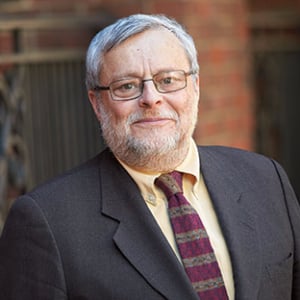
Dwight D. Opperman Professor of Law; Director, Center for Labor, New York University School of Law
Samuel Estreicher is a nationally preeminent scholar in US and international-comparative labor and employment law and arbitration law. He has authored more than a dozen books, including Beyond Elite Law: Access to Civil Justice in America (with Joy Radice, Cambridge Univ. 2016); leading casebooks on legislation and regulatory state, labor law and employment discrimination and employment law; and published more than 200 articles in professional and academic journals. He served as Chief Reporter for the American Law Institute’s Restatement of Employment Law (2015). After clerking for Judge Harold Leventhal of the US Court of Appeals for the DC Circuit, practicing in a labor law firm, and clerking for Justice Lewis F. Powell Jr. of the US Supreme Court, Prof. Estreicher joined the NYU School of Law faculty in 1978. In addition to serving as counsel to major law firms, he is the former secretary of the Labor and Employment Law Section of the American Bar Association, a former chair of the Committee on Labor and Employment Law of the Association of the Bar of the City of New York.15). He maintains an active appellate and ADR practice. The Labor and Employment Research Association awarded him its 2010 Susan C. Eaton Award for Outstanding Scholar-Practitioner. In recent years, Estreicher also has published work in public international law and authored several briefs in the Supreme Court and US courts of appeals on employment and US foreign relations law issues. Prof. Estreicher received his BA from Columbia College, his MS in industrial relations from Cornell University, and his JD from Columbia Law School, where he was editor-in-chief of the Columbia Law Review. He is a member of the College of Labor and Employment Lawyers and was appointed in 2016 by the UN Secretary General as a member of the UN’s Internal Justice Commission.
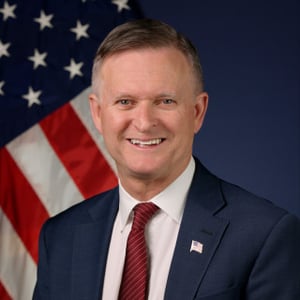
Deputy Secretary of Transportation, US Department of Transportation
Steven G. Bradbury was sworn in as the Deputy Secretary of Transportation on March 13, 2025, following his confirmation by the U.S. Senate on March 11, 2025. In this role, he oversees the Department’s operating administrations and spearheads initiatives to ensure a safe, efficient, and modern transportation system that strengthens economic productivity and global competitiveness. Deputy Secretary Bradbury also assists Secretary Duffy in managing the Department’s activities, including its workforce of over 58,000 employees and an annual budget exceeding $109 billion.
Bradbury previously served as the 23rd General Counsel of the Department of Transportation from 2017 to 2021, as the Acting Deputy Secretary from 2019, and as Acting Secretary of Transportation in 2021. As General Counsel, he was the chief legal officer, advising on all legal matters and ensuring the integrity and compliance of the Department’s policies and programs.
Before rejoining DOT, Bradbury was a Distinguished Fellow at The Heritage Foundation from December 2022 to March 2025. He has extensive experience in the public and private sector, having served as Principal Deputy and Acting Assistant Attorney General at the U.S. Department of Justice and as a partner at Kirkland & Ellis LLP and Dechert LLP. Earlier in his career, he clerked for Justice Clarence Thomas and Judge James L. Buckley.
Bradbury holds a J.D., magna cum laude, from the University of Michigan Law School and a B.A. in English from Stanford University.
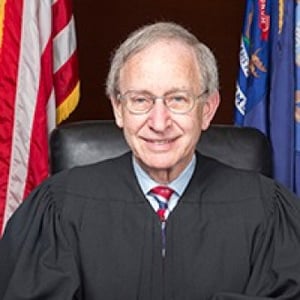
Justice, Michigan Supreme Court
Stephen Markman was appointed Justice of the Michigan Supreme Court on October 1, 1999. He served as the Chief Justice from 2017-2019. Before his appointment, he served as Judge on the Michigan Court of Appeals from 1995-1999. Prior to this, he practiced law with the firm of Miller, Canfield, Paddock & Stone in Detroit.
From 1989-1993, Justice Markman served as United States Attorney, or federal prosecutor, in Michigan, after having been nominated by President George H. W. Bush and confirmed by the United States Senate. From 1985-1989, he served as Assistant Attorney General of the United States, after having been nominated by President Ronald Reagan and confirmed by the United States Senate. In that position, he headed the Department of Justice’s Office of Legal Policy, which served as the principal policy development office within the Department, and which coordinated the federal judicial selection process. Prior to this, he served for seven years as Chief Counsel of the United States Senate Subcommittee on the Constitution, and as Deputy Chief Counsel of the United States Senate Judiciary Committee.
Justice Markman has authored articles for such publications as the University of Michigan Journal of Law Reform, the Detroit College of Law Review, the Stanford Law Review, the University of Chicago Law Review, the American Criminal Justice Law Review, the Barrister’s Law Journal, the Harvard Journal of Law & Public Policy, and the American University Law Review. He has also served as a contributing editor of National Review magazine, and has authored chapters in such books as “In the Name of Justice: The Aims of the Criminal Law,” “Still the Law of the Land,” and “Originalism: A Quarter Century of Debate.”
Justice Markman has taught constitutional law at Hillsdale College since 1993. He has served on the Board of Directors of the Western Michigan University Thomas M. Cooley Law School. He traveled to Ukraine on two occasions on behalf of the State Department, to provide assistance in the development of that nation’s post-Soviet constitution. He is a Fellow of the Michigan Bar Foundation, a Master of the Bench of the Inns of Court, and a member of the One Hundred Club. He has spoken before hundreds of youth, civic, charitable, and legal groups throughout Michigan and nationally, and has coached Little League baseball and basketball. He lives with his wife Mary Kathleen in Mason, and has two sons, James and Charles.
Justice Markman was re-elected to the Supreme Court in 2000, 2004, and 2012. His present term expires January 1, 2021.
Partner, Gibson, Dunn & Crutcher LLP
Julian W. Kleinbrodt is a partner in the San Francisco office of Gibson, Dunn & Crutcher. He practices in the firm’s Litigation Department and is a member of the firm’s Antitrust and Competition Practice Group.
Mr. Kleinbrodt has experience handling a wide variety of antitrust matters through trial and appeal. He has particular experience with claims involving price-fixing, monopolization, attempted monopolization, refusals to deal, tying, bundling, exclusive dealing, disparagement, market allocation and division, and no-poach provisions. For example, Mr. Kleinbrodt was part of a team that defended a major technology company in a multi-week bench trial dubbed the “Super Bowl of Antitrust.” Mr. Kleinbrodt prevailed on behalf of that same company in multiple federal appeals, including successfully arguing before the Ninth Circuit Court of Appeals. Mr. Kleinbrodt also has obtained dismissals on the pleadings of major putative antitrust class actions, won denial of class certification in sweeping nationwide cases, and prevailed at trial and after trial on behalf of multiple clients—including matters recognized by the Dailey Journal as its Top Verdicts of 2018, 2019, and 2021.
Mr. Kleinbrodt has additional experience representing clients in civil and criminal investigations by the U.S. Department of Justice and Federal Trade Commission. Mr. Kleinbrodt also regularly counsels clients on antitrust compliance and has authored multiple articles on competition issues.
In addition to his competition practice, Mr. Kleinbrodt is a member of the firm’s Labor & Employment Practice Group. He has represented clients across the country, with a particular focus on discrimination and class action claims. As a representative example, Mr. Kleinbrodt helped to secure denial of class certification on behalf of UPS in a putative state-wide class action of Kentucky workers alleging disability discrimination and then secured affirmance of that order on appeal, Hughes v. UPS Supply Chain Sols., Inc., 2021 WL 3008755 (Ky. Ct. App. July 16, 2021).
Mr. Kleinbrodt received his law degree magna cum laude from the University of Michigan School of Law in 2014, where he was elected to the Order of the Coif and served on the Michigan Law Review’s editorial board. Before joining the firm, Julian served as a law clerk to the Honorable Stephen V. Wilson of the United States District Court for the Central District of California. He graduated magna cum laude from the University of California, Los Angeles in 2011 and was a member of Phi Beta Kappa.
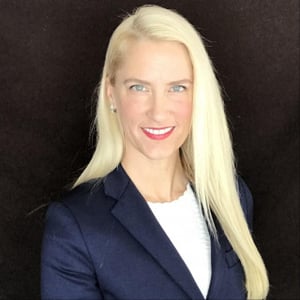
Former NAAG Antitrust Task Force Chair and Former Assistant Attorney General at Wisconsin Department of Justice
As former Chair of the NAAG Multistate Antitrust Task Force and as Wisconsin's Assistant Attorney General for Antitrust from 2005-2024, Gwendolyn has extensive experience litigating antitrust cases on behalf of the State of Wisconsin- including merger enforcement, cartel prosecutions. She was the lead attorney in State of Wisconsin v. Indivior, where she led 42 Attorneys General in their successful case against the manufacturer of Suboxone, resulting in a $102.5 million settlement. Gwendolyn was also on the trial team for the States' challenge to the T-Mobile/Sprint merger.
Gwendolyn was co-chair of the Pharmaceutical Industry Working Group in the National Association of Attorneys General Antitrust Task Force, and was a delegate to the “Future of Pharma Mergers” international initiative spearheaded by the FTC, and lead the Reimagining Pharma Attorney Generals Advisory Group.
Active in the American Bar Association, she is a member of the Antitrust Section Council. Gwendolyn was also the 2023 recipient of the NAAG (nationwide) Attorney General Career Staff Award, and was named as a “Woman Making History” by Wisconsin Lawyer magazine in 2024.
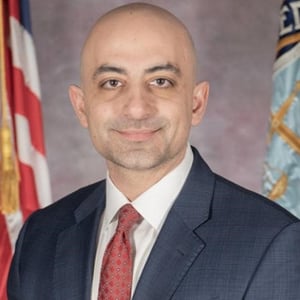
Director, Bureau of Consumer Protection, Federal Trade Commission
Chris Mufarrige served in the first Trump Administration as a Senior Adviser to the Director and Deputy Director of the Consumer Financial Protection Bureau, advising on enforcement, rulemaking, and supervisory exams relating to the country’s largest banks and nonbank financial institutions. Most recently, he was Commissioner Melissa Holyoak’s Chief of Staff and Attorney Adviser. He has also worked at private law firms and as an in-house lawyer. In his free time, Mufarrige taught a class on financial services and consumer protection at George Mason University’s Antonin Scalia Law School.
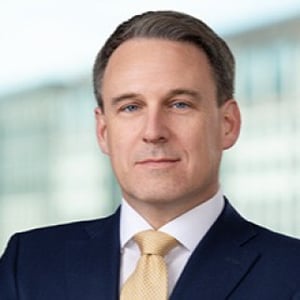
Chair, Global Antitrust Law Practice Group, Morrison Foerster
Alex Okuliar is Co-Chair of Morrison Foerster’s Global Antitrust Law Practice Group. He is the former Deputy Assistant Attorney General for Civil Antitrust Enforcement at the U.S. Department of Justice and a former advisor at the Federal Trade Commission.
Alex’s practice spans merger review, civil litigation, and criminal investigations. Over his twenty-five-year career, Alex has worked on nearly one thousand deals. He has deep experience guiding clients through the complex global merger clearance process and has litigated agency merger challenges through trial. He has also helped clients succeed in a wide range of federal and state cases, including class actions and private party disputes alleging price fixing, monopolization, group boycotts, market allocation, and tying. His understanding of the agency processes from the inside allows him to offer expert, timely, and practical advice to clients navigating merger and conduct investigations by the U.S. Department of Justice, the Federal Trade Commission, state Attorneys General, and foreign agencies. Alex’s work has been recognized by leading industry publications such as Chambers, The Legal 500 U.S., and Global Competition Review.
Outside of client work, Alex is a prolific thought leader and was recognized as a 2024 Top Author for Antitrust & Trade Regulation by JD Supra’s Readers’ Choice Awards. He currently serves as the co-chair of the ABA Antitrust Law Section’s Joint Conduct Committee and is the former chair of the Section’s Intellectual Property Committee and co-chair of the 2023 Antitrust Fall Forum on Artificial Intelligence. He is also a member of the Corporations, Securities & Antitrust Executive Committee of The Federalist Society for Law and Public Policy Studies.
Before law school, Alex co-founded and sold an online technology company. Alex received his B.S. in economics and B.A. with distinction in history from the Wharton School of the University of Pennsylvania and his J.D. from Vanderbilt University Law School.
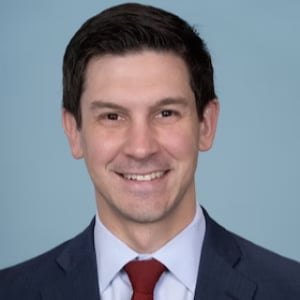
General Counsel, U.S. Commodity Futures Trading Commissioin
Tyler Badgley is the General Counsel at the Commodity Futures Trading Commission. In that role, Mr. Badgley leads the agency’s Legal Division and serves as the Commission’s chief legal advisor. He was appointed General Counsel in January 2026.
Prior to joining the CFTC, Mr. Badgley served as the Deputy General Counsel at the U.S. Department of the Treasury and was the first Executive Secretary under Secretary Scott K.H. Bessent. Mr. Badgley was previously a Senior Counsel at the U.S. Chamber Litigation Center, the litigation arm of the U.S. Chamber of Commerce. There, he focused on complex litigation and regulatory issues, particularly in connection with capital markets.
Mr. Badgley also practiced law at Sullivan & Cromwell LLP, served as a Special Counsel to the U.S. Senate Committee on the Judiciary, and began his legal career as a law clerk for the Honorable Edith H. Jones of the U.S. Court of Appeals for the Fifth Circuit. Mr. Badgley graduated Order of the Coif from the University of Virginia School of Law, where he served as Articles Editor for the Virginia Law Review. He also received his undergraduate degree in Economics and Government from the University of Virginia.
Partner, Gibson, Dunn & Crutcher LLP
Julian W. Kleinbrodt is a partner in the San Francisco office of Gibson, Dunn & Crutcher. He practices in the firm’s Litigation Department and is a member of the firm’s Antitrust and Competition Practice Group.
Mr. Kleinbrodt has experience handling a wide variety of antitrust matters through trial and appeal. He has particular experience with claims involving price-fixing, monopolization, attempted monopolization, refusals to deal, tying, bundling, exclusive dealing, disparagement, market allocation and division, and no-poach provisions. For example, Mr. Kleinbrodt was part of a team that defended a major technology company in a multi-week bench trial dubbed the “Super Bowl of Antitrust.” Mr. Kleinbrodt prevailed on behalf of that same company in multiple federal appeals, including successfully arguing before the Ninth Circuit Court of Appeals. Mr. Kleinbrodt also has obtained dismissals on the pleadings of major putative antitrust class actions, won denial of class certification in sweeping nationwide cases, and prevailed at trial and after trial on behalf of multiple clients—including matters recognized by the Dailey Journal as its Top Verdicts of 2018, 2019, and 2021.
Mr. Kleinbrodt has additional experience representing clients in civil and criminal investigations by the U.S. Department of Justice and Federal Trade Commission. Mr. Kleinbrodt also regularly counsels clients on antitrust compliance and has authored multiple articles on competition issues.
In addition to his competition practice, Mr. Kleinbrodt is a member of the firm’s Labor & Employment Practice Group. He has represented clients across the country, with a particular focus on discrimination and class action claims. As a representative example, Mr. Kleinbrodt helped to secure denial of class certification on behalf of UPS in a putative state-wide class action of Kentucky workers alleging disability discrimination and then secured affirmance of that order on appeal, Hughes v. UPS Supply Chain Sols., Inc., 2021 WL 3008755 (Ky. Ct. App. July 16, 2021).
Mr. Kleinbrodt received his law degree magna cum laude from the University of Michigan School of Law in 2014, where he was elected to the Order of the Coif and served on the Michigan Law Review’s editorial board. Before joining the firm, Julian served as a law clerk to the Honorable Stephen V. Wilson of the United States District Court for the Central District of California. He graduated magna cum laude from the University of California, Los Angeles in 2011 and was a member of Phi Beta Kappa.
Former NAAG Antitrust Task Force Chair and Former Assistant Attorney General at Wisconsin Department of Justice
As former Chair of the NAAG Multistate Antitrust Task Force and as Wisconsin's Assistant Attorney General for Antitrust from 2005-2024, Gwendolyn has extensive experience litigating antitrust cases on behalf of the State of Wisconsin- including merger enforcement, cartel prosecutions. She was the lead attorney in State of Wisconsin v. Indivior, where she led 42 Attorneys General in their successful case against the manufacturer of Suboxone, resulting in a $102.5 million settlement. Gwendolyn was also on the trial team for the States' challenge to the T-Mobile/Sprint merger.
Gwendolyn was co-chair of the Pharmaceutical Industry Working Group in the National Association of Attorneys General Antitrust Task Force, and was a delegate to the “Future of Pharma Mergers” international initiative spearheaded by the FTC, and lead the Reimagining Pharma Attorney Generals Advisory Group.
Active in the American Bar Association, she is a member of the Antitrust Section Council. Gwendolyn was also the 2023 recipient of the NAAG (nationwide) Attorney General Career Staff Award, and was named as a “Woman Making History” by Wisconsin Lawyer magazine in 2024.
Director, Bureau of Consumer Protection, Federal Trade Commission
Chris Mufarrige served in the first Trump Administration as a Senior Adviser to the Director and Deputy Director of the Consumer Financial Protection Bureau, advising on enforcement, rulemaking, and supervisory exams relating to the country’s largest banks and nonbank financial institutions. Most recently, he was Commissioner Melissa Holyoak’s Chief of Staff and Attorney Adviser. He has also worked at private law firms and as an in-house lawyer. In his free time, Mufarrige taught a class on financial services and consumer protection at George Mason University’s Antonin Scalia Law School.
Chair, Global Antitrust Law Practice Group, Morrison Foerster
Alex Okuliar is Co-Chair of Morrison Foerster’s Global Antitrust Law Practice Group. He is the former Deputy Assistant Attorney General for Civil Antitrust Enforcement at the U.S. Department of Justice and a former advisor at the Federal Trade Commission.
Alex’s practice spans merger review, civil litigation, and criminal investigations. Over his twenty-five-year career, Alex has worked on nearly one thousand deals. He has deep experience guiding clients through the complex global merger clearance process and has litigated agency merger challenges through trial. He has also helped clients succeed in a wide range of federal and state cases, including class actions and private party disputes alleging price fixing, monopolization, group boycotts, market allocation, and tying. His understanding of the agency processes from the inside allows him to offer expert, timely, and practical advice to clients navigating merger and conduct investigations by the U.S. Department of Justice, the Federal Trade Commission, state Attorneys General, and foreign agencies. Alex’s work has been recognized by leading industry publications such as Chambers, The Legal 500 U.S., and Global Competition Review.
Outside of client work, Alex is a prolific thought leader and was recognized as a 2024 Top Author for Antitrust & Trade Regulation by JD Supra’s Readers’ Choice Awards. He currently serves as the co-chair of the ABA Antitrust Law Section’s Joint Conduct Committee and is the former chair of the Section’s Intellectual Property Committee and co-chair of the 2023 Antitrust Fall Forum on Artificial Intelligence. He is also a member of the Corporations, Securities & Antitrust Executive Committee of The Federalist Society for Law and Public Policy Studies.
Before law school, Alex co-founded and sold an online technology company. Alex received his B.S. in economics and B.A. with distinction in history from the Wharton School of the University of Pennsylvania and his J.D. from Vanderbilt University Law School.
General Counsel, U.S. Commodity Futures Trading Commissioin
Tyler Badgley is the General Counsel at the Commodity Futures Trading Commission. In that role, Mr. Badgley leads the agency’s Legal Division and serves as the Commission’s chief legal advisor. He was appointed General Counsel in January 2026.
Prior to joining the CFTC, Mr. Badgley served as the Deputy General Counsel at the U.S. Department of the Treasury and was the first Executive Secretary under Secretary Scott K.H. Bessent. Mr. Badgley was previously a Senior Counsel at the U.S. Chamber Litigation Center, the litigation arm of the U.S. Chamber of Commerce. There, he focused on complex litigation and regulatory issues, particularly in connection with capital markets.
Mr. Badgley also practiced law at Sullivan & Cromwell LLP, served as a Special Counsel to the U.S. Senate Committee on the Judiciary, and began his legal career as a law clerk for the Honorable Edith H. Jones of the U.S. Court of Appeals for the Fifth Circuit. Mr. Badgley graduated Order of the Coif from the University of Virginia School of Law, where he served as Articles Editor for the Virginia Law Review. He also received his undergraduate degree in Economics and Government from the University of Virginia.
Special Counsel, Wiley Rein LLP
Michael Showalter is a Special Counsel at Wiley Rein LLP. He received his J.D. from Yale Law School in 2016.
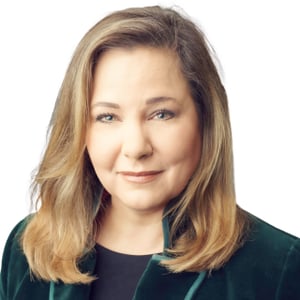
Senior Advisor, Freshfields
Christine is a senior advisor in our antitrust, competition and trade practice with more than 25 years of public and private sector experience at the intersection of law, policy and politics. Based in Washington, DC, she counsels senior executives and boards of directors on how to navigate complex and evolving legal and regulatory regimes to achieve their desired business goals.
Most recently, Christine served as a Commissioner at the Federal Trade Commission (FTC) where she helped shape policies and enforcement actions in the fields of antitrust, consumer privacy and data security and consumer protection. During her tenure, she also testified before the US Congress on several occasions and represented the FTC in bilateral and multilateral discussions abroad.
Before joining the FTC, Christine was a Senior Vice President at Delta Air Lines where she oversaw the carrier’s regulatory and international legal matters. Prior to moving in-house, she was a partner at two international law firms where she worked with clients to achieve regulatory clearance for multi-jurisdictional mergers and to defend businesses in high-stakes investigations.
Her broad sector experience ranges from aircraft and automobiles to veterinary services, video games and virtual reality. She has worked extensively in the highly regulated fields of airlines, healthcare and pharmaceuticals.
After leaving the FTC last year, Christine founded an organization to provide safe housing and comprehensive support services to survivors of human trafficking and sexual exploitation. Freshfields provided pro bono services to the organization including corporate formation. She will continue supporting this organization alongside client practice.
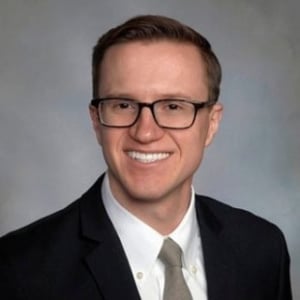
Chief Counsel for the Administrative State, Regulatory Reform, and Antitrust, House Committee on the Judiciary
Adam Cella is currently the Chief Counsel for the Administrative State, Regulatory Reform, and Antitrust at the House Committee on the Judiciary. Formerly, he was an attorney-advisor at the U.S. Federal Trade Commission. Prior to joining the FTC, he was an associate at Axinn, Veltrop & Harkrider LLP.

Bissonnette v. LePage Bakeries Park St., LLC - Post-Decision SCOTUScast
Samuel Estreicher
Samuel Estreicher
On April 12, 2024, the Supreme Court issued its ruling in Bissonnette v. LePage Bakeries...
Topics
Second Circuit Rejects Preemption Challenge to New York’s Broadband Rate Regulation
On April 26, the U.S. Court of Appeals for the Second Circuit issued its decision...
Trump v. United States - Post-Argument SCOTUScast
Steven Gill Bradbury
Steven Bradbury
On April 25, 2024, the Supreme Court heard oral argument in Trump v. United States....
Toward a More Confident State Constitutionalism
Steve J. Markman
Federalist Society Review, Volume 25
This article is adapted from a speech Justice Markman delivered to the Florida Annual Education...
FTC’s Sweeping Non-Compete Ban: Summary, States’ Views, and Litigation Challenges
Julian W. Kleinbrodt, Gwendolyn J. Lindsay Cooley, Christopher Mufarrige, Alexander P. Okuliar, Tyler S. Badgley
On April 23, 2024, the FTC voted 3-2 to adopt a final rule banning the use...
FTC’s Sweeping Non-Compete Ban: Summary, States’ Views, and Litigation Challenges
Julian W. Kleinbrodt, Gwendolyn J. Lindsay Cooley, Christopher Mufarrige, Alexander P. Okuliar, Tyler S. Badgley
On April 23, 2024, the FTC voted 3-2 to adopt a final rule banning the use...
Topics
The FTC’s Weak Case Against Amazon
Late last year, the Federal Trade Commission (FTC), joined by seventeen state attorneys general, filed...
Corner Post and 28 U.S.C. § 2401(a): Not Much to Look At?
Michael J. Showalter
Federalist Society Review, Volume 25
This term the U.S. Supreme Court will decide Corner Post, Inc. v. Board of Governors...
Christine Wilson’s Expectations for Antitrust and the FTC
Christine S. Wilson, Adam Cella
Join us on Tuesday, April 30th at 12:00 PM ET for a special lunch panel...
Topics
Noncompetes, Overtime, and the Status Quo: How Agency Rulemaking Distorts Federal Policy and Why Only Courts Can Fix It
Last week was a busy one for the Biden administration. It issued a raft of...