
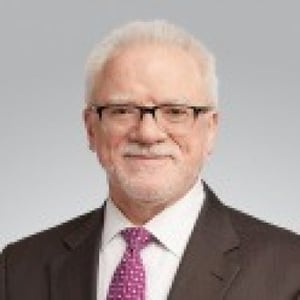
Partner, Williams & John LTD
David L. Applegate is a partner of Williams & John Ltd., where he chairs the firm's intellectual property practice group and is a member of the commercial litigation practice group. He focuses his practice on patent, trademark, copyright, trade secret, unfair competition, and business litigation and arbitration, and on U. S. Supreme Court and related amicus brief practice.
Mr. Applegate is a Fellow of Litigation Counsel of America, the Intellectual Property Institute, and the Diversity Law Institute; a Senior Master Member of the Richard Linn American Inn of Court; a Past President of the Chicago Lincoln American Inn of Court; and a Legal Policy Advisor to The Heartland Institute. He is "AV Preeminent" peer review rated by Martindale-Hubbell, reflecting the highest peer recognition for both ethical standards and legal ability, and has been named by his peers for inclusion in Illinois Leading Lawyers and IllinoisSuper Lawyers in both commercial and intellectual property litigation for decades.
Throughout his career, Mr. Applegate has represented corporations and individuals as both plaintiffs and defendants in state and federal litigation at the trial and appellate levels. He has tried multiple cases to verdict in both jury and bench trials nationwide and has argued appeals in the Illinois appellate courts and the U.S. Court of Appeals for the Seventh and Federal Circuits; his amicus brief was cited twice in the U. S. Supreme Court’s 5-4 majority opinion in the Janus case. Mr. Applegate also has extensive commercial arbitration and private mediation experience in both national and international dispute resolution forums, and is a former member of the Chicago International Dispute Resolution Association. In 2001, the U. S. District Court for the Northern District of Illinois and the Chicago Chapter of the Federal Bar Association recognized him for his outstanding individual commitment to pro bono service to indigent clients throughout the Northern District of Illinois.
In addition to his legal practice, Mr. Applegate has written and spoken frequently on matters of law and public policy, including on both local and national television and radio. He is an avid collector and amateur historian of original comic strip and editorial cartoon art, and has written extensively in that field as well for over three decades.
CoFounder, RightsClick
Steven’s extensive background in IP law and policy began as an attorney for the U.S. Senate Judiciary Committee, after which, he served as senior counsel for Policy and International Affairs at the U.S. Copyright Office and then as Chief Intellectual Property Counsel for the Global Intellectual Property Center of the U.S. Chamber of Commerce. Before co-founding RightsClick, he started the IP consultancy Sentinel Worldwide, and teaches copyright law at George Washington University Law School.
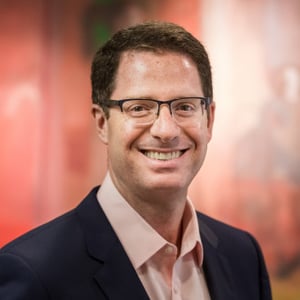
Partner, O’Melveny & Myers
Brian P. Brooks is the Managing Partner of Valor Capital Group. He has served as CEO of the Bitfury Group and CEO of digital asset exchange and marketplace Binance.US.
Mr. Brooks became Acting Comptroller of the Currency upon the resignation of the 31st Comptroller of the Currency Joseph M. Otting as a result of his designation as First Deputy Comptroller by Treasury Secretary Steven T. Mnuchin pursuant to his authority under 12 USC § 4.
As Acting Comptroller of the Currency, Mr. Brooks was the administrator of the federal banking system and chief officer of the Office of the Comptroller of the Currency (OCC). The OCC supervises nearly 1,200 national banks, federal savings associations, and federal branches and agencies of foreign banks that conduct approximately 70% of all banking business in the United States. The mission of the OCC is to ensure that national banks and federal savings associations operate in a safe and sound manner, provide fair access to financial services, treat customers fairly, and comply with applicable laws and regulations.
The Comptroller also serves as a director of the Federal Deposit Insurance Corporation and a member of the Financial Stability Oversight Council and the Federal Financial Institutions Examination Council.
Prior to becoming Acting Comptroller, Mr. Brooks served as Senior Deputy Comptroller and Chief Operating Officer. In this role, he oversaw OCC bank supervision, bank supervision policy, economics, supervisory system and analytical support, systemic risk identification support and specialty supervision, and innovation. He also served as a member of the OCC's Executive Committee and was the Chair of the Technology and Systems Subcommittee, since joining the agency in April 2020.
Prior to joining the OCC, Mr. Brooks served as Chief Legal Officer of Coinbase Global, Inc., where he headed the legal, compliance, audit, investigations, and government relations functions for the company, which served 20 million customers. He held this position since September 2018.
From 2014-2018, Mr. Brooks served as Executive Vice President, General Counsel, and Corporate Secretary of the $3.2 trillion Fannie Mae. Prior to joining Fannie Mae, he served as a Vice Chairman of OneWest Bank, N.A., from 2011 to 2014. Prior to joining OneWest, he served managing partner of the Washington, D.C. office of the global law firm O'Melveny & Myers LLP, where he also served as chair of the firm's financial services practice group. Prior to joining the OCC, Mr. Brooks also served on the Boards of Directors of Avant, Inc. and Fannie Mae, and also served as an advisor to a number of technology startups.
Mr. Brooks holds a bachelor’s degree from Harvard University in government and a law degree from the University of Chicago.

Professor Emeritus of Law, Antonin Scalia Law School, George Mason University
In 1994, Professor of Law Michael I. Krauss became the law school's first recipient of the university's "Teacher of the Year" award for his engaging and challenging approach in the classroom. Born in the United States but raised in Canada, Professor Krauss speaks legalese in two languages. He earned his B.A. cum laude from Carleton University, his LL.B. summa cum laude from the Université de Sherbrooke, and his LL.M. from Yale Law School, where he was a Commonwealth Scholar. He was Columbia University's Law and Economics Fellow in 1981. He has been teaching at George Mason since 1987 and also has taught at the law schools of Seattle University, the University of Toronto, and the Université de Sherbrooke.
Hired as a law clerk by Justice Louis-Philippe Pigeon of Canada's Supreme Court, Professor Krauss practiced law for Quebec City's largest law firm before entering academia. He also served for five years on Québec's Human Rights Commission. A Salvatori Fellow of the Heritage Foundation and an academic fellow of the Foundation for the Defense of Democracies, Professor Krauss sits on the advisory boards of several think tanks. He served as president of the Virginia Association of Scholars and on the Board of Governors of the Education Section of the Virginia State Bar, and is currently a member of the Board of Governors of the National Association of Scholars.
Professor Krauss teaches Torts, Legal Ethics and Jurisprudence, and has a strong interest in national security issues. His research on torts and ethics is nationally known. He co-authored the first edition of Legal Ethics in a Nutshell in May 2003. This book digests the Model Rules in an engaging and often critical fashion. The second edition was published in 2006. Professor Krauss is now under contract with West Publications to produce an innovative textbook on Products Liability in late 2008.
Professor Krauss received his B.A. cum laude from Carleton University, his LL.B. summa cum laude from the Université de Sherbrooke, and his LL.M. from Yale Law School.
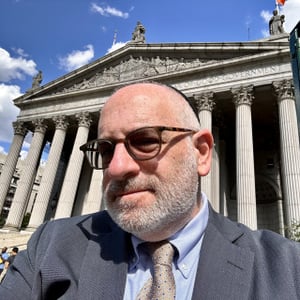
Owner, Coleman Law Firm, PC
Ron Coleman has shaped the law relating to the use and abuse of intellectual property as a tool of competition. A leader in social media for lawyers, his blog about copyright, trademark and free speech, LIKELIHOOD OF CONFUSION®, has since its inception in 2005 become one of the most influential publications in IP law.
Recent representations include:
Author of the first article on Internet law in the ABA Journal (1995), Ron was co-author of the chapter on “Responses to Complaints” in Business and Commercial Litigation in the Federal Courts (ABA / West Group 1998). More recently, his chapter on the interplay of rights of publicity and trademark was included in In the Arena: A Sports Law Handbook. Other publications include the Computer and Internet Law Journal, the NYSBA Journal and the NJ Law Journal. Ron has been a featured speaker at a host of legal conferences. These include the International Trademark Association (INTA), the New Jersey, New York City and New York County Bar Associations, the Copyright Society of the USA, the American Intellectual Property Law Association, the Intellectual Property Owners Association, the Ohio Intellectual Property Law Society, Minnesota CLE and the Berkman Center for Internet and Society at Harvard. He was recently reappointed to the Internet Committee of INTA.
Ron has represented clients of every size in state and federal courts, bench and jury trials, the TTAB and in arbitrations and mediations throughout the country. He has also been retained as an expert on trademark law and practice in professional liability litigation. A graduate of Princeton University, he received his JD from Northwestern University School of Law.
Partner, Proskauer Rose LLP
Steven Krane joined Proskauer upon his graduation from New York University School of Law in 1981, taking a year off in 1984-85 to serve as law clerk to Judge Judith S. Kaye of the New York Court of Appeals. He became a partner in the Litigation and Dispute Resolution Department in 1989, and is the chair of the firm’s Law Firm Advisory Practice Group, concentrating in the field of legal ethics and professional responsibility, while continuing to represent commercial clients in a broad range of civil litigation matters.
Steven represents law firms and individual lawyers in a variety of professional matters, including rendering opinions and counseling them on a daily basis on a broad range of professional matters including conflicts of interest, client confidentiality, cross-border legal practice issues, partnership disputes, and internal investigations. In addition, he defends law firms in litigated proceedings involving legal malpractice and other civil claims; represents individual lawyers before grievance and disciplinary committees; and assists lawyers in disputes concerning admission to the Bar. He has served as a litigation consultant and expert witness testifying on a variety of issues such as conflicts of interest, litigation conduct, legal malpractice, billing disputes, and solicitation of clients by lawyers leaving a law firm.
Steven is among the nation’s leaders in developing and interpreting the rules governing the professional conduct of lawyers. He is chair of the American Bar Association’s Standing Committee on Ethics and Professional Responsibility, and has served on that committee since 2004. He has led the New York State Bar Association's Committee on Standards of Attorney Conduct, and its predecessor, since 1995. That committee is responsible for formulating the ethical rules governing New York lawyers. He served as a member of the NYSBA Committee on Professional Ethics for four years (1990-94), and spent nine of the 11 years from 1985 to 1996 associated in various capacities with the Committee on Professional and Judicial Ethics of the New York City Bar, including three years as the chair (1993-96). He was recently appointed by Chief Judge Kaye as co-chair of the New York Judicial Institute on Professionalism in the Law. He served as vice-chair of the NYSBA Special Committee on the Law Governing Firm Structure and peration (the “MacCrate Committee”), and chaired the successor to that committee, the Special Committee on Multidisciplinary Practice.
Steven has had a distinguished career as a bar leader outside of the field of legal ethics as well, most notably serving as President of the NYSBA in 2001-02; the youngest person to hold that post. He coordinated the efforts of the organized bar in responding to the terrorist attacks of September 11, 2001; initiated the NYSBA’s successful lawsuit against the Federal Trade Commission challenging the application of the Gramm-Leach-Bliley Act’s privacy provisions to the legal profession (serving as counsel to the NYSBA in the District of Columbia Circuit and as a member of the ABA’s Gramm-Leach-Bliley Task Force); and created and now chairs the Student Loan Assistance for the Public Interest program, which provides grants to lawyers in public interest jobs to help them defray their educational debts. Active in the community, he is a member of the Board of Directors of the Friends of the John Jay Homestead (Katonah, NY) and a Trustee of the New York Bar Foundation.
Steven is active in the development of law and policy relating to cross-border legal practice, and serves as one of the principal negotiators for the ABA and NYSBA in their efforts to achieve agreements with foreign governments to liberalize restrictions on lawyers engaged in international practice. In that regard, he chairs the NYSBA Special Committee on Crossborder Legal Practice; is a vice-chair of the NYSBA Section on International Law and Practice; and Liaison to International Bar Associations; and is an Advisor to the ABA Task Force on International Trade in Legal Services.
Steven served as a Hearing Panel Chair for both the Departmental Disciplinary Committee for the First Judicial Department (1996-99) and the Committee on Grievances of the United States District Court for the Southern District of New York (1995-2000). He currently serves as a Special Referee for the Grievance Committee for the Ninth Judicial District (Second Department) in New York.
For several years, Steven taught legal ethics at Columbia University School of Law as a member of its adjunct faculty. He continues to be a frequent lecturer on ethics, and has written extensively on issues of professional responsibility.

Eldred v. Ashcroft: The Supreme Court's Mickey Mouse Copyright Decision
David L. Applegate
Recently decided by the Supreme Court is the case of Eldred v. Ashcroft, which challenged...
State Sovereign Immunity and the Enforcement of Intellectual Property Rights
Steven M. Tepp
If angels were to govern men, neither external nor internal controls on government would be...
Nevada v. Hibbs: An Unsound Departure from the States' Rights Trend
Steven F. Griffith, Amelia W. Koch
In 1997, William Hibbs, an employee of Nevada’s Department of Human Resources, sought leave to...
The Breadth of Hoffman Plastic
Michael T. Taylor
In Hoffman Plastic Compounds, Inc., v. NLRB, 122 S.Ct. 1275 (2002), the Supreme Court was...
Restoring the Rule of Law in Class Actions: Congress Considers the Class Action Fairness Act of 2003
Brian P. Brooks
The system of dual sovereignty known as federalism is a fundamental and cherished part of...
Punitive Damages and the Supreme Court: A Tragedy in Five Acts
Michael I. Krauss
First, I want to situate Tort law in a way that allows us to understand...
The Splintered Opinion in Green Tree: A Roadmap Through Arbitration Federalism
Lori Singer Meyer
In Green Tree v. Bazzle, a case decided in June, 2003, the United States Supreme...
Legislating Morality in the 21st Century
Ronald D. Coleman, David Marshak
[T]he Court … says: “[W]e think that our laws and traditions in the past half...
After the 1999 Code Amendments: The Future of Ethics
Steven C. Krane
On July 14, 1999, the presiding Justices of the Appellate Division of the New York...
RLUIPA May not Pass Constitutional Scrutiny
John M. Armentano
The Religious Land Use and Institutionalized Persons Act of 2000 (hereafter, “RLUIPA” or the “Act”)...