
Goolsby-Rosenthal Chair in Economics and Law, University of Texas at Arlington
Andrew P. Morriss is Dean and Anthony G. Buzbee Dean's Endowed Chairholder at Texas A&M School of Law and a member of the Board of Advisors for the Center on Culture and Civil Society at the Independent Institute. He is also a Research Fellow at the Center for Labor and Employment Law at New York University; Senior Fellow at the Property & Environment Research Center; Senior Scholar at the Mercatus Center at George Mason University; and a regular Visiting Professor at Universidad Francisco Marroquín, in Guatemala. Prior to coming to the University of Illinois, he served as Galen J. Roush Professor of Business Law and Regulation at Case Western Reserve University.
He received his A.B. degree from Princeton University, his J.D. and a masters degree in public affairs from the University of Texas at Austin, and his Ph.D. (economics) from the Massachusetts Institute of Technology. After law school he clerked for U.S. District Judge Barefoot Sanders in the Northern District of Texas and worked for two years at Texas Rural Legal Aid in Hereford and Plainview, Texas.
Professor Morriss is the author or coauthor of more than forty book chapters and scholarly articles, and he is the co-editor of Cross-Border Human Resources, Labor and Employment Issues: Proceedings of the New York University 54th Annual Conference on Labor (with Samuel Estreicher); Property Stories (with Gerald Korngold); and The Common Law and the Environment (with Roger Meiners). He is the author of the book, Regulation by Litigation (with Bruce Yandle and Andrew Dorchak), and he also regularly writes for The Freeman: Ideas on Liberty and Books & Culture: A Christian Review.
Professor Morriss was recently named one of the Reporters for the Restatement of Employment Law by the American Law Institute (ALI), Senior Fellow for the Institute for Energy Research, and a Reporter for the Restatement of Employment Law by the American Law Institute.
Judge, United States Court of Appeals, Eleventh Circuit
Judge Kevin C. Newsom is a member of the United States Court of Appeals for the Eleventh Circuit. He sits in Birmingham, Alabama.
Before his appointment to the bench, Judge Newsom was the head of the appellate practice group at Bradley Arant Boult Cummings LLP and, before that, the Solicitor General of Alabama. As a practicing lawyer, Judge Newsom argued four cases in the Supreme Court of the United States, and nearly 40 more in the United States Courts of Appeals and state supreme and appellate courts.
Judge Newsom graduated summa cum laude from Samford University and magna cum laude from Harvard Law School, where he was an articles editor on the Harvard Law Review. Following law school, Judge Newsom clerked for Judge Diarmuid F. O’Scannlain of the United States Court of Appeals for the Ninth Circuit and Justice David H. Souter of the Supreme Court of the United States.
Judge Newsom teaches at Harvard Law School, Yale Law School, Stanford Law School, and the University of Chicago Law School. His published work has appeared in the Yale Law Journal and the Harvard Law Review.
Senior Fellow, Arthur F. Burns Fellow in Financial Policy Studies, American Enterprise Institute
Peter J. Wallison holds the Arthur F. Burns Chair in Financial Policy Studies and is co-director of AEI’s program on Financial Policy Studies. Prior to joining AEI, he practiced banking, corporate and financial law at Gibson, Dunn & Crutcher in Washington, D.C., and New York. Mr. Wallison has held a number of government positions. From June 1981 to January 1985, he was General Counsel of the United States Treasury Department, where he had a significant role in the development of the Reagan Administration's proposals for deregulation in the financial services industry. During 1986 and 1987, Mr. Wallison was White House counsel to President Ronald Reagan, and between 1972 and 1976, he served first as Special Assistant to New York's Gov. Nelson A. Rockefeller and, subsequently, as counsel to Mr. Rockefeller as vice president of the United States.
Mr. Wallison was admitted to practice before the courts of New York and the District of Columbia, and is retired from practice in New York. He continues to be a member of the District of Columbia Bar Association. He received his undergraduate degree from Harvard College in 1963 and law degree from Harvard Law School in 1966.
Mr. Wallison is the author of Ronald Reagan: The Power of Conviction and the Success of His Presidency, published in December 2002 by Westview Press. On campaign finance, he is the author (with Joel Gora) of Better Parties, Better Government, (AEI Press 2009). On financial or regulatory matters, he is the author of Back From the Brink, a proposal for a private deposit insurance system, and co-author of Nationalizing Mortgage Risk: The Growth of Fannie Mae and Freddie Mac; The GAAP Gap: Corporate Disclosure in the Internet Age; Competitive Equity: A Better Way to Organize Mutual Funds; Bad History, Worse Policy: How a False Narrative about the Financial Crisis Led to the Dodd-Frank Act (AEI Press 2013); and Hidden In Plain Sight: What Caused the World’s Worst Financial Crisis and Why it Could Happen Again (Encounter Books 2015). His most recent book is Judicial Fortitude: The Last Chance to Rein in the Administrative State, published by Encounter Books in October 2018.
He testifies frequently before committees of Congress, and is a frequent contributor to the op-ed pages of the Wall Street Journal and other print and online journals. He has also been a speaker at many conferences on financial services, housing, the causes of the financial crisis, the Dodd-Frank Act, accounting, and corporate governance, and was a member of the Shadow Financial Regulatory Committee between 1995 and 2015. He was a member of the SEC Advisory Committee on Improvements to Financial Reporting (2008), co-Chair of the Pew Financial Reform Task Force (2009), and a member of the congressionally- appointed Financial Crisis Inquiry Commission (2009-2011). In May 2011, for his work in financial policy, Mr. Wallison received an honorary doctorate in Humane Letters from the University of Colorado.
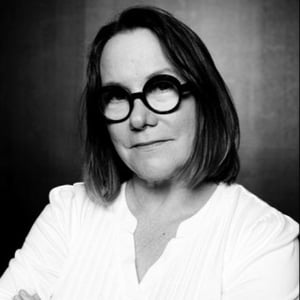
Independent Analyst, None
Allison Hayward most recently served as the Head of Case Selection at the Oversight Board. Previously, she was a Commissioner at the California Fair Political Practices Commission, a Board Member at the Office of Congressional Ethics, and an Assistant Professor of Law at George Mason University School of Law. She also previously worked as Chief of Staff and Counsel in the office of Federal Election Commission Commissioner Bradley A. Smith and practiced election law in California and in Washington DC.
In 1994-1995, Professor Hayward was a judicial clerk for the Honorable Danny J. Boggs, United States Court of Appeal for the Sixth Circuit.
She is a member of the State Bar of California and the District of Columbia Bar.
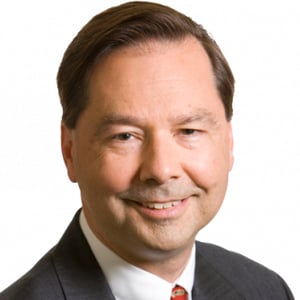
Senior Legal Fellow, Edwin Meese III Institute for the Rule of Law, Advancing American Freedom
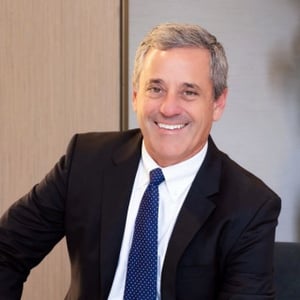
Partner, Friedland Cianfrani LLP
Mike has three decades of IP enforcement experience. He has represented clients in more than 270 intellectual property cases in state and federal courts in California and 23 other states and before the Trademark Trials and Appeals Board.
Mike’s practice includes patent, trademark, trade secret, and copyright cases. His cases have spanned a wide range of industries and technologies, including consumer products, semiconductors, tactical products, medical devices, computer software, apparel, restaurants, and financial services. He has represented brand-name companies including Oakley, Luxottica, Tesla, 5.11 Tactical, ITT, Makita, Pacific Life Insurance Company, Carl’s Jr., Microsemi, NASCAR, Daytona International Speedway, Game Show Network, Razor, Volcom, Specialized Bicycle, Mexicana Airlines, and SRS Labs, among others.
Mike was a partner at Knobbe Martens for more than two decades. At Knobbe, Mike served as co-chair of the Litigation Department. He had previously served as co-chair of the Trademark/Brand Protection group and the Consumer Products practice group.
World Trademark Review 1000 has several times named Mike a “Leading Trademark Lawyer." In the 2022 edition, WTR 1000 commended him for his “advanced state of preparedness,” and included a client remark that, “there’s nothing he hasn’t seen.”
In the 2021 edition, WTR described him as a “backbone of [his former firm's] litigation practice,” and noted his ability to litigate “cases associated with all categories of IP rights.”
In the 2020 edition, WTR described him as having been “on the cutting edge of enforcement for three decades.” In that edition, a client said he was “a sophisticated and thoughtful professional who understands how to get things done.”
In 2023, Legal 500 named Mike to its list of preeminent patent litigators. Thompson/Reuters has regularly named him a “Southern California Super Lawyer” in the category of IP litigation since 2004.
He frequently speaks on intellectual property litigation subjects, including to the AIPLA, OCBA, OCIPLA, LAIPLA, ABA, ACC, INTA, Harvard Law School Association, Harvard Business School Association, MIT Alumni Association, and the Federalist Society. Mike’s articles on IP subjects have been featured in publications including American Marketer, Luxury Roundtable, IP Watchdog, Law 360, IP 360, The Trademark Lawyer, The Los Angeles Daily Journal, The Recorder, ABA Landslide, Orange County Business Journal, Engage, and Stanford Technology Review.
Mike has taught as an adjunct professor at Whittier School of Law and served as a JAG with the California State Military Reserve. For 16 years, he served as a Reserve Deputy with the Orange County Sheriff’s Department, retiring as a Lieutenant.
Mike serves on the Harvard Law School Association’s Senior Advisory Committee, is a board member of the Federal Bar Association of Orange County, and the vice-chair of the Executive Committee of the Federalist Society's Intellectual Property Practice Group. He is a former member of Law360's Intellectual Property Editorial Board, a former member and former Secretary of the Harvard Law School Association's Executive Committee, and a former president of the Harvard Law School Association of Orange County.
Assistant Inspector General, Compliance, Federal Housing Finance Agency

Legal Alchemy: The General Mining Law of 1872 as Privatization Model
Roger E. Meiners, Andrew P. Morriss
Sometime soon you will pick up a major newspaper and read that an environmental pressure...
The Heavy Hand of Redevelopment
M Stirling
In late 2002, Elaine Evans, together with business and residential owners of 22,883 other parcels...
Discrimination, Retaliation, and Implied Private Rights of Action
Kevin C. Newsom
On Tuesday, November 30, 2004, the U.S. Supreme Court heard oral argument in Jackson v....
Return of the Kings: A Glance at Bush v. Schiavo
Geoffrey Hymans
The practice group for which I volunteer is the “Federalism and Separation of Powers” practice...
The WorldCom and Enron Settlements: Politics Rears its Ugly Head
Peter J. Wallison
Recent news that the independent directors of WorldCom and Enron had agreed to settle outstanding...
Rethinking Campaign Finance Prohibitions
Allison R. Hayward
Modern politicians and activists face a sea of complex and contradictory campaign finance regulations. Every...
Voting by Military Personnel and Overseas Citizens: The Uniformed and Overseas Citizens Absentee Voting Act
Hans A. Von Spakovsky
All United States military personnel and their dependents, as well as American citizens located abroad,...
State Sovereign Immunity for Patent Infringement Claims, Five Years After Florida Prepaid
Michael K. Friedland, Lauren J. Keller
In Florida Prepaid Postsecondary Education Expense Board v. College Savings Bank, the Supreme Court held...
Intellectual Property and “Cheap Exclusion”
The transition in the Federal Trade Commission’s leadership from Chairman Timothy Muris to Chairman Deborah...
Immigration and Identity Fraud
David Morgan Frost
Identity fraud presents a host of problems to various parts of society. The commercial ramifications...