
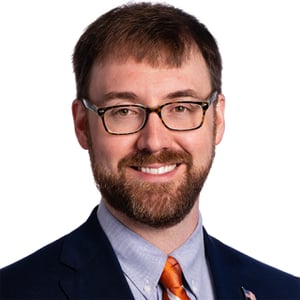
Senior Legal Fellow, Courts and the Constitution, Legal Policy Center, The Heritage Foundation
Zack is a Senior Legal Fellow of Courts and the Constitution at The Heritage Foundation.
He previously served for several years as an Assistant United States Attorney in the Northern District of Florida. Prior to that, he spent two years as an associate in the Washington, D.C. office of Cleary Gottlieb Steen & Hamilton, which he joined after clerking for the Hon. Emmett R. Cox on the United States Court of Appeals for the Eleventh Circuit.
Smith received his undergraduate, master’s, and law degrees from the University of Florida. During law school, Smith served as the Editor in Chief of the Florida Law Review and served on the executive boards of several student organizations, including the UF Chapter of the Federalist Society.

Levin, Mabie & Levin Professor of Law, University of Florida Levin College of Law
Professor Gary Lawson joined the University of Florida Levin College of Law faculty on July 1, 2024, after twenty-four years at Boston University School of Law and eleven years at Northwestern University School of Law. While at Boston University, he was named a William Fairfield Warren Distinguished Professor in 2022 – the highest faculty honor within the university. He has authored or co-authored nine editions of a textbook on administrative law, a textbook on constitutional law, five university press books, one popular press book, and more than one hundred scholarly articles on topics ranging from aspects of constitutional theory and history to the proof of legal propositions. His works have been cited in more than twenty opinions of United States Supreme Court justices. He is a founding member, and serves on the Board of Directors, of the Federalist Society for Law and Public Policy Studies and is on the Editorial Advisory Board of the Heritage Guide to the Constitution.
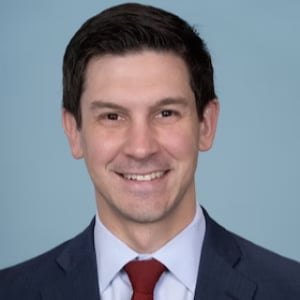
General Counsel, U.S. Commodity Futures Trading Commissioin
Tyler Badgley is the General Counsel at the Commodity Futures Trading Commission. In that role, Mr. Badgley leads the agency’s Legal Division and serves as the Commission’s chief legal advisor. He was appointed General Counsel in January 2026.
Prior to joining the CFTC, Mr. Badgley served as the Deputy General Counsel at the U.S. Department of the Treasury and was the first Executive Secretary under Secretary Scott K.H. Bessent. Mr. Badgley was previously a Senior Counsel at the U.S. Chamber Litigation Center, the litigation arm of the U.S. Chamber of Commerce. There, he focused on complex litigation and regulatory issues, particularly in connection with capital markets.
Mr. Badgley also practiced law at Sullivan & Cromwell LLP, served as a Special Counsel to the U.S. Senate Committee on the Judiciary, and began his legal career as a law clerk for the Honorable Edith H. Jones of the U.S. Court of Appeals for the Fifth Circuit. Mr. Badgley graduated Order of the Coif from the University of Virginia School of Law, where he served as Articles Editor for the Virginia Law Review. He also received his undergraduate degree in Economics and Government from the University of Virginia.

Partner, Lewis Brisbois
Sarah E. Lang is a partner in the New York office of Lewis Brisbois and a member of the Appellate Practice. Ms. Lang has represented clients at all levels of state and federal courts, including the New York State Appellate Division, the Second Circuit Court of Appeals, and the U.S. Supreme Court. The primary focus of her practice is drafting and arguing substantive motions and appeals before the federal courts and New York’s trial and appellate courts in substantive areas including general liability, New York Labor Law, medical malpractice, premises liability, and rideshare and transportation matters, among others. She also has extensive experience representing clients, including religious institutions, in matters arising under Title VII, the First Amendment, RLUIPA, New York’s City and State Human Rights Laws, New York’s Religious Corporations Law, and New York’s Real Property Tax Law. This includes federal jury trial experience and providing preventive advice and counseling. Prior to joining the firm, Ms. Lang clerked on the United States Court of Appeals for the Eighth Circuit, as well as the United States District Court for the Eastern District of North Carolina. She also previously served as an Attorney Advisor for the United States Department of Education.

President, Harned Strategies LLC
Karen Harned is President at Harned Strategies LLC. Previously, she served as Executive Director of the National Federation of Independent Business Small Business Legal Center, a post she held from 2002-2022. Prior to joining the Legal Center, Ms. Harned was an attorney at a Washington, D.C. law firm specializing in food and drug law, where she represented several small and large businesses and their respective trade associations before Congress and federal agencies. She also served as Assistant Press Secretary to U.S. Senator Don Nickles of Oklahoma from August of 1989 to March of 1993. Ms. Harned received her B.A. from the University of Oklahoma in 1989 and her J.D. from The George Washington University National Law Center in 1995. She is admitted to practice in the District of Columbia.
As Executive Director of the NFIB Small Business Legal Center, Ms. Harned commented regularly on small business cases before federal and state courts, as well as the U.S. Supreme Court. She has appeared on Fox News, Fox Business, NBC Nightly News, CNN, CNBC and MSNBC, as well as National Public Radio, CBS Radio, and radio outlets across the country. Her opinion editorials and articles regarding healthcare, lawsuit abuse, regulation, and other issues important to small business have been published in newspapers and other publications nationwide.
Ms. Harned has testified before Congress on the small business impact of regulation and the civil justice system. Additionally, she has conducted numerous webinars and legal compliance seminars for small business owners across the country on issues relating to employment law, including unionization and immigration.

President, Center for Constitutional Litigation
Robert S. Peck, founder and president of CCL, is a sought-after appellate litigator within the plaintiffs’ bar. He is credited with having developed groundbreaking constitutional challenges to laws impeding access to courts. He regularly appears before the U.S. Supreme Court and state supreme courts, litigating cases on the merits as well as at the petition stage. Bob’s diverse practice includes state and federal constitutional law, complex civil litigation, federal preemption, personal jurisdiction, punitive damages, products liability, mass torts, consumer protection, and Section 1983 cases.
Bob has taught advanced constitutional law and state constitutional law at The George Washington University Law School and American University Washington College of Law as a member of the adjunct faculty. He is a past chair of the Board of Advisors of the RAND Corporation’s Institute for Civil Justice; past member of the Board of Directors of the National Center for State Courts; a member of the advisory committee of the Civil Justice Research Institute at the University of California, Berkeley; and a Leaders Forum member of the American Association for Justice. Bob is a past president of the U.S. Supreme Court Fellows Alumni Association and the Freedom to Read Foundation, and a past national chair of Lawyers for Libraries. He has received the prestigious AV Preeminent rating from Martindale Hubbell for both legal ability and ethical standards.

Of Counsel, Kellogg Hansen
Collin White litigates high-stakes cases in trial and appellate courts across the country. Since he joined the firm in 2015, he has represented clients from a wide range of industries in cases about antitrust, intellectual property, securities, telecommunications, and administrative and constitutional law. He also advises clients on antitrust and regulatory matters.
Collin regularly represents both plaintiffs and defendants in antitrust cases. He has represented plaintiffs in a conspiracy case about software for auto dealers, In re Dealer Management Systems Antitrust Litig., MDL No. 2817 (N.D. Ill.), and a landmark monopolization case about spot cable advertising, Viamedia Inc. v. Comcast Corp., No. 16-cv-05486 (N.D. Ill.). He has represented defendants in the Supreme Court’s leading modern Rule of Reason decision, Ohio v. American Express Co., 138 S. Ct. 2274 (2018); a price-discrimination case about a well-known energy shot, U.S. Wholesale Outlet & Distribution, Inc. v. Innovation Ventures, LLC, 89 F.4th 1126 (9th Cir. 2023) (cert. petition filed Apr. 12, 2024); the FTC’s attempt to block Meta’s acquisition of Within, a virtual reality application developer, FTC v. Meta Platforms Inc., No. No. 5:22-cv-04325-EJD (N.D. Cal.); and the FTC’s ongoing monopolization action in FTC v. Meta Platforms, Inc., No. 20-3590 (D.D.C.).
Collin also regularly represents clients in appeals. For example, he has helped secure victories for telecommunications clients (in Greenlining Institute v. FCC, No. 17-73283 (9th Cir. 2020), and Bellsouth Telecommunications LLC v. Cobb County, No. S17G2011 (Ga. 2019)); a software company (in Intellisoft, Ltd. v. Acer Am. Corp., 955 F.3d 927 (Fed. Cir. 2020)); and an individual injured by a medical device (in In re Bard IVC Filters Products Liability Litigation, 969 F.3d 1067 (9th Cir. 2020)).
General Counsel, U.S. Commodity Futures Trading Commissioin
Tyler Badgley is the General Counsel at the Commodity Futures Trading Commission. In that role, Mr. Badgley leads the agency’s Legal Division and serves as the Commission’s chief legal advisor. He was appointed General Counsel in January 2026.
Prior to joining the CFTC, Mr. Badgley served as the Deputy General Counsel at the U.S. Department of the Treasury and was the first Executive Secretary under Secretary Scott K.H. Bessent. Mr. Badgley was previously a Senior Counsel at the U.S. Chamber Litigation Center, the litigation arm of the U.S. Chamber of Commerce. There, he focused on complex litigation and regulatory issues, particularly in connection with capital markets.
Mr. Badgley also practiced law at Sullivan & Cromwell LLP, served as a Special Counsel to the U.S. Senate Committee on the Judiciary, and began his legal career as a law clerk for the Honorable Edith H. Jones of the U.S. Court of Appeals for the Fifth Circuit. Mr. Badgley graduated Order of the Coif from the University of Virginia School of Law, where he served as Articles Editor for the Virginia Law Review. He also received his undergraduate degree in Economics and Government from the University of Virginia.
Partner, Lewis Brisbois
Sarah E. Lang is a partner in the New York office of Lewis Brisbois and a member of the Appellate Practice. Ms. Lang has represented clients at all levels of state and federal courts, including the New York State Appellate Division, the Second Circuit Court of Appeals, and the U.S. Supreme Court. The primary focus of her practice is drafting and arguing substantive motions and appeals before the federal courts and New York’s trial and appellate courts in substantive areas including general liability, New York Labor Law, medical malpractice, premises liability, and rideshare and transportation matters, among others. She also has extensive experience representing clients, including religious institutions, in matters arising under Title VII, the First Amendment, RLUIPA, New York’s City and State Human Rights Laws, New York’s Religious Corporations Law, and New York’s Real Property Tax Law. This includes federal jury trial experience and providing preventive advice and counseling. Prior to joining the firm, Ms. Lang clerked on the United States Court of Appeals for the Eighth Circuit, as well as the United States District Court for the Eastern District of North Carolina. She also previously served as an Attorney Advisor for the United States Department of Education.
President, Harned Strategies LLC
Karen Harned is President at Harned Strategies LLC. Previously, she served as Executive Director of the National Federation of Independent Business Small Business Legal Center, a post she held from 2002-2022. Prior to joining the Legal Center, Ms. Harned was an attorney at a Washington, D.C. law firm specializing in food and drug law, where she represented several small and large businesses and their respective trade associations before Congress and federal agencies. She also served as Assistant Press Secretary to U.S. Senator Don Nickles of Oklahoma from August of 1989 to March of 1993. Ms. Harned received her B.A. from the University of Oklahoma in 1989 and her J.D. from The George Washington University National Law Center in 1995. She is admitted to practice in the District of Columbia.
As Executive Director of the NFIB Small Business Legal Center, Ms. Harned commented regularly on small business cases before federal and state courts, as well as the U.S. Supreme Court. She has appeared on Fox News, Fox Business, NBC Nightly News, CNN, CNBC and MSNBC, as well as National Public Radio, CBS Radio, and radio outlets across the country. Her opinion editorials and articles regarding healthcare, lawsuit abuse, regulation, and other issues important to small business have been published in newspapers and other publications nationwide.
Ms. Harned has testified before Congress on the small business impact of regulation and the civil justice system. Additionally, she has conducted numerous webinars and legal compliance seminars for small business owners across the country on issues relating to employment law, including unionization and immigration.
President, Center for Constitutional Litigation
Robert S. Peck, founder and president of CCL, is a sought-after appellate litigator within the plaintiffs’ bar. He is credited with having developed groundbreaking constitutional challenges to laws impeding access to courts. He regularly appears before the U.S. Supreme Court and state supreme courts, litigating cases on the merits as well as at the petition stage. Bob’s diverse practice includes state and federal constitutional law, complex civil litigation, federal preemption, personal jurisdiction, punitive damages, products liability, mass torts, consumer protection, and Section 1983 cases.
Bob has taught advanced constitutional law and state constitutional law at The George Washington University Law School and American University Washington College of Law as a member of the adjunct faculty. He is a past chair of the Board of Advisors of the RAND Corporation’s Institute for Civil Justice; past member of the Board of Directors of the National Center for State Courts; a member of the advisory committee of the Civil Justice Research Institute at the University of California, Berkeley; and a Leaders Forum member of the American Association for Justice. Bob is a past president of the U.S. Supreme Court Fellows Alumni Association and the Freedom to Read Foundation, and a past national chair of Lawyers for Libraries. He has received the prestigious AV Preeminent rating from Martindale Hubbell for both legal ability and ethical standards.
Of Counsel, Kellogg Hansen
Collin White litigates high-stakes cases in trial and appellate courts across the country. Since he joined the firm in 2015, he has represented clients from a wide range of industries in cases about antitrust, intellectual property, securities, telecommunications, and administrative and constitutional law. He also advises clients on antitrust and regulatory matters.
Collin regularly represents both plaintiffs and defendants in antitrust cases. He has represented plaintiffs in a conspiracy case about software for auto dealers, In re Dealer Management Systems Antitrust Litig., MDL No. 2817 (N.D. Ill.), and a landmark monopolization case about spot cable advertising, Viamedia Inc. v. Comcast Corp., No. 16-cv-05486 (N.D. Ill.). He has represented defendants in the Supreme Court’s leading modern Rule of Reason decision, Ohio v. American Express Co., 138 S. Ct. 2274 (2018); a price-discrimination case about a well-known energy shot, U.S. Wholesale Outlet & Distribution, Inc. v. Innovation Ventures, LLC, 89 F.4th 1126 (9th Cir. 2023) (cert. petition filed Apr. 12, 2024); the FTC’s attempt to block Meta’s acquisition of Within, a virtual reality application developer, FTC v. Meta Platforms Inc., No. No. 5:22-cv-04325-EJD (N.D. Cal.); and the FTC’s ongoing monopolization action in FTC v. Meta Platforms, Inc., No. 20-3590 (D.D.C.).
Collin also regularly represents clients in appeals. For example, he has helped secure victories for telecommunications clients (in Greenlining Institute v. FCC, No. 17-73283 (9th Cir. 2020), and Bellsouth Telecommunications LLC v. Cobb County, No. S17G2011 (Ga. 2019)); a software company (in Intellisoft, Ltd. v. Acer Am. Corp., 955 F.3d 927 (Fed. Cir. 2020)); and an individual injured by a medical device (in In re Bard IVC Filters Products Liability Litigation, 969 F.3d 1067 (9th Cir. 2020)).
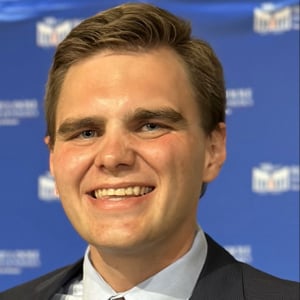
Assistant Solicitor General, Kansas Attorney General
Adam Steinhilber is an assistant solicitor general for the State of Kansas. He was previously a litigation associate in the Kansas City office of Bryan Cave Leighton Paisner LLP. Before entering private practice, Adam clerked for Chief Judge Timothy M. Tymkovich of the U.S. Court of Appeals for the Tenth Circuit and Justice Mark S. Massa of the Indiana Supreme Court.
Adam earned his J.D., magna cum laude, from the University of Michigan Law School, where he was elected to the Order of the Coif. He earned his B.A. in Political Science from the University of Kansas, where he was elected to Phi Beta Kappa.
Adam has held several leadership positions within the Federalist Society, and he currently serves on the Board of the Kansas City Lawyers Chapter.

Vice President and Director of Competition Policy, Progressive Policy Institute
Diana Moss joined the Progressive Policy Institute in 2023. She was previously President of the American Antitrust Institute from 2015-2023. An economist, Dr. Moss has developed and expanded competition enforcement and policy advocacy channels and strategies, and strengthened communications with enforcers, Congress, other advocacy groups, and the media. Her work spans both antitrust and regulation, with industry expertise in digital technology, electricity, petroleum, food and agriculture, airlines, telecommunications, and healthcare. Dr. Moss was previously at the Federal Energy Regulatory Commission, where she coordinated the agency’s competition analysis for electricity mergers. In the early 1990s, she consulted in private practice in the areas of regulation and antitrust. Dr. Moss has spoken widely on various topics involving competition policy and enforcement, testified before Congress, appeared before state and federal regulatory commissions, and made numerous radio and television appearances. She has published articles in a number of economic and legal academic journals, including: American Economic Review, Journal of Industrial Organization, the Energy Law Journal, and the Antitrust Bulletin. She is editor of Network Access, Regulation and Antitrust (2005). Dr. Moss is Adjunct Faculty in the Department of Economics at the University of Colorado at Boulder. She holds a M.A. degree from the University of Denver and a Ph.D. from the Colorado School of Mines.
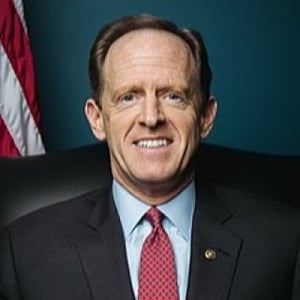
Former Senator, Pennsylvania
Pat Toomey (born November 17, 1961, Providence, Rhode Island, U.S.) is an American politician who was elected as a Republican to the U.S. Senate in 2010 and represented Pennsylvania from 2011 to 2023. He previously served in the U.S. House of Representatives (1999–2005).
George Mason University Foundation Professor of Law, Antonin Scalia Law School, George Mason University
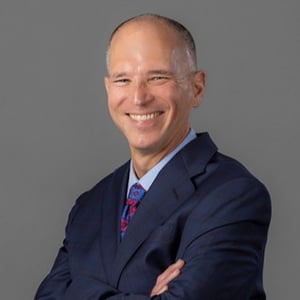
TODD J. ZYWICKI is George Mason University Foundation Professor of Law at Antonin Scalia Law School at George Mason University and Research Fellow of the George Mason Law and Economics Center. During the Fall 2023 semester he served as the Visiting Scholar in Conservative Thought and Policy for the Bruce Benson Center for the Study of Western Civilization at the University of Colorado-Boulder. From 2020-2021 he was Chair of the Consumer Financial Protection Bureau Taskforce on Federal Consumer Financial Law. In 2021 he was inducted to the American College of Consumer Financial Services Lawyers. He is also a Senior Fellow of the F.A. Hayek Program for the Advanced Study of Politics, Philosophy, and Economics at George Mason University and a former Senior Fellow of the Cato Institute. From 2015-2017 he was Executive Director of the George Mason Law and Economics Center. He served as Co-Editor of the Supreme Court Economic Review from 2006-2017. From 2003-2004, Professor Zywicki served as the Director of the Office of Policy Planning at the Federal Trade Commission. He has also taught at Vanderbilt University Law School, Georgetown University Law Center, Boston College Law School, Mississippi College School of Law, and China University of Political Science and Law.
Professor Zywicki clerked for Judge Jerry E. Smith of the U.S. Court of Appeals for the Fifth Circuit and worked as an associate at Alston & Bird in Atlanta, Georgia, where he practiced bankruptcy and commercial law. He received his J.D. from the University of Virginia, where he was executive editor of the Virginia Tax Review and John M. Olin Scholar in Law and Economics. Professor Zywicki also received an M.A. in Economics from Clemson University and an A.B. cum Laude with high honors in his major from Dartmouth College.
Professor Zywicki is also a Lone Mountain Fellow of the Property and Environment Research Center, a Fellow of the International Centre for Economic Research in Turin, Italy, and a former Senior Fellow of the Goldwater Institute. During the Fall 2008 Semester Professor Zywicki was the Searle Fellow of the George Mason University School of Law and was a 2008-09 W. Glenn Campbell and Rita Ricardo-Campbell National Fellow and the Arch W. Shaw National Fellow at the Hoover Institution on War, Revolution and Peace. He has lectured and consulted with government officials around the world, including Iceland, Italy, Japan, and Guatemala. In 2006 Professor Zywicki served as a Member of the United States Department of Justice Study Group on “Identifying Fraud, Abuse and Errors in the United States Bankruptcy System.”
Professor Zywicki is the author of more than 130 articles in leading law reviews and peer-reviewed economics journals. He is one of the Top 10 most-cited law professors in the field of Commercial Law and one of the Top 25 law professors on Twitter as measured by engagement levels. He is one of the Top 50 Most Downloaded Law Authors at the Social Science Research Network. He has testified multiple times before Congress on issues of consumer bankruptcy law and consumer credit and is a frequent commentator on legal issues in the print and broadcast media, including the Wall Street Journal, New York Times, The Washington Post, The Washington Times, Nightline, The Newshour with Jim Lehrer, Neil Cavuto Show, Fox & Friends, Smerconish, Fox News @ Night with Shannon Bream, Fox Business, CNN, CNBC, Bloomberg News, BBC, The Diane Rehm Show, Lou Dobbs Show, Jerry Doyle Show, and The Laura Ingraham Show.
Professor Zywicki is former Chairman and a current member of the Board of Directors of the Competitive Enterprise Institute, and is a member of the Board of Directors of the Institute for Humane Studies, Bill of Rights Institute, the Executive Committee for the Federalist Society's Financial Institutions and E-Commerce Practice Group, the Board of Trustees of the Foundation for Research on Economics and the Environment. He formerly served on the Governing Board and the Advisory Council for the Financial Services Research Program at George Washington University School of Business. He is currently the Chair of the Academic Advisory Council for the following organizations: The Bill of Rights Institute, the film “We the People in IMAX,” and the McCormick-Tribune Foundation “Freedom Museum” in Chicago, Illinois. He is a member of the Board of Visitors of Ralston College and was a member of the Board of Trustees of Yorktown University. From 2005-2009 he served as an elected Alumni Trustee of the Dartmouth College Board of Trustees.
President, Corporate and External Affairs, Plaid
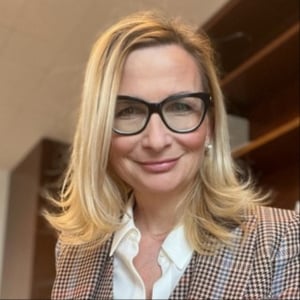
Jelena McWilliams is the former Managing Partner of the Washington, D.C. office of Cravath, Swaine, & Moore LLP and former Head of the Financial Institutions Group (FIG) Practice. She is a former Chairman of the Federal Deposit Insurance Corporation (FDIC). Ms. McWilliams focuses her practice on advising public and private companies, financial institutions, fintechs, and early-stage and venture companies on regulatory and corporate matters, as well as on mergers and acquisitions, IPO and other capital markets transactions.
While at the FDIC, Ms. McWilliams managed over 6,000 employees supervising approximately 5,000 banks, including through the COVID-19 pandemic. She participated in interagency negotiations, policy developments and joint agency rulemakings both as agency principal and as a voting member of the Financial Stability Oversight Council (FSOC). Ms. McWilliams chaired the Resolution Group at the Financial Stability Board (FSB); chaired and served on the Federal Financial Institutions Examination Council (FFIEC); and served on the Financial and Banking Information Infrastructure Committee (FBIIC). She testified before U.S. Congress on numerous occasions and engaged extensively with U.S. and international regulators, including the Basel Committee on Banking Supervision and the International Association of Deposit Insurers. She established the agency’s first office of innovation to implement technological advancements through supervisory channels and collaborative partnerships between banks and fintechs. Ms. McWilliams also spearheaded the agency’s effort to develop prudential banking policy on digital assets, including through a “crypto sprint” with the Office of the Currency Comptroller (OCC) and the Federal Reserve Board (FRB), and in collaboration with the President’s Working Group multiagency effort on stablecoins. She envisioned and created Mission Driven Bank Fund, a novel private/public partnership investment fund to support investments in low- and moderate-income communities served by the Minority Depository Institutions and Community Development Financial Institutions.
Ms. McWilliams is a frequent speaker on trends and topics in the financial services sector, including bank regulatory policy, governance trends, digital assets, fintechs and early-stage company regulatory policy. She is a member of the Economic Council of Washington, D.C., and serves on the Board of Trustees of the Southwestern Graduate School of Banking Foundation at Southern Methodist University.
Ms. McWilliams was born in Belgrade, Serbia. She received her B.A. with highest honors from the University of California, Berkeley in 1999 and her J.D. from the University of California, Berkeley, School of Law in 2002.
Vice President and Director of Competition Policy, Progressive Policy Institute
Diana Moss joined the Progressive Policy Institute in 2023. She was previously President of the American Antitrust Institute from 2015-2023. An economist, Dr. Moss has developed and expanded competition enforcement and policy advocacy channels and strategies, and strengthened communications with enforcers, Congress, other advocacy groups, and the media. Her work spans both antitrust and regulation, with industry expertise in digital technology, electricity, petroleum, food and agriculture, airlines, telecommunications, and healthcare. Dr. Moss was previously at the Federal Energy Regulatory Commission, where she coordinated the agency’s competition analysis for electricity mergers. In the early 1990s, she consulted in private practice in the areas of regulation and antitrust. Dr. Moss has spoken widely on various topics involving competition policy and enforcement, testified before Congress, appeared before state and federal regulatory commissions, and made numerous radio and television appearances. She has published articles in a number of economic and legal academic journals, including: American Economic Review, Journal of Industrial Organization, the Energy Law Journal, and the Antitrust Bulletin. She is editor of Network Access, Regulation and Antitrust (2005). Dr. Moss is Adjunct Faculty in the Department of Economics at the University of Colorado at Boulder. She holds a M.A. degree from the University of Denver and a Ph.D. from the Colorado School of Mines.
Former Senator, Pennsylvania
Pat Toomey (born November 17, 1961, Providence, Rhode Island, U.S.) is an American politician who was elected as a Republican to the U.S. Senate in 2010 and represented Pennsylvania from 2011 to 2023. He previously served in the U.S. House of Representatives (1999–2005).
George Mason University Foundation Professor of Law, Antonin Scalia Law School, George Mason University
TODD J. ZYWICKI is George Mason University Foundation Professor of Law at Antonin Scalia Law School at George Mason University and Research Fellow of the George Mason Law and Economics Center. During the Fall 2023 semester he served as the Visiting Scholar in Conservative Thought and Policy for the Bruce Benson Center for the Study of Western Civilization at the University of Colorado-Boulder. From 2020-2021 he was Chair of the Consumer Financial Protection Bureau Taskforce on Federal Consumer Financial Law. In 2021 he was inducted to the American College of Consumer Financial Services Lawyers. He is also a Senior Fellow of the F.A. Hayek Program for the Advanced Study of Politics, Philosophy, and Economics at George Mason University and a former Senior Fellow of the Cato Institute. From 2015-2017 he was Executive Director of the George Mason Law and Economics Center. He served as Co-Editor of the Supreme Court Economic Review from 2006-2017. From 2003-2004, Professor Zywicki served as the Director of the Office of Policy Planning at the Federal Trade Commission. He has also taught at Vanderbilt University Law School, Georgetown University Law Center, Boston College Law School, Mississippi College School of Law, and China University of Political Science and Law.
Professor Zywicki clerked for Judge Jerry E. Smith of the U.S. Court of Appeals for the Fifth Circuit and worked as an associate at Alston & Bird in Atlanta, Georgia, where he practiced bankruptcy and commercial law. He received his J.D. from the University of Virginia, where he was executive editor of the Virginia Tax Review and John M. Olin Scholar in Law and Economics. Professor Zywicki also received an M.A. in Economics from Clemson University and an A.B. cum Laude with high honors in his major from Dartmouth College.
Professor Zywicki is also a Lone Mountain Fellow of the Property and Environment Research Center, a Fellow of the International Centre for Economic Research in Turin, Italy, and a former Senior Fellow of the Goldwater Institute. During the Fall 2008 Semester Professor Zywicki was the Searle Fellow of the George Mason University School of Law and was a 2008-09 W. Glenn Campbell and Rita Ricardo-Campbell National Fellow and the Arch W. Shaw National Fellow at the Hoover Institution on War, Revolution and Peace. He has lectured and consulted with government officials around the world, including Iceland, Italy, Japan, and Guatemala. In 2006 Professor Zywicki served as a Member of the United States Department of Justice Study Group on “Identifying Fraud, Abuse and Errors in the United States Bankruptcy System.”
Professor Zywicki is the author of more than 130 articles in leading law reviews and peer-reviewed economics journals. He is one of the Top 10 most-cited law professors in the field of Commercial Law and one of the Top 25 law professors on Twitter as measured by engagement levels. He is one of the Top 50 Most Downloaded Law Authors at the Social Science Research Network. He has testified multiple times before Congress on issues of consumer bankruptcy law and consumer credit and is a frequent commentator on legal issues in the print and broadcast media, including the Wall Street Journal, New York Times, The Washington Post, The Washington Times, Nightline, The Newshour with Jim Lehrer, Neil Cavuto Show, Fox & Friends, Smerconish, Fox News @ Night with Shannon Bream, Fox Business, CNN, CNBC, Bloomberg News, BBC, The Diane Rehm Show, Lou Dobbs Show, Jerry Doyle Show, and The Laura Ingraham Show.
Professor Zywicki is former Chairman and a current member of the Board of Directors of the Competitive Enterprise Institute, and is a member of the Board of Directors of the Institute for Humane Studies, Bill of Rights Institute, the Executive Committee for the Federalist Society's Financial Institutions and E-Commerce Practice Group, the Board of Trustees of the Foundation for Research on Economics and the Environment. He formerly served on the Governing Board and the Advisory Council for the Financial Services Research Program at George Washington University School of Business. He is currently the Chair of the Academic Advisory Council for the following organizations: The Bill of Rights Institute, the film “We the People in IMAX,” and the McCormick-Tribune Foundation “Freedom Museum” in Chicago, Illinois. He is a member of the Board of Visitors of Ralston College and was a member of the Board of Trustees of Yorktown University. From 2005-2009 he served as an elected Alumni Trustee of the Dartmouth College Board of Trustees.
President, Corporate and External Affairs, Plaid
Jelena McWilliams is the former Managing Partner of the Washington, D.C. office of Cravath, Swaine, & Moore LLP and former Head of the Financial Institutions Group (FIG) Practice. She is a former Chairman of the Federal Deposit Insurance Corporation (FDIC). Ms. McWilliams focuses her practice on advising public and private companies, financial institutions, fintechs, and early-stage and venture companies on regulatory and corporate matters, as well as on mergers and acquisitions, IPO and other capital markets transactions.
While at the FDIC, Ms. McWilliams managed over 6,000 employees supervising approximately 5,000 banks, including through the COVID-19 pandemic. She participated in interagency negotiations, policy developments and joint agency rulemakings both as agency principal and as a voting member of the Financial Stability Oversight Council (FSOC). Ms. McWilliams chaired the Resolution Group at the Financial Stability Board (FSB); chaired and served on the Federal Financial Institutions Examination Council (FFIEC); and served on the Financial and Banking Information Infrastructure Committee (FBIIC). She testified before U.S. Congress on numerous occasions and engaged extensively with U.S. and international regulators, including the Basel Committee on Banking Supervision and the International Association of Deposit Insurers. She established the agency’s first office of innovation to implement technological advancements through supervisory channels and collaborative partnerships between banks and fintechs. Ms. McWilliams also spearheaded the agency’s effort to develop prudential banking policy on digital assets, including through a “crypto sprint” with the Office of the Currency Comptroller (OCC) and the Federal Reserve Board (FRB), and in collaboration with the President’s Working Group multiagency effort on stablecoins. She envisioned and created Mission Driven Bank Fund, a novel private/public partnership investment fund to support investments in low- and moderate-income communities served by the Minority Depository Institutions and Community Development Financial Institutions.
Ms. McWilliams is a frequent speaker on trends and topics in the financial services sector, including bank regulatory policy, governance trends, digital assets, fintechs and early-stage company regulatory policy. She is a member of the Economic Council of Washington, D.C., and serves on the Board of Trustees of the Southwestern Graduate School of Banking Foundation at Southern Methodist University.
Ms. McWilliams was born in Belgrade, Serbia. She received her B.A. with highest honors from the University of California, Berkeley in 1999 and her J.D. from the University of California, Berkeley, School of Law in 2002.

Florida Supreme Court Affirms Constitutional Power of Governor to Suspend Rogue Prosecutors
Zack Smith
Florida’s Governor, Ron DeSantis, suspended Monique Worrell from her position as the State Attorney for...
Topics
Beals v. Virginia Coalition for Immigrant Rights: SCOTUS Sides With Virginia in Voter-Roll Clean-Up Dust-Up
Earlier this week, the state of Virginia found itself in the Supreme Court, requesting an...
Ghosts of Chevron [The FedSoc Films Podcast]
Gary Lawson
In this episode of the FedSoc Films Podcast, Professor Gary Lawson of the University of...
A Seat at the Sitting - November 2024
Tyler S. Badgley, Sarah E. Lang, Karen Harned, Robert S. Peck, Collin R. White
The November Docket in 90 Minutes or Less
Each month, a panel of constitutional experts convenes to discuss the Court’s upcoming docket sitting...
A Seat at the Sitting - November 2024
Tyler S. Badgley, Sarah E. Lang, Karen Harned, Robert S. Peck, Collin R. White
The November Docket in 90 Minutes or Less
Each month, a panel of constitutional experts convenes to discuss the Court’s upcoming docket sitting...
Idaho Supreme Court Clarifies Right to Jury in Landlord-Tenant Dispute
Adam Steinhilber
Article I, section 7 of the Idaho Constitution guarantees that “[t]he right of trial by...
Topics
May the EEOC Embed Interrogatories in Subpoenas?
A routine subpoena from the Equal Employment Opportunity Commission to an employer might include items...
Daniel Webster Debate Series: Should America Strengthen Social Media Regulations?
The Federalist Society's Georgetown Law Chapter'sDaniel Webster Debate Series presents Daniel Webster Debate Series:Should America...
Competition and Consumer Banking: Bank Mergers, Credit Cards, and the Capital One-Discover Deal
Diana L. Moss, Patrick J. Toomey, Todd J. Zywicki, Jelena McWilliams
In September, the Department of Justice announced that it would withdraw its 1995 bank merger...
Competition and Consumer Banking: Bank Mergers, Credit Cards, and the Capital One-Discover Deal
Diana L. Moss, Patrick J. Toomey, Todd J. Zywicki, Jelena McWilliams
In September, the Department of Justice announced that it would withdraw its 1995 bank merger...