
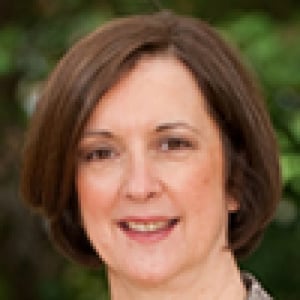
Assistant District Attorney, Philadelphia District Attorney
Sarah Hart has worked for over three decades in the criminal justice field at the federal, state and local levels.
From 1979-95, she served as a prosecutor in Philadelphia where (for 9 years) she represented the District Attorney in federal prison litigation involving mass releases of pretrial detainees. During this time, she provided substantial assistance to the U.S. Congress in drafting the Federal Prison Litigation Reform Act (PLRA).
From 1995-2001, Mrs. Hart served as the Chief Counsel for the Pennsylvania Department of Corrections where she successfully defended the constitutionality of the PLRA in the federal courts.
From 2001-2005, following unanimous Senate confirmation, she served as the Director of the National Institute of Justice (the research and evaluation arm of the U.S. Department of Justice) where, among other things, she developed the national $1 billion DNA initiative.
After an appointment as a Visiting Professor teaching graduate school courses at Rutgers University, she returned to Philadelphia to represent Philadelphia District Attorney in class action litigation concerning the Philadelphia Prison System. During this time she represented the Pennsylvania District Attorney’s Association in crafting comprehensive, bipartisan prison reform legislation in Pennsylvania that enacted sweeping changes in sentencing and parole practices. (Acts 81-84 of 2008).
Mrs. Hart previously served as Vice Chair of the Legal Affairs Committee of the American Corrections Association, a member of the Executive Committee of the Criminal Law Practice Group of the Federalist Society, a member of the Board of Directors of the Crime Victims Law Institute, and as a member of the Pennsylvania Supreme Court’s Appellate Procedural Rules Committee. She has also provided extensive training on the PLRA and corrections issues to the National Institute of Corrections, the National Association of Attorneys General, and the Association of State Correctional Administrators.
Mrs. Hart has published articles relating to corrections, forensics, and domestic violence. A recent publication focuses on the benefits and costs of prisoner class actions.
S. Hart, Evaluating Institutional Prisoners’ Rights Litigation: Costs and Benefits and Federalism Considerations, 11 U. Penn. J. Const. L. 73 (2008).
She is a graduate of Rutgers Law School and the University of Delaware.
Chairman, Cato Institute
Robert A. Levy is chairman of the Cato Institute's board of directors. He joined Cato as senior fellow in constitutional studies in 1997 after 25 years in business. He also sits on boards of the Institute for Justice, the Federalist Society, and the George Mason University School of Law. He founded CDA Investment Technologies, a major provider of financial information and software, and was its CEO until 1991. Levy clerked for Judge Royce C. Lamberth on the U.S. District Court in Washington, D.C., and for Judge Douglas H. Ginsburg on the U.S. Court of Appeals for the D.C. Circuit. From 1997 until 2004, Levy was an adjunct professor of law at Georgetown University. He has written numerous articles on investments, law, and public policy. His writing has appeared in the New York Times, Wall Street Journal, USA Today,Washington Post, National Review, and many other publications. Levy has also discussed public policy on national radio and TV programs, including ABC's Nightline, CNN's Crossfire, Fox's The O'Reilly Factor, MSNBC's Hardball, and NBC's Today Show. His latest book, co-authored with William Mellor, is The Dirty Dozen: How Twelve Supreme Court Cases Radically Expanded Government and Eroded Freedom. Levy received his Ph.D. in business from the American University and his J.D. degree from the George Mason University School of Law.
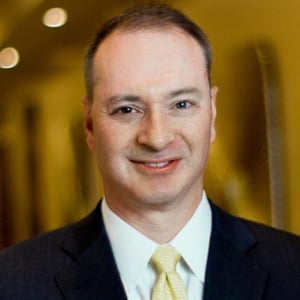
Managing Shareholder, Saltzman Mugan Dushoff, PLLC
Over the course of his twenty-plus years as an attorney in Las Vegas, Mr. Saltzman has developed a corporate law practice focused on financial institution and liquor law. He assists businesses in their formation, licensing and governance matters; he also counsels businesses on corporate mergers and acquisition matters. He assists highly regulated financial institutions and captive insurance companies in corporate and regulatory compliance matters and he has testified before the Nevada legislature as an expert on trust company legislation and drafted portions of Nevada law relating to the chartering and operation of Nevada trust companies. He has counseled trust companies and financial service firms on Blockchain and cryptocurrency related legal compliance matters.
Mr. Saltzman has developed and managed the firm’s liquor law practice into Nevada’s largest alcohol beverage specialty law practice group. He and his team of attorneys and paralegals assist a wide range of liquor retailers, wholesalers and suppliers in licensing and compliance matters in all Nevada jurisdictions. More information on Mr. Saltzman’s liquor law practice can be found at his blog: www.nvliquorlaw.com
Matthew Saltzman received a Bachelor of Arts degree in Economics and Philosophy from University of Wisconsin, Madison in 1987. In 1993, he received his Juris Doctor from University of Pittsburgh School of Law, where he was also Executive Editor of the University of Pittsburgh Law Review and served as teaching assistant for the Legal Research and Writing course.
Chairman, Cato Institute
Robert A. Levy is chairman of the Cato Institute's board of directors. He joined Cato as senior fellow in constitutional studies in 1997 after 25 years in business. He also sits on boards of the Institute for Justice, the Federalist Society, and the George Mason University School of Law. He founded CDA Investment Technologies, a major provider of financial information and software, and was its CEO until 1991. Levy clerked for Judge Royce C. Lamberth on the U.S. District Court in Washington, D.C., and for Judge Douglas H. Ginsburg on the U.S. Court of Appeals for the D.C. Circuit. From 1997 until 2004, Levy was an adjunct professor of law at Georgetown University. He has written numerous articles on investments, law, and public policy. His writing has appeared in the New York Times, Wall Street Journal, USA Today,Washington Post, National Review, and many other publications. Levy has also discussed public policy on national radio and TV programs, including ABC's Nightline, CNN's Crossfire, Fox's The O'Reilly Factor, MSNBC's Hardball, and NBC's Today Show. His latest book, co-authored with William Mellor, is The Dirty Dozen: How Twelve Supreme Court Cases Radically Expanded Government and Eroded Freedom. Levy received his Ph.D. in business from the American University and his J.D. degree from the George Mason University School of Law.
Managing Shareholder, Saltzman Mugan Dushoff, PLLC
Over the course of his twenty-plus years as an attorney in Las Vegas, Mr. Saltzman has developed a corporate law practice focused on financial institution and liquor law. He assists businesses in their formation, licensing and governance matters; he also counsels businesses on corporate mergers and acquisition matters. He assists highly regulated financial institutions and captive insurance companies in corporate and regulatory compliance matters and he has testified before the Nevada legislature as an expert on trust company legislation and drafted portions of Nevada law relating to the chartering and operation of Nevada trust companies. He has counseled trust companies and financial service firms on Blockchain and cryptocurrency related legal compliance matters.
Mr. Saltzman has developed and managed the firm’s liquor law practice into Nevada’s largest alcohol beverage specialty law practice group. He and his team of attorneys and paralegals assist a wide range of liquor retailers, wholesalers and suppliers in licensing and compliance matters in all Nevada jurisdictions. More information on Mr. Saltzman’s liquor law practice can be found at his blog: www.nvliquorlaw.com
Matthew Saltzman received a Bachelor of Arts degree in Economics and Philosophy from University of Wisconsin, Madison in 1987. In 1993, he received his Juris Doctor from University of Pittsburgh School of Law, where he was also Executive Editor of the University of Pittsburgh Law Review and served as teaching assistant for the Legal Research and Writing course.
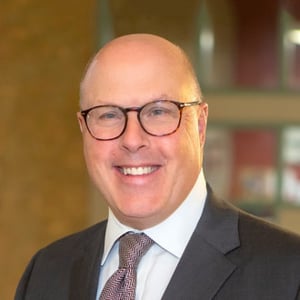
Senior Attorney, Sensient Technologies Corporation
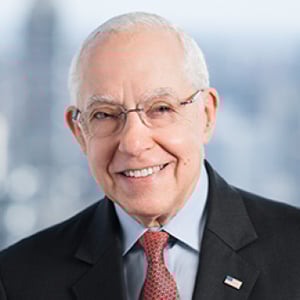
Former United States Attorney General
Michael B. Mukasey is the former Attorney General of the United States, the nation’s chief law enforcement officer. As Attorney General from November 2007 to January 2009, he oversaw the U.S. Department of Justice and advised on critical issues of domestic and international law.
From 1988 to 2006, Judge Mukasey served as a district judge in the United States District Court for the Southern District of New York, becoming Chief Judge in 2000.
From 1972 to 1976, Judge Mukasey served as an Assistant United States Attorney for the Southern District of New York, and as Chief of the Official Corruption Unit from 1975 to 1976. His practice consisted of criminal litigation on behalf of the government, including investigation and prosecution of narcotics, bank robbery, interstate theft, securities fraud, fraud on the government and bribery. From 1976 to 1987 and from 2006 to 2007 he was in private practice.
Judge Mukasey has received numerous honors, including the Federal Bar Council’s Learned Hand Medal for Excellence in Federal Jurisprudence. He served as Chairman of the Committee on Public Access to Information and Proceedings of the New York Bar Association from 1984 to 1987. He served on the Federal Courts Committee of the Association of the Bar of the City of New York from 1979 to 1982 and its Communications Law Committee from 1983 to 1986. Judge Mukasey was also a part-time lecturer at Columbia School of Law from January 1993 to May 2007, teaching trial advocacy.
He received his LL.B. from Yale Law School in 1967 and his B.A. from Columbia College in 1963.
Director of Regulatory and State Affairs, Institute for Energy Research
Daniel Simmons is Director of State Affairs at the Institute for Energy Research. He oversees energy research and outreach at the state level. Before joining IER, Simmons served as the Director of the Natural Resources Task Force at the American Legislative Exchange Council (ALEC). ALEC’s Natural Resources Task Force promotes policy innovations through markets, property rights, and the rule of law in energy, environment, natural resources, and agricultural policy areas.
Prior to working for ALEC, Simmons was a Research Fellow at the Mercatus Center at George Mason University. He analyzed proposed federal regulations and wrote comments to federal agencies during the rulemaking process. He also drafted law review articles based on a current regulatory and legal issues.
Previous to working at the Mercatus Center, Simmons served as Legislative Staff for the Committee on Resources in the U.S. House of Representatives where he handled endangered species and forestry issues.
Simmons holds a B.A. in Economics from Utah State University and a J.D. from George Mason University School of Law. He is a member of the Virginia State Bar.
Professor of Law and Director of the Natural Resources Law Cente, University of Colorado Law School
Professor Mark Squillace is the Director of the Natural Resources Law Center at the University of Colorado Law School. Before coming to Colorado, Professor Squillace taught at the University of Toledo College of Law where he was the Charles Fornoff Professor of Law and Values. Prior to Toledo, Mark taught at the University of Wyoming College of Law where he served a three-year term as the Winston S. Howard Professor of Law. He is a former Fulbright scholar and the author or co-author of numerous articles and books on natural resources and environmental law. In 2000, Professor Squillace took a leave from law teaching to serve as Special Assistant to the Solicitor at the U.S. Department of the Interior. In that capacity he worked directly with the Secretary of the Interior, Bruce Babbitt, on variety of legal and policy issues.

Executive Vice President, The Federalist Society
Dean Reuter is Executive Vice President at the Federalist Society for Law and Public Policy Studies. He has served in two federal government agency Offices of the Inspector General, as Counsel to the Inspector General and Deputy Inspector General, responsible for policing the use of federal funds granted and contracted through those agencies. As such, he helped conduct and oversee criminal investigations across the country. He is the principal author of the non-fiction book, The Hidden Nazi: The Untold Story of America's Deal with the Devil, and editor of Liberty’s Nemesis: The Unchecked Expansion of the State and Confronting Terror: 9/11 and the Future of American National Security. He was appointed by the President and served as Vice-Chairman of the Board of Directors of the Corporation for National and Community Service, and recently served as an appointee on the U.S. Commission on Presidential Scholars. He is a graduate of Hood College (BA with Honors) and the University of Maryland School of Law.

Partner, Arnold & Porter
John Elwood is the head of Arnold & Porter’s Appellate and Supreme Court practice. He has argued before the Supreme Court nine times, and appeared before most of the federal courts of appeals. He has successfully argued cases across a broad cross-section of subjects, with particular experience in environmental law, the False Claims Act, government contracting, and federal criminal law
Mr. Elwood’s work has earned him recognition as one of Washington’s top Supreme Court lawyers (Washingtonian, 2013), as one of “a small group of lawyers” with an “outsized influence at the U.S. Supreme Court” (Reuters, 2014), and as one of the country’s most innovative lawyers (Financial Times, 2014). Chambers USA reports that “[t]he much-admired John Elwood is praised for his advocacy skills” (2013), and describes Mr. Elwood as “phenomenal” (2014), “incredibly talented” (2012), and “a much-loved and widely respected lawyer who is quick on his feet” (2010).
Before joining the firm, Mr. Elwood served in senior-level positions in the U.S. Department of Justice. Beginning as an Assistant to the Solicitor General, and continuing with the firm, he has briefed more than 20 merits cases before the Supreme Court of the United States, and has briefed approximately 135 cases at the certiorari stage. As the senior Deputy in the Office of Legal Counsel, he advised the White House and federal agencies on a range of constitutional, statutory, and regulatory issues.

Former President & CEO, The Federalist Society for Law and Public Policy Studies
Eugene B. Meyer, former President and CEO of the Federalist Society, has served as Executive Director, CEO, and/or President of the organization for more than 40 years. He is responsible for shepherding the organization from a small group of law students to a community of 90,000 lawyers, law students, academics, judges, and others interested in the rule of law. The Society now includes a Student Chapter at nearly every ABA-accredited law school in the country and Lawyers Chapters in 220 major cities across the nation. Gene earned his B.A. in history at Yale in 1975 and his M.A. in political science from the London School of Economics in 1976. Gene currently serves on the boards of the U.S. Chess Center, the Holman Foundation, the Sarah Scaife Foundation, and the advisory board of the Adam Smith Society. He holds the title of International Chess Master.
Associate Professor of Law, William and Mary Law School

Associate Professor of Law, Loyola Law School Los Angeles
Levitt is a national expert in constitutional law and the law of democracy, with particular focus on election administration and redistricting. He has published in the Harvard Law Review, the Yale Law and Policy Review, the Georgetown Law Journal, the William & Mary Law Review, and the peer-reviewed Election Law Journal, among others. In the spring of 2013, he served as a visiting faculty member at the Yale Law School.
Levitt has been invited to testify before committees of the U.S. Senate, the U.S. Civil Rights Commission, several state legislative bodies, and both federal and state courts. His research has been cited extensively in the media and the courts, including the U.S. Supreme Court. He also maintains the website All About Redistricting, tracking the process of state and federal redistricting around the country, including litigation.
Levitt has served in various capacities for several presidential campaigns, including as the National Voter Protection Counsel in 2008, helping to run an effort ensuring that tens of millions of citizens could vote and have those votes counted. Before joining the faculty of Loyola Law School, he was counsel at the Brennan Center for Justice at NYU School of Law, for five years. He has also worked as in-house counsel to the country's largest independent voter registration and engagement operation, and at several nonprofit civil rights and civil liberties organizations.
Levitt served as a law clerk to the Honorable Stephen Reinhardt of the U.S. Court of Appeals for the Ninth Circuit. He holds a law degree and a masters degree in public administration from Harvard University, and was an articles editor for the Harvard Law Review. He is admitted to the bar in California, New Jersey, New York, and the District of Columbia, and to the U.S. Courts of Appeal for the Ninth Circuit and Eleventh Circuit, and the U.S. District Courts in the Central District of California and Northern District of Florida.

Senior Fellow and Director of Constitutional Studies, Manhattan Institute
Ilya Shapiro is a senior fellow and director of constitutional studies at the Manhattan Institute and a contributing editor of City Journal. Previously he was executive director and senior lecturer at the Georgetown Center for the Constitution, and before that a vice president of the Cato Institute.
Shapiro is the author of Lawless: The Miseducation of America’s Elites (2025) and Supreme Disorder: Judicial Nominations and the Politics of America’s Highest Court (2020), coauthor of Religious Liberties for Corporations? (2014), and editor of 11 volumes of the Cato Supreme Court Review (2008-18). He has contributed to a variety of academic, popular, and professional publications, including the Wall Street Journal, Harvard Journal of Law & Public Policy, Washington Post, Los Angeles Times, USA Today, National Review, and Newsweek. He also regularly provides commentary for various media outlets, writes the Shapiro’s Gavel newsletter on Substack, and once appeared on the Colbert Report.
Shapiro has testified many times before Congress and state legislatures and has filed more than 500 amicus curiae “friend of the court” briefs in the Supreme Court. He lectures regularly on behalf of the Federalist Society, is a member of the board of fellows of the Jewish Policy Center, was an inaugural Washington Fellow at the National Review Institute, and has been an adjunct law professor at the George Washington University and University of Mississippi. He is also the chairman of the board of advisers of the Mississippi Justice Institute, a barrister in the Edward Coke Appellate Inn of Court, and a former member of the Virginia Advisory Committee to the U.S. Commission on Civil Rights.
Earlier in his career, Shapiro was a special assistant/adviser to the Multi-National Force in Iraq on rule-of-law issues and practiced at Patton Boggs and Cleary Gottlieb. Before entering private practice, he clerked for Judge E. Grady Jolly of the U.S. Court of Appeals for the Fifth Circuit. He holds an AB from Princeton University, an MSc from the London School of Economics, and a JD from the University of Chicago Law School.
Executive Vice President, The Federalist Society
Dean Reuter is Executive Vice President at the Federalist Society for Law and Public Policy Studies. He has served in two federal government agency Offices of the Inspector General, as Counsel to the Inspector General and Deputy Inspector General, responsible for policing the use of federal funds granted and contracted through those agencies. As such, he helped conduct and oversee criminal investigations across the country. He is the principal author of the non-fiction book, The Hidden Nazi: The Untold Story of America's Deal with the Devil, and editor of Liberty’s Nemesis: The Unchecked Expansion of the State and Confronting Terror: 9/11 and the Future of American National Security. He was appointed by the President and served as Vice-Chairman of the Board of Directors of the Corporation for National and Community Service, and recently served as an appointee on the U.S. Commission on Presidential Scholars. He is a graduate of Hood College (BA with Honors) and the University of Maryland School of Law.


Florence v. Board of Chosen Freeholders - Post-Decision SCOTUScast
Sarah V. Hart
SCOTUScast 04-06-12 featuring Sarah Hart
On April 2, 2012 the Supreme Court announced its decision in Florence v. Board of Chosen...
Coleman v. Maryland Court of Appeals - Post-Decision SCOTUScast
Elizabeth Price Foley
SCOTUScast 04-06-12 featuring Elizabeth Foley
On March 20, 2012, the Supreme Court announced its decision in Coleman v. Maryland Court of...
How the Supreme Court Has Subverted the Constitution
Robert A. Levy, Matthew Saltzman
Las Vegas Lawyers Chapter
The Supreme Court has endorsed an exponential growth in federal government power, often at the...
How the Supreme Court Has Subverted the Constitution
Robert A. Levy, Matthew Saltzman
Las Vegas Lawyers Chapter
The Supreme Court has endorsed an exponential growth in federal government power, often at the...
Can Someone Please Turn on the Lights? Bringing Transparency to the Foreign Corrupt Practices Act
James C. Dunlop, Michael B. Mukasey
Engage Volume 13, Issue 1, March 2012
Note from the Editor: This paper assesses the Department of Justice’s authority under the Foreign...
The Keystone Pipeline - Podcast
Daniel R. Simmons, Mark Squillace, Dean Reuter
Environmental Law & Property Rights Practice Group Podcast
The Keystone Pipeline is designed to transport petroleum products from Northeast Alberta, Canada, to as...
Zivotofsky v. Clinton - Post-Decision SCOTUScast
John P. Elwood
SCOTUScast 04-03-12 featuring John Elwood
On March 26, 2012 the Supreme Court announced its decision in Zivotofsky v. Clinton (also known as...
2011 Annual Report
Eugene B. Meyer
Dear Friends and Supporters: America is in the middle of a momentous national discussion about...
Sester v. U.S. - Post-Decision SCOTUScast
Allison Orr Larsen
SCOTUScast 04-02-12 featuring Allison Larsen
On March 28, 2012, the Supreme Court announced its decision in Sester v. U.S. The question...
Redistricting Litigation Update - Podcast
Justin Levitt, Ilya Shapiro, Dean Reuter
Civil Rights Practice Group Podcast
To listen, please right click on the audio file you wish to hear and then...