
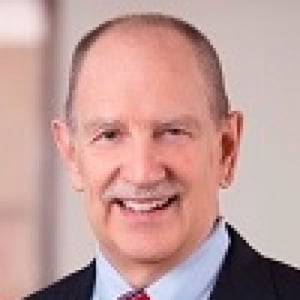
Retired
Tom Gede retired in 2023 as a principal in Morgan Lewis Consulting LLC and of counsel to the firm. He currently consults on a variety of legal and policy matters for both public and private clients. Tom has a national reputation and distinguished background in federal Indian law. Prior to retirement, he represented clients in complex governmental matters in litigation, administrative and regulatory proceedings, including high-profile matters involving state governments. A former senior deputy in the California Attorney General’s office, Tom was amicus coordinator and Supreme Court counsel, and argued cases in the US Supreme Court, the California Supreme Court, and numerous state and federal appellate courts.
Tom also served as executive director of the Conference of Western Attorneys General (CWAG), coordinating activities on key legal and policy issues, such as federal Indian law, energy, environmental, public lands, financial services, and telecommunications, for the attorneys general of 18 western states and territories. In 2016, Tom was elected as a Member of the American Law Institute (ALI), and served as an Adviser on the Restatement of the Law Third - The Law of American Indians. Tom also taught federal Indian law as an adjunct law professor at the University of the Pacific - McGeorge School of Law. He served as an assistant editor for and the author of the Indian gaming chapter in CWAG’s American Indian Law Deskbook (2d & 3d eds.). He has been engaged in Indian gaming and Indian law matters for more than three decades, having focused on the gaming compacts with Indian tribes, as well as complex civil and criminal jurisdiction, land, natural resources, water and law enforcement issues in Indian country. He has testified before Congress on American Indian and Native Alaskan issues. In 2012 he was appointed by Speaker John Boehner to serve on the United States Indian Law and Order Commission, where he examined criminal justice issues in Indian country and Alaska, resulting in the issuance of an important report to the President and Congress.
Professor of Law, UCLA School of Law
Sander has been working on questions of social and economic inequality for nearly all of his career. He was born in Washington, D.C., but spent most of his childhood in small towns in northwest Indiana. After earning a B.A. in Social Studies at Harvard, Sander in 1978 joined the federal Vista program and worked for a small neighborhood housing group on Chicago's south side. While organizing tenant unions and building receiverships, he was deeply impressed with the work of the South Shore Bank, an experimental, community-development bank owned by churches and foundations. Sander secured funding from three federal agencies and, with the Woodstock Institute, completed the first detailed study of the bank. South Shore Bank was widely imitated as an instrument for community revitalization in other urban areas over the next two decades.
Sander attended graduate school at Northwestern University from 1983 to 1988, earning degrees in law (J.D., 1988) and economics (M.A. 1985, Ph.D., 1990). In his law review comment and his dissertation, Sander sought to understand why fair housing laws had seemingly produced widespread integration in some American metropolitan areas, but very little integration in most. During much of this period, Sander served on the board of the Rogers Park Tenants Committee, and worked on the election effort and subsequent transition team of Harold Washington, Chicago’s first black mayor.
In 1989, Sander joined the faculty of the UCLA School of Law. During this period, he continued his work on housing segregation, but also pursued two new interests: the reasons behind the American legal profession’s explosive growth since the mid-1960s, and the structure and effects of law school admissions policies. With Kris Knaplund, he published in 1995 the first comparative evaluation of academic support programs used in legal education. After California voters approved Propostion 209 in 1996 – banning the use of race in various government programs, including admissions at the University of California – Sander successfully argued for the adoption of class-based preferences in the law school’s admissions, and published a study on the results of this experiment in 1997.
During the 1990s, Sander was involved in several Los Angeles civic initiatives. He served as President of the Fair Housing Congress of Southern California from 1984 to 1996; founded the Fair Housing Institute in 1996, and helped the City of Los Angeles design and implement in 1997 what was, at the time, the nation's most ambitious living wage law. Sander also persuaded regional authorities to develop outreach programs that sharply increased local usage of the Earned Income Tax Credit, generating tens of millions of dollars annually for LA's poorest working families.
Sander was one of seven UCLA faculty members and staff who launched the Program in Public Interest Law and Policy, which created a distinct curriculum aimed at public interest students. From 1998 to 2004, Sander helped to steer the "After the JD" study, the first national panel study of law school graduates. In 1998-99, Sander and others at the School of Law launched the Empirical Research Group (ERG), an entity designed to help faculty members undertake ambitious empirical projects and introduce more quantitative and methodological sophistication into their policy-related work.
In 2004, Sander published a comprehensive study of affirmative action in American law schools, focusing particularly on the ways in which large preferences imposed unexpected but substantial costs on their intended beneficiaries.
Sander teaches courses in Property, Quantitative Methods, Urban Housing, and Policy Analysis. He is married to astrophysicist Fiona Harrison, and has a son, Robert. He lives in the Los Feliz neighborhood of Los Angeles.

Executive Vice President, The Federalist Society
Dean Reuter is Executive Vice President at the Federalist Society for Law and Public Policy Studies. He has served in two federal government agency Offices of the Inspector General, as Counsel to the Inspector General and Deputy Inspector General, responsible for policing the use of federal funds granted and contracted through those agencies. As such, he helped conduct and oversee criminal investigations across the country. He is the principal author of the non-fiction book, The Hidden Nazi: The Untold Story of America's Deal with the Devil, and editor of Liberty’s Nemesis: The Unchecked Expansion of the State and Confronting Terror: 9/11 and the Future of American National Security. He was appointed by the President and served as Vice-Chairman of the Board of Directors of the Corporation for National and Community Service, and recently served as an appointee on the U.S. Commission on Presidential Scholars. He is a graduate of Hood College (BA with Honors) and the University of Maryland School of Law.
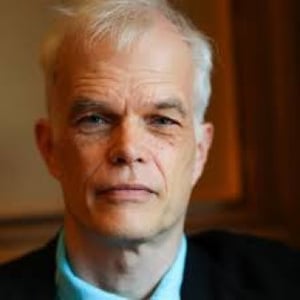
Senior Editor, National Review
Historian Richard Brookhiser is a senior editor of National Review, a senior fellow at the National Review Institute, and the author of several books, including Founders’ Son, Right Time, Right Place, George Washington on Leadership, What Would the Founders Do?, Gentleman Revolutionary, Rules of Civility, America’s First Dynasty, Alexander Hamilton, American, Founding Father: Rediscovering George Washington, Way of the WASP, and The Outside Story.
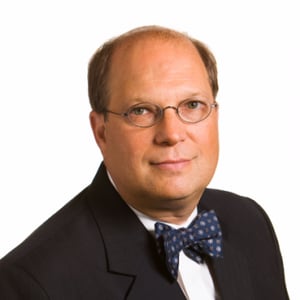
Professorial Lecturer in Law, The George Washington University
Paul Rosenzweig is an accomplished writer and speaker with a national reputation in cyber security and homeland security. He is the founder of Red Branch Consulting PLLC, a homeland security consulting company. He is also a Senior Advisor to The Chertoff Group. Mr. Rosenzweig formerly served as Deputy Assistant Secretary for Policy in the Department of Homeland Security.
He is a Professorial Lecturer in Law at George Washington University, and a Senior Fellow in the Tech, Law & Security Program at the American University, Washington College of Law. He serves as an advisor to and former member of the American Bar Association Standing Committee on Law and National Security, and a Contributing Editor of the Lawfare blog. He is a member of the ABA Cybersecurity Legal Task Force and of the United States Court of Appeals for the District of Columbia Circuit Advisory Committee on Admissions and Grievances. He serves, as well, as a Hearing Committee Member of the District of Columbia Board of Professional Responsibility. In 2011 he was a Carnegie Fellow in National Security Journalism at the Medill School of Journalism, Northwestern University.
Mr. Rosenzweig is a cum laude graduate of the University of Chicago Law School. He has an M.S. in Chemical Oceanography from the Scripps Institution of Oceanography, University of California at San Diego and a B.A from Haverford College. Following graduation from law school he served as a law clerk to the Honorable R. Lanier Anderson, III of the United States Court of Appeals for the Eleventh Circuit.
He is the author of Cyber Warfare: How Conflicts in Cyberspace are Challenging America and Changing the World and of three video lecture series from The Great Courses, Thinking About Cybersecurity: From Cyber Crime to Cyber Warfare; The Surveillance State: Big Data, Freedom, and You; and Investigating American Presidents.
He is the co-author (with James Jay Carafano) of Winning the Long War: Lessons from the Cold War for Defeating Terrorism and Preserving Freedom and co-editor (with Jill D. Rhodes and Robert S. Litt) of the Cybersecurity Handbook (3rd ed.). He is also co-editor (with Timothy McNulty and Ellen Shearer) of two books, Whistleblowers, Leaks and the Media: The First Amendment and National Security, and National Security Law in the News: A Guide for Journalists, Scholars, and Policymakers. Mr. Rosenzweig is a member of the Literary Society of Washington.
Associate, Gibson, Dunn & Crutcher 
Scott Martin is an associate in the Washington, D.C. office of Gibson, Dunn & Crutcher. He practices in the firm’s Litigation Department and is a member of its Appellate and Constitutional Law Practice Group. Mr. Martin has represented clients before the Supreme Court of the United States, federal appellate and trial courts, and state courts in cases involving constitutional law, securities regulation, class action proceedings, and the False Claims Act.
Before joining the firm, Mr. Martin served as a judicial clerk to the Honorable Alex Kozinski of the United States Court of Appeals for the Ninth Circuit and the Honorable Antonin Scalia of the Supreme Court of the United States. He graduated from Columbia Law School, where he was a James Kent Scholar and a senior editor of the Columbia Law Review. At Columbia, he received the John Ordronaux Prize for graduating first in his class, the Thomas E. Dewey Prize for written advocacy, the Robert Noxon Toppan Prize for constitutional law, and the full-tuition Hamilton Fellowship. Mr. Martin received his undergraduate degree, summa cum laude in mathematics and political science, from Furman University. He is admitted to practice in New York and the District of Columbia, and before the Supreme Court of the United States and the United States Courts of Appeals for the Third, Fourth, Fifth, Eighth, Ninth, and Eleventh Circuits.
Deputy Attorney General, California Department of Justice
Brian Means is a nationally recognized expert in the area of postconviction review. He graduated with Great Distinction, Order of the Coif, and Order of the Barristers from the University of the Pacific, McGeorge School of Law. He was the recipient of seven American Jurisprudence Awards. Following graduation, he clerked for the Honorable Garland E. Burrell, Jr., federal judge. There, he worked on several high-profile cases, including the criminal action against the Unabomber, Theodore Kackynski. For the past fourteen years he has worked as a Deputy Attorney General with the California Department of Justice, and has held the position of supervisor of the federal habeas corpus team. He works almost exclusively on federal habeas corpus litigation, practicing in the Eastern District of California, the Ninth Circuit Court of Appeals, and the United States Supreme Court. He has appeared as a legal analyst on CNN, MSNBC, and the California Channel. He writes the Federal Habeas Manual: A Guide to Habeas Corpus Litigation, published by Westlaw, and the Federal Habeas Practitioner Note, a quarterly publication distributed nationally to habeas practitioners and members of the judiciary.
Former Adjunct Professor of Law; former Special Counsel to the President; former federal prosecutor, Georgetown Law (ret.)
Bill Otis is a former Adjunct Professor of Law at Georgetown University, a one-time federal prosecutor, and a former Special White House Counsel for President George H. W. Bush. After graduating from Stanford Law School, he started his career in the Criminal Division of the Justice Department, then became chief of appeals for the US Attorney's Office for the Eastern District of Virginia. In the 1980's he served on the Department's "Train the Trainer" team, which taught US Attorneys Offices across the county how to implement the then-new Sentencing Reform Act. He has held several posts in the federal government, including Special Assistant to the Secretary of Energy and Counselor to the head of the Drug Enforcement Administration, in addition to the White House post. He has testified before Congress on issues in criminal procedure, illegal drugs, the US Sentencing Commission, and the death penalty, and has given numerous media interviews on those and other subjects. He currently teaches a seminar at Georgetown Law titled "Conservatism in Law in America" with his wife, Federalist Society co-founder Lee Liberman Otis.
Author and FoxNews.com Contributor
John R. Lott, Jr. is an economist who has held research and/or teaching positions at the University of Chicago, Yale University, Stanford, UCLA, Wharton, and Rice and was the chief economist at the United States Sentencing Commission during 1988 and 1989. He has published over 100 articles in academic journals. He also is the author of six books including More Guns, Less Crime, Freedomnomics, The Bias Against Guns, and Are Predatory Commitments Credible? He has just released another book entitled "Debacle: Obama's war on jobs and growth and what we can do now to regain our future." Lott is a FoxNews.com contributor and a weekly columnist for them. Opinion pieces by Prof. Lott have appeared in such places as The Wall Street Journal, The New York Times, The Los Angeles Times, the New York Post, USA Today, and The Chicago Tribune. He has appeared on such television programs as the ABC and NBC National Evening News broadcasts, Fox News, "The NewsHour with Jim Lehrer," and the "Today Show." He received his Ph.D. in economics from UCLA in 1984.
Associate Professor of Law, Marquette University Law School
Professor O'Meara re-joined the Marquette Law School faculty in the fall of 2002. He was a visiting faculty member from the fall of 1997 until the spring of 1999. In 1999 and 2005, Professor O'Meara was the recipient of the James D. Ghiardi Faculty Award for Teaching Excellence. During the interim between 1999 and 2002, Professor O'Meara completed his Master of Divinity degree from the Weston Jesuit School of Theology. Greg is also a member of the Wisconsin Province of the Society of Jesus. Professor O'Meara's prior legal experience includes working as an Assistant District Attorney in Milwaukee County, serving as a staff attorney with the Legal Defense Project at the University of Wisconsin Law School, and teaching at Creighton University School of Law. In addition to criminal law, evidence, and the legal theory seminar, Greg also teaches legal ethics and criminal procedure.
Executive Vice President, The Federalist Society
Dean Reuter is Executive Vice President at the Federalist Society for Law and Public Policy Studies. He has served in two federal government agency Offices of the Inspector General, as Counsel to the Inspector General and Deputy Inspector General, responsible for policing the use of federal funds granted and contracted through those agencies. As such, he helped conduct and oversee criminal investigations across the country. He is the principal author of the non-fiction book, The Hidden Nazi: The Untold Story of America's Deal with the Devil, and editor of Liberty’s Nemesis: The Unchecked Expansion of the State and Confronting Terror: 9/11 and the Future of American National Security. He was appointed by the President and served as Vice-Chairman of the Board of Directors of the Corporation for National and Community Service, and recently served as an appointee on the U.S. Commission on Presidential Scholars. He is a graduate of Hood College (BA with Honors) and the University of Maryland School of Law.
Professor of Law, University of Baltimore School of Law (on leave); Senior Counsel, U.S. Department of Justice
Professor Dolin’s scholarship centers on patent law with a specific focus on how the patent regime affects innovation, especially in bio-pharmaceutical areas. His work in these areas includes a number of scholarly articles, presentations, amicus briefs, and congressional testimony.
Dr. Dolin is currently on leave from his academic duties while he serves as Senior Counsel in the Civil Rights Division of the United States Department of Justice.
From January 2020 to January 2022, Professor Dolin served as a resident Associate Justice of the Supreme Court of the Republic of Palau. In this role, he (together with other members of the Court) heard appeals in civil, criminal, administrative, and constitutional law matters.
Prior to joining the University of Baltimore School of Law, Professor Dolin held visiting appointments in other law schools. He also served as a law clerk to the Hon. Pauline Newman, of the U.S. Court of Appeals for the Federal Circuit and the late Hon. H. Emory Widener Jr., of the U.S. Court of Appeals for the Fourth Circuit.
Rumors that he has a real Russian bear in his office are entirely true.
Brandon Simmons is an attorney in Washington, D.C. He clerked for Chief Judge J.L. Edmondson on the U.S. Court of Appeals for the Eleventh Circuit.

Match-E-Be-Nash-She-Wish Band of Pottawatomi Indians v. Patchak and Salazar v. Patchak - Post-Decision SCOTUScast
Thomas F. Gede
SCOTUScast 05-07-12 featuring Thomas Gede
To listen, please right click on the audio file you wish to hear and then select "Save...
The Fisher Case: Mismatch & the Future of Affirmative Action - Podcast
Richard H. Sander, Dean Reuter
Civil Rights Practice Group Podcast
To listen, please right click on the audio file you wish to hear and then...
James Madison by Richard Brookhiser - Podcast
Richard Brookhiser, James A. Haynes
Practice Groups Podcast
Richard Brookhiser's book examines the life of America's fourth President, James Madison, including his role...
United States v. Jones - Post-Decision SCOTUScast
Paul Rosenzweig
SCOTUScast 05-01-12 featuring Paul Rosenzwieg
On January 23, 2012, the Supreme Court announced its decision in United States v. Jones. The...
Filarsky v. Delia - Post-Decision SCOTUScast
Scott Martin
SCOTUScast 04-27-12 featuring Scott Martin
To listen, please right click on the audio file you wish to hear and then select "Save...
Wood v. Milyard - Post-Decision SCOTUScast
Brian Means
SCOTUScast 04-27-12 featuring Brian Means
On April 24, 2012, the Supreme Court announced its decision in Wood v. Milyard. The question...
Dorsey v. United States and Hill v. United States - Post-Argument SCOTUScast
William G. Otis
SCOTUScast 04-26-12 featuring William Otis
On April 17, 2012 the Supreme Court heard oral argument in Dorsey v. United States and Hill v....
Stand Your Ground - Podcast
John Lott, Gregory O'Meara, Dean Reuter
Criminal Law & Procedure Practice Group Podcast
To listen, please right click on the audio file you wish to hear and then...
Caraco Pharmaceutical Laboratories, Ltd. v. Novo Nordisk - Post-Decision SCOTUScast
Gregory Dolin
SCOTUScast 04-25-12 featuring Gregory Dolin
On April 17, 2012, the Supreme Court announced its decision in Caraco Pharmaceutical Laboratories, Ltd. v....
Does the Takings Clause Have an Expiration Date?
Michael James Barton, Brandon Simmons
Engage Volume 13, Issue 1, March 2012
Overview In the last Term, the United States Supreme Court declined to review two property...