
Deputy Secretary, Pennsylvania Department of Environmental Protection
Mr. Perry is the Deputy Secretary in the Department of Environmental Protection’s newly created Office of Oil and Gas Management. Prior to becoming Deputy Secretary, Scott was the Director for the Bureau of Oil and Gas Management for almost two years. Scott was also an Assistant Counsel with DEP's Bureau of Regulatory Counsel where he advised the Department’s Office of Energy and Technology Deployment, Bureau of Oil and Gas Management, Bureau of Radiation Protection, Bureau of Laboratories, Division of Residual Waste, Division of Municipal Financial Assistance and Division of Source Water and Groundwater Protection. He earned his B.A. from Penn State in 1995 and his J.D. from Willamette University, College of Law in Salem, Oregon, in 2000. Mr. Perry lives in Camp Hill, Pennsylvania with his wife June, and son Nickolas.
Partner, Bracewell & Giuliani LLP
Jason Hutt advises energy companies, manufacturers, project developers, investor groups and financial institutions about environmental risks and liabilities associated with regulatory compliance, project development, congressional investigations, internal investigations and corporate transactions. He also assists in the defense of administrative, civil and criminal proceedings involving environmental enforcement agencies at the federal and state levels.
Mr. Hutt counsels clients on current and upcoming regulatory developments at the nexus of environmental and energy policy, with focused attention on natural gas development (including hydraulic fracturing), responses to the Deepwater Horizon incident, and climate change. He is nationally recognized for his work on shale gas issues on behalf of producers, oil field services companies, hedge funds and technology developers.
Mr. Hutt routinely is involved in identifying, evaluating and managing environmental risks and opportunities associated with corporate acquisitions, divestitures and financings, including environmental due diligence, purchase and sale agreement negotiation, and post-closing integration efforts. Within the energy sector, his representative experience includes transactions involving petroleum refineries, liquefied natural gas (LNG) import terminals, renewable energy projects (e.g., wind, biofuels and geothermal), natural gas processing plants, cogeneration facilities, oil and gas wells, pipelines, propane retailers and synfuel facilities.
Representative work in other sectors involves operations and industries such as chemical manufacturers, oil field services, independent tank terminal operators, glass manufacturing, textiles manufacturing, uranium mining, industrial cleaning operations, hazardous waste management facilities, paper and plastic manufacturing facilities, and medical equipment manufacturing facilities.
Mr. Hutt performs environmental risk evaluations and advises on permit strategy and contract negotiation in relation to project development. His most recent work has involved onshore and offshore LNG import terminals, highway expansions, coal-fired power plant siting on tribal lands, utility privatizations at military bases, international undersea pipelines, interstate undersea electric transmission cables and a pump-storage project.

Associate Attorney, Sierra Club Environmental Law Program
Craig Segall started at the Sierra Club in 2008 as an environmental law fellow. Before coming to the Club, Craig was a law clerk to the Honorable Marsha S. Berzon of the U.S. Court of Appeals for the Ninth Circuit. He is a graduate of the University of Chicago and of Stanford Law School, where he spent most of his time in the basement working with Stanford's environmental law clinic. When not practicing law, Craig keeps busy outdoors. In recent years, he has barely beaten a 12-year-old to the top of Mount Whitney, accidentally driven transmission-deep into a salt lake, and, on an ill-advised hike in South Africa, provoked a surprisingly aggressive ostrich.
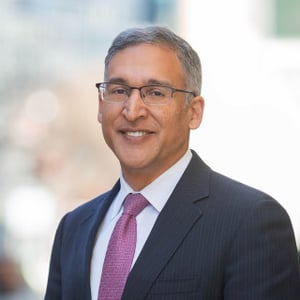
Partner, Millbank LLP
Mr. Katyal, the former Acting Solicitor General of the United States, focuses on appellate and complex litigation. He has argued 54 cases before the Supreme Court of the United States.
He has extensive experience in matters of antitrust, corporate, constitutional, securities, technology, criminal, patent, copyright, trademark, ERISA, products liability, labor, employment and tribal law. In the 2022-23 Supreme Court term, he argued five separate cases (nearly 10% of the docket), including winning the landmark voting case Moore v. Harper, which Judge Michael Luttig described as “the most important case for American democracy in the almost two and a half centuries since America’s founding.” Judge Luttig also said Mr. Katyal’s argument “was the single best oral argument I have ever heard made in the Supreme Court of the United States.” His cases include successfully striking down the Guantanamo military tribunals, successfully defending the constitutionality of the Voting Rights Act and successfully defending the Peace Cross in Maryland. His 2017 win in Bristol Myers Squibb v. Superior Court was a landmark victory for personal jurisdiction law and his 2006 win in Hamdan v. Rumsfeld was described by former Acting Solicitor General Walter Dellinger as “simply the most important decision on presidential power and the rule of law ever. Ever.”
From 2010 to 2011, Mr. Katyal served as Acting Solicitor General of the United States, where he argued several major Supreme Court cases involving a variety of issues, such as his successful defense of the constitutionality of the Voting Rights Act of 1965, his victorious defense of former Attorney General John Ashcroft for alleged abuses in the war on terror, his unanimous victory against eight states who sued the nation's leading power plants for contributing to global warming, and a variety of other matters. As Acting Solicitor General, he was responsible for representing the federal government of the United States in all appellate matters before the US Supreme Court and the Courts of Appeals throughout the nation. He served as Counsel of Record hundreds of times in the US Supreme Court. He was also the only head of the Solicitor General's office to argue a case in the US Court of Appeals for the Federal Circuit, on the important question of whether certain aspects of the human genome were patentable.
After graduating from Yale Law School, Mr. Katyal clerked for The Honorable Guido Calabresi of the US Court of Appeals for the Second Circuit as well as for The Honorable Justice Stephen G. Breyer of the US Supreme Court. He also served in the Deputy Attorney General's Office at the Justice Department as National Security Advisor and as Special Assistant to the Deputy Attorney General during 1998-1999.
Mr. Katyal is a best-selling New York Times author and has published dozens of scholarly articles in law journals (including several in the Harvard Law Review and Yale Law Journal), as well as many op-ed articles in publications such as the New York Times and the Washington Post. He has testified numerous times before various committees of both the US House of Representatives and the US Senate.

Patrick Hotung Professor of Constitutional Law, Georgetown University Law Center
Randy Barnett is the Patrick Hotung Professor of Constitutional Law at Georgetown University Law Center. He has argued before the United States Supreme Court, tried murder cases to juries as a prosecutor in Chicago, and appeared as a prosecutor in the feature film Inalienable. He is the author of numerous books, including Restoring the Lost Constitution, The Structure of Liberty, Our Republican Constitution, and The Original Meaning of the Fourteenth Amendment. He has published two memoirs, A Life for Liberty: The Making of an American Originalist, and Felony Review: Tales of True Crime and Corruption in Chicago. He is currently working on a new book, Freedom and Flourishing: Libertarianism for the Real World.

Thomas M. Siebel Senior Fellow, The Hoover Institution, Stanford University; Gary T. Schwartz Distinguished Professor of Law Emeritus, UCLA School of Law
Eugene Volokh is the Thomas M. Siebel Senior Fellow at the Hoover Institution (Stanford), as well as the Gary T. Schwartz Distinguished Professor of Law Emeritus and Distinguished Research Professor at UCLA School of Law. He recently retired from teaching at UCLA, after 30 years there, and is now focusing on research.
Volokh is the author of the textbooks The First Amendment and Related Statutes (8th ed. 2023), and Academic Legal Writing (5th ed. 2016), as well as over 100 academic law journal articles, mostly on First Amendment law. He is a member of The American Law Institute; the editor-in-chief of the Journal of Free Speech Law; and the creator and coauthor of The Volokh Conspiracy, a leading legal blog founded in 2002 (hosted at the Washington Post from 2014 to 2017 and now at Reason Magazine).
Partner, Gibson Dunn & Crutcher
Douglas R. Cox is a partner in the Washington, D.C. office of Gibson, Dunn & Crutcher and Vice-Chair of the firm's Crisis Management Practice Group. He practices in the areas of constitutional and general commercial litigation, appellate law, and governmental matters.
Mr. Cox has represented numerous clients in litigation before federal and state trial and appellate courts. He played a principal role in the firm's successful representation of the prevailing candidate before the Supreme Court of the United States in Bush v. Palm Beach County Canvassing Board and Bush v. Gore, stemming from the 2000 presidential election, and in other cases before the Supreme Court involving equal protection, voting rights and election law, the scope of the jury trial right under the Seventh Amendment, and other constitutional and statutory issues.
Mr. Cox successfully represented the National Association of Securities Dealers ("NASD") in a series of trial and appellate matters, including DL Capital Group, LLC v. Nasdaq Stock Market, Inc., 409 F.3d 93 (2d Cir. 2005) and Sparta Surgical Corp. v. NASD, 159 F.3d 1209 (9th Cir. 1998).
Mr. Cox frequently represents accounting firms in a variety of matters, including matters involving the SEC and PCAOB. He also has substantial experience representing clients before congressional investigating committees.
Mr. Cox previously served for five years during the Reagan and Bush Administrations in the Justice Department's Office of Legal Counsel, becoming Principal Deputy Assistant Attorney General during the Bush Administration. In that Office, he provided legal advice to Executive Branch departments; resolved legal disputes on behalf of the Attorney General between Executive Branch departments; prepared formal opinions of the Attorney General; drafted and issued opinions on legal issues of importance to the Executive Branch; and advised Congress as to the constitutionality of pending legislation.
From 1981 through 1987, Mr. Cox practiced in New York City with a national firm, representing major corporations in state and federal courts. His practice focused on intellectual property, securities, and international tax litigation.
Mr. Cox received his law degree, cum laude, from Harvard Law School in 1980, where he served as Editor-in-Chief of the Harvard Journal of Law and Public Policy from 1979-1980. He received his undergraduate degree in history, magna cum laude, from Princeton University in 1977. He attended Oxford University on a Knox Scholarship in 1980-1981.
In 2005, Chief Justice Rehnquist appointed Mr. Cox to serve as a member of the Judicial Conference Standing Committee on Rules of Practice and Procedure. In 2008 he was reappointed by Chief Justice Roberts.
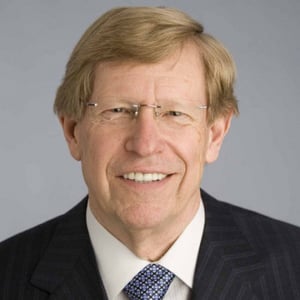
Partner, Gibson Dunn & Crutcher LLP
Theodore B. Olson is a Partner in Gibson, Dunn & Crutcher’s Washington, D.C. office; a founder of the Firm’s Crisis Management, Sports Law, and Appellate and Constitutional Law Practice Groups.
Mr. Olson was Solicitor General of the United States during the period 2001-2004. From 1981-1984, he was Assistant Attorney General in charge of the Office of Legal Counsel in the U.S. Department of Justice. Except for those two intervals, he has been a lawyer with Gibson, Dunn & Crutcher in Los Angeles and Washington, D.C. since 1965.
Selected by Time magazine in 2010 as one of the 100 most influential people in the world, Mr. Olson is one of the nation’s premier appellate and United States Supreme Court advocates. He has argued 65 cases in the Supreme Court and has prevailed in over 75% of those cases. These include the two Bush v Gore cases arising out of the 2000 presidential election; Citizens United v Federal Election Commission; Hollingsworth v Perry, the case affirming the overturning of California’s Proposition 8, banning same-sex marriages; Murphy v NCAA, overturning a federal law prohibiting states from authorizing sports betting; and U.S. Dept. of Homeland Security v Regents of the Univ. of Calif., challenging the Trump Administration’s rescission of the Deferred Action for Childhood Arrivals (“DACA”). Mr. Olson’s practice is concentrated on appellate and constitutional law, federal legislation, media and commercial disputes, and assisting clients with strategies for the containment, management and resolution of major legal crises. He has handled cases at all levels of state and federal court systems throughout the United States. Mr. Olson co-authored “Redeeming the Dream, the Case for Marriage Equality” with David Boies. Both were featured in HBO’s award-winning documentary, “The Case Against 8.”
Mr. Olson's Supreme Court arguments have included cases involving separation of powers; federalism; voting rights; the Tenth Amendment; the First Amendment; the Equal Protection and Due Process Clauses; jury trial rights; punitive damages; takings of property; the Commerce Clause; administrative law; taxation; criminal law; sports wagering; copyright, patent and antitrust; securities; campaign finance; foreign sovereign immunities; telecommunications; the environment; the internet; the Supremacy Clause; and other federal constitutional and statutory questions. As Solicitor General, during the presidency of George W. Bush, Mr. Olson was the Government's principal advocate in the United States Supreme Court, responsible for supervising and coordinating all appellate litigation of the United States, and a legal adviser to the President and the Attorney General. As Assistant Attorney General for the Office of Legal Counsel during the Reagan Administration, Mr. Olson was the Executive Branch's principal legal adviser, rendering legal guidance to the President and to the heads of the Executive Branch departments on a wide range of constitutional and federal statutory questions, and assisting in formulating and articulating the Executive Branch's position on constitutional issues.
Mr. Olson has served as private counsel to two Presidents, Ronald W. Reagan and George W. Bush, in addition to serving those two Presidents in high-level positions in the Department of Justice. He has twice been awarded the United States Department of Justice's Edmund J. Randolph Award, its highest award for public service and leadership, and also received the Department of Defense's Distinguished Public Service Award, its highest civilian award, for his advocacy in the courts of the United States, including the Supreme Court. He also received the American Bar Association Medal, its highest award for “exceptionally distinguished service by a lawyer or lawyers to the cause of American jurisprudence.” Mr. Olson is to receive the 2021 Jack Valenti Friend of the White House Fellows Award in the Fall of 2021 to be presented by the White House Fellows Foundation and Association.
Mr. Olson is a member of the Commission on White House Fellowships; a member of the Board of Trustees of the Ronald Reagan Presidential Foundation; a member of the Board of Visitors of the Federalist Society; the Board of Directors of the Knight First Amendment Institute at Columbia University; and the 9/11 Pentagon Memorial Foundation. He was a visiting scholar at the National Constitution Center in 2007. He served on the President's Privacy and Civil Liberties Oversight Board from 2006 to 2008; and of the Council of the Administrative Conference of the United States from 2010 to 2020. He was Co-Chair of the Knight Commission on the Information Needs of Communities in a Democracy from 2008-2009, and served two terms on the Board of Directors of the National Center for State Courts.
Mr. Olson is a Fellow of both the American College of Trial Lawyers and the American Academy of Appellate Lawyers. He has been repeatedly listed in legal publications as one of the nation’s leading appellate lawyers. The late New York Times columnist William Safire described Mr. Olson as his generation's "most persuasive advocate" before the Supreme Court and "the most effective Solicitor General in decades.”
Mr. Olson received his law degree in 1965 from the University of California at Berkeley (Boalt Hall) where he was a member of the California Law Review and Order of the Coif. He received his bachelor's degree from the University of the Pacific, where he was recognized as the outstanding graduating student in both forensics and journalism. He has written and lectured extensively on appellate advocacy, oral communication in the courtroom, civil justice reform, and constitutional and administrative law.
Partner, Gibson Dunn & Crutcher
Douglas R. Cox is a partner in the Washington, D.C. office of Gibson, Dunn & Crutcher and Vice-Chair of the firm's Crisis Management Practice Group. He practices in the areas of constitutional and general commercial litigation, appellate law, and governmental matters.
Mr. Cox has represented numerous clients in litigation before federal and state trial and appellate courts. He played a principal role in the firm's successful representation of the prevailing candidate before the Supreme Court of the United States in Bush v. Palm Beach County Canvassing Board and Bush v. Gore, stemming from the 2000 presidential election, and in other cases before the Supreme Court involving equal protection, voting rights and election law, the scope of the jury trial right under the Seventh Amendment, and other constitutional and statutory issues.
Mr. Cox successfully represented the National Association of Securities Dealers ("NASD") in a series of trial and appellate matters, including DL Capital Group, LLC v. Nasdaq Stock Market, Inc., 409 F.3d 93 (2d Cir. 2005) and Sparta Surgical Corp. v. NASD, 159 F.3d 1209 (9th Cir. 1998).
Mr. Cox frequently represents accounting firms in a variety of matters, including matters involving the SEC and PCAOB. He also has substantial experience representing clients before congressional investigating committees.
Mr. Cox previously served for five years during the Reagan and Bush Administrations in the Justice Department's Office of Legal Counsel, becoming Principal Deputy Assistant Attorney General during the Bush Administration. In that Office, he provided legal advice to Executive Branch departments; resolved legal disputes on behalf of the Attorney General between Executive Branch departments; prepared formal opinions of the Attorney General; drafted and issued opinions on legal issues of importance to the Executive Branch; and advised Congress as to the constitutionality of pending legislation.
From 1981 through 1987, Mr. Cox practiced in New York City with a national firm, representing major corporations in state and federal courts. His practice focused on intellectual property, securities, and international tax litigation.
Mr. Cox received his law degree, cum laude, from Harvard Law School in 1980, where he served as Editor-in-Chief of the Harvard Journal of Law and Public Policy from 1979-1980. He received his undergraduate degree in history, magna cum laude, from Princeton University in 1977. He attended Oxford University on a Knox Scholarship in 1980-1981.
In 2005, Chief Justice Rehnquist appointed Mr. Cox to serve as a member of the Judicial Conference Standing Committee on Rules of Practice and Procedure. In 2008 he was reappointed by Chief Justice Roberts.
Partner, Gibson Dunn & Crutcher LLP
Theodore B. Olson is a Partner in Gibson, Dunn & Crutcher’s Washington, D.C. office; a founder of the Firm’s Crisis Management, Sports Law, and Appellate and Constitutional Law Practice Groups.
Mr. Olson was Solicitor General of the United States during the period 2001-2004. From 1981-1984, he was Assistant Attorney General in charge of the Office of Legal Counsel in the U.S. Department of Justice. Except for those two intervals, he has been a lawyer with Gibson, Dunn & Crutcher in Los Angeles and Washington, D.C. since 1965.
Selected by Time magazine in 2010 as one of the 100 most influential people in the world, Mr. Olson is one of the nation’s premier appellate and United States Supreme Court advocates. He has argued 65 cases in the Supreme Court and has prevailed in over 75% of those cases. These include the two Bush v Gore cases arising out of the 2000 presidential election; Citizens United v Federal Election Commission; Hollingsworth v Perry, the case affirming the overturning of California’s Proposition 8, banning same-sex marriages; Murphy v NCAA, overturning a federal law prohibiting states from authorizing sports betting; and U.S. Dept. of Homeland Security v Regents of the Univ. of Calif., challenging the Trump Administration’s rescission of the Deferred Action for Childhood Arrivals (“DACA”). Mr. Olson’s practice is concentrated on appellate and constitutional law, federal legislation, media and commercial disputes, and assisting clients with strategies for the containment, management and resolution of major legal crises. He has handled cases at all levels of state and federal court systems throughout the United States. Mr. Olson co-authored “Redeeming the Dream, the Case for Marriage Equality” with David Boies. Both were featured in HBO’s award-winning documentary, “The Case Against 8.”
Mr. Olson's Supreme Court arguments have included cases involving separation of powers; federalism; voting rights; the Tenth Amendment; the First Amendment; the Equal Protection and Due Process Clauses; jury trial rights; punitive damages; takings of property; the Commerce Clause; administrative law; taxation; criminal law; sports wagering; copyright, patent and antitrust; securities; campaign finance; foreign sovereign immunities; telecommunications; the environment; the internet; the Supremacy Clause; and other federal constitutional and statutory questions. As Solicitor General, during the presidency of George W. Bush, Mr. Olson was the Government's principal advocate in the United States Supreme Court, responsible for supervising and coordinating all appellate litigation of the United States, and a legal adviser to the President and the Attorney General. As Assistant Attorney General for the Office of Legal Counsel during the Reagan Administration, Mr. Olson was the Executive Branch's principal legal adviser, rendering legal guidance to the President and to the heads of the Executive Branch departments on a wide range of constitutional and federal statutory questions, and assisting in formulating and articulating the Executive Branch's position on constitutional issues.
Mr. Olson has served as private counsel to two Presidents, Ronald W. Reagan and George W. Bush, in addition to serving those two Presidents in high-level positions in the Department of Justice. He has twice been awarded the United States Department of Justice's Edmund J. Randolph Award, its highest award for public service and leadership, and also received the Department of Defense's Distinguished Public Service Award, its highest civilian award, for his advocacy in the courts of the United States, including the Supreme Court. He also received the American Bar Association Medal, its highest award for “exceptionally distinguished service by a lawyer or lawyers to the cause of American jurisprudence.” Mr. Olson is to receive the 2021 Jack Valenti Friend of the White House Fellows Award in the Fall of 2021 to be presented by the White House Fellows Foundation and Association.
Mr. Olson is a member of the Commission on White House Fellowships; a member of the Board of Trustees of the Ronald Reagan Presidential Foundation; a member of the Board of Visitors of the Federalist Society; the Board of Directors of the Knight First Amendment Institute at Columbia University; and the 9/11 Pentagon Memorial Foundation. He was a visiting scholar at the National Constitution Center in 2007. He served on the President's Privacy and Civil Liberties Oversight Board from 2006 to 2008; and of the Council of the Administrative Conference of the United States from 2010 to 2020. He was Co-Chair of the Knight Commission on the Information Needs of Communities in a Democracy from 2008-2009, and served two terms on the Board of Directors of the National Center for State Courts.
Mr. Olson is a Fellow of both the American College of Trial Lawyers and the American Academy of Appellate Lawyers. He has been repeatedly listed in legal publications as one of the nation’s leading appellate lawyers. The late New York Times columnist William Safire described Mr. Olson as his generation's "most persuasive advocate" before the Supreme Court and "the most effective Solicitor General in decades.”
Mr. Olson received his law degree in 1965 from the University of California at Berkeley (Boalt Hall) where he was a member of the California Law Review and Order of the Coif. He received his bachelor's degree from the University of the Pacific, where he was recognized as the outstanding graduating student in both forensics and journalism. He has written and lectured extensively on appellate advocacy, oral communication in the courtroom, civil justice reform, and constitutional and administrative law.

Richard and Frances Mallery Professor of Law and Faculty Director, Constitutional Law Center, Stanford Law School
Michael W. McConnell is the Richard and Frances Mallery Professor and Faculty Director of the Constitutional Law Center at Stanford Law School, and a Senior Fellow at the Hoover Institution. From 2002 to 2009, he served as a Circuit Judge on the United States Court of Appeals for the Tenth Circuit. He was nominated by President George W. Bush, a Republican, and confirmed by a Democratic Senate by unanimous consent. McConnell has previously held chaired professorships at the University of Chicago and the University of Utah, and visiting professorships at Harvard and NYU. He teaches courses on constitutional law, constitutional history, First Amendment, and interpretive theory. He has published widely in the fields of constitutional law and theory, especially church and state, equal protection, and separation of powers. His book, “The President Who Would Not Be King: Executive Power Under the Constitution,” was published by Princeton University Press in 2020, based on the Tanner Lectures in Human Values, which he delivered at Princeton in 2019. His latest book, co-authored with Nathan Chapman, “Agreeing to Disagree: How the Establishment Clause Protects Religious Diversity and Freedom of Conscience,” was published by Oxford University Press in mid-2023. McConnell has argued sixteen cases in the United States Supreme Court, most recently Carney v. Adams (2020). defending a provision of the Delaware Constitution requiring political balance on that state’s courts. More recently, he was co-counsel in Gonzalez v. Google. He earned his B.A. from Michigan State University and his J.D. from the University of Chicago, and has received honorary degrees from Notre Dame University and Michigan State. He served as law clerk to Supreme Court Justice William J. Brennan, Jr. and D.C. Circuit Chief Judge J. Skelly Wright. He has been Assistant General Counsel of the Office of Management & Budget, Assistant to the Solicitor General of the Department of Justice, and a member of the President’s Intelligence Oversight Board. He is Senior of Counsel to the law firm Wilson, Sonsini, Goodrich & Rosati, and is co-chair of Meta’s Oversight Review Board.
Sally D. Danforth Distinguished Professor of Law & Religion and, Washington University School of Law
Professor John Inazu's scholarship focuses on the First Amendment freedoms of speech, assembly, and religion, and related questions of legal and political theory. His first book, Liberty's Refuge: The Forgotten Freedom of Assembly (Yale University Press, 2012), seeks to recover the role of assembly in American political and constitutional thought. His second book isConfident Pluralism: Surviving and Thriving Through Deep Difference (University of Chicago Press, 2016). Professor Inazu is a Senior Fellow at the Institute for Advanced Studies in Culture at the University of Virginia. He is the special editor of a volume on law and theology published in Law and Contemporary Problems, and his articles have appeared in a number of law reviews and specialty journals. He has written broadly for mainstream audiences in publications including USA Today, CNN, the Hedgehog Review, and the Washington Post.
Professor Inazu was the law school's 2014 David M. Becker Professor of the Year. Prior to joining the law faculty, he was a visiting assistant professor at Duke University School of Law and a Royster Fellow at the University of North Carolina at Chapel Hill. He clerked for Judge Roger L. Wollman of the U.S. Court of Appeals for the Eighth Circuit and served for four years as an associate general counsel with the Department of the Air Force at the Pentagon.
Retired
Tom Gede retired in 2023 as a principal in Morgan Lewis Consulting LLC and of counsel to the firm. He currently consults on a variety of legal and policy matters for both public and private clients. Tom has a national reputation and distinguished background in federal Indian law. Prior to retirement, he represented clients in complex governmental matters in litigation, administrative and regulatory proceedings, including high-profile matters involving state governments. A former senior deputy in the California Attorney General’s office, Tom was amicus coordinator and Supreme Court counsel, and argued cases in the US Supreme Court, the California Supreme Court, and numerous state and federal appellate courts.
Tom also served as executive director of the Conference of Western Attorneys General (CWAG), coordinating activities on key legal and policy issues, such as federal Indian law, energy, environmental, public lands, financial services, and telecommunications, for the attorneys general of 18 western states and territories. In 2016, Tom was elected as a Member of the American Law Institute (ALI), and served as an Adviser on the Restatement of the Law Third - The Law of American Indians. Tom also taught federal Indian law as an adjunct law professor at the University of the Pacific - McGeorge School of Law. He served as an assistant editor for and the author of the Indian gaming chapter in CWAG’s American Indian Law Deskbook (2d & 3d eds.). He has been engaged in Indian gaming and Indian law matters for more than three decades, having focused on the gaming compacts with Indian tribes, as well as complex civil and criminal jurisdiction, land, natural resources, water and law enforcement issues in Indian country. He has testified before Congress on American Indian and Native Alaskan issues. In 2012 he was appointed by Speaker John Boehner to serve on the United States Indian Law and Order Commission, where he examined criminal justice issues in Indian country and Alaska, resulting in the issuance of an important report to the President and Congress.
Retired
Tom Gede retired in 2023 as a principal in Morgan Lewis Consulting LLC and of counsel to the firm. He currently consults on a variety of legal and policy matters for both public and private clients. Tom has a national reputation and distinguished background in federal Indian law. Prior to retirement, he represented clients in complex governmental matters in litigation, administrative and regulatory proceedings, including high-profile matters involving state governments. A former senior deputy in the California Attorney General’s office, Tom was amicus coordinator and Supreme Court counsel, and argued cases in the US Supreme Court, the California Supreme Court, and numerous state and federal appellate courts.
Tom also served as executive director of the Conference of Western Attorneys General (CWAG), coordinating activities on key legal and policy issues, such as federal Indian law, energy, environmental, public lands, financial services, and telecommunications, for the attorneys general of 18 western states and territories. In 2016, Tom was elected as a Member of the American Law Institute (ALI), and served as an Adviser on the Restatement of the Law Third - The Law of American Indians. Tom also taught federal Indian law as an adjunct law professor at the University of the Pacific - McGeorge School of Law. He served as an assistant editor for and the author of the Indian gaming chapter in CWAG’s American Indian Law Deskbook (2d & 3d eds.). He has been engaged in Indian gaming and Indian law matters for more than three decades, having focused on the gaming compacts with Indian tribes, as well as complex civil and criminal jurisdiction, land, natural resources, water and law enforcement issues in Indian country. He has testified before Congress on American Indian and Native Alaskan issues. In 2012 he was appointed by Speaker John Boehner to serve on the United States Indian Law and Order Commission, where he examined criminal justice issues in Indian country and Alaska, resulting in the issuance of an important report to the President and Congress.
Partner, Kirkland and Ellis, LLP
John O'Quinn is a Partner in Kirkland's Washington, D.C. office. His practice focuses on litigation, including intellectual property disputes, commercial litigation, regulatory issues arising from or likely to lead to litigation, and other complex litigation matters at both the trial and appellate levels. He has extensive argument experience before both trial and appellate courts, and has argued in most of the U.S. Courts of Appeals, including the D.C. Circuit and the Federal Circuit. Mr. O'Quinn has been to trial multiple times, where he has examined expert and fact witnesses. Representative clients include Apple, Boeing, B. Braun Medical, Charter Communications, C.R. Bard, POET LLC, Siemens, and Teva Pharmaceuticals.
From 2006 to 2009, Mr. O'Quinn served in the United States Department of Justice. As Deputy Associate Attorney General, he was responsible for helping to oversee much of the government's civil litigation and reviewing proposed settlements of multi-million dollar civil cases brought by or against the government. As the Deputy Assistant Attorney General for the Federal Programs Branch of the Civil Division, Mr. O'Quinn supervised over 100 attorneys charged with defending the constitutionality of federal statutes and regulations, representing the diplomatic and national security interests of the United States in court, and conducting significant Title VII, personnel, social security, Medicare and Medicaid-related litigation. Mr. O'Quinn worked with counsel from virtually every federal agency on complex civil litigation matters and personally directed significant cases defending the government's interests, arguing more than 20 cases in federal court. In February of 2009, Mr. O'Quinn was awarded the Office of the Secretary of Defense Medal for Exceptional Public Service for his leadership in defending the Department of Defense in lawsuits challenging the detention and trial of enemy combatants captured abroad by United States Armed Forces.
Mr. O'Quinn was previously an associate with Kirkland from 2003 to 2006. While on leave from the Firm, he served as special counsel to the United States Senate Committee on the Judiciary for the nomination of Chief Justice Roberts. Prior to joining the Firm, Mr. O'Quinn was a law clerk for Justice Antonin Scalia of the U.S. Supreme Court and Judge David Sentelle of the U.S. Court of Appeals for the D.C. Circuit.
While at Kirkland, Mr. O'Quinn has also provided legal counseling and representation for individuals and organizations on a pro bono basis, including arguing a habeas petition on behalf of a defendant convicted of capital murder, and submitting FOIA requests on behalf of a civil rights organization.
Associate, Hogan Lovells LLP
Dominic Perella concentrates his practice on appellate and Supreme Court litigation. Dom has argued before the U.S. Court of Appeals for the District of Columbia Circuit and the D.C. Court of Appeals, and has briefed numerous cases before the Supreme Court and the majority of the federal circuits. He was named, and one of his arguments mentioned, in theNational Law Journal's 2011 Appellate Hot List.
Dom's appellate practice has covered constitutional questions, insurance law, environmental regulation, Medicare regulation, and white-collar criminal appeals, among other areas. He also has developed a focus on communications law, and in that capacity has litigated matters on behalf of cable industry clients and participated in rulemakings before the Federal Communications Commission.
Before joining our legal practice, Dom served as a judicial clerk to The Honorable Sandra L. Lynch, Chief Judge of the U.S. Court of Appeals for the First Circuit. Dom graduatedsumma cum laude from the New York University School of Law, where he was named a Butler Scholar and received the Law Review Association Award for second-highest GPA in the graduating class of 2005.

Executive Vice President, The Federalist Society
Dean Reuter is Executive Vice President at the Federalist Society for Law and Public Policy Studies. He has served in two federal government agency Offices of the Inspector General, as Counsel to the Inspector General and Deputy Inspector General, responsible for policing the use of federal funds granted and contracted through those agencies. As such, he helped conduct and oversee criminal investigations across the country. He is the principal author of the non-fiction book, The Hidden Nazi: The Untold Story of America's Deal with the Devil, and editor of Liberty’s Nemesis: The Unchecked Expansion of the State and Confronting Terror: 9/11 and the Future of American National Security. He was appointed by the President and served as Vice-Chairman of the Board of Directors of the Corporation for National and Community Service, and recently served as an appointee on the U.S. Commission on Presidential Scholars. He is a graduate of Hood College (BA with Honors) and the University of Maryland School of Law.
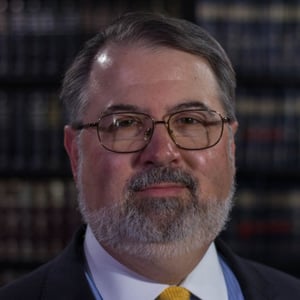
Staff Attorney, National Right to Work Legal Defense Foundation
Experience: Staff Attorney, National Right to Work Legal Defense Foundation, Springfield, VA, 1989-Present; Associate, Borland & Borland, Wilkes-Barre, PA, 1989; Intern, Criminal Division, U.S. Attorney’s Office, Atlanta, GA, U.S. Justice Department, 1988-89; Martindale-Hubbell® AV® Peer Review Rated.
Bar Admissions: Pennsylvania, 1989; District of Columbia, 1991; U.S. Supreme Court, 1992 (admitted only in PA & DC).
Law School: Emory University, J.D., 1989.
College: Hampden-Sydney College, B.A., with Honors in Political Science and History, magna cum laude, 1986.
Member: Federalist Society.
Publications: “Casting an Overdue Skeptical Eye: Knox v. SEIU,” CATO SUPREME COURT REVIEW, September 2012, at 333; “Making Windows into Litigants’ Souls: The Pernicious Potential of Gilpin v. AFSCME,” Engage, Apr. 2004, at 90; Co-author, “Big Labor’s Tyranny of the Minority: Forced Union Dues in Politics,” Federalist Society Free Speech & Election Law Newsletter, Fall 1996.
Reported Decisions (partial listing): Knox v. SEIU Local 1000, 132 S.Ct. 2277 (2012); Locke v. Karass, 555 U.S. 207 (2009); Cummings v. Connell, 402 F. 3d 935 (9th Cir. 2005); Prescott v. County of El Dorado, 177 F.3d 1102 (9th Cir. 1999), vacated, 528 U.S. 1111, reinstated in part, 204 F.3d 984 (9th Cir. 2000); Knight v. Kenai Peninsula Borough School District, 131 F.3d 807 (9th Cir. 1997); Johnson v. Lafayette Firefighters Ass’n, 51 F.3d 726 (7th Cir. 1995); Weaver v. University of Cincinnati, 942 F.2d 1039 (1991), further proceedings, 970 F.2d 1523 (6th Cir. 1992); Dixon v. City of Chicago, 948 F.2d 355 (7th Cir. 1991); Orr v. National Football League Players Ass’n, 147 L.R.R.M. (BNA) 2845 (Va. Cir. Ct. 1994), aff’d, 150 L.R.R.M. (BNA) 2191 (Va. 1995).

Drilling and Fracking: Who Regulates? - Podcast
Scott R. Perry, Jason B. Hutt, Craig Segall, Joel Burcat
Environmental Law & Property Rights Practice Group Podcast
The techniques of directional drilling and hydraulic fracturing for oil and natural gas have been...
National Federation of Independent Business v. Sebelius - Post-Decision SCOTUScast
Neal K. Katyal, Randy E. Barnett
SCOTUScast 07-10-12 featuring Randy Barnett and Neal Katyal
On June 28, 2012, the Supreme Court announced its decision in National Federation of Independent Business...
United States v. Alvarez - Post-Decision SCOTUScast
Eugene Volokh
SCOTUScast 07-09-12 featuring Eugene Volokh
On June 28, 2012 the Supreme Court announced its decision in United States v. Alvarez. The...
2012 Annual Supreme Court Round Up
Douglas R. Cox, Theodore B. Olson
Washington, DC Lawyers Chapter
On July 6, 2012, former U.S. Solicitor General Theodore Olson delivered the Annual Supreme Court Round Up...
2012 Annual Supreme Court Round Up
Douglas R. Cox, Theodore B. Olson
Washington, DC Lawyers Chapter
On July 6, 2012, former U.S. Solicitor General Theodore Olson delivered the Annual Supreme Court Round Up...
Liberty’s Refuge - Faculty Book Podcast
Michael W. McConnell, John Inazu
Faculty Division Podcast 07-06-12 featuring John Inazu and Michael McConnell
During the past decade, courts have struggled to reconcile anti-discrimination statutes with claims by private...
Match-E-Be-Nash-She-Wish Band of Pottawatomi Indians v. Patchak and Salazar v. Patchak - Post-Decision SCOTUScast
Thomas F. Gede
SCOTUScast 07-06-12 featuring Tom Gede
On June 18, 2012, the Supreme Court announced its decision in Match-E-Be-Nash-She-Wish Band of Pottawatomi Indians...
Salazar v. Ramah Navajo Chapter - Post-Decision SCOTUScast
Thomas F. Gede
SCOTUScast 07-06-12 featuring Tom Gede
On June 18, 2012, the Supreme Court announced its decision in Salazar v. Ramah Navajo...
Williams v. Illinois - Post-Decision SCOTUScast
John C. O'Quinn
SCOTUScast 07-05-12 featuring John O'Quinn
On June 18, 2012, the Supreme Court announced its decision in Williams v. Illinois. The issue...
41New Rule on Union Dues: Knox v. SEIU - Podcast
Dominic F. Parella, Dean Reuter, W. James Young
Labor & Employment Law Practice Group Podcast
In June 2012 the United States Supreme Court announced its decision in Knox v. Service Employees...