
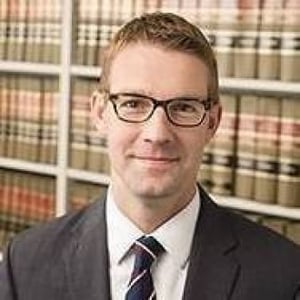
Chief Policy Advisor and Senior Legal Counsel, Office of Governor Kim Reynolds
Member, Fanning Harper Martinson Brandt & Kutchin, P.C.
Frank Valenzuela joined Fanning Harper Martinson Brandt & Kutchin, P.C. in 2007 and is a member whose practice focuses on school litigation, employment litigation, local government defense and serving as an assistant city attorney.
Admitted to The Florida Bar in 2003 and State Bar of Texas in 2006, Frank is licensed to practice in all Texas and Florida state courts and the U.S. District Courts for the Northern District of Texas and Northern and Southern Districts of Florida. Prior to joining FHMBK, Frank worked as Associate Corporate Counsel for the Morgan Management Corporation, which operates Morgan Buildings and Spas, Inc. and related Morgan companies.
Originally from Miami, Frank received his undergraduate degree in Politics from the University of Dallas and his law degree from Notre Dame Law School, where he was on the Moot Court Team. He and his wife moved back to Dallas from Miami in late 2005 to raise their family. Frank enjoys spending time with his family and friends, including coaching soccer and playing sports.
Frank has earned inclusion on the Texas Rising Stars listing for three consecutive years, 2010-2012.
Kansas Securities Commissioner
Aaron Jack, J.D., M.B.A., is the Kansas Securities Commissioner, a position he was appointed to by Kansas Governor Sam Brownback in 2011. Aaron was previously the West-Central Zone Director for New York Life where his 3,200 registered representatives produced over $1.5 billion in sales annually. Aaron was the first director in the history of New York Life to raise $1 billion in new assets for the company's investment management subsidiary, NYLIM.
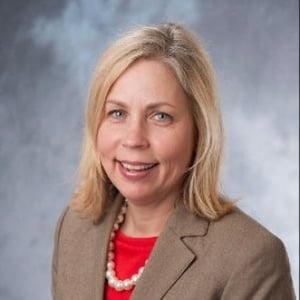
Senior Executive Counsel, NFIB Small Business Legal Center
Elizabeth Milito serves as Senior Executive Counsel with the National Federation of Independent Business, a position she has held since March 2004. Ms. Milito came to NFIB from the U.S. Department of Veteran's Affairs where she defended the agency in employment and labor lawsuits and was responsible for training and counseling managers on fair employment and HR practices. She has an extensive background in tort, medical malpractice and employment law.
Prior to serving as an attorney at the Department of Veteran's Affairs, Ms. Milito worked as a trial attorney at Nationwide Insurance Company. At Nationwide, she completed over 100 trials to verdict. Ms. Milito was the editor of notes and comments for the Maryland Law Review at the University of Maryland School of Law where she earned her Juris Doctor degree in May of 1996. Following her education, she served as a clerk to the Honorable Alan M. Wilner on the Maryland Court of Appeals, the state's highest court.
Ms. Milito is responsible for managing litigation and amicus work for NFIB. She has testified before Congress, federal agencies, and state legislatures on the small business impact of labor and employment issues. She also comments and writes regularly on small business cases before federal and state courts. Ms. Milito frequently counsels businesses facing employment discrimination charges, wage and hour claims, wrongful termination lawsuits, and in most other areas of human resources law. She also provides and develops on-line and on-site training on a variety of employment law matters and is a frequent media spokesperson on employment and labor matters.
Professor of Law, Fordham University School of Law
Professor Johnson is currently a Professor of Law at Fordham University School of Law, and teaches in the areas of Contracts, Environmental Law, and Gun Control/Gun Rights. He was previously Professor of Legal Studies in Business at Franklin and Marshall College (1988-93), Of Counsel at Kirkpatrick and Lockhard (1990-93), Vice President and Co-owner Westar Environmental Corporation (1988-90), and an Associate at Morgan, Lewis and Bockius (1985-88).
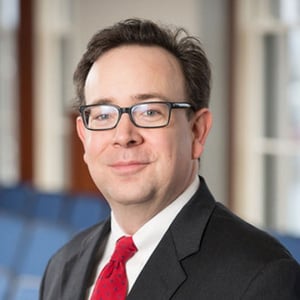
Professor of Law, Oklahoma City University School of Law
Professor O’Shea is a nationally recognized expert on firearms law and the Second Amendment. He is a co-author of the first law school casebook on the subject, Firearms Law and the Second Amendment: Regulation, Rights, and Policy, published in 2012. He serves as the Associate Director of OCU Law’s Center for State Constitutional Law and Government.
Professor O’Shea is an honors graduate of Harvard College and Harvard Law School. He also holds a master’s degree in philosophy from the University of Pittsburgh. Before coming to Oklahoma City University School of Law in 2006, he practiced commercial litigation in Chicago and in his hometown of Kansas City, Missouri. He also served as a law clerk to Chief Judge Danny J. Boggs of the U.S. Court of Appeals for the Sixth Circuit and to Judge John R. Gibson of the U.S. Court of Appeals for the Eighth Circuit.
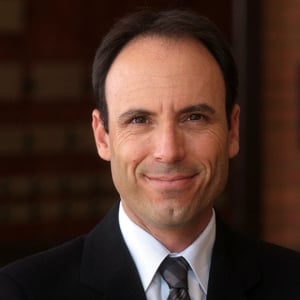
Professor of Law, UCLA School of Law
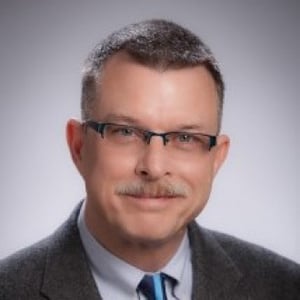
Founder and Senior Director, Institutional Religious Freedom Alliance
Stanley Carlson-Thies is the Founder and Senior Director of the Institutional Religious Freedom Alliance (IRFA), a division of the Center for Public Justice. As part of this role, he convenes the Coalition to Preserve Religious Freedom, a multi-faith alliance of social-service, education, and religious freedom organizations that advocates for the religious freedom of faith-based organizations to Congress and the federal government. In addition he is also a Senior Fellow at the Canadian think tank Cardus.
From 2009-2010 he served on a task force of President Obama’s Advisory Council on Faith-Based and Neighborhood Partnerships, helping to draft recommendations on how to clarify the church-state rules that apply to federal funding of social-service providers, and has consulted with federal departments and several states.
He served with the White House Office of Faith-Based & Community Initiatives from its inception in February 2001 until mid-May 2002. He assisted with writing “Unlevel Playing Field: Barriers to Participation by Faith-Based and Community Organizations in Federal Social Service Programs,” a report released by the White House in August 2001, and “Rallying the Armies of Compassion,” the initial blueprint for President George W. Bush’s faith and community agenda.
Previously, he was Director of Social Policy Studies for CPJ and directed CPJ’s project to track the implementation and impact of the Charitable Choice provision of the 1996 federal welfare reform law. Following his term in the White House, he returned to CPJ as the Director of Faith-based Policy Studies.
He received the William Bentley Ball Life and Religious Liberty Defense Award from the Center for Law and Religious Freedom and the Christian Legal Society in October 2004. He was named as one of 12 advocates who are “reinterpreting God and country” by the National Journal in May 2004. He holds a doctorate in political science from the University of Toronto. His dissertation is on the role of Protestants and Catholics in the development of Dutch politics in the 19th and 20th centuries. Besides the United States, he has lived in Canada, the Netherlands, and Japan, where he was born of missionary parents. He lives in Annapolis, Maryland, with his wife, Christiane. They are the proud parents of Simon.
Retired
Tom Gede retired in 2023 as a principal in Morgan Lewis Consulting LLC and of counsel to the firm. He currently consults on a variety of legal and policy matters for both public and private clients. Tom has a national reputation and distinguished background in federal Indian law. Prior to retirement, he represented clients in complex governmental matters in litigation, administrative and regulatory proceedings, including high-profile matters involving state governments. A former senior deputy in the California Attorney General’s office, Tom was amicus coordinator and Supreme Court counsel, and argued cases in the US Supreme Court, the California Supreme Court, and numerous state and federal appellate courts.
Tom also served as executive director of the Conference of Western Attorneys General (CWAG), coordinating activities on key legal and policy issues, such as federal Indian law, energy, environmental, public lands, financial services, and telecommunications, for the attorneys general of 18 western states and territories. In 2016, Tom was elected as a Member of the American Law Institute (ALI), and served as an Adviser on the Restatement of the Law Third - The Law of American Indians. Tom also taught federal Indian law as an adjunct law professor at the University of the Pacific - McGeorge School of Law. He served as an assistant editor for and the author of the Indian gaming chapter in CWAG’s American Indian Law Deskbook (2d & 3d eds.). He has been engaged in Indian gaming and Indian law matters for more than three decades, having focused on the gaming compacts with Indian tribes, as well as complex civil and criminal jurisdiction, land, natural resources, water and law enforcement issues in Indian country. He has testified before Congress on American Indian and Native Alaskan issues. In 2012 he was appointed by Speaker John Boehner to serve on the United States Indian Law and Order Commission, where he examined criminal justice issues in Indian country and Alaska, resulting in the issuance of an important report to the President and Congress.

Iowa Supreme Court Deeply Divided on Whether the Iowa Constitution Contains a Right to Education
Ryan G. Koopmans
State Court Docket Watch Summer 2012
In April, the Iowa Supreme Court rejected a plea to read a right to a...
Filarsky v. Delia - Post-Decision SCOTUScast
Frank Valenzuela
SCOTUScast 08-15-12 featuring Frank Valenzuela
On April 17, 2012, the Supreme Court announced its decision in Filarsky v. Delia. The question...
The Economic Freedom Amendment: A States-Based Response to the Nationalizing Effects of Bailouts and Federal Ownership of Corporate Stock
Aaron Jack
Engage Volume 13, Issue 2, July 2012
Note from the Editor: This paper discusses a proposed state constitutional amendment that would deny...
United States v. Home Concrete & Supply, LLC and Its Implications for Administrative Law
Elizabeth Milito
Engage Volume 13, Issue 2, July 2012
I. Introduction On April 25, 2012, the United States Supreme Court decided United States v....
Bar Watch Bulletin for August 7, 2012
Remarks by James Silkenat, New ABA President-Elect The new ABA president-elect, James Silkenat, addressed the...
Firearms Law and the Second Amendment - Faculty Book Podcast
Nicholas Johnson, Michael O'Shea, Adam Winkler
Faculty Division Podcast 08-07-12 featuring Nicholas Johnson, Michael O'Shea and Adam Winkler
This podcast discusses Firearms Law and the Second Amendment: Regulation, Rights and Policy by authors...
Barwatch Bulletin for August 2012
Around the ABA Annual Meeting… South Carolina Senator Lindsey Graham offered the Annual Meeting’s keynote...
Which Religious Organizations Count as Religious? The Religious Employer Exemption of the Health Insurance Law's Contraceptives Mandate
Stanley Carlson-Thies
Engage Volume 13, Issue 2, July 2012
On August 1, 2011, the Health Resources and Service Administration issued guidelines specifying that, among...
Criminal Jurisdiction of Indian Tribes: Should Non-Indians Be Subject to Tribal Criminal Authority Under VAWA?
Thomas F. Gede
Engage Volume 13, Issue 2, July 2012
Ever since the U.S. Supreme Court issued its 1978 decision in Oliphant v. Suquamish Tribe,1...
ABA Watch August 2012
Table of Contents
The ABA and Executive Power in the Obama Administration ABA House of Delegates Considers Policies...