
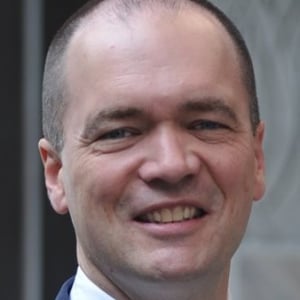
Professor of Law, High Point School of Law
Scott Gaylord directs High Point Law’s Appellate Litigation Clinic and serves as a Professor of Law, teaching Constitutional Law and related upper-level elective courses. The Appellate Clinic works with students to write and file briefs in significant court cases, including appeals before the United States Supreme Court.
Professor Gaylord is a prominent Constitutional Law scholar with an impressive background in both academia and legal practice. He has authored or co-authored 18 substantial law review articles, co-authored a Constitutional Law casebook, and has written more than 35 amicus briefs to the U.S. Supreme Court and federal circuit courts on prominent national cases involving religious liberty and free speech. He is a frequent speaker on constitutional law and First Amendment topics at law schools across the country and has regularly provided commentary on ongoing constitutional issues to national media outlets, including th eNew York Times, USA Today, the Diane Rehm Show, NPR, The National Constitution Center, and Bloomberg Law.
Professor Gaylord also started an appellate advocacy clinic at his former law school and currently serves on the North Carolina Chief Justice’s Commission on Professionalism, along with holding many other service and leadership roles. Prior to joining the academy in 2007, he practiced complex civil and commercial litigation with the Charlotte firm of Robinson Bradshaw & Hinson, and he clerked for Judge Edith H. Jones on the United States Court of Appeals for the Fifth Circuit.
Professor Gaylord earned his B.A. in philosophy and English, summa cum laude, from Colgate University, his Ph.D. in philosophy from the University of North Carolina at Chapel Hill, and his J.D. from Notre Dame Law School, where he also graduated summa cum laude.
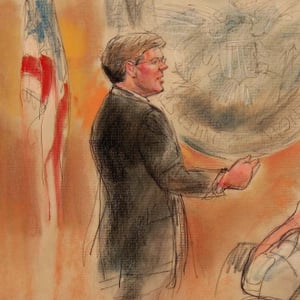
Partner, Neilson Law Group P.C.
C. Thomas Ludden is the head of the Appellate Practice group at Lipson Neilson P.C. He has appeared before the United States Supreme Court, the Michigan Supreme Court, the Sixth and Ninth Circuit Courts of Appeal and the Michigan Court of Appeals. Mr. Ludden is a 1990 graduate of the University of Michigan (J.D./M.B.A) and a 1986 graduate of Dickinson College (B.A.) where he majored in Latin, Ancient Greek and Economics.

Senior Scholar, Manhattan Institute; Professor of Law Emerita, University of San Diego
Gail Heriot is a Senior Scholar at the Manhattan Institute, a Professor of Law Emerita at the University of San Diego and the Chairman of the Board of the American Civil Rights Project. She served on the U.S. Commission on Civil Rights for 18 years. Her new book is entitled “Why We Walk on Eggshells: How Our Civil Rights Laws Stifle Our Public Discourse.”

Executive Vice President, The Federalist Society
Dean Reuter is Executive Vice President at the Federalist Society for Law and Public Policy Studies. He has served in two federal government agency Offices of the Inspector General, as Counsel to the Inspector General and Deputy Inspector General, responsible for policing the use of federal funds granted and contracted through those agencies. As such, he helped conduct and oversee criminal investigations across the country. He is the principal author of the non-fiction book, The Hidden Nazi: The Untold Story of America's Deal with the Devil, and editor of Liberty’s Nemesis: The Unchecked Expansion of the State and Confronting Terror: 9/11 and the Future of American National Security. He was appointed by the President and served as Vice-Chairman of the Board of Directors of the Corporation for National and Community Service, and recently served as an appointee on the U.S. Commission on Presidential Scholars. He is a graduate of Hood College (BA with Honors) and the University of Maryland School of Law.
I. Herman Stern Professor of Law
David Post is currently the I. Herman Stern Professor of Law at the Beasley School of Law at Temple University, where he teaches intellectual property law and the law of cyberspace. Professor Post is also an Adjunct Scholar at the Cato Institute, a Fellow at the Institute for Information Law and Policy at New York Law School, and a contributor to the influential Volokh Conspiracy blog. [More detail on Professor Post's research and writings can be found here.]
Trained originally as a physical anthropologist, Professor Post spent two years studying the feeding ecology of yellow baboons in Kenya's Amboseli National Park, and he taught at the Columbia University Department of Anthropology from 1976 through 1981. He then attended Georgetown Law Center, from which he graduated summa cum laude in 1986. After clerking with then-Judge Ruth Bader Ginsburg on the DC Circuit Court of Appeals, he spent 6 years at the Washington D.C. law firm of Wilmer, Cutler & Pickering, practicing in the areas of intellectual property law and high technology commercial transactions. He then clerked again for Justice Ginsburg during her first term on the Supreme Court before joining the faculty of, first, the Georgetown University Law Center (1994-1997) and then the Temple University Law School (1997-present).
Professor Post is the author of Cyberlaw: Problems of Policy and Jurisprudence in the Information Age (3d Edition, West, 2007) (co-authored with Paul Schiff Berman and Patricia Bellia), and In Search of Jefferson's Moose: Notes on the State of Cyberspace (Oxford U. Press, forthcoming 2008), as well as numerous articles on intellectual property, the law of cyberspace, and the application of complexity theory to Internet legal questions that have appeared in the Stanford Law Review, Journal of Legal Studies, Berkeley Technology Law Journal, Esther Dyson's Release 1.0, Journal of Online Law, University of Chicago Legal Forum, Vanderbilt Law Review, Georgetown Law Journal, and numerous other publications. For four years (1994-1998) he wrote a monthly column on law and technology ("Plugging In") for the American Lawyer, and from 1998-2004 he wrote the "On the Horizon" column for InformationWeek (with Bradford Brown). He has appeared as a commentator on the Lehrer News Hour, Court TV's Supreme Court Preview, NPR's All Things Considered, BBC's World, and other television and radio shows, and recently was featured in the PBS documentary The Supreme Court. During 1996-1997 he conducted, along with two colleagues (Professors Larry Lessig and Eugene Volokh) the first Internet-wide e-mail course on "Cyberspace Law for Non-Lawyers" which attracted over 20,000 subscribers. He also sings and plays guitar, piano, banjo, and harmonica in the bands "Bad Dog," "The Dwights," and "The Zen Cohens."
Professor Post's writings can be accessed online via his publications page and personal site (http://www.davidpost.com).
J.D., Georgetown University
Ph.D. (Anthropology), Yale University
B.A., Yale University

Thomas M. Siebel Senior Fellow, The Hoover Institution, Stanford University; Gary T. Schwartz Distinguished Professor of Law Emeritus, UCLA School of Law
Eugene Volokh is the Thomas M. Siebel Senior Fellow at the Hoover Institution (Stanford), as well as the Gary T. Schwartz Distinguished Professor of Law Emeritus and Distinguished Research Professor at UCLA School of Law. He recently retired from teaching at UCLA, after 30 years there, and is now focusing on research.
Volokh is the author of the textbooks The First Amendment and Related Statutes (8th ed. 2023), and Academic Legal Writing (5th ed. 2016), as well as over 100 academic law journal articles, mostly on First Amendment law. He is a member of The American Law Institute; the editor-in-chief of the Journal of Free Speech Law; and the creator and coauthor of The Volokh Conspiracy, a leading legal blog founded in 2002 (hosted at the Washington Post from 2014 to 2017 and now at Reason Magazine).
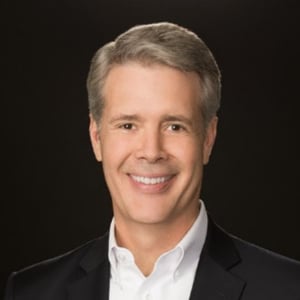
Partner, Cooley
Rob McDowell advises telecommunications, media and technology clients on their most significant regulatory, legal and business matters. As a former commissioner of the Federal Communications Commission (FCC) and a highly regarded industry leader, Rob has been at the forefront of the most complex and groundbreaking issues facing telecommunications.
Mr. McDowell was first appointed to the FCC by President George W. Bush in 2006 and again by President Obama in 2009. He was unanimously confirmed both times by the US Senate. During his tenure, Mr. McDowell led efforts to expand consumer access to spectrum through his work on the two largest wireless auctions in US history at the time, played a key role in the 2009 digital television transition and led efforts to establish the first federal civil rights rule in a generation by creating a ban on racially discriminatory practices in broadcast advertising. He also worked extensively on several large and complex mergers, including Sirius/XM and Comcast/NBC-Universal.
He is an advocate for internet freedom, serving on the US delegation to the 2012 World Conference on International Telecommunications and exposing an international bid to regulate vital aspects of the Internet through multilateral treaty-based organizations. Mr. McDowell authored an op-ed in the Wall Street Journal opposing multilateral internet regulation that led to a resolution passed unanimously in the House and Senate, as well as the ultimate defeat of the international bid at a treaty negation in Dubai later that year.
Prior to the FCC, Mr. McDowell was senior vice president for CompTel, the Competitive Telecommunications Association, where he led advocacy efforts before several government agencies, the White House and Congress.
Mr. McDowell is often called upon for speaking engagements and frequently appears on TV and radio. He has written opinion pieces for many high-profile publications, including the Wall Street Journal and Washington Post.
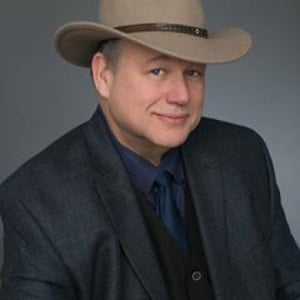
Assistant Professor, Florida Coastal School of Law
Professor Rod Sullivan practiced maritime law for 25 years before joining the faculty at Florida Coastal School of Law and is a Board Certified specialist in Admiralty and Maritime Law. During his years of practice he tried over 100 jury and non-jury cases in both federal and state courts in Florida and Georgia.
Professor Sulivan regularly teaches Constitutional Law, Administrative Law, Admiralty and Maritime Law, and the global Climate Change Seminar.
Professor Sullivan successfully argued before the United States Supreme Court on behalf of Edgar Townsend in the case of Atlantic Sounding, Inc. v. Townsend, 129 S. Ct. 2561 (2009). In a 5-4 decision written by Justice Clarence Thomas the Supreme Court decided that a seaman who was wrongfully denied medical care by his employer could seek punitive damages.
Professor Sullivan appeared as counsel for certain voters in Nassau County, Florida in the 2000 Presidential Election recount case in Tallahassee, Florida which came to be known as Bush v. Gore. He also served in the Merchant Marine Ready Reserve program of the U. S. Naval Reserve, earning the rank of Lieutenant.
Senior Scholar, Manhattan Institute; Professor of Law Emerita, University of San Diego
Gail Heriot is a Senior Scholar at the Manhattan Institute, a Professor of Law Emerita at the University of San Diego and the Chairman of the Board of the American Civil Rights Project. She served on the U.S. Commission on Civil Rights for 18 years. Her new book is entitled “Why We Walk on Eggshells: How Our Civil Rights Laws Stifle Our Public Discourse.”

The Effect of Super PACs on North Carolina Judicial Elections
Scott W. Gaylord
This November, North Carolinians will have the opportunity to select one person to serve an...
Textualism and the Michigan Supreme Court
C. Thomas Ludden
In this white paper, the author analyzes selected Michigan Supreme Court cases interpreting the Michigan...
Textualism and the Michigan Supreme Court
C. Thomas Ludden
In this white paper, the author analyzes selected Michigan Supreme Court cases interpreting the Michigan...
Kloeckner v. Solis - Post-Argument SCOTUScast
A Bryant
SCOTUScast 10-22-12 featuring Christopher Bryant
On October 2, 2012 the Supreme Court heard oral argument in Kloeckner v. Solis. The case...
Fisher v. University of Texas: Affirmative Action Revisited by the Supreme Court - Podcast
Gail L. Heriot, Dean Reuter
Civil Rights Practice Group Podcast
Fisher v. University of Texas is being heralded as the blockbuster case of this year’s...
In Search of Jefferson’s Moose - Faculty Book Podcast
David G. Post, Eugene Volokh
Faculty Division Podcast 10-19-12 featuring David Post and Eugene Volokh
In Search of Jefferson’s Moose: Notes on the State of Cyberspace explores the “new world” of cyberspace:...
A U.N. Regulated Internet? The Case for Defending Against Persistent Intergovernmental Threats to Internet Freedom
Robert M. McDowell
Engage Volume 13, Issue 3 October 2012
Note from the Editor: The author has adapted this paper from testimony before the U.S....
Moncrieffe v. Holder - Post-Argument SCOTUScast
D Broyles
SCOTUScast 10-16-12 featuring Scott Broyles
On October 10, 2012, the Supreme Court heard oral argument in Moncrieffe v. Holder. The question...
Lozman v. City of Riviera Beach, Florida - Post-Argument SCOTUScast
Rod Sullivan
SCOTUScast 10-15-12 featuring Rod Sullivan
On October 1, 2012, the Supreme Court heard oral argument in Lozman v. City of Riviera...
Fisher v. University of Texas at Austin - Post-Argument SCOTUScast
Gail L. Heriot
SCOTUScast 10-12-12 featuring Gail Heriot
On October 10, 2012, the Supreme Court heard oral argument in Fisher v. University of...