

Partner, Holtzman Vogel Baran Torchinsky & Josefiak PLLC
Abhishek (Abhi) Kambli is a partner at Holtzman Vogel who represents clients in high-stakes appellate and complex litigation, constitutional challenges, and matters involving state attorneys general and federal agencies. He is one of a handful of lawyers nationally who has both led federal litigation from inside the Department of Justice and multi-state coalition work from a State Attorney General’s office—giving clients a 360-degree perspective on government enforcement, regulatory challenges, and constitutional advocacy.
Prior to joining Holtzman Vogel, Abhi served as Deputy Associate Attorney General at the United States Department of Justice, where he acted as lead counsel in high-priority matters for the Trump Administration, oversaw the Department’s civil components on behalf of the Associate Attorney General, advised the White House Counsel’s Office and federal agencies on litigation risk and strategy, and developed the Department’s national affirmative civil litigation strategy.
Earlier, he served as Deputy Attorney General and Division Chief of the Special Litigation and Constitutional Issues Division at the Kansas Attorney General’s Office, where he launched the division and led multi-state coalitions in trial and appellate courts nationwide, including the United States Supreme Court. He began his career as an Assistant United States Attorney in the Southern District of Indiana, prosecuting more than 100 federal cases from investigation through appeal.
Abhi is also a Lieutenant Colonel in the United States Air Force Judge Advocate General's Corps, having served on active duty and in the reserves since 2013. His military service includes criminal trials as both prosecutor and defense attorney, appellate representation before the Court of Appeals for the Armed Forces, and representation of a high-profile detainee before the Military Commissions at Guantánamo Bay.
Erin Gaide is an Assistant Attorney General in the Kansas Office of the Attorney General, where she is a member of the Special Litigation & Constitutional Issues Division. Before beginning with the Kansas Attorney General, Erin clerked for the Honorable Allison H. Eid of the U.S. Court of Appeals for the Tenth Circuit.
Erin earned her J.D., magna cum laude, from the College of Law William & Mary, where she was elected to the Order of the Coif. She earned her B.A., cum laude, in International Studies from the Ohio State University.
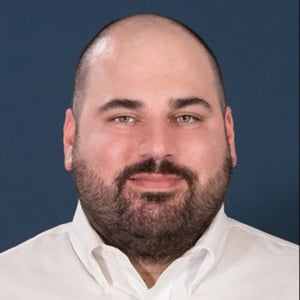
Senior Attorney, Pacific Legal Foundation
Chris Kieser practices in PLF’s property rights and equality before the law practice groups.
His property rights clients include Cedar Point Nursery, which challenged a California regulation requiring them to allow union organizers to invade their private property, as well as Randall and Kimberley Pavlock, who are fighting back against Indiana’s beachfront land grab along Lake Michigan.
Under equality before the law, Chris represents coalitions of Asian-American parents challenging discriminatory admissions policies for selective K-12 schools in New York City; Montgomery County, Maryland; and Fairfax County, Virginia. He also represents a parent organization in Connecticut challenging a racial quota that prevents many Black and Hispanic students from enrolling at the state’s magnet schools.
Chris has published law review articles in the William & Mary Environmental Law Review and the Federalist Society Review. His op-eds have appeared in the New York Daily News, National Review, The Blaze, the Daily Journal, and SCOTUSblog.
Chris clerked for the Honorable Daniel A. Manion of the United States Court of Appeals for the Seventh Circuit and the Honorable Thomas D. Schroeder of the United States District Court for the Middle District of North Carolina. He holds a B.A., cum laude, from the University of Notre Dame, and graduated magna cum laude from Notre Dame Law School in 2013. At Notre Dame, he was an articles editor of the Notre Dame Law Review.
Growing up on Long Island, Chris developed a deep passion for limited government and individual liberty, arguing with his more numerous progressive classmates. This experience made him deeply skeptical that government tinkering at the expense of individual rights ever works, whether it be denying a property owner the use of his land or a student a seat at her desired school because of her race. He chose PLF because it is the national leader in litigation that furthers individual liberty.
When he’s not working, you’re likely to find Chris rooting for the Mets and Fighting Irish or debating some arcane point of law (because apparently that doesn’t happen enough at work).
Chris is currently licensed to practice in California and admitted to practice before the Supreme Court of the United States, the United States Courts of Appeal for the Second, Seventh, and Ninth Circuits, and the U.S. District Courts for the Eastern and Central Districts of California, the Northern District of Indiana, and the Northern District of Illinois.
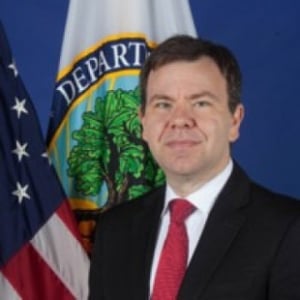
General Counsel, Mountain States Legal Foundation
William E. Trachman is General Counsel for Mountain States Legal Foundation, where he protects the rights of individuals to live freely and securely under the U.S. Constitution. Previously, he was appointed to serve in the Department of Education as Deputy Assistant Secretary in the Office for Civil Rights. Prior to his appointment, he served as General Counsel to the Douglas County School District, where he helped litigate the fight for school choice in the school district. Presently, Mr. Trachman serves as Chair of the Colorado Federalist Society and the Vice Chair of the U.S. Commission on Civil Rights’ Colorado Advisory Board. He previously taught as an Adjunct Professor at the University of Denver, Sturm College of Law. He attended U.C. Berkeley for both undergraduate and law school, and then clerked for the Honorable Harris Hartz on the 10th Circuit Court of Appeals. Mr. Trachman is licensed in Colorado, California, and Washington, D.C.
Senior Attorney, Pacific Legal Foundation
Chris Kieser practices in PLF’s property rights and equality before the law practice groups.
His property rights clients include Cedar Point Nursery, which challenged a California regulation requiring them to allow union organizers to invade their private property, as well as Randall and Kimberley Pavlock, who are fighting back against Indiana’s beachfront land grab along Lake Michigan.
Under equality before the law, Chris represents coalitions of Asian-American parents challenging discriminatory admissions policies for selective K-12 schools in New York City; Montgomery County, Maryland; and Fairfax County, Virginia. He also represents a parent organization in Connecticut challenging a racial quota that prevents many Black and Hispanic students from enrolling at the state’s magnet schools.
Chris has published law review articles in the William & Mary Environmental Law Review and the Federalist Society Review. His op-eds have appeared in the New York Daily News, National Review, The Blaze, the Daily Journal, and SCOTUSblog.
Chris clerked for the Honorable Daniel A. Manion of the United States Court of Appeals for the Seventh Circuit and the Honorable Thomas D. Schroeder of the United States District Court for the Middle District of North Carolina. He holds a B.A., cum laude, from the University of Notre Dame, and graduated magna cum laude from Notre Dame Law School in 2013. At Notre Dame, he was an articles editor of the Notre Dame Law Review.
Growing up on Long Island, Chris developed a deep passion for limited government and individual liberty, arguing with his more numerous progressive classmates. This experience made him deeply skeptical that government tinkering at the expense of individual rights ever works, whether it be denying a property owner the use of his land or a student a seat at her desired school because of her race. He chose PLF because it is the national leader in litigation that furthers individual liberty.
When he’s not working, you’re likely to find Chris rooting for the Mets and Fighting Irish or debating some arcane point of law (because apparently that doesn’t happen enough at work).
Chris is currently licensed to practice in California and admitted to practice before the Supreme Court of the United States, the United States Courts of Appeal for the Second, Seventh, and Ninth Circuits, and the U.S. District Courts for the Eastern and Central Districts of California, the Northern District of Indiana, and the Northern District of Illinois.
General Counsel, Mountain States Legal Foundation
William E. Trachman is General Counsel for Mountain States Legal Foundation, where he protects the rights of individuals to live freely and securely under the U.S. Constitution. Previously, he was appointed to serve in the Department of Education as Deputy Assistant Secretary in the Office for Civil Rights. Prior to his appointment, he served as General Counsel to the Douglas County School District, where he helped litigate the fight for school choice in the school district. Presently, Mr. Trachman serves as Chair of the Colorado Federalist Society and the Vice Chair of the U.S. Commission on Civil Rights’ Colorado Advisory Board. He previously taught as an Adjunct Professor at the University of Denver, Sturm College of Law. He attended U.C. Berkeley for both undergraduate and law school, and then clerked for the Honorable Harris Hartz on the 10th Circuit Court of Appeals. Mr. Trachman is licensed in Colorado, California, and Washington, D.C.

Partner, Gibson, Dunn & Crutcher, LLP
Svetlana S. Gans is a partner in the Washington, D.C. office of Gibson, Dunn & Crutcher, LLP where she helps clients navigate complex consumer protection, privacy, and competition related regulatory proceedings before the U.S. Federal Trade Commission (FTC), , U.S. Department of Justice Antitrust Division, State Attorneys General and other enforcement bodies. Ms. Gans also assists on litigation matters and provides strategic counseling and advice related to public policy issues.
Before joining Gibson Dunn, she served as the Vice President & Associate General Counsel at NCTA, the Internet & Television Association, where she helped lead the association’s consumer protection and competition policy work. Prior to joining NCTA, Ms. Gans served with distinction as Chief of Staff to Acting Chairman Maureen K. Ohlhausen at the FTC. As the agency chief of staff, Ms. Gans managed and oversaw agency operations, including bureau and office heads reporting to the Chairman, a seven-member office staff, and an agency budget of over $300 million. She also served as the Acting Chairman’s key advisor on consumer protection and competition investigations and litigation, working with a diverse team of attorneys and economists to preserve competition and protect U.S. consumers. She created, executed, and oversaw several strategic initiatives for the agency, including the agency process reform, regulatory reform, and data security transparency initiatives. Previously, Ms. Gans had the unique experience of serving in both litigating bureaus of the FTC: the Bureau of Competition and the Bureau of Consumer Protection.
Prior to her time in government, Ms. Gans worked as an antitrust associate at major law firms. Her practice focused on defending consumer product, financial services, and trade association clients in regulatory and private investigations alleging conspiracy and violations of antitrust and consumer protection laws.
Ms. Gans has been an active leader in the ABA Antitrust Law Section (“Section”) for two decades, and currently serves as the Section’s Marketing Officer. Ms. Gans helped create the Section’s Young Lawyer Representative Program, now in its 10th year, and the Section’s Law Ambassador Program, each aimed at developing and promoting the next generation of consumer protection and competition attorneys. Ms. Gans is also active in the Federal Communications Bar Association, currently serving as Co-Chair of the Diversity Pipeline Initiative and the Women’s Leadership Committee.
Ms. Gans received her law degree with high honors from the University of Denver College of Law. During law school, Ms. Gans served as a Judicial Intern to the Honorable John L. Kane, Jr. and as an Honors Program Paralegal for the United States Department of Justice Antitrust Division, Merger Taskforce. Ms. Gans earned her undergraduate degree cum laude from Boston University.
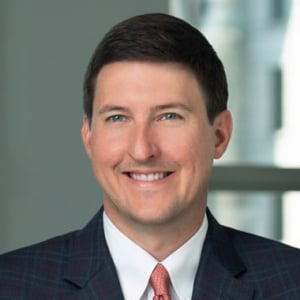
Counsel, Latham & Watkins, LLP
Keith Klovers, former advisor to FTC commissioners Christine S. Wilson and Maureen K. Ohlhausen, represents companies in complex merger reviews, government conduct investigations, and civil antitrust litigation, as well as in complaints brought by US antitrust enforcers.
Keith represents companies in highly scrutinized industries, including healthcare, life sciences, and technology, before the US DOJ and FTC. He leverages an impressive track record of successfully obtaining merger clearances, including unconditional clearances without remedies for high-profile mergers, resolving conduct investigations, and defending clients in antitrust litigation and on appeal before the US government.
Complementing his extensive experience advising clients on day-to-day antitrust issues, he has provided specific guidance to clients related to the antitrust considerations of IP licensing, Robinson-Patman Act compliance, and dual distribution arrangements.
During his tenure at the FTC, Keith advised the commissioners on more than 100 merger reviews and conduct investigations, including litigation, settlements, and Part 3 opinions, and advised on several significant antitrust policy initiatives. Keith also clerked for judge Douglas H. Ginsburg on the US Court of Appeals for the District of Columbia Circuit.
A prolific writer on current and innovative antitrust trends, his numerous articles can be found in the Antitrust Law Journal, Michigan Law Review, George Mason Law Review, Journal of Antitrust Enforcement, Antitrust Magazine, Health Affairs, and the Journal of Economic and Development Studies, among others.
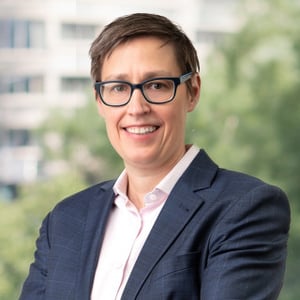
Partner, WilmerHale
Jennifer Milici is the former Chief Trial Counsel of the US Federal Trade Commission’s Bureau of Competition. Ms. Milici focuses her practice on representing clients in high-profile litigation and helping clients navigate the evolving antitrust regulatory environment. She is well-positioned to advise clients on antitrust regulatory reviews and investigations, to litigate challenges filed by US antitrust enforcers, and to represent clients in high stakes federal, state, or administrative litigation.
Ms. Milici has more than 15 years of civil litigation experience and has played a key role in numerous trials. She has extensive courtroom experience and has successfully developed and implemented strategies to win trials raising complex and cutting-edge issues.
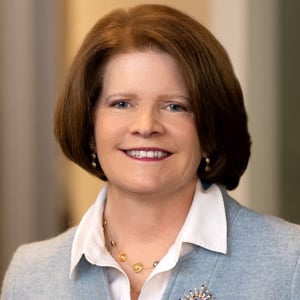
Partner, Antitrust and Competition, Wilson Sonsini Goodrich & Rosati
Maureen Ohlhausen is a partner in the Washington, D.C., office of Wilson Sonsini Goodrich & Rosati, where she advises industry-leading clients on complex antitrust and litigation matters, with a focus on high-profile cases. Sought after for her depth of experience on antitrust and Federal Trade Commission (FTC)-related issues, Maureen is known for her relationships with officials in the U.S. and abroad.
After finishing law school and clerking at the U.S. Court of Appeals for the D.C. Circuit, Maureen joined the FTC in 1997. She held a series of roles at the agency over the next 12 years, rising to the position of Director of the FTC Office of Policy Planning, where she led the agency’s work on e-commerce and headed the FTC’s Internet Access Task Force, which produced an influential report analyzing competition and consumer protection legal issues in the broadband and internet sectors. She then went into private practice at a leading telecommunications law firm, where she headed the FTC practice group.
In 2012, Maureen was confirmed by the Senate as a Commissioner of the FTC and was appointed Acting Chairman in January 2017, a role she held until May 2018. As Acting Chairman, Maureen directed all aspects of the agency’s antitrust work, including merger review, conduct enforcement, and all consumer protection enforcement, with an emphasis on privacy and technology issues. Under her leadership, the FTC won several influential merger challenges in court and reached a number of key digital privacy settlements.
To date, Maureen is the only FTC Commissioner to have received the Robert Pitofsky Lifetime Achievement Award in recognition of her contributions to the FTC.
Following the end of her term at the FTC, and immediately prior to joining Wilson Sonsini, Maureen was chair of the global antitrust and competition practice at Baker Botts, based in that firm’s Washington, D.C., office.
A recognized thought leader, Maureen is a frequent author and speaker, and is often quoted by leading print and broadcast media on antitrust, FTC, and privacy and data security matters. She has published dozens of articles on antitrust, privacy, intellectual property, regulation, FTC litigation, telecommunications, and international law issues in prestigious publications. During her tenure at the FTC and in private practice, she testified more than two dozen times before Congress, including before the Senate Commerce Committee and the House Energy and Commerce Antitrust Sub-Committee. She also testified before the Antitrust Modernization Commission.

Associate Attorney, Gibson, Dunn & Crutcher
Matthew Rozen is an associate in the Washington, D.C. office of Gibson, Dunn & Crutcher. He practices in the firm’s Litigation Department and Appellate and Constitutional Law practice.
Before joining the firm, Mr. Rozen served as a law clerk to the Honorable Richard A. Posner of the United States Court of Appeals for the Seventh Circuit. Mr. Rozen graduated with highest honors from the University of Chicago Law School, where he served as an Articles Editor on the University of Chicago Law Review. Mr. Rozen holds a master’s degree in Comparative Literature from the University of California, Irvine, and received his undergraduate degree in Literature from Harvard University, where he graduated magna cum laude.
Mr. Rozen is admitted to practice in Virginia and the District of Columbia. He is fluent in Spanish and proficient in French.

Partner, Milbank
Mr. Weingarten is a seasoned trial lawyer who has served as first chair trial counsel and lead counsel in federal courts and federal agency administrative proceedings. He has significant experience in antitrust matters, both conduct and merger related, including most recently serving as first chair trial counsel representing the Federal Trade Commission (FTC) in federal court and administrative proceedings challenging anticompetitive mergers and conduct. He also has experience litigating competition matters across industries, with a focus on the healthcare, pharmaceutical and technology sectors.
James is the Vice Chair of the American Bar Association’s Antitrust Section of Civil Practice and Procedure Committee.
Prior to joining Milbank, James served as Chief Trial Counsel at the Federal Trade Commission. He held various other positions at the FTC after joining the agency in 2017. In those roles, he investigated and litigated significant merger and non-merger matters on behalf of the government. He litigated with state attorneys general and coordinated with foreign regulators. These experiences equip him not only to litigate on behalf of clients, but also to advise them on government merger and business practice investigations.
Before joining the FTC, he spent eight years as a litigation associate at Williams & Connolly LLP.
James graduated from Harvard Law School, magna cum laude, in 2007, and from Yale College, magna cum laude, in 2001. After law school, he clerked with Judge Danny Boggs on the US Court of Appeals for the Sixth Circuit.
Partner, Gibson, Dunn & Crutcher, LLP
Svetlana S. Gans is a partner in the Washington, D.C. office of Gibson, Dunn & Crutcher, LLP where she helps clients navigate complex consumer protection, privacy, and competition related regulatory proceedings before the U.S. Federal Trade Commission (FTC), , U.S. Department of Justice Antitrust Division, State Attorneys General and other enforcement bodies. Ms. Gans also assists on litigation matters and provides strategic counseling and advice related to public policy issues.
Before joining Gibson Dunn, she served as the Vice President & Associate General Counsel at NCTA, the Internet & Television Association, where she helped lead the association’s consumer protection and competition policy work. Prior to joining NCTA, Ms. Gans served with distinction as Chief of Staff to Acting Chairman Maureen K. Ohlhausen at the FTC. As the agency chief of staff, Ms. Gans managed and oversaw agency operations, including bureau and office heads reporting to the Chairman, a seven-member office staff, and an agency budget of over $300 million. She also served as the Acting Chairman’s key advisor on consumer protection and competition investigations and litigation, working with a diverse team of attorneys and economists to preserve competition and protect U.S. consumers. She created, executed, and oversaw several strategic initiatives for the agency, including the agency process reform, regulatory reform, and data security transparency initiatives. Previously, Ms. Gans had the unique experience of serving in both litigating bureaus of the FTC: the Bureau of Competition and the Bureau of Consumer Protection.
Prior to her time in government, Ms. Gans worked as an antitrust associate at major law firms. Her practice focused on defending consumer product, financial services, and trade association clients in regulatory and private investigations alleging conspiracy and violations of antitrust and consumer protection laws.
Ms. Gans has been an active leader in the ABA Antitrust Law Section (“Section”) for two decades, and currently serves as the Section’s Marketing Officer. Ms. Gans helped create the Section’s Young Lawyer Representative Program, now in its 10th year, and the Section’s Law Ambassador Program, each aimed at developing and promoting the next generation of consumer protection and competition attorneys. Ms. Gans is also active in the Federal Communications Bar Association, currently serving as Co-Chair of the Diversity Pipeline Initiative and the Women’s Leadership Committee.
Ms. Gans received her law degree with high honors from the University of Denver College of Law. During law school, Ms. Gans served as a Judicial Intern to the Honorable John L. Kane, Jr. and as an Honors Program Paralegal for the United States Department of Justice Antitrust Division, Merger Taskforce. Ms. Gans earned her undergraduate degree cum laude from Boston University.
Counsel, Latham & Watkins, LLP
Keith Klovers, former advisor to FTC commissioners Christine S. Wilson and Maureen K. Ohlhausen, represents companies in complex merger reviews, government conduct investigations, and civil antitrust litigation, as well as in complaints brought by US antitrust enforcers.
Keith represents companies in highly scrutinized industries, including healthcare, life sciences, and technology, before the US DOJ and FTC. He leverages an impressive track record of successfully obtaining merger clearances, including unconditional clearances without remedies for high-profile mergers, resolving conduct investigations, and defending clients in antitrust litigation and on appeal before the US government.
Complementing his extensive experience advising clients on day-to-day antitrust issues, he has provided specific guidance to clients related to the antitrust considerations of IP licensing, Robinson-Patman Act compliance, and dual distribution arrangements.
During his tenure at the FTC, Keith advised the commissioners on more than 100 merger reviews and conduct investigations, including litigation, settlements, and Part 3 opinions, and advised on several significant antitrust policy initiatives. Keith also clerked for judge Douglas H. Ginsburg on the US Court of Appeals for the District of Columbia Circuit.
A prolific writer on current and innovative antitrust trends, his numerous articles can be found in the Antitrust Law Journal, Michigan Law Review, George Mason Law Review, Journal of Antitrust Enforcement, Antitrust Magazine, Health Affairs, and the Journal of Economic and Development Studies, among others.
Partner, WilmerHale
Jennifer Milici is the former Chief Trial Counsel of the US Federal Trade Commission’s Bureau of Competition. Ms. Milici focuses her practice on representing clients in high-profile litigation and helping clients navigate the evolving antitrust regulatory environment. She is well-positioned to advise clients on antitrust regulatory reviews and investigations, to litigate challenges filed by US antitrust enforcers, and to represent clients in high stakes federal, state, or administrative litigation.
Ms. Milici has more than 15 years of civil litigation experience and has played a key role in numerous trials. She has extensive courtroom experience and has successfully developed and implemented strategies to win trials raising complex and cutting-edge issues.
Partner, Antitrust and Competition, Wilson Sonsini Goodrich & Rosati
Maureen Ohlhausen is a partner in the Washington, D.C., office of Wilson Sonsini Goodrich & Rosati, where she advises industry-leading clients on complex antitrust and litigation matters, with a focus on high-profile cases. Sought after for her depth of experience on antitrust and Federal Trade Commission (FTC)-related issues, Maureen is known for her relationships with officials in the U.S. and abroad.
After finishing law school and clerking at the U.S. Court of Appeals for the D.C. Circuit, Maureen joined the FTC in 1997. She held a series of roles at the agency over the next 12 years, rising to the position of Director of the FTC Office of Policy Planning, where she led the agency’s work on e-commerce and headed the FTC’s Internet Access Task Force, which produced an influential report analyzing competition and consumer protection legal issues in the broadband and internet sectors. She then went into private practice at a leading telecommunications law firm, where she headed the FTC practice group.
In 2012, Maureen was confirmed by the Senate as a Commissioner of the FTC and was appointed Acting Chairman in January 2017, a role she held until May 2018. As Acting Chairman, Maureen directed all aspects of the agency’s antitrust work, including merger review, conduct enforcement, and all consumer protection enforcement, with an emphasis on privacy and technology issues. Under her leadership, the FTC won several influential merger challenges in court and reached a number of key digital privacy settlements.
To date, Maureen is the only FTC Commissioner to have received the Robert Pitofsky Lifetime Achievement Award in recognition of her contributions to the FTC.
Following the end of her term at the FTC, and immediately prior to joining Wilson Sonsini, Maureen was chair of the global antitrust and competition practice at Baker Botts, based in that firm’s Washington, D.C., office.
A recognized thought leader, Maureen is a frequent author and speaker, and is often quoted by leading print and broadcast media on antitrust, FTC, and privacy and data security matters. She has published dozens of articles on antitrust, privacy, intellectual property, regulation, FTC litigation, telecommunications, and international law issues in prestigious publications. During her tenure at the FTC and in private practice, she testified more than two dozen times before Congress, including before the Senate Commerce Committee and the House Energy and Commerce Antitrust Sub-Committee. She also testified before the Antitrust Modernization Commission.
Associate Attorney, Gibson, Dunn & Crutcher
Matthew Rozen is an associate in the Washington, D.C. office of Gibson, Dunn & Crutcher. He practices in the firm’s Litigation Department and Appellate and Constitutional Law practice.
Before joining the firm, Mr. Rozen served as a law clerk to the Honorable Richard A. Posner of the United States Court of Appeals for the Seventh Circuit. Mr. Rozen graduated with highest honors from the University of Chicago Law School, where he served as an Articles Editor on the University of Chicago Law Review. Mr. Rozen holds a master’s degree in Comparative Literature from the University of California, Irvine, and received his undergraduate degree in Literature from Harvard University, where he graduated magna cum laude.
Mr. Rozen is admitted to practice in Virginia and the District of Columbia. He is fluent in Spanish and proficient in French.
Partner, Milbank
Mr. Weingarten is a seasoned trial lawyer who has served as first chair trial counsel and lead counsel in federal courts and federal agency administrative proceedings. He has significant experience in antitrust matters, both conduct and merger related, including most recently serving as first chair trial counsel representing the Federal Trade Commission (FTC) in federal court and administrative proceedings challenging anticompetitive mergers and conduct. He also has experience litigating competition matters across industries, with a focus on the healthcare, pharmaceutical and technology sectors.
James is the Vice Chair of the American Bar Association’s Antitrust Section of Civil Practice and Procedure Committee.
Prior to joining Milbank, James served as Chief Trial Counsel at the Federal Trade Commission. He held various other positions at the FTC after joining the agency in 2017. In those roles, he investigated and litigated significant merger and non-merger matters on behalf of the government. He litigated with state attorneys general and coordinated with foreign regulators. These experiences equip him not only to litigate on behalf of clients, but also to advise them on government merger and business practice investigations.
Before joining the FTC, he spent eight years as a litigation associate at Williams & Connolly LLP.
James graduated from Harvard Law School, magna cum laude, in 2007, and from Yale College, magna cum laude, in 2001. After law school, he clerked with Judge Danny Boggs on the US Court of Appeals for the Sixth Circuit.

Topics
Court Holds the Corporate Transparency Act Is Unconstitutional: A Victory for Limited Government and the Right to Privacy
Earlier this month, a federal district court judge issued a preliminary injunction against the enforcement...
Explainer Episode 81 - State AG Litigation Against Federal Agencies: A Kansas Perspective
Abhishek Kambli, Erin Steinhilber
State Attorneys General have been active in recent years in filing lawsuits against federal agencies. ...
Litigation Update: Boston Parent Coalition for Academic Excellence v. The School Committee for the City of Boston
Christopher M. Kieser, William E. Trachman
On December 9, the Supreme Court denied certiorari in Boston Parent Coalition for Academic Excellence...
Litigation Update: Boston Parent Coalition for Academic Excellence v. The School Committee for the City of Boston
Christopher M. Kieser, William E. Trachman
On December 9, the Supreme Court denied certiorari in Boston Parent Coalition for Academic Excellence...
Is FTC Administrative Litigation Constitutional?
Svetlana Gans, Keith Klovers, Jennifer Milici, Maureen K. Ohlhausen, Matthew S. Rozen, James Weingarten
Axon and Jarkesy have renewed scrutiny of the constitutionality and fairness of FTC’s administrative litigation. For example, the...
Is FTC Administrative Litigation Constitutional?
Svetlana Gans, Keith Klovers, Jennifer Milici, Maureen K. Ohlhausen, Matthew S. Rozen, James Weingarten
Axon and Jarkesy have renewed scrutiny of the constitutionality and fairness of FTC’s administrative litigation. For example, the...
Topics
Free to Speak for a Living? Professional Speech and the First Amendment Back at SCOTUS
The Supreme Court’s 2018 decision in National Institute of Family & Life Advocates v. Becerra...
Topics
Sheldon Gilbert to Become Next Federalist Society President and CEO
The Federalist Society’s Board of Directors is delighted to announce that Sheldon Gilbert will become...
Topics
EPA’s FY 2024 Enforcement Results
EPA’s Office of Enforcement and Compliance Assurance (OECA) recently issued its annual results for FY...
Topics
Will the Supreme Court Finally Address the Private Nondelegation Doctrine?
The Supreme Court is poised to tackle a key separation of powers issue this term:...