
Lecturer in Law, University of Chicago Law School
Robert Gasaway is a Lecturer in Law at the University of Chicago Law School. He was formerly a Partner at Kirkland & Ellis LLP in their Washington office. He has represented and advised corporate clients on a wide variety of matters before federal courts, state courts, federal administrative agencies, and federal and state legislative bodies. Mr. Gasaway focuses his practice on appellate litigation, representing clients in the preparation of integrated, multiforum trial and appellate strategies in high-risk sets of related cases.

Frances and George Skestos Professor of Law, University of Michigan Law School
Adam C. Pritchard, the Frances and George Skestos Professor of Law, teaches corporate and securities law. He is the author, with Stephen J. Choi, of Securities Regulation: Cases and Analysis, currently in its fifth edition. His research focuses on securities class actions, Securities and Exchange Commission (SEC) enforcement, and the history of securities law in the U.S. Supreme Court. His articles have appeared in the Journal of Law and Economics, American Law and Economics Review, the Journal of Empirical Legal Studies, the Journal of Finance, the Journal of Law, Economics, and Organizations, and various law reviews. Professor Pritchard holds BA and JD degrees from the University of Virginia, as well as an MPP from the Harris School of Public Policy at the University of Chicago. While at Virginia, he was an Olin Fellow in Law and Economics and served as articles development editor of the Virginia Law Review. After graduation, he clerked for the Hon. J. Harvie Wilkinson III of the U.S. Court of Appeals for the Fourth Circuit and served as a Bristow Fellow in the Office of the Solicitor General at the U.S. Department of Justice. After working in private practice, Professor Pritchard served as senior counsel in the Office of the General Counsel of the SEC, where he wrote appellate briefs and studied the effect of recent reforms in the areas of securities fraud litigation. He received the SEC's Law and Policy Award for his work in United States v. O'Hagan, in which the U.S. Supreme Court upheld the misappropriation theory of insider trading. Professor Pritchard has been a visiting professor at the Northwestern University School of Law, the Georgetown University Law Center, and the University of Iowa School of Law. He also has been a visiting scholar at the SEC and a visiting fellow in capital market studies at the Cato Institute. He was previously a member of the FINRA National Adjudicatory Council and the Nasdaq Listing Qualifications Panel.
Cecil C. Humphreys Professor of Law, University of Memphis School of Law
Professor William Kratzke is the Cecil C. Humphreys Professor of Law at the University of Memphis Cecil C. Humphreys School of Law. His teaching interests include Torts, Federal Income Taxation, Unfair Competition, and Economic Analysis of Law.
Before joining the Memphis School of Law faculty in 1979, Professor Kratzke was an Assistant Professor of Law at Oklahoma City University from 1977-1979. He also served as a visiting Professor of Law at Santa Clara University from 1986-1987.
Professor Kratzke Co-authored, with Earl W. Kintner, three volumes of a nine volumes treatise entitled Federal Antitrust Law (volume 6, 7, and 8). He has also published law review articles on trademark law, Federal Tort Claims Act, Tennessee administrative law, labor law, products liability law, and Russian law. He is a member of the American Law Institute and was a Fulbright Scholar in the Spring of 1997 and from 2001-2002.
Professor of Law and Executive Director, Law and Economics Center, Antonin Scalia Law School, George Mason University
Donald Kochan is Professor of Law and Executive Director of the Law & Economics Center (LEC). Professor Kochan is an elected member of the American Law Institute (ALI) and serves as an Adviser to ALI's Restatement of the Law Fourth, Property project. Professor Kochan is a Nonresident Scholar at the Center for the Constitution at Georgetown University Law Center, where he was a Visiting Scholar in residence during Fall 2018. Before joining the Antonin Scalia Law School faculty, he was the Parker S. Kennedy Professor in Law at Chapman University’s Dale E. Fowler School of Law from 2004 to 2020. From 2003 to 2004, Professor Kochan was an Olin Fellow at the University of Virginia School of Law. During 2002-2003, he was a Visiting Assistant Professor of Law at George Mason’s Scalia Law School.
Professor Kochan’s scholarship focuses on areas of property law, constitutional law, administrative law, local government law, natural resources and environmental law, and law & economics. He has published several books and more than 50 scholarly articles and essays in well-regarded law journals. His work has been cited in more than a dozen state and federal court opinions, in more than 75 briefs filed in state and federal courts including more than 25 filed in the U.S. Supreme Court, in dozens of books and treatises, and in more than 800 scholarly articles.
Professor Kochan received his JD from Cornell Law School, where he was a John M. Olin Scholar in Law and Economics and managing editor of the Cornell International Law Journal. During law school, he also served as editor and executive editor of the Harvard Journal of Law & Public Policy symposium issues in 1997 and 1998. He received his BA from Western Michigan University, magna cum laude, with majors in both political science and philosophy, where he studied as the John W. Gill Medallion Scholar and was honored as the Presidential Scholar (awarded to the top graduate in the political science department).
After graduating from law school, Professor Kochan was a law clerk to The Honorable Richard F. Suhrheinrich of the United States Court of Appeals for the Sixth Circuit. Following his clerkship, Professor Kochan was an associate with the firm of Crowell & Moring LLP in Washington, D.C., where he specialized in natural resources & environmental law as well as tort, products, and consumer civil litigation & legislative affairs.
Staff Attorney, Southern Utah Wilderness Alliance
David Garbett is a staff attorney with the Southern Utah Wilderness Alliance in Salt Lake City, Utah. His practice focuses on public lands law, principally as it relates to the Bureau of Land Management. His litigation and administrative work has involved oil and gas leasing and development, air quality issues, wilderness identification and management, rights of way claims, and resource management planning. Mr. Garbett earned his J.D. from Harvard Law School in 2006. He also holds an M.S. in economics from Utah State University and a B.A. in history from Brigham Young University.
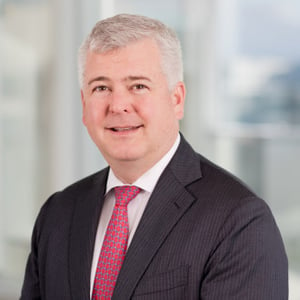
Partner and Deputy Chair, Securities Department, WilmerHale
Daniel Gallagher advises corporate boards and management on the full range of legal and strategic issues they face, and counsels financial services and accounting firms in investigations, regulatory proceedings and policy matters. Mr. Gallagher brings to his practice an unparalleled breadth of experience from having served not only in senior positions at the Securities and Exchange Commission but also as the chief legal officer of a global, S&P 500 corporation and general counsel of a broker-dealer.
Mr. Gallagher has extensive experience in the public and private sectors, navigating regulatory matters, financial markets, corporate legal affairs and governance, and fintech issues, including the regulatory and policy issues arising from new technology.
Mr. Gallagher previously served as the chief legal officer at Mylan N.V., a leading global pharmaceutical company; as the president of a financial services consulting firm; and as an SEC Commissioner. As an SEC Commissioner, Mr. Gallagher championed corporate governance reform, advocated for a comprehensive holistic review of equity market structural issues, and encouraged greatly improving the commission’s fixed income market expertise.
Mr. Gallagher also served on SEC staff in various senior roles, including as the deputy director and co-acting director of the Division of Trading and Markets, where he was on the front lines of the agency’s response to the financial crisis, including representing the commission in the Lehman Brothers liquidation. He was also a counsel to former SEC Commissioner Paul Atkins and to former Chairman Christopher Cox, working on matters involving the Division of Enforcement and the Division of Trading and Markets.
Earlier in his career, Mr. Gallagher was the senior vice president and general counsel of a global provider of financial services technology, where he managed all legal and regulatory matters. He first joined WilmerHale in 1993 as an associate in the firm’s Securities Department.
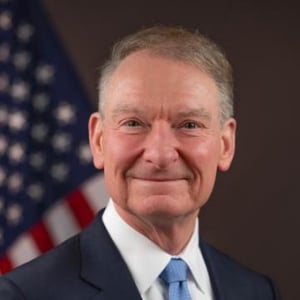
Chairman of the Securities and Exchange Commission
Paul S. Atkins was sworn into office as the 34th Chairman of the Securities and Exchange Commission on April 21, 2025, after being nominated by President Donald J. Trump on January 20, 2025, and confirmed by the U.S. Senate on April 9, 2025.
Prior to returning to the SEC, Chairman Atkins was most recently chief executive of Patomak Global Partners, a company he founded in 2009. Chairman Atkins helped lead efforts to develop best practices for the digital asset sector. He served as an independent director and non-executive chairman of the board of BATS Global Markets, Inc. from 2012 to 2015.
Chairman Atkins was appointed by President George W. Bush to serve as a Commissioner of the SEC from 2002 to 2008. During his tenure, he advocated for transparency, consistency, and the use of cost-benefit analysis at the agency. Chairman Atkins also represented the SEC at meetings of the President’s Working Group on Financial Markets and the U.S.-EU Transatlantic Economic Council. From 2009 to 2010, he was appointed a member of the Congressional Oversight Panel for the Troubled Asset Relief Program.
Before serving as an SEC Commissioner, Chairman Atkins was a consultant on securities and investment management industry matters, especially regarding issues of strategy, regulatory compliance, risk management, new product development, and organizational control.
From 1990 to 1994, Chairman Atkins served on the staff of two chairmen of the SEC, Richard C. Breeden and Arthur Levitt, ultimately as chief of staff and counselor, respectively. He received the SEC’s 1992 Law and Policy Award for work regarding corporate governance matters.
Chairman Atkins began his career as a lawyer in New York, focusing on a wide range of corporate transactions for U.S. and foreign clients, including public and private securities offerings and mergers and acquisitions. He was resident for 2½ years in his firm's Paris office and admitted as conseil juridique in France.
A member of the New York and Florida bars, Chairman Atkins received his J.D. from Vanderbilt University School of Law in 1983 and was Senior Student Writing Editor of the Vanderbilt Law Review. He received his A.B., Phi Beta Kappa, from Wofford College in 1980.
Originally from Lillington, North Carolina, Chairman Atkins grew up in Tampa, Florida. He and his wife Sarah have three sons.
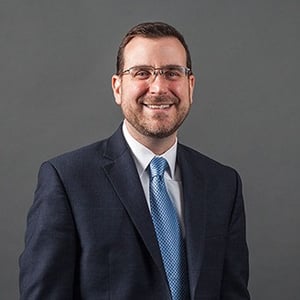
Professor of Law, Antonin Scalia Law School, George Mason University
Adam Mossoff is Professor of Law at Antonin Scalia Law School, George Mason University. He has published extensively on why patents, copyrights, and other intellectual property rights have been—and should be—legally secured to innovators and creators as property rights. His scholarship has been relied on by the United States Supreme Court, by lower federal courts, and by U.S. federal agencies. He has been invited to testify numerous times before the U.S. Senate and the House of Representatives on intellectual property legislation. His writings on intellectual property policy have also appeared in the Wall Street Journal, New York Times, Forbes, Investors Business Daily, and in other media outlets. His journal articles can be downloaded here.
Professor Mossoff is a longstanding member of the Executive Committee of the Intellectual Property Practice Group of the Federalist Society, on which he served as Chairperson from 2016-2018, and he is Chair of the Intellectual Property Working Group of the Regulatory Transparency Project of the Federalist Society. He is a Senior Fellow and Chair of the Forum for Intellectual Property at the Hudson Institute, a Visiting Intellectual Property Fellow at the Heritage Foundation, and a member of the Board of Directors of the Center for Intellectual Property Understanding. He is a member of the Intellectual Property Rights Policy Committee of ANSI and he has served as Chair and Vice-Chair of the Intellectual Property Committee of the IEEE-USA, on which he remains a member in good standing.
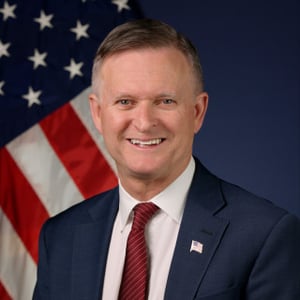
Deputy Secretary of Transportation, US Department of Transportation
Steven G. Bradbury was sworn in as the Deputy Secretary of Transportation on March 13, 2025, following his confirmation by the U.S. Senate on March 11, 2025. In this role, he oversees the Department’s operating administrations and spearheads initiatives to ensure a safe, efficient, and modern transportation system that strengthens economic productivity and global competitiveness. Deputy Secretary Bradbury also assists Secretary Duffy in managing the Department’s activities, including its workforce of over 58,000 employees and an annual budget exceeding $109 billion.
Bradbury previously served as the 23rd General Counsel of the Department of Transportation from 2017 to 2021, as the Acting Deputy Secretary from 2019, and as Acting Secretary of Transportation in 2021. As General Counsel, he was the chief legal officer, advising on all legal matters and ensuring the integrity and compliance of the Department’s policies and programs.
Before rejoining DOT, Bradbury was a Distinguished Fellow at The Heritage Foundation from December 2022 to March 2025. He has extensive experience in the public and private sector, having served as Principal Deputy and Acting Assistant Attorney General at the U.S. Department of Justice and as a partner at Kirkland & Ellis LLP and Dechert LLP. Earlier in his career, he clerked for Justice Clarence Thomas and Judge James L. Buckley.
Bradbury holds a J.D., magna cum laude, from the University of Michigan Law School and a B.A. in English from Stanford University.
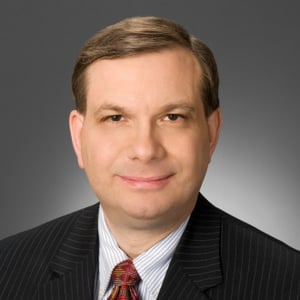
National Affairs Columnist, National Review
John Fund is National Affairs Columnist for National Review magazine and a on-air analyst on the Fox News Channel. He is considered a notable expert on American politics and the nexus between politics and economics.
He previously served as a columnist and editorial board member for The Wall Street Journal. He is the author of several books, including Who's Counting: Bow Fraudsters and Bureaucrats Put Your Vote At Risk (Encounter Books, 2012); Stealing Elections: How Voter Fraud Threatens Our Democracy (Encounter Books, 2008) and The Dangers of Regulation Through Litigation (ATRA Press, 2008). He worked as a research analyst for the California Legislature in Sacramento before beginning his journalism career as a reporter for the syndicated columnists Rowland Evans and Robert Novak.
Roll Call, the newspaper of Capitol Hill, called him "the Tom Paine of the modern Congressional reform movement." He has won awards from the Institute for Justice, The School Choice Aliance and the Warren Brooks award for journalistic excellence from the American Legislative Exchange Council.
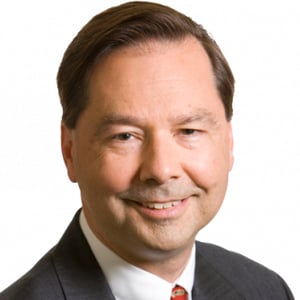
Senior Legal Fellow, Edwin Meese III Institute for the Rule of Law, Advancing American Freedom
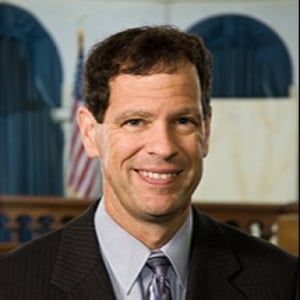
Warren Distinguished Professor of Law, University of San Diego School of Law
Michael D. Ramsey is Warren Distinguished Professor of Law at the University of San Diego School of Law, where he teaches and writes in the areas of Constitutional Law, Foreign Relations Law and International Law. He is the author of The Constitution’s Text in Foreign Affairs (Harvard University Press), co-editor of International Law in the U.S. Supreme Court: Continuity and Change (Cambridge University Press), and co-author of two casebooks, Transnational Law and Practice (2d ed., Aspen) and International Business Transactions: A Problem-Oriented Coursebook (14th ed., West). His scholarly articles have appeared in publications such as the Yale Law Journal, the University of Chicago Law Review, the Georgetown Law Journal and the American Journal of International Law. He received his B.A. magna cum laude from Dartmouth College and his J.D. summa cum laude from Stanford Law School. Prior to teaching, he served as a judicial clerk for Judge J. Clifford Wallace of the United States Court of Appeals for the Ninth Circuit and for Justice Antonin Scalia of the United States Supreme Court, and practiced law with the law firm of Latham & Watkins, where he specialized in international finance and investment. He has taught as a visiting professor at the University of California, San Diego, in the Department of Political Science and at the University of Paris – Sorbonne, in the Department of Comparative Law.

Leitner Family Professor of International Law and Co-Founder & Co-Director of the Center on Asian Americans & the Law, Fordham University School of Law
Thomas H. Lee is the Leitner Family Professor of International Law at Fordham, where he teaches civil procedure, constitutional law, federal courts, international law, and the U.S. law of civil-military relations. His meticulously researched and historically-grounded scholarship has argued that the Eleventh Amendment reflected the classical international law principle that only a sovereign state—not its citizens or subjects— has rights against other sovereign states; that the Alien Tort Statute was a national-security peacekeeping statute, not an international human-rights statute, enacted in 1789 when the United States was a militarily weak state; and that the Natural Born Citizen Clause regarding presidential eligibility reflected natural-law principles of membership by descent as well as domestic birthplace. His current research examines the nature of Article III judicial power and the role of the federal courts in American society.
He is Co-Director of the Center on Asian Americans and the Law, Special Counsel at Hughes Hubbard & Reed, and a Member of the American Law Institute. He was Special Counsel to the General Counsel of the U.S. Department of Defense, a Member of the ICSID Panel of Conciliators, Adviser to the Constitutional Court of Korea, and Visiting Professor at Columbia, Harvard, and the University of Virginia law schools, as well as Faculty Director of International and Graduate Studies at Fordham from 2006 to 2019. Before his academic career, Lee clerked for Judge Michael Boudin of the First Circuit and Justice David Souter of the Supreme Court and served as an active-duty U.S. naval cryptology officer, afloat on submarines and surface combatants and ashore in Korea, Japan, and with the National Security Agency. He holds A.B. (summa cum laude), A.M. (Regional Studies—East Asia), and J.D. degrees from Harvard, where he was Articles Chair of the Harvard Law Review and a Ph.D. candidate (ABD) in Government.

Supreme Court Rules on Greenhouse Gases - Podcast
Robert R. Gasaway
Environmental Law & Property Rights Practice Group Podcast
On Monday, June 23, 2014, the Supreme Court decided Utility Air Regulatory Group v. Environmental...
Halliburton v. Erica P. John Fund - Post-Decision SCOTUScast
Adam Christopher Pritchard
SCOTUScast 6-26-14 featuring Adam Pritchard
On June 23, 2014, the Supreme Court issued its opinion in Halliburton Co. v. Erica...
POM Wonderful LLC v. The Coca Cola Company - Post-Decision SCOTUScast
William Kratzke
SCOTUScast 6-25-14 featuring William Kratzke
On June 12, 2014, the Supreme Court heard oral argument in POM Wonderful LLC v....
Public Land Controversy: The States v. The Federal Government - Podcast
Donald J. Kochan, David Garbett
Environmental Law & Property Rights and Federalism & Separation of Powers Practice Groups Podcast
Controversies over jurisdiction and management of public lands are building. Whether grazing rights disputes in...
A Conversation with SEC Commissioners Daniel Gallagher and Paul Atkins - Podcast
Daniel M. Gallagher, Paul S. Atkins
Financial Services & E-Commerce Practice Group Podcast
Securities and Exchange Commissioner Daniel Gallagher and former Commissioner Paul Atkins joined us on a...
Supreme Court Rules on Patents: Alice Corp v. CLS Bank - Podcast
Adam Mossoff
Intellectual Property Practice Group Podcast
In its surprisingly short opinion in Alice Corp. v. CLS Bank on June 19, 2014, the...
Halliburton v. Erica P. John Fund
Steven Gill Bradbury
Short Video featuring Steven Bradbury
Halliburton Co. v. Erica P. John Fund, Inc. Post-Decision Commentary On June 23, 2014, the...
Obama's Enforcer: Eric Holder's Justice Department - Podcast
John Fund, Hans A. Von Spakovsky
Federalism & Separation of Powers Practice Group Podcast
In their new book, Obama's Enforcer: Eric Holder's Justice Department, Hans von Spakovsky and John...
Republic of Argentina v. NML Capital, Ltd. - Post-Decision SCOTUScast
Michael D. Ramsey, Thomas Lee
SCOTUScast 6-20-14 featuring Mike Ramsey and Thomas Lee
On June 16, 2014, the Supreme Court heard oral argument in Republic of Argentina v....
Conservative & Libertarian Legal Scholarship: Trusts & Estates
XXIV. Trusts & Estates
[Return to Table of Contents] XXIV. Trusts & Estates LAWRENCE W. WAGGONER, ESTATES IN LAND...