
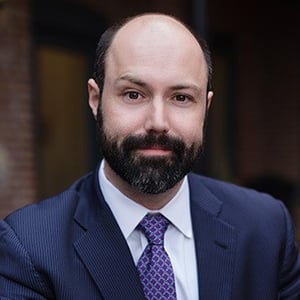
Senior Counsel, Compass Legal Group
Andrew Kloster is Senior Counsel at the nonprofit Compass Legal Group. He is a long-time fixture of the conservative movement, advising clients on the new right on a wide variety of matters criminal, civil, political / electoral, and administrative. Recently, he served as Chief of Staff to the Wisconsin Office of Special Counsel investigation into election administration. Prior to that, he served in the Trump administration, including concurrently as Associate Director in the White House Office of Presidential Personnel and as Deputy General Counsel (and later, Acting General Counsel) in the United States Office of Personnel Management. He has also served in senior positions in regulatory and legal positions at the United States Department of Transportation and the Environmental Protection Agency, and was appointed by President Trump to serve a three-year term on the Council of the Administrative Conference of the United States. Previously, he worked at the Heritage Foundation, the Scalia Law School, and other movement groups. He is a graduate of the University of Miami and the New York University School of Law, and he served as a law clerk on the United States Court of Appeals for the Seventh Circuit.
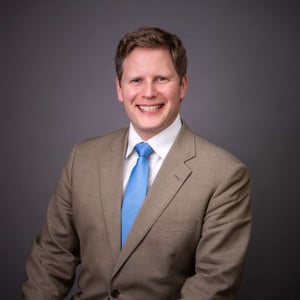
Director, Center for American Freedom, America First Policy Institute
James Sherk was born in Ontario, Canada, and immigrated with his family to Midland, Michigan while in middle school. He serves as AFPI’s Director of the Center for American Freedom. Sherk previously served as Special Assistant to the President for Domestic Policy on the White House Domestic Policy Council under President Donald Trump. James served as the Administration’s top civil service reform and labor policy advisor from 2017 to 2021. At the White House, he was the principal author of and/or policy lead for approximately two dozen executive orders and presidential memoranda. Sherk also served as a member of the President’s Council on Improving Federal Civic Architecture. Prior to his White House service, Sherk was a Research Fellow at the Heritage Foundation, where he was a nationally recognized expert on the civil service and labor policy. Sherk received a Bachelor of Science in Mathematics and Economics from Hillsdale College and an Master of Arts in Economics from the University of Rochester. Sherk and his wife, Jill, live in Northern Virginia with three beloved children who teach their parents to ponder inscrutable questions like “how much drawing can go on the walls before we have to repaint them?”
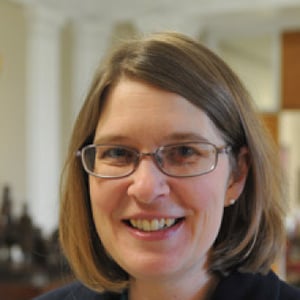
Professor of Law, University of Louisville Brandeis School of Law
Ariana R. Levinson is a nationally acclaimed and internationally recognized labor and employment law scholar and focuses her teaching on practical legal skills. She has often presented her research, including at Berkeley Law School, Fordham Law School, University of Leeds, and Universidad Carlos II de Madrid. Levinson’s work has been published in the Columbia Business Law Review and the Cornell Journal of Law and Public Policy. She has a forthcoming student co-authored article in the Harvard Journal on Legislation and is working on a hornbook on arbitration.
Professor Levinson received a Corey Rosen Research Fellowship from the Rutgers School of Management and Labor Relations for the 2012-13 academic year, and a Michael W. Huber Fellowship for the 2013-14 academic year. In conjunction with the fellowships, she published "Founding Worker Cooperatives: Social Movement Theory and the Law" in the Nevada Law Journal and is working on a research project about the Cincinnati Union Co-op Initiative. Her article "What the Awards Tell Us about Labor Arbitration of Employment Discrimination Claims", published in the University of Michigan Journal of Law Reform was selected by blind review by Vanderbilt Law School faculty for presentation at the Branstetter New Voices in Civil Justice Workshop in May 2012.
In addition to writing about worker ownership and arbitration, Professor Levinson has also written a number of articles about workplace technology and privacy. Her most recent publications on this topic include a book chapter in the Research Handbook on Electronic Commerce Law.
Professor Levinson is the faculty liaison to the Peggy Browning Fund and a co-planner of the Warns-Render Labor and Employment Law Institute, an annual labor and employment law continuing legal education program. She coaches the mock arbitration team and advises the Wagner moot court team. She is a Reviewer for the American Business Law Journal. Professor Levinson is admitted to practice in Indiana and California.
Prior to teaching at Brandeis School of Law, Professor Levinson taught at USC Gould School of Law and at UCLA School of Law. She clerked for the Honorable John G. Davies (United States District Court, Central District of California) and for the Honorable Myra C. Selby (Supreme Court of Indiana) and practiced labor law, including serving as a fellow for the AFL-CIO's Legal Department.
She graduated magna cum laude from the University of Michigan Law School. During law school, she served as a contributing editor on the Michigan Law Review and was awarded the Robert S. Feldman Labor Law Award for the most outstanding work in that field. She also received a 2014-15 faculty favorite award from the University of Louisville Delphi Center for Teaching and Learning.
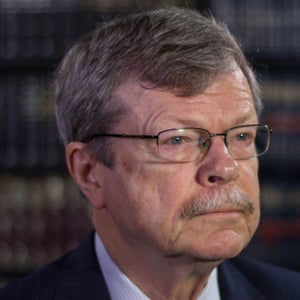
Vice President & Legal Director, National Right To Work Legal Defense Foundation
Raymond J. LaJeunesse, Jr., is Vice President and Legal Director of the National Right to Work Legal Defense Foundation, a non-profit legal aid organization. He was the first Staff Attorney employed by the Foundation and has more than forty-five years of experience helping workers in litigation in federal and state courts and administrative agencies over the abuses of compulsory unionism.
Mr. LaJeunesse has argued four cases in the United States Supreme Court. Those cases include Lehnert v. Ferris Faculty Ass’n, 500 U.S. 507 (1991), which limited the purposes for which compulsory union fees collected from public employees may lawfully be spent; Air Line Pilots Ass’n v. Miller, 523 U.S. 866 (1998), which established that unions cannot compel nonmembers to exhaust union-established remedies before going to court to challenge compulsory union fees; and Marquez v. Screen Actors Guild, 525 U.S. 33 (1998), in which the Court recognized that unions must notify employees that they can satisfy the “membership” requirement of “union shop” agreements by just paying fees for union bargaining activities and need not join and pay full dues to keep their jobs. He also was lead attorney in Hohe v. Casey, 956 F.2d 399 (3d Cir. 1992), in which more than $8.3 million in compulsory agency fees was recovered from the American Federation of State, County and Municipal Employees for a class of 57,000 nonmembers.
Mr. LaJeunesse is the author of several published articles about labor law, has testified before Congressional committees several times, and was an Advisor on the Transition Team for Labor- Related Agencies, Office of the President-Elect, in 1980-81 and a legislative aide to a member of the Virginia state legislature. He is a Vice Chairman of the Federalist Society’s Labor and Employment Law Practice Group and has spoken or debated at the Society’s National Lawyers Convention and at many Lawyers and Student Chapters on such topics as Right to Work laws, compulsory unionism arrangements, the misuse of union dues for politics, union organizing tactics (“card check” vs. secret-ballot elections), and the future of the union movement.
Vice President & Legal Director, National Right To Work Legal Defense Foundation
Raymond J. LaJeunesse, Jr., is Vice President and Legal Director of the National Right to Work Legal Defense Foundation, a non-profit legal aid organization. He was the first Staff Attorney employed by the Foundation and has more than forty-five years of experience helping workers in litigation in federal and state courts and administrative agencies over the abuses of compulsory unionism.
Mr. LaJeunesse has argued four cases in the United States Supreme Court. Those cases include Lehnert v. Ferris Faculty Ass’n, 500 U.S. 507 (1991), which limited the purposes for which compulsory union fees collected from public employees may lawfully be spent; Air Line Pilots Ass’n v. Miller, 523 U.S. 866 (1998), which established that unions cannot compel nonmembers to exhaust union-established remedies before going to court to challenge compulsory union fees; and Marquez v. Screen Actors Guild, 525 U.S. 33 (1998), in which the Court recognized that unions must notify employees that they can satisfy the “membership” requirement of “union shop” agreements by just paying fees for union bargaining activities and need not join and pay full dues to keep their jobs. He also was lead attorney in Hohe v. Casey, 956 F.2d 399 (3d Cir. 1992), in which more than $8.3 million in compulsory agency fees was recovered from the American Federation of State, County and Municipal Employees for a class of 57,000 nonmembers.
Mr. LaJeunesse is the author of several published articles about labor law, has testified before Congressional committees several times, and was an Advisor on the Transition Team for Labor- Related Agencies, Office of the President-Elect, in 1980-81 and a legislative aide to a member of the Virginia state legislature. He is a Vice Chairman of the Federalist Society’s Labor and Employment Law Practice Group and has spoken or debated at the Society’s National Lawyers Convention and at many Lawyers and Student Chapters on such topics as Right to Work laws, compulsory unionism arrangements, the misuse of union dues for politics, union organizing tactics (“card check” vs. secret-ballot elections), and the future of the union movement.
Professor of Law, Western New England College School of Law
Professor Gouvin has been a member of the Western New England College School of Law faculty since 1991. He was tenured and promoted to full professor in 1996. He served as Associate Dean for External Affairs during the 2003-2004 academic year and as Associate Dean for Academic Affairs from 2004-2009. He is currently the Director of the Law and Business Center for Advancing Entrepreneurship.
During his time on the faculty he has taught contracts, business organizations, banking regulation, secured transactions, and other business-related courses. In 2002 he founded the Small Business Clinicat Western New England College School of Law and was the moving force behind the creation of the Law and Business Center for Advancing Entrepreneurship, a collaborative effort with the Western New England College School of Business.
Prior to 1991, Professor Gouvin practiced corporate, banking, and commercial law with the firm of Bernstein, Shur, Sawyer and Nelson in Portland, Maine. At the firm Professor Gouvin helped to represent a diverse array of clients, from Fortune 500 companies to closely held businesses.
Professor Gouvin holds a bachelor’s degree from Cornell University, a master’s degree from Harvard’s Kennedy School of Government, and J.D. and LL.M. degrees from the Boston University School of Law. His scholarly writings focus on the intersection of corporate law and banking law. He is a co-author of the treatiseBlumberg on Corporate Groupswith Phillip Blumberg and Kurt Strasser at the University of Connecticut School of Law and Nicholas Georgakopoulos at the Indiana University (Indianapolis) School of Law. His contributions dealt primarily with corporate groups in the financial services sector. He has written numerous law review articles on a range of topics affecting financial services.
Vice President & Legal Director, National Right To Work Legal Defense Foundation
Raymond J. LaJeunesse, Jr., is Vice President and Legal Director of the National Right to Work Legal Defense Foundation, a non-profit legal aid organization. He was the first Staff Attorney employed by the Foundation and has more than forty-five years of experience helping workers in litigation in federal and state courts and administrative agencies over the abuses of compulsory unionism.
Mr. LaJeunesse has argued four cases in the United States Supreme Court. Those cases include Lehnert v. Ferris Faculty Ass’n, 500 U.S. 507 (1991), which limited the purposes for which compulsory union fees collected from public employees may lawfully be spent; Air Line Pilots Ass’n v. Miller, 523 U.S. 866 (1998), which established that unions cannot compel nonmembers to exhaust union-established remedies before going to court to challenge compulsory union fees; and Marquez v. Screen Actors Guild, 525 U.S. 33 (1998), in which the Court recognized that unions must notify employees that they can satisfy the “membership” requirement of “union shop” agreements by just paying fees for union bargaining activities and need not join and pay full dues to keep their jobs. He also was lead attorney in Hohe v. Casey, 956 F.2d 399 (3d Cir. 1992), in which more than $8.3 million in compulsory agency fees was recovered from the American Federation of State, County and Municipal Employees for a class of 57,000 nonmembers.
Mr. LaJeunesse is the author of several published articles about labor law, has testified before Congressional committees several times, and was an Advisor on the Transition Team for Labor- Related Agencies, Office of the President-Elect, in 1980-81 and a legislative aide to a member of the Virginia state legislature. He is a Vice Chairman of the Federalist Society’s Labor and Employment Law Practice Group and has spoken or debated at the Society’s National Lawyers Convention and at many Lawyers and Student Chapters on such topics as Right to Work laws, compulsory unionism arrangements, the misuse of union dues for politics, union organizing tactics (“card check” vs. secret-ballot elections), and the future of the union movement.
President, UAW 2322
Ron moved to Springfield 35 years ago after graduating high school and has lived in western Massachusetts ever since. Starting a pottery and stained glass business in 1986 at his home in the Maple High-Six Corners neighborhood and working in the hospitality industry he still made time to be involved in city politics. Ron was a member of his Neighbor Council and the Neighborhood Watch.
In 1993 Ron went to work in the healthcare field working at an area hospital as an alcohol and substance abuse counselor and mental health counselor, spending the next 12 years helping people learn to help themselves.
When their employer tried to cut their wages, increase their health insurance costs and make other changes to their wages, benefits and working conditions, Ron joined his coworkers and helped lead and win a campaign to join UAW 2322. He spent the next 6 years fighting for and winning better wages and benefits for his coworkers as chief steward of the union.
In 2004 Ron ran for and won the position of President of UAW Local 2322 and has worked tirelessly with the 3,200 workers they represent to fight for and win better wages, benefits and working conditions, so they and their families can enjoy a better life.
In 2006 Ron won the Pioneer Valley Labor Leader of the Year award for his efforts on behalf of working people and the community. Later that year Ron and the UAW worked on the campaign to elect Deval Patrick, Governor of the Commonwealth. The UAW was the second major union to endorse Deval due in no small part to Ron’s efforts. In recognition of Ron’s efforts for workers, Governor Patrick appointed him to the Commonwealth Corporation Board of Directors which oversees over $34 million annually in funding for job training in the Commonwealth.
Professor of Law, Western New England College School of Law
Professor Gouvin has been a member of the Western New England College School of Law faculty since 1991. He was tenured and promoted to full professor in 1996. He served as Associate Dean for External Affairs during the 2003-2004 academic year and as Associate Dean for Academic Affairs from 2004-2009. He is currently the Director of the Law and Business Center for Advancing Entrepreneurship.
During his time on the faculty he has taught contracts, business organizations, banking regulation, secured transactions, and other business-related courses. In 2002 he founded the Small Business Clinicat Western New England College School of Law and was the moving force behind the creation of the Law and Business Center for Advancing Entrepreneurship, a collaborative effort with the Western New England College School of Business.
Prior to 1991, Professor Gouvin practiced corporate, banking, and commercial law with the firm of Bernstein, Shur, Sawyer and Nelson in Portland, Maine. At the firm Professor Gouvin helped to represent a diverse array of clients, from Fortune 500 companies to closely held businesses.
Professor Gouvin holds a bachelor’s degree from Cornell University, a master’s degree from Harvard’s Kennedy School of Government, and J.D. and LL.M. degrees from the Boston University School of Law. His scholarly writings focus on the intersection of corporate law and banking law. He is a co-author of the treatiseBlumberg on Corporate Groupswith Phillip Blumberg and Kurt Strasser at the University of Connecticut School of Law and Nicholas Georgakopoulos at the Indiana University (Indianapolis) School of Law. His contributions dealt primarily with corporate groups in the financial services sector. He has written numerous law review articles on a range of topics affecting financial services.
Vice President & Legal Director, National Right To Work Legal Defense Foundation
Raymond J. LaJeunesse, Jr., is Vice President and Legal Director of the National Right to Work Legal Defense Foundation, a non-profit legal aid organization. He was the first Staff Attorney employed by the Foundation and has more than forty-five years of experience helping workers in litigation in federal and state courts and administrative agencies over the abuses of compulsory unionism.
Mr. LaJeunesse has argued four cases in the United States Supreme Court. Those cases include Lehnert v. Ferris Faculty Ass’n, 500 U.S. 507 (1991), which limited the purposes for which compulsory union fees collected from public employees may lawfully be spent; Air Line Pilots Ass’n v. Miller, 523 U.S. 866 (1998), which established that unions cannot compel nonmembers to exhaust union-established remedies before going to court to challenge compulsory union fees; and Marquez v. Screen Actors Guild, 525 U.S. 33 (1998), in which the Court recognized that unions must notify employees that they can satisfy the “membership” requirement of “union shop” agreements by just paying fees for union bargaining activities and need not join and pay full dues to keep their jobs. He also was lead attorney in Hohe v. Casey, 956 F.2d 399 (3d Cir. 1992), in which more than $8.3 million in compulsory agency fees was recovered from the American Federation of State, County and Municipal Employees for a class of 57,000 nonmembers.
Mr. LaJeunesse is the author of several published articles about labor law, has testified before Congressional committees several times, and was an Advisor on the Transition Team for Labor- Related Agencies, Office of the President-Elect, in 1980-81 and a legislative aide to a member of the Virginia state legislature. He is a Vice Chairman of the Federalist Society’s Labor and Employment Law Practice Group and has spoken or debated at the Society’s National Lawyers Convention and at many Lawyers and Student Chapters on such topics as Right to Work laws, compulsory unionism arrangements, the misuse of union dues for politics, union organizing tactics (“card check” vs. secret-ballot elections), and the future of the union movement.
President, UAW 2322
Ron moved to Springfield 35 years ago after graduating high school and has lived in western Massachusetts ever since. Starting a pottery and stained glass business in 1986 at his home in the Maple High-Six Corners neighborhood and working in the hospitality industry he still made time to be involved in city politics. Ron was a member of his Neighbor Council and the Neighborhood Watch.
In 1993 Ron went to work in the healthcare field working at an area hospital as an alcohol and substance abuse counselor and mental health counselor, spending the next 12 years helping people learn to help themselves.
When their employer tried to cut their wages, increase their health insurance costs and make other changes to their wages, benefits and working conditions, Ron joined his coworkers and helped lead and win a campaign to join UAW 2322. He spent the next 6 years fighting for and winning better wages and benefits for his coworkers as chief steward of the union.
In 2004 Ron ran for and won the position of President of UAW Local 2322 and has worked tirelessly with the 3,200 workers they represent to fight for and win better wages, benefits and working conditions, so they and their families can enjoy a better life.
In 2006 Ron won the Pioneer Valley Labor Leader of the Year award for his efforts on behalf of working people and the community. Later that year Ron and the UAW worked on the campaign to elect Deval Patrick, Governor of the Commonwealth. The UAW was the second major union to endorse Deval due in no small part to Ron’s efforts. In recognition of Ron’s efforts for workers, Governor Patrick appointed him to the Commonwealth Corporation Board of Directors which oversees over $34 million annually in funding for job training in the Commonwealth.
Vice President & Legal Director, National Right To Work Legal Defense Foundation
Raymond J. LaJeunesse, Jr., is Vice President and Legal Director of the National Right to Work Legal Defense Foundation, a non-profit legal aid organization. He was the first Staff Attorney employed by the Foundation and has more than forty-five years of experience helping workers in litigation in federal and state courts and administrative agencies over the abuses of compulsory unionism.
Mr. LaJeunesse has argued four cases in the United States Supreme Court. Those cases include Lehnert v. Ferris Faculty Ass’n, 500 U.S. 507 (1991), which limited the purposes for which compulsory union fees collected from public employees may lawfully be spent; Air Line Pilots Ass’n v. Miller, 523 U.S. 866 (1998), which established that unions cannot compel nonmembers to exhaust union-established remedies before going to court to challenge compulsory union fees; and Marquez v. Screen Actors Guild, 525 U.S. 33 (1998), in which the Court recognized that unions must notify employees that they can satisfy the “membership” requirement of “union shop” agreements by just paying fees for union bargaining activities and need not join and pay full dues to keep their jobs. He also was lead attorney in Hohe v. Casey, 956 F.2d 399 (3d Cir. 1992), in which more than $8.3 million in compulsory agency fees was recovered from the American Federation of State, County and Municipal Employees for a class of 57,000 nonmembers.
Mr. LaJeunesse is the author of several published articles about labor law, has testified before Congressional committees several times, and was an Advisor on the Transition Team for Labor- Related Agencies, Office of the President-Elect, in 1980-81 and a legislative aide to a member of the Virginia state legislature. He is a Vice Chairman of the Federalist Society’s Labor and Employment Law Practice Group and has spoken or debated at the Society’s National Lawyers Convention and at many Lawyers and Student Chapters on such topics as Right to Work laws, compulsory unionism arrangements, the misuse of union dues for politics, union organizing tactics (“card check” vs. secret-ballot elections), and the future of the union movement.

Topics
Right to Work Laws in the Courts — An Update
Right to Work laws, which prohibit requirements that workers pay union dues as a condition...
Topics
Are Public-Sector Compulsory Union Fees Doomed?
Twice in the past five years the United States Supreme Court has questioned its holding...
Topics
Right to Work laws at the polls and in the courts - an update
Since my last blog on this subject, dated November 28, 2016, two more states have...
Statewide vs. Local Right to Work Laws - Podcast
Andrew Kloster, James Sherk, Ariana R. Levinson, Raymond J. LaJeunesse
Labor and Employment Law Practice Group Podcast
In 1957, an article in the Stanford Law Review asked the question: can counties and cities pass...
What a Trump Administration Might Mean for Employers
On December 13, 2016, the Littler law firm sponsored a program entitled “The 2016 Presidential...
Topics
Right to Work laws at the polls and in the courts
Right to Work laws prohibit requirements that workers pay union dues as a condition of...
Union Organizing and the NLRB Under President Obama
Raymond J. LaJeunesse
Engage Volume 13, Issue 3 October 2012
Note from the Editor: This paper analyzes union organizing and the NLRB under the Obama...
Forced Unionism and the 1st Amendment
Eric J. Gouvin, Raymond J. LaJeunesse, Isaac Mass, Ron Patenaude
Western New England Student Chapter
On October 13, 2010, the Western New England Student Chapter of the Federalist Society hosted...
Forced Unionism and the 1st Amendment
Eric J. Gouvin, Raymond J. LaJeunesse, Isaac Mass, Ron Patenaude
Western New England Student Chapter
On October 13, 2010, the Western New England Student Chapter of the Federalist Society hosted...
SCOTUScast 1-23-09 featuring Raymond LaJeunesse
Raymond J. LaJeunesse
14 Penn Plaza LLC v. Pyett
On Monday, December 1, the Supreme Court heard oral argument in 14 Penn Plaza LLC...