Are Public-Sector Compulsory Union Fees Doomed?
Note from the Editor: The Federalist Society takes no positions on particular legal and public policy matters. Any expressions of opinion are those of the author. We welcome responses to the views presented here. To join the debate, please email us at [email protected].
Twice in the past five years the United States Supreme Court has questioned its holding in Abood v. Detroit Board of Education, 431 U.S. 209 (1977) (6-3 decision on this issue), that the First Amendment allows a government to force its employees to pay “agency fees” to a labor organization that is their “exclusive representative” for purposes of “collective bargaining” with the government. See Harris v. Quinn, 134 S. Ct. 2618, 2632-34 (2014); Knox v. SEIU, Local 1000, 132 S. Ct. 2277, 2289 (2012). Last term the Court agreed to revisit the issue in Friedrichs v. California Teachers Ass’n, and many legal observers of the oral argument in that case speculated that the Court would overrule Abood. However, the Court deadlocked 4 to 4 in Friedrichs due to the untimely death after oral argument of Justice Antonin Scalia. 136 S. Ct. 1083 (2016). On June 6, 2017, Attorneys from the National Right to Work Legal Defense Foundation and the Illinois Liberty Justice Center filed a petition for writ of certiorari with the Court for Mark Janus, a nonmember Illinois state employee, that presents the same question that Friedrichs presented: “should Abood be overruled and public-sector agency fee arrangements be declared unconstitutional under the First Amendment?” Janus v. American Fed’n of State, Cty, & Mun. Employees, Council 31, No. 16-1466 (U.S. docketed June 8, 2017). The case has already generated a lot of media attention.
* * * * *
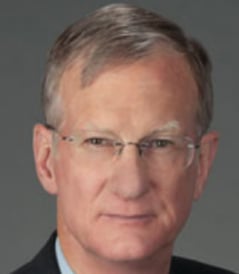
Raymond J. LaJeunesse, Jr. is Vice President & Legal Director at the National Right to Work Legal Defense Foundation, Inc.

Vice President & Legal Director, National Right To Work Legal Defense Foundation
Raymond J. LaJeunesse, Jr., is Vice President and Legal Director of the National Right to Work Legal Defense Foundation, a non-profit legal aid organization. He was the first Staff Attorney employed by the Foundation and has more than forty-five years of experience helping workers in litigation in federal and state courts and administrative agencies over the abuses of compulsory unionism.
Mr. LaJeunesse has argued four cases in the United States Supreme Court. Those cases include Lehnert v. Ferris Faculty Ass’n, 500 U.S. 507 (1991), which limited the purposes for which compulsory union fees collected from public employees may lawfully be spent; Air Line Pilots Ass’n v. Miller, 523 U.S. 866 (1998), which established that unions cannot compel nonmembers to exhaust union-established remedies before going to court to challenge compulsory union fees; and Marquez v. Screen Actors Guild, 525 U.S. 33 (1998), in which the Court recognized that unions must notify employees that they can satisfy the “membership” requirement of “union shop” agreements by just paying fees for union bargaining activities and need not join and pay full dues to keep their jobs. He also was lead attorney in Hohe v. Casey, 956 F.2d 399 (3d Cir. 1992), in which more than $8.3 million in compulsory agency fees was recovered from the American Federation of State, County and Municipal Employees for a class of 57,000 nonmembers.
Mr. LaJeunesse is the author of several published articles about labor law, has testified before Congressional committees several times, and was an Advisor on the Transition Team for Labor- Related Agencies, Office of the President-Elect, in 1980-81 and a legislative aide to a member of the Virginia state legislature. He is a Vice Chairman of the Federalist Society’s Labor and Employment Law Practice Group and has spoken or debated at the Society’s National Lawyers Convention and at many Lawyers and Student Chapters on such topics as Right to Work laws, compulsory unionism arrangements, the misuse of union dues for politics, union organizing tactics (“card check” vs. secret-ballot elections), and the future of the union movement.