
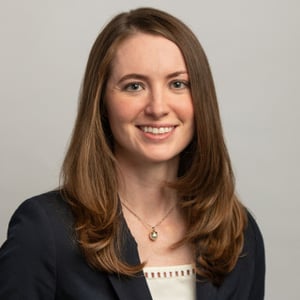
Renée Flaherty is an attorney with the Institute for Justice. She joined the Institute in 2013 and litigates cases to secure property rights, economic liberty and school choice in federal and state courts.
Renée successfully represented families in defense of North Carolina’s Opportunity Scholarship Program, which was upheld by the North Carolina Supreme Court in July 2015.
Renée’s views have been published in USA Today and The Wall Street Journal.
Prior to joining the Institute for Justice, Renée worked in private practice as a tax controversy associate at the Washington, D.C., office of Bingham McCutchen, LLP. She received her law degree from Harvard Law School in 2011, where she was an editor of the Harvard Negotiation Law Review and served on the Executive Board of the Federalist Society. Renée graduated from the University of Texas at Austin with a Bachelor of Arts in Philosophy and a Bachelor of Business Administration. Renée is originally from Odessa, Texas.
Renée Flaherty is a member of the D.C. bar.
Partner, Graves Garrett LLC
Todd Graves is a lawyer in private practice with the law firm of Graves Garrett. Todd represents individuals and businesses nationwide before federal and state courts and administrative agencies. His areas of expertise include white collar criminal defense, political speech and election law, internal investigations, regulatory compliance, and complex commercial litigation. Todd is admitted to the United States Supreme Court, the Missouri Bar, the Kansas Bar, the Texas Bar, the Iowa Bar, the Federal Courts of Appeals for the Tenth Circuit, the Eighth Circuit and the Sixth Circuit, and the Federal District Courts for the Western District of Missouri, Eastern District of Missouri, the District of Kansas, and the Western District of Michigan.
Todd currently serves as Executive Vice-President of the Pony Express Council of the Boy Scouts of America. He is a member of the Board of Directors of the American Royal Association and a founding board member of the Kansas City Missouri Police Foundation.
Before forming Graves Garrett, Todd served as the United States Attorney for the Western District of Missouri. As United States Attorney, Todd was responsible for prosecuting federal crimes including mail and wire fraud, money laundering, public corruption, health care fraud, child pornography, firearms violations, narcotics trafficking, pharmaceutical diversion, corporate fraud, and terrorism financing. During Graves’ tenure, felony filings doubled.
In addition, Todd was responsible for defending civil lawsuits brought against the United States, handling federal forfeiture actions, and collecting debts and restitution. Todd managed a staff of 120 with headquarters in Kansas City and two branch offices.
Todd also served as a member of the Attorney General’s Advisory Committee, advising the Attorney General on Department of Justice national priorities and policies. Todd participated in drafting Department of Justice policies in corporate investigations including charging, pre-trial diversion, and sentencing. Todd was also a member of the national Executive Working Group, which includes six Department of Justice officials, six state attorneys general, and six district attorneys.
Todd was appointed United States Attorney from his position as Platte County Prosecuting Attorney, an office to which he was elected in 1994 and 1998. At the time of his election in 1994, he was the youngest full-time prosecuting attorney in Missouri. In that position, he oversaw a yearly caseload of approximately 400 felonies, 2500 misdemeanors and 14,000 traffic offenses.
As Prosecuting Attorney and as United States Attorney, Todd actively managed cases and trials under his authority and personally tried numerous jury trials to verdict, including cases of child molestation, drug distribution, murder and capital murder.
Prior to his service as Platte County Prosecuting Attorney, Todd was in private practice with the Bryan Cave law firm. Before joining Bryan Cave, he was an Assistant Attorney General for the State of Missouri.
In 1991, Todd received his law degree and a master’s degree in public administration from the University of Virginia. He received a bachelor’s degree, Summa Cum Laude, from the University of Missouri in 1988.
Raised on a family farm near Tarkio, Missouri, Todd has been married 24 years to his wife, Tracy. The couple has four children, and they reside on a 270 acre farm north of Kansas City that has been in the family since 1867.
Owner, The Knight Law Firm
A lawyer since 1981, Mr. Knight is rated AV by Martindale-Hubbell. Mr. Knight has vast experience in complex litigation, corporate law, and international transactions. He practices in the fields of Aviation, Bankruptcy, Corporate, Commercial, and International Law. He also handles luxury car and RV Lemon Law claims.
Prior to founding his own firm in 1992, he was with the venerable Miami firms Walton Lantaff and Blackwell Walker. He has represented financial institutions, manufacturers, air carriers, repair stations, and wealthy investors from the US, Europe, Latin America, the Middle East, and the Far East.
He is admitted to practice before the United States Supreme Court, the Eleventh Circuit Court of Appeals, and in all three Federal District and Bankruptcy Courts in Florida.
Mr. Knight graduated in 1981 from the University of Miami School of Law, where he served as the Executive Editor of the International Law Journal. During law school he clerked with the Equal Employment Opportunity Commission.
He earned a B.A. degree from Vanderbilt University in 1978, with majors in Philosophy, Political Science, and Spanish, as well as minors in French and History. Also during his undergraduate years, he attended the Universidad Complutense of Madrid, Spain, Georgetown University, and Vanderbilt's institute at Aix-en-Provence, France.
Mr. Knight is licensed to pilot both helicopters and airplanes. In addition to flying, his interests include karate, skiing, hunting, fishing and military history. He is a member of the Miami Rotary Club.
Mr. Knight has lectured on "Aircraft and Engine Liens in and out of Bankruptcy Court" (Miami Aircraft Maintenance Council, May 2001) "Election Law Ethics" (RNLA, Orlando, June 2004), "Fundamentals of Election Law" (RNLA, Orlando, January 2006), "The Help America Vote Act" (RNLA, Miami, September 2008), Moderator RNLA Florida Election Law School, Orlando, September 2010.
Mr. Knight served as Chair of the RNLA's Florida Chapter from the April 2004 through April 2006, and as Co-Chair from April 2006 until April 2009. In June 2004 he was the Director of and organized RNLA's first Florida Election Law School. During the 2002 election cycle he was a member of the Miami-Dade County Legal Team's Executive Committee. In 2000 he served as a member of the Bush-Cheney "Recount" Team.
Florida Second District Court of Appeal
A Sarasota native, Judge Susan H. Rothstein-Youakim graduated from Pine View School in 1987. She graduated in 1990 from Duke University with a B.A. in Russian, cum laude, and in 1993 from the University of Florida College of Law, where she was an Executive Articles Editor on the Florida Journal of International Law.
After law school, Judge Rothstein-Youakim moved to Tampa and began her career as a law clerk to the Honorable Charles R. Wilson, United States Court of Appeals for the Eleventh Circuit, who was then a federal magistrate judge. In January 1995, Judge Rothstein-Youakim joined the Appellate Division of the United States Attorney's Office for the Middle District of Florida. There, she represented the United States and its client agencies in criminal, civil, and post-conviction appeals in the United States Court of Appeals for the Eleventh Circuit, personally drafting more than 600 briefs and presenting approximately 60 oral arguments. She also served as an instructor at the Department of Justice's National Advocacy Center in Columbia, South Carolina.
In May 2016, Governor Rick Scott appointed Judge Rothstein-Youakim to the Second District Court of Appeal, and she began her service on the court on July 5, 2016. She is active in the Bruce R. Jacob-Chris W. Altenbernd Criminal Appellate American Inn of Court and received its Altenbernd Award for Excellence in 2015. She also serves as a mentor to students in elementary school, college, and law school.
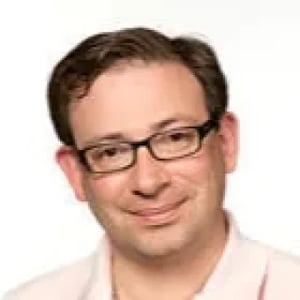
Henry L. Shattuck Professor of Law, Harvard Law School
Matthew Stephenson is Professor of Law at Harvard Law School, where he teaches administrative law, legislation and regulation, anti-corruption law, and political economy of public law. His research focuses on the application of positive political theory to public law, particularly in the areas of administrative procedure, anti-corruption, judicial institutions, and separation of powers. Prior to joining the Harvard Law School faculty, Professor Stephenson clerked for Senior Judge Stephen Williams on the D.C. Circuit and for Justice Anthony Kennedy on the Supreme Court. He received his J.D. and Ph.D. (political science) from Harvard in 2003, and his B.A. from Harvard College in 1997.
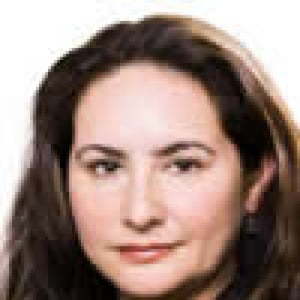
Director of Global Outreach, Florida Chamber of Commerce
Alice Ancona heads the Florida Chamber’s international efforts and is responsible for developing and implementing programs that foster global trade and investment for Florida. She is responsible for promoting the Chamber’s international trade agenda, including reducing barriers to trade, promoting efforts to expand trade opportunities for Florida businesses and products, and expanded development of our trade infrastructure to federal and state, elected and appointed officials, staff and agencies as well as within the business community.
Ms. Ancona serves as the lead advocate to accomplish the goals set forth in the Florida Trade & Logistics Study 2.0 (TL2) through the newly created Florida Trade and Logistics Institute which actively works to expand Florida’s role as a global trade hub. She also serves as staff to the Chamber’s International Business Council and International Policy Committee which develops policy positions and recommendations on international trade and investment and works to promote Florida’s global competitiveness through advocacy.
Prior to joining the Florida Chamber Ms. Ancona was Senior Vice President of Governmental Affairs at the Greater Miami Chamber of Commerce. She was the Chamber’s chief advocate and served as the principal a liaison between the Chamber and public sector on a wide range of public policy issues and was responsible for development, management and implementation of the Chamber’s public policy positions and advocacy strategies.
Ms. Ancona has experience in planning, developing, and implementing export programs and strategies for U.S. based companies; identifying and exploring export opportunities in overseas markets and market access problems affecting trade and has contributed to international trade research efforts. She has worked with a number of international trade stakeholders, business organizations, universities, and other strategic partners to advance and promote support for international trade and free trade agreements. These include developing grassroots international trade initiatives and activities designed to raise awareness of the benefits of international trade. Utilizing her diverse experiences in policy development, program management, and public affairs at local, federal, and international levels, she has integrated counseling on the design of effective policies and programs with traditional advocacy for implementation through legislative or administrative action.
Ms. Ancona is Vice Chair of Freight Transportation Advisory Committee (FTAC) of the Miami MPO, Regional Freight Advisory Committee member (RFAC) of the Southeast Florida Transportation Council (SEFTC), serves on the 2014-2015 Board of Directors for World Trade Center Miami, is member of the International Policy Committee of the U.S. Chamber of Commerce, member of the Florida International Trade Partnership and Recipient of the 2014 International Women’s Day Award from World Trade Center Miami.
Vice President of Global Innovation Policy, Information Technology & Innovation Foundation
Stephen Ezell is vice president, global innovation policy, at the Information Technology and Innovation Foundation (ITIF). He focuses on science and technology policy, international competitiveness, trade, manufacturing, and services issues.
He is the coauthor of Innovating in a Service-Driven Economy: Insights, Application, and Practice (Palgrave Macmillan, 2015) and Innovation Economics: The Race for Global Advantage (Yale, 2012).
Ezell comes to ITIF from Peer Insight, an innovation research and consulting firm he cofounded in 2003 to study the practice of innovation in service industries. At Peer Insight, Ezell led the Global Service Innovation Consortium, published multiple research papers on service innovation, and researched national service innovation policies being implemented by governments worldwide.
Prior to forming Peer Insight, Ezell worked in the New Service Development group at the NASDAQ Stock Market, where he spearheaded the creation of the NASDAQ Market Intelligence Desk and the NASDAQ Corporate Services Network, services for NASDAQ-listed corporations. Previously, Ezell cofounded two successful innovation ventures, the high-tech services firm Brivo Systems and Lynx Capital, a boutique investment bank.
Ezell holds a B.S. from the School of Foreign Service at Georgetown University, with an honors certificate from Georgetown’s Landegger International Business Diplomacy program.
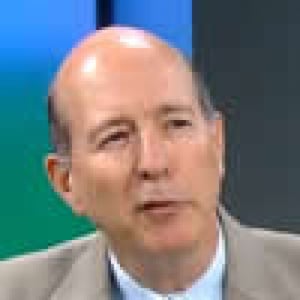
Senior Economic Policy Advisor, AFL-CIO
Thomas Palley is senior economic policy adviser to the AFL-CIO. He was formerly chief economist with the US – China Economic and Security Review Commission. Dr. Palley is the author of numerous journal and magazine articles and several books, including From Financial Crisis to Stagnation: The Destruction of Shared Prosperity and the Role of Economics(Cambridge University Press, 2012) and Plenty of Nothing: The Downsizing of the American Dream and the Case for Structural Keynesianism (Princeton University Press, 1998). He holds a B.A. degree from Oxford University and a M.A. degree in international relations and Ph.D. in economics, both from Yale University. His writings on economics are available at www.thomaspalley.com.
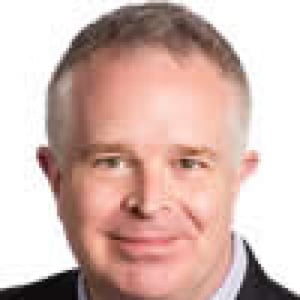
Jay Van Andel Senior Policy Analyst in Trade Policy, Center for, The Heritage Foundation
Bryan Riley is a full-time advocate for free trade through his research and writing for The Heritage Foundation. He brings years of experience in trade and economic issues to his role as Jay Van Andel senior analyst in trade policy.
Working in Heritage’s Center for Trade and Economics, Riley contributes to the influential Index of Economic Freedom, which the think tank publishes annually in partnership with The Wall Street Journal. The 2011 edition measured 183 countries across 10 specific factors of economic freedom: The higher the score, the lower the level of government interference.
Canada retained its top ranking for economic freedom among North American nations measured in 2010, moving up one slot in the world rankings to sixth. The United States continued to lose ground with a ninth-place finish. The U.S. score of 77.8 was down 0.2 points—largely the result of big government spending increases and passage of a restrictive health care law. In the 2010 Index, the United States dropped from the ranks of economically “free” nations into the “mostly free” category.
Riley’s background includes management of grassroots campaigns in support of trade pacts such as the North American Free Trade Agreement, popularly known as NAFTA. When minivans became popular in the 1990s, for example, he helped defeat efforts to reclassify them as “cargo vehicles” instead of “passenger vehicles.” The “cargo” label would have subjected minivans and SUVs to an import tax of 25 percent.
Riley, who joined Heritage in 2010, especially enjoys serving as a myth-buster who counters inaccurate, misleading misinformation that hoodwinks the public and undermines free trade.
He grew up in Manhattan, Kansas. He holds a bachelor’s degree in economics from Kansas State University and a master’s degree in economics from the University of Southern California. He currently resides in Washington, D.C., returning to the nation’s capital after several years in Kansas.
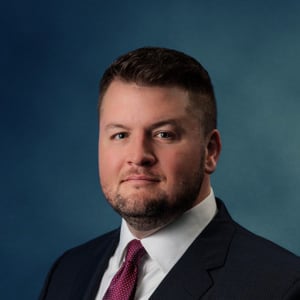
Mr. Morgan Wood Streetman is the founder and principal of Streetman Law in Tampa, Florida. Mr. Streetman is licensed to practice law in Florida and Mississippi, where he was born. He is also licensed to practice before all federal courts in the Northern and Middle Districts of Florida, the Northern and Southern Districts of Mississippi, and the United States Court of Appeals for the Fifth Circuit.
Mr. Streetman has a wealth of experience in business transactions and disputes. He advises small and closely-held businesses on all of their legal needs, which range from contracts with customers and vendors, to employee relations and human resources issues, to shareholder or member disputes, just to name a few.
Part of Mr. Streetman’s business practice is his focus on representing construction-related businesses and individuals. He has handled every aspect of construction law, including drafting contracts, helping individuals obtain proper licensing, construction liens, construction defect claims, and payment and performance bond claims against surety bonding companies.
Mr. Streetman represents individuals who have been injured by another’s negligence, which includes everything from car and trucking accidents, to dog bites, to a landlord’s allowing a criminal assailant to enter an apartment building common area and viciously attack a tenant by failing to secure common areas with locks and keys.
Mr. Streetman received his law degree from Duke University in Durham, North Carolina and his undergraduate degree in Economics from the University of Florida in Gainesville. While at the University of Florida, Mr. Streetman was honored with election to the Phi Beta Kappa Society, which is the nation’s oldest and most prestigious academic honor society. The Society invites less than 1 percent of graduating seniors to become members.
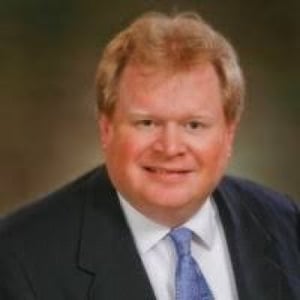
Principal Attorney, Woodring Law Firm
Mr. Daniel Woodring has lived in Florida for almost 30 years, but was born in Philadelphia, Pennsylvania. In Florida, he has lived and worked in Pensacola, Clearwater, Jacksonville, Gainesville and Tallahassee. His wife Jean, who is also an attorney, was born in Miami, and grew up in Ft. Myers. They have a son and a daughter.
Mr. Woodring is recognized as a Florida Super Lawyer, an honor given to fewer than 5% of Florida Attorneys, and holds an Avvo “Superb” rating. Mr. Woodring also has an AV Preeminent® Peer Reviewrating. AV®, AV Preeminent® are registered certification marks of Reed Elsevier Properties Inc., used in accordance with the Martindale-Hubbell certification procedures, standards and policies, and the ratings are explained at www.martindale.com/ratings.
Mr. Woodring is a member of the Florida and Georgia Bars, and is admitted to practice before the Florida Federal Southern, Middle and Northern District Courts, the Eleventh Circuit Court of Appeals and the U.S. Supreme Court. He has worked at the trial level on cases in many of Florida’s 20 judicial circuits, in addition to cases in state administrative tribunals. He has argued cases at the Florida Supreme Court and Florida District Courts of Appeal, and has briefed cases at the U.S. Supreme Court.
He graduated from the University of Florida, College of Law with a Juris Doctorate, Cum Laude, and received his B.A. degree from Clearwater Christian College, Summa Cum Laude.
After law school, Mr. Woodring was in private practice doing general civil and appellate work. He then left for a two year appellate clerkship at the First District Court of Appeal. During his time at the court, he worked on cases including, but not limited to: criminal; family law; administrative law; workers’ compensation; business and civil law; constitutional law.
Mr. Woodring next worked as a counsel in the Executive Office of the Governor, Office of the General Counsel. During his time in Governor Bush’s Legal Office he had diverse responsibilities, including oversight and strategic litigation management of significant legal matters at numerous Governor’s agencies, including the Department of Education, Department of Management Services, Department of Business and Professional Regulation, Department of Health, Agency for Health Care Administration, Department of Children and Families, Department of Community Affairs, Department of Elder affairs, Agency for Workforce Innovation, Department of Transportation, and the Department of State.
He was also legally responsible for topics as disparate as emergency operations; advising the Governor on the selection of judges; implementation of civil service reform; reform of workers’ compensation; budget and appropriation matters; Indian gaming law; and legally advising the Florida Cabinet sitting in its many capacities, such as the Florida Land and Water Adjudicatory Commission.
Mr. Daniel Woodring was then offered the opportunity to be General Counsel for the Florida Department of Education, which encompassed Pre-K though 12th grade, community colleges(now State colleges) and the Florida University System. He was also the first General Counsel for the Florida Board of Governors, when that Board was constitutionally created to manage the State University System.
During almost five years at the Department of Education, Mr. Woodring advised and litigated on matters including, but not limited to: constitutional challenges to Florida’s education programs, including Opportunity Scholarships and the charter school approval and appeal process; doing away with race as a preference in university admissions and state contracting; teacher and professional discipline cases; union, labor and employment matters; state procurement and bid protest proceedings; administrative rule challenges and rule making proceedings; IDEA and Section 504 proceedings; public records, government in the sunshine and ethical matters; contract negotiations and disputes.
Since 2007, Mr. Woodring has been back in private practice as the principal of the Woodring Law Firm, located in Tallahassee, Florida, but with a statewide practice, including Pensacola, Jacksonville, Gainesville, Tampa Bay, Orlando, West Palm Beach, Ft. Myers, Ft. Lauderdale, and Miami. He concentrates his practice on appeals; constitutional cases in both state and federal court; education law matters, including charter school represention; Business litigation; and state administrative matters, including state procurement, regulation and licensing, rule challenges and proposed rule making, although he also handles cases in many other areas.
Please look at the individual practice areas on the left menu for more information.
Mr. Woodring is a member of the Appellate, Administrative, and Governmental Lawyer sections of the Florida Bar and served as Chair of the Education Law Committee of the Florida Bar.
Director of Global Outreach, Florida Chamber of Commerce
Alice Ancona heads the Florida Chamber’s international efforts and is responsible for developing and implementing programs that foster global trade and investment for Florida. She is responsible for promoting the Chamber’s international trade agenda, including reducing barriers to trade, promoting efforts to expand trade opportunities for Florida businesses and products, and expanded development of our trade infrastructure to federal and state, elected and appointed officials, staff and agencies as well as within the business community.
Ms. Ancona serves as the lead advocate to accomplish the goals set forth in the Florida Trade & Logistics Study 2.0 (TL2) through the newly created Florida Trade and Logistics Institute which actively works to expand Florida’s role as a global trade hub. She also serves as staff to the Chamber’s International Business Council and International Policy Committee which develops policy positions and recommendations on international trade and investment and works to promote Florida’s global competitiveness through advocacy.
Prior to joining the Florida Chamber Ms. Ancona was Senior Vice President of Governmental Affairs at the Greater Miami Chamber of Commerce. She was the Chamber’s chief advocate and served as the principal a liaison between the Chamber and public sector on a wide range of public policy issues and was responsible for development, management and implementation of the Chamber’s public policy positions and advocacy strategies.
Ms. Ancona has experience in planning, developing, and implementing export programs and strategies for U.S. based companies; identifying and exploring export opportunities in overseas markets and market access problems affecting trade and has contributed to international trade research efforts. She has worked with a number of international trade stakeholders, business organizations, universities, and other strategic partners to advance and promote support for international trade and free trade agreements. These include developing grassroots international trade initiatives and activities designed to raise awareness of the benefits of international trade. Utilizing her diverse experiences in policy development, program management, and public affairs at local, federal, and international levels, she has integrated counseling on the design of effective policies and programs with traditional advocacy for implementation through legislative or administrative action.
Ms. Ancona is Vice Chair of Freight Transportation Advisory Committee (FTAC) of the Miami MPO, Regional Freight Advisory Committee member (RFAC) of the Southeast Florida Transportation Council (SEFTC), serves on the 2014-2015 Board of Directors for World Trade Center Miami, is member of the International Policy Committee of the U.S. Chamber of Commerce, member of the Florida International Trade Partnership and Recipient of the 2014 International Women’s Day Award from World Trade Center Miami.
Vice President of Global Innovation Policy, Information Technology & Innovation Foundation
Stephen Ezell is vice president, global innovation policy, at the Information Technology and Innovation Foundation (ITIF). He focuses on science and technology policy, international competitiveness, trade, manufacturing, and services issues.
He is the coauthor of Innovating in a Service-Driven Economy: Insights, Application, and Practice (Palgrave Macmillan, 2015) and Innovation Economics: The Race for Global Advantage (Yale, 2012).
Ezell comes to ITIF from Peer Insight, an innovation research and consulting firm he cofounded in 2003 to study the practice of innovation in service industries. At Peer Insight, Ezell led the Global Service Innovation Consortium, published multiple research papers on service innovation, and researched national service innovation policies being implemented by governments worldwide.
Prior to forming Peer Insight, Ezell worked in the New Service Development group at the NASDAQ Stock Market, where he spearheaded the creation of the NASDAQ Market Intelligence Desk and the NASDAQ Corporate Services Network, services for NASDAQ-listed corporations. Previously, Ezell cofounded two successful innovation ventures, the high-tech services firm Brivo Systems and Lynx Capital, a boutique investment bank.
Ezell holds a B.S. from the School of Foreign Service at Georgetown University, with an honors certificate from Georgetown’s Landegger International Business Diplomacy program.
Senior Economic Policy Advisor, AFL-CIO
Thomas Palley is senior economic policy adviser to the AFL-CIO. He was formerly chief economist with the US – China Economic and Security Review Commission. Dr. Palley is the author of numerous journal and magazine articles and several books, including From Financial Crisis to Stagnation: The Destruction of Shared Prosperity and the Role of Economics(Cambridge University Press, 2012) and Plenty of Nothing: The Downsizing of the American Dream and the Case for Structural Keynesianism (Princeton University Press, 1998). He holds a B.A. degree from Oxford University and a M.A. degree in international relations and Ph.D. in economics, both from Yale University. His writings on economics are available at www.thomaspalley.com.
Jay Van Andel Senior Policy Analyst in Trade Policy, Center for, The Heritage Foundation
Bryan Riley is a full-time advocate for free trade through his research and writing for The Heritage Foundation. He brings years of experience in trade and economic issues to his role as Jay Van Andel senior analyst in trade policy.
Working in Heritage’s Center for Trade and Economics, Riley contributes to the influential Index of Economic Freedom, which the think tank publishes annually in partnership with The Wall Street Journal. The 2011 edition measured 183 countries across 10 specific factors of economic freedom: The higher the score, the lower the level of government interference.
Canada retained its top ranking for economic freedom among North American nations measured in 2010, moving up one slot in the world rankings to sixth. The United States continued to lose ground with a ninth-place finish. The U.S. score of 77.8 was down 0.2 points—largely the result of big government spending increases and passage of a restrictive health care law. In the 2010 Index, the United States dropped from the ranks of economically “free” nations into the “mostly free” category.
Riley’s background includes management of grassroots campaigns in support of trade pacts such as the North American Free Trade Agreement, popularly known as NAFTA. When minivans became popular in the 1990s, for example, he helped defeat efforts to reclassify them as “cargo vehicles” instead of “passenger vehicles.” The “cargo” label would have subjected minivans and SUVs to an import tax of 25 percent.
Riley, who joined Heritage in 2010, especially enjoys serving as a myth-buster who counters inaccurate, misleading misinformation that hoodwinks the public and undermines free trade.
He grew up in Manhattan, Kansas. He holds a bachelor’s degree in economics from Kansas State University and a master’s degree in economics from the University of Southern California. He currently resides in Washington, D.C., returning to the nation’s capital after several years in Kansas.
Mr. Morgan Wood Streetman is the founder and principal of Streetman Law in Tampa, Florida. Mr. Streetman is licensed to practice law in Florida and Mississippi, where he was born. He is also licensed to practice before all federal courts in the Northern and Middle Districts of Florida, the Northern and Southern Districts of Mississippi, and the United States Court of Appeals for the Fifth Circuit.
Mr. Streetman has a wealth of experience in business transactions and disputes. He advises small and closely-held businesses on all of their legal needs, which range from contracts with customers and vendors, to employee relations and human resources issues, to shareholder or member disputes, just to name a few.
Part of Mr. Streetman’s business practice is his focus on representing construction-related businesses and individuals. He has handled every aspect of construction law, including drafting contracts, helping individuals obtain proper licensing, construction liens, construction defect claims, and payment and performance bond claims against surety bonding companies.
Mr. Streetman represents individuals who have been injured by another’s negligence, which includes everything from car and trucking accidents, to dog bites, to a landlord’s allowing a criminal assailant to enter an apartment building common area and viciously attack a tenant by failing to secure common areas with locks and keys.
Mr. Streetman received his law degree from Duke University in Durham, North Carolina and his undergraduate degree in Economics from the University of Florida in Gainesville. While at the University of Florida, Mr. Streetman was honored with election to the Phi Beta Kappa Society, which is the nation’s oldest and most prestigious academic honor society. The Society invites less than 1 percent of graduating seniors to become members.
Principal Attorney, Woodring Law Firm
Mr. Daniel Woodring has lived in Florida for almost 30 years, but was born in Philadelphia, Pennsylvania. In Florida, he has lived and worked in Pensacola, Clearwater, Jacksonville, Gainesville and Tallahassee. His wife Jean, who is also an attorney, was born in Miami, and grew up in Ft. Myers. They have a son and a daughter.
Mr. Woodring is recognized as a Florida Super Lawyer, an honor given to fewer than 5% of Florida Attorneys, and holds an Avvo “Superb” rating. Mr. Woodring also has an AV Preeminent® Peer Reviewrating. AV®, AV Preeminent® are registered certification marks of Reed Elsevier Properties Inc., used in accordance with the Martindale-Hubbell certification procedures, standards and policies, and the ratings are explained at www.martindale.com/ratings.
Mr. Woodring is a member of the Florida and Georgia Bars, and is admitted to practice before the Florida Federal Southern, Middle and Northern District Courts, the Eleventh Circuit Court of Appeals and the U.S. Supreme Court. He has worked at the trial level on cases in many of Florida’s 20 judicial circuits, in addition to cases in state administrative tribunals. He has argued cases at the Florida Supreme Court and Florida District Courts of Appeal, and has briefed cases at the U.S. Supreme Court.
He graduated from the University of Florida, College of Law with a Juris Doctorate, Cum Laude, and received his B.A. degree from Clearwater Christian College, Summa Cum Laude.
After law school, Mr. Woodring was in private practice doing general civil and appellate work. He then left for a two year appellate clerkship at the First District Court of Appeal. During his time at the court, he worked on cases including, but not limited to: criminal; family law; administrative law; workers’ compensation; business and civil law; constitutional law.
Mr. Woodring next worked as a counsel in the Executive Office of the Governor, Office of the General Counsel. During his time in Governor Bush’s Legal Office he had diverse responsibilities, including oversight and strategic litigation management of significant legal matters at numerous Governor’s agencies, including the Department of Education, Department of Management Services, Department of Business and Professional Regulation, Department of Health, Agency for Health Care Administration, Department of Children and Families, Department of Community Affairs, Department of Elder affairs, Agency for Workforce Innovation, Department of Transportation, and the Department of State.
He was also legally responsible for topics as disparate as emergency operations; advising the Governor on the selection of judges; implementation of civil service reform; reform of workers’ compensation; budget and appropriation matters; Indian gaming law; and legally advising the Florida Cabinet sitting in its many capacities, such as the Florida Land and Water Adjudicatory Commission.
Mr. Daniel Woodring was then offered the opportunity to be General Counsel for the Florida Department of Education, which encompassed Pre-K though 12th grade, community colleges(now State colleges) and the Florida University System. He was also the first General Counsel for the Florida Board of Governors, when that Board was constitutionally created to manage the State University System.
During almost five years at the Department of Education, Mr. Woodring advised and litigated on matters including, but not limited to: constitutional challenges to Florida’s education programs, including Opportunity Scholarships and the charter school approval and appeal process; doing away with race as a preference in university admissions and state contracting; teacher and professional discipline cases; union, labor and employment matters; state procurement and bid protest proceedings; administrative rule challenges and rule making proceedings; IDEA and Section 504 proceedings; public records, government in the sunshine and ethical matters; contract negotiations and disputes.
Since 2007, Mr. Woodring has been back in private practice as the principal of the Woodring Law Firm, located in Tallahassee, Florida, but with a statewide practice, including Pensacola, Jacksonville, Gainesville, Tampa Bay, Orlando, West Palm Beach, Ft. Myers, Ft. Lauderdale, and Miami. He concentrates his practice on appeals; constitutional cases in both state and federal court; education law matters, including charter school represention; Business litigation; and state administrative matters, including state procurement, regulation and licensing, rule challenges and proposed rule making, although he also handles cases in many other areas.
Please look at the individual practice areas on the left menu for more information.
Mr. Woodring is a member of the Appellate, Administrative, and Governmental Lawyer sections of the Florida Bar and served as Chair of the Education Law Committee of the Florida Bar.
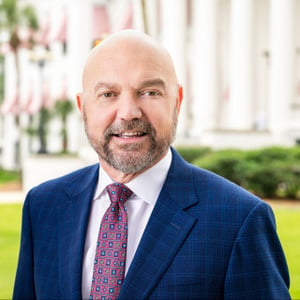
President, Florida Justice Reform Institute
William W. Large is the president of the Florida Justice Reform Institute (FJRI), an organization dedicated to restoring fairness and personal responsibility to Florida's civil justice system.
Under his leadership, FJRI has delivered notable successes on numerous and complex legislative, regulatory, and judicial issues. These have included repealing Florida’s one-way attorney fee statute and reforming the contingency risk fee multiplier, strengthening the rules of evidence for medical damages, providing COVID liability protections for health care workers, and adopting the Federal summary judgment standard, among many others.
Prior to serving as president, Mr. Large served as Governor Bush's deputy chief of staff responsible for a portfolio of health and human service agencies.
Before that, Mr. Large served as general counsel for the Florida Department of Health, and during that time served as director of the Governor's Task Force on Professional Liability Insurance. Prior to working for the state, Mr. Large was a partner practicing in professional malpractice litigation defense.
Mr. Large is admitted to practice before all Florida courts and U.S. District Courts in Florida, and the U.S. Supreme Court. Mr. Large is "AV" rated by Martindale-Hubbell and a member of the Federalist Society, the Florida Defense Lawyers Association and the Defense Research Institute.
Mr. Large holds B.S. and J.D. degrees from the University of Florida, and an M.B.A, an M.S in Political Science, and an M.S. in Risk Management and Insurance from The Florida State University.
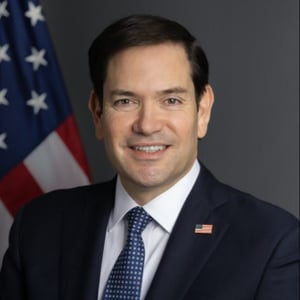
United States Secretary of State
Secretary of State Marco Rubio was born in Miami, Florida in 1971. He is the son of Cuban immigrants who left Cuba in pursuit of the American Dream. His father worked as a banquet bartender, while his mother split time as a stay-at-home mom and hotel maid. From an early age, Rubio learned the importance of faith, family, community, and dignified work.
Rubio is passionate about the American Dream because he’s lived it himself. He was drawn to public service in large part because of conversations with his grandfather, who witnesses how communism destroyed his homeland. After meeting and marrying his wife Jeanette, he served as a City Commissioner in West Miami and as Speaker of the Florida House of Representatives. In 2010, he won a seat in the U.S. Senate. He served as U.S. Senator until 2025.
During his tenure in the U.S. Senate, Rubio was committed to serving the people of Florida and ensuring America remained a strong, resilient nation for generations to come. He was a Senior Member of the Senate Foreign Relations Committee, Vice Chair of the Senate Select Committee on Intelligence, a member of the powerful Senate Appropriations Committee, as well as the Senate Committee on Small Business and Entrepreneurship.
Rubio wrote and passed the Uyghur Forced Labor Prevention Act, which represents the greatest turning point in U.S.-China relations in decades. He also co-led the Hong Kong Relations Act, and the VERDAD Act. During the first Trump Administration, he worked with the President to hold members of the Cuban regime accountable, including the dictatorship’s military holding company. He also created the Paycheck Protection Program, which helped save millions of small businesses in America when the COVID pandemic hit.
In November 2024, President Trump nominated Rubio to serve as America’s Secretary of State. Secretary Rubio was the first cabinet member who was confirmed in the second Trump Administration. He received a historic unanimous vote of 99-0 in the U.S. Senate.
Rubio was sworn in as the 72nd Secretary of State on January 21, 2025. The Secretary’s main priority is to have a Department of State that puts America First.
President, Florida Justice Reform Institute
William W. Large is the president of the Florida Justice Reform Institute (FJRI), an organization dedicated to restoring fairness and personal responsibility to Florida's civil justice system.
Under his leadership, FJRI has delivered notable successes on numerous and complex legislative, regulatory, and judicial issues. These have included repealing Florida’s one-way attorney fee statute and reforming the contingency risk fee multiplier, strengthening the rules of evidence for medical damages, providing COVID liability protections for health care workers, and adopting the Federal summary judgment standard, among many others.
Prior to serving as president, Mr. Large served as Governor Bush's deputy chief of staff responsible for a portfolio of health and human service agencies.
Before that, Mr. Large served as general counsel for the Florida Department of Health, and during that time served as director of the Governor's Task Force on Professional Liability Insurance. Prior to working for the state, Mr. Large was a partner practicing in professional malpractice litigation defense.
Mr. Large is admitted to practice before all Florida courts and U.S. District Courts in Florida, and the U.S. Supreme Court. Mr. Large is "AV" rated by Martindale-Hubbell and a member of the Federalist Society, the Florida Defense Lawyers Association and the Defense Research Institute.
Mr. Large holds B.S. and J.D. degrees from the University of Florida, and an M.B.A, an M.S in Political Science, and an M.S. in Risk Management and Insurance from The Florida State University.
United States Secretary of State
Secretary of State Marco Rubio was born in Miami, Florida in 1971. He is the son of Cuban immigrants who left Cuba in pursuit of the American Dream. His father worked as a banquet bartender, while his mother split time as a stay-at-home mom and hotel maid. From an early age, Rubio learned the importance of faith, family, community, and dignified work.
Rubio is passionate about the American Dream because he’s lived it himself. He was drawn to public service in large part because of conversations with his grandfather, who witnesses how communism destroyed his homeland. After meeting and marrying his wife Jeanette, he served as a City Commissioner in West Miami and as Speaker of the Florida House of Representatives. In 2010, he won a seat in the U.S. Senate. He served as U.S. Senator until 2025.
During his tenure in the U.S. Senate, Rubio was committed to serving the people of Florida and ensuring America remained a strong, resilient nation for generations to come. He was a Senior Member of the Senate Foreign Relations Committee, Vice Chair of the Senate Select Committee on Intelligence, a member of the powerful Senate Appropriations Committee, as well as the Senate Committee on Small Business and Entrepreneurship.
Rubio wrote and passed the Uyghur Forced Labor Prevention Act, which represents the greatest turning point in U.S.-China relations in decades. He also co-led the Hong Kong Relations Act, and the VERDAD Act. During the first Trump Administration, he worked with the President to hold members of the Cuban regime accountable, including the dictatorship’s military holding company. He also created the Paycheck Protection Program, which helped save millions of small businesses in America when the COVID pandemic hit.
In November 2024, President Trump nominated Rubio to serve as America’s Secretary of State. Secretary Rubio was the first cabinet member who was confirmed in the second Trump Administration. He received a historic unanimous vote of 99-0 in the U.S. Senate.
Rubio was sworn in as the 72nd Secretary of State on January 21, 2025. The Secretary’s main priority is to have a Department of State that puts America First.

Professor Emeritus, Paul M. Hebert Law Center, Louisiana State University
In memoriam
Dr. John Baker is Professor Emeritus of Law, and previously the Dale E. Bennett Professor of Law, at Louisiana State University Law School. He is currently Visiting Professor at Peking University School of Transnational Law (via Zoom) and has been Visiting Professor at The Center for the Constitution, Georgetown Law School (2013-2020). He has also been a Visiting Fellow at Oriel College, the University of Oxford (2012-2014) and taught at Blackfriars Hall, Oxford in 2014. Dr. Baker has also been an adjunct Fellow at the Heritage Foundation (Spring, 2008) and a Distinguished Scholar at the Catholic University of America Law School (2011-12). He has taught at Tulane Law School, George Mason Law School, Pepperdine Law School, New York Law School, Hong Kong University, and the University of Dallas, School of Management and also taught and/or lectured in 17 foreign countries. Notable among his foreign visits are the
following: Visiting Professor at the University of Lyon III (France) (1999-2011); Visiting Professor at the Universidad de los Andes, Chile (2012), as a Fulbright Specialist (2006); and a Fulbright Scholar at various universities in the Philippines. Dr. Baker received his J.D., with honors, from the University of Michigan Law School and his B.A., magna cum laude, from the University of Dallas. He also earned a Ph.D. in Political Thought from the University of London. Baker has taught over a dozen different subjects, mostly courses in public law. His main areas of interest are Constitutional Law (particularly federalism and separation of powers), Criminal Law, Anti-Terrorism Law, International Law, Health Care Law, Mediation, and Comparative Law.
In addition to law review articles and book chapters, Dr. Baker’s academic publications include Hall's Criminal Law: Cases and Materials (with Benson, Force and George; 5th ed. Michie, 1993); An Introduction to the Law of the United States (ed. with Levasseur; University Press of America, 1992). He has also published on Forbes.com, FoxNews.com, in The Washington Times, and a number of times in The Wall Street Journal. He argues in federal court, including two oral arguments in the U.S. Supreme Court. For many years, he co-taught courses for the Federalist Society on separation of powers with the late Supreme Court Justice Antonin Scalia. In September 2016, he co-taught a Supreme Court seminar in China with Justice Samuel Alito. Following law school, he served as a law clerk in federal district court and as an assistant district attorney in New Orleans before joining LSU in 1975. While a professor, he has been as a consultant to USAID, USIA (since rolled into the State Department), the Justice Department, the U.S. Senate Judiciary Subcommittee on Separation of Powers, and the Office of Planning in the White House. He served on an ABA Task Force which issued the report, The Federalization of Crime (1998) and later as a consultant to the “Bi-Partisan Task Force on the Over- federalization of Crime” (2012-2014) created by the U.S. House Judiciary Subcommittee on Crime. Dr. Baker was a co-founder of the first iteration (1995) of Stratfor Inc., a global intelligence agency. He co-authored its first book: The Intelligence Edge (with Friedman, Friedman and Chapman; Crown Books/Random House 1997). In 2022, he began a short, weekly video podcast available on YouTube and Rumble, The Baker Brief.
Judge, United States District Court for the Eastern District of New York
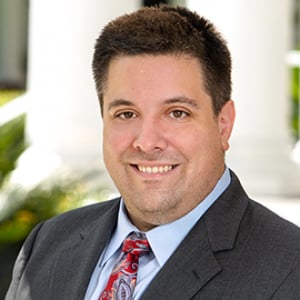
Sheila M. McDevitt Professor of Law and Faculty Director of the Election Law Center, Florida State University College of Law
Professor Morley joined FSU Law in 2018, and teaches and writes in the areas of election law, constitutional law, remedies, and the federal courts. He is best known for his work on election emergencies and post-election litigation, nationwide and other defendant-oriented injunctions, the jurisdiction of the federal courts and their equitable powers more generally. He has testified before congressional committees, made presentations to election officials for the U.S. Election Assistance Commission and participated in bipartisan blue-ribbon groups to develop election reforms. The governor of Florida also appointed Professor Morley to the Criminal Punishment Code Task Force, to propose potential revisions to the legislature.
The U.S. Supreme Court has cited several of his articles, and he was counsel of record for the successful Petitioner in a landmark campaign finance case. Professor Morley has appeared on C-SPAN, Court TV, Fox News and numerous local news programs, and has been quoted in the Washington Post, Los Angeles Times, Roll Call, Politico, U.S. News and World Report, and a wide range of other national publications. His work has been published in many of the nation’s top law reviews, including the Georgetown Law Journal, Northwestern University Law Review, Boston University Law Review and Emory Law Journal.
Before joining FSU Law, Professor Morley was a Climenko Fellow and Lecturer in Law at Harvard Law School. Prior to his experience in academia, he served in government as special assistant to the General Counsel of the Army at the Pentagon, as well as a law clerk for Judge Gerald B. Tjoflat of the U.S. Court of Appeals for the Eleventh Circuit. During his tenure with the Army General Counsel’s office, he was awarded the Meritorious Civilian Service Award and the Army Staff Lapel Pin. He also worked as an associate at Williams & Connolly LLP and the Supreme Court & Appellate group of Winston & Strawn, LLP, both in Washington, D.C.
Professor Morley earned his J.D. from Yale Law School in 2003, where he was a senior editor on the Yale Law Journal; served on the moot court board; and received the Thurman Arnold Prize for Best Oralist in the Morris Tyler Moot Court of Appeals.
Justice, Florida Supreme Court
Ricky Polston is a justice on the Florida Supreme Court. He was appointed to the court on October 2, 2008, by Governor Charlie Crist. Polston was retained by voters on November 2, 2010, and again on November 8, 2016. His current term expires in 2023.
From 2012 to 2014, Polston served as the chief justice of the court.
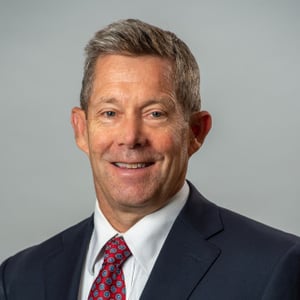
Chief Judge, United States Court of Appeals, Sixth Circuit
JEFFREY S. SUTTON is the Chief Judge of the United States Court of Appeals for the Sixth Circuit. He has served as Chair of the Federal Judicial Conference Committee on Rules of Practice and Procedure, Chair of the Advisory Committee on Appellate Rules, and Chair of the Supreme Court Fellows Commission. He currently serves as Chair of the Executive Committee of the Judicial Conference of the United States. Since 1993, Chief Judge Sutton has been an adjunct professor at The Ohio State University College of Law, where he teaches seminars on State Constitutional Law, the United States Supreme Court, and Appellate Advocacy. He also teaches a class on State Constitutional Law at Harvard Law School. Among other publications, he is the author of Who Decides? States as Laboratories of Constitutional Experimentation and 51 Imperfect Solutions: States and the Making of American Constitutional Law. He is the co-author of a casebook, State Constitutional Law: The Modern Experience, as well as The Law of Judicial Precedent. He is also the co-editor of The Essential Scalia: On the Constitution, the Courts, and the Rule of Law. In 2006, Chief Judge Sutton was elected to the American Law Institute, and in 2017 he was elected to its Council.
Professor Emeritus, Paul M. Hebert Law Center, Louisiana State University
In memoriam
Dr. John Baker is Professor Emeritus of Law, and previously the Dale E. Bennett Professor of Law, at Louisiana State University Law School. He is currently Visiting Professor at Peking University School of Transnational Law (via Zoom) and has been Visiting Professor at The Center for the Constitution, Georgetown Law School (2013-2020). He has also been a Visiting Fellow at Oriel College, the University of Oxford (2012-2014) and taught at Blackfriars Hall, Oxford in 2014. Dr. Baker has also been an adjunct Fellow at the Heritage Foundation (Spring, 2008) and a Distinguished Scholar at the Catholic University of America Law School (2011-12). He has taught at Tulane Law School, George Mason Law School, Pepperdine Law School, New York Law School, Hong Kong University, and the University of Dallas, School of Management and also taught and/or lectured in 17 foreign countries. Notable among his foreign visits are the
following: Visiting Professor at the University of Lyon III (France) (1999-2011); Visiting Professor at the Universidad de los Andes, Chile (2012), as a Fulbright Specialist (2006); and a Fulbright Scholar at various universities in the Philippines. Dr. Baker received his J.D., with honors, from the University of Michigan Law School and his B.A., magna cum laude, from the University of Dallas. He also earned a Ph.D. in Political Thought from the University of London. Baker has taught over a dozen different subjects, mostly courses in public law. His main areas of interest are Constitutional Law (particularly federalism and separation of powers), Criminal Law, Anti-Terrorism Law, International Law, Health Care Law, Mediation, and Comparative Law.
In addition to law review articles and book chapters, Dr. Baker’s academic publications include Hall's Criminal Law: Cases and Materials (with Benson, Force and George; 5th ed. Michie, 1993); An Introduction to the Law of the United States (ed. with Levasseur; University Press of America, 1992). He has also published on Forbes.com, FoxNews.com, in The Washington Times, and a number of times in The Wall Street Journal. He argues in federal court, including two oral arguments in the U.S. Supreme Court. For many years, he co-taught courses for the Federalist Society on separation of powers with the late Supreme Court Justice Antonin Scalia. In September 2016, he co-taught a Supreme Court seminar in China with Justice Samuel Alito. Following law school, he served as a law clerk in federal district court and as an assistant district attorney in New Orleans before joining LSU in 1975. While a professor, he has been as a consultant to USAID, USIA (since rolled into the State Department), the Justice Department, the U.S. Senate Judiciary Subcommittee on Separation of Powers, and the Office of Planning in the White House. He served on an ABA Task Force which issued the report, The Federalization of Crime (1998) and later as a consultant to the “Bi-Partisan Task Force on the Over- federalization of Crime” (2012-2014) created by the U.S. House Judiciary Subcommittee on Crime. Dr. Baker was a co-founder of the first iteration (1995) of Stratfor Inc., a global intelligence agency. He co-authored its first book: The Intelligence Edge (with Friedman, Friedman and Chapman; Crown Books/Random House 1997). In 2022, he began a short, weekly video podcast available on YouTube and Rumble, The Baker Brief.
Judge, United States District Court for the Eastern District of New York
Sheila M. McDevitt Professor of Law and Faculty Director of the Election Law Center, Florida State University College of Law
Professor Morley joined FSU Law in 2018, and teaches and writes in the areas of election law, constitutional law, remedies, and the federal courts. He is best known for his work on election emergencies and post-election litigation, nationwide and other defendant-oriented injunctions, the jurisdiction of the federal courts and their equitable powers more generally. He has testified before congressional committees, made presentations to election officials for the U.S. Election Assistance Commission and participated in bipartisan blue-ribbon groups to develop election reforms. The governor of Florida also appointed Professor Morley to the Criminal Punishment Code Task Force, to propose potential revisions to the legislature.
The U.S. Supreme Court has cited several of his articles, and he was counsel of record for the successful Petitioner in a landmark campaign finance case. Professor Morley has appeared on C-SPAN, Court TV, Fox News and numerous local news programs, and has been quoted in the Washington Post, Los Angeles Times, Roll Call, Politico, U.S. News and World Report, and a wide range of other national publications. His work has been published in many of the nation’s top law reviews, including the Georgetown Law Journal, Northwestern University Law Review, Boston University Law Review and Emory Law Journal.
Before joining FSU Law, Professor Morley was a Climenko Fellow and Lecturer in Law at Harvard Law School. Prior to his experience in academia, he served in government as special assistant to the General Counsel of the Army at the Pentagon, as well as a law clerk for Judge Gerald B. Tjoflat of the U.S. Court of Appeals for the Eleventh Circuit. During his tenure with the Army General Counsel’s office, he was awarded the Meritorious Civilian Service Award and the Army Staff Lapel Pin. He also worked as an associate at Williams & Connolly LLP and the Supreme Court & Appellate group of Winston & Strawn, LLP, both in Washington, D.C.
Professor Morley earned his J.D. from Yale Law School in 2003, where he was a senior editor on the Yale Law Journal; served on the moot court board; and received the Thurman Arnold Prize for Best Oralist in the Morris Tyler Moot Court of Appeals.
Justice, Florida Supreme Court
Ricky Polston is a justice on the Florida Supreme Court. He was appointed to the court on October 2, 2008, by Governor Charlie Crist. Polston was retained by voters on November 2, 2010, and again on November 8, 2016. His current term expires in 2023.
From 2012 to 2014, Polston served as the chief justice of the court.
Chief Judge, United States Court of Appeals, Sixth Circuit
JEFFREY S. SUTTON is the Chief Judge of the United States Court of Appeals for the Sixth Circuit. He has served as Chair of the Federal Judicial Conference Committee on Rules of Practice and Procedure, Chair of the Advisory Committee on Appellate Rules, and Chair of the Supreme Court Fellows Commission. He currently serves as Chair of the Executive Committee of the Judicial Conference of the United States. Since 1993, Chief Judge Sutton has been an adjunct professor at The Ohio State University College of Law, where he teaches seminars on State Constitutional Law, the United States Supreme Court, and Appellate Advocacy. He also teaches a class on State Constitutional Law at Harvard Law School. Among other publications, he is the author of Who Decides? States as Laboratories of Constitutional Experimentation and 51 Imperfect Solutions: States and the Making of American Constitutional Law. He is the co-author of a casebook, State Constitutional Law: The Modern Experience, as well as The Law of Judicial Precedent. He is also the co-editor of The Essential Scalia: On the Constitution, the Courts, and the Rule of Law. In 2006, Chief Judge Sutton was elected to the American Law Institute, and in 2017 he was elected to its Council.

Former President & CEO, The Federalist Society for Law and Public Policy Studies
Eugene B. Meyer, former President and CEO of the Federalist Society, has served as Executive Director, CEO, and/or President of the organization for more than 40 years. He is responsible for shepherding the organization from a small group of law students to a community of 90,000 lawyers, law students, academics, judges, and others interested in the rule of law. The Society now includes a Student Chapter at nearly every ABA-accredited law school in the country and Lawyers Chapters in 220 major cities across the nation. Gene earned his B.A. in history at Yale in 1975 and his M.A. in political science from the London School of Economics in 1976. Gene currently serves on the boards of the U.S. Chess Center, the Holman Foundation, the Sarah Scaife Foundation, and the advisory board of the Adam Smith Society. He holds the title of International Chess Master.
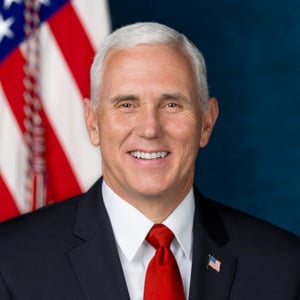
48th Vice President of the United States
Michael R. Pence was born in Columbus, Indiana, on June 7, 1959, one of six children born to Edward and Nancy Pence. As a young boy he had a front row seat to the American Dream. After his grandfather immigrated to the United States when he was 17, his family settled in the Midwest. The future Vice President watched his Mom and Dad build everything that matters—a family, a business, and a good name. Sitting at the feet of his mother and his father, who started a successful convenience store business in their small Indiana town, he was raised to believe in the importance of hard work, faith, and family.
Vice President Pence set off for Hanover College, earning his bachelor’s degree in history in 1981. While there, he renewed his Christian faith which remains the driving force in his life. He later attended Indiana University School of Law and met the love of his life, Second Lady Karen Pence.
After graduating, Vice President Pence practiced law, led the Indiana Policy Review Foundation, and began hosting The Mike Pence Show, a syndicated talk radio show and a weekly television public affairs program in Indiana. Along the way he became the proud father to three children, Michael, Charlotte, and Audrey.
Growing up in Indiana, surrounded by good, hardworking Hoosiers, Vice President Pence always knew that he needed to give back to the state and the country that had given him so much. In 2000, he launched a successful bid for his local congressional seat, entering the United States House of Representatives at the age of 40.
The people of East-Central Indiana elected Vice President Pence six times to represent them in Congress. On Capitol Hill he established himself as a champion of limited government, fiscal responsibility, economic development, educational opportunity, and the U.S. Constitution. His colleagues quickly recognized his leadership ability and unanimously elected him to serve as Chairman of the House Republican Study Committee and House Republican Conference Chairman. In this role, the Vice President helped make government smaller and more effective, reduce spending, and return power to state and local governments.
In 2013, Vice President Pence left the nation’s capital when Hoosiers elected him the 50th Governor of Indiana. He brought the same limited government and low tax philosophy to the Indiana Statehouse. As Governor, he enacted the largest income tax cut in Indiana history, lowering individual income tax rates, the business personal property tax, and the corporate income tax in order to strengthen the State’s competitive edge and attract new investment and good-paying jobs. Due to his relentless focus on jobs, the state’s unemployment rate fell by half during his four years in office, and at the end of his term, more Hoosiers were working than at any point in the state’s 200-year history.
As Governor of Indiana, Vice President Pence increased school funding, expanded school choice, and created the first state-funded Pre-K plan in Indiana history. He made career and technical education a priority in every high school. Under Vice President Pence’s leadership, Indiana, known as “The Crossroads of America,” invested more than $800 million in new money for roads and bridges across the state. Despite the record tax cuts and new investments in roads and schools, the state remained fiscally responsible, as the Vice President worked with members of the Indiana General Assembly to pass two honestly balanced budgets that left the state with strong reserves and AAA credit ratings that were the envy of the nation.
It was Indiana’s success story, Vice President Pence’s record of legislative and executive experience, and his strong family values that prompted President Donald Trump to select Mike Pence as his running mate in July 2016. The American people elected President Donald Trump and Vice President Pence on November 8, 2016. President Donald Trump and Vice President Pence entered office on January 20, 2017.
In February 2021, Vice President Mike Pence joined the Heritage Foundation as a distinguished visiting fellow. The Heritage Foundation helped shape Vice President Mike Pence’s conservative philosophy for decades and played a pivotal role advancing conservative policies throughout the Trump Administration. Vice President Pence also joined Young America’s Foundation as the Ronald Reagan Presidential Scholar. Long before Mike Pence became Vice President to President Donald Trump, the vision and leadership of Ronald Reagan inspired his youth.
Vice President Mike Pence remains grateful for the grace of God, the love and support of his family, and the blessings of liberty that are every American’s birthright.
Former President & CEO, The Federalist Society for Law and Public Policy Studies
Eugene B. Meyer, former President and CEO of the Federalist Society, has served as Executive Director, CEO, and/or President of the organization for more than 40 years. He is responsible for shepherding the organization from a small group of law students to a community of 90,000 lawyers, law students, academics, judges, and others interested in the rule of law. The Society now includes a Student Chapter at nearly every ABA-accredited law school in the country and Lawyers Chapters in 220 major cities across the nation. Gene earned his B.A. in history at Yale in 1975 and his M.A. in political science from the London School of Economics in 1976. Gene currently serves on the boards of the U.S. Chess Center, the Holman Foundation, the Sarah Scaife Foundation, and the advisory board of the Adam Smith Society. He holds the title of International Chess Master.
48th Vice President of the United States
Michael R. Pence was born in Columbus, Indiana, on June 7, 1959, one of six children born to Edward and Nancy Pence. As a young boy he had a front row seat to the American Dream. After his grandfather immigrated to the United States when he was 17, his family settled in the Midwest. The future Vice President watched his Mom and Dad build everything that matters—a family, a business, and a good name. Sitting at the feet of his mother and his father, who started a successful convenience store business in their small Indiana town, he was raised to believe in the importance of hard work, faith, and family.
Vice President Pence set off for Hanover College, earning his bachelor’s degree in history in 1981. While there, he renewed his Christian faith which remains the driving force in his life. He later attended Indiana University School of Law and met the love of his life, Second Lady Karen Pence.
After graduating, Vice President Pence practiced law, led the Indiana Policy Review Foundation, and began hosting The Mike Pence Show, a syndicated talk radio show and a weekly television public affairs program in Indiana. Along the way he became the proud father to three children, Michael, Charlotte, and Audrey.
Growing up in Indiana, surrounded by good, hardworking Hoosiers, Vice President Pence always knew that he needed to give back to the state and the country that had given him so much. In 2000, he launched a successful bid for his local congressional seat, entering the United States House of Representatives at the age of 40.
The people of East-Central Indiana elected Vice President Pence six times to represent them in Congress. On Capitol Hill he established himself as a champion of limited government, fiscal responsibility, economic development, educational opportunity, and the U.S. Constitution. His colleagues quickly recognized his leadership ability and unanimously elected him to serve as Chairman of the House Republican Study Committee and House Republican Conference Chairman. In this role, the Vice President helped make government smaller and more effective, reduce spending, and return power to state and local governments.
In 2013, Vice President Pence left the nation’s capital when Hoosiers elected him the 50th Governor of Indiana. He brought the same limited government and low tax philosophy to the Indiana Statehouse. As Governor, he enacted the largest income tax cut in Indiana history, lowering individual income tax rates, the business personal property tax, and the corporate income tax in order to strengthen the State’s competitive edge and attract new investment and good-paying jobs. Due to his relentless focus on jobs, the state’s unemployment rate fell by half during his four years in office, and at the end of his term, more Hoosiers were working than at any point in the state’s 200-year history.
As Governor of Indiana, Vice President Pence increased school funding, expanded school choice, and created the first state-funded Pre-K plan in Indiana history. He made career and technical education a priority in every high school. Under Vice President Pence’s leadership, Indiana, known as “The Crossroads of America,” invested more than $800 million in new money for roads and bridges across the state. Despite the record tax cuts and new investments in roads and schools, the state remained fiscally responsible, as the Vice President worked with members of the Indiana General Assembly to pass two honestly balanced budgets that left the state with strong reserves and AAA credit ratings that were the envy of the nation.
It was Indiana’s success story, Vice President Pence’s record of legislative and executive experience, and his strong family values that prompted President Donald Trump to select Mike Pence as his running mate in July 2016. The American people elected President Donald Trump and Vice President Pence on November 8, 2016. President Donald Trump and Vice President Pence entered office on January 20, 2017.
In February 2021, Vice President Mike Pence joined the Heritage Foundation as a distinguished visiting fellow. The Heritage Foundation helped shape Vice President Mike Pence’s conservative philosophy for decades and played a pivotal role advancing conservative policies throughout the Trump Administration. Vice President Pence also joined Young America’s Foundation as the Ronald Reagan Presidential Scholar. Long before Mike Pence became Vice President to President Donald Trump, the vision and leadership of Ronald Reagan inspired his youth.
Vice President Mike Pence remains grateful for the grace of God, the love and support of his family, and the blessings of liberty that are every American’s birthright.

Government Ethics and Corruption
Nick Cox, Renée Flaherty, Todd P. Graves, Jefferson P. Knight, Susan Rothstein-Youakim, Matthew C. Stephenson
2017 Annual Florida Chapters Conference
This panel, Government Ethics & Corruption, was held on February 4, 2017, at the 2017...
Florida and the Future of Trade Policy
Alice Ancona, Stephen Ezell, Thomas Palley, Bryan Riley, Morgan W. Streetman, Daniel Woodring
2017 Annual Florida Chapters Conference
This panel, Florida and the Future of Trade Policy, was held on February 4, 2017,...
Florida and the Future of Trade Policy
Alice Ancona, Stephen Ezell, Thomas Palley, Bryan Riley, Morgan W. Streetman, Daniel Woodring
2017 Annual Florida Chapters Conference
This panel, Florida and the Future of Trade Policy, was held on February 4, 2017,...
Address by Senator Marco Rubio
William Large, Marco Rubio
2017 Annual Florida Chapters Conference
This address by the Honorable Marco Rubio (U.S. Senator, Florida) was given on February 3,...
Address by Senator Marco Rubio
William Large, Marco Rubio
2017 Annual Florida Chapters Conference
This address by the Honorable Marco Rubio (U.S. Senator, Florida) was given on February 3,...
The Legacy of Justice Scalia
John S. Baker, Rachel Kovner, Michael T. Morley, Ricky Polston, Jordan E. Pratt, Jeffrey S. Sutton
2017 Annual Florida Chapters Conference
This panel, The Legacy of Justice Scalia, was held on February 3, 2017, at the...
The Legacy of Justice Scalia
John S. Baker, Rachel Kovner, Michael T. Morley, Ricky Polston, Jordan E. Pratt, Jeffrey S. Sutton
2017 Annual Florida Chapters Conference
This panel, The Legacy of Justice Scalia, was held on February 3, 2017, at the...
Remarks by Vice President Michael R. Pence
Eugene B. Meyer, Mike Pence
Philadelphia Lawyers Chapter
These remarks were given by the Honorable Michael R. Pence, Vice President of the United...
Remarks by Vice President Michael R. Pence
Eugene B. Meyer, Mike Pence
Philadelphia Lawyers Chapter
These remarks were given by the Honorable Michael R. Pence, Vice President of the United...
Labor Issues in the Sharing Economy
Short video on the Sharing Economy
The sharing economy is changing the nature of work, yet it doesn’t fit clearly within...