
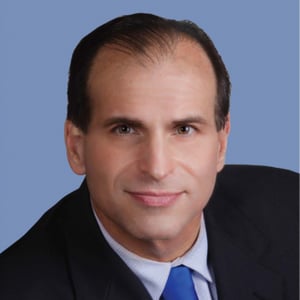
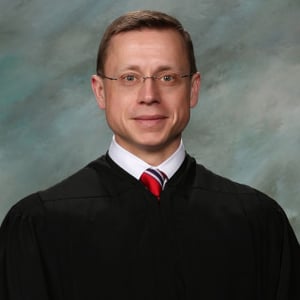
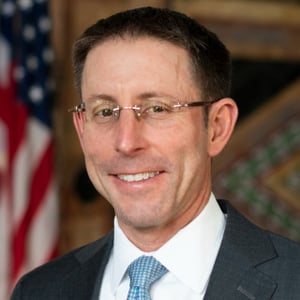
District Judge, United States District Court for the Southern District of Florida
Judge Ed Artau is a United States District Judge for the Southern District of
Florida. He was nominated by President Donald Trump for appointment to
the United States District Court in May of 2025, and confirmed by the United
States Senate in September of 2025. Prior to his confirmation, Judge Artau
was appointed by Governor Ron DeSantis to the Fourth District Court of
Appeal of Florida, where he served as an appellate judge from 2020 until
2025. Prior to being an appellate judge, Judge Artau was appointed by
Governor Rick Scott to the Fifteenth Judicial Circuit in Palm Beach County,
Florida, where he served as a trial judge from 2014 until 2020.
Judge Artau is also an Adjunct Professor at St. Thomas University College of
Law and has served as the Dean of the Advanced Judicial Studies College
and on the faculty of both the Florida Judicial College and the Advanced
Judicial Studies College.
Judge Artau has previously served as the Chair of the Fifteenth Circuit
Judicial Nominating Commission, Vice Chair of the Fourth District Court of
Appeal Judicial Nominating Commission, Parliamentarian of the Appellate
Court Rules Committee, Vice Chair of the Judicial Nominating Procedures
Committee, and as a representative on the Florida Court Education Council.
Before his appointment to the bench, Judge Artau served as General Counsel
to the South Florida Water Management District, where he commenced his
public service as a senior litigation attorney. Prior to this role, Judge Artau
managed his own law firm after having served in the litigation departments of
the law firms of Proskauer Rose, L.L.P. and Hodgson Russ, L.L.P.
Judge Artau is a graduate of the Georgetown University Law Center where he
served as a law review editor and Vice-President of the Georgetown Student
Chapter of the Federalist Society. Judge Artau completed his undergraduate
studies at Nova Southeastern University, where he graduated cum laude and
was later awarded a Doctor of Laws, honoris causa, for his commitment to
public service, academia, and the law.
Judge Artau is a founder of the first Lawyers Chapter of the Federalist
Society in Florida and is the 2025 recipient of the Good Shepherd Award,
presented by the Florida Chapters of the Federalist Society in recognition of his “Commitment to the Rule of Law and the Ideals of the Federalist Society.”
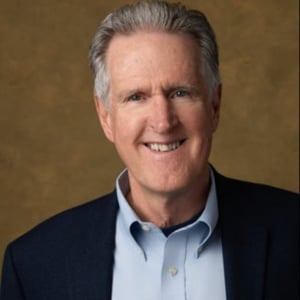
Senior Legal Counsel, Pacific Legal Foundation
Before becoming an attorney, James had been a productive member of society working as an exploration geologist in the late 1970s throughout the southwestern United States. However, after several years of dealing with irrational government bureaucrats and environmental policies untethered from reality, James decided that what the world needs is more lawyers — if they are willing to fight for rationality in regulatory regimes, property rights, and liberty.
James attended the University of Arizona College of Law in Tucson, where he served as an editor for the Law Review and received a J.D. degree in 1983. He had previously received a Masters degree in geological sciences from Brown University and an undergraduate degree from Hamilton College in New York. James received the Professional Achievement Award from the University of Arizona Alumni Association in 2018.
James has worked with Pacific Legal Foundation since 1983, litigating cases from Alaska to Florida. He is a member of the Federalist Society’s Environmental Law and Property Rights Practice Group’s Executive Committee, a member of the American College of Real Estate Lawyers, and an honorary member of Owners Counsel of America, an organization comprised of eminent domain attorneys who represent property owners. The Owners Counsel awarded James its Crystal Eagle award in 2013. In 2022, James was awarded the Brigham-Kanner Property Rights Prize at the William & Mary College of Law. The prize is awarded annually to an individual whose work has advanced the cause of property rights and has contributed to the overall awareness of the important role property rights occupy in the broader scheme of individual liberty.
In 2001, James successfully argued a major property rights case, Palazzolo v. Rhode Island, before the United States Supreme Court, a case which affirmed that rights in regulated property do not disappear when land is bought and sold. He has written extensively on all aspects of property rights and environmental law and frequently speaks on these subjects throughout the nation.
When James is not suing the government he enjoys skiing faster than he should, bicycling, hiking, swimming, and spending quality time with his wife, family, and grandchild.
Mr. Burling’s book Nowhere to Live: The Hidden Story of America’s Housing Crisis is available now on Amazon.
James is a member of the bar only in the states of Alaska and California.
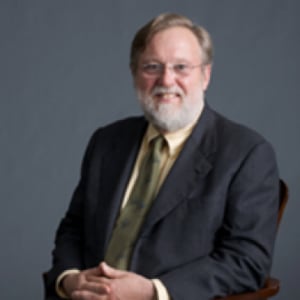
John Hampton Baumgartner, Jr. Professor of Real Property Law; Faculty Director, Georgetown Environmental Law and Policy Program; Faculty Director, Georgetown Climate Resource Center, Georgetown Law Center
Professor Byrne joined the Law Center faculty in 1985. After graduation from the University of Virginia law school, he served as a law clerk to Judge Frank Coffin and U.S. Supreme Court Justice Lewis Powell and then worked as an associate with the D.C. firm of Covington & Burling. He teaches and writes in the areas of Property, Land Use, Constitutional Law, and Higher Education Law and Policy. He served as Associate Dean for the JD Program from 1997 to 2000. He was John Carroll Research Professor in 1996-97.

Professor of Law, Antonin Scalia Law School, George Mason University
ILYA SOMIN is Professor of Law at George Mason University and the B. Kenneth Simon Chair in Constitutional Studies at the Cato Institute. His research focuses on constitutional law, property law, democratic theory, federalism, and migration rights. He is the author of Free to Move: Foot Voting, Migration, and Political Freedom (Oxford University Press, revised and expanded edition, 2022), Democracy and Political Ignorance: Why Smaller Government is Smarter (Stanford University Press, revised and expanded second edition, 2016), and The Grasping Hand: Kelo v. City of New London and the Limits of Eminent Domain (University of Chicago Press, 2015, rev. paperback ed., 2016), coauthor of A Conspiracy Against Obamacare: The Volokh Conspiracy and the Health Care Case (Palgrave Macmillan, 2013), and co-editor of Eminent Domain: A Comparative Perspective (Cambridge University Press, 2017). Democracy and Political Ignorance has been translated into Italian and Japanese.
Somin’s work has appeared in numerous scholarly journals, including the Yale Law Journal, Stanford Law Review, Northwestern University Law Review, Georgetown Law Journal, Critical Review, and others. Somin has also published articles in a variety of popular press outlets, including the New York Times, Washington Post, Wall Street Journal, Los Angeles Times, CNN, NBC, The Atlantic, USA Today, Boston Globe, US News and World Report, South China Morning Post, National Law Journal and Reason. He has been quoted or interviewed by the New York Times, Washington Post, Wall Street Journal, Time, Newsweek, The Economist, the Christian Science Monitor, the Financial Times, The Guardian, the Associated Press, CBS, MSNBC, NPR, BBC, Reuters, the Canadian Broadcasting Corporation, the Australian Broadcasting Corporation, Radio Free Europe/Radio Liberty, Al Jazeera, and the Voice of America, among other media.
Somin’s writings have been cited in decisions by the United States Supreme Court, multiple state supreme courts and lower federal courts, and the Supreme Court of Israel. He is co-counsel for the plaintiffs in VOS Selections, Inc. v. Trump, a case challenging the constitutionality of President Trump’s “Liberation Day” tariffs. Somin has testified on the use of drones for targeted killing in the War on Terror before the US Senate Judiciary Subcommittee on the Constitution, Civil Rights, and Human Rights. In 2009, he testified on property rights issues at the United States Senate Judiciary Committee confirmation hearings for Supreme Court Justice Sonia Sotomayor. Somin writes regularly for the popular Volokh Conspiracy law and politics blog, now affiliated with Reason magazine (previously affiliated with the Washington Post from 2014 to 2017). From 2006 to 2013, he served as Co-Editor of the Supreme Court Economic Review, one of the country’s top-rated law and economics journals.
Somin has served as a visiting professor at the University of Pennsylvania Law School. He has also been a visiting professor or scholar at the Georgetown University Law Center, the University of Hamburg, Germany, the University of Torcuato Di Tella in Buenos Aires, Argentina, Uriel Reichman University in Israel, and Zhengzhou University in China. He is a University Affiliate of the Schar School of Policy and Government at George Mason University, and an affiliated faculty member of the George Mason University Institute for Immigration Research. Before joining the faculty at George Mason, Somin was the John M. Olin Fellow in Law at Northwestern University Law School in 2002-2003. In 2001-2002, he clerked for the Hon. Judge Jerry E. Smith of the U.S. Court of Appeals for the Fifth Circuit. Professor Somin earned his B.A., Summa Cum Laude, at Amherst College, M.A. in Political Science from Harvard University, and J.D. from Yale Law School.
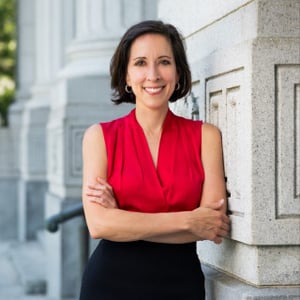
Freda H. Alverson Professor of Law, George Washington University School of Law; Founder, National Zoning Atlas
Sara C. Bronin is a Mexican-American architect, attorney, George Washington University professor, and changemaker whose interdisciplinary work focuses on how law and policy can foster more equitable, sustainable, well-designed, and connected places. She wrote Key to the City: How Zoning Shapes Our World, and she founded and leads the National Zoning Atlas and National Preservation Atlas, which illuminate land use rules influencing our economy, society, health, and happiness. She also served in a Presidentially-appointed, Senate-confirmed role chairing the federal historic preservation agency.
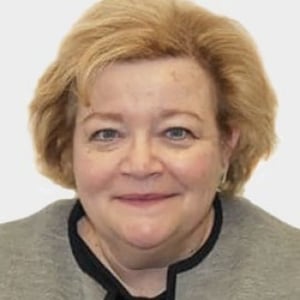
Partner, Resolution Economics
Victoria Lipnic is a Partner at Resolution Economics. She leads the Company’s Human Capital Strategy Group. The Human Capital Strategy Group combines the Company’s expertise in data analytics and deep knowledge of regulatory requirements with an interdisciplinary approach to advise organizations on the full range of their human capital needs and reporting requirements including recruitment, selection, promotions, DE&I, pay equity, and overall talent allocation.
Lipnic joined Resolution Economics in 2021. She has broad experience in the full range of human capital, labor and employment issues, especially from the regulatory enforcement perspective. Prior to joining the Company she served as Commissioner from 2010 to 2020 and Acting Chair from 2017 to 2019 of the U.S. Equal Employment Opportunity Commission. She was appointed to the EEOC by President Barack Obama and unanimously confirmed by the U.S. Senate. At the EEOC she worked on policy, cases, and regulations under all of the statutes enforced by the Commission including Title VII of the Civil Rights Act of 1964, the Age Discrimination in Employment Act (ADEA), the Americans with Disabilities Act (ADA), the Equal Pay Act (EPA), the Pregnancy Discrimination Act (PDA) and the Genetic Information Nondiscrimination Act (GINA). While at the EEOC she participated in numerous agency regulatory initiatives including the final GINA regulations, the ADA, as amended, regulations, and the revisions to the EEO-1 form to include pay data reporting. She organized the agency’s first public meeting on Big Data in Employment, created its Chief Data Officer position, oversaw development of the Office of Enterprise Data and Analytics and published a significant report on age discrimination. She co-chaired the EEOC’s Select Task Force on the Study of Harassment in the Workplace, and co-authored its seminal report, issued in 2016, before the #MeToo movement.
Prior to joining the EEOC, she practiced law with Seyfarth Shaw, LLP. She also served as the U.S. Assistant Secretary of Labor for Employment Standards from 2002 to January 2009, a position she was appointed to by President George W. Bush. At the Department of Labor she oversaw regulatory development and enforcement for the Wage and Hour Division, the Office of Federal Contract Compliance Programs (OFCCP), the Office of Labor Management Standards and four national workers’ compensation programs. This included oversight and enforcement of the Fair Labor Standards Act, the Family and Medical Leave Act, Executive Order 11246 and the Labor Management Reporting Disclosure Act.
Prior to her service as Assistant Secretary, Lipnic served as Workforce Policy Counsel to the Committee on Education and the Workforce in the U.S. House of Representatives. She was also in-house counsel for labor and employment with the U.S. Postal Service.

Tammy McCutchen is a leading authority on federal and state wage-hour laws and prevailing wage laws. She counsels businesses on wage-hour compliance, including conducting internal audits on independent contractor status, overtime exemptions, and other pay practices. She also represents employers during investigations by the U.S. Department of Labor and serves as an expert witness in wage-hour class actions. She was a founding officer of ComplianceHR, a law and technology company, where she created AI-based applications to evaluate independent contractor and overtime exempt status.
Ms. McCutchen served as Administrator of the U.S. Department of Labor’s Wage and Hour Division, appointed by President Bush and confirmed by the Senate in 2001. She was the primary architect of the 2004 revisions to the overtime exemption regulations, the first major changes to the regulations in 55 years.
Before joining DOL, she was senior counsel for the Hershey Company in Hershey, Pennsylvania.
Ms. McCutchen has been a volunteer leader of the Federalist Society since 1989. She served in leadership roles for the Northwestern Student Chapter and Chicago Lawyers Chapter. She currently serves in leadership for the Labor & Employment Practice Group, the Regulatory Transparency Project, and the Knoxville, TN Lawyers Chapter. She served on the Editorial Advisory Board of Law360, the Labor Committee of the U.S. Chamber of Commerce, the Small Business Legal Advisory Board of the National Federation of Independent Business, and a Policy Fellow at the ACU Foundation.
Ms. McCutchen is a graduate of Western Illinois University and Northwestern University School of Law. She clerked for the Hon. Daniel Manion on the U.S. Court of Appeals for the Seventh Circuit.
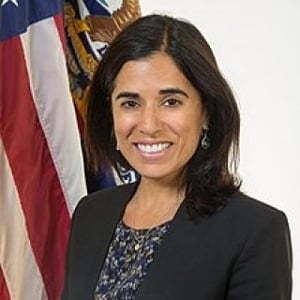
Former Solicitor of Labor, 2021-2025
Seema Nanda served as the U.S. Solicitor of Labor, from 2021 to 2025.

Judge, United States Court of Appeals, Sixth Circuit
Judge Readler earned his undergraduate and law degrees from the University of Michigan. After graduating, he served as a law clerk to Judge Alan Norris of the United States Court of Appeals for the Sixth Circuit. Judge Readler then began practicing law in the Columbus office of the international law firm Jones Day, eventually spending ten years as a partner in the firm’s Issues and Appeals Practice Group. While at Jones Day, Judge Readler appeared in state and federal trial and appellate courts around the country, most frequently the Supreme Court of Ohio and the Sixth Circuit. Judge Readler also successfully argued before the United States Supreme Court in McQuiggin v. Perkins on behalf of an inmate claiming actual innocence. His other pro bono representations include representing capital defendants before the Tenth Circuit and the Supreme Court of Ohio, as well as representing defendants sentenced to life in prison before the Sixth Circuit. While at Jones Day, Judge Readler traveled to Nairobi with Lawyers Without Borders to train Kenyan lawyers in prosecuting domestic violence cases, and he was also a recipient of the American Marshall Memorial Fellowship awarded by the German Marshall Fund of the United States. Following his career in private practice, Judge Readler served as Acting Assistant Attorney General for the Civil Division of the United States Department of Justice from 2017 to 2019. In that role, Judge Readler led and supervised over 1,000 lawyers in the Department’s largest litigating division, briefing and arguing several cases on behalf of the United States in federal courts across the country, including high-profile cases significant to the Administration and the Department. In March 2019, Judge Readler was confirmed to serve as a Circuit Judge on the Sixth Circuit. He resides in Columbus.
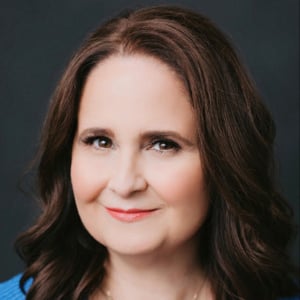
Chief Judge, United States Court of Appeals, Fifth Circuit
Jennifer Walker Elrod is the Chief Judge of the United States Court of Appeals for the Fifth Circuit. She was nominated to the Fifth Circuit in 2007, and she served as a Circuit Judge on the court until assuming the role of Chief Judge in October 2024. Prior to serving as a Circuit Judge, Chief Judge Elrod was appointed and then twice elected Judge of the 190th District Court of Harris County, Texas, where she spent over five years presiding over more than 200 jury and non-jury trials.
Chief Judge Elrod graduated cum laude from Harvard Law School, where she was an active member of the Harvard Federalist Society, an Ames Moot Court finalist, and a Senior Editor of the Harvard Journal of Law & Public Policy. She clerked for the Honorable Sim Lake in the Southern District of Texas. Before serving as a judge, Chief Judge Elrod worked in private practice, focusing on civil litigation, antitrust, and employment matters.
She has been repeatedly recognized for her work as a jurist, as well as for her pro bono work and contributions to the community. She has been named the 2022 Texas Review of Law & Politics’ Jurist of the Year, the 2018 Harvard Federalist Society’s Alumni of the Year, the 2016–17 Texas Association of Civil Trial and Appellate Specialists’ Appellate Judge of the Year, and the 2008 Mexican-American Bar Association of Texas’s Judge of the Year.
Chief Judge Elrod is actively engaged in the academic and legal communities. Chief Judge Elrod currently serves on the Board of Directors and as the Jurist-in-Residence at the South Texas College of Law, where she teaches civil procedure and First Amendment law. She is also a member of the American Law Institute and of the Board of Advisors for the Harvard Journal of Law & Public Policy, and she is a former member of the Board of Regents of her alma mater, Baylor University, and the Board of Visitors at Brigham Young University Law School. She previously served as the Chair of the Codes of Conduct Committee for the Judicial Conference of the United States. She has also served as the M.D. Anderson Visiting Public Service Professor at the Texas Tech University School of Law and as Jurist-in-Residence at Brigham Young University Law School, and she has taught legal writing at the University of Houston Law Center. She presented the Lewis F. Powell, Jr. Distinguished Lecture at the Washington and Lee University School of Law and is a frequent speaker on the topics of trial and appellate procedure, ethics, employment law, and constitutional law. Chief Judge Elrod also serves on the board of the Garland R. Walker Inn of Court, and co-produces an annual musical CLE, for which her pupilage group has won multiple national awards.
Chief Judge Elrod’s publications include: Trial by Siri: AI Comes to the Courtroom; Don’t Mess with Texas Judges: In Praise of the State Judiciary; For Good: Enriching Your Practice and Your Life Through Pro Bono and Community Service; Is the Jury Still Out?: A Case for the Continued Viability of the American Jury; and W(h)ither the Jury? The Diminishing Role of the Jury Trial in our Legal System.
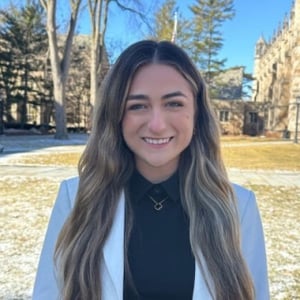
President, North Carolina Student Chapter
Caroline L. Martin is the 2025-2026 Federalist Society Student Chapter President at the University of North Carolina School of Law. She graduated from the University of Michigan Honors College in 2021 with B.A. in History and Political Science. Before attending law school, she worked at the National Republican Senatorial Committee and the U.S. House of Representatives. She is currently externing with the United States District Court for the Middle District of North Carolina. Upon graduating and passing the bar exam, she plans to return to a law firm in her hometown of Chicago, Illinois. If admitted to the bar, she will be a sixth generation Irish attorney.
Judge, United States Court of Appeals, Fifth Circuit
Andrew Oldham is a Circuit Judge on the United States Court of Appeals for the Fifth Circuit. Before ascending to the bench, Judge Oldham served as General Counsel to Texas Governor Greg Abbott, where he advised the Governor on a range of issues under federal and state law and managed litigation in which the Governor was an interested party. Before that he served as Deputy Solicitor General for the State of Texas, where he represented Texas in federal courts across the country, including twice before the United States Supreme Court. Before moving to Texas, Judge Oldham was an attorney at Kellogg Hansen Todd Figel & Frederick in Washington, D.C. His practice focused on appellate litigation in federal courts of appeals throughout the country. Before entering private practice, Judge Oldham served as a law clerk to Justice Samuel A. Alito, Jr., at the Supreme Court of the United States and to Judge David B. Sentelle of the U.S. Court of Appeals for the District of Columbia Circuit. He also worked as an attorney-adviser in the Office of Legal Counsel at the U.S. Department of Justice from 2006 to 2008. Judge Oldham earned a B.A. from the University of Virginia with highest honors, a Truman Scholarship for graduate school, an M. Phil., first class (with distinction), from Cambridge University, and a J.D., magna cum laude, from Harvard Law School.
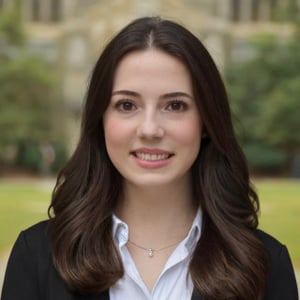
Alumni Relations Chair, Michigan Student Chapter

Solicitor General of Missouri
Lou Capozzi is the Solicitor General of Missouri. In that role, he oversees all appeals for the State of Missouri. He is also the Director of Special Litigation and litigates high-stakes cases at trial.
Lou previously worked at Jones Day, where he specialized in administrative and election law. At Jones Day, he helped lead a six-week bench trial in federal court, during which he cross-examined important expert and fact witnesses, delivered closing argument, asserted evidentiary objections, and argued several motions, including a motion for a directed verdict. He has also authored briefs at all phases of litigation--from evidentiary motions to dispositive motions and appeals.
Lou is also Lecturer in Law at the University of Pennsylvania Carey Law School and a Public Member of the Administrative Conference of the United States. He has published several academic articles focusing on administrative law.
Lou clerked for Justice Neil Gorsuch at the United States Supreme Court in the 2021 Term, as well as for Judges J. Harvie Wilkinson III of the United States Court of Appeals for the Fourth Circuit and Anthony Scirica of the United States Court of Appeals for the Third Circuit. He gradated as the valedictorian from the University of Pennsylvania Law School in 2019.
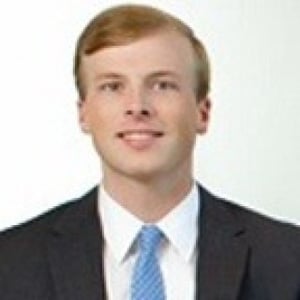
Special Assistant to the President and Senior Adviser for Policy, The White House
Clark Milner serves as Special Assistant to the President and Senior Advisor for Policy, focusing primarily on domestic policy. Milner formerly served as Deputy Chief of Staff for Policy and Chief Counsel to Senator Bill Hagerty. Prior to that, Milner served as Deputy Counsel to Governor Bill Lee and Associate Deputy Counsel to Governor Bill Haslam, was an associate with Bass, Berry, and Sims PLC in Nashville, and was a law clerk to Judge Thomas A. Varlan of the U.S. District Court for the Eastern District of Tennessee. Milner received his law degree from the University of Tennessee and his undergraduate degree from the University of Georgia. He is from Knoxville, Tennessee.
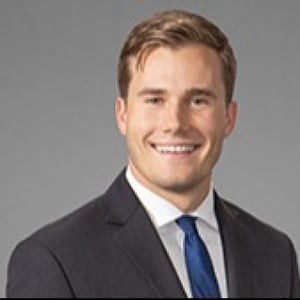
Chief Deputy Solicitor General, Florida Attorney General's Office
Jason Muehlhoff is Chief Deputy Solicitor General in the Florida Attorney General's Office. Prior to that, he was an associate in the Dallas office of Gibson, Dunn & Crutcher. He previously served as a law clerk for the Honorable Lawrence VanDyke of the U.S. Court of Appeals for the Ninth Circuit.
Mr. Muehlhoff graduated with Honors from Harvard Law School in 2021. While in law school, he served as the Articles Chair of the Harvard Journal of Law & Public Policy. He earned his Bachelor of Arts degree summa cum laude from Biola University in 2016, where he studied Political Science and Theology.
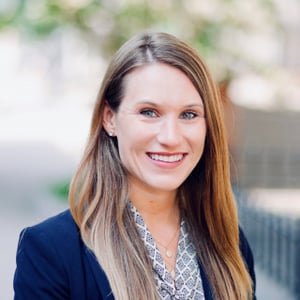
Counsel, Becket Fund for Religious Liberty
Amanda Salz is counsel at the Becket Fund for Religious Liberty, where her practice focuses on First Amendment litigation at both the trial and appellate levels. She is also a member of the Federalist Society’s Religious Liberties Executive Committee.
Before joining Becket, Amanda worked as an associate at Morgan, Lewis & Bockius LLP. As a member of the firm’s appellate group, Amanda litigated many cases involving constitutional and administrative issues. In addition to her experience in private practice, Amanda clerked for the Honorable Andrew S. Oldham of the U.S. Court of Appeals for the Fifth Circuit and the Honorable Reed C. O’Connor of the U.S. District Court for the Northern District of Texas.
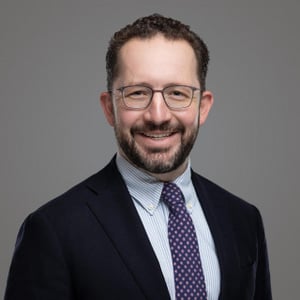
Executive Director, Alliance For Consumers
O.H. leads Alliance For Consumers, which fights to ensure that consumer protection efforts, class action lawsuits, and attorney general enforcement actions are consistent with the rule of law and benefit everyday consumers, not just class action lawyers and career bureaucrats.
His work with AFC builds off his time with the Arizona Attorney General's Office under Attorney General Mark Brnovich, where he not only defended constitutional questions and served as the State's lead counsel in the U.S. Supreme Court, but also had the privilege of leading Arizona's consumer protection lawsuit against Google over the tracking of consumers' location, and the successful case against Volkswagen over well-publicized diesel-related consumer deception.
O.H. is a 2010 graduate of Harvard Law School. Before joining Attorney General Brnovich in 2016, O.H. practiced at WilmerHale and Ropes & Gray in Boston and clerked for the Hon. J.L. Edmondson of the United States Court of Appeals for the Eleventh Circuit in Atlanta, Georgia.
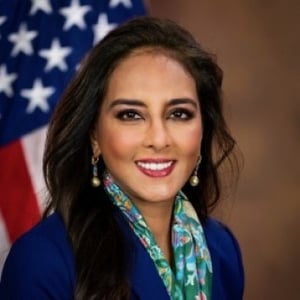
Assistant Attorney General for Civil Rights, U.S. Department of Justice
Harmeet K. Dhillon is the Assistant Attorney General for Civil Rights at the U.S. Department of Justice. She was nominated by President Donald Trump in December 2024. She was confirmed by the U.S. Senate on April 3, 2025, and sworn in as AAG by Attorney General Pam Bondi on April 7, 2025.
Prior to joining the Division, Ms. Dhillon founded both the Dhillon Law Group, Inc., a successful legal practice with offices in California, Florida, Virginia, and New Jersey; and the Center for American Liberty, a nonprofit organization dedicated to pursuing civil liberties legal claims. Her law practice focused on First Amendment / free speech, civil rights, and campaign and election law issues. Among her many notable cases, Ms. Dhillon brought legal challenges against the University of California, Berkeley over its free speech policy, against an Antifa organization for an assault on a conservative journalist, against several states for their restrictive responses to Covid-19, and against various large tech companies for a host of civil rights issues.
Assistant Attorney General Dhillon was born in Chandigarh, India, and lived in London before moving to The Bronx, New York. Her family ultimately settled in rural Smithfield, North Carolina. After graduating high school at age 16, Ms. Dhillon attended Dartmouth College where she became editor-in-chief of The Dartmouth Review. After earning her bachelor’s degree in Classical Studies, she attended the University of Virginia School of Law and served on the editorial board of the Virginia Law Review. She later clerked for the Honorable Paul V. Niemeyer of the United States Court of Appeals for the Fourth Circuit in Baltimore, Maryland.
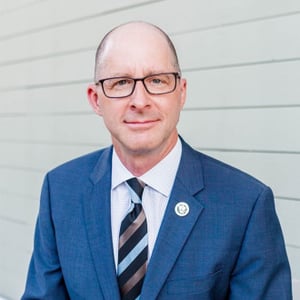
Judge, U.S. District Court for the Southern District of Texas
Hon. Charles Eskridge, Judge, United States District Court for the Southern District of Texas, Houston Division, was born in Cleveland, Ohio, and arrived in Houston, Texas, at the age of 11 with his parents in 1974.
Judge Eskridge received a B.S. from Trinity University and a J.D. from Pepperdine University School of Law. He served as a law clerk to Chief Judge Charles Clark of the United States Court of Appeals for the Fifth Circuit, as a law clerk to Justice Byron White of the Supreme Court of the United States, and as a special assistant to the Hon. Howard Holtzmann of the Iran/U.S. Claims Tribunal in The Hague.
From 1994 to 2019, Judge Eskridge was in private practice in Houston, Texas, litigating complex commercial disputes. He teaches Origins of the Federal Constitution at the University of Houston Law Center and has served as the Distinguished Visiting Practitioner of Law at the Pepperdine University School of Law.
President Donald J. Trump nominated him to the federal bench on May 3, 2019. Following confirmation by the Senate, Judge Eskridge took his seat on October 22, 2019.
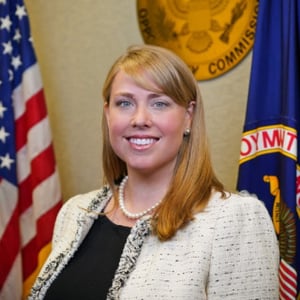
Chair, United States Equal Employment Opportunity Commission
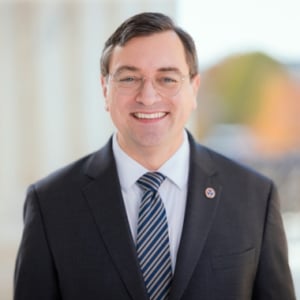
Attorney General of Tennessee
Jonathan Skrmetti was sworn in to an eight-year term as Tennessee’s Attorney General and Reporter on September 1, 2022.
Prior to his current role, General Skrmetti served as Chief Counsel to Governor Bill Lee and as Chief Deputy Attorney General to his predecessor, Tennessee Attorney General Herbert Slatery.
Before working for the State of Tennessee, General Skrmetti was a partner at Butler Snow LLP in Memphis. His legal career began with nearly a decade as a federal prosecutor. He worked at the Civil Rights Division at Main Justice and then at the Memphis U.S. Attorney’s Office and prosecuted sex traffickers, corrupt government officials, and violent white supremacists. In addition, General Skrmetti taught cyberlaw as an adjunct professor at the University of Memphis.
General Skrmetti earned honors degrees from George Washington University, the University of Oxford, and Harvard Law School, where he was editor-in-chief of the Harvard Journal of Law & Public Policy. Following law school, Jonathan clerked for Judge Steven Colloton on the U.S. Court of Appeals for the Eighth Circuit. He lives in Franklin, Tennessee, with his wife and four children.
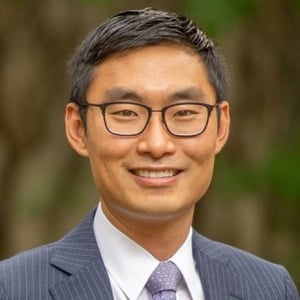
Director, Supreme Court Litigation Clinic, University of Virginia School of Law
Xiao Wang is director of the Supreme Court Litigation Clinic. He has led appeals and argued cases before the U.S. Supreme Court, the federal courts of appeals, and other federal courts and agencies. In addition, he organizes the En Banc Institute and supervises the National Appellate Clinic Network, which was recognized as a finalist for Bloomberg Law’s Law School Innovation Program. Wang previously worked as a litigator at Williams & Connolly and Wilkinson Stekloff, where he led investigations or litigation on behalf of Mars, Under Armour and the National Football League.
Wang writes about federal courts, constitutional law, and law and religion. His work has appeared in the Michigan Law Review, Vanderbilt Law Review and Columbia Law Review Forum, and his popular writing has appeared in Bloomberg, the Chicago Tribune and the Los Angeles Times.
Prior to joining the Law School, Wang taught at Northwestern Pritzker School of Law as a clinical assistant professor and director of the Appellate Advocacy Center, where he supervised the Supreme Court and Federal Appellate clinics. Wang clerked for Judge Karen N. Moore of the U.S. Court of Appeals for the Sixth Circuit and Judge Lucy H. Koh of the U.S. District Court for the Northern District of California. He earned his B.A. in economics and master’s in public policy from the University of Virginia, where he was a Jefferson Scholar. He earned his J.D. from Yale Law School, where he was a Truman Scholar. Before law school, he worked as a consultant at McKinsey & Co.
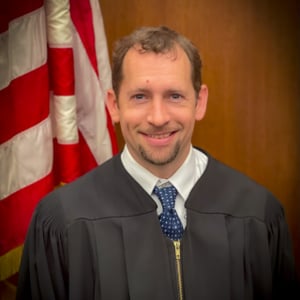
District Judge, United States District Court for the Northern District of Texas
Judge Brantley Starr was appointed to United States District Court for the Northern District of Texas in August 2019. Before his appointment, Judge Starr was the Deputy First Assistant Attorney General of Texas. Prior to that appointment, he served as Deputy Attorney General for Legal Counsel. From 2011 to 2015, Judge Starr served as career staff attorney to Texas Supreme Court Justice Eva Guzman. From 2008 to 2011, he practiced at King & Spalding, LLP. He served in the Office of the Solicitor General from 2006 to 2008. Prior to that, Judge Starr clerked for then-Justice Don Willett on the Texas Supreme Court after serving at the Office of the Attorney General. Judge Starr received his law degree from the University of Texas School of Law and his bachelor of arts degree from Abilene Christian University in 2001. Judge Starr has taught the Origins of the Constitution Class at the University of Texas law, Texas A&M law, and SMU law.
Judge, United States Court of Appeals, Ninth Circuit
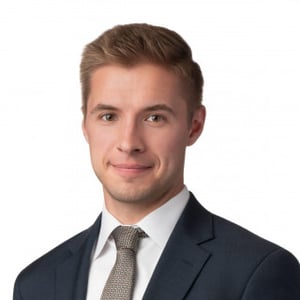
Fellow for China and Technology, American Enterprise Institute
Ryan Fedasiuk is a Fellow at the American Enterprise Institute, where he writes on the intersection of U.S.-China relations, technology, and national power. He is cross-appointed between AEI's Foreign and Defense Policy Studies program and the Center for Technology, Science, and Energy. He is also an Adjunct Assistant Professor in the Security Studies Program at Georgetown University, where he teaches open-source intelligence (OSINT) methods.
From 2022-2024, Ryan was an Advisor for U.S.-China Bilateral Affairs at the U.S. Department of State, where he helped launch the Office of China Coordination and served as the U.S. government’s main point of contact with the Chinese Embassy in Washington. Before that, he was a Senior Research Analyst with the Center for Security and Emerging Technology (CSET), leading open-source investigations into military applications of AI and U.S. security posture in East Asia.
Ryan’s investigations into U.S. and Chinese technological power have been featured in reporting by The Washington Post, Wall Street Journal, and Associated Press; and his commentary has appeared in POLITICO, Foreign Policy, Defense One, and War on the Rocks, among other outlets.
Ryan holds an M.A. in Security Studies from Georgetown University, where he also studied Mandarin. He received his B.A. in International Studies and Russian language from American University.

Partner & Chair, National Security Practice, Wiley Rein LLP
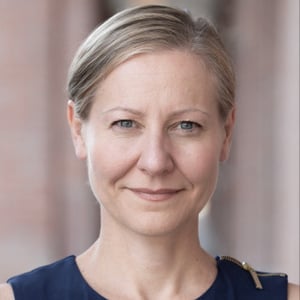
Senior Fellow, Brookings Institution

Emanuel S. Heller Professor of Law, University of California at Berkeley; Senior Research Fellow, School of Civic Leadership, Civitas Institute, University of Texas at Austin; Nonresident Senior Fellow, American Enterprise Institute
John Yoo is the Emanuel Heller Professor of Law. He is also Distinguished Visiting Scholar, School of Civic Leadership and Senior Research Fellow, Civitas Institute, at the University of Texas at Austin. He is also a Nonresident Senior Fellow at the American Enterprise Institute.
His most recent book, The Politically Incorrect Guide to the Supreme Court, co-authored with Robert Delahunty, was published in 2023. Professor Yoo’s other books include Defender-in-Chief: Trump’s Fight for Presidential Power; Striking Power: How Cyber, Robots, and Space Weapons Change the Rules for War, Point of Attack: Preventive War, International Law, and Global Welfare, and Crisis and Command: A History of Executive Power from George Washington to George Bush.
Professor Yoo has published more than 100 articles in academic journals on subjects including national security, constitutional law, international law, and the Supreme Court. He also regularly contributes to the editorial pages of the Wall Street Journal, New York Times, Washington Post, Los Angeles Times, and National Review, among others.
Professor Yoo has served in all three branches of government. He was an official in the U.S. Department of Justice, where he worked on national security and terrorism issues after the 9/11 attacks. He served as general counsel of the U.S. Senate Judiciary Committee. He has been a law clerk for Supreme Court Justice Clarence Thomas and federal appeals Judge Laurence Silberman. He has been a visiting professor at Seoul National University in South Korea, the Interdisciplinary Center in Israel, Keio University in Japan, Trento University in Italy, the University of Chicago, and the Free University of Amsterdam.
Professor Yoo supervises the Public Law and Policy Program and the California Constitution Center. He also serves on the boards of the Pacific Legal Foundation, the Federalist Society’s Separation of Powers and Federalism Division, the Universidad Cientifica del Sur Law School, and the Asia-Pacific Law Institute at Seoul National University. He is a winner of the Federalist Society’s Paul Bator award and been the Edwin Meese III Originalism Lecturer at the Heritage Foundation.
Professor Yoo graduated from Yale Law School and summa cum laude from Harvard College.
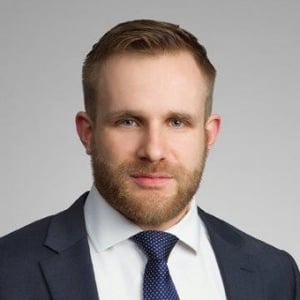
Deputy Assistant to the President for Economic Policy, The White House
Ryan Baasch serves as the Deputy Director of President Trump's National Economic Council (NEC), and as Deputy Assistant to the President on Economic Policy, where he focuses on cutting-edge technology issues at the frontier of AI regulation, space commercialization, and telecommunications networks. Before joining NEC, Ryan occupied multiple positions in the Texas Attorney General's office where he supervised all of the office's offensive civil litigation and maintained a heavy appellate caseload touching First Amendment and technology issues. Ryan began his career as a law clerk to Judge Karen LeCraft Henderson and spent five years at a large law firm in Washington D.C. and New York.
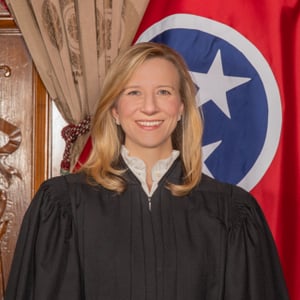
Justice, Supreme Court of Tennessee
Justice Sarah Campbell was confirmed to the Tennessee Supreme Court in 2022. She previously served as an Associate Solicitor General in the Tennessee Attorney General’s Office and as an associate at the law firm of Williams & Connolly LLP in Washington, DC. Justice Campbell earned her law degree from Duke University School of Law, a Master of Public Policy degree from Duke University, and her undergraduate degree from the University of Tennessee, where she received the Torchbearer Award. She served as a law clerk for Justice Samuel A. Alito, Jr. on the United States Supreme Court and Judge William H. Pryor Jr. on the U.S. Court of Appeals for the Eleventh Circuit.
Deputy General Counsel for Administrative Law, Federal Communications Commission (FCC)
Michael Carlson is Senior Corporate Counsel at Amazon’s Project Kuiper, where he leads a legal team advising on regulatory issues and strategic initiatives related to satellite communications and broadband deployment. Prior to joining Amazon, he served as Deputy General Counsel at the Federal Communications Commission, overseeing the Office of General Counsel’s Administrative Law Division.
Mr. Carlson has also served as an attorney in the U.S. intelligence community, advising on legal and policy issues related to national security, and as a corporate strategist at Microsoft, where he focused on emerging technologies and global regulatory trends. He teaches Communications Law at George Mason University’s Antonin Scalia Law School.
He earned his J.D. from the University of Pennsylvania Law School, and clerked for Judge Deborah Cook on the U.S. Court of Appeals for the Sixth Circuit. He lives in Arlington, VA with his wife and four children.
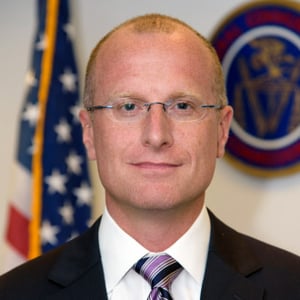
Chairman, Federal Communications Commission
Brendan Carr is the Chairman of the Federal Communications Commission. He previously served as the senior Republican Commissioner and as the FCC’s General Counsel. Nominated by both President Trump and President Biden, Carr has been confirmed unanimously by the Senate three times.
Described by Axios as “the FCC’s 5G crusader,” Carr has led the FCC’s work to modernize its infrastructure rules and accelerate the buildout of high-speed networks. His reforms cut billions of dollars in red tape, enabled the private sector to construct high-speed networks in communities across the country, and extended America’s global leadership in 5G.
Chairman Carr is also focused on expanding America’s skilled workforce—the tower climbers and construction crews needed to build next-gen networks. His jobs initiative promotes community colleges and apprenticeships as a pipeline for good-paying 5G jobs. He is recognizing America’s talented tower crews through a series of “5G Ready” Hard Hat presentations.
Chairman Carr leads a groundbreaking telehealth initiative at the FCC. The Connected Care Pilot Program supports the delivery of high-quality care to low-income Americans and veterans.
Chairman Carr’s time outside of Washington helps inform his approach to the job. He regularly hits the road to hear directly from community members and learn how changes in federal policies could help improve their lives.
Chairman Carr brings nearly 20 years of private and public sector experience in communications and tech policy to his position. Before joining the FCC as a staffer back in 2012, he worked as an attorney at Wiley Rein LLP in the firm’s appellate, litigation, and telecom practices. Previously, Chairman Carr clerked on the U.S. Court of Appeals for the Fourth Circuit for Judge Dennis Shedd. After attending Georgetown University for his undergrad, Chairman Carr earned his J.D. magna cum laude from the Catholic University of America’s Columbus School of Law where he served as an editor of the Catholic University Law Review.
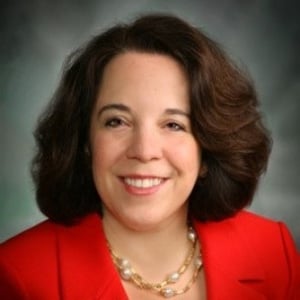
Vice President, Technology Policy & Regulation, Lockheed Martin Government Affairs
Jennifer A. Warren is currently Vice President, Global Regulatory Affairs & Public Policy for Lockheed Martin Corporation. In this capacity, she is responsible for leading the corporate team’s engagement and strategy across the Executive Branch, Independent Agencies and Intergovernmental Bodies across a broad business, regulatory and public policy portfolio.
Her responsibilities also include leading corporate relationships with Intergovernmental Bodies, such as ITU, CITEL, ICAO, UN Office of Outer Space Affairs, and major trade associations; Ms. Warren is the former Chair (twice) of the Satellite Industry Association (SIA), and currently serves on the Boards of the SIA, US ITU Association, and the Professional Services Corporation, and as the co-chair of the U.S. Chamber of Commerce’s Telecommunications and E-Commerce Committee. She also participates on the ITI Space Enterprise Council and the US Chamber Space Council.
Ms. Warren has broad private sector engagement across government, having been a member of the Department of Commerce Spectrum Management Advisory Committee (CSMAC), FAA Commercial Space Transportation Advisory Committee, Department of State International Telecommunications Advisory Committee (now International Digital Economy & Telecommunications Advisory Committee), and NASA Advisory Committee/Regulatory Policy Committee, as well as served on the FCC’s WRC Advisory Committee.
From 1991-1996, Ms. Warren held several senior roles in the U.S. Federal Communications Commission, including as Assistant Chief in the Wireless Telecommunications Bureau and Senior Legal Advisor in the International Bureau. In 1991, she graduated from Georgetown University Law Center (J.D.), where she subsequently served as an Adjunct Professor in International Communications Regulation and Policy for close to 20 years. She is also a graduate of Georgetown University (B.S. in Languages), and a member of the Illinois State and D.C. Bars, the Federal Communications Bar Association, and American Bar Association. Her civic activities include the Boards of the George Washington Legacy Foundation and Gadsby Tavern Museum Society in Old Town Alexandria, and the Foundation of the National Archives & Records Administration.
Ms. Warren lives in Old Town Alexandria, Virginia, with her husband Ed, and their puppy - Madison.

Tazewell Taylor Professor of Law and William H. Cabell Research Professor, William & Mary Law School
Jonathan H. Adler joined the William & Mary law faculty as the Tazwell Taylor Professor of Law and William H. Cabell Research Professor in 2025. Prior to joining the faculty, he was the inaugural Johan Verheij Memorial Professor of Law and the founding Director of the Coleman P. Burke Center for Environmental Law at the Case Western Reserve University School of Law.
Professor Adler is the author or editor of seven books, including Climate Liberalism: Perspectives on Liberty, Property and Pollution (Palgrave, 2023), Marijuana Federalism: Uncle Sam and Mary Jane (Brookings Institution Press, 2020), Business and the Roberts Court (Oxford University Press, 2016) and Rebuilding the Ark: New Perspectives on Endangered Species Act Reform (AEI Press, 2011).
His articles have appeared in publications ranging from the Harvard Environmental Law Review and Yale Journal on Regulation to the Wall Street Journal, New York Times, and Washington Post. He has testified before Congress a dozen times, and his work has been cited in the U.S. Supreme Court. A 2024 study identified Professor Adler as the seventh most cited legal academic in administrative and environmental law from 2019 to 2023.
Professor Adler is a contributing editor to Civitas Outlook and a regular contributor to the popular legal blog, The Volokh Conspiracy. A regular commentator on constitutional and regulatory issues, he has appeared on numerous radio and television programs, ranging from the PBS Newshour and National Public Radio to the Fox News Channel and Entertainment Tonight.
Professor Adler is a senior fellow at the Property & Environment Research Center in Bozeman, Montana. In 2018, Professor Adler was elected to membership in the American Law Institute and helped co-found the organization Checks and Balances. In 2024, Professor Adler was appointed a public member of the Administrative Conference of the United States.
Professor Adler clerked for the Honorable David B. Sentelle on the U.S. Court of Appeals for the District of Columbia Circuit.
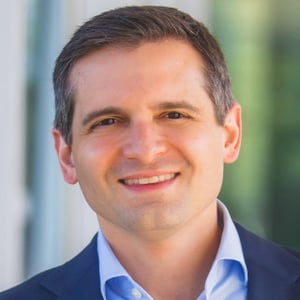
Assistant General Counsel for Litigation, Exxon Mobil Corporation
Justin Anderson is the Assistant General Counsel for Litigation at ExxonMobil. As head of litigation, Justin is responsible for protecting ExxonMobil’s interests in disputes arising around the world. That litigation portfolio includes a variety of commercial disputes, investment treaty arbitrations, long-running climate lawsuits, environmental claims, and a diverse range of other matters. Justin has led the litigation department at ExxonMobil since July 2023.
Prior to joining ExxonMobil, Justin was a partner in the litigation department of Paul, Weiss, Rifkind, Wharton & Garrison, LLP. At the law firm, Justin represented clients in a variety of litigation and regulatory matters, including class actions, white collar matters, regulatory enforcement proceedings, and complex business litigation.
Justin previously served as an Assistant U.S. Attorney in the U.S. Attorney’s Office for the Southern District of New York from 2009 to 2015. He led the investigation, prosecution, and trial of federal crimes, including financial fraud, public corruption, narcotics trafficking, identity theft, and money laundering. For his work on one of those matters, he received the John Marshall Award, the Justice Department’s highest award for trial litigators.
Earlier in his career, Justin was a law clerk to Judge José A. Cabranes of the U.S. Court of Appeals for the Second Circuit, and Judge Sidney H. Stein of the U.S. District Court for the Southern District of New York.
Justin earned his B.A. and M.A. from Johns Hopkins University and his J.D. from Yale Law School.
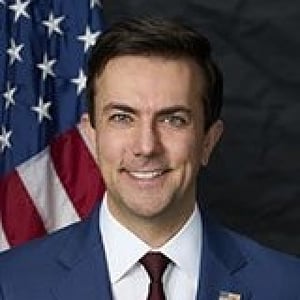
Deputy Administrator, United States Environmental Protection Agency
David Fotouhi was sworn in as Deputy Administrator of the United States Environmental Protection Agency on June 16, 2025.
Fotouhi is an experienced environmental attorney who previously served in senior roles at EPA. During the first term of the Trump Administration, Fotouhi served as EPA’s Acting General Counsel and Principal Deputy General Counsel. Prior to rejoining the agency, Fotouhi was a partner in the Washington, D.C. office of Gibson, Dunn & Crutcher LLP practicing environmental law.
Fotouhi grew up in Oklahoma and holds a B.A. from Vanderbilt University and a J.D. from Harvard Law School. Before entering private legal practice, Fotouhi served as a law clerk to the Honorable Raymond W. Gruender of the U.S. Court of Appeals for the Eighth Circuit.
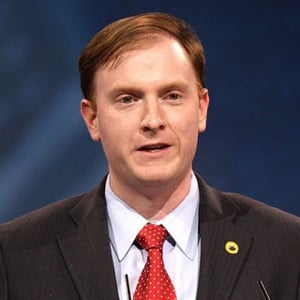
State Auditor & Securities Commissioner, West Virginia
John “JB” McCuskey is West Virginia’s 21st State Auditor. He is currently in his second term, first elected in 2016. Previously, he served two terms in the House of Delegates and practiced law in Charleston.
As Auditor, McCuskey has made it his mission to ensure an efficient, effective, and transparent government. On his watch, McCuskey has turned West Virginia into the most transparent state in the country by allowing citizens to access real-time data about how their tax dollars are spent through WVCheckbook.gov. He also established the Public Integrity and Fraud Unit which has opened more than 200 investigations into local governments, uncovering fraud totaling more than $2.5 million.
A tool to fight fraud and abuse is the use of the state Purchasing Card. Over the past five years, McCuskey has pushed for more agencies, boards and commissions, and institutions of higher education to use the P-Card, which offers an efficient method for streamlining the payment process. The P-Card program nets the state tens of millions each year in cost avoidance savings. Since Auditor McCuskey took office, the state and local governments have earned more than $41 million in rebates from the use of the P-Card.
McCuskey is also leading the nation in using augmented intelligence and machine learning to streamline government processes and mitigate fraud and abuse of taxpayer dollars. The Auditor’s Office has established a platform, the first of its kind, to be used to track government spending and highlight fraud and important trends.
Additionally, the Auditor is the Land Commissioner for the state of West Virginia. McCuskey pushed to rewrite decades old tax laws, to streamline the property tax process for taxpayers and collectors across the state. This will help speed up the process to prevent houses from becoming dilapidated during what was a very lengthy process. The legislation also created, for the first time, a payment plan for homeowners who fall on hard times.
McCuskey is a native of Harrison County, West Virginia. His parents, John and Anne McCuskey, cultivated his deep love of the Mountain State and instilled in him the values of public service.
He is a graduate of The George Washington University with a degree in Political Communication. He is also a graduate of the West Virginia University College of Law. Before attending law school, McCuskey worked as a civilian for the Department of Defense at the Pentagon in the offices of the Army and Department of Defense General Counsels.
Auditor McCuskey lives in Charleston with his wife, Wendy, and daughters, Charlotte Anne and Martha Elizabeth, and their dog Pearl, where they own a small business.
Executive Director, Alliance For Consumers
O.H. leads Alliance For Consumers, which fights to ensure that consumer protection efforts, class action lawsuits, and attorney general enforcement actions are consistent with the rule of law and benefit everyday consumers, not just class action lawyers and career bureaucrats.
His work with AFC builds off his time with the Arizona Attorney General's Office under Attorney General Mark Brnovich, where he not only defended constitutional questions and served as the State's lead counsel in the U.S. Supreme Court, but also had the privilege of leading Arizona's consumer protection lawsuit against Google over the tracking of consumers' location, and the successful case against Volkswagen over well-publicized diesel-related consumer deception.
O.H. is a 2010 graduate of Harvard Law School. Before joining Attorney General Brnovich in 2016, O.H. practiced at WilmerHale and Ropes & Gray in Boston and clerked for the Hon. J.L. Edmondson of the United States Court of Appeals for the Eleventh Circuit in Atlanta, Georgia.
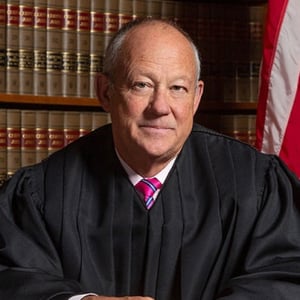
Judge, United States Court of Appeals, Tenth Circuit
Judge Tymkovich, of Denver, Colorado, was nominated to the Tenth Circuit Court of Appeals by President George W. Bush, and confirmed in April 2003. On October 1, 2015 he became Chief Circuit Judge and held this position until October 2022. He was Chair of the US Judicial Conference’s Committee on Judicial Resources from 2011 to 2015. Since 2008 he has been an adjunct professor of law at the University of Colorado School of Law, teaching Election Law. He is a member of the Doyle Inn of Court, the American Law Institute, and the International Society of Barristers. Since he joined the Circuit, Judge Tymkovich has hosted judicial delegations from Russia, Kazakhstan, and Afghanistan, and has also represented the United States in programs at Kiev and Yalta in Ukraine.
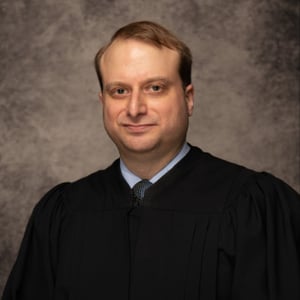
Judge, United States Court of Appeals, Second Circuit
Judge Menashi was appointed to the U.S. Court of Appeals for the Second Circuit on November 14, 2019. Previously, he served as special assistant and associate counsel to the President in the White House and as acting general counsel at the U.S. Department of Education. He was assistant professor of law at Scalia Law School, George Mason University, where he taught administrative law and civil procedure, and a research fellow at New York University School of Law and Georgetown University Law Center. He was also a partner at Kirkland & Ellis LLP in New York, where he practiced appellate and commercial litigation, and served as a law clerk to Justice Samuel Alito on the Supreme Court of the United States and to Judge Douglas Ginsburg on the U.S. Court of Appeals for the District of Columbia Circuit. He graduated from Stanford Law School, where he was elected to Order of the Coif and served as senior articles editor of the Stanford Law Review, and from Dartmouth College, where he was elected to Phi Beta Kappa.
Attorney General of Tennessee
Jonathan Skrmetti was sworn in to an eight-year term as Tennessee’s Attorney General and Reporter on September 1, 2022.
Prior to his current role, General Skrmetti served as Chief Counsel to Governor Bill Lee and as Chief Deputy Attorney General to his predecessor, Tennessee Attorney General Herbert Slatery.
Before working for the State of Tennessee, General Skrmetti was a partner at Butler Snow LLP in Memphis. His legal career began with nearly a decade as a federal prosecutor. He worked at the Civil Rights Division at Main Justice and then at the Memphis U.S. Attorney’s Office and prosecuted sex traffickers, corrupt government officials, and violent white supremacists. In addition, General Skrmetti taught cyberlaw as an adjunct professor at the University of Memphis.
General Skrmetti earned honors degrees from George Washington University, the University of Oxford, and Harvard Law School, where he was editor-in-chief of the Harvard Journal of Law & Public Policy. Following law school, Jonathan clerked for Judge Steven Colloton on the U.S. Court of Appeals for the Eighth Circuit. He lives in Franklin, Tennessee, with his wife and four children.

Attorney General, State of Ohio
Dave Yost was re-elected as Ohio’s 51st attorney general on Nov. 8, 2022, receiving more votes than any other attorney general in the state’s history.
During his first term as the state’s chief legal officer, he quickly gained a national reputation as a fearless advocate for the rule of law — or, as he puts it, “the same rules for everybody.”
Yost’s goal is to “do big good” for the people of Ohio by protecting consumers, rooting out corruption, defending the environment, ensuring an open and competitive marketplace, and fulfilling the many other duties of the Ohio Attorney General’s Office.
Yost began his public-service career as Delaware County auditor, later winning election as that county’s prosecutor. From 2011 through 2018, he served as Ohio’s auditor of state and, in January 2019, began his first term as attorney general.
Yost earned his bachelor’s degree from The Ohio State University and law degree from Capital University. He and his wife, Darlene, live in Franklin County; they have three grown children and five grandchildren.

Socialism or Sensible Protections? Zoning, Rent Control, and the Roots of the Housing Crisis
Ed Artau, James S. Burling, J. Peter Byrne, Ilya Somin, Sara Bronin
Property Rights Practice Group
CLE credit for this event is available at On-Demand CLE. From Zohran Mamdani's mayoral campaign promise...
Agency Policy Making: Navigating a New Era in Labor Law
Victoria Lipnic, Tammy Dee McCutchen, Seema Nanda, Chad A. Readler
Labor & Employment Law Practice Group
Much of federal labor and employment law is shaped by the policy-making choices of agency...
SOC! Sidebar 2: Star Wars
Jennifer Walker Elrod, Caroline Layla Martin
2025 National Lawyers Convention
Featuring: Hon. Jennifer Walker Elrod, United States Court of Appeals, Fifth Circuit Student Interviewer: Ms. Caroline L....
24th Annual Barbara K. Olson Memorial Lecture
Andrew Oldham, Lilly Schneider
2025 National Lawyers Convention
Featuring: Hon. Andrew Oldham, United States Court of Appeals, Fifth Circuit Introducer: Ms. Lilly Schneider, Alumni...
The New Strategic Litigation Ecosystem
Louis J. Capozzi, Clark D. Milner, Jason Muehlhoff, Amanda Salz, Oramel H. Skinner
Young Lawyers Chapters
The rapid growth of strategic litigation vehicles has changed the professional landscape dramatically, most notably...
Civil Rights, Equally Applied
Harmeet K. Dhillon, Charles R. Eskridge, Andrea R. Lucas, Jonathan Skrmetti, Xiao Wang, Brantley Starr
Civil Rights Practice Group
CLE credit for this event is available at On-Demand CLE. The second Trump administration is aggressively...
Made in China: The Legal Battle Over America’s Supply Chains
Daniel Bress, Ryan Fedasiuk, Nazak Nikakhtar, Marta Wosinska, John C. Yoo
International & National Security Law Group
China’s grip on critical supply chains poses a serious threat to America’s economic and national...
The FCC and the U.S. Space Agenda
Ryan Baasch, Sarah Keeton Campbell, Michael Carlson, Brendan Carr, Jeff Schwarz, Jennifer Warren
Communications & Technology Practice Group
America’s technological leadership faces growing challenges from international rivals, especially from China, in critical areas...
The Future of Climate Litigation
Jonathan H. Adler, Justin Anderson, David Fotouhi, John B. McCuskey, Oramel H. Skinner, Timothy M. Tymkovich
Energy & Environment Practice Group
Climate-related litigation is front and center in a multi-layered campaign against fossil fuels and the...
The States and the Future of Fair Competition
Steven J. Menashi, Jonathan Skrmetti, Dave Yost
Antitrust & Consumer Protection Practice Group
CLE credit for this event is available at On-Demand CLE. The next chapter in U.S. antitrust...