
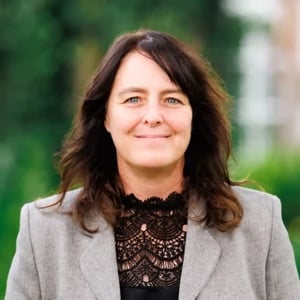
Professor of Law and Journalism, University of Florida
Professor Jane Bambauer is the Brechner Eminent Scholar at the Levin College of Law and at the College of Journalism and Communications. She teaches Torts, First Amendment, Media Law, Criminal Procedure, and Privacy Law.
Professor Bambauer’s research assesses the social costs and benefits of Big Data, AI, and predictive algorithms. Her work analyzes how the regulation of these new information technologies will affect free speech, privacy, law enforcement, health and safety, competitive markets, and government accountability. Professor Bambauer’s research has been featured in over 20 scholarly publications, including the Stanford Law Review, the Michigan Law Review, the California Law Review, and the Journal of Empirical Legal Studies. Her work has also been featured in media outlets, including the Washington Post, the New York Times, Fox News, and Lawfare, where she is a contributing editor.
Professor Bambauer currently serves as the Chair of the National AI Advisory Committee Subcommittee on Law Enforcement, and she has previously served as the deputy director of the Center for Quantum Networks, a multi-institutional engineering research center funded by the National Science Foundation. She holds a B.S. in Mathematics from Yale College and a J.D. from Yale Law School.

Patrick Hotung Professor of Constitutional Law, Georgetown University Law Center; Faculty Director, Georgetown Center for the Constitution
Randy E. Barnett is the Patrick Hotung Professor of Constitutional Law at the Georgetown University Law Center and is the Faculty Director of the Georgetown Center for the Constitution. After graduating from Northwestern University and Harvard Law School, he tried many felony cases as a prosecutor in the Cook County States’ Attorney’s Office in Chicago. A recipient of a Guggenheim Fellowship in Constitutional Studies and the Bradley Prize, Professor Barnett has been a visiting professor at Penn, Northwestern and Harvard Law School.
Professor Barnett’s publications includes thirteen books, more than one hundred articles and reviews, as well as numerous op-eds. His most recent book is Felony Review: Tales of True Crime and Corruption in Chicago (2026). His other books on the Constitution include: A Life for Liberty: The Making of an American Originalist (2024); The Original Meaning of the Fourteenth Amendment: Its Letter and Spirit (2021) (with Evan Bernick); An Introduction to Constitutional Law: 100 Supreme Court Cases Everyone Should Know (2019) (with Josh Blackman); Restoring the Lost Constitution: The Presumption of Liberty (2nd ed. 2013); Our Republican Constitution: Securing the Liberty and Sovereignty of We the People (2016); and Constitutional Law: Cases in Context (5th ed. forthcoming 2027) (with Josh Blackman). His books on contracts are The Oxford Introductions to U.S. Law: Contracts (2010) and Contracts: Cases and Doctrine (7th ed. 2021) (with Nate Oman). And he is the author of The Structure of Liberty: Justice and the Rule of Law (2nd ed. 2014).
In 2004, he argued the medical marijuana case of Gonzalez v. Raich before the U.S. Supreme Court. In 2012, he was one of the lawyers representing the National Federation of Independent Business in its constitutional challenge to the Affordable Care Act in NFIB v. Sebelius. He’s appeared in numerous documentaries and portrayed a prosecutor in the 2010 science-fiction feature film, InAlienable: The Movie. On X he is @RandyEBarnett
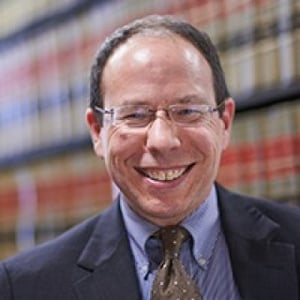
Professor of Law, Michigan State University (currently serving as FCC General Counsel)
Professor Candeub joined the MSU Law faculty in fall 2004. He is also a Fellow with MSU's Institute of Public Utilities. Prior to joining MSU, he served as an advisor at the Federal Communications Commission (FCC). From 1998 to 2000, Professor Candeub was a litigation associate for the Washington D.C. firm of Jones, Day, Reavis & Pogue and also has served as a corporate associate with Cleary, Gottlieb, Steen & Hamilton, also in Washington, D.C. Immediately following law school, he clerked for Chief Judge J. Clifford Wallace, U.S. Court of Appeals for the Ninth Circuit. While in law school, Professor Candeub was an articles editor for the University of Pennsylvania Law Review.
Professor Candeub's scholarly interests focus on the law and regulation of communications, internet, technology. His numerous law review articles and scholarly papers have placed him at the center of legal and policy controversies, and he often writes for popular outlets such as the Wall Street Journal and US News. Federal courts, including the U.S. Supreme Court, have cited and relied upon his work.
He joined the Trump administration in 2019 as Deputy Assistant Secretary of Commerce for Telecommunications and Information and assumed the role of Acting Assistant Secretary. He later joined the Department of Justice as Deputy Associate Attorney General.
Professor Candeub is a senior fellow at the D.C.-based Center of Renewing America.
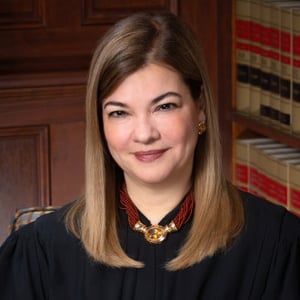
Judge, United States Court of Appeals, Eleventh Circuit
Judge Barbara Lagoa was born in Miami, Florida. She received her Bachelor of Arts cum laude in 1989 from Florida International University where she majored in English and was a member of the Phi Kappa Phi honor society. Judge Lagoa received her Juris Doctor from Columbia University School of Law in 1992, where she served as an Associate Editor of the Columbia Law Review. She is fluent in English and Spanish. On December 6, 2019, she received her commission as a judge on the U.S. Eleventh Circuit Court of Appeals from President Donald Trump.
On January 9, 2019, she became the first Hispanic woman and the first Cuban American woman appointed to serve on the Florida Supreme Court. Prior to her appointment by Governor Ron DeSantis to the Florida Supreme Court, Governor Jeb Bush appointed her in June of 2006 to serve on the Third District Court of Appeal. At that court, she became the first Hispanic woman and the first Cuban American woman appointed to serve on the Third District Court of Appeal. On January 1, 2019, she became the first Hispanic female Chief Judge of the Third District Court of Appeal.
Prior to joining the bench, Judge Lagoa practiced in both the civil and criminal arenas. Her civil practice at Greenberg Traurig focused on general and complex commercial litigation, particularly the areas of employment discrimination, business torts, securities litigation, construction litigation, and insurance coverage disputes. In 2003, she joined the United States Attorney’s Office for the Southern District of Florida as an Assistant United States Attorney, where she worked in the Civil, Major Crimes and Appellate Sections. As an Assistant United States Attorney, she tried numerous criminal jury trials, including drug conspiracies and Hobbs Act violations. She also handled a significant number of appeals.
While a practicing lawyer, Judge Lagoa was admitted to The Florida Bar, the United States District Courts for the Middle and Southern Districts of Florida, and the United States Court of Appeals for the Eleventh Circuit. She was also a member of many local, state, and national professional groups including the Dade County Bar Association, and the Florida Association for Women Lawyers.
Judge Lagoa’s civic and community activities include service on the Board of Directors for the YWCA of Greater Miami and Dade County, the Film Society of Miami, Kristi House, and the FIU Alumni Association. She was also a member of the Federal Judicial Nominating Commission. She is currently a member of the Eugene P. Spellman and William Hoeveler Chapter of the American Inns of Court.
Judge Lagoa is married to Paul C. Huck, Jr., an attorney. They have three daughters.

Thomas M. Siebel Senior Fellow, The Hoover Institution, Stanford University; Gary T. Schwartz Distinguished Professor of Law Emeritus, UCLA School of Law
Eugene Volokh is the Thomas M. Siebel Senior Fellow at the Hoover Institution (Stanford), as well as the Gary T. Schwartz Distinguished Professor of Law Emeritus and Distinguished Research Professor at UCLA School of Law. He recently retired from teaching at UCLA, after 30 years there, and is now focusing on research.
Volokh is the author of the textbooks The First Amendment and Related Statutes (8th ed. 2023), and Academic Legal Writing (5th ed. 2016), as well as over 100 academic law journal articles, mostly on First Amendment law. He is a member of The American Law Institute; the editor-in-chief of the Journal of Free Speech Law; and the creator and coauthor of The Volokh Conspiracy, a leading legal blog founded in 2002 (hosted at the Washington Post from 2014 to 2017 and now at Reason Magazine).
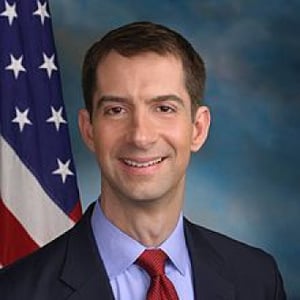
United States Senator, Arkansas
Tom Cotton is a United States Senator from Arkansas. Tom’s committees include the Banking Committee, where he chairs the Economic Policy Subcommittee, the Intelligence Committee, and the Armed Services Committee, where he chairs the Air Land Power Subcommittee.
Tom grew up on his family’s cattle farm in Yell County. He graduated from Dardanelle High School, Harvard, and Harvard Law School. After a clerkship with the U.S. Court of Appeals and private law practice, Tom left the law because of the September 11th attacks. Tom served nearly five years on active duty in the United States Army as an Infantry Officer.
Tom served in Iraq with the 101st Airborne and in Afghanistan with a Provincial Reconstruction Team. Between his two combat tours, Tom served with The Old Guard at Arlington National Cemetery. Tom’s military decorations include the Bronze Star Medal, Combat Infantry Badge, and Ranger Tab.
Between the Army and the Senate, Tom worked for McKinsey & Co. and served one term in the House of Representatives.
Tom and his wife Anna have two sons, Gabriel and Daniel.
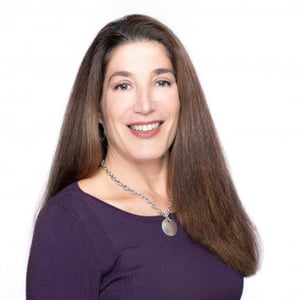
Director, Independent Women's Law Center, Independent Women's
Jennifer C. Braceras, a member of the Federalist Society Board of Visitors, is the director of Independent Women’s Law Center and a former member of the U.S. Commission on Civil Rights.
Ms. Braceras is a graduate of the Harvard Law School, where she served as an editor of the Law Review. After law school, she clerked for two federal judges and practiced labor and employment law with the Boston law firm Ropes & Gray.
A long time political columnist and editor, Ms. Braceras's writing has appeared in a variety of publications, including the Wall Street Journal, the Boston Globe, the Hill, and National Review Online. She co-hosts At the Bar, a bimonthly virtual happy hour discussion about issues at the intersection of law, politics, and culture.
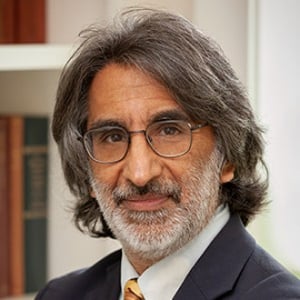
Sterling Professor of Law, Yale Law School
Akhil Reed Amar is Sterling Professor of Law and Political Science at Yale University, where he teaches constitutional law in both Yale College and Yale Law School. After graduating from Yale College, summa cum laude, in 1980 and from Yale Law School in 1984, and clerking for Judge (later Justice) Stephen Breyer, Amar joined the Yale faculty in 1985 at the age of 26. He is Yale’s only living professor to have won the University’s unofficial triple crown — the Sterling Chair for scholarship, the DeVane Medal for teaching, and the Lamar Award for alumni service.
Amar’s work has won awards from both the American Bar Association and the Federalist Society, and he has been cited by Supreme Court justices across the spectrum in more than 50 cases — tops among scholars under age 70. According to both Fred Shapiro’s landmark 2021 study of lifetime scholarly citations and Heinonline’s most recent tabulation of lifetime law-review citations, Amar is America’s second most-cited legal scholar still under age 70. He is a member of the American Academy of Arts and Sciences and has written widely for popular publications, including The New York Times, The Washington Post, The Wall Street Journal, Time, and The Atlantic. He was an informal consultant to the popular TV show The West Wing and his scholarship has been showcased on many broadcasts, including The Colbert Report, Morning Joe, AC360, Velshi, Fox News @ Night with Shannon Bream, Fareed Zakaria GPS, Erin Burnett Outfront, and Constitution USA with Peter Sagal.
He is the author of more than a hundred law review articles and several books, including The Bill of Rights (1998 — winner of the Yale University Press Governors’ Award), America’s Constitution (2005 — winner of the ABA’s Silver Gavel Award), America’s Unwritten Constitution (2012 — named one of the year’s 100 best nonfiction books by The Washington Post), and The Constitution Today (2016 — named one of the year’s top ten nonfiction books by Time magazine). The first volume of his ambitious trilogy on American constitutional history from the Founding to the present, The Words That Made Us: America’s Constitutional Conversation, 1760-1840, came out in May 2021. The second volume, Born Equal: Remaking America’s Constitution, 1840-1920, will be published in September 2025 and is already available for pre-order. All together, his nonfiction books have won two starred reviews from Publishers Weekly and three starred reviews from Kirkus—tops, it is believed, among legal scholars under age 70. Together with Vikram David Amar (YLS ’88), he has a bi-weekly column on the Supreme Court on the distinguished website SCOTUSblog. Along with Andy Lipka, he co-hosts a popular and free weekly podcast, Amarica’s Constitution, whose listeners are eligible for CLE credit in most American jurisdictions. A wide assortment of his articles and op-eds and video links to many of his public lectures and free online courses may be found at akhilamar.com.
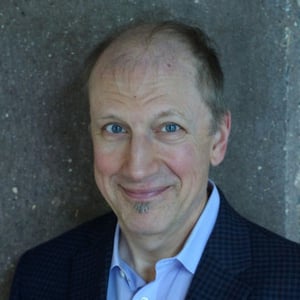
James L. Oberstar Professor of Law and Public Policy, University of St. Thomas School of Law
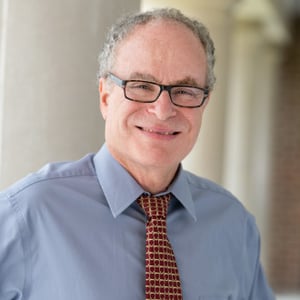
William Rand Kenan, Jr. Distinguished Professor of Law, University of North Carolina School of Law
William (Bill) Marshall joined the Carolina Law faculty in 2001 and serves as the William R. Kenan Jr. Distinguished Professor of Law. His teaching and research interests include the first amendment, presidential power, election law, federal jurisdiction, federal judicial selection, civil procedure, and media law. Marshall is the author of numerous book chapters, articles, and essays on free speech, separation of powers, the Establishment Clause, and the Free Exercise Clause. His work has appeared in the Harvard Law Review, the Yale Law Journal, the Supreme Court Review, and the University of Chicago Law Review, among others.
Marshall received his law degree from the University of Chicago and his undergraduate degree from the University of Pennsylvania. Marshall was Deputy Counsel to the President and Deputy Assistant to the President during the Clinton Administration and also served as the Solicitor General for the State of Ohio. He has taught at the Northwestern, Boston University, Vanderbilt, Ohio State, DePaul, Case Western Reserve, William and Mary, and the University Connecticut law schools. Prior to beginning his teaching career, Marshall was a Special Assistant Attorney General for the State of Minnesota.
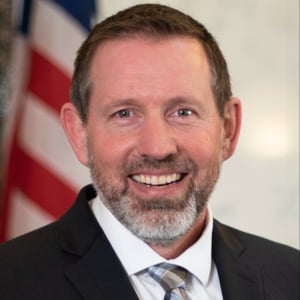
Judge, United States Court of Appeals, Ninth Circuit
Lawrence VanDyke serves as a circuit judge on the U.S. Court of Appeals for the Ninth Circuit. Prior to that appointment in January 2020, he served as a Deputy Assistant Attorney General in the Environment and Natural Resources Division of the United States Department of Justice. Before that, he served consecutively as the Solicitor General of two western states – Nevada and Montana. At the beginning of his legal career, he worked as an attorney in the Appellate and Constitutional Issues practice group at Gibson Dunn & Crutcher, LLP.
Judge VanDyke received his law degree magna cum laude from Harvard Law School, where he was an editor on the Harvard Law Review. He has engineering and theology undergraduate degrees and a masters degree in engineering management. He served as a law clerk to the Honorable Janice Rogers Brown of the United States Court of Appeals for the District of Columbia Circuit. Judge VanDyke and his wife Cheryl live in Reno, Nevada, and they have three children.
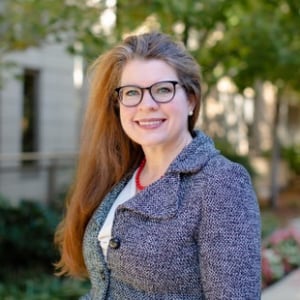
Vice President and Senior Counsel, The Becket Fund for Religious Liberty
Lori Windham is vice president and senior counsel at Becket, where she has represented clients on cutting-edge religious freedom issues since 2005. She has represented parties before the Supreme Court, arguing Becket’s unanimous victory on behalf of foster families in Fulton v. Philadelphia, as well as working with the Becket team on its Supreme Court victories in Hosanna-Tabor, Hobby Lobby, and Little Sisters of the Poor. She won a victory for the world’s largest religious media network in EWTN v. Azar, staving off millions of dollars in government fines under unlawful the HHS mandate. She has won more than a dozen victories in federal appellate courts, including successful defense of cities and school districts sued for accommodating religion, victories for houses of worship facing discrimination in the land use process, and overturning a multimillion-dollar judgment against a major evangelical ministry. She recently won a first-in-the-nation injunction for an adoption agency threatened with shutdown for its religious beliefs.
Recognized in Washington as an expert on religious freedom issues, Lori has testified in Congressional oversight hearings before the U.S. House of Representatives Judiciary Committee and before the U.S. Commission on Civil Rights. Outside Washington, Lori is sought-after speaker on First Amendment law, including appearances at Yale Law School, Harvard Law School, Stanford Law School, Georgetown University Law Center, Central European University, and many others.
In addition to these venues, Lori also defends her clients in the media, including television appearances on CBS This Morning, Hardball, CNN Tonight, On the Record, America’s Newsroom, Opinion Journal, and many others. Her work has been covered by the New York Times, Wall Street Journal, Washington Post, and dozens of other papers. She is also a regular guest on radio, with appearances on shows ranging from Sean Hannity to NPR.
Lori has successfully represented a wide array of clients, including a Santeria priest prohibited from making animal sacrifices, synagogues prohibited from building on their own land, and religious student organizations penalized for their religious speech. One of her most challenging cases involved travel to a remote farming community to ensure that members of the local Amish community were not jailed for using their traditional building methods.
Lori is a graduate of Harvard Law School and earned her B.A. summa cum laude at Abilene Christian University. She has served on the Board of Visitors of Abilene Christian University and received the ACU Young Alumnus of the Year award for her work at Becket. She sits on the board of Dominion Christian School and the visiting committee of the Fund for American Studies’ Summer Law Fellowship.
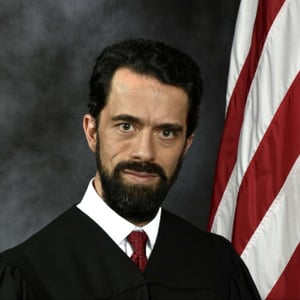
Judge, United States Court of Appeals, Third Circuit
Stephanos Bibas is a judge on the U.S. Court of Appeals for the Third Circuit. Judge Bibas was previously a professor of law and criminology at the University of Pennsylvania Law School. As director of the Penn Law Supreme Court Clinic, he argued six cases before the Supreme Court of the United States and filed briefs in dozens of others. He graduated summa cum laude and Phi Beta Kappa from Columbia University in 1989 with a B.A. in political theory and from Oxford University in 1991 with a B.A. in jurisprudence. He then earned his J.D. from Yale Law School in 1994.
After graduating from Yale Law, Judge Bibas clerked for Judge Patrick Higginbotham of the U.S. Court of Appeals for the Fifth Circuit and Justice Anthony Kennedy on the Supreme Court and was a litigation associate at Covington & Burling LLP in Washington, D.C. Thereafter, Judge Bibas served as an Assistant U.S. Attorney in the Southern District of New York, where he successfully prosecuted the world’s leading expert in Tiffany stained glass for hiring a grave robber to steal priceless Tiffany windows from cemeteries. Before his tenure at Penn Law, Judge Bibas taught at the University of Chicago Law School and the University of Iowa College of Law and was a research fellow at Yale Law School. He has published two books and seventy scholarly articles.
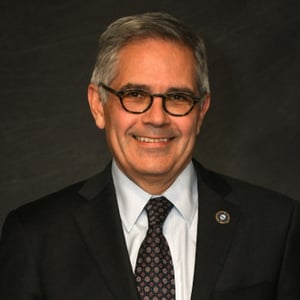
District Attorney, City of Philadelphia
Lawrence S. Krasner was officially sworn in on January 2, 2018, as the City of Philadelphia’s 26th District Attorney. Before being elected District Attorney, Mr. Krasner served of-counsel at Greenblatt, Pierce, Funt, and Flores, LLC. Larry was born in 1961 in St. Louis, the son of a World War II veteran and author father and evangelist mother. After attending public schools in St. Louis and the Philadelphia area, Larry earned degrees from the University of Chicago and Stanford Law School with the help of student loans and scholarships.
Mr. Krasner attended public school in the St. Louis and Philadelphia areas. He received his undergraduate degree at the University of Chicago in 1983 and his law degree from Stanford Law School in 1987, where he was selected to the Stanford Law Review. After multiple offers of employment in prosecutors’ and public defenders’ offices throughout the country, he worked as a public defender in Philadelphia from ’87 – ’91 and was then promoted to the Federal Public Defender’s Office in Philadelphia (’91- ’93). In 1993 he started his own private practice, specializing in criminal defense and police misconduct matters. He has remained in private practice ever since. During that time, Mr. Krasner has tried thousands of bench and jury trials in criminal and civil court in the Philadelphia area as well as other counties and states.
Throughout his 30 year career, Mr. Krasner has also proudly demonstrated a steadfast commitment to social justice, having defended protesters pro bono who were involved with movements including ACT UP, Black Lives Matter, progressive clergy with POWER, Casino-Free Philadelphia, DACA Dreamers, Decarcerate PA, anti-gun clergy with Heeding God’s Call, anti-poverty and homelessness advocates with Kensington Welfare Rights Union, Occupy Philly and Reclaim Philadelphia, and Grannies for Peace, among many others.
He has resided in Philadelphia for over 30 years with his wife of 28 years. His wife has been a judge of the Court of Common Pleas for 17 years. They have two adult sons.
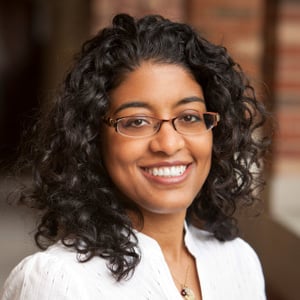
Walton Hale Hamilton Professor of Law, Yale Law School
Tracey Meares is the Walton Hale Hamilton Professor and a Founding Director of the Justice Collaboratory at Yale Law School. Before joining Yale, she was a professor at the University of Chicago Law School from 1995 to 2007. She was the first African American woman granted tenure at both law schools. Meares is a nationally recognized expert on policing in urban communities, who has worked extensively with the federal government, including being a member of President Barack Obama’s Task Force on 21st Century Policing. In 2019, Meares was elected a member of the American Academy of Arts and Sciences.
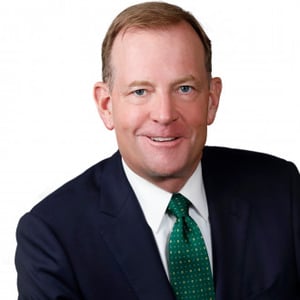
Partner, King & Spalding LLP
Former U.S. Attorney for the Eastern District of California, a 34-county district with an area that stretches from the Oregon border to Bakersfield, Greg Scott is an experienced trial lawyer who represents major companies facing government investigations and litigation, with a focus in the healthcare, retail, and construction industries. He has extensive knowledge on matters involving consumer protection, construction disputes, the Foreign Corrupt Practices Act (FCPA) and the False Claims Act (FCA).
Greg represents corporations under investigation by state district attorneys concerning potential violations of consumer protection laws, as well as corporations operating senior assisted livingfacilities under investigation by the state attorney general regarding potential violations of elder abuse laws. In addition, he represents construction companies under investigation by state district attorneys when employees are involved in serious accidents at worksites.
A retired Lieutenant Colonel after serving more than 20 years in the California Army National Guard & United States Army Reserve, Greg went on to become a deputy district attorney in Contra Costa County and twice-elected District Attorney of Shasta County. He also served as an Adjunct Professor of National Security Law at the University of the Pacific, McGeorge School of Law following his first term as U.S. Attorney for the E.D. of California. Between his two terms as U.S. Attorney for the E.D. of California, Greg was the vice chair of the white-collar defense and corporate investigations practice at an AmLaw 50 firm.
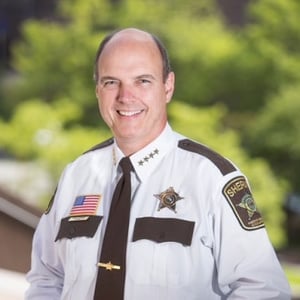
Sheriff (Ret.); Co-Founder and Principal Consultant, Public Safety Strategies Group LLC
Rich Stanek is co-founder and Principal Consultant with Public Safety Strategies Group, LLC., bringing his wealth of knowledge from 36 years of public safety experience to clients across the country, including organizational leadership, agency management, national law enforcement best practices, crime reduction strategies, public policy advocacy, corporate security, and expert testimony.
Rich served as the 27th Sheriff of Hennepin County, Minnesota for 12 years, with responsibility for the safety and security of 1.2 million residents. He managed over 1100 employees and volunteers, a budget of $125 million, and provided care and custody for inmates in the largest Jail and Sheriff’s Office in the Upper Midwest.
He is the author of numerous publications providing education for residents regarding emerging public safety and justice issues: Mental Illness among Jail inmates, Opioid Abuse and Addiction, the nexus between Mass Shootings and Mental Illness, the Collapse of the 35W Bridge, Intelligence-led Policing, and FirstNet, the dedicated National Public Safety Broadband Network for First Responders.
Rich served two terms on the Board of Directors for FirstNet: its mission is to develop, build and operate the Nationwide Public Safety Broadband Network that equips first responders. FirstNet operates within the U.S. Department of Commerce with a nonpartisan Congressional authorization and $7 billion appropriation. Rich was first appointed in 2014 and in his second term, Rich served as FirstNet’s Chair of Outreach and Advocacy efforts nationwide.
Rich started his policing career in 1983, with the Cottage Grove Police Department and joined the Minneapolis Police Department in 1986; he rose through the ranks to Captain and led the Criminal Investigations Division (Homicide, Burglary, Robbery, Rape, Gangs & Narcotics). During those years, Rich developed strong relationships with residents, pastors, business owners, community groups and local elected leaders; they developed strategies to fight and lower violent crime in Minneapolis. They worked to elect Rich as Hennepin County Sheriff and he re-prioritized Agency personnel and resources for three proven crime fighting initiatives: a Violent Offender Task Force, Criminal Information Sharing & Analysis Unit (CISA) to serve the Sheriff’s Office and 36 local Police Departments in Hennepin County and 7 Counties regionally; and new Crime Lab technology (DNA testing, firearms testing, and Property Crime initiatives). As a result of his leadership, these efforts, and new partnerships, violent crime in Hennepin County dropped by 38% from 2006-2018.
Prior to serving as Sheriff, Rich was appointed by Governor Tim Pawlenty as the State’s Commissioner of Public Safety, and Director of Homeland Security, overseeing nine State Agencies with over 2200 employees; including the Minnesota State Patrol, Bureau of Criminal Apprehension, Emergency Management, Office of Justice Programs and State Fire Marshal.
Rich came to the forefront of State leadership when he was appointed Chairman of the State Peace Officer Standards & Training Board (POST) and then elected as a State Legislator; he served for 5 terms while also working as a Minneapolis Police Officer. He chaired the House of Representatives Public Safety Policy & Finance Committees and authored numerous key legislative initiatives, including Minnesota’s entry into the Nation’s Emergency Management Assistance Compact (“EMAC”), and post-9/11 information sharing and communications initiatives to better equip First Responders.
At both the state and national level, Rich has become well-known for his strong and visible advocacy for advancements in law enforcement public policy, technology, education, and best practices, through his elected and appointed leadership roles. As a result, Rich is a much sought-after media spokesperson, faculty presenter and keynote speaker.
During his service as Sheriff, Rich served as President of the Major County Sheriffs of America (MCSA), Vice President of the National Sheriffs Associations (NSA); and President of the Minnesota Sheriff’s Association (MSA). He served as a Law Enforcement Senior Advisor to the Director of National Intelligence (DNI), Secretary of Department of Homeland Security (DHS), and the Director of the Federal Bureau of Investigation (FBI); He is the Past President of the Leaders in National Counterterrorism (LinCT); and served on the Criminal Intelligence Coordinating Council (CICC) and FBI’s Joint Terrorism Task Force (JTTF), where he held a top-secret national security clearance. Rich has testified numerous times before Congress regarding community policing strategies, 21st century Policing, countering violent extremism and community engagement.
Rich’s educational background includes an M.A. in Public Administration from Hamline University and a B.A. in Criminal Justice from the University of Minnesota. Additional professional training includes; the Southern Police Institute in Louisville, PERF’s Senior Management Institute for Police at Cambridge University, the U.S. Army War College in Pennsylvania, FBI National Executive Institute in Virginia and the Leaders in National Counterterrorism Training in Australia and the Jewish Institute for National Security Affairs (JINSA) in Israel.
Rich lives in Maple Grove, Minnesota, and has been married to his wife, Sally for 36 years; they have 2 adult children and a dog named Teddy. Rich is an avid Northwoods outdoorsman; where he enjoys time at his northern Minnesota cabin; hunting, fishing, boating, hiking and snowmobiling.
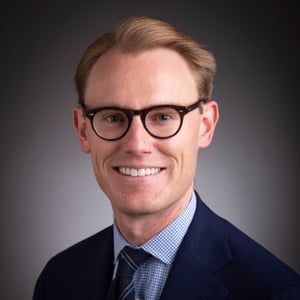
Associate General Counsel, Synthetic Biology Company
Tyler Clarkson works as an Associate General Counsel at a synthetic biology company handling all regulatory and compliance matters. Tyler previously served as the Deputy General Counsel, Principal Deputy General Counsel, and Acting General Counsel at USDA. He also worked as a Counselor to the Administrator at OIRA. Previously, he worked as an associate at Freshfields Bruckhaus Deringer focusing largely on global investigations. Tyler attended college and law school at UVA; while in law school, Tyler served as the president of the UVA Law Federalist Society chapter.
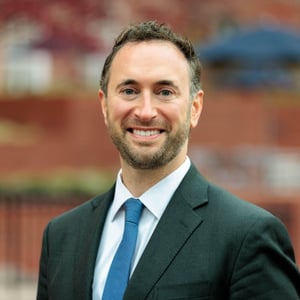
Associate Dean for Academic Affairs, The George Washington University Law School
Aram A. Gavoor is the Associate Dean for Academic Affairs and an internationally recognized scholar in American administrative law, national security, and federal courts. His co-authored work was cited by the U.S. Supreme Court in Department of Commerce v. New York (2019). His scholarship has earned placement in the Florida Law Review, Indiana Law Journal, Ohio State Law Journal, and other law journals. He has briefed and argued over a dozen high-profile public law cases before a majority of the U.S. Courts of Appeals and numerous cases before almost a third of the 94 U.S. District Courts. Associate Dean Gavoor frequently shares his national security, artificial intelligence policy, and federal courts expertise with international news media, including CNN, BBC World News, Wall Street Journal, NBC News, and ABC (Australia) World News. In 2021, the National Law Journal named Associate Dean Gavoor a Rising Star (top 40 under 40) honoree.
Earlier in his career, Associate Dean Gavoor served as Senior Counsel for National Security in the Civil Division of the U.S. Department of Justice, as third-in-rank Counselor to the Administrator of the Office of Information and Regulatory Affairs in the White House Office of Management and Budget, and in private practice. He received the Attorney General's Award for Distinguished Service in 2019, the Civil Division Special Commendation Award in 2020, 2019, and 2018, and a Commendation from the Human Rights and Special Prosecutions Section of the Criminal Division in 2018.
Associate Dean Gavoor previously served on the law school’s part-time faculty from 2008-2017 before accepting a term-limited position as Visiting Associate Professor from 2017-2019. He received GW Law’s Distinguished Adjunct Faculty Teaching Award from the 2020 and 2017 graduating classes. He currently teaches Constitutional Law II, Administrative Law, National Security Law, and Federal Courts.
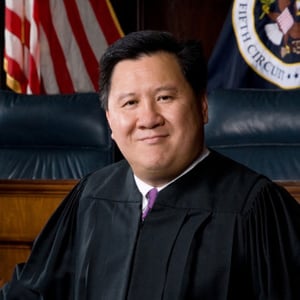
Judge, United States Court of Appeals, Fifth Circuit
James C. Ho is a Circuit Judge on the U.S. Court of Appeals for the Fifth Circuit. Before taking the bench on January 4, 2018, he was a partner and co-chair of the national Appellate and Constitutional Law practice group of Gibson, Dunn & Crutcher LLP.
As an appellate litigator for over a decade, including three years as the Solicitor General of Texas, Judge Ho presented 50 oral arguments in federal and state courts nationwide. He won numerous appeals, including three merits cases at the U.S. Supreme Court. He was routinely ranked among the nation’s leading lawyers by Benchmark, Chambers, Law360, The Legal 500, and The National Law Journal, among other publications. His work has been cited favorably by courts at every level of both the federal and state judiciaries. He won a Best Brief Award from the National Association of Attorneys General for every year that he served as solicitor general, and he is the only state solicitor general in history to be invited by the U.S. Supreme Court to express the views of a state.
Judge Ho has served in all three branches of the federal government. On the Senate Judiciary Committee, he served as chief counsel of the Subcommittees on the Constitution and Immigration under Senator John Cornyn. At the Justice Department, he served as Special Assistant to the Assistant Attorney General for Civil Rights and an attorney-advisor at the Office of Legal Counsel. He clerked for Judge Jerry E. Smith of the U.S. Court of Appeals for the Fifth Circuit and Justice Clarence Thomas of the U.S. Supreme Court.
His record of public service also includes appointments as vice chair of the Federal Judicial Evaluation Committee in Texas and co-chair of the National Asian Pacific American Bar Association Judiciary Committee, and as a member of the U.S. Magistrate Judge Merit Selection Panel for the Northern District of Texas, the U.S. delegation to the United Nations Committee on the Elimination of Racial Discrimination, and the Continuity of Government Commission.
In addition, Judge Ho has served as an Adjunct Professor of Law at the University of Texas School of Law, where he taught seminars on U.S. Supreme Court Litigation and Religious Liberty. He has authored numerous articles in respected law reviews nationwide, including an annual feature on exemplary judicial writing for The Green Bag Almanac & Reader. He previously served as senior editor of The Green Bag and as co-editor of Pub. L. Misc.
Judge Ho graduated from Stanford University with honors and a B.A. in Public Policy in 1995, and the University of Chicago Law School with high honors in 1999. Before law school, he was a legislative aide to California State Senator Quentin Kopp. He and his wife Allyson live in Dallas, Texas, with their twin daughter and son.
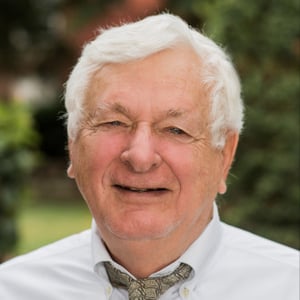
Lyle T. Alverson Professor of Law, George Washington University Law School
Professor Pierce is author of over twenty books and 130 articles on administrative law, government regulation, and the effects of various forms of government intervention on the performance of markets. His books and articles have been cited in hundreds of judicial opinions, including over a dozen opinions of the U.S. Supreme Court.
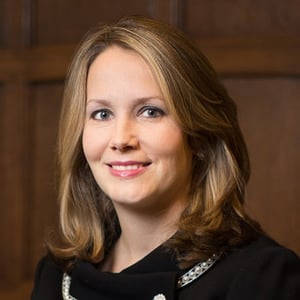
Partner, McGuireWoods LLP
The Honorable Susan C. Rodriguez was sworn-in as a U.S. District Judge in the Western District of North Carolina on December 8, 2025. She previously served as a U.S. Magistrate Judge since April 2023. Prior to taking the bench, Judge Rodriguez was a partner at a national law firm, where she was the co-leader of the firm’s financial institutions industry team. Her private practice experience focused on government investigations and white-collar matters. She has represented clients in numerous government investigations by the U.S. Department of Justice, U.S. Department of Homeland Security, Consumer Financial Protection Bureau (CFPB), and the Federal Trade Commission (FTC), among others. She was recognized for her outstanding work for clients through Chambers rankings in both 2022 and 2023 for Litigation: White-Collar Crime & Government Investigations in North Carolina and nationally for Fintech Legal: Corporate, Securities & Financing. She also was named to “North Carolina Rising Stars,” Government Relations, Super Lawyers, 2017-2019.
Judge Rodriguez also served as a legal policy advisor at the Department of Homeland Security. She was a federal law clerk for the Honorable Frank D. Whitney, U.S. District Court Judge for the Western District of North Carolina, handling both civil and criminal matters. Prior to that, she was a presidential appointee, serving as a staffer in the White House Counsel’s office from 2005-2006, handling management of judicial nominations and assisting with responses to congressional investigations.
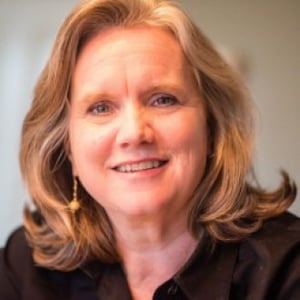
Principal, Sharon Fast Gustafson, Attorney at Law, PLC
SHARON FAST GUSTAFSON is the immediate past General Counsel of the U.S. Equal Employment Opportunity Commission (EEOC), where she enforced Title VII of the Civil Rights Act of 1964, the Americans with Disabilities Act, and the Age Discrimination in Employment Act.
Ms. Gustafson graduated with honors from Georgetown Law Center in 1991 and has concentrated her practice in employment law. She worked for four years in the labor and employment law group at Jones, Day in Washington, D.C. Since that time, she has had a broad-based solo practice advising and representing employers and employees in handling all aspects of the employment relationship, in compliance with federal and state workplace laws, and in designing and implementing sound employment policies and practices.
Ms. Gustafson is an experienced litigator in federal and state courts; before administrative agencies, including the EEOC, state and local civil rights offices, and the Department of Labor (DOL) Wage and Hour Division; and in mediation and arbitration. She is admitted to practice in state and federal courts in Virginia, Maryland, and the District of Columbia, and in the United States Supreme Court.
Ms. Gustafson successfully litigated a pregnancy discrimination case, Young v. UPS, 575 U.S. 206 (2015), from EEOC intake to a successful outcome at the U.S. Supreme Court. In 2016, she received the Metropolitan Washington Employment Lawyers Association’s “Lawyer of the Year” award “in recognition of outstanding dedication to Civil Rights, Equality, and Justice.”
Ms. Gustafson represents both employers and employees in matters relating to employment law.
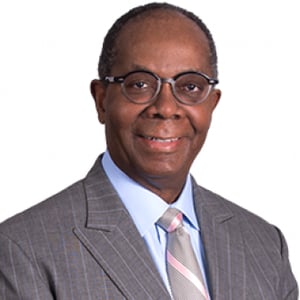
Managing Partner, Crabbe Brown & James LLP
Larry James has been at the heart of the Columbus business, legal, civic, and political scene for the last thirty years. He is a respected litigator, as well as an advisor to local and national leaders. In recognition of his many achievements, the law firm changed its name from Crabbe, Brown, Jones, Potts & Schmidt to Crabbe, Brown & James in January 2001.
In 2011, The Ohio State University selected Mr. James as lead counsel to represent its student athletes in NCAA investigations. In 2013, Armen Keteyian published his book The System: The Glory and Scandal of Big-Time College Football, a chapter of which is dedicated to Larry’s work in representing the OSU football players.
In 2012, Mr. James and his wife, Donna, were awarded the American Red Cross of Greater Columbus’ Humanitarians of the Year Award. In 2015, noted journalist Wil Haygood published his award-winning book Showdown: Thurgood Marshall and the Supreme Court Nomination That Changed America, which he dedicated to Mr. James.
Mr. James is a life member of the Sixth Circuit Judicial Conference, and he has served as General Counsel of the National Fraternal Order of Police since 2001.
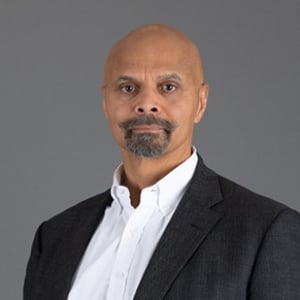
Partner, Benesch, Friedlander, Coplan & Aronoff LLP
Peter focuses his legal practice on representing management in employment-related litigation and in contract negotiations, NLRB proceedings, EEO matters and arbitration.
Peter Kirsanow is a partner with Benesch’s Labor & Employment Practice Group. He returned to Benesch in January 2008 after serving as a presidential appointee to the National Labor Relations Board (NLRB) in Washington D.C. for two years. While serving on the NLRB, he was involved with significant decisions including Oakwood Healthcare, Inc., Dana/Metaldyne and Oil Capital Sheet Metal, Inc. In addition, Peter testified before the Senate Judiciary Committee on the nominations of John Roberts, Samuel Alito, Sonia Sotomayor, Elena Kagan and Neil Gorsuch to the Supreme Court. He also continues to testify before and advise members of the U.S. Congress on employment law matters, most recently on November 18 before the House Subcommittee on Investigations and Oversight regarding disparate impact theory.
Peter was recently reappointed by the Majority Leader of the House of Representatives to his fourth consecutive six-year term on the U.S. Commission on Civil Rights. This is a part-time position which will expire in December 2025.
Recently, Peter and a team of Benesch attorneys served as lead counsel to the National Association of Manufacturers in litigation before the U.S. Circuit Court for the District of Columbia against the NLRB, challenging the Board’s Notice of Employer Rights Posting Rule. The court ruled in favor of Benesch’s client, striking down the NLRB’s Rule in its entirety. This ruling impacts over 6,000,000 employers nationwide which would have been subject to the posting requirement.
Additionally, Peter is past chair of the board of directors of the Center for New Black Leadership and is a member of Benesch’s Diversity & Inclusion Committee. This committee helps ensure that the firm promotes an environment in which differences are respected, employees are treated fairly, and individual skills and talents are valued.
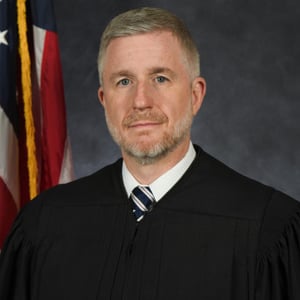
Judge, United States Court of Appeals, Third Circuit
Judge Paul Matey was appointed to the United States Court of Appeals for the Third Circuit in 2019 by President Trump.
Before his judicial service, Judge Matey was a partner at Lowenstein Sandler in New Jersey where he practiced complex commercial litigation and criminal defense. Earlier, Judge Matey was the Senior Vice President, General Counsel and Secretary for University Hospital Newark, an academic medical center and teaching hospital.
He also served as the Deputy Chief Counsel to Governor Chris Christie, and as an Assistant United States Attorney in the District of New Jersey, where he was awarded the Justice Department’s Director’s Award for Superior Performance. He also practiced at the Washington D.C. firm of Kellogg, Hansen, Todd, Figel & Frederick, and served as a law clerk to judges on the United States Court of Appeals for the Third Circuit and the United States District Court for the District of New Jersey.
He earned his bachelor’s degree from the University of Scranton, a Jesuit University, in 1993, and his juris doctorate, summa cum laude, from Seton Hall University School of Law in 2001, where he served as Editor-in-Chief of the Seton Hall Law Review.
In 2019, Judge Matey was elected to membership in the American Law Institute and, since 2020, has lectured on administrative law and the American legal history at Seton Hall.
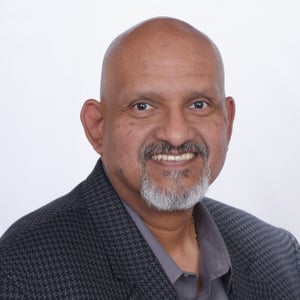
CEO, Intelligent Partnerships
Daniel Villao is Chief Executive Officer at Intelligent Partnerships, Inc. and the Immediate Past Chair of the National Board of Directors for the Association of Latino Professionals for America (ALPFA). He is also the former Deputy Administrator in the Office of Apprenticeship for the U.S. Department of Labor under both Republican and Democratic Administrations.
With decades of experience in policy development, Daniel has had proven success in innovative supplier-access design and training. As Deputy Administrator, Daniel was successful in helping major employers such as Microsoft, Lufthansa, Zurich, and AON adopt apprenticeship to create workforce development systems that benefit America's workers and employers.
Daniel specializes in implementing an innovative and accessible workforce design that transforms businesses and adds value to all aspects of organizations. Daniel has dedicated his career to analyzing the ever-changing landscape of the workplace and helping organizations navigate the world of work and creating jobs that make sense in emerging models.
Daniel Villao is the author of the acclaimed Beyond Green Jobs, which addresses a systems approach to diversity and inclusion in the construction sector in a future world defined by climate change.
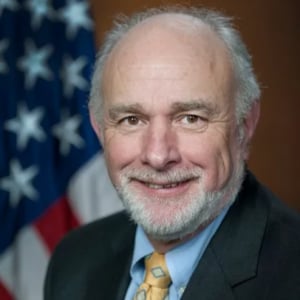
Visiting Fellow in Governance Studies, Brookings Institution
Bill Baer is a visiting fellow in Governance Studies. He is one of the world’s best known and respected antitrust/competition enforcers. Baer is the only person to have led antitrust enforcement at both U.S. antitrust agencies, serving as assistant attorney general in charge of the Antitrust Division of the U.S. Department of Justice from 2013 to 2016, and as director of the Bureau of Competition at the Federal Trade Commission from 1995 to 1999. During his tenure as assistant attorney general, the Antitrust Division achieved unprecedented success in civil and criminal enforcement, bringing and winning more cases than at any point in its history. He also developed close working relationships with his competition enforcement colleagues around the world. In 2016 and early 2017, Baer also served as acting associate attorney general, the third highest official in the Department of Justice. He oversaw the work of the Antitrust, Civil, Civil Rights, Tax, and Environment and Natural Resources Divisions and successfully led the effort to hold financial institutions accountable in the residential mortgage-backed securities crisis, securing record penalties and consumer redress. Baer worked at the Federal Trade Commission on two different occasions: from 1995 to 1999, as director of the Bureau of Competition; and from 1975 to 1980 as attorney advisor to the chairman and assistant general counsel for Legislation and Congressional Relations. While not in public service, he headed the highly regarded antitrust practice at Arnold & Porter, representing a broad range of companies in U.S. and international cartel investigations, antitrust litigation, and merger and acquisition reviews by antitrust enforcers, including the Department of Justice, the Federal Trade Commission, state attorneys general, and the European Commission.
Baer was twice named by Global Competition Review as the best competition lawyer in the world; honored, in 2010 and 2012, by Best Lawyers as the best antitrust lawyer in Washington; and named by The National Law Journal as one of “The Decade’s Most Influential Lawyers.” In 2015 the Federal Trade Commission honored him with the Miles W. Kirkpatrick Lifetime Achievement Award. In 2017, the American Antitrust Institute presented him with the Alfred E. Kahn Award for Antitrust Achievement. In 2024 the American Economic Liberties Project honored him with its first Achievements in Antitrust Award. Most recently, Baer was awarded the John Sherman Award for his substantive contributions to the development of antitrust law. It is the highest honor granted by the Justice Department’s Antitrust Division.
Baer received his J.D. in 1975 from Stanford Law School, where he served as senior article editor of The Stanford Law Review, and his B.A. in 1972 from Lawrence University. Outside of Brookings, he is a trustee and board officer of his alma mater, Lawrence University. He previously served on the Biden transition team for the Federal Trade Commission. In addition, he occasionally serves as a consulting expert on antitrust matters.
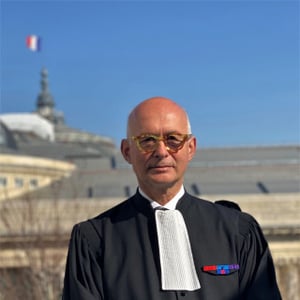
Partner, Supreme Court Attorney, Cabinet Briard LLP
François-Henri Briard is a Knight of the Legion of Honor, an Officer of the National Order of Merit and a Knight of the Palmes Académiques.
He was a member of the Governing Board of the Bar of the French Supreme Courts (2003-2005).
François-Henri Briard was a trustee of Sarah Lawrence College in New York for eight years. He is President of the Institut Vergennes, a member of the U.S. Supreme Court Historical Society and an honorary member of the Society of the Cincinnati and of the Sons of the American Revolution. He is also an expert with the Federalist Society, a U.S. think tank that focuses on constitutional and judicial issues.
He is a member of the Institute of Consulting Tax Attorneys (IACF) and an associate member of the Academy of Moral Sciences, Letters and Arts of Versailles and Ile de France.
He is a member of the French Navy civilian reserve with the rank of frigate captain and has been awarded a medal by the voluntary military services. On behalf of the Firm, he received the Military Reserve Prize (2011).
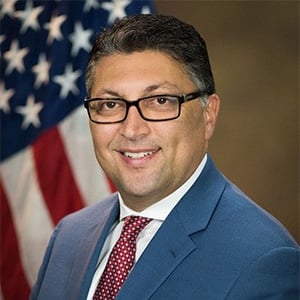
Adjunct Professor of Law, University of Pennsylvania
Makan Delrahim is currently an Adjunct Professor of Law at the University of Pennsylvania.
Previously he served as Assistant Attorney General for the Antitrust Division, Deputy Assistant to the President, and Deputy White House Counsel. Mr. Delrahim’s rich antitrust background covers the full range of industries, issues, and institutions touched upon by the work of the Antitrust Division. He is a former partner in the Los Angeles office of a national law firm. He served in the Antitrust Division from 2003 to 2005 as a Deputy Assistant Attorney General, overseeing the Appellate, Foreign Commerce, and Legal Policy sections. During that time, he played an integral role in building the Antitrust Division’s engagement with its international counterparts and was involved in civil and criminal matters. He has served on the Attorney General’s Task Force on Intellectual Property and as Chairman of the Merger Working Group of the International Competition Network. Mr. Delrahim was also a Commissioner on the Antitrust Modernization Commission from 2004 to 2007. Earlier in his career, Mr. Delrahim served as antitrust counsel, and later as the Staff Director and Chief Counsel of the U.S. Senate Judiciary Committee.
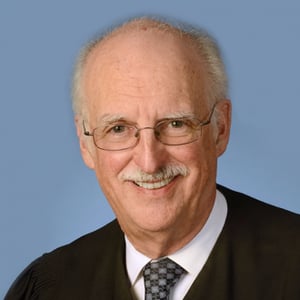
Senior Judge, United States Court of Appeals, District of Columbia Circuit
Circuit Judge Douglas H. Ginsburg was appointed to the United States Court of Appeals for the District of Columbia in 1986. After receiving his B.S. from Cornell University in 1970, and his J.D. from the University of Chicago Law School in 1973, he clerked on the D.C. Circuit and for Justice Thurgood Marshall on the United States Supreme Court. Thereafter, Judge Ginsburg was a professor at the Harvard Law School, the Deputy Assistant and then Assistant Attorney General for the Antitrust Division of the Department of Justice, as well as the Administrator of the Office of Information and Regulatory Affairs in the Office of Management and Budget. Concurrent with his service as a federal judge, Judge Ginsburg has taught at the University of Chicago Law School and the New York University School of Law. Judge Ginsburg is currently a Professor of Law at the George Mason University and a visiting professor at University College London, Faculty of Laws.
Judge Ginsburg is the Chairman of the International Advisory Board of the Global Antitrust Institute at the Law and Economics Center of the George Mason University School of Law. He also serves on the Advisory Boards of: Competition Policy International; the Harvard Journal of Law and Public Policy; the Journal of Competition Law and Economics; the Journal of Law, Economics & Policy; the Supreme Court Economic Review; the University of Chicago Law Review; the New York University Journal of Law and Liberty; and, at University College London, both the Centre for Law, Economics and Society and the Jevons Institute for Competition Law and Economics.
In 2020, Judge Ginsburg was the 11th recipient of the John Sherman Award, presented by the Antitrust Division of the Department of Justice in recognition of the awardee’s Lifetime Contributions to Antitrust Law and Policy.
In 2014, Judge Ginsburg received the Lifetime Achievement Award given annually by the Global Competition Review.
He is the author or co-author of several books and more than 100 articles on competition and regulation, including, most recently, Growing Convergence: The Limited Role of Antitrust in Standard Essential Patent Disputes, in CPI Antitrust Chronicle, Summer 2021, Vol. 1, No. 2.
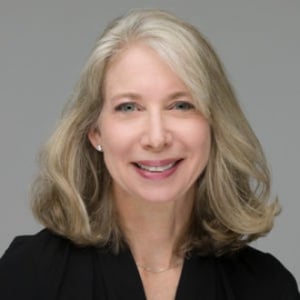
Vice President and Director of Competition Policy, Progressive Policy Institute
Diana Moss joined the Progressive Policy Institute in 2023. She was previously President of the American Antitrust Institute from 2015-2023. An economist, Dr. Moss has developed and expanded competition enforcement and policy advocacy channels and strategies, and strengthened communications with enforcers, Congress, other advocacy groups, and the media. Her work spans both antitrust and regulation, with industry expertise in digital technology, electricity, petroleum, food and agriculture, airlines, telecommunications, and healthcare. Dr. Moss was previously at the Federal Energy Regulatory Commission, where she coordinated the agency’s competition analysis for electricity mergers. In the early 1990s, she consulted in private practice in the areas of regulation and antitrust. Dr. Moss has spoken widely on various topics involving competition policy and enforcement, testified before Congress, appeared before state and federal regulatory commissions, and made numerous radio and television appearances. She has published articles in a number of economic and legal academic journals, including: American Economic Review, Journal of Industrial Organization, the Energy Law Journal, and the Antitrust Bulletin. She is editor of Network Access, Regulation and Antitrust (2005). Dr. Moss is Adjunct Faculty in the Department of Economics at the University of Colorado at Boulder. She holds a M.A. degree from the University of Denver and a Ph.D. from the Colorado School of Mines.

Judge, United States Court of Appeals, Sixth Circuit
Judge Readler earned his undergraduate and law degrees from the University of Michigan. After graduating, he served as a law clerk to Judge Alan Norris of the United States Court of Appeals for the Sixth Circuit. Judge Readler then began practicing law in the Columbus office of the international law firm Jones Day, eventually spending ten years as a partner in the firm’s Issues and Appeals Practice Group. While at Jones Day, Judge Readler appeared in state and federal trial and appellate courts around the country, most frequently the Supreme Court of Ohio and the Sixth Circuit. Judge Readler also successfully argued before the United States Supreme Court in McQuiggin v. Perkins on behalf of an inmate claiming actual innocence. His other pro bono representations include representing capital defendants before the Tenth Circuit and the Supreme Court of Ohio, as well as representing defendants sentenced to life in prison before the Sixth Circuit. While at Jones Day, Judge Readler traveled to Nairobi with Lawyers Without Borders to train Kenyan lawyers in prosecuting domestic violence cases, and he was also a recipient of the American Marshall Memorial Fellowship awarded by the German Marshall Fund of the United States. Following his career in private practice, Judge Readler served as Acting Assistant Attorney General for the Civil Division of the United States Department of Justice from 2017 to 2019. In that role, Judge Readler led and supervised over 1,000 lawyers in the Department’s largest litigating division, briefing and arguing several cases on behalf of the United States in federal courts across the country, including high-profile cases significant to the Administration and the Department. In March 2019, Judge Readler was confirmed to serve as a Circuit Judge on the Sixth Circuit. He resides in Columbus.
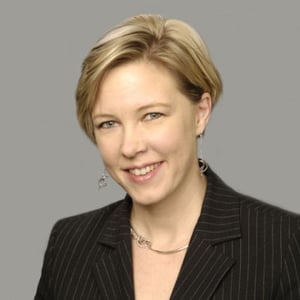
Clinical Professor and Senior Scholar and Senior Fellow for Copyright Research and Policy of C-IP2, Antonin Scalia Law School, George Mason University
Sandra Aistars is Senior Fellow for Copyright Research and Policy and a Senior Scholar at the Center for Intellectual Property x Innovation Policy (C-IP2). She also leads the law school’s Arts & Entertainment Advocacy Program. Professor Aistars has over twenty years of advocacy experience on behalf of copyright and other intellectual property owners. She has served on trade missions and been an industry advisor to the Department of Commerce on intellectual property implications for international trade negotiations; worked on legislative and regulatory matters worldwide; frequently testified before Congress and federal agencies regarding intellectual property matters; chaired cross-industry coalitions and technology standards efforts; and is regularly tapped by government agencies to lecture in U.S. government-sponsored study tours for visiting legislators, judges, prosecutors, and regulators.
Immediately prior to joining Scalia Law, Professor Aistars was the Chief Executive Officer of the Copyright Alliance – a nonprofit, public interest organization that represents the interests of artists and creators across the creative spectrum. While at Scalia Law, she continues to collaborate with the Copyright Alliance as a member of its Academic Advisory Board. Professor Aistars currently serves on the boards of the Washington Area Lawyers for the Arts (WALA) and the Howard Intellectual Property Program (HIPP), and she has previously served as trustee of the Copyright Society of the USA (CSUSA). Professor Aistars has also previously served as Vice President and Associate General Counsel at Time Warner Inc. She began her legal career in private practice at Weil, Gotshal and Manges LLP.
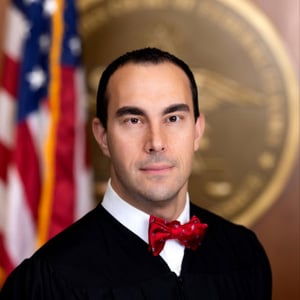
U.S. Court of Federal Claims and Jurist-In-Residence Professor of Law, The University of Akron School of Law
Judge Ryan T. Holte was sworn in as a judge on the United States Court of Federal Claims in July 2019. Prior to confirmation he served as the David L. Brennan Professor of Law and Director of the Center for Intellectual Property Law and Technology at The University of Akron School of Law (2017-2019) and an assistant professor of law at Southern Illinois University School of Law (2013-2017). Judge Holte has written and presented widely on patent law subjects and empirical legal studies of Federal Circuit and district court patent law cases. His most recent articles were published in the Iowa Law Review (2019), George Mason Law Review (2018), and Washington Law Review (2017).
In practice, Judge Holte served for six years as general counsel and partner of an electrical engineering technology company and is co-inventor of multiple patents related to Systems and Methods for Countering Satellite-Navigated Munitions. Prior to entering academia, Judge Holte practiced as a litigation attorney at the Federal Trade Commission and an associate in the Intellectual Property Practice Group at Jones Day. Prior to practice, he served as a law clerk to Judge Stanley F. Birch, Jr. on the United States Court of Appeals for the Eleventh Circuit and as a law clerk to Judge Loren A. Smith on the United States Court of Federal Claims.
Judge Holte received his JD from the University of California Davis School of Law and his BS, magna cum laude, in engineering from the California Maritime Academy where he was a First Class graduate of the Corps of Cadets Third Engineering Division and sailed as a U.S. Merchant Marine oiler.
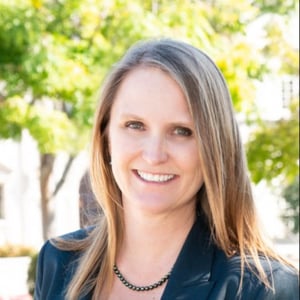
Professor of Law, University of San Diego School of Law
Lisa Ramsey is a Professor of Law at the University of San Diego School of Law, where she is a founding member of the Center for Intellectual Property Law and Markets. She teaches and writes in the intellectual property and international intellectual property law area and is an expert on trademark law. Professor Ramsey is an active member of the American Intellectual Property Law Association and has given presentations on trademark law to attorneys, professors, and students throughout the United States and around the world. Before joining the USD law faculty, she was an intellectual property litigator at Gray Cary Ware & Freidenrich and served as a judicial law clerk for the Honorable Rebecca Beach Smith in the United States District Court for the Eastern District of Virginia. Professor Ramsey’s scholarship focuses on potential conflicts between trademark laws and free speech rights, and explains how trademark protection of inherently valuable words, symbols, and product features can harm fair competition and freedom of expression.
Examples of Professor Ramsey’s publications include Protectable Trademark Subject Matter in Common Law Countries and the Problem with Flexibility in The Cambridge Handbook of International and Comparative Trademark Law (Irene Calboli & Jane Ginsburg eds., Cambridge University Press 2020); Using Failure to Function Doctrine to Protect Free Speech and Competition in Trademark Law in the Iowa Law Review Online (2020); Non-Traditional Trademarks and Inherently Valuable Expression in The Protection of Non-Traditional Trademarks (Irene Calboli & Martin Senftleben eds., Oxford University Press 2018); Free Speech Challenges to Trademark Law After Matal v. Tam in the Houston Law Review (2018); A Free Speech Right to Trademark Protection? in the Trademark Reporter (2016); and Free Speech and International Obligations to Protect Trademarks in the Yale Journal of International Law (2010). Her article Descriptive Trademarks and the First Amendment in the Tennessee Law Review (2003) was judged by the editor of the Intellectual Property Law Review to be one of the best intellectual property law articles of 2003.
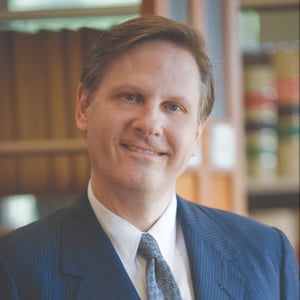
Associate Dean for Faculty Development & Chapman Distinguished Professor of Law, University of Tulsa College of Law
Robert Spoo is Chapman Distinguished Professor at The University of Tulsa College of Law, where he teaches copyright law, property, contracts, law and literature, and other subjects. He received his Ph.D. in English from Princeton University and his J.D. from the Yale Law School. After serving as a judicial clerk for the Honorable Sonia Sotomayor when she was a judge on the U.S. Court of Appeals for the Second Circuit, Spoo was an attorney with law firms in New York, San Francisco, and Tulsa.
Formerly, Spoo was, for more than a decade, editor of the James Joyce Quarterly and a tenured member of the English Department at the University of Tulsa. He has published extensively on modern authors, law and literature, copyrights, and the public domain. His recent articles have appeared in the Stanford Law Review, UCLA Law Review, Law & Literature, Cardozo Arts & Entertainment Law Journal, and Journal of Modern Literature. His book Without Copyrights: Piracy, Publishing, and the Public Domain (Oxford University Press, 2013)—an exploration of the problems faced by foreign authors during the nineteenth and early twentieth centuries when they lacked copyright protection in the United States—was enthusiastically reviewed in The Nation, London Times Literary Supplement, Paris Review Daily, American Historical Review, Critical Inquiry, and other venues. Spoo’s earlier books and editions, published with Oxford and Duke University Presses, focused on James Joyce, Ezra Pound, and H.D. (Hilda Doolittle).
Spoo is coeditor, with Simon Stern, of a Law & Literature series with Oxford University Press.
In 2016, Spoo was awarded a Guggenheim Foundation Fellowship in the Humanities—one of four legal scholars in the United States and Canada to receive a Guggenheim that year. His book Modernism and the Law, prepared during his Guggenheim year, was published in 2018 by Bloomsbury Academic.
In 2020-2021, Spoo was on leave with a Law and Public Affairs (LAPA) Fellowship from Princeton University, where his project for the LAPA year was “Lawful Piracy and Trade Courtesy in the American Copyright Vacuum.”
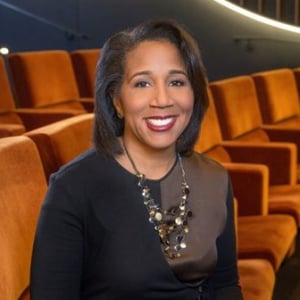
Senior Executive Vice President and Global General Counsel, Motion Picture Association
Karyn A. Temple is Senior Executive Vice President and Global General Counsel for the Motion Picture Association. One of the world’s leading authorities on copyright, Ms. Temple oversees all of the Association’s legal affairs and content protection efforts around the world.
Prior to joining the Motion Picture Association, Ms. Temple served more than eight years in the U.S. Copyright Office, most recently as the Register of Copyrights, where she led the 400-person agency and its eight divisions. Prior to leading the U.S. Copyright Office, Ms. Temple headed its Office of Policy and International Affairs, as well as served in policy and litigation roles at the U.S. Department of Justice; she most recently served in the Obama Administration as Senior Counsel to the Deputy Attorney General of the United States.
Ms. Temple received her J.D. from Columbia University School of Law and her B.A. in English from the University of Michigan.
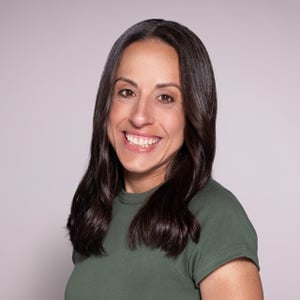
Chief Legal Officer, Paradigm
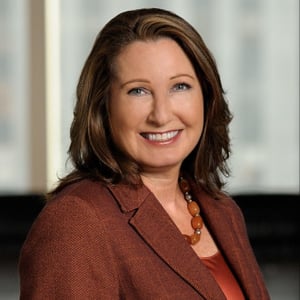
President, Americas and Global Chief Legal Officer, Merkle Science
Mary Beth Buchanan is currently President, Americas and Global Chief Legal Officer at Merkle Science. She was former General Counsel for Kraken Cryptocurrency Exchange. She was a partner at Bryan Cave LLP in the firm’s White Collar Defense and Investigations and Securities Litigation and Enforcement Client Service Groups. She concentrated her practice on white collar criminal defense, SEC and FINRA enforcement matters, corporate and accounting fraud, internal investigations, corporate compliance, foreign corrupt practices violations, Congressional investigations and complex civil litigation.
Ms. Buchanan served as the United States Attorney for the Western District of Pennsylvania from September 2001 to November 2009, having been appointed by President George W. Bush. She is the only woman in Pennsylvania's history to be presidentially appointed to this position. As the United States Attorney, Ms. Buchanan oversaw the prosecution of more than 5,000 cases, including corporate and securities fraud, bank fraud, foreign corrupt practices, false claims, money laundering, health care fraud, public corruption and a broad range of violent crimes. Prior to that time, Ms. Buchanan spent more than 13 years as an Assistant United States Attorney litigating criminal, civil and appellate cases.
During her tenure as the United States Attorney, Ms. Buchanan also held several posts at the DOJ, including serving as the director of the Executive Office for United States Attorneys, acting director of the DOJ’s Office on Violence Against Women and chair of the Attorney General’s Advisory Committee. Ms. Buchanan also served on the U.S. Sentencing Commission's Organizational Guidelines Advisory Committee, which made recommendations to the Commission for amendments to the Sentencing Guidelines for Business Organizations.
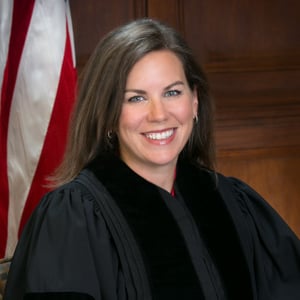
Judge, United States Court of Appeals, Eleventh Circuit
Britt C. Grant is a judge on the U.S. Court of Appeals for the Eleventh Circuit. Judge Grant was appointed to the federal bench in August 2018 after serving as a Justice on the Supreme Court of Georgia. Prior to her judicial appointment, she served as the Solicitor General of Georgia and practiced in the Washington, D.C. office of Kirkland & Ellis. Upon graduation from law school, Judge Grant served as a law clerk to then-Judge Brett M. Kavanaugh of the U.S. Court of Appeals for the District of Columbia Circuit. She earned her J.D., with distinction, from Stanford Law School, where she was the Co-Founder of the Stanford National Security and the Law Society, and the President of the Stanford Law chapter of the Federalist Society. Before enrolling in law school, Judge Grant served in The White House in a variety of domestic policy roles as well as on the staff of Congressman Nathan Deal. Judge Grant earned her B.A., summa cum laude, from Wake Forest University, where she was inducted into Phi Beta Kappa. She now lives in Atlanta, Georgia with her husband and three children.
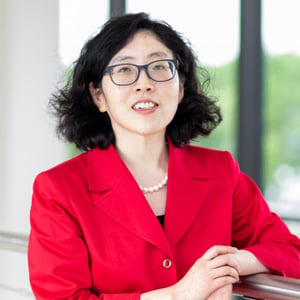
Vice President of Operations and General Counsel, The Philanthropy Roundtable
Jenny Kim is vice president of operations and general counsel of the Philanthropy Roundtable. Previously, she was deputy general counsel, political law and vice president of policy at Koch Industries, one of the largest private companies in America. While there, she implemented the political law compliance for the United States, Canada and the European Union, and led on criminal justice reform. Before joining Koch Industries in 2008, Ms. Kim was a senior associate at Miller & Chevalier Chartered and an associate with Crowell & Moring, LLP. Previously, she was a Presidential Management Fellow at The White House Office of Counsel to the President and the U.S. Department of Defense, Missile Defense Agency. She earned a Juris Doctor from Boston College Law School and a bachelor's degree from New York University. She is a member of the bar in New York, Massachusetts and the District of Columbia.
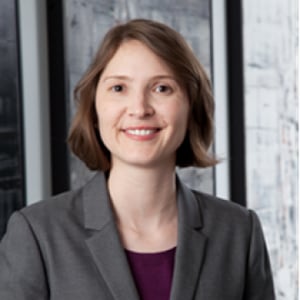
General Counsel, Shamrock Foods Company
Carrie Ryerson is the General Counsel for Shamrock Foods Company, a $4 billion dollar 100-year-old privately held company based in Phoenix, Arizona. Carrie is responsible for all legal, compliance, safety and risk management functions at Shamrock.
Starting with Shamrock as the in-house employment attorney several years ago, her role evolved into the head of a newly-created legal department with multiple attorneys and others who focus on, among other areas, risk management and compliance. She has created a sophisticated and mature legal organization that is efficient, effective and responsive. Every position within Shamrock that she has held was newly-created and were roles that she was the first to occupy. As a result, she was charged with creating the function, developing the duties, and establishing the internal and external partnerships to ensure each role’s meaningful impact on the enterprise.
Prior to joining Shamrock, Carrie practiced in the areas of commercial litigation, employment and complex civil appeals at Fennemore Craig, a leading firm in the Southwest. Carrie has a law degree from William & Mary School of Law where she was on the Bill of Rights Journal and published a note analyzing the constitutionality of an issue related to the census. She graduated summa cum laude from the University of Arizona. Carrie lives in Phoenix with her husband, son and daughter.
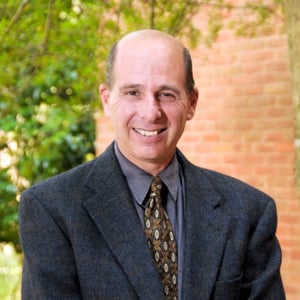
Sandra Day O'Connor Professor of Law & Professor of Government, William & Mary Law School
Neal Devins is the Sandra Day O’Connor Professor of Law and Professor of Government at the College of William and Mary. He is the author of several books and more than 100 articles and book chapters on courts, constitutional law, and law & politics. His books include The Company They Keep (Oxford 2019) (with Larry Baum), The Democratic Constitution (Oxford 2d ed. 2015) (with Louis Fisher), Political Dynamics of Constitutional Law (West 6th ed. 2019) (with Louis Fisher), and Shaping Constitutional Values: The Supreme Court, Elected Government, and the Abortion Dispute (Johns Hopkins University Press 1996). His articles have appeared in The Yale Law Journal, The Stanford Law Review, The Columbia Law Review, The Michigan Law Review, The California Law Review, The Virginia Law Review, The University of Pennsylvania Law Review, The University of Chicago Law Review, The New York University Law Review, and several other journals and magazines. Professor Devins is also the author of op-eds appearing in The Wall Street Journal, The New York Times, The Washington Post, The Los Angeles Times, Slate, and several other newspapers. He has testified before House and Senate committees on budget reform and the separation of powers. Professor Devins is a graduate of Georgetown University (A.B. 1978) and Vanderbilt Law School (J.D. 1982).
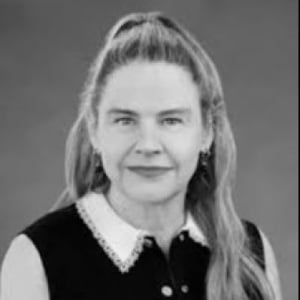
Ralph V. Whitworth Professor in Law, Georgetown University Law Center
Professor Nourse is one of the nation’s leading scholars of Congress, the separation of powers, and statutory interpretation. In addition to her scholarship, she has practiced as an attorney in the White House, the Department of Justice, the Senate, and in private practice. The story of her pioneering work on gender equality is told in Equal: Women Reshape American Law.
Her most recent book is “The Impeachments of Donald Trump: An Introduction to Constitutional Argument” (West 2021). In 2016, Harvard Press published her Misreading Law, Misreading Democracy, on the limits of textualism. She is one of the most-cited scholars on interpretation in the country and has recently co-authored Yale’s revised leading casebook, Statutes, Regulation & Interpretation (West 2024).
Professor Nourse has published widely on the power of the President and the separation of powers, Reclaiming the Constitutional Text from Originalism: The Case of Executive Power, 106 Calif. L. Rev. 1 (2018), and constitutional rights, In Reckless Hands (Norton 2008), the story of Skinner v. Oklahoma and American eugenics.
President Biden appointed Professor Nourse to serve as Vice-Chair of the United States Commission on Civil Rights in 2023, with her term expiring in 2029.
Professor Nourse previously served as Chief Counsel to then Vice President Biden under the Obama Administration. Prior to that role, she practiced as an appellate litigator in the Department of Justice and as Special Counsel to the Senate Judiciary Committee.
Professor Nourse has held chairs at Emory University and the University of Wisconsin. She has been a visiting professor at Yale, NYU, University of Maryland, and Northwestern.
She began her legal career in New York, clerking for legendary trial judge of the Southern District of New York, Edward Weinfeld, and practicing at Paul, Weiss, Rifkind Wharton & Garrison. She left private practice to serve as junior counsel to the Senate-Iran Contra Committee. After serving on the appellate staff of the Civil Division, she was hired as a legal expert for then Senator Joseph Biden.
Professor Nourse is the co-Founder of the Supreme Court Interpretation Lab, which uses big data to analyze trends in Supreme Court analyses. She formerly served as Executive Director of the Georgetown Law Center on Congressional Studies.
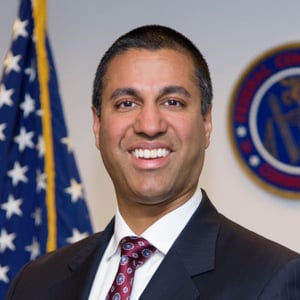
Nonresident Fellow, American Enterprise Institute
Ajit Pai, a former chairman of the Federal Communications Commission (FCC), is a nonresident fellow at the American Enterprise Institute, where he focuses on issues pertaining to technology and innovation, telecommunications regulatory policy, and market-based incentives for investment in broadband deployment. Concurrently, he is a partner at Searchlight Capital Partners, a global investment firm.
Mr. Pai’s distinguished career at the FCC includes two leadership roles following presidential appointments. He was appointed commissioner by President Barack Obama in 2012, designated chairman by President Donald Trump in 2017, and twice confirmed by the US Senate. While at the helm of the FCC, Mr. Pai had a transformative impact on the future of US technology and communications policy, implementing major initiatives to help close the digital divide; advance US leadership in 5G and other wireless technologies; promote innovation; protect consumers, public safety, and national security; and make the agency itself more open, transparent, and data-driven.
Earlier in his career, Mr. Pai served in various public-sector positions in the FCC’s Office of General Counsel, the US Department of Justice, the US Senate Judiciary Committee, and the US District Court for the Eastern District of Louisiana. He also worked as a partner at Jenner & Block and associate general counsel at Verizon Communications.
Mr. Pai graduated with honors from Harvard University, where he received a bachelor’s degree, and from the University of Chicago Law School, where he received a law degree and was an editor on the University of Chicago Law Review.

Chief Judge, United States Court of Appeals, Eleventh Circuit
William H. Pryor Jr. serves as Chief Circuit Judge on the United States Court of Appeals for the Eleventh Circuit.
In 2013–18, he served on the United States Sentencing Commission and, in 2017–18, served as Acting Chair.
He has taught as a visiting professor at the University of Alabama School of Law and previously taught as an adjunct professor at the Cumberland School of Law of Samford University.
He served as the 45th Attorney General of Alabama from 1997 to 2004. When he took office, he was the youngest attorney general in the nation. In his reelection, he received the highest percentage of votes of any statewide candidate.
He graduated magna cum laude from Tulane Law School where he finished first in the common-law curriculum and was editor in chief of the Tulane Law Review. He then served as a law clerk for Judge John Minor Wisdom of the U.S. Court of Appeals for the Fifth Circuit.
He is a member of The American Law Institute and an Adviser for the RESTATEMENT OF THE LAW THIRD, CONFLICT OF LAWS. He is a coauthor with Bryan Garner, Justices Gorsuch and Kavanaugh, and several other judges of a treatise, THE LAW OF JUDICIAL PRECEDENT. He has published in the Yale Law Journal, Columbia Law Review, Virginia Law Review, Notre Dame Law Review, Harvard Journal of Law & Public Policy, Yale Law & Policy Review, George Mason Law Review, Florida Law Review, Alabama Law Review, Case Western Reserve Law Review, and Tulane Law Review. He has published op-eds in The Wall Street Journal, The New York Times, National Review, and USA Today. He has debated at National Lawyers’ Conventions of the Federalist Society (including on National Public Radio) and at the Oxford Union in the United Kingdom. And he is listed among several “widely admired judicial writers” in Bryan Garner’s The Redbook: A Manual on Legal Style.
He is a member of the Tulane Law School Hall of Fame and has received the Defender of the Constitution Award from the Heritage Foundation, the Jurist of the Year Award from the Texas Review of Law & Politics, and the St. Thomas More Award from the St. Thomas More Society of Atlanta. Judge Pryor is also a proud member of the National Society of the Sons of the American Revolution.
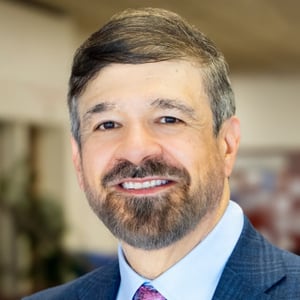
Hugh and Hazel Darling Foundation Professor of Law; Director, Center for the Study of Constitutional Originalism, University of San Diego School of Law

Showcase Panel II: Private Control Over Public Discussion
Jane Bambauer, Randy E. Barnett, Adam Candeub, Barbara Lagoa, Eugene Volokh
2021 National Lawyers Convention
The 2021 National Lawyers Convention took place November 11-13, 2021 at the Mayflower Hotel in...
2021 Antonin Scalia Memorial Dinner
Tom Cotton, Jennifer C. Braceras
2021 National Lawyers Convention
On November 11, 2021, The Federalist Society hosted its annual Antonin Scalia Memorial Dinner. This...
Religious Liberty after Fulton v. City of Philadelphia
Akhil Reed Amar, Thomas C. Berg, William P. Marshall, Lawrence VanDyke, Lori Windham
2021 National Lawyers Convention
The 2021 National Lawyers Convention took place November 11-13, 2021 at the Mayflower Hotel in...
Criminal Justice 2021 and The Rule of Law
Stephanos Bibas, Lawrence S. Krasner, Tracey Meares, McGregor W. Scott, Rich Stanek
2021 National Lawyers Convention
The 2021 National Lawyers Convention took place November 11-13, 2021 at the Mayflower Hotel in...
Administrative Inquisitions? How Agencies Initiate, Conduct, and Conclude Investigations
Tyler S. Clarkson, Aram A. Gavoor, James C. Ho, Richard J. Pierce, Susan Courtwright Rodriguez
2021 National Lawyers Convention
The 2021 National Lawyers Convention took place November 11-13, 2021 at the Mayflower Hotel in...
"Progressive" HR in 2021: The Solution or the Problem?
Sharon Fast Gustafson, Larry H. James, Peter Kirsanow, Paul B. Matey, Daniel Villao
2021 National Lawyers Convention
The 2021 National Lawyers Convention took place November 11-13, 2021 at the Mayflower Hotel in...
The Antitrust Revolution?
Bill Baer, François-Henri Briard, Makan Delrahim, Douglas H. Ginsburg, Diana L. Moss, Chad A. Readler
2021 National Lawyers Convention
The 2021 National Lawyers Convention took place November 11-13, 2021 at the Mayflower Hotel in...
IP Law and Culture
Sandra Aistars, Ryan T. Holte, Lisa P. Ramsey, Robert Spoo, Karyn A. Temple
2021 National Lawyers Convention
The 2021 National Lawyers Convention took place November 11-13, 2021 at the Mayflower Hotel in...
A View From In-House
Katie Biber, Mary Beth Buchanan, Britt C. Grant, Jenny Kim, Carrie Ryerson
2021 National Lawyers Convention
The 2021 National Lawyers Convention took place November 11-13, 2021 at the Mayflower Hotel in...
The Separation of Powers and Political Polarization
Neal E. Devins, Victoria Nourse, Ajit V. Pai, William H. Pryor, Michael B. Rappaport
2021 National Lawyers Convention
The 2021 National Lawyers Convention took place November 11-13, 2021 at the Mayflower Hotel in...