
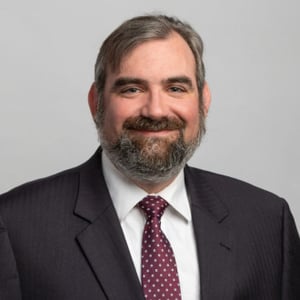
Senior Attorney, Institute for Justice
Robert Frommer serves as a senior attorney with the Institute for Justice. He joined the Institute in August 2008 and is currently litigating on behalf of SpeechNow.org, a group challenging the federal campaign finance laws regarding free speech.
Before joining IJ, Robert was an attorney with the Washington, D.C., office of Gibson, Dunn & Crutcher LLP, where he litigated both complex litigation and public-interest matters. He is a former law clerk to Judge Morris Sheppard Arnold of the U.S. Court of Appeals for the Eighth Circuit.
Robert received his law degree magna cum laude from the University of Michigan Law School in 2004, where he was elected to the Order of the Coif and served as both a book review editor for the Michigan Law Review and president of the Federalist Society student chapter. Before going to law school, Robert earned a master's degree in economics from George Mason University.
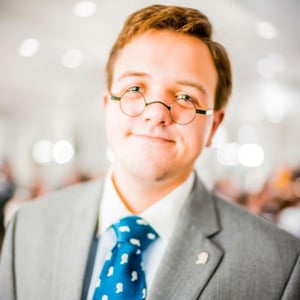
Adam Griffin is a graduate of the University of North Carolina School of Law. During law school, he served as a research assistant to Professor Stephen E. Sachs and UNC Law Dean Martin Brinkley. After law school, Adam spent two years litigating for liberty at the Institute for Justice as an inaugural Law and Liberty Fellow. He then served as a law clerk to Chief Judge Richard E. Myers in the United States District Court for the Eastern District of North Carolina, and previously worked at Pacific Legal Foundation and the Civil Rights Division of the Department of Justice.
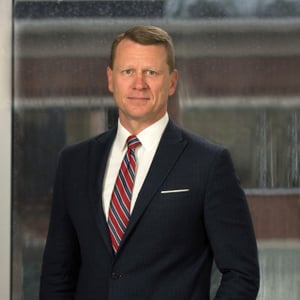
Partner, Phelps Dunbar LLP
Mike Hurst is a partner with Phelps Dunbar LLP where he optimizes his in-depth knowledge of the court system, investigative and prosecutorial agencies, the regulatory arena, and the public policy realm to help clients facing government investigations, enforcement actions, regulatory matters, general litigation and policy issues. Mike currently serves as the General Counsel of the Republican National Committee and as Chairman of the Mississippi Republican Party. He previously served as the U.S. Attorney for the Southern District of Mississippi from 2017-2021, and with over 20 years of experience before judges, juries and policy makers, handling some of the largest and most high-profile cases in Mississippi, he's known for untangling the most complex legal issues.
As U.S. Attorney, Mike was described as a “hard charger,” leading efforts to combat violent crime, human trafficking and public corruption, among many other issues, throughout Mississippi. He almost tripled prosecutions in the U.S. Attorney’s Office over a three-year period, resulting in the most indictments and federal defendants indicted in a one-year period in Mississippi history. He created innovative and national award-winning crime-fighting solutions, like “Project EJECT,” and he established the first statewide, multilevel and multidisciplinary human trafficking body, the Mississippi Human Trafficking Council, to comprehensively and holistically address this criminal scourge.
During his tenure as U.S. Attorney, Mike oversaw some of the biggest cases in Mississippi history: the largest health care fraud scheme (Wade Walters, et. al.), the largest Ponzi scheme (Lamar Adams), the largest False Claims Act health care fraud settlement (Region 8), and the largest nursing home False Claim Act settlement (Hyperion). In addition, as Chief Federal Law Enforcement Officer for the Southern District, Mike coordinated the largest single-state immigration worksite enforcement operation in our nation’s history, involving hundreds of federal law enforcement agents covering seven different locations operated by multiple companies.
Mike’s no show pony – he’s a work horse. Before his tenure as U.S. Attorney, Mike was an Assistant U.S. Attorney for the Southern District of Mississippi for more than eight years. He handled some of the most difficult and complex cases in that office, dealing with white collar crimes, public corruption and financial fraud, including numerous jury trials before almost every federal judge in the Southern District.
He also has experience in the private sector. He has practiced law in Washington, D.C., and has served as a litigator and general counsel for a conservative nonprofit. He also has extensive experience in public policy, having served as the Legislative Director to a U.S. Congressman and as Counsel to the House Judiciary Committee.
Mike has also testified before both the United States Senate and the U.S. House of Representatives on issues ranging from crime to Presidential pardons. He has worked on all sides of the legal, regulatory, investigative, prosecutorial and policy spectrum. The incredible insight gained from this varied experience enables him to find a path forward for clients, no matter how complicated the case.
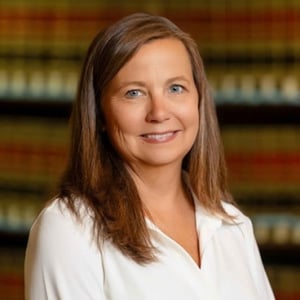
John P. Murphy Foundation Professor of Law and Associate Dean for External Engagement, University of Notre Dame Law School
Nicole Stelle Garnett is the John P. Murphy Foundation Professor of Law at Notre Dame Law School, where she also serves as the Associate Dean for External Engagement and directs the Notre Dame Education Law Project. Her teaching and research focus on education law and policy, religious liberty, and topics related to property law (especially land use and urban development policies). In addition to dozens of articles on these subjects, she is the author of Lost Classroom, Lost Community: Catholic Schools' Importance in Urban America (University of Chicago Press, 2014) and Ordering the City: Land Use, Policing and the Restoration of Urban America (Yale University Press, 2009).
Garnett received her B.A. with distinction in Political Science from Stanford University and her J.D. from Yale Law School. After law school, she clerked for the Honorable Morris S. Arnold of the United States Court of Appeals for the Eighth Circuit and for Associate Justice Clarence Thomas of the Supreme Court of the United States. Before joining the law school faculty in 1999, she worked for two years as a staff attorney at the Institute for Justice, a non-profit public-interest law firm in Washington, D.C., where she helped to defend the constitutionality of the nation's first private-school-choice programs.
At Notre Dame, Garnett is a faculty fellow in the Institute for Educational Initiatives, Kellogg Institute for International Studies, Fitzgerald Institute for Real Estate, and deNicola Center for Ethics and Culture. She also is an elected member of the American Law Institute and a Senior Fellow at the Manhattan Institute.
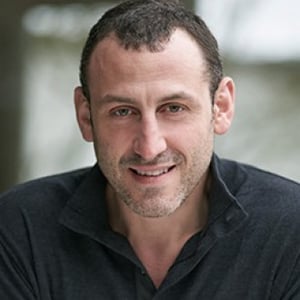
Professor of Law, Northwestern University Pritzker School of Law
Joshua Kleinfeld teaches and writes about political, legal, and moral philosophy, criminal law, and criminal procedure. He also practices law in Northwestern's Juvenile Criminal Defense Clinic. He is a full professor with tenure at the Northwestern Pritzker School of the Law and (by courtesy) in Northwestern’s philosophy department. In 2017-18, he was a visiting professor at Harvard and Stanford Law Schools. He is the recipient of the Bator Award, given annually to one American law professor under the age of 40 who has demonstrated "excellence in legal scholarship, a commitment to teaching, a concern for students, and who has made a significant public impact."
In philosophy, Kleinfeld's research focuses on the idea of "embodied ethical life," as developed in the socio-theoretic tradition of Hegel, Weber, and Durkheim. This tradition aims to understand and critique social life by bringing to light the normative ideas implicit in social practices and institutions. In law, this means that the most interesting philosophical concepts are often those reflected or actualized in legal practice – in the law as judges and lawyers think of it and wield it.
In criminal law and procedure, Kleinfeld has developed a theory known as "reconstructivism," which holds that the chief office of criminal law is not to dole out retributive justice, nor to optimize crime and cost control, but to reconstruct a violated normative order in the wake of a crime. This work, which draws on the thought of Hegel, Durkheim, Jean Hampton, and Antony Duff, develops an alternative to retributive and utilitarian theories of criminal law by focusing on the distinctive social function and sense of justice at work in the criminal system.
Kleinfeld is also involved in practical criminal justice reform. In this vein, he defends children accused of homicide in the Northwestern Juvenile Criminal Defense clinic and assists in litigation efforts meant to reform American criminal law through the courts. He has also developed a view of criminal justice reform known as "democratization," which holds that the root of the American criminal justice crisis is a set of bureaucratic attitudes, structures, and incentives divorced from the American public’s concerns and sense of justice, and that the primary solution is to make criminal justice more community-focused and responsive to lay influences. Working with others, he has developed a number of policy proposals meant to reform American criminal justice in a democratic direction.
Kleinfeld holds a JD from Yale Law School, a PhD in philosophy from the Goethe University of Frankfurt (supervised by Axel Honneth, Klaus Günther, and Rainer Forst), and a BA in philosophy from Yale College. He clerked for Judge J. Harvie Wilkinson on the United States Court of Appeals for the Fourth Circuit; Judge Janice Rogers Brown on the United States Court of Appeals for the D.C. Circuit; and President (chief justice) Aharon Barak of the Supreme Court of Israel. He worked as an Associate at Debevoise & Plimpton LLP in Frankfurt, Germany, in the area of corporate criminal law. Before law school, he worked as a Senior Research Analyst at the White House’s Council on Bioethics.
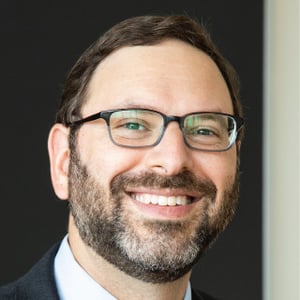
Antonin Scalia Professor of Law, Harvard Law School
Stephen E. Sachs is the Antonin Scalia Professor of Law at Harvard Law School, where he teaches civil procedure, conflict of laws, and seminars on constitutional law. His research focuses on the law and theory of constitutional interpretation, the jurisdiction of state and federal courts, the history of procedure and private law, and the role of the general common law in the U.S. legal system.
Sachs has authored numerous articles, essays, and book chapters. He is an elected member of the American Law Institute, an adviser to the ALI’s project on the Restatement of the Law (Third), Conflict of Laws, a former member of the Judicial Conference’s Advisory Committee on Appellate Rules, and a founding member of the Academic Freedom Alliance.
In 2020, Sachs received the Federalist Society’s Joseph Story Award, which recognizes a young academic who has demonstrated excellence in legal scholarship, a commitment to teaching, a concern for students, and who has made a significant public impact in a manner that advances the rule of law in a free society.
Sachs previously taught at Duke University School of Law and as a visiting professor at the University of Chicago Law School. Before entering academia, he practiced in the Washington, D.C., litigation group of Mayer Brown LLP, and he clerked for Chief Justice John G. Roberts Jr. as well as for Judge Stephen F. Williams of the U.S. Court of Appeals for the D.C. Circuit.
Sachs received his J.D. from Yale Law School, where he was executive editor of the Yale Law Journal and served both as executive editor and articles editor of the Yale Law & Policy Review. A Rhodes Scholar, he graduated from Oxford University with a first-class BA (Hons) degree in philosophy, politics, and economics. He received his A.B. degree summa cum laude in history from Harvard University, earning the Sophia Freund Prize.
Sachs is a licensed attorney in Massachusetts and the District of Columbia, and he is authorized to practice before the D.C. Circuit, the Second Circuit, the Seventh Circuit, and the Supreme Court of the United States.

Laurence A. Tisch Professor of Law and Director, Classical Liberal Institute, New York University School of Law; Director, Classical Liberal Institute, Civitas Institute University of Texas at Austin
Richard A. Epstein is the inaugural Laurence A. Tisch Professor of Law at NYU School of Law. Prior to his joining the faculty, he was a visiting law professor at NYU from 2007 through 2009. He served as the Peter and Kirstin Bedford Senior Fellow at the Hoover Institution from 2000 to 2024. Since 2024 to the present he is a senior lecturer at the Civitas Institute at the University of Texas—Austin. Epstein is also the James Parker Hall Distinguished Service Professor of Law Emeritus and a senior lecturer at the University of Chicago. His initial law school appointment was at the University of Southern California from 1968 to 1972. Epstein received an LL.D., h.c. from the University of Ghent, 2003. He has been a member of the American Academy of Arts and Sciences since 1985 and was a Senior Fellow of the Center for Clinical Medical Ethics at the University of Chicago Division of Biological Sciences, also from 1983. to 2022 He served as editor of the Journal of Legal Studies from 1981 to 1991, and of the Journal of Law and Economics from 1991-2001. From 2001 to 2010 he was a director of the John M. Olin Program in Law and Economics at the University of Chicago.
His newest book, The Myth of Birthright Citizenship: What the Fourteenth Amendment Really Says was published in 2026 (Encounter Books). Prior to that he has published many books including, The Dubious Morality of the Modern Administrative State (Roman & Littlefield 2020).Earlier he published th Classical Liberal Constitution: The Uncertain Quest for Limited Government (Harvard 2014) iHis previous books include Design for Liberty: Private Property, Public Administration and the Rule of Law (Harvard 2011); The Case Against the Employee Free Choice Act (Hoover 2009); Supreme Neglect: How to Revive the Constitutional Protection of Property Rights (Oxford 2008); Antitrust Decrees in Theory and Practice: Why Less is More (AEI 2007); Overdose: How Excessive Government Regulation Stifles Pharmaceutical Innovation (Yale University Press. 2006); How Progressives Rewrote the Constitution (Cato 2006); Cases and Materials on Torts (Aspen Law & Business; 8th ed. 2004); Skepticism and Freedom: A Modern Case for Classical Liberalism (University of Chicago, 2003); Torts (Aspen Law & Business 1999); Principles for a Free Society: Reconciling Individual Liberty with the Common Good (Perseus Books, 1998): Mortal Peril: Our Inalienable Rights to Health Care (Addison-Wesley, 1997); Simple Rules for a Complex World (Harvard, 1995); Bargaining With the State (Princeton, 1993); Forbidden Grounds: The Case Against Employment Discrimination Laws (Harvard , 1992); Takings: Private Property and the Power of Eminent Domain (Harvard, 1985); and Modern Products Liability Law (Greenwood Press, 1980). He has also edited(with Catherine M. Sharkey) Cases and Materials on the Law of Torts (10th edition 2012).
Professor Epstein has written numerous articles on a wide range of legal and interdisciplinary subjects. He has taught courses in administrative law, antitrust law, civil procedure, communications, constitutional law, contracts, corporations, criminal law, employment discrimination law, environmental law, food and drug law health law and policy, legal history, labor law, property, real estate development and finance, jurisprudence, labor law; land use planning, patents, individual, estate and corporate taxation, Roman Law; torts, and workers' compensation.
Professor Epstein also writes a regular column for Civitas Institute, which also sponsors his podcast, The Libertarian with Charles C.W. Cooke, and Law Talk, with Cooke and John Yoo. He also does a podcast with John Batchelor. And appears regularly on the Freedom File with Judge Andrew Napolitano.
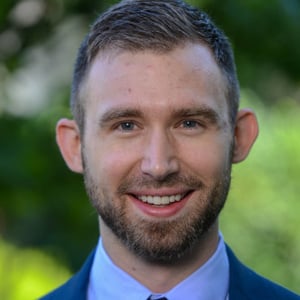
Assistant Professor of Law, Belmont University College of Law
Caleb N. Griffin is an Assistant Professor of Law at Belmont University College of Law. Prior to joining Belmont, Professor Griffin taught business and corporate law courses at Regent University School of Law, where he was the recipient of multiple teaching awards. Prior to entering the academy, Professor Griffin was an associate at Vinson & Elkins LLP in Houston, Texas, where he practiced corporate law. Professor Griffin's scholarship focuses on corporate law and corporate governance. His most recent paper provides a critical assessment of asset stewardship and proxy voting at index funds. Professor Griffin has also published theoretical and empirical work on mergers and acquisitions, the shareholder wealth maximization norm, and director fiduciary duties. Professor Griffin received his undergraduate degree in Finance, summa cum laude, from Oklahoma Christian University. He received his Juris Doctor, cum laude, from Harvard Law School.
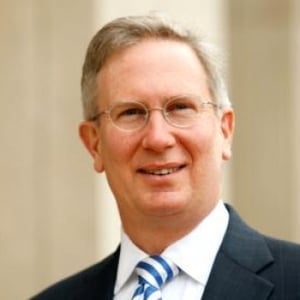
David and Mary Harrison Distinguished Professor of Law, University of Virginia School of Law
Paul G. Mahoney is a David and Mary Harrison Distinguished Professor and served as dean of the Law School from 2008-16. Mahoney's teaching and research areas are securities regulation, law and economic development, corporate finance, financial derivatives and contracts. He has published widely in law reviews and peer-reviewed finance and law and economics journals. His book, “Wasting a Crisis: Why Securities Regulation Fails,” was published by the University of Chicago Press in 2015.
Mahoney joined the Law School faculty in 1990 after practicing law with the New York firm of Sullivan & Cromwell and clerking for Judge Ralph K. Winter, Jr. of the U.S. Court of Appeals for the Second Circuit and Justice Thurgood Marshall of the U.S. Supreme Court. He served as academic associate dean at the Law School from 1999 to 2004 and has held the Albert C. BeVier Research Chair and the Brokaw Chair in Corporate Law. He has been a visiting professor at the University of Chicago Law School, the University of Southern California Law School and the University of Toronto Faculty of Law. He has also worked on legal reform projects in Kazakhstan, Kyrgyzstan, Mongolia and Nepal.
Mahoney is a member of the Council on Foreign Relations and a fellow of the American Academy of Arts and Sciences. In 2018 he joined Securities and Exchange Commission’s Investor Advisory Committee. He served as an associate editor of the Journal of Economic Perspectives from 2004 to 2007 and as a director of the American Law and Economics Association from 2002 to 2004. He is a past recipient of the All-University Outstanding Teacher Award and the Law School's Traynor Award for excellence in faculty scholarship.
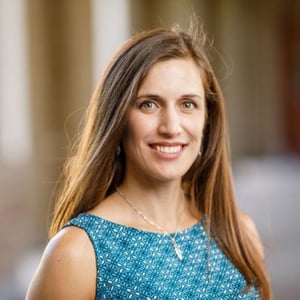
Associate Professor of Law, Notre Dame Law School
Marah Stith McLeod joined Notre Dame Law School in 2016. She teaches criminal law and criminal procedure and studies legal and ethical problems in these areas. Her scholarship explores the distribution of decisional power in the criminal justice system and the theory and practice of criminal punishment, including the death penalty.
McLeod attended Yale Law School, where she was notes editor of the Yale Law Journal. She served as a law clerk to Judge Diarmuid O’Scannlain of the Ninth Circuit Court of Appeals and to Justice Clarence Thomas of the U.S. Supreme Court. She also served an Attorney-Adviser in the Office of Legal Counsel in the U.S. Department of Justice.
After her government work, McLeod joined Sidley Austin LLP in Chicago and became a civil litigator and pro bono counsel in death penalty cases. She taught legal writing at Columbia Law School prior to coming to Notre Dame.
McLeod studied political theory at Harvard University, after which she spent a year working with Mother Teresa’s sisters in a home for handicapped orphans in Kolkata, India. McLeod now has three beloved children of her own.

Professor, University of Minnesota Law School
Ilan Wurman is the Julius E. Davis Professor of Law at the University of Minnesota, where he teaches administrative law and constitutional law. He previously taught at Arizona State University. He writes primarily on the Fourteenth Amendment, administrative law, separation of powers, and constitutionalism. His academic writing has appeared in the Yale Law Journal, the Stanford Law Review, the University of Chicago Law Review, the University of Pennsylvania Law Review, the Virginia Law Review, the Duke Law Journal, the Minnesota Law Review, the Notre Dame Law Review, and the Texas Law Review among other journals.
Professor Wurman is the author of a casebook, Administrative Law Theory and Fundamentals: An Integrated Approach (Foundation Press 2d ed. 2024). He is also the author of A Debt Against the Living: An Introduction to Originalism (Cambridge 2017), and The Second Founding: An Introduction to the Fourteenth Amendment (Cambridge 2020). His next book, The Constitution of 1789: A New Introduction, is also forthcoming with Cambridge University Press.
Professor Wurman practices law with the firm Tully Bailey. He has litigated a variety of administrative law and constitutional law cases, including cases involving COVID-19 restrictions, transmission lines, and Appointments Clause challenges. He also devised winning public nuisance theories to force city governments to address the increasingly challenging public camping crises throughout the country.
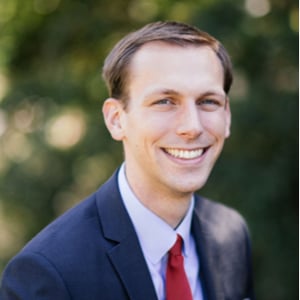
Assistant Professor, Pepperdine Caruso School of Law
Professor Kubisch received his law degree from the University of Notre Dame, where he served as Editor-in-Chief of the Notre Dame Law Review and earned the Colonel William J. Hoynes Award for having the best academic record in his class. Professor Kubisch clerked for the Honorable Steven M. Colloton of the United States Court of Appeals for the Eighth Circuit during the 2015-2016 term. Prior to teaching at Pepperdine, Professor Kubisch was an associate at Jones Day, where he specialized in appellate litigation and critical motions practice.
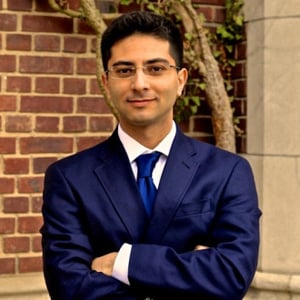
Associate Professor of Law, University of Notre Dame Law School
Sherif Girgis joined Notre Dame Law School in 2021. Prior to joining Notre Dame Law, Sherif practiced law at Jones Day in Washington, D.C., where he focused on appellate and complex civil litigation. Before that, Girgis served as a law clerk to Justice Samuel Alito, Jr., of the U.S. Supreme Court and Judge Thomas B. Griffith of the U.S. Court of Appeals for the D.C. Circuit. Now completing his Ph.D. in philosophy at Princeton, Girgis earned his J.D. at Yale Law School, where he served as an editor of the Yale Law Journal and won the Felix S. Cohen Prize for best paper in legal philosophy. Before law school, he earned a master's degree (B.Phil.) in philosophy from the University of Oxford as a Rhodes Scholar, and his bachelor's degree in philosophy from Princeton, Phi Beta Kappa and summa cum laude. Girgis is coauthor of What Is Marriage? Man and Woman: A Defense, cited in a dissent in United States v. Windsor, and Debating Religious Liberty and Discrimination, released by Oxford University Press in 2017. His work at the intersection of philosophy and law--including criminal law, constitutional liberties, and jurisprudence--has appeared in academic and popular venues including the Yale Law Journal, the Virginia Law Review, the University of Pennsylvania Law Review, the Harvard Journal of Law and Public Policy, the American Journal of Jurisprudence, the Cambridge Companion to Philosophy of Law, The New York Times, and The Wall Street Journal.
Thurgood Marshall Professor of Constitutional Law, Harvard Law School
Vicki C. Jackson, Thurgood Marshall Professor of Constitutional Law, writes and teaches about U.S. constitutional law and comparative constitutional law. She is the author of Constitutional Engagement in a Transnational Era (2010), and coauthor, with Mark Tushnet, of Comparative Constitutional Law (3d ed. 2014), a leading course book in the field. She has written on constitutional aspects of federalism, gender equality, election law, free speech, sovereign immunity, courts and judicial independence, methodological challenges in comparative constitutional law, and other topics. Her other books include Federalism (with Susan Low Bloch, coauthor) (2013), two edited collections, Federal Courts Stories (2010) (with Judith Resnik, co-editor), and Defining the Field of Constitutional Law (2002) (with Mark Tushnet, co-editor), and another course book, Inside the Supreme Court: The Institution and Its Procedures (2d ed., 2008) (with Susan Low Bloch and Thomas G. Krattenmaker). Her scholarly projects include normative conceptions of the role of elected representatives in a democracy; proportionality in constitutional law and interpretation; gender equality and the interaction of international and domestic law; and the co-evolution of the constitutionalization of international law and the internationalization of constitutional law. She is a member of the Executive Committee of the American Association of Law Schools (AALS), and has served on the Executive Committee of the International Association of Constitutional Law, on the Board of Managerial Trustees of the International Association of Women Judges, as Chair of the Federal Courts Section of the AALS, and on the D.C. Bar Board of Governors. She has also practiced law, in private practice, and as a government lawyer in the Office of Legal Counsel in the U.S. Department of Justice.
Antonin Scalia Professor of Law, Harvard Law School
Stephen E. Sachs is the Antonin Scalia Professor of Law at Harvard Law School, where he teaches civil procedure, conflict of laws, and seminars on constitutional law. His research focuses on the law and theory of constitutional interpretation, the jurisdiction of state and federal courts, the history of procedure and private law, and the role of the general common law in the U.S. legal system.
Sachs has authored numerous articles, essays, and book chapters. He is an elected member of the American Law Institute, an adviser to the ALI’s project on the Restatement of the Law (Third), Conflict of Laws, a former member of the Judicial Conference’s Advisory Committee on Appellate Rules, and a founding member of the Academic Freedom Alliance.
In 2020, Sachs received the Federalist Society’s Joseph Story Award, which recognizes a young academic who has demonstrated excellence in legal scholarship, a commitment to teaching, a concern for students, and who has made a significant public impact in a manner that advances the rule of law in a free society.
Sachs previously taught at Duke University School of Law and as a visiting professor at the University of Chicago Law School. Before entering academia, he practiced in the Washington, D.C., litigation group of Mayer Brown LLP, and he clerked for Chief Justice John G. Roberts Jr. as well as for Judge Stephen F. Williams of the U.S. Court of Appeals for the D.C. Circuit.
Sachs received his J.D. from Yale Law School, where he was executive editor of the Yale Law Journal and served both as executive editor and articles editor of the Yale Law & Policy Review. A Rhodes Scholar, he graduated from Oxford University with a first-class BA (Hons) degree in philosophy, politics, and economics. He received his A.B. degree summa cum laude in history from Harvard University, earning the Sophia Freund Prize.
Sachs is a licensed attorney in Massachusetts and the District of Columbia, and he is authorized to practice before the D.C. Circuit, the Second Circuit, the Seventh Circuit, and the Supreme Court of the United States.
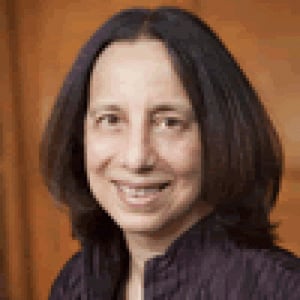
Nicholas deB. Katzenbach Professor of Law, Yale Law School
Reva Siegel is the Nicholas deB. Katzenbach Professor of Law at Yale University. Professor Siegel’s writing draws on legal history to explore questions of law and inequality, and to analyze how courts interact with representative government and popular movements in interpreting the Constitution. She is currently writing on the role of social movement conflict in guiding constitutional change, addressing this question in recent articles on the enforcement of Brown, originalism and the Second Amendment, the "de facto ERA," and reproductive rights. Her publications include Before Roe v. Wade: Voices That Shaped the Abortion Debate Before the Supreme Court’s Ruling, (with Linda Greenhouse, 2nd ed. 2012); The Constitution in 2020 (edited with Jack Balkin, 2009);Processes of Constitutional Decisionmaking (with Brest, Levinson, Balkin & Amar, 2006) and Directions in Sexual Harassment Law (edited with Catharine A. MacKinnon, 2004). Professor Siegel received her B.A., M.Phil, and J.D. from Yale University, clerked for Judge Spottswood Robinson on the D.C. Circuit, and began teaching at the University of California at Berkeley. She is a member of the American Academy of Arts and Sciences, and is active in the American Society for Legal History, the American Association of Law Schools, and the American Constitution Society, serving on the board of the national organization and as faculty advisor of Yale’s chapter.
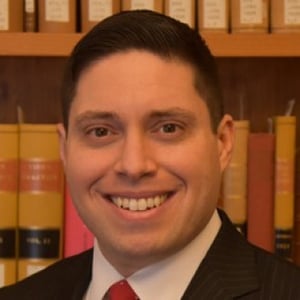
Professor, Associate Dean for Faculty Research, Catholic University of America, Columbus School of Law
José Joel Alicea is the inaugural St. Robert Bellarmine Professor of Law, Associate Dean for Faculty Research, and Director of the Law School’s Center for the Constitution and the Catholic Intellectual Tradition. He has also served as a Visiting Professor at Duke Law School and Notre Dame Law School. Prior to joining the Catholic Law faculty, Professor Alicea practiced law for several years at the law firm of Cooper & Kirk, PLLC, where he specialized in constitutional litigation. He previously served as a law clerk for Justice Samuel A. Alito Jr., on the United States Supreme Court and for Judge Diarmuid F. O'Scannlain on the United States Court of Appeals for the Ninth Circuit.
Professor Alicea’s scholarship has focused on constitutional theory. His scholarship has appeared, or is forthcoming, in the Yale Law Journal, the University of Pennsylvania Law Review, the Virginia Law Review, and the Notre Dame Law Review, among other publications. He has also been active in public debates about constitutional law, testifying before Congress and publishing essays in places like The New York Times, City Journal, and National Affairs.
Professor Alicea is a Fellow at the Columbus School of Law's Center for Religious Liberty and a Nonresident Fellow at The American Enterprise Institute. He is the recipient of several research and teaching awards, including the student-selected Professor of the Year teaching award.
Laurence A. Tisch Professor of Law and Director, Classical Liberal Institute, New York University School of Law; Director, Classical Liberal Institute, Civitas Institute University of Texas at Austin
Richard A. Epstein is the inaugural Laurence A. Tisch Professor of Law at NYU School of Law. Prior to his joining the faculty, he was a visiting law professor at NYU from 2007 through 2009. He served as the Peter and Kirstin Bedford Senior Fellow at the Hoover Institution from 2000 to 2024. Since 2024 to the present he is a senior lecturer at the Civitas Institute at the University of Texas—Austin. Epstein is also the James Parker Hall Distinguished Service Professor of Law Emeritus and a senior lecturer at the University of Chicago. His initial law school appointment was at the University of Southern California from 1968 to 1972. Epstein received an LL.D., h.c. from the University of Ghent, 2003. He has been a member of the American Academy of Arts and Sciences since 1985 and was a Senior Fellow of the Center for Clinical Medical Ethics at the University of Chicago Division of Biological Sciences, also from 1983. to 2022 He served as editor of the Journal of Legal Studies from 1981 to 1991, and of the Journal of Law and Economics from 1991-2001. From 2001 to 2010 he was a director of the John M. Olin Program in Law and Economics at the University of Chicago.
His newest book, The Myth of Birthright Citizenship: What the Fourteenth Amendment Really Says was published in 2026 (Encounter Books). Prior to that he has published many books including, The Dubious Morality of the Modern Administrative State (Roman & Littlefield 2020).Earlier he published th Classical Liberal Constitution: The Uncertain Quest for Limited Government (Harvard 2014) iHis previous books include Design for Liberty: Private Property, Public Administration and the Rule of Law (Harvard 2011); The Case Against the Employee Free Choice Act (Hoover 2009); Supreme Neglect: How to Revive the Constitutional Protection of Property Rights (Oxford 2008); Antitrust Decrees in Theory and Practice: Why Less is More (AEI 2007); Overdose: How Excessive Government Regulation Stifles Pharmaceutical Innovation (Yale University Press. 2006); How Progressives Rewrote the Constitution (Cato 2006); Cases and Materials on Torts (Aspen Law & Business; 8th ed. 2004); Skepticism and Freedom: A Modern Case for Classical Liberalism (University of Chicago, 2003); Torts (Aspen Law & Business 1999); Principles for a Free Society: Reconciling Individual Liberty with the Common Good (Perseus Books, 1998): Mortal Peril: Our Inalienable Rights to Health Care (Addison-Wesley, 1997); Simple Rules for a Complex World (Harvard, 1995); Bargaining With the State (Princeton, 1993); Forbidden Grounds: The Case Against Employment Discrimination Laws (Harvard , 1992); Takings: Private Property and the Power of Eminent Domain (Harvard, 1985); and Modern Products Liability Law (Greenwood Press, 1980). He has also edited(with Catherine M. Sharkey) Cases and Materials on the Law of Torts (10th edition 2012).
Professor Epstein has written numerous articles on a wide range of legal and interdisciplinary subjects. He has taught courses in administrative law, antitrust law, civil procedure, communications, constitutional law, contracts, corporations, criminal law, employment discrimination law, environmental law, food and drug law health law and policy, legal history, labor law, property, real estate development and finance, jurisprudence, labor law; land use planning, patents, individual, estate and corporate taxation, Roman Law; torts, and workers' compensation.
Professor Epstein also writes a regular column for Civitas Institute, which also sponsors his podcast, The Libertarian with Charles C.W. Cooke, and Law Talk, with Cooke and John Yoo. He also does a podcast with John Batchelor. And appears regularly on the Freedom File with Judge Andrew Napolitano.
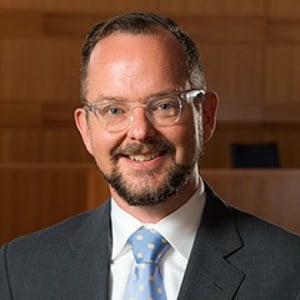
T.J. Maloney Chair in Business Law, Fordham University School of Law
Professor Griffith is an expert in corporate and financial regulatory law. He writes and speaks on corporate law, political economy, and the constitutional rights of corporations and other business associations. In addition to his academic writing, he has authored or contributed to many amicus briefs, including: Iowa v SEC, NCPPR v SEC, AFBR v SEC, and In re Tesla.
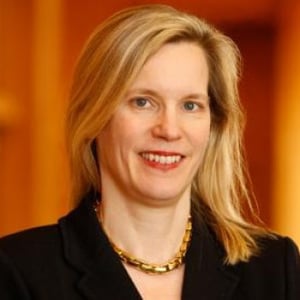
John S. Battle Professor of Law, University of Virginia School of Law
Julia D. Mahoney teaches courses in property, government finance, constitutional law and nonprofit organizations. A graduate of Yale Law School, she joined the University of Virginia faculty as an associate professor in 1999 and is now John S. Battle Professor of Law. She has also taught at the University of Southern California Law School and the University of Chicago Law School, and before entering the legal academy, practiced law at the New York firm Wachtell, Lipton, Rosen & Katz. Her scholarly articles include works on land preservation, eminent domain, health care reform and property rights in human biological materials.
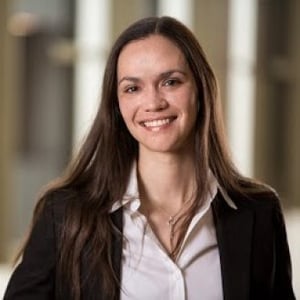
Assistant Professor, University of Toronto Faculty of Law
Adriana Robertson is an Assistant Professor in the Faculty of Law. Professor Robertson’s research focuses on the intersection of law and finance. Trained in both law and finance, her research draws heavily on both empirical and theoretical methods from financial economics.
Professor Robertson holds a BA from the University of Toronto (Trinity College), where she was awarded the Lorne T. Morgan Gold Medal in Economics, a PhD in Finance from the Yale School of Management, and a JD from Yale Law School, where she was on the board of the Yale Journal on Regulation and the Yale Journal of Law and Feminism. She is an Affiliated Fellow of the Information Society Project at Yale Law School. Her recent work has been featured in major media outlets including The New York Times, The Wall Street Journal, The Globe and Mail, and The Financial Times.

Associate Professor of Legal Studies & Business Ethics; Co-Director, Wharton Initiative on Financial Policy and Regulation, The Wharton School, University of Pennsylvania
Christina Parajon Skinner is an expert on financial regulation. Her research focuses on central banking, the debt markets, separation of powers, corporate governance, and law and macroeconomics. Professor Skinner’s work is international and comparative in scope, drawing on her experience as an academic and central bank lawyer in the United Kingdom. Her research has been published or is forthcoming in the Columbia Law Review, the Duke Law Journal, the Vanderbilt Law Review, and the Georgetown Law Journal, among other leading academic journals. Professor Skinner has also contributed to financial regulatory policy working groups, including those convened by the Federal Reserve Bank of New York, the Financial Stability Board, and the U.K. Banking Standards Board.
Prior to joining the faculty at Wharton, Professor Skinner served as legal counsel at the Bank of England, in the Financial Stability Division of the Bank’s Legal Directorate. Her work there focused principally on matters of bank resolution, financial market infrastructure, and macroprudential policy. Previously, Professor Skinner was an Academic Visitor at the University of Oxford, Faculty of Law and a Visiting Fellow at the London School of Economics, Law Department. From 2014-2016, she was a post-doctoral fellow and lecturer in Law at Columbia Law School.
Professor Skinner received her J.D. from Yale Law School, and an A.B. from the School of Public and International Affairs at Princeton University, with a concentration in international economics. She received certificates of proficiency in European Politics and Society, and Spanish Language and Culture.
She is married with five children.
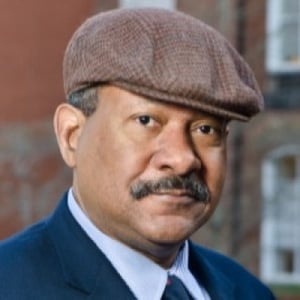
Harold Paul Green Research Professor of Law, George Washington University School of Law
Robert J. Cottrol joined the law school faculty in 1995 as a visiting professor of law of legal history. Previously, he taught at Rutgers University and Boston College, and had visited at the University of Virginia. As well as specializing in American legal history, Professor Cottrol has also taught torts and criminal law. His writings on law and history have appeared in the Yale Law Journal, Georgetown Law Journal, American Journal of Legal History, Law and Society Review, Slavery and Abolition: A Journal of Slave and Post-Slave Studies and American Quarterly, among others.
He is the author of The Afro-Yankees: Providence’s Black Community in the Antebellum Era (selected by Choice as an outstanding academic book for 1983), editor of Gun Control and the Constitution: Sources and Explorations on the Second Amendment (Book of the Month selection by the History Book Club), and From African to Yankee: Narratives of Slavery and Freedom in Antebellum New England (1998). Professor Cottrol’s book Brown v. Board of Education: Caste, Culture and the Constitution (2003) won the Langum Project Prize for Historical Literature in 2003 and was a “Book-of-the-Month” selection of the History Book Club. Most recently, he has authored The Long, Lingering Shadow: Slavery, Race, and Law in the American Hemisphere (2013).
He is currently doing research contrasting the role of law in the development of systems of slavery and racial hierarchy in the United States and Latin America. He has lectured on American law at the Federal Universities of Santa Catarina and Rio Grande do Sul in Brazil and the University of Buenos Aires and La Universidad del Museo Social in Argentina.
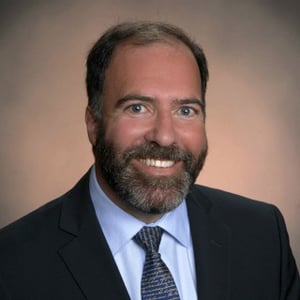
Professor of Law, Widener University Commonwealth Law School
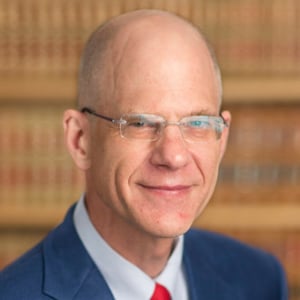
Charles W. Ebersold and Florence Whitcomb Ebersold Chair in Constitutional Law; Director, Election Law @ Moritz, Ohio State University Moritz College of Law
Professor Foley (known as “Ned”) directs Election Law @ Moritz at Ohio State’s law school, where he also holds the Ebersold Chair in Constitutional Law.
His book Ballot Battles: The History of Disputed Elections in the United States (Oxford University Press, 2016) was named Finalist for the David J. Langum, Sr. Prize in American Legal History and listed as one of 100 “must-read books about law and social justice”.
He has completed a new book manuscript, Presidential Elections and Majority Rule (to be published by Oxford University Press), which employs historical analysis to offer a feasible reform of state laws that would enable the Electoral College to operate as intended and thereby avoid the election of presidents who lack majority support among the voters in the states responsible for their Electoral College victories.
As Reporter for the American Law Institute’s Project on Election Administration (with his Mortiz colleague Steven Huefner, who served as Associate Reporter), Professor Foley drafted Principles of Law: Non-Precinct Voting and Resolution of Ballot-Counting Disputes, which provides nonpartisan guidance for the resolution of election disputes.
During his fellowship at Stanford University’s Center on Democracy, Development, and the Rule of Law, Foley wrote Due Process, Fair Play and Excessive Partisanship: A New Principle of Judicial Review of Election Law, 84 U. Chicago Law Review 655-758 (2017), which was cited in briefs in Gill v. Whitford and Benisek v. Lamone (the Supreme Court gerrymandering cases). His extensive online commentary about gerrymandering includes: Wechsler, History, and Gerrymandering, Scotusblog, and Constitutional Preservation, the Marbury Duty & Congressional Gerrymanders, Election Law Blog.
While Professor Foley has special expertise on recounts and other procedures for fairly and accurately identifying which candidate is the winner in close elections, he has written widely on all aspects of election law, including the need for nonpartisan institutions in election administration. He has also co-authored Election Law and Litigation: The Judicial Regulation of Politics (Wolters Kluwer 2014).
Professor Foley has taught at Ohio State since 1991. Previously, he clerked for Chief Judge Patricia M. Wald of the U.S. Court of Appeals and Justice Harry Blackmun of the United States Supreme Court. In 1999, he took a leave from the faculty to serve as the state solicitor in the office of Ohio’s Attorney General. In that capacity, he was responsible for the state’s appellate and constitutional cases.
Professor Foley is a graduate of Columbia University School of Law and Yale College.
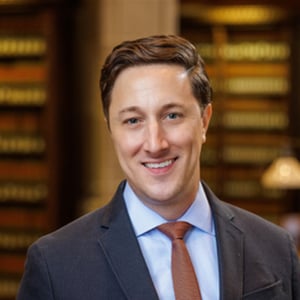
Professor of Law, Notre Dame Law School
Professor Derek Muller is a nationally-recognized scholar in the field of election law. His research focuses on the role of states in the administration of federal elections, the constitutional contours of voting rights and election administration, the limits of judicial power in the domain of elections, and the Electoral College.
He has published more than two dozen academic works, and his op-eds have appeared in the New York Times, the Los Angeles Times, and the Wall Street Journal. He has testified before Congress, and he is a contributor at the Election Law Blog. He is a co-author on a Federal Courts casebook published by Carolina Academic Press. He is also the co-reporter on a new Restatement of the Law, Election Litigation, an effort led by the American Law Institute.
Professor Muller teaches Election Law, Civil Procedure, and Evidence.
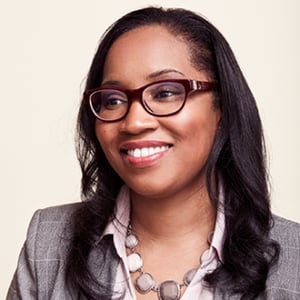
George T. and Harriet E. Pfleger Chair in Law, USC Gould School of Law
Franita Tolson is the George T. and Harriet E. Pfleger Chair in Law at the University of Southern California Gould School of Law. She also holds a courtesy faculty appointment in the Political Science and International Relations Department at the USC Dornsife College of Letter, Arts and Sciences.
Her scholarship and teaching focus on the areas of election law, constitutional law, legal history, and employment discrimination. She has written on a wide range of topics including partisan gerrymandering, political parties, the Elections Clause, the Voting Rights Act of 1965, and the Fourteenth and Fifteenth Amendments.
Her research has appeared or will appear in leading law reviews including the Yale Law Journal, Harvard Law Review, Stanford Law Review, California Law Review, University of Pennsylvania Law Review, and Vanderbilt Law Review. Tolson is one of the coauthors of the leading election law casebook, The Law of Democracy (Foundation Press, 6th ed., forthcoming 2022). Her forthcoming book, In Congress We Trust?: Enforcing Voting Rights from the Founding to the Jim Crow Era, will be published in 2023 by Cambridge University Press.
As a nationally recognized expert in election law, Tolson has written for or appeared as a commentator for various mass media outlets including The New York Times, The Los Angeles Times, the Wall Street Journal, Reuters and Bloomberg Law. She has testified before Congress numerous times on voting rights issues. She has also authored a legal analysis for an amendment to the U.S. Constitution, introduced by Senator Elizabeth Warren and Senator Richard Durbin, that would explicitly protect the right to vote. During the fall of 2020, Tolson worked as an election law analyst for CNN. She currently co-hosts an election themed podcast, Free and Fair with Franita and Foley, with Ned Foley of The Ohio State University Moritz College of Law.
Prior to joining USC, Tolson was the Betty T. Ferguson Professor of Voting Rights at Florida State University College of Law and a visiting assistant professor at Northwestern University School of Law. Before entering academia, she clerked for the Honorable Ann Claire Williams of the United States Court of Appeals for the Seventh Circuit and the Honorable Ruben Castillo of the Northern District of Illinois.
Tolson is a graduate of the University of Chicago Law School, where she was the Walter V. Schaefer Visiting Professor of Law during the Spring 2021 academic quarter.
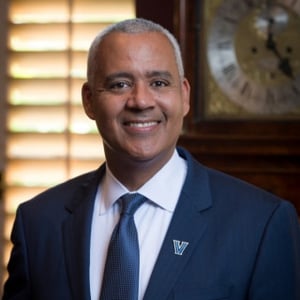
Arthur J. Kania Dean and Professor of Law, Villanova University, Charles Widger School of Law
Mark C. Alexander, JD is the Arthur J. Kania Dean and Professor of Law at the Villanova University Charles Widger School of Law. As the School’s chief administrator and chairperson of the faculty, Alexander is responsible for all facets of the Law School, including its long-term strategic and academic planning, curricular initiatives, faculty research and teaching support, student services, and fundraising and alumni relations.
Alexander previously served as Associate Dean for Academics at Seton Hall University’s School of Law. His responsibilities included oversight of the curriculum’s academic components, collaboration with the faculty and administration on implementation of the School’s strategic plan, and management of the career, enrollment and student services offices. A member of Seton Hall’s Law School faculty for two decades, he was honored as Professor of the Year on numerous occasions.
Alexander’s areas of expertise include constitution law, election law, the First Amendment and criminal procedure. His research interests focus on the constitutional dimensions of election law and campaign reform. Alexander has authored several books on the First Amendment and constitutional law, and his scholarship has been published in leading journals such as Harvard Journal of Law & Public Policy, Stanford Law & Policy Review and NYU Review of Law & Social Change.
Regularly interviewed by national print and broadcast media, Alexander is a sought-after speaker and panelist for national and international law symposiums and academic forums. He possesses significant international experience, having spent a year in Spain teaching American law and politics on a Fulbright Scholarship, as well as teaching in the Seton Hall Law-in-Italy program. He is also a fellow of the U.S.-Japan Leadership Program. Alexander served on the J. William Fulbright Foreign Scholarship Board from 2010 to 2014, having been appointed by President Barack Obama.
In addition to his leadership in academia, Alexander has also served as an adviser and issues director for several high-profile political campaigns. Prior to joining the Seton Hall Law School faculty in 1996, he clerked for Chief Judge Thelton Henderson of the United States District Court for the Northern District of California and was a litigator with Gibson, Dunn & Crutcher in San Francisco. Alexander earned a Juris Doctor from Yale University Law School and a Bachelor of Arts in Architecture from Yale University.

Professor of Law, University of Michigan Law School
Christopher J. Walker is a Professor of Law at the University of Michigan. Prior to joining Michigan law faculty in 2022, he spent a decade teaching at The Ohio State University Moritz College of Law. He previously clerked for Justice Anthony Kennedy of the U.S. Supreme Court, worked on the Civil Appellate Staff at the U.S. Department of Justice, and served on the Senate Judiciary Committee staff for the Gorsuch Supreme Court confirmation. Professor Walker’s research focuses on administrative law, regulation, and law and policy at the agency level. Outside the law school, he chaired the American Bar Association’s Section of Administrative Law and Regulatory Practice in 2020-21 and served as one of forty Public Members of the Administrative Conference of the United States from 2016-2022, and he continues to serve in both organizations in various capacities. He also works of counsel at the U.S. Chamber Litigation Center. In 2022, he received the Federalist Society’s Joseph Story Award.
Professor, University of Minnesota Law School
Ilan Wurman is the Julius E. Davis Professor of Law at the University of Minnesota, where he teaches administrative law and constitutional law. He previously taught at Arizona State University. He writes primarily on the Fourteenth Amendment, administrative law, separation of powers, and constitutionalism. His academic writing has appeared in the Yale Law Journal, the Stanford Law Review, the University of Chicago Law Review, the University of Pennsylvania Law Review, the Virginia Law Review, the Duke Law Journal, the Minnesota Law Review, the Notre Dame Law Review, and the Texas Law Review among other journals.
Professor Wurman is the author of a casebook, Administrative Law Theory and Fundamentals: An Integrated Approach (Foundation Press 2d ed. 2024). He is also the author of A Debt Against the Living: An Introduction to Originalism (Cambridge 2017), and The Second Founding: An Introduction to the Fourteenth Amendment (Cambridge 2020). His next book, The Constitution of 1789: A New Introduction, is also forthcoming with Cambridge University Press.
Professor Wurman practices law with the firm Tully Bailey. He has litigated a variety of administrative law and constitutional law cases, including cases involving COVID-19 restrictions, transmission lines, and Appointments Clause challenges. He also devised winning public nuisance theories to force city governments to address the increasingly challenging public camping crises throughout the country.
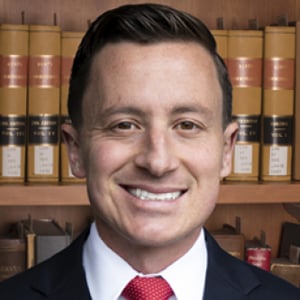
Assistant Professor of Law, Columbus School of Law, Catholic University of America
Chad Squitieri is an Assistant Professor of Law at Catholic University of America’s Columbus School of Law. There he serves as the Director of the Separation of Powers Institute, and as a Managing Director of the Center for the Constitution and the Catholic Intellectual Tradition. Professor Squitieri’s scholarship addresses administrative law and constitutional law topics, including separation-of-powers principles. His scholarship has appeared in the Administrative Law Review, the Harvard Journal of Law and Public Policy, and the Baylor Law Review, among other publications.
Prior to joining the faculty at the Catholic University of America, Prof. Squitieri practiced law at Gibson, Dunn & Crutcher LLP as a member of the Appellate and Constitutional Law and Administrative Law and Regulatory practice groups. He also served as a Special Assistant to former United States Secretary of Labor Eugene Scalia, and as a law clerk to then-Chief Judge D. Brooks Smith of the United States Court of Appeals for the Third Circuit.

Litigation Update: United States v. Moore-Bush
Robert Frommer, Adam F. Griffin
Is long-term police use of a surveillance camera targeted at a person’s home and curtilage a Fourth Amendment search?
In 2017, ATF agents placed a surveillance camera on a pole across the street from...
Courthouse Steps Oral Argument: Turkiye Halk Bankasi A.S. v. United States
Mike Hurst
On January 17, 2023, the US Supreme Court will hear oral argument in Turkiye Halk...
Courthouse Steps Oral Argument: Glacier Northwest, Inc. v. International Brotherhood of Teamsters
The U.S. Supreme Court appears ready to clarify when and under what circumstances federal labor...
Panel: America and Her Discontents
Nicole Stelle Garnett, Paul Gowder, Joshua Kleinfeld, Stephen E. Sachs
24th Annual Federalist Society Faculty Conference
Featuring: Prof. Nicole Stelle Garnett, John P. Murphy Foundation Professor of Law, University of Notre Dame Law...
Young Legal Scholars Paper Presentation
Richard A. Epstein, Caleb N. Griffin, Paul G. Mahoney, Marah Stith McLeod, Ilan Wurman, Mark R. Kubisch
24th Annual Federalist Society Faculty Conference
Featuring: Prof. Ilan Wurman, "Reversing Incorporation," Associate Professor, Arizona State University, Sandra Day O'Connor College...
Panel: Dobbs & the Rule of Law
Sherif Girgis, Vicki C. Jackson, Stephen E. Sachs, Reva Siegel, J. Joel Alicea
24th Annual Federalist Society Faculty Conference
This past June, the Supreme Court’s 6-3 decision in Dobbs v. Jackson Women’s Health Organization...
Panel: Politicization of the Economy
Richard A. Epstein, Sean J. Griffith, Julia D. Mahoney, Adriana Z. Robertson, Christina P. Skinner
24th Annual Federalist Society Faculty Conference
The role of our democratically responsive institutions—and the legislature in particular—is increasingly performed by private...
Panel: Election Law in Flux
Robert J. Cottrol, Michael R. Dimino, Edward B. Foley, Derek T. Muller, Franita Tolson
24th Annual Federalist Society Faculty Conference
Election law has attracted increasing academic and judicial scrutiny in recent years, with topics of...
Welcome Remarks by AALS President-Elect, Dean Mark Alexander
Mark C. Alexander
24th Annual Federalist Society Faculty Conference
Featuring Dean Mark Alexander, AALS President-Elect
Luncheon Debate: Resolved: The Major Questions Doctrine Has No Place in Statutory Interpretation
Christopher J. Walker, Ilan Wurman, Chad C. Squitieri
24th Annual Federalist Society Faculty Conference
In West Virginia v. EPA, decided this last term, the Supreme Court invoked the major...