Can Fake News Be Regulated? [POLICYbrief]
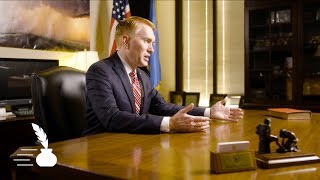
Short video featuring Thomas C. Arthur
On April 11, 2018, Facebook CEO Mark Zuckerberg testified at a congressional hearing regarding questionable content which appeared on the social media platform. Lawmakers grilled Zuckerberg, threatening to regulate his company and its peers.
Can Congress force media companies such as Facebook to ban fake news from their platforms? Prof. Thomas C. Arthur of Emory University School of Law explores the history of fake news and its connection to what the Supreme Court refers to as "political speech."
As always, the Federalist Society takes no particular legal or public policy positions. All opinions expressed are those of the speaker.
Learn more about Prof. Arthur:
http://law.emory.edu/faculty-and-scholarship/faculty-profiles/arthur-profile.html

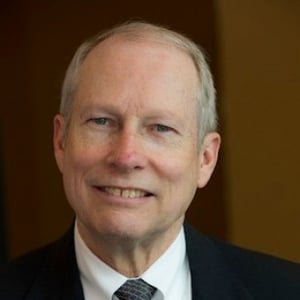
L. Q. C. Lamar Professor of Law, Emory University School of Law
Thomas C. Arthur holds degrees from Yale Law School and Duke University, where he was an Angier B. Duke Scholar and a member of Phi Beta Kappa. Before coming to Emory, he practiced law for eleven years with the Washington, DC office of Kirkland & Ellis. In 1982, he left his law firm partnership to join the Emory Law faculty.
Arthur teaches antitrust, civil procedure, and administrative law, and he has been active on the executive committee of the Antitrust Section of the Association of American Law Schools. His articles in the California and Tulane law reviews have been credited with the founding of a new, "statutory" school of antitrust analysis. His 1991 Emory Law Journal article (co-authored with Professor Richard D. Freer) provoked a nationally noted debate over an important new statute governing the jurisdiction of federal courts. A major antitrust article, "The Costly Quest for Perfect Competition: Kodak and Nonstructural Market Power," was published in the New York University Law Review (vol. 69, April 1994).