
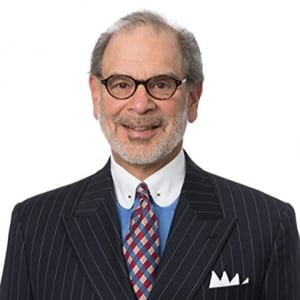
Executive Director, The Financial Technology and Cybersecurity Center
Thomas P. Vartanian is the Executive Director of the Financial Technology & Cybersecurity Center, an author, financial services advisor, expert witness, and board mentor. He is the former Executive Director of the Program on Financial Regulation & Technology at George Mason University’s Antonin Scalia Law School, where he was also a Professor of Law. Between 1983 and 2018, he chaired the Financial Institution’s practices at two international law firms, Dechert LLP and Fried Frank LLP, through four financial crises. Both as a regulator and private practitioner, he has represented parties in a majority of the 50 largest financial institution failures in American history.
Mr. Vartanian served in the Reagan Administration during the S&L crisis as General Counsel of the Federal Home Loan Bank Board and the FSLIC. Prior to that, he served in the Carter Administration in the Office of the Comptroller of the Currency as Special Assistant to the Chief Counsel. Since departing government service, he has advised many subsequent presidential administrations on financial institution issues.
Mr. Vartanian is a futurist and expert in financial technology who has been described by clients in Chambers as “one of the best financial services lawyers in America.” Mr. Vartanian was Chairman of the American Bar Association’s Cyberspace Law Committee between 1998 and 2002, where he chaired an international task force of lawyers from twenty countries which released a seminal report in London in 2000 on the novel issues created by doing business in Cyberspace. He is currently a member of the American Association of Bank Directors’ Task Force on Bank Director Personal Liability Mitigation.
Mr. Vartanian has authored more than four hundred articles and eight books, including his new book, 200 Years of American Financial Panics: Crashes, Recessions, Depressions, and the Technology That Will Change It All chronicling the country’s tumultuous financial history and the impact that technology will have on its future.
He is a frequent lecturer and media commentator on the financial services industry, having appeared on Bloomberg TV, CNN, Fox News, Newsmax, PBS and various local and national radio shows. He has also taught financial services and digital commerce law at Georgetown Law School, George Washington Law School, and Boston University School of Law, and has been a guest lecturer at Harvard Law School.
In 2008, Mr. Vartanian was named “Washingtonian of the Year” based on his use of music and sports to raise money for charities in the D.C. metropolitan area. As a musician, he appeared in the first production in the United States in 1970 of Joseph and the Amazing Technicolor Dreamcoat. His classic rock band, The Johnny Esquire Band, has helped raise approximately $5,000,000 for charities in the Washington D.C. area over the last twenty-five years. Mr. Vartanian also founded and plays for the Washington All Stars, a senior baseball team that has raised more than $500,000 for Special Olympics.
His next book, The Unhackable Internet, will be published in early 2023.
Chief Judge (ret.), U.S. Court of Appeals for the Federal Circuit, and Honorary Professor, Tsinghua University
Randall R. Rader was appointed to the United States Court of Appeals for the Federal Circuit by President George H. W. Bush in 1990 and served as Chief Judge from June 2010 to June 2014. He was appointed to the United States Claims Court (now the U. S. Court of Federal Claims) by President Ronald W. Reagan in 1988. Judge Rader's most prized title may well be "Professor Rader."
As Professor, Judge Rader has taught courses on patent law and other advanced intellectual property courses at The George Washington University Law School,University of Virginia School of Law, Georgetown University Law Center, the Munich Intellectual Property Law Center, and other university programs in Tokyo, Taipei, New Delhi, and Beijing. Due to the size and diversity of his classes, Judge Rader may have taught patent law to more students than anyone else. Judge Rader has also co-authored several texts including the most widely used textbook on U. S. patent law, "Cases and Materials on Patent Law," (St. Paul, Minn.: Thomson/West 3d ed. 2009) and "Patent Law in a Nutshell," (St. Paul, Minn.: Thomson/West 2007) (translated into Chinese and Japanese). Judge Rader has won acclaim for leading dozens of government and educational delegations to every continent (except Antarctica), teaching rule of law and intellectual property law principles.
Judge Rader has received many awards, including the Sedona Lifetime Achievement Award for Intellectual Property Law, 2009; Distinguished Teaching Awards from George Washington University Law School, 2003 and 2008 (by election of the students); the Jefferson Medal from the New Jersey Intellectual Property Law Association, 2003; the Distinguished Service Award from the Berkeley Center for Law and Technology, 2003; the J. William Fulbright Award for Distinguished Public Service from George Washington University Law School, 2000; and the Younger Federal Lawyer Award from the Federal Bar Association, 1983. Before appointment to the Court of Federal Claims, Judge Rader served as Minority and Majority Chief Counsel to Subcommittees of the U.S. Senate Committee on the Judiciary. From 1975 to 1980, he served as Counsel in the House of Representatives for representatives serving on the Interior, Appropriations, and Ways and Means Committees. He received a B.A. in English from Brigham Young University in 1974 and a J.D. from George Washington University Law School in 1978.

Partner, Steptoe & Johnson LLP
Stewart Baker is a partner in the law firm of Steptoe & Johnson in Washington, D.C. From 2005 to 2009, he was the first Assistant Secretary for Policy at the Department of Homeland Security. His law practice covers cybersecurity, data protection, homeland security, and travel and foreign investment regulation; he has been awarded one patent.
Mr. Baker has been General Counsel of the National Security Agency and General Counsel of the commission that investigated WMD intelligence failures prior to the Iraq war. He is the author of Skating on Stilts, a book on terrorism, cybersecurity, and other technology issues; he also hosts the weekly Cyberlaw Podcast.
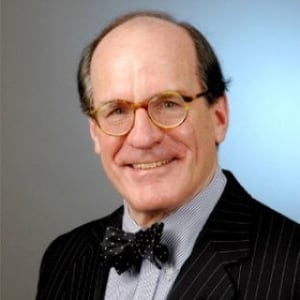
Retired Partner, Sullivan & Cromwell LLP
Upon his resignation as the Legal Adviser of the U.S. Department of State in January 1993, Mr. Williamson rejoined Sullivan & Cromwell's Washington, D.C. office. He originally joined the Firm in 1964 after graduating from New York University School of Law, where he was an editor of the Law Review. He became a partner of the Firm in 1971, moved to its London office in 1976, returned to its New York office in 1979, moved to its Washington, D.C. office in 1988 and became Of Counsel in 2007. In 2018, he retired from the firm.
At Sullivan & Cromwell, Mr. Williamson engaged in a broad and wide-ranging domestic and international financing and transactions practice, as well as advice with respect to corporate governance issues, the United States’ economic sanctions laws, the ethics rules applicable to government officials and the immunities of foreign sovereigns and international organizations.
Mr. Williamson has been an active participant on panels and other forums involving public international law and national security issues, such as the domestic and international bases for the use of force, the role of the United States with respect to the International Criminal Court, the law of the sea and the application of international legal principles in the war against terrorism.
Mr. Williamson is a member of the Council on Foreign Relations and a former member of the Executive Council of the American Society of International Law, the Executive Committees of the Business and Advisory Committee (BIAC) to the OECD and the U.S. Council for International Business, the United States Advisory Board of NTT DoCoMo, Inc. and the Board of Directors of Triton Oil & Gas Limited.
Mr. Williamson has served on the Boards of Regents and Trustees of the University of the South and as chair of the Board of Regents. He is currently a member of the Board of Directors of the American Council of Trustees and Alumni, a higher education watchdog.
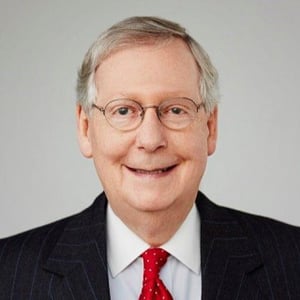
United States Senator, Kentucky
Mitch McConnell is the Senate Majority Leader. Elected to that position unanimously by his Republican colleagues first in 2014 and again in 2016, he is only the second Kentuckian to ever serve as Majority Leader in the U.S. Senate. The first, Senator Alben Barkley, led the Democrats from 1937 to 1949.
Senator McConnell has served, again by the unanimous vote of his colleagues, as the Republican Leader since the 110th Congress. He is the longest-serving Senate Republican Leader in the history of the United States. McConnell previously served in leadership as the Majority Whip in the 108th and 109th Congresses and as chairman of the National Republican Senatorial Committee during the 1998 and 2000 election cycles.
McConnell has been called “the most conservative leader of either party in the history of the Senate.” He has also earned a reputation as a “master tactician” for permanently locking in critical tax relief for working families and small businesses, and putting in place the most significant spending reduction legislation in a generation.
He has received praise from numerous media outlets for his work as Senate Majority Leader, and in 2015 TIME Magazine named McConnell one of the 100 Most Influential People in the World.
First elected to the Senate in 1984, McConnell is Kentucky’s longest-serving senator. He made history that year as the only Republican challenger in the country to defeat an incumbent Democrat and as the first Republican to win a statewide Kentucky race since 1968. On November 4, 2014, he was elected to a record sixth term by receiving broad support across Kentucky, winning 110 of the Commonwealth’s 120 counties.
McConnell graduated with honors from the University of Louisville College of Arts and Sciences, where he served as student body president. He also is a graduate of the University of Kentucky College of Law, where he was elected president of the Student Bar Association.
McConnell worked as an intern on Capitol Hill for Senator John Sherman Cooper before serving as chief legislative assistant to Senator Marlow Cook and as Deputy Assistant Attorney General to President Gerald Ford.
Before his election to the Senate, he served as judge-executive of Jefferson County, Kentucky, from 1978 until he commenced his Senate term on January 3, 1985.
McConnell currently serves as a senior member of the Appropriations, Agriculture and Rules Committees. He is the proud father of three daughters.
McConnell is married to Secretary Elaine L. Chao, the 18th U.S. Secretary of Transportation. Previously, Secretary Chao served for eight years as President George W. Bush’s U.S. Secretary of Labor. She is also a former president of the United Way of America and director of the Peace Corps.
John Adams is a pseudonym. The author is a veteran attorney in the government arms control community. His opinions are purely his own, and do not reflect any official position or policy of the United States, the Conference on Disarmament, or the Organization for the Prohibition of Chemical Weapons.
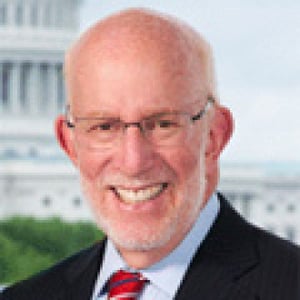
Partner, Jones Day
Ben Ginsberg represents numerous political parties, political campaigns, candidates, members of Congress and state legislatures, governors, corporations, trade associations, vendors, donors, and individuals participating in the political process. He represents a variety of clients on election law issues, particularly those involving federal and state campaign finance laws, ethics and gifts rules, pay-to-play laws, election administration, government investigations, redistricting, communications law, and election recounts and contests.
Prior to joining Jones Day in 2014, Mr. Ginsberg served as national counsel to the Bush-Cheney presidential campaigns in the 2004 and 2000 election cycles and played a central role in the 2000 Florida recount. In 2012 and 2008, he served as national counsel to the Romney for President campaign. He also has represented the campaigns and leadership PACs of numerous members of the Senate and House as well as the national party committees. He serves as counsel to the Republican Governors Association and has extensive experience on the state legislative level through Republican redistricting efforts.
Before entering law school, Mr. Ginsberg spent five years as a newspaper reporter at The Boston Globe, Philadelphia Evening Bulletin, The Berkshire Eagle (Massachusetts), and The Riverside Press-Enterprise (California). He has been a guest lecturer at the Stanford University Law School, a Fellow at Harvard University's Institute of Politics, and an adjunct professor of law at Georgetown University Law Center. Mr. Ginsberg recently served as co-chair of the Presidential Commission on Election Administration.
Georgetown University Law Center, J.D., 1982
University of Pennsylvania, A.B., 1974
Bell, McAndrews & Hiltachk, LLP

Book Review: Bretton Woods and Dumbarton Oaks: American Economic and Political Postwar Planning in the Summer of 1944 by Georg Schild
John Pickering
Financial Services & E-Commerce Newsletter - Volume 1, Issue 1, Fall 1996
Bretton Woods and Dumbarton Oaks: American Economic and Political Postwar Planning in the Summer of...
Circuit Court Opinions address application of Disparate Impact Liability under the Fair Housing Act
Thomas P. Vartanian, Robert H. Ledig, Alisa Babitz
Financial Services & E-Commerce Newsletter - Volume 1, Issue 1, Fall 1996
The Fifth and Ninth Circuit Court of Appeals have each recently issued opinions which are...
Intellectual Property Protection in China
Randall R. Rader
Intellectual Property Practice Group Newsletter - Volume 1, Issue 1, Fall 1996
China recognized the significance of intellectual property as early as the Tang Dynasty (A.D. 617-906]....
Encryption Policy Debate
Stewart A. Baker
Intellectual Property Practice Group Newsletter - Volume 1, Issue 1, Fall 1996
The cryptography debate is a fascinating one. It divides the body politic in surprising ways....
Investment Agreement Negotiations in the OECD
Edwin D. Williamson
International & National Security Law Practice Group Newsletter - Volume 1, Issue 1, Fall 1996
Summary Considerable progress is being made in the negotiation of a multilateral agreement on investment...
Campaign Finance "Reform": A View from Capitol Hill
Mitch McConnell
Free Speech & Election Law Practice Group Newsletter - Volume 1, Issue 1, Fall 1996
The campaign finance "reform" movement is intellectually bankrupt. It has not had an original idea...
The Chemical Weapons Convention: Legal and Juridical Observations
John Adams
International & National Security Law Practice Group Newsletter - Volume 1, Issue 1, Fall 1996
Introduction It is the inherent contradiction of the Twentieth Century that the same era that...
Campaign Finance: What Role for the Parties?
Benjamin L. Ginsberg
Free Speech & Election Law Practice Group Newsletter - Volume 1, Issue 1, Fall 1996
Coming in the midst of a season of unprecedented political spending, the Supreme Court's Colorado...
A Practitioner's View of Colorado Republican Federal Campaign Committee v. Federal Election Commission
Charles H. Bell
Free Speech & Election Law Practice Group Newsletter - Volume 1, Issue 1, Fall 1996
The Supreme Court decision in Colorado Republican Federal Campaign Committee v. Federal Election Commission may...
Extra-Terrestrial Sanctions in an Interdependent World
Gregory Husisian
International & National Security Law Practice Group Newsletter - Volume 1, Issue 1, Fall 1996
U.S. Unilateral Sanctions in the Post-World War Era It is almost a law of nature:...